
Features
Fiddling while the nation burns


by Dr F E Dias
Section 365A of Sri Lanka’s Penal Code criminalises “any act of gross indecency” between persons. One would have imagined that it would be a grave and substantial challenge for a reasonable person to justify that acts of gross indecency and carnal intercourse against the order of nature, should be declared human rights, and be sanctioned, endorsed and celebrated.
UN CEDAW
On February 21, 2022, the notorious CEDAW committee of the UN, a battery of unelected radical feminists who issue recommendations to governments of the developing world as if they had the authority to mandate, decided that the sovereign nation of Sri Lanka should repeal 365A and endorse and encourage lesbianism together with other ingredients in the alphabet soup. They even decreed inter alia that the government should provide training to the nation’s law enforcement agencies regarding the normalization of homosexual activity inclusive of bisexualism, even tagging transgenderism into the melée.
On August 24, 2022, MP Premanath Dolawatta submitted a private member’s bill to parliament seeking to amend the penal code in order to legalise sodomy among youth who have reached their 16th birthday, and adults, as long as it was consensual, and between humans. A concession was provided that the provision on bestiality will remain unchanged, although the reasoning for justifiying homosexuality can be likewise applied to justify bestiality.
It was deemed that Sri Lankans have “an extremely backward notion” regarding deviant sexual behaviour – id est it is queer not to be queer. “Modern psychiatry” was said not consider sodomy to be perverted, and that the perversity of sodomy was a Victorian and colonial remnant – perhaps expecting that the populace will acquiesce to institutionalisation of queerness since they no longer desire empire. While it was activism rather than integrity that removed ego-syntonic homosexuality from the manual of mental disorders, and the mental health of the perpetrator does not determine the perversity of the act, irrelevant arguments and unsound reasoning cloak the reality that these attempts at transmogrification of Sri Lankan culture is in fact subordination to neocolonialism.
US President Biden has stated that LGBT “rights” are core to US foreign policy, and the US is the largest donor to the United Nations. Freshly returned from Davos, the president of bankrupt Sri Lanka which is on its knees before the IMF, stated that the Government will not oppose the Dolawatta bill.
UN HRC
The national report obsequiously submitted in late 2022 for review by the United Nations’ Human Rights Council’s Working Group during its 42nd session held in Geneva, indicated the Sri Lankan government’s keen desire to conform to the LGBTIQ+ ideologies, even mentioning the prevalence of a legal gender recognition certificate that could be obtained in three to five days by “transgender” persons. When men obtain this legal certification that they are, for example, women, they could with impunity enter female washrooms and shower cubicles – and compete against real women in sports. Anyone who objects, let alone resists this insanity will be accused and perhaps penalized for harassment, discrimination and all else that is whined about.
The Working Group of UN bureaucrats, some from the wealthy countries and others from Latvia, Costa Rica, Czechia and Uruguay, issued a report on February 1 resolving that the sovereign nation of Sri Lanka should repeal section 365 and 365A, and normalize not only LGB and T but also I, Q, and the even more vague “+”, that encompasses all conceivable “genders”, “gender identities” and sexual orientations – including paedophilia.
The representative from Chile required Sri Lanka to ensure the legal prevention of persons with homosexual inclinations from seeking and receiving rehabilitation or therapy, thus providing clarity to their objectives which is not the well being of individuals struggling with unnatural desires, but the propagation of a culture of vice. The directives from the UN HRC if pursued would logically lead to the position where it would be illegal for a kleptomaniac to seek remedy, and illegal for a therapist to provide treatment to cure his disordered propensities – and our government would repeal the penal codes concerning theft because the apparatchiks of a supranational organization seeking global government mandates it.
The Fifth Column
Activists such as Ambika Satkunanathan state that “progressive” values associated unnatural and obscene acts related to sodomy and gender dysphoria being put into the educational curriculum of the state’s children would be a high priority, and indicated that textbooks could be changed even prior to the sanctioning of grossly indecent carnal acts by law. She also stated honestly that the legislative proposal at hand is merely a “small step” in the journey into establishing in this nation what would be a polychromatic dystopia. While it will be commendable to treat each human being with respect and dignity since they are human beings, it does not imply that all human acts, lifestyles and lusts need likewise to be respected, since there is a distinction to be made between the sinner and the sin. Those inflicted with tuberculosis need to be loved and protected, and not made afraid or harassed, but this does not require the national repeal of the BCG.
A petition was filed in April 2023 for the sake of protecting decency by Jehan Hameed, Shenali Waduge and Athula De Silva, pointing out the unconstitutionality of the proposed bill of MP Dolawatte, stressing on the scandalization of the nation’s children when their elders betray them, and the escalation of sexually transmitted disease especially involving viruses received anally from one man who passes it on anally to another.
A flurry of intervening petitions was subsequently submitted in support of decriminalising acts of gross indecency, many petitioners being ex-officio radicals already long in the tooth. Some of the persons who support the promotion of homosexuality ironically are associated with Saving Children, Child Protection and Child Rights. Less surprisingly, others are passionate promoters of abortion and have decades of experience in lobbying for the abortion of Sri Lanka’s children, often in association with foreign-funded NGOs. The local arm of the global abortion business International Planned Parenthood Association, namely the SL Family Planning Association which for years have inter alia been corrupting the nations’ youth, subtly encouraging promiscuity with the promise of the availability of abortifacient drugs and devices to flush out the consequences, is another intervening petitioner. HIV services are also in the fray, since without homosexuality, HIV services will cease to be required.
Roots and Reasoning
While it is understood that international pressure, money and pride are decisive forces driving this agenda, the reasoning put forward for propagating LGB, T and other diverse concepts collectively, and the associated assault on the virtue of self-restraint, traditional marriage and the natural family, deserves scrutiny. While proposed variously and emotionally, the underlying rationale is the alleged discrimination, harassment and fear of violence felt by persons self-identifying under one or more of the letters of the rainbow. It is of the essence to recognize that the deception occurs via conflation of genuine problems, with the justification of the lifestyle – while its raw reality, inevitable consequences and ultimate objectives are camouflaged.
Let us consider a thief, practicing or non-practicing, having an inclination to theft or devoid of it, as long as thief is her identity. Suppose she goes to a bank and is harassed by the teller, and discriminated against by the manager, and made afraid by the cashier. The fitting course of action would be first to investigate whether these were her unfounded perceptions, whether incidents occurred and if so whether they were intentional. It would subsequently be necessary to find out the causes for these incidents, and whether they were related to the black and white horizontal stripes on the thief’s top, whether she insinuated deviously that the cashier issued one note less when he didn’t, whether the manager tried to over-charge her for the cheque-book for personal gain, or if the security officer at the exit didn’t open the door for her as was expected simply because he was lazy.
Whether her wallet was forcibly examined, and whether she refrained from complaining to the GM due to self-doubt regarding receipt of fair treatment on account of her thief-like garb and demeanour or for other unrelated reasons, wrongs done need to be rectified, and the nation and its institutions already have sufficient laws and rules to deal with it. If these laws are not enforced, then non-enforcement is the problem, not the law. While it is acceptable that every citizen should be treated equally by the law, it would be ridiculous to make theft legal on account of thieves’ feelings of vulnerability. Even more ridiculous would it be, if not only theft, but also laundering, pilfering, misappropriation, burglary, smuggling, and even “+” were to be legalized, and children’s school text books were amended to portray the goodness of LPMBS+ as a “small step” in the journey towards equality.
Deceit
The reason to normalize sodomy, as a first “small step” is not for the reason of enabling homosexuals to proceed with their lifestyle – which they already are doing, nor for the protection and care of individuals suffering from various deviant sexual inclinations who may seek a safe and understanding environment to proceed with their conversion or rehabilitation. It is evident that individuals having unnatural sexual inclinations, and who choose to indulge in them, cannot be penalized as long as they commit their sins in private. The victim of any action, not only sodomic, when coerced or brought about through “threat of unlawful detention”, “fear of death or hurt”, or when consent has been obtained via the “use of force, or intimidation” has protection through law already, so stressing on the consensuality of unnatural acts as justification for legalizing gross indecency would make little difference to extant private practitioners – and is irrational as a basis for amending the code.
Rather, decriminalization and subsequent efforts at “equality” for the entire ideological LGBTIQ+ spectrum is to enable propagation permeation proliferation empowerment and inculturation of its philosophy and lifestyle, that would even eventually legally enable the penalization of efforts to protect natural marriage, to affirm the natural family and to prevent scandal in society so that civilizational demise may proceed unhindered. The abortion mongers, the geriatric feminists and anti-life and anti-family NGOs and activists backed by their international patrons seek to change the law in order to change culture, and with culture to change our children, and thereby change the nation’s future.
Dystopia
Apart from homosexuality becoming more evident in society and homosexual displays becoming commonplace consequent to its approbation, sodomic marriages will be sought, since it would not be equality if a man may marry a woman, but not a another man, and vice versa. It will be harassment and violation of alleged human rights if three or four may not be wedded together, if two could, and the possibility of a dog being thrown into this communion is not remote or unrealistic. Caterers or hospitality providers who do not wish to provide services on such occasions on matters of principle will face litigation and a threat to their business since they would need to treat all customers equally, especially those categorized as oppressed.
Further when all colours of the rainbow are legal and equal, it will be necessary to extend the already fashionable and irrational gender equality practices to more than women. Presently companies are bending over backwards with diversity-hiring and -promoting in order to have parities in positions of power, and currently women are breaking ceilings and making news, and quotas are being legislated for them.
To ensure equality and to break the bias against all “genders” there will consequently arise requirements to eliminate under-representation of homosexuals and other “genders” on the boards and in the leadership of all institutions, since that would be “gender equality”. Naturally, a significant proportion of the population will be inclined to identify into these expanded privileged categories to obtain status, positions, and scholarships that they could not have achieved were they grounded on competency, and the beta males can transition into women to fill the women’s quotas in power positions.
The legal transgender certificate will enable a woman certified as a legal man to pray among the men in a mosque, and “mother” and “father” could be words found to be offensive and replaceable by parent 1, parent 2, and even 3, 4, 5 as the case may be, since equality requires that “throuples” may have children, even if they cannot beget them. These are but the tip of the “decriminalize homosexuality” and “LGBTQI+ equality” project. And what is mentioned is not the outpouring of a deluded imagination but examples of actualities in nations that followed the rainbow and found a can of worms at the end of it.
Silence is Assent
What the United Nations Organisation, its committees, the NGOs, and the local activists and special rapporteurs have been working on for decades, sustained by the billions of dollars from their patrons, is a redefinition of values. Chastity among the young, and life-long marriage between a man and a woman who are open to fruitfulness and are faithful to each other, are the essence of strong natural families – which are the fundamental units of society and the bedrock of a stable and thriving culture. The demeaning of marriage, the corruption of youth, and the destruction of the natural family are the means through which nations are weakened and made vulnerable to control.
Uganda, under similar attack from activists in NGOs and Western governments pushing the LGBT agenda, has taken a courageous stand. President Museveni says he has “rejected the pressure from the imperialists”. Hungarian Prime Minister Viktor Orbán at the State of the Nation address on February 18th declared that gender propaganda is the greatest threat stalking a nation’s children. In April 2023, at the UN’s Commission on Population and Development conference, 22 nations resisted their colleagues from the Western countries and defeated the Biden administration’s attempt to include LBGT education for children, under the far broader scope of the euphemistic “comprehensive sexuality education” in the resolution document of the 56th session. And yet, will Sri Lanka sing and dance as society and culture takes the next leap headlong and happily into self-disintegration? This is the conflagration of civilisation, albeit in a kaleidoscopic inferno.




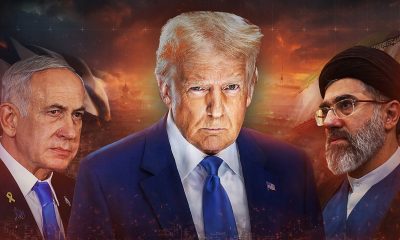
 Going forward, it is hoped that a reported ceasefire agreement between the US and Iran would provide a basis for a degree of stability in the Middle East and pave the way for substantive peace talks between the powers concerned. The world is compelled to fall back on hope because there is never knowing when President Donald Trump would change his mind and plans on matters of the first importance. So erratic has he been.
Yet, confusion abounds on who has agreed to what. The US President is on record that a number of conditions put forward by him to Iran to deescalate tensions have been accepted by the latter, whereas Iran is yet to state unambiguously that this is so. For instance, the US side claims that Iran has come clear on the point that it would not work towards acquiring a nuclear weapons capability, but there is no official confirmation by Iran that this is so. The same goes for the rest of the conditions.
Accordingly, the peace process between the US and Iran, if such a thing solidly exists, could be said to be mired in uncertainty. Nevertheless, the wider publics of the world are bound to welcome the prospects of some sort of ceasing of hostilities because it would have the effect of improving their economic and material well being which is today under a cloud.
However, questions of the first magnitude would continue to bedevil international politics and provide the breeding ground for continued tensions between East and West. Iran-US hostilities helped highlight some of these divisive issues and a deescalation of these tensions would not inevitably translate into even a temporary resolution of these questions. The world community would have no choice but to take them up and work towards comprehending them better and managing them more effectively.
For example, there are thorny questions arising from the Treaty on the Non-Proliferation of Nuclear Weapons (NPT). Essentially, this treaty bans the processing and use of nuclear weapons by states but some of the foremost powers are not signatories to it.
Moreover, the NPT does not provide for the destroying of nuclear arsenals by those signatory states which are already in possession of these WMDs. Consequently, there would be a glaring power imbalance between the latter nuclear-armed states and others which possess only conventional weapons.
Such a situation has grave implications for Iran’s security, for instance. The latter could argue, in view of the NPT restrictions, that the US poses a security threat to it but that it is debarred by the Treaty from developing a nuclear arms capability of its own to enable it to match the nuclear capability of the US. Moreover, its regional rival Israel is believed to possess a nuclear weapons capability.
Accordingly, a case could be made that the NPT is inherently unfair. The US would need to help resolve this vexatious matter going forward. But if it remains, US-Iran tensions would not prove easy to resolve. The same goes for Iran-Israeli tensions. Consequently, the Middle East would remain the proverbial ‘powder keg’.
Besides the above issues, the world has ample evidence that it could no longer speak in terms of a united NATO or West. Apparently, there could be no guarantee that US-NATO relations would remain untroubled in future, even if the current Iran-US standoff is peacefully resolved. US-NATO ties almost reached breaking point in the current crisis when the US President called on its NATO partners, particularly Britain, to help keep open the Hormuz Straits for easy navigation by commercial vessels, militarily, on seeing that such help was not forthcoming. Such questions are bound to remain sore points in intra-Western ties.
In other words, it would be imperative for the US’ NATO partners to help pull the US’ ‘chestnuts out of the fire’ going ahead. The question is, would NATO be willing to thus toe the US line even at the cost of its best interests.
For the West, these fractious issues are coming to the fore at a most unpropitious moment. The reality that could faze the West at present is the strong opposition shown to its efforts to bolster its power and influence by China and Russia. Right through the present crisis, the latter have stood by Iran, materially and morally. For instance, the most recent Security Council resolution spearheaded by the US which was strongly critical of Iran, was vetoed by China and Russia.
Accordingly, we have in the latter developments some marked polarities in international politics that could stand in the way of the West advancing its interests unchallenged. They point to progressively intensifying East-West tensions in international relations in the absence of consensuality.
It is only to be expected that given the substance of international politics that the West would be opposed by the East, read China and Russia, in any of the former’s efforts to advance its self interests unilaterally in ways that could be seen as illegitimate, but what is sorely needed at present is consensuality among the foremost powers if the world is to be ‘a less dangerous place to live in.’ Minus a focus on the latter, it would be a ‘no-win’ situation for all concerned.
It would be central to world stability for International Law to be upheld by all states and international actors. Military intervention by major powers in the internal affairs of other countries remains a principal cause of international mayhem. Both East and West are obliged to abide scrupulously with this principle.
From the latter viewpoint, not only did the West err in recent times, but the East did so as well. Iran, for instance, acted in gross violation of International Law when it attacked neighbouring Gulf states which are seen as US allies. Neither Iran nor the US-Israel combine have helped in advancing international law and order by thus taking the law into their own hands.
Unfortunately, the UN has been a passive spectator to these disruptive developments. It needs to play a more robust role in promoting world peace and in furthering consensual understanding among the principal powers in particular. The need is also urgent to advance UN reform and render the UN a vital instrument in furthering world peace. The East and West need to think alike and quickly on this urgent undertaking.
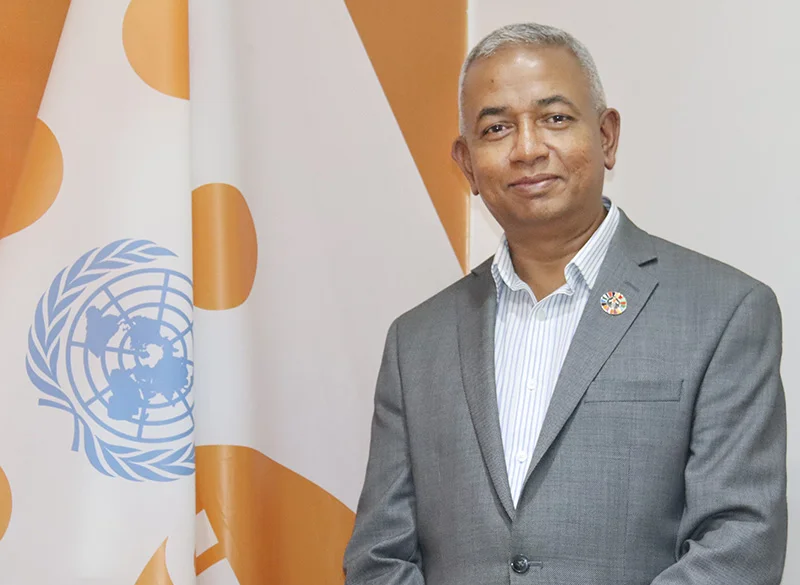
Marking World Health Day on April 7, health experts have called for a stronger commitment to science-based decision-making to address increasingly complex and evolving health challenges in Sri Lanka and beyond.
Dr. Dayanath Ranatunga, Assistant Representative of the United Nations Population Fund, stressed that health is no longer confined to hospitals or traditional medical systems, but is shaped by a broad spectrum of social, environmental, and technological factors.
“This year’s theme, ‘Together for Health. Stand with Science,’ reminds us that science is not only for laboratories or policymakers. It is a way of thinking and a tool that shapes everyday decisions,” he said.
Dr. Ranatunga noted that modern health challenges are increasingly interconnected, ranging from infectious diseases such as COVID-19 to climate-related risks, demographic shifts, and emerging forms of online violence.
He warned that maternal and newborn health continues to demand urgent attention despite progress. Globally, an estimated 260,000 women died from pregnancy and childbirth-related causes in 2023 alone—many of them preventable through timely, science-based interventions.
“In countries like Sri Lanka, where fertility rates are declining and survival rates improving, every pregnancy carries greater significance—not just for families, but for the future of communities and economies,” he said.
The UNFPA official also highlighted the growing threat of Technology Facilitated Gender-Based Violence (TFGBV), including cyber harassment and online abuse, noting that these forms of violence can have deep psychological consequences despite lacking visible physical harm.
He emphasised the need for multidisciplinary, science-informed approaches that integrate mental health, digital safety, and survivor-centered care.
Turning to demographic trends, Dr. Ranatunga pointed out that increasing life expectancy is bringing new challenges, particularly the rise of non-communicable diseases such as diabetes, cardiovascular illnesses, and cancers.
In Sri Lanka, nearly 13.9% of mothers develop diabetes during pregnancy, a trend attributed to obesity and unhealthy lifestyles, underscoring the urgent need for preventive healthcare strategies.
“Are we investing enough in prevention?” he asked, noting that early intervention and healthier lifestyles could significantly reduce long-term healthcare costs, especially in a country with a free public healthcare system.
He underscored the importance of data-driven policymaking, stating that scientific research and analytics enable governments to identify gaps, anticipate future needs, and allocate resources more effectively.
The UNFPA, he said, is already leveraging tools such as Geographic Information Systems (GIS) to improve access to maternal healthcare, including mapping travel times for pregnant women to reach health facilities.
Digital innovation is also transforming healthcare delivery, from telemedicine to real-time data systems, improving efficiency and ensuring continuity of care even during emergencies.
In Sri Lanka, partnerships between the government and development agencies are helping to modernise training institutions, including facilities in Batticaloa, equipping healthcare workers with both clinical and digital skills.
However, Dr. Ranatunga cautioned that technology alone is not a solution.
“It must be guided by evidence and grounded in equity,” he said, pointing out that women’s health remains significantly underfunded, with only about 7% of global healthcare research focusing on conditions specific to women.
He also drew attention to the growing health impacts of climate change, including extreme weather, food insecurity, and displacement, describing it as an emerging public health crisis.
“Health does not begin in hospitals. It is shaped by the environments we live in, the choices we make, and the systems we build,” he said.
Calling for renewed commitment, Dr. Ranatunga urged stakeholders to invest in prevention, embrace innovation, and ensure that science remains central to policy and practice.
“Science is not just about knowledge—it is about ensuring that everyone has the opportunity to live healthy, dignified lives, and that no one is left behind,” he added.
By Ifham Nizam

 Melantha Perera is well known as a very versatile musician.
He was involved with the band Mirage, as their keyboardist/vocalist, and was also seen in action with other outfits, as well, before embarking on a trip to Australia, as a solo artiste.
I now hear that he has plans to operate as a trio.
However, what has got many talking about Melantha, these days, is his awesome work with the visually impaired Bright Light Band.
They have worked out a special song for the Sinhala and Tamil New Year, aptly titled ‘Awurudu Kaale.’
Says Melantha: “This song has been created to celebrate the spirit of the Sinhala and Tamil New Year and to share the joy of the Awurudu season with all Sri Lankans”.
Yes, of course, Melantha composed the song, with the lyrics written collaboratively by Melantha, Badra, and the parents of the talented performers, whose creative input brought the song to life during moments of inspiration.
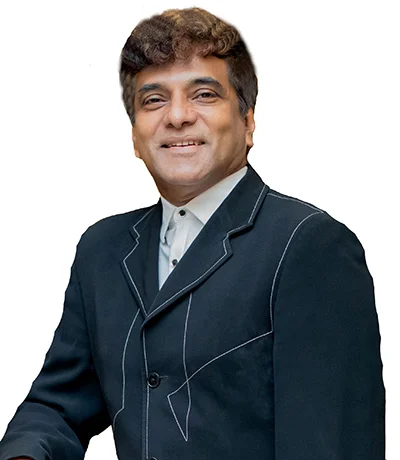
Melantha Perera: Awesome work with Bright Light Band
This meaningful collaboration reflects the strong community behind the Bright Light Band.
According to Melantha, accompaning the song is a vibrant video production that also features the involvement of the parents, highlighting unity, joy, and togetherness.
Beyond showcasing their musical talents, the visually impaired members of Bright Light Band deliver a powerful message, through this project, that their abilities extend beyond singing, as they also express themselves through movement and dance.
Melantha expressed his satisfaction with the outcome of the project and looks forward to sharing it with audiences across the country during this festive season.
He went on to say that Bright Light Band extends its sincere gratitude to Bcert Australia for their generous Mian sponsorship, the CEO of the company, Samath Fernando, for his continuous support in making such initiatives possible, and Rukshan Perera for his personal support and encouragement in bringing this project to completion.
The band also acknowledges Udara Fernando for his invaluable contribution, generously providing studio space and accommodating extended recording sessions to suit the children’s availability.
Appreciation is warmly extended to the parents, whose unwavering commitment from ensuring attendance at rehearsals to supporting the video production has been instrumental in the success of this project.
Through ‘Awurudu Kaale’, Bright Light Band hopes to spread festive cheer and inspire audiences, proving that passion and talent know no boundaries.

BCCI curbs movement of benched IPL players in latest rules

Prasidh trumps Miller in last-ball finish as Gujarat Titans clinch thriller

Greece to ban social media for under-15s from next year

Showers will occur at a few places in the Western, Sabaragamuwa and North-western provinces and in Galle, Matara, Kandy, Nuwara-Eliya and Mannar districts after 2.00 p.m.

Sun directly overhead Chilaw, Bingiriya, Halmillawewa, Panduwasnuwara, Gokarella, Kawudupelella, Koppaveli and Kirankulam about 12:12 noon. today (09)

Heat Index at Caution Level in the Western, Sabaragamuwa, Southern, Eastern, North-western, Northern and North-central provinces and in Monaragala district

‘Dates have the highest sugar content to fight Coronavirus’

Sunday Island 27 December – Headlines

#SundayIsland 17th December – Headlines

Sunday Island – 28th March

Sunday Island Headlines – 21 March

Sunday Island – 21st February – Headlines
-

 Features5 days ago
Ranjith Siyambalapitiya turns custodian of a rare living collection
-

 News4 days ago
Global ‘Walk for Peace’ to be held in Lanka
-

 News2 days ago
Lankan-origin actress Subashini found dead in India
-

 Opinion7 days ago
Hidden truth of Sri Lanka’s debt story: The untold narrative behind the report
-

 Features5 days ago
Beyond the Blue Skies: A Tribute to Captain Elmo Jayawardena
-

 Features5 days ago
Aspects of Ceylon/Sri Lanka Foreign Relations – 1948 to 1976
-
 Features6 days ago
The Ramadan War
-

 Editorial6 days ago
Brouhaha over a book