
Business
Export sector records Year-on-Year growth


Highlights•
The trade deficit narrowed in November 2023, compared to a year earlier and October 2023, as a combined impact of an improvement in exports and a compression in imports. Exports recorded a year-on-year growth for the first time since September 2022.
• Monthly workers’ remittances continued to exceed US dollars 500 million and recorded a notable increase in November 2023 compared to the corresponding period in 2022.
• Tourist arrivals soared during the festive season, contributing to high earnings from tourism.
• Foreign investments in the government securities market continued to record a net outflow since July 2023, but remains positive on a cumulative basis during the year.
• Gross Official Reserves amounted to US dollars 3.6 billion by end November 2023.
• The Sri Lanka rupee continued to remain stable against the US dollar during the month of November 2023.
Merchandise Trade Balance
The deficit in the merchandise trade account narrowed to US dollars 390 million in November 2023, compared to the deficit of US dollars 449 million recorded in November 2022 as well as US dollars 683 million recorded in October 2023. In the meantime, the cumulative deficit in the trade account during January to November 2023 narrowed to US dollars 4,414 million from US dollars 4,827 million recorded over the same period in 2022.
Performance of Merchandise Exports
Overall Exports: Earnings from merchandise exports recorded a year-on-year marginal increase in November 2023 for the first time since September 2022. Accordingly, earnings improved by 0.4 per cent to US dollars 999 million in November 2023, over November 2022 as well as over US dollars 928 million in October 2023. An increase in earnings was observed in agricultural exports and mineral exports, while a decline was recorded in industrial exports. Cumulative export earnings recorded a decline of 9.4 per cent during January to November 2023 to US dollars 10,909 million, over the same period in the last year.
Industrial Exports: Earnings from the exports of industrial goods declined in November 2023, with a significant share of the decline being contributed by garments. Accordingly, exports of garments to most of the major markets (the USA, the EU, and the UK) recorded declines. However, earnings from garment exports improved notably in November 2023, compared to October 2023. Further, declines were recorded in the exports of animal fodder (mainly, poultry feed and wheat residues); machinery
Agricultural Exports: Earnings from the exports of agricultural goods improved in November 2023, compared to a year ago, led by tea (mainly, instant tea) exports. An increase of earnings from overall tea exports resulted from the higher export volumes although the unit price of tea exports in November 2023 was lower than a year earlier. Further, export earnings from coconut related products (mainly, fibres and coconut oil) and spices (mainly, cinnamon) increased due to higher export volumes. Meanwhile, there was a decline in export earnings from minor agricultural products (primarily, areca nuts), natural rubber, and vegetables.
Mineral Exports: Earnings from mineral exports increased substantially in November 2023, compared to November 2022, mainly due to higher exports of zirconium ores.
Overall Imports: Expenditure on merchandise imports declined by 3.9 per cent (year-on-year) to US dollars 1,389 million in November 2023, compared to US dollars 1,445 million in November 2022 and US dollars 1,610 million in October 2023. A decline in import expenditure was observed in intermediate goods, mainly resulted from lower expenditure on fuel imports. However, an increase was recorded in imports of investment goods and consumer goods partly due to relaxation of import restrictions. Meanwhile, cumulative import expenditure during January to November 2023 declined by 9.1 per cent to US dollars 15,323 million over the corresponding period in the last year. CBSL

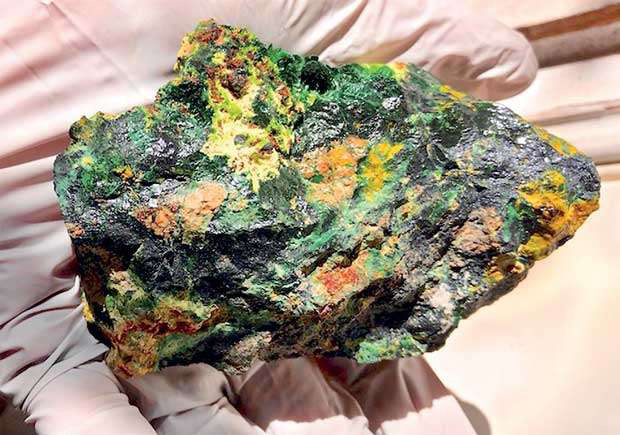
Sri Lanka stands on the brink of an economic transformation, powered not by traditional exports, but by the vast, untapped mineral wealth lying beneath its soil and off its shores. According to a comprehensive new business report launched by the Pathfinder Foundation in collaboration with the Australian Trade and Investment Commission, on 17th December in Colombo, the island’s mineral sector holds a staggering unrealised export potential of up to USD 2 billion.
Currently, Sri Lanka exports most of its high-purity minerals including world-renowned vein graphite, rare earth elements (REEs), and mineral sands in raw or semi-processed form, capturing only a fraction of their true value. The report reveals that while current exports to top destinations total about USD 389 million, the achievable potential is estimated at USD 778 million, with the full downstream value-add opportunity reaching several times that figure.
“Sri Lanka has great potential for exports,” stated Australian High Commissioner Matthew Duckworth at the report’s launch. “It is not only about mining but also about refining – moving up the value chain to get significantly higher export earnings.”
The nation is endowed with critical resources essential for global clean energy and high-tech supply chains. This includes an estimated 5 million tonnes of graphite (with purity up to 99.9%), over 600 million tonnes of mineral sands containing REEs like neodymium, and the massive Eppawala phosphate deposit, which alone holds 60 million tonnes of phosphate-bearing material. Experts believe even these numbers may be conservative due to a lack of island-wide surveys, pointing to major exploration opportunities.
However, realising this potential requires urgent action. The report identifies systemic barriers: a fragmented regulatory framework involving over 18 agencies, slow licensing, infrastructure gaps, and outdated mining methods. These challenges have discouraged investment and prevented value addition.
The path forward is clear. The government is already moving to modernise the approval process via a unified digital platform and is crafting a national critical minerals strategy. The report emphasises that success hinges on attracting foreign expertise and investment, particularly in downstream processing – turning graphite into battery-grade material, refining rare earths, and processing mineral sands domestically.
Australia, with its global leadership in sustainable mining and technology, is positioned as a key partner. Australian METS (Mining Equipment, Technology, and Services) companies can bring advanced technology, ESG-compliant practices, and training, potentially reducing operational costs by 30-40% while improving recovery rates.
“For Sri Lanka, the stakes are high. Developing a modern, sustainable mineral sector can diversify the economy, create high-value jobs, build resilience, and integrate the nation into strategic global supply chains,” the Australian High Commissioner noted. The message from the report is one of urgent optimism: the resources are here, the international partners are ready, and the roadmap is laid out. Now is the time for policymakers, investors, and stakeholders to come together to unlock this buried treasure for the benefit of all Sri Lankans.
By Sanath Nanayakkare
Business
Environmental damage now a direct threat to telecom operations, SLT chief warns at 2026 calendar launch

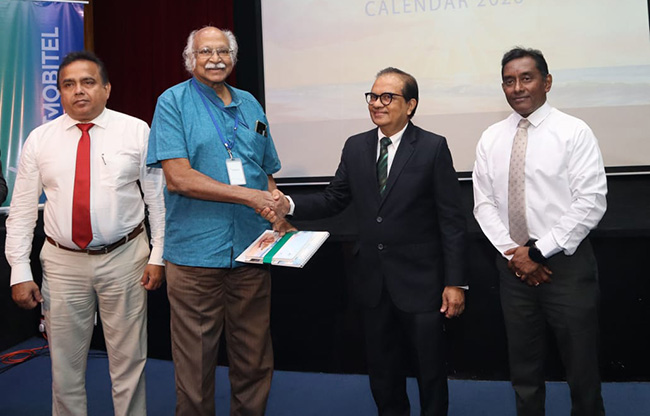
Environmental destruction is no longer an abstract environmental concern but a direct business risk, Sri Lanka Telecom/Mobitel Chairman Dr. Mothilal de Silva warned, as the national telecom giant launched its 2026 corporate calendar linking climate change, marine degradation and network stability.
Unveiling the calendar, Dr. de Silva said the initiative was not a ceremonial exercise but a corporate statement on responsibility and survival. “Today we are not just unveiling a calendar; we are sharing a story — a story of beauty, resilience and profound responsibility,” he said, stressing that environmental protection had become business-integral for SLT.
The 2026 SLT-Mobitel desk and digital calendar takes viewers beneath Sri Lanka’s seas, focusing on the intricate forms of marine shells and clams. Created by renowned artists Pulasthi Ediriweera and Nalin Jayarathna, the artworks portray seashells as both natural marvels of design and lasting symbols of fragile marine life.
“Each shell is a protective home — a permanent memorabilia left by gentle creatures,” Dr. de Silva said. “In their form and pattern, they send us a silent message about their presence and their urgent need for protection.”
Drawing a direct link between ecological degradation and recent climate-related disasters, Dr. de Silva rejected attempts to mask environmental realities. “You cannot cover this up with fake news. The destruction of forests, hill-country ecosystems, tea estates and irresponsible land use has created these calamities,” he said, referring to recent cyclonic events and flooding.
He warned that climate change and rising sea levels were already affecting SLT’s core infrastructure. Sri Lanka’s international connectivity depends on five subsea communication cables landing in Colombo and Matara. “Unusual sea-level rise and abnormal tides have already caused network outages. When the sea is disturbed, it directly affects the quality and reliability of our network,” he said.
Dr. de Silva said SLT and its international consortium partners follow strict environmental safeguards when laying, maintaining and even disposing of subsea cables. These include detailed environmental surveys, route planning to avoid sensitive marine ecosystems and specialised installation techniques. Cable repair operations based in Galle, he added, also adhere to stringent environmental standards.
“Our work is fundamentally about connection — connecting people, businesses and nations. But this connection must be built with care for the environment that hosts it,” he said, noting that sustainability was not merely a corporate social responsibility obligation but essential to business continuity.
Marine naturalist Dr. Malik Fernando, addressing the launch, highlighted Sri Lanka’s rich but inadequately studied seashell diversity. He said several marine and freshwater mollusc species were protected under existing laws, yet continued to appear in markets due to weak enforcement.
Some shells, including cone shells, are highly venomous and capable of causing human fatalities, Dr. Fernando noted, underscoring the risks posed by unregulated collection. While many mollusc species are widely dispersed due to larval movement, he said certain rare species recorded from limited locations could be near-endemic and vulnerable to extinction.
Dr. Fernando also pointed to the broader challenge of biodiversity research, noting that many species remain unidentified due to the lack of systematic field studies, despite improved access to global scientific resources through digital platforms.
In concluding remarks, Dr. de Silva called on the media to play a responsible role in conveying environmental truths to the public and suggested that the calendar be shared internationally, including at future UN climate conferences. “A digitally empowered Sri Lanka must go hand in hand with preserving its natural wonders,” he said. “This calendar is a reminder that protecting the environment is not optional — it is essential for our future.”
By Ifham Nizam
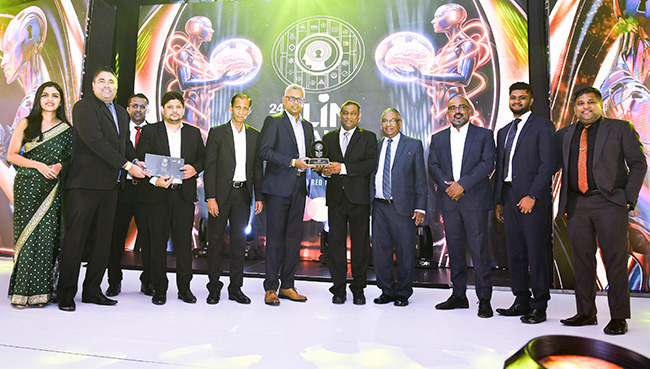
Tokyo Cement Group’s longstanding commitment to social progress and sustainability was honoured with a CSR Brand of the Year Merit Award at the SLIM Brand Excellence 2025 Awards ceremony held recently. The accolade recognises the Group’s flagship environmental conservation and community empowerment initiatives, designed to drive national transformation through meaningful, measurable CSR initiatives.
The Tokyo Cement led environmental stewardship programmes appraised by the award includes mangrove restoration, forest plant nurseries, coral reef rehabilitation, and marine biodiversity conservation projects, aimed at creating a sustainable and greener future. Through decades of collaborative engagement with expert project partners Tokyo Cement has delivered remarkable milestones in each focus area. This includes planting nearly 100,000 mangrove saplings along the Northern and Eastern coastlines and supplying over 116,000 forest trees nurtured at its own nurseries. The company’s Coral Reef Rehabilitation project, which upcycles ready-mixed concrete waste, has deployed more than 1,000 Reef Balls that act as artificial reef substrates at critical reef restoration sites around the island.
Among Tokyo Cement’s most influential sustainability initiatives is its Renewable Energy Programme that makes its entire local manufacturing process 100% energy independent through an installed capacity of 24MW. With the support of nearly 2,500 farming families across the Mahiyangana, Badulla, Monaragala, Trincomalee, Kilinochchi, and Jaffna districts, who have helped plant more than 10 million Gliricidia trees, the company plays a key role in mobilising the country’s rural economy.

Ex-Nascar driver and his family among seven killed in US plane crash

TikTok owner signs agreements to avoid US ban

Violence breaks out in Bangladesh after death of youth protest leader

Financial contribution from Gift Sri Lanka Foundation and the Georgia Buddhist Vihara, USA, for disaster relief

European Union provides over Euro 2.35 million Humanitarian Assistance to Sri Lanka

Tannane goal from own half sets Morocco on way to FIFA Arab Cup 2025 title

‘Dates have the highest sugar content to fight Coronavirus’

Sunday Island 27 December – Headlines

#SundayIsland 17th December – Headlines

Sunday Island – 28th March

Sunday Island Headlines – 21 March

Sunday Island – 21st February – Headlines
-

 Features5 days ago
Why Sri Lanka Still Has No Doppler Radar – and Who Should Be Held Accountable
-

 News1 day ago
Pakistan hands over 200 tonnes of humanitarian aid to Lanka
-

 Midweek Review2 days ago
How massive Akuregoda defence complex was built with proceeds from sale of Galle Face land to Shangri-La
-

 News1 day ago
Pope fires broadside: ‘The Holy See won’t be a silent bystander to the grave disparities, injustices, and fundamental human rights violations’
-

 Latest News5 days ago
Landslide early warnings in force in the Districts of Badulla, Kandy, Kegalle, Kurunegala, Matale, Nuwara Eliya and Ratnapura
-

 News6 days ago
Govt. okays postgraduate medical training for Maldivian medical officers and dental surgeons
-

 Features5 days ago
Srima Dissanayake runs for president and I get sidelined in the UNP
-

 Editorial5 days ago
Disaster relief and shocking allegations