
Sports
Ethir: Legendary high jumper and humanitarian


On Thursday, 18 April 2024 at 11:55 am Dr. Nagalingam Ethirveerasingam (PhD) passed away peacefully at his home in Los Angeles, California, USA. He was surrounded by his family. He was 89 years old.
Nagalingam Ethirveerasingam (Ethir) was born in 1934 in a one-room hut with a palmyrah palm leaf roof and a mud floor in Periyavillan, a small village on the Jaffna Peninsula. He taught himself to high jump in his backyard by analysing pictures in an athletics book he had won as a prize after one of his first meets at Jaffna Central College.
He made a silent promise to himself that he would make it to the Olympics after watching a newsreel of the 1948 Olympic Games at a theatre in Jaffna Town. Four years later, at the age of 17, he competed at the 1952 Olympic Games in Helsinki, Finland. His athletics journey continued as he went on to compete at the 1956 Melbourne Olympic Games and won the first Gold Medal in any sport for Ceylon at the 1958 Asian Games in Toyoko, followed by a Silver Medal at the 1962 Asian Games In Jakarta, Indonesia.
Ethir broke high jump records at every age while at Jaffna Central College, performing strengthening exercises with homemade weights using old bus axles and other bus parts. After winning the National Meet in Colombo in 1951, he finally acquired a specialist athletics coach, P.E. Rajendra, and a workout regime. He was then selected to be on the team for the 1952 Olympic Games in Helsinki, traveling by ship for over one month to reach Finland. He next participated in the 1954 Asian Games, where he placed fourth despite jumping the same height as the medal winners, setting a new Asian Record that he shared with them.
In 1955 and 1956, Ethir was voted the Ceylon Daily News “Sports Star of the Year.” He transferred to St. Joseph’s College, Colombo, for his ‘A’ Levels and to be nearer his coach. In 1956, he was awarded a full athletic scholarship to the University of California, Los Angeles (UCLA). He later earned a Master’s Degree from California Polytechnic University, San Luis Obispo, and a PhD from Cornell University in 1971.
In 1958, despite co-holding the Asian High Jump record, as well as the Ceylon record, he was initially not selected to be on the team for the Asian Games in Tokyo, Japan. However, due to a series of newspaper articles written by Daily News Sports Editor Carlton Seneviratne, the selection committee relented, allowing Ethir to participate.
But being selected so late, the committee told him he had to find and pay his own way to Tokyo from Los Angeles. A benefactor, Donavan Andre, donated US$ 5,000 for his travel just a few days before the games. He arrived shortly before the Games began, wearing his UCLA track suit with the Ceylon insignia patch pinned on, as he wasn’t provided with a uniform by the association. His fellow teammates then elected him captain of the team.
Ethir not only won the Gold Medal but also set a new Asian and Ceylon record of 6 feet 8 inches (2.03 meters). His Ceylon record lasted until 1989. Meanwhile, back in Ceylon, the 1958 Anti-Tamil riots were occurring at the same time that he was competing. He was unaware of the events unfolding in his country until he spoke to his brother upon returning to the USA.
History repeated itself in 1960 and 1962. In 1960, despite being the Asian and Ceylon High Jump record holder, and jumping the qualifying height for the Olympics, he was not selected for the Mexico City Olympic Games. Again, in 1962, a campaign was required for his selection, and he won a Silver Medal at the Asian Games in Jakarta.
Ethir was a witness to several pivotal events in the troubled pre-war history of Ceylon/Sri Lanka. In 1956, he was almost killed when he and two friends went to observe the Federal Party’s Satyagraha at the Galle Face esplanade against the “Sinhala Only Bill” that was to be introduced in Parliament. In the attacks against the peaceful protesters that ensued and anti-Tamil riots that spread across the country, Ethir and his two friends were almost killed by rioters. Fortunately, one of the rioters recognised him from the pictures in the newspapers when he won the Ceylon “Sports Star of the Year” award. This man then took them into a pharmacy and told the pharmacist to let them stay until it was safe.
Another historic event that he witnessed was the 20 February 1961 Satyagraha at the Jaffna Kachcheri by members of the Tamil political parties. This peaceful protest was also met with violence by the state.
After graduating from UCLA with a bachelor’s degree, he returned to Ceylon but struggled to find employment in his field – Agriculture Education. He returned to the United States to earn his Master’s Degree and then attempted to find employment in Ceylon again. However, like many thousands of Tamils, he was unable to do so and instead accepted an offer to teach in Sierra Leone at the University of Njala. Over his academic career, he worked at Universities in Sierra Leone, Nigeria, and Papua New Guinea. He also worked for UNESCO.
It was in 1965 in Sierra Leone that he met and married the love of his life, Juliet Ann Power. She had joined the US Peace Corps after graduating from university and was also posted to Sierra Leone. They had three children and eight grandchildren and would have celebrated their 58th wedding anniversary in May of this year.
In 1994, after retiring at the age of sixty, Ethir wanted to ‘give back’ to his country and people for all the support he had received during his athletics career. He applied for a position at the University of Jaffna, Kilinochchi Campus (Agriculture) at the height of the war. His application was accepted and despite the dangers due to the ongoing war and severe embargoes on fuel, electricity, medicine, and other essential items to most of Northern Sri Lanka, he returned to his homeland to work in the LTTE-controlled Vanni on a one-year contract.
Rather than working for only one year and returning to the US, he stayed on in the Vanni as an unpaid volunteer after his contract ended, working tirelessly on humanitarian, education, and sports projects to aid civilians impacted by the conflict. He was in Kilinochchi in October 1995 when 500,000 civilians were displaced from the Jaffna Peninsula to the Vanni and other areas. He was part of the team in Kilinochchi that received the Internally Displaced Persons and coordinated their emergency food and shelter.
He felt that all his training and academic career had prepared him for this mission and remained an unpaid volunteer for the rest of his life; living and working in the North & East of Sri Lanka for 6 to 10 months of every year from 1994 until the COVID pandemic in 2020. He relied on benefactors in the Tamil Diaspora and the support of his wife, Juliet, to cover his expenses. His work focused on education, sports, and helping the most marginalised communities. All his life he was a forceful opponent of the caste system.
His last trip to Sri Lanka, whose citizenship he never relinquished despite being eligible for US citizenship, was February to April of 2023 when, at the age of 88 and despite contracting COVID while in Jaffna, he gave workshops in Jaffna and Kilinochchi for athletics coaches and athletes on coaching methods and talent recognition.
During the years from 1994 until the end of the war, Ethir worked tirelessly for peace and a negotiated end to the war. He traveled the world, meeting with governments, political leaders, human rights groups, and the Tamil Diaspora to advocate for civilians affected by the war, and later, the 2004 Tsunami. Some of the most important work was what he accomplished after the end of the war in 2009. His sporting achievements and fame ensured that he had access to and was well respected by all sides in the conflict. As a result, he was able to meet with and act as a conduit for unofficial messages between the warring parties aimed at creating the conditions for peace talks. The Harvard Initiative in 1997 was one of these efforts, which like countless others unfortunately failed.
He directly impacted thousands of people through humanitarian and development projects in education and sports for war and tsunami-affected persons, inspiring others to live selflessly and work for the betterment of society. These projects and initiatives spanned various sectors and included the differently-abled for whom he was a lifelong advocate. Notably, after the war ended he co-conceived the SERVE Institute, which made educational videos that were distributed to schools throughout the North and East. Due to the lack of qualified teachers in some of the remote areas of the North and East most severely affected by the war, especially the areas inhabited by marginalised persons due to their caste. The Institute made videos in Tamil of expert teachers.
teaching lessons in Mathematics, Chemistry, Physics, and other subjects and distributed these to schools throughout the North and East. They were a valuable resource for students when the COVID pandemic made attending school impossible.
Ethir was also the force behind the groundbreaking study of the Northern education system in 2014 that consulted thousand of parents, educators, community leaders, and administrative staff. The resulting Northern Education System Review (NERS) made wide-ranging, revolutionary recommendations to improve the education system. Many of these recommendations were incorporated by the Northern Province Ministry of Education. The National Ministry of Education in Colombo was also impressed and incorporated some of the recommendations and conducted similar studies in other parts of the country. (Link to the report: https://www.edudept.np.gov.lk/reviewreporteng.html)
Ethir believed in helping people no matter their ethnicity, religion, or linguistic background. In his travels and coaching throughout Sri Lanka, he identified athletes who he thought could compete at an international level. The first of these was Manjula Kumara Wijesekara, who would go on to be the Sri Lankan record holder in High Jump. Manjula could only speak a little English and Ethir almost no Sinhalese when Ethir invited him to the US to live with his family in Los Angeles. Manjula lived with Ethir’s family for a year during which Ethir coached him and he took intensive English classes. He eventually earned a full scholarship to the University of Southern California (USC).
Ethir did the same with current Sri Lankan high jump record holder Ushan Thiwanka Perera, and high jumpers Nalin Priyadarshana, and Purnima Gunarathna who all stayed at his home in LA while he coached them and assisted them in their quest to receive scholarships to US universities.
Sri Lankan Olympic Silver medalist Susanthika Jayasinghe also stayed at his home and was coached by him for three months in 2007 when she made her ‘comeback’ to athletics. She won the Bronze medal at the World Championships in Osaka, Japan that year. Both Susanthika and Manjula helped in post-war coaching clinics that Ethir conducted in Northern Sri Lanka.
In 1998, Sri Lankan President Chandrika Kumaratunga Bandaranaike offered him the honorific ‘Deshabandu,’ which he respectfully declined, stating in his letter to her, “I cannot in good conscience accept such a title when my people are suffering and the war is continuing.”
He was the last of his six siblings: brothers Sellathurai Nithiyanantham, Nagalingam Ratnasingam, Nagalingam Rajasingam, Nagalingam Segarajasingam, Nagalingam Pararajasingam, and sister Parameswary Nadarajah.
Nagalingam Ethirveerasingam is survived by his wife of 57 years, Juliet Ethirveerasingam (Power); his children Sakunthala, Nahulan, and Arjunan; his eight grandchildren Ryan Corsaut, Samantha Quezada, Cassandra Quezada, Benjamin Quezada, Devin Ethirveerasingam, Lila Ethirveerasingam, Hayden Ethirveerasingam, and Nara Ethirveerasingam; his son-in-law Paul
Quezada, and daughters-in-law Jennifer Ethirveerasingam and Nimmi Harasgama.


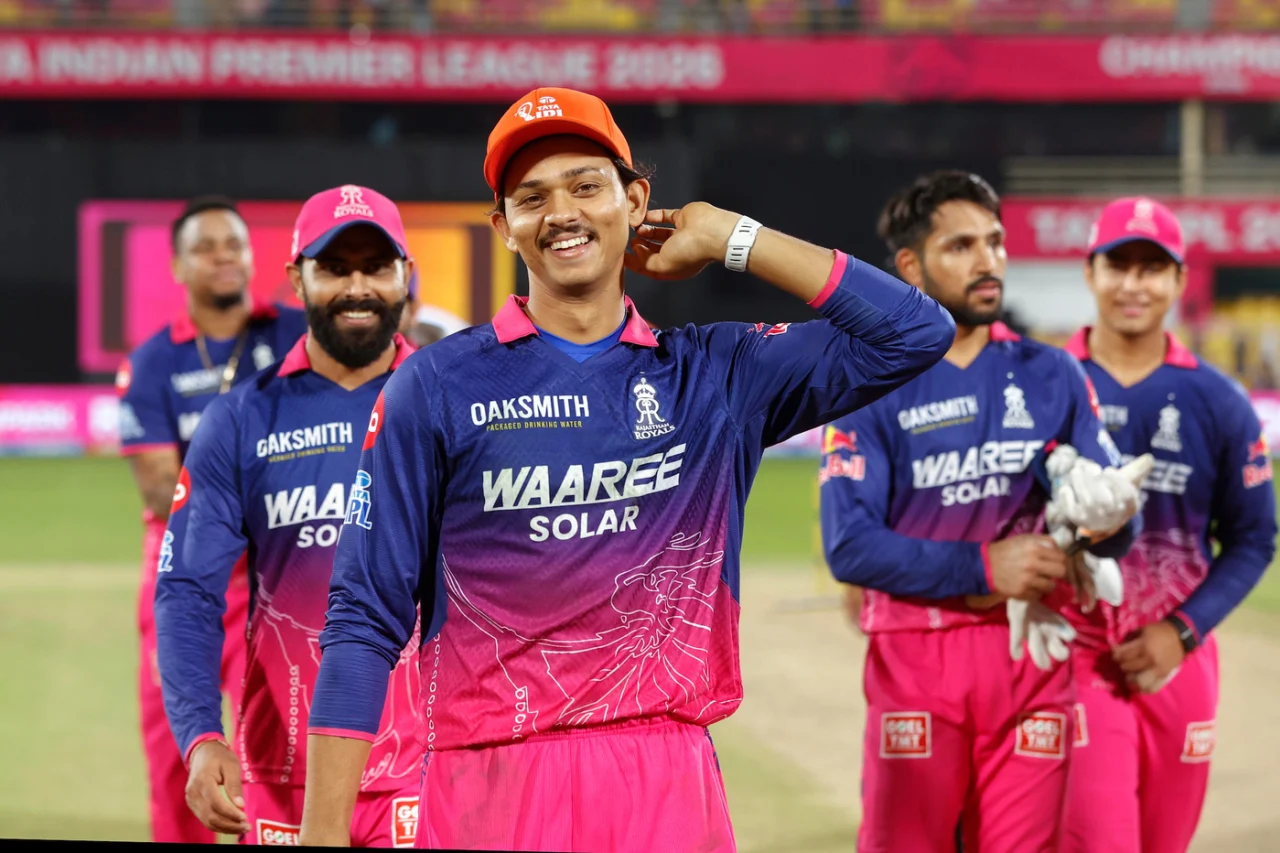
Heavy rain in Guwahati delayed the start of the match between Rajasthan Royals (RR) and Mumbai Indians (MI) by more than two and a half hours. And when play finally began at 10.10 pm, there was another storm awaiting MI.
RR’s openers Yashasvi Jaiswal and Vaibhav Sooriyavanshi ransacked 80 runs in five overs. Sooryavanshi was eventually dismissed for 39 off 14, but Jaiswal rampaged unbeaten through the 11-over innings, scoring 77 off 32 to power RR to 150 for 3.
In reply, MI lost three wickets inside the powerplay, which was reduced to 3.2 overs, and were eventually restricted to 123 for 9. Jofra Archer had provided the first breakthrough, and Sandeep Sharma, Nandre Burger and Ravi Bishnoi picked up two wickets apiece. RR moved to the top of the points table with three wins in three games, while MI suffered their second successive defeat.
Sooryavanshi and Jaiswal don’t need to be told to be aggressive, and that natural instinct was heightened in a rain-shortened contest. If there was any moisture in the pitch due to the weather, there was no evidence of it in the powerplay. MI chose to give the first over not to Trent Boult but to Deepak Chahar and Jaiswal tore into him: 4, 6, 4, 0, 4, 4.
Then came the highly-anticipated battle: 15-year old Vaibhav Sooryavanshi facing Jasprit Bumrah for the first time in his fledgling career. How would he approach one of the greatest bowlers in the game? Bumrah’s first ball was a slot ball. Sooryavanshi played the delivery and not the deliverer, and smashed it over the long-on boundary. The strike rotated back to him over the next two balls, and when Bumrah tested him with an off-pace delivery, Sooryavanshi swivelled and pulled him for another six over deep backward square leg. Round one – 13 off 5 balls – to Sooryavanshi.
Boult came on for the third over and Jaiswal cleared the deep square leg boundary twice and Sooryavanshi once, and by the time the 20-ball powerplay was finished, RR were 59 for 0.
Jaiswal is usually boom or bust against MI. Before this match, he had two centuries and five scores of less than 15 in eight innings against them. On Tuesday, he went boom again, smashing four fours and three sixes in his first nine deliveries. He got to fifty off 23 balls by cracking Hardik Pandya through point.
Sooryavanshi fell to the golden arm of Shardul Thakur, Dhruv Jurel and Riyan Parag fell to the mystery spin of AM Ghazanfar, but Jaiswal didn’t stop. He clobbered Bumrah for a straight six and picked three fours off Shardul in the final over to take RR to 150.
Like they had with the ball, MI suffered 20 balls of powerplay mayhem with the bat. Facing an asking rate of nearly 14, Ryan Rickelton swung Jofra Archer for six over deep midwicket but then top-edged another pull and was caught by Jurel running back. Suryakumar Yadav paddled Nandre Burger for the flattest of sixes over fine leg but was deceived by a hard-length offcutter and caught at deep backward square a ball later. Rohit was pinned lbw for the sixth time in 13 IPL innings by Sandeep. While RR’s powerplay score was 59 for 0; MI responded with 29 for 3.
The pitch had become a little tacky as the match progressed and the RR quicks adapted by using their cutters to good effect. Legspinner Ravi Bishnoi extended his lead at the top of the Purple Cap charts by dismissing Hardik and Tilak Varma in his first over, reducing MI to 46 for 5 after five overs. He should have had a third in his next over, when Sherfane Rutherford miscued to long-on but Jaiswal dropped the chance.
With the required rate soaring to past 17 an over, Naman Dhir and Rutherford tried to revive the chase with a partnership of 47 in 17 balls. But any slim hope MI may have had was extinguished when Sandeep dived forward at short third to take a low catch to end Rutherford’s innings. Burger, Sandeep and Archer closed out the innings to seal RR’s victory by 27 runs.
Brief scores: [11 overs per team]
Rajasthan Royals 150 for 3 in 11 overs (Yashasvi Jaiswal 77*, Vaibhav Sooryavanshi 39, Riyan Parag 20; Shardul Thakur 1-36, AM Ghazanfar 2-21) beat Mumbai Indians 123 for 9 in 11 overs (Tilak Varma 14, Sherfane Rutherford 25, Naman Dhir 25; Jofra Archer 1-17, Nandre Burger 2-21, Sandeep Sharma 2-26, Tushar Deshpande 1-29, Ravi Bishnoi 2-25) by 27 runs
[Cricinfo]

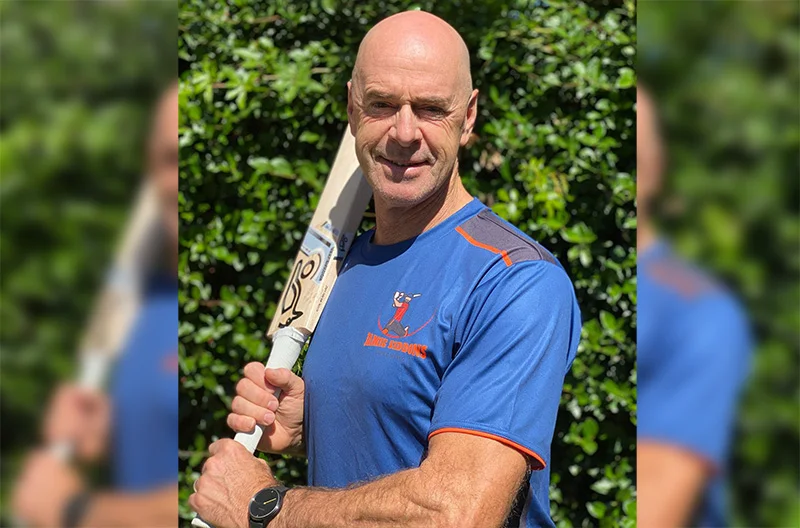
Sri Lanka have turned to seasoned Australian campaigner Jammie Siddons to steady the ship and sharpen their edge, with the new women’s head coach making it clear that toppling heavyweights, not merely making up the numbers, will be the name of the game.
Siddons, a well-travelled coach with miles on the clock, has set his sights firmly on the upcoming Women’s World Cup in England, where Sri Lanka will open proceedings against the hosts at Edgbaston in June. It’s a baptism by fire, England in their own backyard, but the message from the dressing room is simple: try and beat top teams regularly.
Drawn alongside England, West Indies, New Zealand, Ireland and Scotland in a six-team group, Sri Lanka know there’s little room for passengers. It’s sink or swim.
“The World Cup is our big focus and we’ve got some tough games coming up,” Siddons told reporters on the sidelines of a floodlit training session at the CCC. “England at home will be a hard nut to crack. West Indies and New Zealand are quality sides as well.”
Before the main event, Sri Lanka will have a dress rehearsal in Bangladesh, a chance to blood fresh faces.
“We’re heading to Bangladesh before the World Cup and that gives us an opportunity to look at some of the new players coming through,” Siddons added, casting an eye on the next crop.
Sri Lanka’s women have made steady strides over the past two years under Rumesh Rathnayake, but as any seasoned observer will tell you, fine margins often decide games at this level and there are still a few loose ends to tie up.
Fielding, particularly in the deep, has been their Achilles’ heel. Dropped catches have cost them dear, while a lack of firepower with the bat has meant they’ve often been caught playing catch-up against the game’s heavyweights; Australia, England and India.
“From a bowling perspective, we need a few more tricks in the bag. The girls have to develop variations, slower balls, cutters and cut down the boundaries. That’s something we’ve been working on,” he said, underlining the need to outthink rather than outmuscle opponents.
For years, Sri Lanka have leaned heavily on the broad shoulders of Chamari Atapattu, their talisman, their match-winner, their go-to player when the chips are down. Siddons knows that while Chamari remains the crown jewel, cricket is no one-woman show.
“She’s our major player and we’ve depended a lot on her,” he admitted. “But we need a few more to put their hands up. Chamari still has plenty to offer.”
Encouragingly, Siddons has already spotted bright talents in the pace department, a rare commodity in the women’s game in Sri Lanka.
“I’ve seen a couple of very exciting fast bowling talents who haven’t played much yet. They could be key for us,” he said, hinting at new-ball options that could ruffle a few feathers.
Off the field, Sri Lanka Cricket has invested heavily over the last five years, the board has cast the net wide taking the game to schools, strengthening domestic competitions and ensuring a steady pipeline of talent.
There has been no shortage of cricket either, with bilateral series home and away giving players valuable time in the middle. The Under-19 side is currently cutting its teeth in Australia, while development squads are being kept busy with regular tours and fixtures.
Central contracts and match fees are now part of the furniture, a far cry from the hand-to-mouth existence of yesteryear, though there remains room for improvement.
An absorbing contest is on the cards during the morning session on the final day as the next 28 overs are likely to decide the finalist from the first semi final of the Under 19 Division I Tier ‘A’ tournament between St. Joseph’s College and Prince of Wales College at the D.H.H. Ground, Madampella today.
The semi-final moved towards a tense first innings finish after Prince of Wales reached 242 for five at stumps on the second day in reply to St. Joseph’s commanding first innings total of 354.
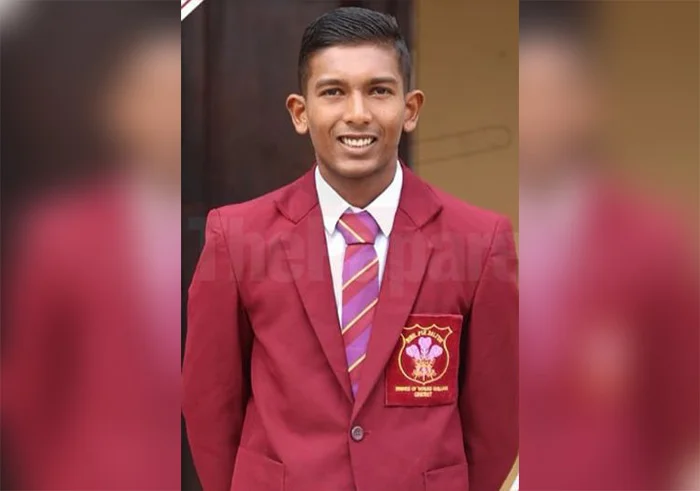
Open batsman Thusindu Deemantha played a remarkable innings of patience and determination, remaining unbeaten on 102 to keep the Cambrians’ hopes alive. His knock clearly reflected Prince of Wales’ strategy of batting for first innings points against the strong Darley Road outfit.
Deemantha displayed admirable grit to anchor the innings, facing as many as 248 deliveries during his stay at the crease. His unbeaten century included eight boundaries and he is set to resume his innings for a third consecutive day today after having first walked in to bat on Monday evening.
From the outset it was evident that Prince of Wales were aiming to stretch their innings as long as possible in pursuit of first innings advantage. According to tournament regulations, the first innings is restricted to 120 overs and the Cambrians now have 28 overs remaining to surpass the Josephian total.
St. Joseph’s bowlers will be eager to make early breakthroughs and expose the lower order to their formidable spin trio of Vigneswaran Akash, Vishwa Peiris and Nushan Perera. The three spinners dominated proceedings on the second day, accounting for 76 of the 92 overs bowled to Prince of Wales.
While Nushan Perera and Vishwa Peiris maintained tight control with economy rates below 2.5 runs per over, Akash bowled his 20 overs for just over three runs an over. Peiris was the most successful among them with two wickets.
For Prince of Wales, Oshan Maneesha contributed a valuable 38 runs while Gavesha Fernando played an important supporting role. Fernando joined Deemantha in a crucial 108-run fourth wicket partnership that steadied the innings and carried the Cambrians closer to the Josephian total.
With Deemantha firmly set at the crease and the Cambrians still needing to close the gap, the opening session today promises a gripping battle as both teams fight for a place in the final. (RF)

Trump announces two-week ceasefire as Iran agrees to reopen Hormuz Strait

Yashasvi Jaiswal powers Royals past Mumbai Indians in 11-over thrash

Showers will occur at several places in the Western, Sabaragamuwa, Southern and North-western provinces and in Kandy, Nuwara-Eliya and Monaragala districts after 1.00 p.m.

The Sun is directly overhead Warakapola, Aranayaka, Gampola, Bibile, Inginiyagala, and Akkaraipattu at about 12:12 noon today (08)

AKD admits import of substandard coal, blames technicalities and supplier

‘Sri Lanka – China relations: Community with a Shared Future’ launched

‘Dates have the highest sugar content to fight Coronavirus’

Sunday Island 27 December – Headlines

#SundayIsland 17th December – Headlines

Sunday Island – 28th March

Sunday Island Headlines – 21 March

Sunday Island – 21st February – Headlines
-

 Features4 days ago
Ranjith Siyambalapitiya turns custodian of a rare living collection
-

 News7 days ago
2025 GCE AL: 62% qualify for Uni entrance; results of 111 suspended
-

 News4 days ago
Global ‘Walk for Peace’ to be held in Lanka
-

 Editorial7 days ago
Search for Easter Sunday terror mastermind
-

 News2 days ago
Lankan-origin actress Subashini found dead in India
-

 Opinion6 days ago
Hidden truth of Sri Lanka’s debt story: The untold narrative behind the report
-

 Opinion7 days ago
Is there hope for Palestine?
-

 Features4 days ago
Beyond the Blue Skies: A Tribute to Captain Elmo Jayawardena