
Opinion
Estate sector wage hike and other matters


by Dr. Upatissa Pethiyagoda
President Ranil Wickremesinghe has received praise for increasing plantation workers’ daily wage to Rs. 1,700 from Rs. 1,000.The wage hike has led to protests by the plantation owners. It is not unusual for politicians to make rash promises from May Day platforms, which haven’t the faintest chance of implementation. Cheering crowds are the dream of most politicians.
Our plantation sector is exemplary (perhaps even unique) in the manner in which it keeps its records. Every item of expense, from a broom for the office, to roof repairs to the Superintendent’s bungalow, gets translated into the “cost of production”. So is labour, as a very large cost item. Thus, tinkering with the cost structure is very dangerous, almost irresponsible. I presume that even after acquisition by the State, these time-tested and healthy procedures are observed.
Naturally, the estate management is deeply sensitive to price changes, be it for fertiliser, fuel or labour.The trade unions in the plantation sector (for example, the CWC of the late S. Thondaman), are very powerful. Thus, any attempted retraction of the promised wage increase will draw a vehement response from the unions.
The Department of Labour has set up a number of Wages Boards, to establish wage levels that are fair to both employees and employers. I served on one of them briefly, but it was long enough for me to witness the hard bargaining between the representatives of contending parties. They are by no means trivial, but extremely “hard-nosed.” Thus, irresponsible and hasty changes will meet with sturdy resistance by parties who have laboured hard, to achieve some balance and compromise, and finally to reach some agreement. Any impetuous, ill-considered and rash changes of convenience, will deservedly be strongly resisted. Otherwise, the tortuous negotiations of the Wages Boards will become irrelevant.
Plantation owners argue that the present high cost of production and low prices, do not permit them to accommodate any wage increases. This will compel them to abandon production. One understands that tea and rubber prices have been fluctuating due to circumstances beyond our control.
A remedy seems to be developing industries that will drive the sector to trade in finished products, (e. g. tea bags or tyres), rather than as raw material for industries abroad. If a plantation industry is so beleaguered that it cannot pay its labour a fair wage without incurring a loss, then they should be growing something else. The tea industry for example has developed strengths and discipline, which, if applied elsewhere, may yield good results.
An industry in the present world cannot survive on unproven slogans. Kodak and Remington have disappeared with the advent of digital cameras and laptop computers. Nearer home, tea prevailed over coffee, which was devastated by the “Coffee Rust ” fungus (Hemeleia vastatrix). If tea could do it to coffee, why not something else to do it to tea?
There is evidence of the dire effects on the fertility of soils, following long periods of cultivation of tea. It is clear that intensive focus (research) on this matter is warranted.
(i) Soil pH, fertility and erosion.
Generally, most crops thrive at a soil pH of around 7.0 (neutral). Tea soils are generally very acidic, with pH values between 4.5 and 5.0. It is to be noted that a single digit reduction indicates a tenfold increase of acidity. Thus, a soil at 5.0, is a hundred times more acidic than one at ‘neutral’ (pH 7.0). At about 4.0, the soil becomes threateningly infertile. At 3.9, we are told that only certain Cacti and coarse grasses can exist. We are perhaps at the threshold of disaster.
(ii) Nutrient retention
With the low soil organic matter content, nutrient retention is very low. The belief that “rehabilitation” of areas for replanting, are “restored” by two years under Guatemala or mana grass is, sadly, only a wishful hope. A trial planting of Guatemala grass for two years, showed a negligible increase in Soil carbon, and that too for about six months.
Soil erosion and fertility loss is very high on tea land. Even a moderate shower displaces an enormous amount of soil. (this is one reason why our rivers run brown). Silt recovered from contour drains, in tea, had a nitrogen content near that of pure urea. (about 46%).
(III) Soil ‘biota’
Even in tea areas receiving nearly 200 inches of rainfall annually, there are hardly any earthworms. This is an indication that all is not well. It is probable that years of heavy fertiliser, (especially with sulphate of ammonia), have resulted in a low pH and virtual biological sterility. Just as for earthworms, the invisible but no less important microorganisms, such as those active participants (Nitrifying and nitrogen-fixing), are also probably suppressed. The soil being “dead,” results in even the mildest drought or delayed fertiliser, causing visible distress to the tea. The normal way of dealing with soil acidity is the farming practice of “liming.” This too has problems when applied to tea. Very heavy (tons of lime per acre), showed miniscule and transient changes.
These aspects are too critically important to ignore and thus urgently demand updating and confirmation.
(iv) Crop diversification
If painful practices and complex economic analyses, are necessary to validate a profit of a few cents then one should conclude that “the game is not worth the candle,” and move on to something different. There’s the rub. After toying around with a large number of food crops, including potato, sweet potatoes, vegetables and some market garden crops including soya beans, ginger, fennel, dill, mustard, onion and fenugreek, it was clear that none gave anything like a fair crop. Of particular interest was potato. (My predecessor, Dr Visser was a Dutchman, who had worked on potato, at Wageningen.)
He was thus able to procure quite a number of cultivars for trial. The same sad story. Not a single variety performed well enough. The experience sufficed to convince me that the whole exercise of growing potatoes in Sri Lanka is not a winning game. The unpalatable truth is that we would do better to import our needs, and divert our efforts to grow other crops (but not on tea lands)!
The most sensible option is to aim at an eventual choice of a crop that is economically sound and environment friendly. A lengthy story would not be appropriate here. But tentatively, forests naturally establishing or bamboo plantations, fuel wood, kapok, indigenous fruits may be considered, among several other options are attractive.


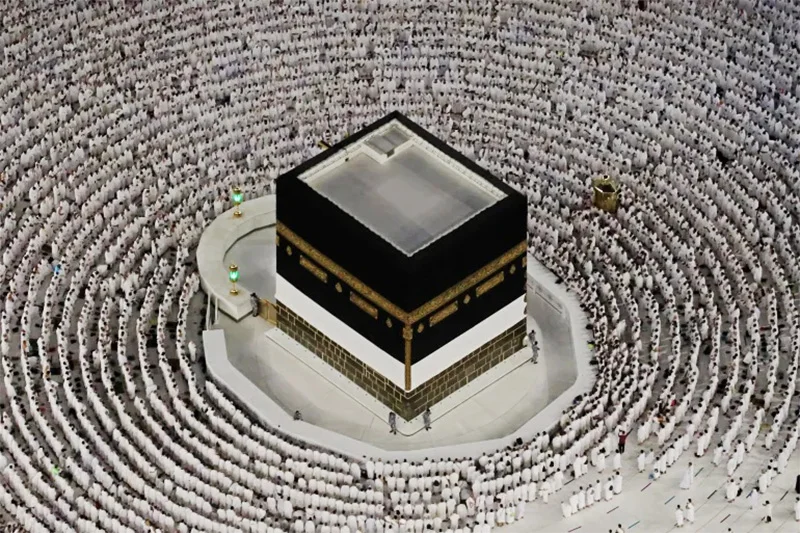
Every year, the spiritual compass of the Muslim world turns towards the holy city of Makkah, where millions of pilgrims gather for Hajj — one of humanity’s oldest and most profound journeys of faith.
This year, too, the sacred valleys of Saudi Arabia are filled with the echoes of “Labbaik Allahumma Labbaik” — “Here I am, O Allah, here I am” — as Muslims from every continent respond to a divine call that dates back thousands of years to Prophet Ibrahim (Abraham).
Among them are thousands of Sri Lankan pilgrims, dressed in simple white garments, leaving behind worldly status, wealth and identity in pursuit of spiritual purification and closeness to God.
According to Muslim Affairs authorities, the Kingdom of Saudi Arabia has allocated a Hajj quota of 3,500 pilgrims for Sri Lanka for Hajj 2026, enabling devotees from across the island to undertake the sacred pilgrimage. The annual allocation is determined through agreements between Saudi Arabia and Muslim-majority and minority nations worldwide.
Since early this month at the Bandaranaike International Airport in Katunayake, emotional scenes unfolded as families bade farewell to departing pilgrims with tears, embraces and prayers.
Elderly parents clutched prayer beads, children waved anxiously, while relatives sought blessings from loved ones embarking on the once-in-a-lifetime spiritual journey.
For many Sri Lankan Muslims, performing Hajj is not simply travel — it is the fulfilment of a lifelong dream nurtured through years of prayer, sacrifice and savings.
In villages, towns and cities across Sri Lanka, preparations for Hajj often begin months or even years in advance. Some families save gradually over decades, while elderly pilgrims regard the journey as the culmination of a lifetime of devotion.
Hajj is the fifth pillar of Islam and is obligatory for every financially and physically able Muslim at least once in a lifetime.
Yet the pilgrimage is far more than a religious obligation.
It is a journey deeply rooted in the story of Prophet Ibrahim, known as Abraham in Christianity and Judaism, and revered across the Abrahamic faiths as a towering symbol of faith, obedience and sacrifice.
Islamic tradition recounts how Prophet Ibrahim was commanded by Allah to leave his wife Hajjar and infant son Ismail in the barren desert valley of Makkah. With unwavering faith in God’s wisdom, Ibrahim obeyed.
Left in the scorching desert with little water or food, Hajjar desperately searched for water for her thirsty child, running seven times between the hills of Safa and Marwa.
Her determination, courage and trust in God are immortalised in the rituals of Hajj today.
Pilgrims reenact Hajjar’s desperate search by walking between Safa and Marwa, symbolising perseverance, faith and hope even in moments of despair.
According to Islamic belief, Allah answered Hajjar’s prayers by causing the miraculous Zamzam well to spring forth beneath baby Ismail’s feet — a well that continues to provide water to millions of pilgrims centuries later.
Another defining moment in Ibrahim’s story is commemorated during Hajj and Eid-ul-Adha — the willingness of the Prophet to sacrifice his beloved son in obedience to God’s command.
As Ibrahim prepared to carry out the sacrifice, Allah replaced Ismail with a ram, signifying that faith, sincerity and submission were greater than the act itself.
The symbolic stoning of the devil during Hajj recalls Ibrahim’s rejection of Satan’s temptations that sought to discourage him from obeying God.
Thus, every ritual of Hajj carries profound historical and spiritual meaning.
The pilgrimage is not simply movement through sacred spaces; it is a reenactment of timeless lessons in obedience, sacrifice, patience and devotion.
One of the most remarkable aspects of Hajj is the extraordinary equality it represents.
Pilgrims, regardless of nationality, race, language or social class, wear the same simple white attire, known as Ihram.
Presidents, businessmen, labourers and farmers stand side by side in prayer, under the blazing Arabian sun, erasing worldly distinctions and affirming the Islamic belief that all human beings are equal before God.
Religious scholars often describe Hajj as the world’s greatest annual demonstration of unity and humility.
The spiritual climax of the pilgrimage occurs at the plains of Arafat, where pilgrims spend hours in prayer and repentance seeking divine forgiveness.
Many Muslims believe that a sincerely accepted Hajj cleanses a believer of past sins and marks the beginning of a spiritually renewed life.
Upon returning home, pilgrims are honoured with the title “Hadji” or “Hajji,” a distinction that carries immense respect within Muslim communities, including in Sri Lanka.
Traditionally, a Hadji is viewed as someone who has fulfilled one of Islam’s most sacred obligations and returned with heightened spiritual responsibility.
However, Islamic scholars emphasise that the title is not merely ceremonial.
“The true significance of becoming a Hadji lies in personal transformation,” a Colombo-based Islamic scholar said.
“A pilgrim is expected to return with greater humility, compassion, honesty and social responsibility. Hajj is not about status; it is about becoming a better human being.”
Across Sri Lanka, mosques have been conducting special prayers for pilgrims, while families gather to seek blessings before departure.
The pilgrimage season also creates a unique emotional atmosphere within Muslim communities, where neighbours visit departing pilgrims and homes become centres of prayer and reflection.
Saudi Arabia has introduced extensive arrangements this year to facilitate the pilgrimage, including digital crowd management systems, improved transport networks, upgraded accommodation and enhanced healthcare services.
Sri Lankan diplomats and officials, stationed in Saudi Arabia, have been coordinating closely with Saudi authorities to ensure the welfare and smooth movement of Sri Lankan pilgrims throughout the pilgrimage period.
Sri Lanka’s Ambassador to Saudi Arabia, Ameer Ajwad, recently inspected facilities in Mina, prepared for Sri Lankan pilgrims, and reaffirmed efforts to provide a safe and spiritually fulfilling Hajj experience.
As millions circle the Holy Kaaba in prayer, Hajj continues to stand as one of the most extraordinary gatherings on Earth — a timeless spiritual movement connecting humanity across borders, cultures and generations.
For Sri Lanka’s pilgrims, the sacred journey is not merely a passage to Makkah.
It is a journey into the soul — a return to the eternal lessons of Prophet Ibrahim, Hajjar and Ismail — lessons of sacrifice, endurance, obedience and unwavering faith that continue to inspire humanity centuries later.
By Ifham Nizam

‘Ferocious in battle, Magnanimous in victory (Col Tim Collins- Brit Army)
Sri Lanka commemorated the 17th anniversary of the end of the 30-year Eelam conflict with a moving War Heroes Remembrance Day ceremony on 19 May 26 at the monument on the Parliament grounds. It was a solemn occasion when the Nation paid tribute to over 29,000 Defence and Police people (women and men) who died in the conflict. Sadly, politics, aberrations and theatrics were also on display.
The gravity of the sacrifices made and consequences of the Eelam war and two Southern terrorist insurgencies (1971 and 1988-9), are felt mostly by those who lost their loved ones in the conflicts as the nation mourns with them. Any hesitation to pay tribute belittle the fallen.
It was regrettable to see that the ceremony was also political. Why were the general public excluded from honouring the fallen? It defies understanding that such actions could take place at an event held sacred by the nation. Is there any other country where citizens are prevented from laying wreaths at a National Remembrance monument?
In the UK, from where this ceremony originates, 10,000 veterans (of an army of 109,000 -just half of Sri Lanka’s) take part in the march past every November. They are selected by their regimental associations from thousands of applications on a first come first served basis. Public access is unrestricted with numbers attending being the only barrier to viewing.
It is shocking that in Sri Lanka while public access is denied (selectively?), ‘invitations’ are given to attend a national Remembrance Day. They were restricted to just three government nominees! Who made this unwise decision and why?
Did the other government cohorts object to being invited? Would they have been embarrassed to come? Is the purpose of this to prevent prominent actors in the victory from receiving overwhelming accolades if they attended? Was there a fear of gate crashing? Perish the thought.
What is the need to make political speeches at an event to honour the nation’s dead? Couldn’t the speeches be made in Parliament or broadcast the day before? Seeing VIPs enjoying a joke at this ceremony hurts.
When laying wreaths at the monument, national customs should be followed by all, as in the past. A traditional low bow with hands clasped humbly, as at funerals, should be the form. In the West the head is bowed. It is unnecessary to imitate Americans by placing one hand over the heart when bowing, as on CNN. Bringing the other hand over the midriff elaborates but is an awkward addition.
The dress for all civilians attending should be similar, respectful and appropriate as for formal events and uniform, matching that of the retired military.
This is the time for the nation to remember and reflect for a moment on the dead in conflict, not only of the Military and Police who sacrificed their lives in thousands doing their duty but also of the innocent civilians who died in tens of thousands. Or, is it that some, other than the NOK, who survived in the North and South, have become hardened to death and do not wish to recall how appalling the losses were? Has death lost its meaning if also not its sting?
During 1988-9, when 60,000 died in 13 months (over 100 a day), a tea planter in Bandarawella was shot dead by Southern terrorists for hoisting the national flag on Independence day.
In the Eelam conflict just one regiment, (regiments are the core and heart of the Army), Gemunu Watch, lost 3,424 KIA and 4,272 WIA. The Imperial British Army after WWII lost 2551 (just over half of the Gemunu Watch number) in war in Korea (1949-51), Falklands (1982), Iraq, Afghanistan (20 years) and 40 years of insurgency in Northern Ireland. (SL Army infantry regiments (SL Light Infantry, Sinha, Gemunu, Gajaba and Vijayba) had about 19,000 of 21,000 of the Army KIA. That is the enormity of the sacrifices made by our indomitable military. Who then struggled to find heroes in the military?
Fisher Weerasuriya from Matara and farmer Vernugopal from Jaffna who never knew each other were brought to a place hundreds of miles from their villages, to blow each other’s brains out. ‘Had they a quarrel? Busy as the devil is, not the smallest. Their political leaders had fallen out; and instead of shooting one another had the cunning to get these blockheads to shoot each other’ (transcribed from ‘Sartor Resartus’ – Carlyle). Do Sri Lankan politicians who stirred the pot not know this when they fervently say they hope to prevent conflict in the future?
Is it correct then to exult that 6,000 troops died in the last phase of the war? Is that an achievement? As FM Montgomery said of the WW1 British Army “Good fighting Generals of the war appeared to have complete disregard for life’.
Reparations are claimed by the winners in wars between nations. After civil conflicts there should be reconciliation. There should be no humiliation. When will commemoration of the dead be national in Sri Lanka? How many from communal minorities attend this ceremony? Every citizen from North to South should be welcomed to attend Remembrance ceremonies in the future. That will hopefully help to sow unity.
The military died without a murmur for their companions so that the nation would survive. Let next year’s commemoration be a truly national event where the focus is on those who died while veterans in large numbers and the next of kin together with the general public, are warmly welcomed.
“If it be life that awaits, I shall live forever unconquered: If Death I shall die at last strong in my pride and free”. – Scottish National Memorial
by Old Soldier
Aragalaya betrayed? ‘The treason of the intellectuals’ in the age of populism – Part II
The JVP/NPP conceptualisation of the ‘Jathika punarudaya’ (national renaissance) interpreted the Sri Lankan Renaissance as the aspiration to regain the moment we lost in the global modernisation project, which is believed to have emerged in the twentieth century as a result of the Western European Renaissance and Enlightenment imagination. Jathika punarudaya values modernity as the era of citizens based on a representative democratic model founded on a common social contract. It values human rights, civil rights, and political rights as the core of modernity. It values social interventions based on the values of social justice and collectivism. But is the current government acting on the basis of those renaissance beliefs that they claim to believe in?
This government came to power within the framework of bourgeois parliamentary democracy. However, the opposition alleges that the government is working to limit the right of the opposition to question the government’s actions within that framework, and within Parliament itself. The continued postponement of provincial council elections by the government has been criticized as a delay in the implementation of decentralised political power, especially in provinces inhabited by Tamils and Muslims.
The promise to abolish the executive presidency and restore a parliamentary-based political power structure continues to be postponed. This has drawn attention as a possible way to suppress trade union activities and intimidate political activists through repressive laws such as the Public Security Act and the Emergency Law, which are continuously implemented through the authoritarian use of the power of the executive presidency.
‘Honest party leadership,’ not the institutional system
The JVP, the core political party of the current government, which insists that its members are honest, claims that even if they violate certain rules and regulations in the course of governing, there is nothing wrong with it because it is not done for personal interest but for the common good. This implies that this government does not rely on rules, regulations, and a system of institutions built to last, but rather on the leaders of its own party, the JVP, whose leaders believe themselves to be honest. The system of institutions established on rules and regulations is for the rest of the people.
Attempts to subjugate institutions and public opinion to the government’s opinion
It is apparent that the government wants to implement its pre-designed agenda without any hindrance. To that end, the government is trying to subjugate all institutions and public opinion to its sole opinion. The most striking example of this approach is the government’s attempt to implement, without any genuine public discussion, neoliberal reforms formulated by previous governments regarding national education, which will have a decisive impact on the future of the country. The leadership brags that the proposed education reforms will be implemented as originally designed, regardless of any criticism or objections.
The government sets up committees at the local level claiming to represent the public, but people complain that they exclude anyone who does not conform to their way of thinking.
Freedom of expression
Civil rights activists say the current government’s continued use of the Online Safety Act, which was passed by the previous government despite public opposition, poses a serious threat to freedom of expression. Freedom of expression has been suppressed under the guise of legality. The government has made it a policy to summon and question individuals who criticise the government—even national-level politicians—at the CID. This amounts to intimidating its critics.
The government has not only broken its promises by failing to repeal the existing PTA but is also attempting to pass a new anti-terrorism law that local and international civil rights organizations have unanimously condemned as even more repressive. It has been stated that there is scope for the proposed new law to intensify the current use of anti-terrorism law as a weapon to suppress freedom of expression.
“The Arts Council has become an arts police!”
The latest instance of the government’s attempt to curb freedom of expression that has come under serious public criticism is the detention of four books by a Sri Lankan writer, Theebachelvan, who writes in Tamil, by Sri Lankan Customs when they were brought into the country from India. Later, a statement issued by the Director of Customs said that two of the novels would be released based on recommendations issued by the National Arts Council and the Literary Council, while the other two would not be released based on the recommendations of those boards and the Ministry of Defense.
The statement that “The Arts Council has become an arts police!” sums up the public protest that arose questioning the “legal and moral rights of the members of the Arts Council and the Literary Council who have received political appointments” to “measure and mark the boundaries of freedom of speech and expression at their own discretion” by giving such recommendations and assuming a power that they do not have.
Going beyond this general situation, the serious question that has been raised is: on what basis did Customs consider the views expressed in the two books by Theebachelvan that have been censored to be equivalent to the crime of ‘sedition’ under Section 120 of the Penal Code, which was cited as the reason for the detention? A related question is whether there is a connection between the allegation of sedition and the fact that the writer is a Tamil from Kilinochchi.
The irony here is the intervention of the current government’s Minister of Culture, the heads of the Arts Council under the Ministry of Culture, and its own literary sub-council in deciding this matter, along with the follow-up statements defending the government’s decision made by the same authorities, as well as by writers, artists, intellectuals, and academics who have been holding positions under the current government and those who have not.
There was strong public criticism that these individuals—who were believed to have held radical, liberal views on freedom of expression and ethnic rights before the current government came to power—have been appointed to various positions under the current government and now approve its repressive decisions in the name of ethnic reconciliation.
The following sentiments extracted from the comments made by Sumathy Sivamohan on her FB page, expressing her shock at a statement made by one of the leading Sinhala writers involved in making such statements, encapsulate the essence of the public criticism of the issue:
” I am shocked at [name of the person]’s words on the detainment of Theebachelvan’s works by Customs. … The radicalness, the liberalness, are just thin veneers of their Sinhala-only stances. …. Now, they talk of Reconciliation. Reconciliation via Repression. …. Reconciliation, my foot! …. reconciliation is in your head, I think …. [I am] outraged. But now, [I] am certain of one thing. This is the bluff and bluster of liberals. …. That [name of the person] and others think, when Sinhala people think there’s reconciliation, there’s reconciliation, smacks of very deep-rooted racism
I don’t understand the argument, ‘we have to protect this government’ sentiment, touted by many liberals, who in intimate circles voice criticism. And these are the same people who supported the LTTE too, when it suited them—their liberal Sinhala agendas. … Now, they are blubbering …. it is shocking, for it whisks the mask off the faces of these liberal faces. There is a side of Sinhala liberalism that slavishly supports sentiments pertaining to the LTTE. They are the same, they are all the same. Those radicals, those liberals, those everybody, who think because they are Sinhala they have superior knowledge of matters. Sickening.” (reproduced with permission). (To be continued)
by Kumudu Kusum Kumara

Oscar-winning Star Wars editor Marcia Lucas dies aged 80

Hundreds arrested in France after wild Champions League celebrations

‘Disappointing’ – Sangakkara on Sam Curran turning out for Surrey with IPL still on

Truck carrying Afghan returnees from Pakistan flips on highway, killing 18

PSG beat Arsenal to win back-to-back Champions League titles after shootout

What Hegseth’s comments at Shangri-La Dialogue say about US foreign policy

‘Dates have the highest sugar content to fight Coronavirus’

Sunday Island 27 December – Headlines

#SundayIsland 17th December – Headlines

Sunday Island – 28th March

Sunday Island Headlines – 21 March

Sunday Island – 21st February – Headlines
-
 News7 days ago
Police probe underway to ascertain links between criminals deported from UAE and local politicians
-
 News2 days ago
IMF urges Lanka not to meddle with exchange rate
-
 News6 days ago
Easter Sunday carnage: Court told Maulana’s statement cannot be accepted without cross-examination
-

 News6 days ago
UK passport holder hiding here wants to have deportation order rescinded to leave without blemish
-
 Opinion6 days ago
Undermining the democratic political framework
-

 Features3 days ago
The Division Bell Mystery
-
 News7 days ago
Dickoya double murder suspect arrested
-
 Midweek Review5 days ago
Israeli-US aggression won’t go unanswered -Iranian Ambassador