
Business
‘Elevating SL through innovation and sustainable supply chain solutions’

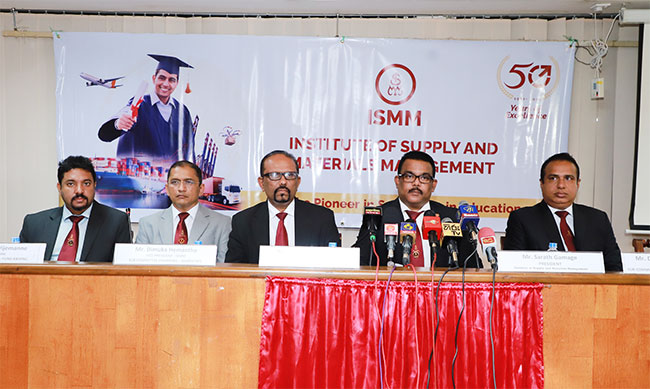
The Institute of Supply and Materials Management (ISMM) came into being on October 24, 1972. Accordingly, we are celebrating our 50th anniversary on October 24, 2022 and to coincide with this event ISMM will be organizing a full day international seminar on October 24, 2022 at the Shangri-La Hotel, Colombo, where eminent scholars in the supply chain profession, both local and foreign are scheduled to attend. The theme selected for the seminar is “Elevating the economy through innovative and sustainable supply chain solutions”.
The Institute of Supply and Materials Management (ISMM) is the only national body in Sri Lanka in the field of supply chain management. ISMM was incorporated by Act of Parliament No. 03 of 1981 on 29th January 1981. In 1980 ISMM was affiliated to the International Federation of Purchasing and Supply Management (IFPSM) based in UK. IFPSM is the world body encompassing 45 National Associations having over 250,000 Supply Chain Management professionals engaged in different sectors and levels. In recognition of its expertise the ISMM was able to obtain the membership of the Organization of Professional Associations of Sri Lanka (OPA) on 3rd September 1976. Since then, ISMM plays a vital role in OPA activities. ISMM is also registered under the Tertiary and Vocational Education Commission (TVEC) under reference P01/0160. In 2001, ISMM was affiliated to the International Trade Centre (ITC) and licensed to conduct its MLS-SCM programmes in Sri Lanka and in 2014 ISMM was able to obtain the ISO 9001 Quality Management System Certificate from the Sri Lanka Standards Institution (SLSI).
ISMM has been the Diploma awarding National Body for the last three decades awarding Graduate Diploma and Advance Diploma, in addition to conducting other Professional Courses namely Certificate and Management Courses adding more than 10,000 professionals to the profession of Supply Chain Management in Sri Lanka on a national scale including the government sector, tri forces and police. In 2010, ISMM launched the 3-year Graduate Diploma in Purchasing and Supply Chain Management (GDPSCM) programme with a dissertation. This Programme contains 120 Credits, and it is designed equivalent to a Special Degree. As at present, ISMM conducts the following courses at the operational, supervisory middle and senior management levels:
Graduate Diploma in Purchasing and Supply Chain Management (English)
Advance Diploma in Logistics and Warehouse Management (Sinhala & English).
Advance Diploma in Purchasing and Logistics Management (Sinhala & English).
International Diploma in Supply Chain Management (English).
Course in Stores Management (Sinhala & English).
Course in Purchasing Management (Sinhala & English).
Course in Shipping, Air Cargo and Containerization (English).
Certificate Course in Project Management for Supply Chain Professionals (English).
Certificate Course in Government Tender Procedure (Sinhala)
Certificate Course in Import and Export Procedures (English)
Certificate Course in Storekeeping (Sinhala)
ISMM Office and the Training Directorate is housed at the Organisation Professional Association Premises, Professional Centre, No. 275/75, Prof. Stanley Wijesundara Mawatha, Colombo 07, and for further information you can visit the website www.ismmsrilanka.com
(ISMM)



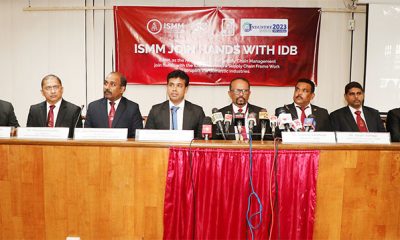


The Securities and Exchange Commission of Sri Lanka (SEC) successfully hosted a series of high-level meetings of the International Organization of Securities Commissions (IOSCO), bringing together leading securities regulators and enforcement officials from around the world to discuss emerging regulatory challenges, strengthen international cooperation, and enhance collective efforts to combat cross-border securities market misconduct.
The meetings, held at the Hilton Colombo from 13 to 16 October 2026, included sessions of the IOSCO Enforcement and Cooperation Committee and its Screening Group (Committee 4/SG), as well as meetings of the Monitoring Group and the Steering Committee. The event attracted approximately 50 senior representatives from securities regulators and exchanges across several jurisdictions, including Australia, Japan, the United States, the United Kingdom, France, Italy, Canada, New Zealand, India, Germany, Belgium, Singapore, China and Spain, reflecting the global significance of the discussions and the growing importance of international regulatory collaboration.
Welcoming delegates to Sri Lanka, Senior Professor D.B.P.H. Dissabandara, Chairman of the SEC, emphasized the critical role of international cooperation in safeguarding market integrity and investor confidence in an increasingly interconnected financial landscape.
“No regulator can effectively address cross-border misconduct in isolation. The speed with which information, transactions and illicit activities can move across borders requires an equally coordinated and timely regulatory response. Strong international cooperation, effective information sharing and mutual trust among regulators are essential to maintaining fair, transparent and resilient capital markets,” he stated.
The discussions focused on a range of enforcement and cooperation matters, including mechanisms for enhancing cross-border information exchange, strengthening investigative collaboration among regulators, addressing increasingly sophisticated forms of securities fraud and market abuse, and promoting the effective implementation of international standards and best practices. Participants also exchanged experiences and insights on emerging enforcement challenges arising from technological developments, digitalization of financial services, and increasingly interconnected global markets.
IOSCO is recognized as the leading international body that brings together the world’s securities regulators and serves as the global standard setter for securities regulation. Through its policy work and cooperative initiatives, IOSCO plays a central role in promoting investor protection, ensuring that markets are fair, efficient and transparent, reducing systemic risk, and strengthening confidence in capital markets worldwide.
Sri Lanka has maintained a strong and active relationship with IOSCO for more than three decades. The SEC became an Ordinary Member of IOSCO in 1993 and has been a signatory to the IOSCO Multilateral Memorandum of Understanding (MMoU) since 2004. The MMoU is the internationally recognised benchmark for cooperation and information sharing among securities regulators and serves as a critical tool in facilitating cross-border investigations and enforcement actions.

Pan Asia Bank recently entered into a one-year Memorandum of Understanding (MOU) with Ideal Motors (Pvt) Ltd, creating a new financing avenue for customers purchasing vehicles from the authorised Mahindra dealer. The strategic partnership will enable customers of Ideal Motors to access leasing facilities from Pan Asia Bank, making vehicle financing more convenient while supporting their mobility and business requirements. The agreement also provides an opportunity for the Bank to expand its leasing portfolio and strengthen its presence in Sri Lanka’s vehicle financing market.
Ideal Motors is the authorised dealer for the Mahindra vehicle range in Sri Lanka, including the Mahindra Bolero CPU Truck and Scorpio Jeep/Pickup. The vehicles cater to a range of requirements, from commercial and business applications to personal mobility, making accessible financing an important part of the purchasing decision.
The Bank’s vehicle leasing facilities are designed to simplify the financing process, with convenient repayment options and professional support to help customers select a solution suited to their requirements. For customers, the arrangement brings vehicle selection and financing closer together, reducing the need to navigate the two processes separately.
“Our partnership with Ideal Motors enables us to bring financing closer to customers at the point of vehicle purchase. We remain focused on providing convenient and flexible leasing solutions that support both personal mobility and the needs of businesses,” said Naleen Edirisinghe, Director/CEO of Pan Asia Bank.
Pan Asia Bank and Ideal Motors will work closely during the one-year partnership to maximise business opportunities and deliver a seamless financing experience to customers. The collaboration is expected to strengthen both organisations’ ability to respond to demand for commercial and personal vehicles while creating greater value for customers.
Yohan Ebell, Head of Retail Credit, Pan Asia Bank, said: “Through this partnership, we aim to make vehicle financing simpler and more accessible, with leasing solutions designed to meet the varied requirements of Ideal Motors’ customers.”
The collaboration also reflects Pan Asia Bank’s commitment to building partnerships that make financial services more accessible and responsive to the needs of individuals and businesses.
Pan Asia Bank has established a growing presence in vehicle financing, offering leasing solutions designed around customer convenience and flexibility. Its leasing proposition is supported by a nationwide branch network and a customer-focused approach, enabling customers to obtain guidance on financing options while completing their vehicle purchase.

Heritance Hotels and Resorts has secured four distinguished titles at the World Travel Awards 2026, with three national awards recognising its Sri Lankan properties and an international title for Heritance Aarah in the Maldives.
The three Sri Lankan titles recognise Heritance Tea Factory as Sri Lanka’s Leading Heritage Hotel 2026, Heritance Ahungalla as Sri Lanka’s Leading Luxury Hotel 2026, and Heritance Kandalama as Sri Lanka’s Leading Wedding Hotel 2026. Heritance Aarah was named the Indian Ocean’s Leading All-Inclusive Resort 2026.
Internationally recognised within the global travel and tourism industry, the World Travel Awards celebrate excellence across hotels, resorts, and destinations. Recognition at this level affirms the quality, distinctiveness, and consistency of the experiences delivered by Heritance Hotels and Resorts.

Import and Export (Control) Regulations No. 08 of 2026
Draft Bill of the Public Private Partnership Enterprises Act to be gazzetted
Amendment of the Ayurvedha Act No. 31 of 1961

Cabinet nod to amend the Sri Lanka Development Administration Institute Act No. 9 of 1982
Establishment of the National Higher Performance Centre
State patronage for the cremation ceremony of the late deputy prelate (Anu Nayaka Thero) of the Sri Laka Ramangya Maha Nikaya, Gatambe Rajopawanramadhipatha, Siri Chandawimala Wanshalankara, Chandrakeerthi Sri Amarawansha, Sadhdharmawageeshwara, Shasanashobhanna Most Venerable Keppetiyagoda Siriwimalabhidhana Thero

‘Dates have the highest sugar content to fight Coronavirus’

Sunday Island 27 December – Headlines

#SundayIsland 17th December – Headlines

Sunday Island – 28th March

Sunday Island Headlines – 21 March

Sunday Island – 21st February – Headlines
-

 Features3 days ago
Kotahena:A Small Enclave, An Extraordinary Legacy
-

 News7 days ago
Sri Lanka, India caught in US-Iran ship crisis
-

 News4 days ago
Asgiri Mahanayake calls for immediate release of Gnanasara Thera
-

 Latest News7 days ago
Missiles intercepted near Riyadh after Saudi coalition hits Yemen fuel depot
-
 Latest News7 days ago
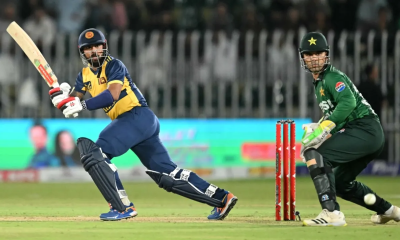
Kusal Mendis’ unbeaten 87 hands Sri Lanka consolation win
-

 News3 days ago
Record 1,600 students take Russian Classical Ballet examination in Sri Lanka
-

 News6 days ago
AC President recuses himself from hearing prison attire case pertaining to Gnanasara Thera
-

 Latest News7 days ago
Heavy showers above 100 mm are likely at some places in the Western, Sabaragamuwa, Southern, Central, and North-western provinces and in Anuradhapura district.