
Sports
Elena Rybakina, Aryna Sabalenka reach Australian Open final

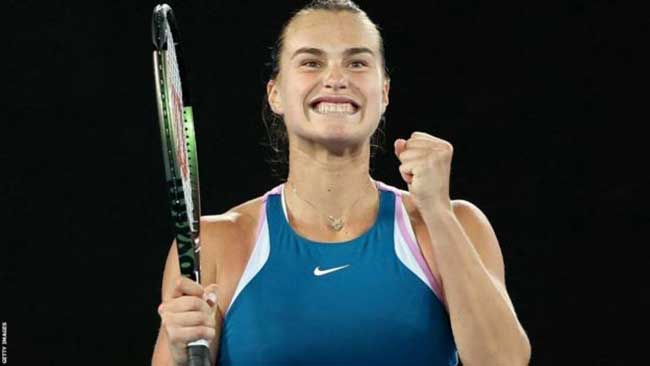
What all seemed so different, so daunting, even, about trying to win a Grand Slam title to Elena Rybakina a little more than six months ago is now coming rather naturally.If she can win one more match, she will add a championship at the Australian Open to the one she collected at Wimbledon.
Rybakina, 23, who represents Kazakhstan, reached her second final in a span of three major tournaments by beating Victoria Azarenka 7-6 (4), 6-3 at Melbourne Park on Thursday, signaling a rapid rise toward the top.
“Everything was new at Wimbledon,” Rybakina said after hitting nine aces in the semifinals to raise her tournament-leading total to 44. “Now I more or less understand what to expect.”
That could come in handy Saturday, when she will face No. 5 seed Aryna Sabalenka of Belarus. Sabalenka, 24, reached her first Grand Slam title match by beating unseeded Magda Linette 7-6 (1), 6-2 in Thursday’s second semifinal.
Sabalenka improved to 10-0 in 2023 and has won all 20 sets she has contested this season.More importantly, the victory over Linette gave Sabalenka her first taste of success in a Slam semifinal after going 0-3 at that stage until now, losing each previous attempt 6-4 in the third set.
Rybakina and Sabalenka employ a somewhat similar brand of tennis, relying on big serves and big hitting at the baseline. Sabalenka is far less cautious, though, and her penchant for high-risk, high-reward play was evident against Linette, who had never before been past the third round in 29 appearances at majors.
Sabalenka finished with a whopping 33-9 edge in winners but also compiled more unforced errors than Linette.
The key to both semifinals, really, was a first-set tiebreaker. Azarenka lost the mark on her strokes, making things smoother for Rybakina, while Sabalenka raced to a 6-0 lead in hers. It wasn’t the case that each and every shot Sabalenka hit landed right on a line, but it must have seemed that way to Linette.
Rybakina, meanwhile, added to what already was an impressive run through a string of top opponents. Azarenka, the champion at Melbourne Park in 2012 and 2013, joined a list of players eliminated by Rybakina over the past two weeks that includes No. 1 Iga Swiatek and No. 17 Jelena Ostapenko — both owners of major titles — and 2022 Australian Open runner-up Danielle Collins.
“For sure, they’re very experienced players,” said Rybakina, whose parents and sister have been in town throughout the Australian Open. “I knew that I have to focus on every point.”
As usual, Rybakina did it with her powerful serve, delivering it at up to 117 mph, and stinging groundstrokes that she used to close points seemingly at will. The performance was particularly noteworthy against a returner and defender as established on hard courts as Azarenka, a former No. 1 and a three-time runner-up at the US Open.
“Kind of hard to digest,” Azarenka said. “Obviously, I had quite a few chances that I gave myself.”
Rybakina might be seeded 22nd in Melbourne, and ranked 25th, but those numbers are not indicative of her talent and form. Rybakina did not get the usual bump from her title in July at Wimbledon, where zero rankings points were awarded after the All England Club banned players from Russia and Belarus because of the invasion of Ukraine.
It was breezy and chilly at Rod Laver Arena from the start of Rybakina vs. Azarenka, with the temperature dipping below 70 degrees. That could have played a role in the way the first set was as much of a seesaw as can be, with each player seeming to gain the upper hand and ceding it just as quickly.
“I couldn’t play really aggressive tennis,” Rybakina said. “The ball wasn’t going so much.”
Rybakina’s occasional inconsistency was encapsulated by the first game. She began, inauspiciously, with a double fault before holding with the help of three aces.
Azarenka nosed ahead by breaking for a 3-2 lead on a leaping, full-extension volley winner with both women at the net. Rybakina, though, broke right back and then once more to go up 5-3.
That allowed Rybakina to serve for the set, and she was a point from owning it at 40-30, but Azarenka conjured up a terrific down-the-line forehand passing shot to erase that chance and wound up taking the game with a big backhand winner she accented with a shout of “Let’s go!”
A mistake-filled tiebreaker ended with Azarenka pushing a forehand wide to cap an 11-shot exchange. Rybakina broke at love for a 2-1 lead in the second, and while they would continue to play for another 25 minutes, the outcome was never really much in doubt.
Sure, Rybakina again faltered while trying to serve out the victory at 5-2. No one expected Azarenka to go quietly. But one last break, aided by a double fault from Azarenka, allowed Rybakina to take another step toward another trophy.
“Ready,” she said, “to give everything I have left.”
Billie Jean King and six other members of the trailblazing “Original 9” group of Hall of Famers whose $1 contracts more than a half-century ago paved the way for the millions now offered in women’s tennis were in the stands for the semifinals.
“I want to say a big ‘thank you’ from the players, because it’s unbelievable what you’ve done for us, for the new generation,” Rybakina said. “It means a lot.”
(ESPN)




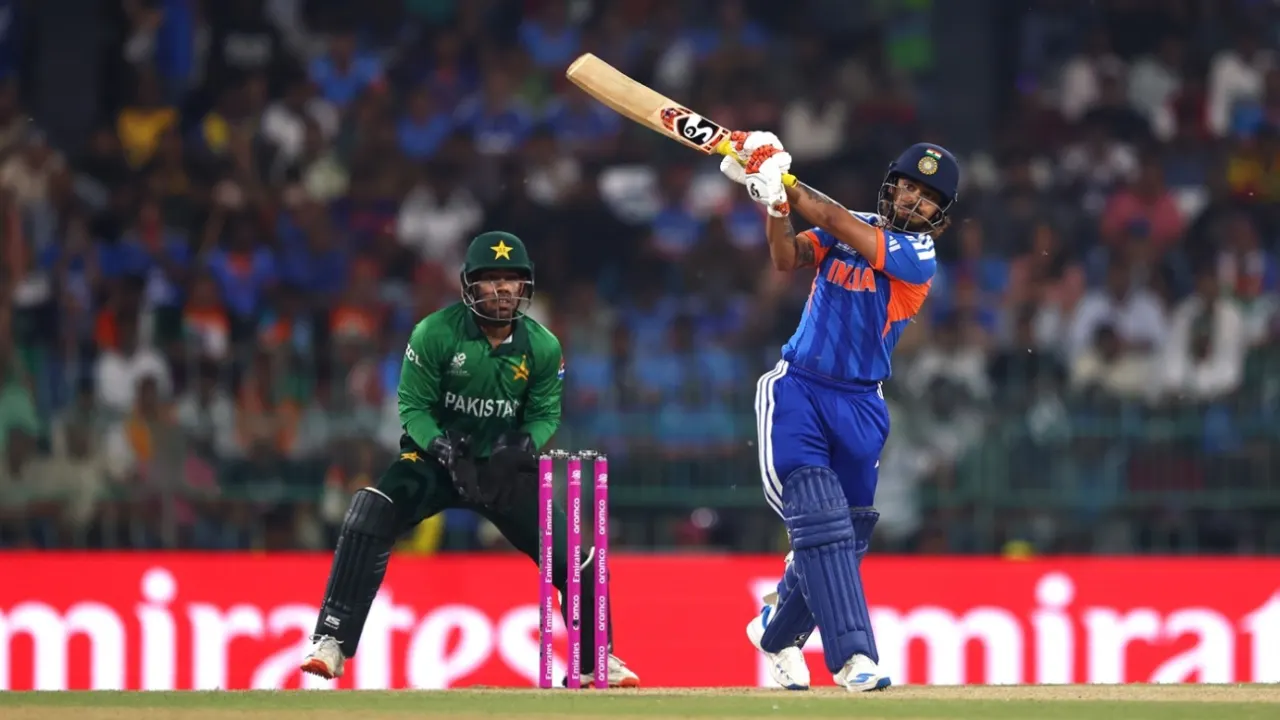
No matter how good you are or how likely you are to win or how forgiving the schedule is, a World Cup brings its own unique challenges and stakes, especially at home, especially given the current geopolitics of the region this home is in. India have been comfortable victors in all three matches so far but haven’t yet been able to unleash the style of play that they want to.
The last of these three matches was one in which India had all to lose. Nothing rode on the match against Pakistan in terms of progression or whom they face in the Super Eights, yet they couldn’t afford to lose. Such overwhelming favourites losing to underdogs in the current geopolitical climate would have been massive outside the purview of this tournament. A win, however, merely reaffirmed their status as the favourites.
Now India will look to go back to try to score big. They haven’t yet scored more than 209 despite batting first in all three games. Ahmedabad at night is the perfect scenario for them. Four of the last five first innings in Ahmedabad in the night have been over 210.
Netherlandswill want to prove they are not mere props, a vehicle to see how much India can push the limits of what scores are absurd. They were within one catch of beating Pakistan, they beat Namibia, and will want to show they are no pushovers.
India will want to bat first should they win the toss, but it will be interesting to see whether Netherlands want to avoid an impossible target or do what teams do to give themselves the best chance to win in the night in Ahmedabad.
He is the best T20 batter in the world, but Abhishek Sharma’s initiation to the World Cup has been an inauspicious one: golden duck, stomach illness, four-ball duck. And it doesn’t say anything about Abhishek’s skill or temperament. It is just one of those things. But Abhishek will want to get it out of the way so it doesn’t weigh on him in the Super Eights.
Netherlands will look to borrow from Abhishek’s first two dismissals in the World Cup. As it is, they like to open the bowling with offspinner Aryan Dutt. . After Salman Agha tied Abhishek down for three balls and got him out off the fourth, this belief will be reaffirmed. Do mind, though, that Ahmedabad is no Colombo. You can trust yourself to clear the infield on this batting paradise.
Outside of Harshit Rana’s last-minute injury and withdrawal from the tournament, all other availability issues that India faced are now sorted. The only change they will likely make is go back to Arshdeep Singh ahead of Kuldeep Yadav on the quicker Ahmedabad surface.
India (probable): Abhishek Sharma, Ishan Kishan (wk), Tilak Varma, Suryakumar Yadav (capt), Hardik Pandya, Rinku Singh, Shivam Dube, Axar Patel, Arshdeep Singh, Jasprit Bumrah, Varun Chakravarthy.
Netherlands have been alternating between Timm van der Gugten and Kyle Klein in their first three matches. Paul van Meekeren has played only one of their three matches, making way for left-arm quick Fred Klaasen. It will eventually come down to two of three quicks.
Netherlands (probable): Michael Levitt, Max O’Dowd, Bas de Leede, Colin Ackermann, Scott Edwards (capt & wk), Zach Lion-Cachet, Logan van Beek, Aryan Dutt, Roelof van der Merwe, two out of Kyle Klein, Fred Klaassen and Paul van Meekeren.
[Cricinfo]

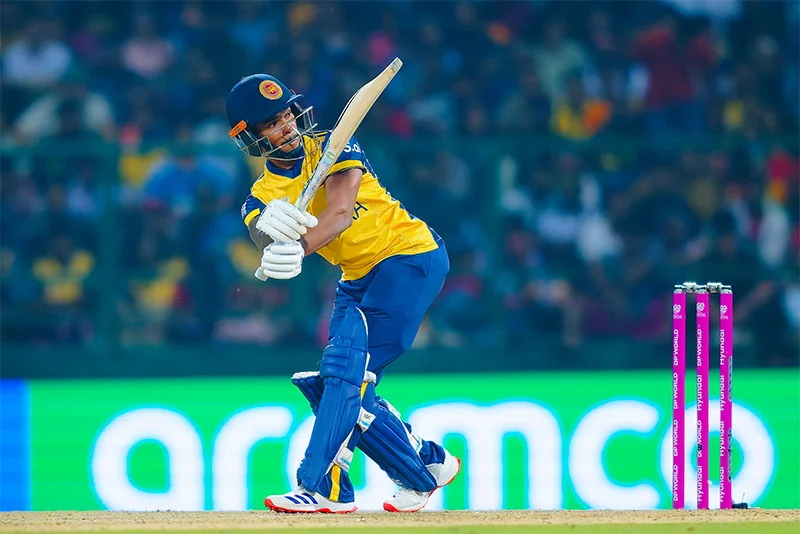
Cricket, as they say, is a funny old game. Barely a fortnight after being booed off this very stadium following a humbling 3-0 drubbing by England, Sri Lanka were hoisted on shoulders and hailed as heroes on Monday night as they sent Australia packing from the World Cup with a performance that had nerve, nous and no shortage of swagger.
Kandy, which had turned hostile earlier this month, was suddenly awash with jubilation. Fans burned the midnight oil, firecrackers lit up the hill capital and chants echoed long after the winning run was scored. There is no sweeter music in Sri Lankan cricket than the sound of Australia being knocked out of a tournament.
Australia had come out all guns blazing. At 100 for no loss in eight overs, with the Power Play carnage extending into the middle phase, the former champions looked set to bat Sri Lanka out of the contest. It was leather on willow and Sri Lanka were staring down the barrel.
Then the tide turned.
The spinners applied the handbrake on a surface that offered just enough grip, bowling with discipline and clever changes of pace to drag things back from the brink. The squeeze was relentless. Boundaries dried up, risks multiplied and panic crept in.
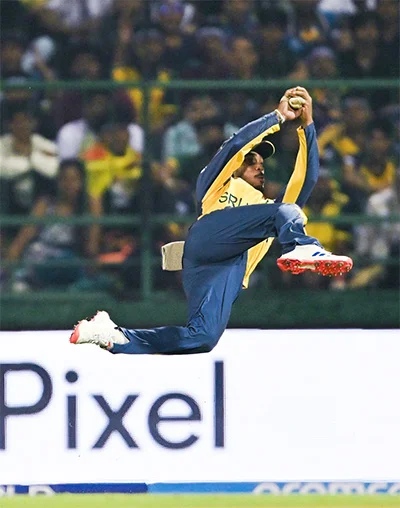
At the death, Dushmantha Chameera was ice-cool under pressure. Nailing his yorkers and varying his pace cleverly, he denied Australia the late surge that so often proves decisive. What followed was a collapse of dramatic proportions, six wickets for 21 runs, as Australia were bundled out for 180, a total that looked well below par given their flying start.
“We knew this was a 200 wicket,” Pathum Nissanka told reporters. “When Australia were bowled out for 180, we believed we could chase it down. But we had to be watchful and plan well.”
What followed was a run chase for the ages.
Knockout games against Australia are rarely strolls in the park. More often than not, they are arm-wrestles that go down to the wire. But Sri Lanka got home with two overs to spare, a statement win carved out with composure rather than brute force.
For years, Sri Lanka have bemoaned the absence of a power-hitter in the mould of David Miller, Hardik Pandya or Tim David, men who can clear the ropes at will. Nissanka, however, proved that timing can trump muscle.
His hundred was worth its weight in gold.
 Elegant rather than explosive, he peppered the boundary with five sixes of the highest quality, each one greeted by a roar that rolled down from the Pallekele stands. The pick of the lot was a reverse-swept six off the left-arm spinner that had audacity written all over it.
“I loved that reverse-swept six,” Nissanka said. “I knew that area was vacant but you had to execute well. I’m glad it paid off.”
It was the first hundred of this World Cup and a landmark knock for the 27-year-old, who became the first Sri Lankan to score two T20I centuries.
“Scoring a hundred in a World Cup has always been my dream,” he added. “I’m glad I achieved that today.”
If Nissanka was the architect, Kusal Mendis was the steady hand on the tiller. His mature approach at the top ensured Sri Lanka did not lose wickets in clusters, and his game awareness, particularly regarding the dew, proved crucial.
“Kusal batted so well and told me the dew would come in,” Nissanka said. “We had to make sure we didn’t take undue risks. We planned well and are happy to be through to the second round.”
That clarity of thought, so conspicuously absent during the England series, was evident throughout the chase. Sri Lanka rotated strike smartly, picked their moments to attack and refused to be drawn into a slugfest.
The victory ensured Sri Lanka became the first team from Group ‘B’ to seal passage into the second round, where sterner tests await in the form of England, Pakistan and New Zealand.
Rex Clementine at Pallekele
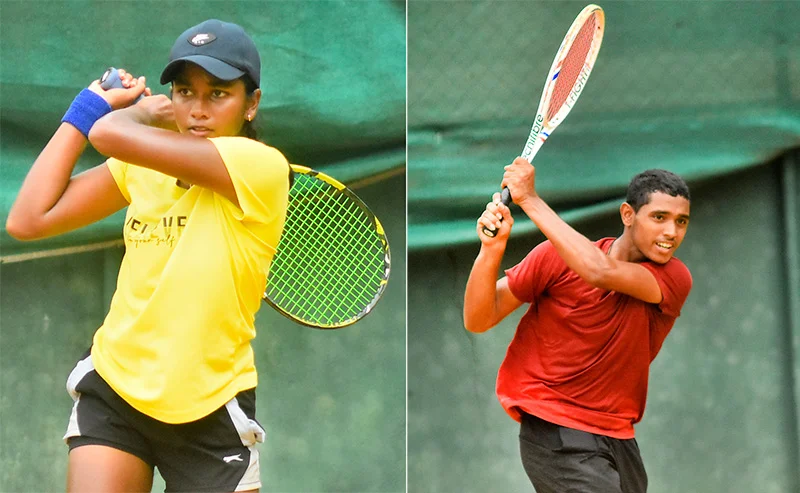
Ganuka Fernando and Yuhansa Peiris reached the quarter finals of the J30 ITF Week 4 tournament as they won their second round matches in Colombo on Tuesday.
In the boys’ second round encounter Ganuka Fernando beat Chris Jovan Gubza of Austria 6-0, 6-4 to seal his quarter-final place.
For her place Yuhansa beat Ai Shin Huang of Taipei 7-6, 6-2 in the second round.
They are set to compete in the quarter finals today.

India look to go into Super Eight stage with all-win record

Cabinet approves construction of new 300 bed Base Hospital in Deniyaya

Heavy showers about 100 mm are likely at some places in the Eastern, Uva and North-central provinces and in Matale and Nuwara-Eliya districts

Cabinet nod to legally empower methodology for implementing the ‘Praja Shakthi’ poverty alleviation national movement

NPP not under Indian pressure to hold PC polls – JVP

Battery storage drive to power Sri Lanka’s renewable leap

‘Dates have the highest sugar content to fight Coronavirus’

Sunday Island 27 December – Headlines

#SundayIsland 17th December – Headlines

Sunday Island – 28th March

Sunday Island Headlines – 21 March

Sunday Island – 21st February – Headlines
-

 Life style3 days ago
Marriot new GM Suranga
-

 Business2 days ago
Ministry of Brands to launch Sri Lanka’s first off-price retail destination
-

 Features3 days ago
Monks’ march, in America and Sri Lanka
-
 Opinion6 days ago
Will computers ever be intelligent?
-

 Features3 days ago
The Rise of Takaichi
-

 Features3 days ago
Wetlands of Sri Lanka:
-

 News3 days ago
Thailand to recruit 10,000 Lankans under new labour pact
-

 News3 days ago
Massive Sangha confab to address alleged injustices against monks