
Life style
Durian prevent cancer and improve digestion

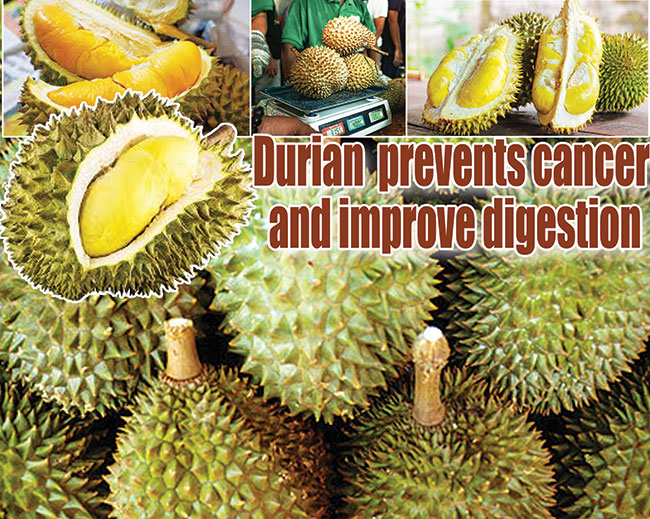
Durian is the fruit of several tree species belonging to the genus Durio. There are about 30 recognised Durio species, however, at least nine of which produce edible fruits. Durio zibethinus is the only species available in the international market: other species are sold in their local regions. Durio zibethinus or locally known as durian is belongs to the family of Bombacaceae, or by others in a broadly defined Malvaceae or by others in a smaller family of just seven genera Durionaceae. Durian is native to Southeast Asia. It is found wild or semi-wild in South Tenasserim, lower Burma and around villages in peninsular Malaysia. In addition, wild durian widely planted in Borneo and Sumatra. Borneo is the centre for diversity of Durio species. Durian is commonly cultivated along roads or in commercial orchards in Thailand, Laos, Vietnam, Malaysia, Brunei, Indonesia and Philippines. Apart from durian, this species also well-known with other common names such as Civet-Cat Fruit Tree, Civet fruit, Kampung Durian as called in English, Dian, Durian Puteh and Jatu called in Borneo, Liu Lian as called in Chinese, Dereyan called by Indonesian and etc .
Durian thrives in a hot, humid and wet climate
Durian grows best in a well-drained and fertile soil rich in organic matters that have a pH range from 5-6.5. Durian is intolerant of water logging which will cause destructive fungal root and trunk rot diseases. Furthermore, durian cannot withstand more than 0.02 % of salinity in the soil.
The durian tree can reach up to 27-40 m in height in tropical forests. Durian tree usually erect with short, straight, rough, peeling trunk to 1.2 m in diameter and have an umbrella-shaped canopy of rough branches and thin branchlets coated with coppery or gray scales when young. The evergreen, alternate leaves are oblong, elliptic or rounded at the base, abruptly pointed at the apex; leathery, dark-green and glossy above, silvery or pale-yellow, and densely covered with gray or reddish-brown, hairy scales on the underside. The fruits are ovoid or ovoid-oblong to nearly round and up to 8 kg in weight. The yellow or yellowish-green rind is thick, tough, semi-woody, and densely set with stout, sharply pointed spines, 3- to 7-sided at the base. Inside there are 5 compartments containing the creamy-white, yellowish, pinkish or orange-coloured flesh and 1 to 7 chestnut-like seeds .
Durian as a source of foods
Generally, durian is consumed fresh as fruit or food products such as candy, ice cream and durian puffs after certain cooking procedures. Traditionally, durian flesh is added into dishes such as “sayur” which is the Indonesian soup made from fresh water fish as an ingredient . Moreover, durian-based sauce is used to cook “Ikan brengkes“, a tradition dish in Sumatran islands, Indonesia. Overripe durian pulps are processed to become durian paste in Thailand while unripe durian may be cooked as a vegetable Beside the flesh, durian seeds are also valuable as they can be eaten after boiling or roasting and made into durian flour and chips (Agus, 2014). Furthermore, the young leaves and shoots of durian plant can be cooked as green vegetables.
Health benefits
Durian is widely celebrated for its long list of health benefits, which include the ability to boost immune system, prevent cancer and inhibit free radical activity, improve digestion, strengthen bones, improve signs of anaemia, prevent premature aging, lower blood pressure, and protect against cardiovascular diseases. Some of the more minor benefits of durian are to reduce inflammation of the joints, help thyroid health, reduce headaches, and lower symptoms of depression, anxiety, and stress. Most of the health benefits come from durian’s impressive vitamin and mineral content. Durian contains vitamins such as vitamin-C, folic acid, thiamin, riboflavin, niacin, B6 and vitamin A. Important minerals such as potassium, iron, calcium, magnesium, sodium, zinc, phosphorus are also found in durian. It also contains nutrients such as phytonutrients, water, protein and beneficial dietary fibre.
Relieves anaemia and promotes healthy pregnancy
Anaemia is a medical condition that reduces the level of haemoglobin on blood. Deficiency in haemoglobin can lead to fatigue, headache, insomnia and etc. In pregnant woman, anaemia can lead to abnormality and fatality of the foetus. Durian contains high amount of folate or folic acid which is essential in the production of haemoglobin. Besides that, low content of iron in durian aids in haemoglobin production alleviating condition of anaemia (Kevat, 2013). Furthermore, presence of folate in durian is important for pregnant woman as it promote regular tissue growth as well as protects the brain and spine in developing baby (Health benefits of durians, 2015).
Helps to maintain healthy bones
Durian contains a number of trace metals including calcium and potassium. Even calcium is present in low level in durian, but amount of potassium present in durian fulfils about 9 % of our body’s daily requirement. Potassium is required for the development of healthy bones. Even though the most abundant mineral of our bone is calcium, but potassium is crucial to regulate the distribution and deposition of the calcium in bones so that it is not dissolved or released into the blood excessively (Kevat, 2013).
Helps to alleviate depression and improves sleep
Durian contains amino acids known as tryptophan – a natural sleep inducing compounds. Tryptophan is required to increase the level of serotonin and melatonin. These two neuro-chemicals are required to manage our emotions. Serotonin is essential to relieve stress, sleeplessness, anxiousness, appetite as well as depression. In addition, these types of hormones help to manage sleeping function and could be utilized in the epilepsy cure (Kevat, 2013).
Fight cancer
Durian has a wealth of vitamins, nutrients, and organic chemicals that function as antioxidants. In the battle against cancer, free radicals are vitally important, because during cell metabolism, there are by-products created, called free radicals. These free radicals can destroy the DNA of regular cells and convert them into cancer cells, which can then metastasize or form fatal, tumorous growths. All of the antioxidants which reduce oxidative stress on the organs of the body are bonuses to the immune system, and durian is packed with them, including vitamin-C, vitamin-B complex, and vitamin E, as well as phytonutrients that battle cancerous cells (Health benefits of Durian, 2015).
Aids in digestion
Durian contains high levels of dietary fibre, which are important for the normal function of the digestive system. Fibre causes bowel movement to increase in bulk, which makes it easier for them to move through the intestinal tract. Fibre also stimulates peristaltic motion and the secretion of digestive and gastric juices, further easing the entire process. By reducing conditions like constipation and blockage in the intestines, conditions like bloating, excess flatulence, heartburn, cramps, and indigestion as well as colorectal cancer can be minimized. Much of the fibre in durian is insoluble fibre, which also lowers the frequency of diarrhea for people with loose stool. Fibre also helps to reduce the amount of cholesterol in the blood by scraping LDL cholesterol out of the body and quickly removing it before it can do any damage to the cardiovascular system (Health benefits of Durian, 2015).
1. Anti-aging
Durian has a wide variety of antioxidant properties stemming from its vitamin and organic chemical makeup that actively reduce the amount of free radicals in the body. Eating an excessive amount of durian can seriously boost your body’s ability to eliminate those free radicals, thereby reducing the chances of premature aging and delaying the appearance of symptoms such as wrinkles, age spots, macular degeneration, hair loss, tooth loosening, arthritis, cancer, and heart disease (Health benefits of Durian, 2015). In addition, the high water content of Durian is an added advantage along with its antioxidant content. Water keeps the skin hydrated, reduces dryness and alleviates the appearance of fine lines. It also nourishes skin for clear and smooth skin .
Increase and encourage fertility
Estrogen is a hormone which helps in conceiving. Most of the women who suffer from fertility usually have a low estrogen level in their body which is increased with pills, injections and supplements. Studies have shown that durian contains a high level of this hormone and can act as an herbal medicine (Kevat, 2013). Besides that, durian can produce intensified sexual libido and stamina, and also reduce the chances of infertility in men and women, and increase sperm motility .
Used as traditional medicine
According to traditional use, durian may have antibacterial, anti-inflammatory, and vasoconstrictor properties. Traditionally, durian leaves and roots are in Malaysia used to treat fever. The juice of fresh leaves is used as an ingredient in a lotion for fevers, and the juice from the bark is used as an antimalarial in Sumatra.
Other Uses
On the other hand, durian can be used for purposes other than foods and medicines. Durian husks which are usually thrown as wastes after the durian pulps are consumed can be dried to be used as fuel or fertilizers for tree (Utilization of durian, n.d.). It can also be used as an ingredient for making handmade paper like artistic paper with certain pattern (Agus, 2014). Due to the strong smell, durian husks can be used as the natural mosquitoes repellent. Dr. S. Kathiresan from AIMST University discovered that durian peel can be used as a mean to recover the oil spill at coastal areas (Lim, 2011). In this case, the durian peel powder is chemically modified and acts as the efficient oil absorbent to remove the oil from the water, solving the problem of oil spills which have caused adverse effects to living sea organisms and human economic activities.
REVIEW ON DURIAN CONSUMPTION
Durians are abundant in Asia during their season as Malaysia, Indonesia and Thailand are the world’s main durian producers. In this case, numerous surveys and reviews have been done on the nutritional values and health benefits of durian. Undeniably, durian has offered unlimited benefits to human health such as relieving anemia, alleviating depression and enhancing fertility (Health benefits of durian, 2015; Kevat, 2013). The Swiss Society of Food Science and Technology also discovered that the levels of antioxidants content in durian are higher as compared with other Asian fruits like mango, lychee and mangosteen of similar ripeness (Durians-‘Heaty’ or healthy, n.d.). However, overconsumption of durian can bring adverse effects to consumer especially pregnant women, diabetic patients as well as obese people. As mentioned by Dr. Patrick Chia, a fetal medicine specialist in Malaysia, it is safe for woman to consume durian during pregnancy but pregnant woman with gestational diabetes must avoid eating durian due to the high sugar content . Besides, consumption of durian during last trimester of pregnancy may result in overweight fetus with greater risk of childhood obesity as durian is high-glycaemic food . Apart from that, durian contains high amount of fat and triple amount of calories as compared to other fruits where obese people should avoid (Durians-‘Heaty’ or healthy, n.d.). From traditional Chinese medicine (TCM) perspective by Mr. Chew Hong Gian, a TCM physician at Raffles Chinese Medicine, durian is said to possess “warming” property whereby overindulgence in durians can induce sore throat, phlegmy cough and constipation of Raffles Medical reported that one’s body temperature may be increased slightly from eating durians but that does not lead to fever, coughs or respiratory infections.


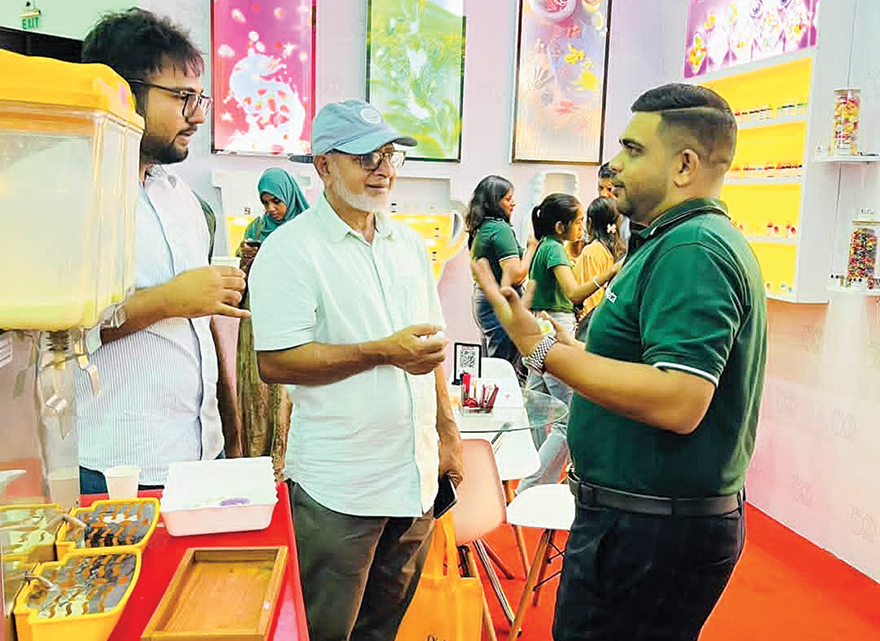
Salman Faiz has turned his family legacy into a modern sensory empire. Educated in London, he returned to Sri Lanka with a global perspective and a refined vision, transforming the family legacy into a modern sensory powerhouse blending flavours,colours and fragrances to craft immersive sensory experiences from elegant fine fragrances to natural essential oils and offering brand offerings in Sri Lanka. Growing up in a world perfumed with possibility, Aromatic Laboratories (Pvt) Limited founded by his father he has immersed himself from an early age in the delicate alchemy of fragrances, flavours and essential oils.
 Salman Faiz did not step into Aromatic Laboratories Pvt Limited, he stepped into a world already alive with fragrance, precision and quiet ambition. Long before he became the Chairman of this large enterprise, founded by his father M. A. Faiz and uncle M.R. Mansoor his inheritance was being shaped in laboratories perfumed with possibility and in conversations that stretched from Colombo to outside the shores of Sri Lanka, where his father forged early international ties, with the world of fine fragrance.
Growing up amidst raw materials sourced from the world’s most respected fragrance houses, Salman Faiz absorbed the discipline of formulation and the poetry of aroma almost by instinct. When Salman stepped into the role of Chairman, he expanded the company’s scope from a trusted supplier into a fully integrated sensory solution provider. The scope of operations included manufacturing of flavours, fragrances, food colours and ingredients, essential oils and bespoke formulations including cosmetic ingredients. They are also leading supplier of premium fragrances for the cosmetic,personal care and wellness sectors Soon the business boomed, and the company strengthened its international sourcing, introduced contemporary product lines and extended its footprint beyond Sri Lanka’s borders.
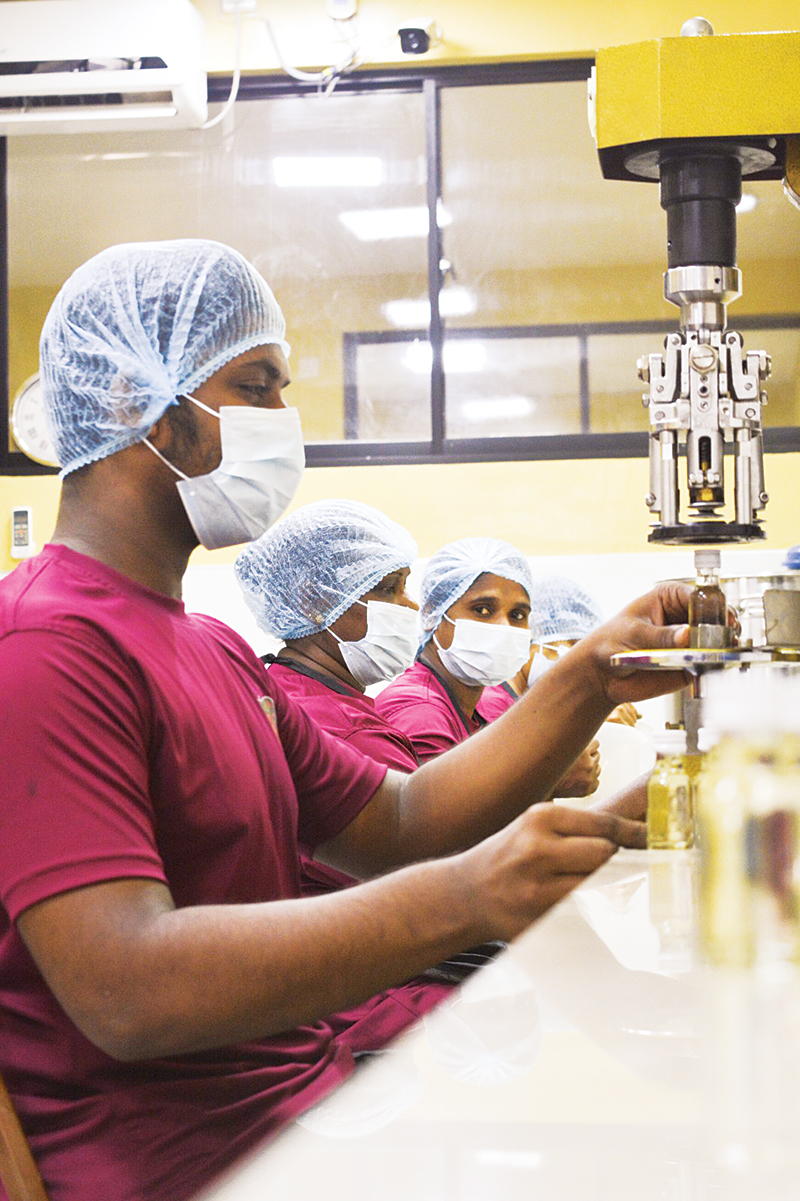
Where raw materials transform into refined fragrance

Salman Faiz -carrying forward a legacy
Today, Aromatic Laboratories stands as a rare example of a second generation. Sri Lankan enterprise that has retained its soul while embracing scale and sophistication. Under Salman Faiz’s leadership, the company continues to honour his father’s founding philosophy that every scent and flavour carries a memory, or story,and a human touch. He imbibed his father’s policy that success was measured not by profit alone but the care taken in creation, the relationships matured with suppliers and the trust earned by clients.
“We are one of the leading companies manufacturing fragrances, dealing with imports,exports in Sri Lanka. We customise fragrances to suit specific applications. We also source our raw materials from leading French company Roberte’t in Grasse
Following his father, for Salman even in moments of challenge, he insisted on grace over haste, quality over conveniences and long term vision over immediate reward under Salman Faiz’s stewardship the business has evolved from a trusted family enterprise into a modern sensory powerhouse.
Now the company exports globally to France, Germany, the UK, the UAE, the Maldives and collaborates with several international perfumes and introduces contemporary products that reflect both sophistication and tradition.
We are one of the leading companies. We are one of the leading companies manufacturing fine and industrial fragrance in Sri Lanka. We customise fragrances to suit specific applications said Faiz
‘We also source our raw materials from renowned companies, in Germany, France, Dubai,Germany and many others.Our connection with Robertet, a leading French parfume House in Grasse, France runs deep, my father has been working closely with the iconic French company for years, laying the foundation for the partnership, We continue even today says Faiz”
Today this business stands as a rare example of second generation Sri Lankan entrepreneurship that retains its souls while embracing scale and modernity. Every aroma, every colour and every flavour is imbued with the care, discipline, and vision passed down from father to son – a living legacy perfected under Salmon Faiz’s guidance.
By Zanita Careem
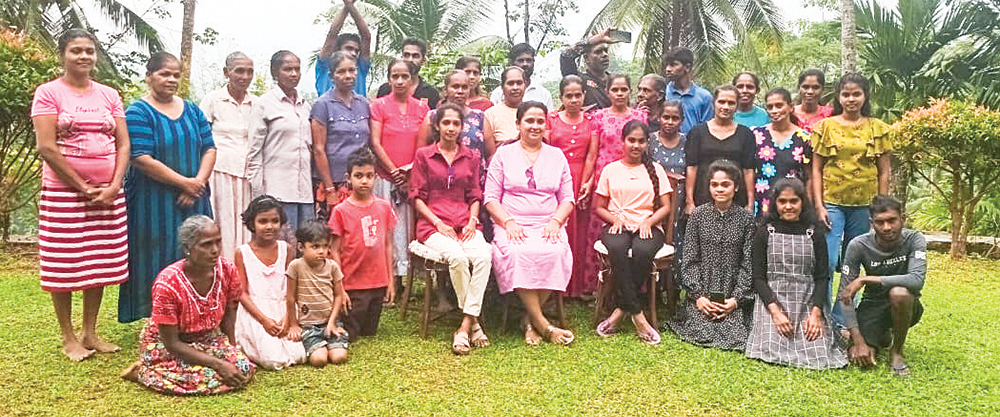
Harini and Chanaka cultivating change
When Harini and Chanaka Mallikarachchi returned to Sri Lanka after more than ten years in the United States, it wasn’t nostalgia alone that they brought home . It was purpose.Beneath the polished resumes and strong computer science backgrounds lay something far more personal- longing to reconnect with the land, and to give back to the country that shaped their memories. From that quiet but powerful decision was born Agri Vision not just an agricultural venture but a community driven movement grounded in sustainability ,empowerment and heritage. They transform agriculture through a software product developed by Avya Technologies (Pvt Limited) Combining global expertise with a deep love for their homeland, they created a pioneering platform that empowers local farmers and introduce innovative, sustainable solutions to the country’s agri sector.
After living for many years building lives and careers in theUnited States, Harini and Chanaka felt a powerful pull back to their roots. With impressive careers in the computer and IT sector, gaining global experience and expertise yet, despite their success abroad, their hearts remained tied to Sri Lanka – connection that inspired their return where they now channel their technological know-how to advance local agriculture.
For Harini and Chanaka, the visionaries behind Agri Vision are redefining sustainable agriculture in Sri Lanka. With a passion for innovation and community impact, they have built Agri Vision into a hub for advanced agri solutions, blending global expertise with local insight.
In Sri Lanka’s evolving agricultural landscape, where sustainability and authenticity are no longer optional but essential. Harini and Chanaka are shaping a vision that is both rooted and forward looking. In the heart of Lanka’s countryside, Uruwela estate Harini and Chanaka alongside the ever inspiring sister Malathi, the trio drives Agri Vision an initiative that fuses cutting edge technology with age old agricultural wisdom. At the core of their agri philosophy lies two carefully nurtured brands artisan tea and pure cinnamon, each reflecting a commitment to quality, heritage and people.
Armed with global exposure and professional backgrounds in the technology sector,they chose to channel thier experiences into agriculture, believing that true progress begins at home.
-
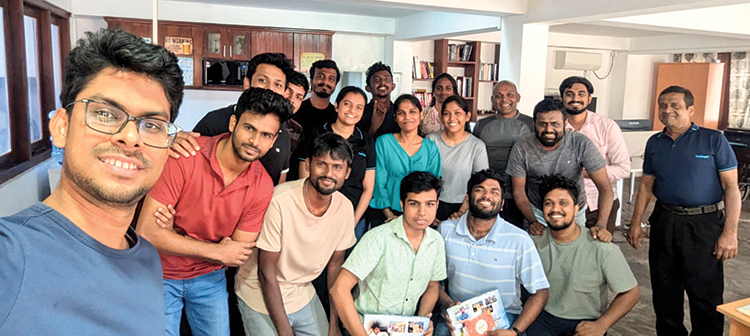
- Avya Technologies (Pvt) ltd software company that developed Agri Vision
-

- Chanaka,Harini and Shakya Mallikarachchi and Malathi Malathi dias (middle)
But the story of Agri Vision is as much about relationships as it is about technology. Harini with her sharp analytical mind, ensures the operations runs seamlessly Chanaka, the strategist looks outward, connecting Agri Vision to globally best practices and Malathi is their wind behind the wings, ensures every project maintains a personal community focussed ethos. They cultivate hope, opportunity and a blueprint for a future where agriculture serves both the land and the people who depend on it .
For the trio, agriculture is not merely about cultivation, it is about connection. It is about understanding the rhythm of the land, respecting generations of farming knowledge, and that growth is shared by the communities that sustain it. This belief forms the backbone of Agro’s vision, one that places communities not only on the periphery, but at the very heart of every endeavour.
Artisan tea is a celebration of craft and origin sourced from selected growing regions and produced with meticulous attention to detail, the tea embodier purity, traceability and refinement, each leaf is carefully handled to preserve character and flavour, reflecting Sri Lanka’s enduring legacy as a world class tea origin while appealing to a new generation of conscious consumers complementing this is pure Cinnamon, a tribute to authentic Ceylon, Cinnamon. In a market saturated with substitutes, Agri vision’s commitment to genuine sourcing and ethical processing stands firm.
By working closely with cinnamon growers and adhering to traditional harvesting methods, the brands safeguards both quality and cultural heritage.
What truly distinguishes Harini and Chanake’s Agri Vision is their community approach. By building long term partnerships with smallholders. Farmers, the company ensures fair practises, skill development and sustainable livelihoods, These relationships foster trust and resilience, creating an ecosystem where farmers are valued stakeholders in the journey, not just suppliers.
Agri vision integrates sustainable practices and global quality standards without compromising authenticity. This harmony allows Artisan Tea and Pure Cinnamon to resonate beyond borders, carrying with them stories of land, people and purpose.
As the brands continue to grow Harini and Chanaka remain anchored in their founding belief that success of agriculture is by the strength of the communities nurtured along the way. In every leaf of tea and every quill of cinnamon lies a simple yet powerful vision – Agriculture with communities at heart.
By Zanita Careem

Courtyard by Marriott Colombo has welcomed Suranga Peelikumbura as its new General Manager, ushering in a chapter defined by vision, warmth, and global sophistication.
Suranga’s story is one of both breadth and depth. Over two decades, he has carried the Marriott spirit across continents, from the shimmering luxury of The Ritz-Carlton in Doha to the refined hospitality of Ireland, and most recently to the helm of Resplendent Ceylon as Vice President of Operations. His journey reflects not only international mastery but also a devotion to Sri Lanka’s own hospitality narrative.
What distinguishes Suranga is not simply his credentials but the philosophy that guides him. “Relationships come first, whether with our associates, guests, partners, or vendors. Business may follow, but it is the strength of these connections that defines us.” It is this belief, rooted in both global perspective and local heart, that now shapes his leadership at Courtyard Colombo.
At a recent gathering of corporate leaders, travel partners, and media friends, Suranga paid tribute to outgoing General Manager Elton Hurtis, hon oring his vision and the opportunities he created for associates to flourish across the Marriott world. With deep respect for that legacy, Suranga now steps forward to elevate guest experiences, strengthen community ties, and continue the tradition of excellence that defines Courtyard Colombo.
From his beginnings at The Lanka Oberoi and Cinnamon Grand Colombo to his leadership roles at Weligama Bay Marriott and Resplendent Ceylon, Suranga’s career is a testament to both resilience and refinement. His return to Marriott is not merely a professional milestone, it is a homecoming.

Canada reacts as cheating row rocks curling superpower

Long queues and confusion mar first day of India’s landmark AI summit

Ancient bone may prove legendary war elephant crossing of Alps

Nepal, Scotland chase win to close out what-if tournament

How dark web agent spotted bedroom wall clue to rescue girl from years of harm

US build-up of warships and fighter jets tracked near Iran

‘Dates have the highest sugar content to fight Coronavirus’

Sunday Island 27 December – Headlines

#SundayIsland 17th December – Headlines

Sunday Island – 28th March

Sunday Island Headlines – 21 March

Sunday Island – 21st February – Headlines
-

 Life style2 days ago
Marriot new GM Suranga
-

 Business1 day ago
Ministry of Brands to launch Sri Lanka’s first off-price retail destination
-

 Features2 days ago
Monks’ march, in America and Sri Lanka
-

 Midweek Review6 days ago
A question of national pride
-

 Business6 days ago
Autodoc 360 relocates to reinforce commitment to premium auto care
-

 Opinion5 days ago
Will computers ever be intelligent?
-

 Features2 days ago
The Rise of Takaichi
-
 Features2 days ago
Wetlands of Sri Lanka: