
Features
Dr. SinhaRaja Tammita-Delgoda Art Historian, Adventurer, Author, and Renaissance Man

PLACES, PEOPLE & PASSIONS (3Ps)
Dr. Chandana (Chandi) Jayawardena DPhil
President – Chandi J. Associates Inc. Consulting, Canada
chandij@sympatico.ca
Profile
SinhaRaja is an explorer and an adventurer who has lived in war zones and reported on wars; he has explored jungles and climbed in the Hindu Kush. Historian, art historian, academic and author, he has produced some of the most important studies in recent years on the art, history, and culture of Sri Lanka. He has also enacted some of its greatest dance rituals and taught the first university course in the west on Sri Lankan Art and Architecture. His first film, the story of an expedition ‘In Search of the Malwatu Oya’, has won five international awards.
SLITHM Graduation 2023 & ‘karandu Atha’
On April 20, 2023. I was seated at a corner of the front row at the BMICH National Convention Centre, with a few veteran hoteliers. We were waiting for the Minister of Tourism to arrive as the chief guest of the annual graduation ceremony of Sri Lanka Institute of Tourism and Hotel Management (SLITHM). Most of the 1,500 seats of the main auditorium were full of relatives of the new graduands, their happy parents and tourism industry leaders.
Getting bored with the long delay, my hotel industry colleague seated next to me, Gemunu Goonewardena, started talking about the roles of elephants in Sri Lanka. “Professor, do you know that elephants working hard in the fields are not used to perform religious tasks like carrying the caskets at pageants?” Annoyed with the delay in commencing the event as advertised, I did not pay much attention to Gemunu’s remark.
“Is that so?”, I made unenthusiastic response. “Yes. For an example, the famous Maligawa tusker Raja of the Temple of the Tooth in Kandy, had very little work to do, except during the annual Kandy Perahera in August. Such tuskers are called with respect, ‘Karandu Atha’” — Gemunu continued to show his knowledge about elephants and our culture.
At that moment I was happy to see the large screen on the stage displaying the arrival of the chief guest and other VIPs welcomed at the entrance and ushered by the Chairman of SLITHM. Kandyan dancers and drummers were performing in front of the slow-moving VIP procession. “Look, the chief guest, that gentleman garlanded with orchids, is not the minister!” Gemunu alerted us.
Apparently, as the minister was too busy to attend the event, SLITHM had arranged a last minute substitute as the chief guest. This gentleman wore a white suit (which reminded me of the prefect’s attire for ceremonies at boys’ schools in Ceylon in 1960s). He appeared prominent among all other VIPs in dark suits, looking distinguished and walking like a king, serious, without a smile on his face. “Professor, look at him. That gentleman is certainly like a ‘Karandu Atha’!”, Gemunu whispered to my ear. I agreed.
A Keynote Speaker Par Excellence
None of veteran hoteliers seated in my row knew of this gentleman – Dr. SinhaRaja Tammita-Delgoda – but we were impressed when he was introduced as an Art Historian, Author, Lecturer, Public Speaker, Academic, Writer, and an award-winning Film-maker. We were even more impressed with his keynote speech – well prepared and well delivered, with a passion. I also liked his given name, the same as the greatest rainforest in Sri Lanka, which is steeped in deep legend and mystery, and since 1988, protected as an UNESCO World Heritage Site. I soon realised that, like the Sinharaja Rainforest, Dr. SinhaRaja Tammita-Delgoda had a mystic personality, which was not easy to analyse.

A Kandyan at a religious event
After nearly four-hours, when the graduation event ended, a few of us were invited to a post-event reception. When I saw the keynote speaker at this reception held in a very small meeting room, attended by about 50 VIPs, I was happy. He was surrounded by a few Colombo socialites who were picking Dr. SinhaRaja Tammita-Delgoda’s brains about topics related to their commercial interests, and close to his heart – horse-riding, eco-tourism, and indigenous food of Sri Lanka.
“Come on, Gemunu, let’s meet this interesting guy.” I approached him with some difficulty. Soon after we introduced ourselves, he introduced the ladies surrounding him to us. Although they were interesting, after greeting them quickly, I zoomed into have a good one-on-one chat with him. I broke the ice with a genuine compliment: “Dr. SinhaRaja Tammita-Delgoda, you delivered an excellent keynote.
Well done! I was inspired by your speech.” I He smiled and said, “Please call me SinhaRaja.” I was thinking that his name was quite a mouthful. Double barrel names are unusual in Sri Lanka, but he is an unusual person. Accomplished and versatile… in fact, truly a Renaissance Man!
After a five-minute chat, owing to some common interests such as art, history, writing, public speaking, lecturing and cinema, we clicked and mutually enjoyed our brief chat. He also liked when I joked about how Gemunu compared him to a ‘Karandu Atha’. Before we parted, we agreed to meet again prior to my return to Canada. Gemunu invited SinhaRaja to join me and two mutual friends for a full-day excursion to ‘Ceylon Culinary Trail’ in Ingiriya in a week’s time, just before my departure from Sri Lanka. SinhaRaja promptly accepted.
The very next day, I shared the links to some of my recent publications with him, and in return, SinhaRaja e-mailed Gemunu and me some links showcasing his recent work, including a YouTube file of his 2019 film: ‘In Search of the Malwatu Oya’ which was an artistic documentary about an adventurous 164-kilometre journey he took on the second longest river in Sri Lanka with a few other adventurers. Starting from the holy mountain of Ritigala, they travelled to the heart of an ancient civilization, the Raja Rata (Land of the Kings) to enter the Bay of Mannar of the Indian Ocean. It is the story of Sri Lanka’s most historic river and the beginning of an ancient civilization. I was not surprised it won five international awards.
‘Ceylon Culinary Trail’ Experience in Ingiriya
A week later, we commenced our trip to Ingiriya early in the morning picking up SinhaRaja at his house near Kotte. Our discussions in the car covered many interesting topics, including poetry. He was thankful when I presented a signed copy of my latest published work: ‘Emotions’ a book of visual poetry. When we arrived at Ingiriya, I realized that Sinharaja was familiar with the customs and rituals of the village, far better than other excursionists there.
After the welcome, and breakfast including dishes made with rare local ingredients, we were taken on a guided tour along a village trail through a rubber plantation. I then realized that SinhaRaja was much physically fitter than the rest of the group from Colombo and Canada! Despite a couple of breaks and drinking some refreshing young and king coconuts in between, we were exhausted by the time we returned to our base in Ingiriya. It was a hot and humid day.
“Sir, you will certainly feel better if you have a dip in this natural pool” – our guide (the husband of the host and cook) showed us a beautiful bathing spot connected to a gently flowing stream towards the Kalu Ganga. Without wasting any time, SinhaRaja got into the water, and we followed him. That cool water and toddy served to make us hungry for a highly anticipated lunch prepared with some ingredients previously unknown to the members of our group.
Topics of Conversation
Over a tasty authentic lunch experience enhanced by singing of old songs and folk poems by our lady host, we did not feel the time pass by. After lunch we engaged in a long conversation about various topics. SinhaRaja listened to our views more than expressing his own. We stayed there chatting for a long time through a sudden welcome downpour that lasted till early evening. It was a wonderful day with some great food for the belly and food for thought.
On our way back to Colombo SinhaRaja and I talked about some common aspects of our lives, the times we both lived and studied in England. I did my three levels of post-secondary education in England over a few decades with long breaks in between. In his case, SinghaRaja has done his bachelor’s, master’s, and doctoral degrees at one go! That was impressive, but I was more fascinated when he told me: “I never went to primary, middle, or upper school. I was home-schooled.”
SinhaRaja was surprised to hear that I was a special apprentice at the Dorchester under the great Chef Anton Mosimann. He was even more surprised to hear that I was a management observer at Le Meridien Piccadilly in London and that hotel’s two-Michelin star restaurant – Oak Room. “I used to dine in that restaurant with a girlfriend during my doctoral studies at the King’s College” he confided.
Our last topic of conversation that day was my wine and spirits studies in Europe. Just before we dropped him off at his house, he was asking me questions about my studies on whisky production in Scotland in 1982, when I was on a UN/ILO Fellowship. “I have a very old bottle of an expensive Japanese whisky, at home, which I’d like to taste with you.” He invited me home. “I was an expert 40 years ago… I don’t drink too much now.” I told him. “I insist my friend. Be my guest!” he persuaded me to spend an hour in his house looking at his collection of books, paintings, and old photographs. The Japanese whisky was also great. After that we kept in touch regularly and I sent him ten questions for this article:
A Connoisseur in Paris
Q: Out of all the places you have visited in Sri Lanka and overseas, what is your favourite and most interesting place?
A: One of the more interesting experiences was journeying to the dry, dusty teak forests of
Western India in search of the Asian Lion. The Gir Forest, in Gujarat, is the home of the
Asian Lion which once roamed the whole of Asia. Hunted to extinction under the British,
Asian Lions were preserved by an Indian prince, in a remote corner of Western India, still relatively unknown.
Q: Out of all the inspiring people you have met, who inspired you most to become an explorer and an adventurer?
A: Nihal Fernando, Sri Lanka’s greatest photographer. He and his protegee, Luxshman Nadaraja, taught me to see the land, instead of just thinking about it. Through Nihal Fernando I learned that Sri Lankan civilization, its art and architecture was inextricably linked to its environment. One cannot see one without the other.
Q: What was the most memorable experience you had during your undergraduate, graduate and doctoral studies in the United Kingdom?
A: Driving a MG Roadster Classic sports car with the top down in winter. It was memorable
because it gave me pneumonia. The other was being held by my arms and legs by four English thugs, who sang “Michael Row the Boat Ashore” as they banged my head against a car. I was saved by an old lady who attacked them with her umbrella. My other formative memory is discovering the work of Sri Lanka’s two great art historians – Ananda Coomaraswamy and Senake Bandaranayake in the library at the School of Oriental and African Studies.
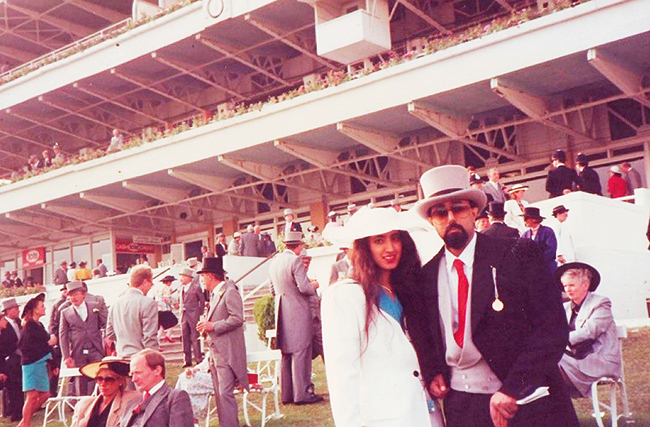
An Aristocrat at The Derby in Epsom Downs, England
Q: What was the most challenging experience you had as a Visiting Fulbright Scholar in the USA?
A: Being stopped at Madison airport by security because I was wearing cufflinks. As the alarms went off, everyone screamed “he has metal in his shirt” and pointed their guns
at me. I had to take the cufflinks off and roll them across the floor. Afterwards, they asked me, “What are they for, why are you wearing them”. I said: “To hold my sleeves together” They felt sorry for me. “Son, this is America. We have buttons here!”
Q: As a student of the early phases of British expansion in India during the 18th century, can you single out one main scholarly contribution you have made to the body of knowledge?
A: I made a study of one of the first Englishman to write a history of India.
Q: What were your main discoveries during your time at Ridi Vihare to study medieval Sinhalese culture?
A: Apart from patience, self-control, and self-discipline, I also learned to appreciate Kandyan Art. I grew to realize that it was not “folk art” and began to see it for what it was, a form of miniature painting: meticulous, precise, and controlled.
Q: What was the most challenging experience you had as a reporter during the final stages of Eelam War IV?
A: Trying not to jump into the air when explosions went off near me. The challenge was trying not to show terror in front of men who coped with fear every day.
Q: Can you explain the inspiration for and the most memorable experience during the making of ‘In Search of Malwatu Oya’?
A: The inspiration was the magic of the unknown, of going back into time. Memorable, as we were travelling in long canoes. I have never been so close to so many crocodiles for so long.
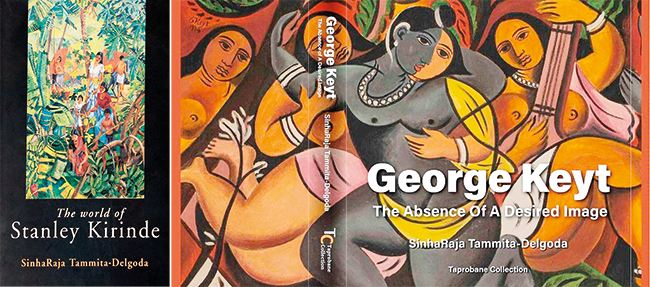
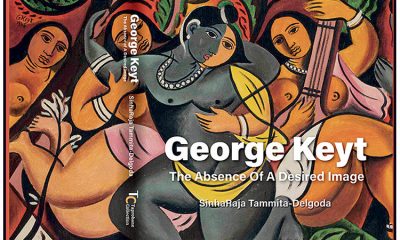
Q: What were the different approaches you took in producing two of the great works on Stanley Kirinde and George Keyt?
A: Both are huge ambitious works of art and scholarship. One project was hugely thorough and had great resources behind it. The other was done at the height of Covid, the Aragalaya, a time of no power, no fuel, no food, no order and now, no money.
Keyt was an outsider and a rebel. Kirinde was an insider and like most insiders, he was conservative and more conformist. Kirinde was part of an ancient culture and a living civilization. Keyt was the product of a recent and derivative colonial culture. At a time when colonial culture was dominant, Keyt went out of his way to reject it and embrace a totally different world. This makes him quite unique.
As there have been many studies on Keyt, our objective was to show works of art which were not published before, and which were not widely known. At the same time, we sought to look closely at the influences behind Keyt’s life and art which have not been so well studied and are not so well known.
With Kirinde, almost everyone went out of their way to help. With Keyt it was different. Great international auction houses and collectors all over the world went out of their way to help. However, in Sri Lanka two local organizations went out of their way not to help. One was an organization associated with the legacy of George Keyt, the other was an organization associated with the legacy of Lionel Wendt. Needless to say, both organizations have gone out of their way to assist and work with foreign scholars and experts.
Q: You told me that you do not like to use the term: ‘coffee table books’ in describing your works on Stanley Kirinde and George Keyt. Why?
A: History of Art is a serious intellectual and scholastic discipline, which entails the study and analysis of the visual arts. It seeks to understand art, sculpture, architecture, craft, and decoration, in their cultural and historic context.
The term coffee table is used mainly in Sri Lanka because people do not like to read. Sri Lankans generally prefer books with pictures which they can glance through without too much effort. They then keep them on long low tables for everyone to see. That is why we call them coffee table books. In the rest of the subcontinent, people not only look at the pictures, but they also read about them and think about them.
Next week, 3Ps will feature a Lawyer, CEO, and a Tourism Visionary …








Tales of Mystery and Suspense 3
The murder, in a private dining room in the house, is of a financier with whom the government was negotiating a loan. When this seemed difficult the Minister of Home Affairs agreed to lead discussions, since he had known Mr Oissel the financier when they were young. Hence the private dinner, but when the Minister stepped out for a vote, Oissel was shot just as the Division Bell rang.
The Brahms and Simon detective novels, the first of which I wrote about last week, were amongst several books by the pair that Robert Scoble gave me when I was in Australia towards the end of last year. Amongst them was another thriller of a very different sort, though that too was written and set between the wars.
Called The Division Bell Mystery, it was set in the House of Commons, the first such book I believe, and was by Ellen Wilkinson, a Labour MP who became Minister of Education in Attlee’s government after the war, having served previously as Parliamentary Private Secretary to several ministers. Her hero Robert West is also a PPS, but a conservative, and his Minister, of Home Affairs, is an old style aristocrat, not much loved by the less orthodox Prime Minister, who nevertheless needs his support on many occasions.
The murder, in a private dining room in the house, is of a financier with whom the government was negotiating a loan. When this seemed difficult the Minister of Home Affairs agreed to lead discussions, since he had known Mr Oissel the financier when they were young. Hence the private dinner, but when the Minister stepped out for a vote, Oissel was shot just as the Division Bell rang.
West was just outside the door when the shot was heard, and when he opened it saw only the dead body with a revolver beside it. The assumption that this was suicide was however challenged by Oissel’s grand-daughter Annette, who was his heir, on the grounds that he would never have killed himself. But her view was given greater credence by the Inspector put in charge of the case who said there were no burn marks on the body which would have been the case had Oissel fired the pistol himself.
Matters are complicated by the fact that Oissel’s flat had been burgled while he was at dinner, and Jenks the policeman allocated to him, who had served the Home Secretary and seemed more acceptable to Oissel than someone from the Security Service, had been killed. Matters get even more complicated when Annette says her grand-father’s notebook in which he wrote his secrets in cipher was missing.
That was found in Jenks’ pocket, and then a photographer came to West to say he had been asked by Jenks to photograph this. More worryingly for West, he finds in the Home Secretary’s drawer a few pages from the notebook with what appears to be an interpretation of the cipher.
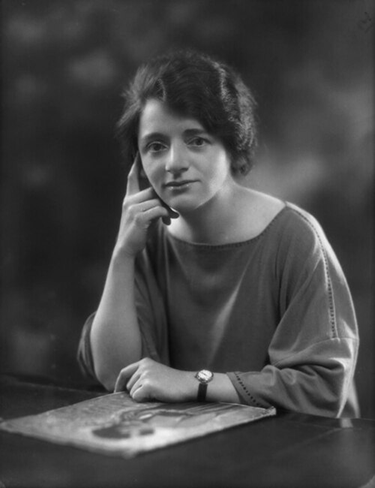
Ellen
Overwhelmed by all this he confides in a recently created peer who knows all about the business world, who insists that they leave the house party at which they had met over dinner and discuss the matter with the Prime Minister who promptly summons the Home Secretary.
But the Home Secretary had gone to Scotland to launch a ship over the weekend, so the meeting could take place only on the morning of the Monday, when difficult questions were expected on the adjournment motion. He admits at the meeting that he had got Jenks to take the notebook, and also that he knew the code since it had been created by him and Oissel when they were young.
He thought he should resign, and even contemplated suicide, but the Prime Minister told him that that would be even worse for the government, and that he should go home to bed. The Prime Minister said that he himself would handle the question, which he did with aplomb, insisting that confidentiality was needed until the inquest. What had happened would be made clear then, he declared, leaving West and Inspector Blackit and Lord Dalbeattie what seemed the impossible task of solving the murder.
Dalbeattie had suggested that West ask a female Labour MP who was very fond of him to get what information she could from the staff. That there was some involvement there had become clear when West, going back late one night to collect a briefcase he had left in a dining room, found someone lurking in the dark in the corridor outside the private rooms. Room J, where the murder had happened, was meant to be guarded throughout by a policeman, but he had left the room having felt dizzy, and it seemed that his coffee had been drugged. West’s sudden appearance however had prevented anyone else getting into the room.
Dalbeattie decides to recreate the scene of the murder and has a dinner party in Room J on the Tuesday night, inviting West and Annette and the society hostess at whose house he had met, and also Patrick Kinnaird, an MP who was engaged to Annette, as well as the Permanent Secretary to the Home Ministry.
After coffee Inspector Blackit comes in with Grace, the Labour MP who had got the confidence of the staff, and a journalist who had also been helpful, and just as they say they think they are on the track the division bell rings. Grace jumps up and tells the Inspector that that provides the solution and they get a ladder, and sure enough find the revolver in the space where the bell is. Directed at the place where Oissel had sat, it had been primed to go off with the ringing of the bell. The waiter who had helped to set things up made clear who the murderer had been.
The reason for the murder and the confused motives of all those involved made for a fascinatingly intricate mix. But also impressive in the book were the descriptions of the isolation possible in the crowded premises of the house, the forceful characterization of the members – Grace based on the writer, the society hostess based on Nancy Astor, the first female MP – and the laid back nature of senior politicians which West realized had to change in the brave new world of high finance.


 The current outbreak of anti-immigrant protests in Durban, South Africa is bound to have taken many a subscriber to value-based politics or political idealism quite by surprise. After all, this is evidence that despite the historic accomplishments of nation-builders of the stature of the late President Nelson Mandela it cannot be taken for granted that identity politics, including racism in its worst forms, is no more in South Africa.
At the time of this writing details are scarce on the substantive root causes of the protests but it could very well be that economic grievances, particularly on the part of the majority community in South Africa, are contributing considerably to the disaffection. Shrinking employment and material prospects are likely to figure majorly among the factors igniting the unrest.
Fortunately, the local authorities in Durban are losing no time in calling for peaceful co-existence among the relevant communities and are pointing to the vital importance of stepping-up national integration processes. Apparently, immigrants in sizable numbers from neighbouring countries are present in Durban. However, international TV footage of the protests quoted some local authorities as saying that the majority of the immigrants in some centres that housed them were not illegal migrants and had the documents that entitle them to be in Durban.
In the Durban protests the world has fresh proof of the socially divisive consequences of the gathering globe-wide economic disaffection, touched off particularly by the continuing crisis in West Asia. Going ahead, the world would need to brace for increasing identity-based unrest of the kind it is just witnessing in South Africa.
Considering that the material lot of ordinary people everywhere could only aggravate progressively, with the US and Iran showing no signs of negotiating an end to their confrontation any time soon, it will be left to the more democratic and progressive sections of the world community to initiate positive measures collectively to bring a measure of relief to the discontented.
The swiftness with which such relief will be provided would depend crucially on the importance those sections taking up these undertakings attach to value-based politics as opposed to Realpolitik of power politics.
Going by these yardsticks, Italy could be considered to be moving in the right direction. Recently Italy came to the fore in initiating the collective named, ‘Rome Coalition for Food Security and Access to Fertilizer’, which has as one of its aims the swift provision of fertilizer to economically weak African countries.
In a recent statement Italian Minister of Foreign Affairs and International Cooperation, Antonio Tajani, said that a principal aim of the project was to ensure that the farmers of Africa gained easy access to fertilizer, considering that food security is a growing concern among some of Africa’s economically vulnerable countries.
The statement went on to mention that some 30 countries hailing from the Mediterranean region, the Middle East, the Balkans as well as the FAO had been invited to join the coalition. The venture is far-seeing in that food security is main among the reasons for social discontent which in turn could degenerate into endemic political turmoil and bloodshed. Separatist violence and geographical fragmentation of countries wouldn’t be too far behind these developments, as Africa itself has often proved.
It is hoped that more G7 countries would take the cue from Italy and do what they could to ease the hardships of economically distressed countries, particularly of the global South. In these efforts they would need to break rank with the US, which is today brutally indifferent to the consequences of its policy of making ‘America First’, come what may.
Going by current developments, the Trump administration seems to be blithely oblivious to the wider, deleterious effects of its policy course in West Asia. Besides rendering Iran militarily and otherwise impotent nothing else seems to matter to Washington, as regards West Asia. This is policy short-sightedness of an extreme kind. After all, right now West Asia could be said to be sitting on the proverbial powder keg.
On the other hand, Iran is not giving the world the impression that it is doing anything constructive to get out of the policy straitjacket that it wove for itself decades ago. Rather than enter into a policy of ‘live and let live’ in relation to Israel in particular and initiate a process of reconciliation with the latter, it has chosen to operate within policy parameters that continue to damn Israel. This has put Israel always on the ‘defensive’ so to speak and prevented the opening up of space for meaningful dialogue.
That said, Israel is obliged to explore the possibilities of entering into a negotiatory process with the Arab-Islamic world that could lead to a de-escalation of tensions and bloodshed. It cannot continue to look at its neighbours through lenses that distort them as archetypal enemies who should be ‘wiped off completely from the face of the earth.’
In other words, the need is urgent for Realpolitik to give way to value-based politicks. Italy is beginning to prove that the latter approach could be pursued with some success. May be the EU and the UK could throw their weight behind these initiatives as well and establish that international politics could be refashioned on the basis of humane, civilized norms. The UN would need to be fully supportive of these moves and prove an organizational nucleus of the operations that follow.
In fact the time is ripe for people of conscience to collectively stand up on the side of peace and say ‘No’ to war and violence. Organizations such as the ICRC, the WHO and Medicines Sans Frontiers have already taken up this call. Referring to the widespread destruction of health facilities and their dehumanizing results these organizations have said, among other things, that ‘This is not a failure of the law. It is a failure of political will.’
True, ‘failure of political will’ among those powers that matter accounts for the runaway, uncontrollable nature of war and destruction in contemporary times, but more fundamentally it is a failure of the human conscience. It could very well be that the phenomenal levels to which violence and war have been unleashed today have had the effect of deadening consciences. This is a matter for urgent study and wide discussion.

 I would describe Indunil Kaushalya Dissanayaka as innovative and creative, and she operates under the name of Cuteefly.
Indunil always comes up with something novel to celebrate special occasions, and she does it with candles … and that’s her profession.
She was in the spotlight when she created a happening scene, with candles, for Christmas, Sinhala and Tamil New Year, and Valentine’s Day.
As lanterns light up Sri Lanka for Vesak, the Colombo-based candle maker is quietly turning wax and wick into little pieces of the festival.
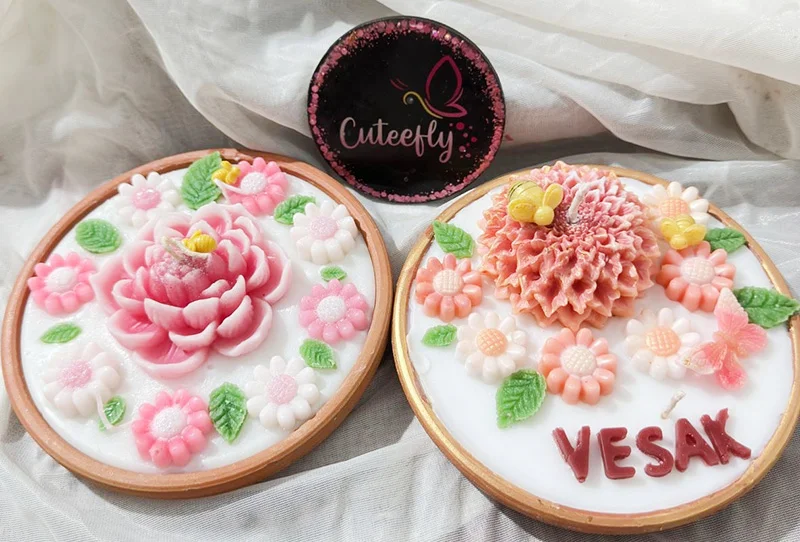
Candles reflecting Vesak themes
Her candles reflect Vesak themes – light, peace, remembrance, giving, etc., to enable you to fill your Vesak celebration with devotion and beauty.
Among her Vesak creations is a lotus-shaped soy candle, scented with sandalwood, lavender, etc., meant to burn during this Vesak Poya Day.

Indunil Kaushalya Dissanayaka: Customers
praise her for her creativity
These handcrafted Vesak candles are perfect for offering at the temple, she says.
What makes her creations so novel is that they come in different shapes, scents, themes, and all are handmade.
What’s more, her customers have heaped praise on her for her creativity.
According to Indunil, her creations are perfect as a thoughtful gift … to bring beauty, unity, and light into every moment.
Says Indunil: “Our beautifully handcrafted Unity candles are designed with premium detail and love, making them perfect for celebrations, gifts, and meaningful occasions.”
Cuteefly, says Indunil, is available online.
Readers could contact Indunil on 0778506066 for more details.
He Facebook Page is: Cuteefly.

Handmade with love

Let us dispel the roots of greed, hatred, and delusion, and transform our lives into a nobel period that brings peace and serenity – PM

Prime Minister and United Nations Resident Coordinator discuss post-Ditwah recovery and humanitarian cooperation

Further embrace the values of Buddhism founded upon non-violence, compassion and boundless loving-kindness towards all living beings – President

Showers will occur at times in the Western, Sabaragamuwa and North-western provinces and in Galle, Matara, Kandy and Nuwara-Eliya districts

IMF urges Lanka not to meddle with exchange rate

Court orders arrest of Basil in Rs. 7.8m poll funds case

‘Dates have the highest sugar content to fight Coronavirus’

Sunday Island 27 December – Headlines

#SundayIsland 17th December – Headlines

Sunday Island – 28th March

Sunday Island Headlines – 21 March

Sunday Island – 21st February – Headlines
-

 News7 days ago
All-New GRAVITE launches at LKR 6.99 Mn
-
 Features7 days ago
The NPP’s pivot to the past
-
 News6 days ago
Police probe underway to ascertain links between criminals deported from UAE and local politicians
-
 News5 days ago
Easter Sunday carnage: Court told Maulana’s statement cannot be accepted without cross-examination
-
 Features7 days ago
End of Peacekeeping
-
 Opinion5 days ago
Undermining the democratic political framework
-
 News5 days ago
UK passport holder hiding here wants to have deportation order rescinded to leave without blemish
-
 Features2 days ago
The Division Bell Mystery