
Business
DFCC Bank excels among finalists at SLIM DIGIS 2.1 –


“Salli Athin Allanne Na” – Digital Marketing Campaign
DFCC Bank, the bank for everyone, was recognised as a finalist at the SLIM DIGIS 2.1 awards recently for its exceptional digital marketing campaign, “Salli Athin Allanne Na” that was launched to promote the DFCC Virtual Wallet.
The timely launch of this campaign saw a faster adaptation of DFCC’s digital wallet amongst customers during an era where the use of cash was not the preferred option for transactions due to the rapid spread of COVID-19.
This marks the first instance in which DFCC Bank has participated in the SLIM DIGIS awards, which recognised outstanding efforts in digital marketing on a national platform. DFCC Bank’s campaign for its innovative digital wallet and banking solution, DFCC Virtual Wallet, was recognised amongst the finalists for Best Digital Marketing Campaign in the Banking and Finance category.
The SLIM DIGIS awards ceremony was held at Monarch Imperial, Thalawathugoda with over 400 digital marketers representing all industries in attendance. The Bank’s contracted digital and creative agencies; Loops Digital and Storybook respectively were also recognized for their contribution to this campaign.
Expressing his sentiments, Thimal Perera – CEO at DFCC Bank said, “Being recognised among the finalists during our very first involvement with such a reputed platform as SLIM DIGIS, is a great source of pride for us. As one of the Sri Lanka’s fast growing commercial banks in Sri Lanka, and one that is committed to providing banking for everyone, we understand the critical importance of digital enablement. DFCC Virtual Wallet is a result of that understanding, providing a fully-featured digital banking experience, which goes beyond transactional banking and embraces a lifestyle approach that is open to collaboration with other partners. Thus, this achievement is an important milestone for us on our brand journey towards emerging as one of Sri Lanka’s most customer-centric and digitally enabled banks.”
Nilmini Gunaratne – Head of Marketing and Sustainability at DFCC Bank added, “We understand that the marketing environment today is in flux with digital marketing emerging as the most widely consumed channel that allows you to measure the reach and success rates. Thus, Digital is now a key element of the Banks communication strategy to reach our target markets on the varied financial propositions we have to offer. The “Salli Athin Allanne Na” campaign was a digital-led 360 campaign, where our objectives were to obtain maximum possible App installs, activations and increase transaction volumes on the Wallet. With these objectives in mind we rolled out the digital campaign across multiple channels including Face book, Instagram, YouTube, TikTok, Google and programmatic ads. The campaign ran for several months and was successful. Thus, it is with great pride and satisfaction that we accept this recognition which was a result of great team work.”
The SLIM DIGIS awards are organized by the Sri Lanka Institute of Marketing (SLIM) and recognize and celebrate Sri Lanka’s best digital marketing work, innovation and talent. SLIM is the national body for marketing in Sri Lanka and the SLIM DIGIS is among Sri Lanka’s most prestigious awards programmes that recognize innovation and budding talent in the digital marketing space.



Oil prices have dropped following the United States and Iran’s signing of an interim peace agreement, resuming a slide interrupted by US President Donald Trump’s warning that he could restart his military campaign.
Brent crude fell 2.3 percent on Thursday in Asia, returning the international benchmark to near to where it was 24 hours previously
Brent futures for delivery in August stood at $77.73 as of 05:30 GMT, only about 7 percent higher than before the US and Israel launched their war on Iran on February 28.
After several days of declines, Brent briefly spiked above $81 a barrel on Wednesday after Trump warned that the US could “go right back to dropping bombs” on Iran if it doesn’t “behave”.
Shrugging off losses on Wall Street overnight, Asian stock markets rallied on renewed optimism for an end to nearly four months of disruption to global energy supply chains.
Japan’s benchmark Nikkei 225 and South Korea’s Kospi both hit all-time highs, gaining more than 2 percent and 1.7 percent, respectively.
Taiwan’s Taiex rose as much as 1.3 percent.
Hong Kong’s Hang Seng Index bucked the trend, dropping 1.7 percent.
US stock futures, which are traded outside of regular market hours and often foreshadow the next day’s performance, climbed, with those tied to the benchmark S&P 500 and the tech-heavy Nasdaq Composite climbing about 0.8 percent and 1.3 percent, respectively.
“Putting aside the contents of the MoU, markets are likely to be welcoming the fact that both the US and Iran signed it sooner than initially expected,” Norihiro Yamaguchi, lead economist for Japan at Oxford Economics, told Al Jazeera.
“The timing is also supportive, as the major central bank policy meetings have now passed, reducing a key source of uncertainty,” Yamaguchi said.
“For Asian markets, the renewed strength in US semiconductor stocks should provide an additional boost, given the region’s heavy exposure to tech shares.”

Pakistani Prime Minister Shehbaz Sharif, who mediated the negotiations between Washington and Tehran, said on Wednesday that the US-Iran memorandum of understanding (MoU) had entered into force with “immediate effect”.
Sharif said Iran would “instantly reopen” the Strait of Hormuz and the US would “immediately” lift its naval blockade of Iranian ports, though it was not immediately clear if the announcement had any effect on boosting maritime traffic in the critical waterway.
Shipping in the strait has been reduced to a fraction of peacetime levels due to the threat of Iranian missiles, drones and mines, as well as the US blockade.
The blockage has resulted in an estimated daily shortfall of 14 million barrels in the global oil market, according to the International Energy Agency (IEA).
Fabien Yip, a market analyst at IG in Sydney, said that while markets have responded to the MoU with optimism, the relief is “largely priced in” as practical issues such as the backlog of vessels in the Gulf and mine clearing operations must still be resolved.
“There is a notable divergence between sentiment and physical supply – production ramp-up and logistics normalisation will take time,” Yip told Al Jazeera.
While more than 500 vessels are estimated to be waiting to exit the Gulf through the strait, shipping companies have expressed concern about the lack of clarity on how to ensure the safety of their vessels and crews in the channel.
In a statement earlier this week, the Baltic and International Maritime Council (BIMCO), one of the world’s largest associations for shipowners, said the US and Iran had yet to provide information about “key aspects such as timings and safe routes”.
“Due to lack of details and a history of overly optimistic reassurances, we believe the security situation for the shipping industry remains volatile, and we still consider it very risky for ships to commence transits at this point,” Jakob Larsen, chief safety and security officer at BIMCO, said in a statement on Monday, responding to the initial announcement of the MoU.
“We advise shipowners to continue doing thorough risk assessments and appeal to all parties to put the safety of seafarers first.”
[Aljazeera]
Business
Pelwatte Dairy commissions Sri Lanka’s largest dairy effluent treatment plant to advance ESG leadership and global market readiness
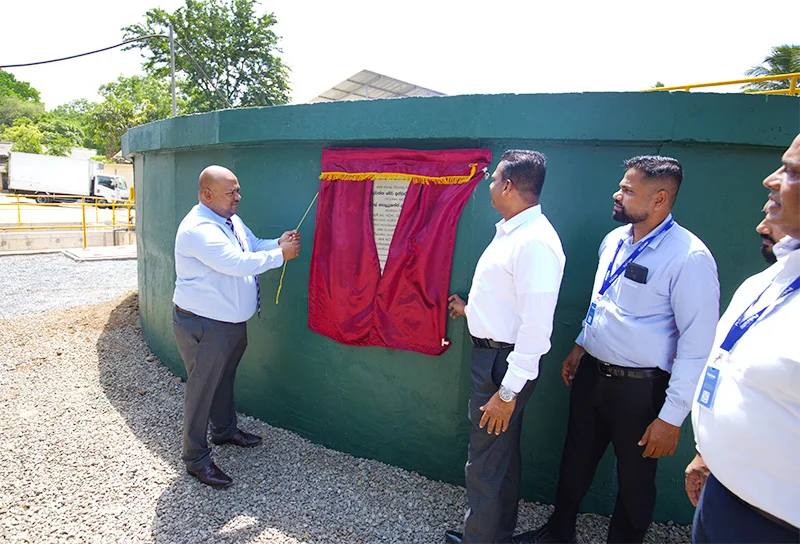
Pelwatte Dairy Industries Limited has successfully commissioned its state-of-the-art Effluent Treatment Plant (ETP) at its Buttala manufacturing facility, marking a significant milestone in the company’s journey toward environmental stewardship, ESG compliance, and responsible dairy processing.
This facility is the largest Effluent Treatment Plant within a dairy processing operation in Sri Lanka, underscoring Pelwatte Dairy’s commitment to aligning its operations with global environmental standards and strengthening its position in international markets.
Strategic Commitment to ESG and Responsible Growth
This investment reflects a deliberate and forward-looking strategy by the Board of Directors to embed Environmental, Social, and Governance (ESG) principles into core operations. As Pelwatte Dairy continues to scale its processing capacity and expand its export footprint, environmental compliance has become a central pillar of sustainable growth.
The ETP has been designed to meet the increasingly stringent environmental expectations of Western, European, and Far Eastern markets, where compliance with wastewater discharge standards, environmental reporting, and sustainability practices are essential for market access.
Future-Proofed Design for Scalable Growth
The facility has a base treatment capacity of 250 m³ per day, with the engineered capability to handle peak volumes of up to 325 m³, representing approximately 30% additional capacity to accommodate future growth in processing volumes. [ETP Opening | Word]
This future-ready design ensures that Pelwatte Dairy can maintain consistent environmental performance even under high production scenarios, reinforcing the company’s commitment to long-term compliance, operational resilience, and responsible expansion.
Advanced Technology Supporting Global Compliance
The ETP integrates advanced treatment technologies, including:
Integrated Dissolved Air Flotation (IDAF)
Anaerobic and Enhanced Sequential Batch Reactor (AnSBR/eSBR) systems
Dedicated CIP wastewater management
Real-time automated process monitoring
Screw press sludge dewatering
These systems ensure high treatment efficiency and compliance with critical environmental parameters such as Biological Oxygen Demand (BOD), Chemical Oxygen Demand (COD), and nutrient discharge limits.
The plant is fully aligned with Sri Lanka’s stringent Central Environmental Authority (CEA) discharge standards and supports adherence to ISO 14001 Environmental Management System (EMS) practices, reinforcing Pelwatte Dairy’s structured approach to environmental management and continuous improvement.
Regulatory Engagement and Endorsement
The inauguration ceremony was attended by distinguished representatives from the Board of Investment (BOI) Environmental Division and Central Environmental Authority (CEA) provincial and district offices, reflecting strong regulatory engagement and endorsement of the environmental standards achieved through this investment.
Their presence underscores Pelwatte Dairy’s proactive approach in working closely with regulatory authorities to ensure compliance with national environmental frameworks while aligning with global best practices.
Enhancing Global Credibility of Sri Lankan Dairy
With this development, Pelwatte Dairy strengthens its position as a responsible and globally competitive dairy processor, capable of meeting the environmental expectations of leading international buyers and regulatory bodies.
This initiative not only enhances the company’s ESG profile but also contributes to elevating the sustainability standards of Sri Lanka’s dairy industry.
Acknowledgements
Pelwatte Dairy extends its sincere appreciation to its project team, operational staff, consultants, regulatory authorities, and partners for their contributions. Special recognition is extended to Industrial Solutions Lanka (Pvt) Limited for their engineering expertise and successful project delivery.
Business
Port City Colombo Forum in Dubai positions Sri Lanka as South Asia’s gateway for UAE business expansion
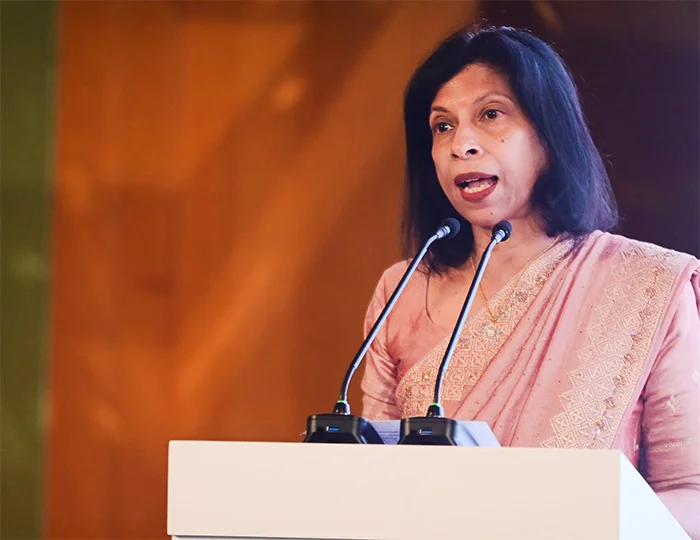
Exclusive invitation-only engagement at the Ritz-Carlton DIFC brought together approximately 200 senior UAE business and diplomatic leaders to explore Sri Lanka’s role as a platform for regional growth
The Embassy of Sri Lanka in the United Arab Emirates and the Consulate General of Sri Lanka in Dubai and the Northern Emirates, in collaboration with Colombo Port City Economic Commission and CHEC Port City Colombo Pvt. Ltd., hosted Globalisation and the Sri Lankan Opportunity – From Recovery to Relevance: Sri Lanka’s Moment in the Evolving Global and Regional Economy, an invitation-only diplomatic and investment engagement at The Ritz-Carlton, Dubai International Financial Centre.
The forum brought together approximately 200 senior leaders from across UAE corporates and business chambers alongside Sri Lanka’s most senior diplomatic and investment representatives – among them senior executives from Sobha Realty, Binghatti, Oracle, Emirates Airlines, First Abu Dhabi Bank, JLL, Cushman & Wakefield, CBRE, IFS, Danube and Samana Developers – reflecting the depth of interest from the UAE’s leading industries in Sri Lanka’s evolving economic proposition.
Opening the forum, Prof. Arusha Cooray, Ambassador of Sri Lanka to the United Arab Emirates, set the tone for a morning of substantive dialogue, speaking to the depth and durability of the UAE–Sri Lanka partnership, one built on decades of trade, people, and shared economic ambition, and affirming Sri Lanka’s commitment to taking that relationship into a new chapter defined by what Sri Lanka can offer UAE businesses seeking to grow their presence across South Asia.
The keynote address was delivered by Ghanim Al Falasi, CEO of Falak Tayyeb Platinum and Senior Vice President/Director General’s Office for of Dubai Silicon Oasis (DSO), who drew on over a decade of senior leadership experience in the UAE’s innovation and technology ecosystem to frame the question of what South Asia’s emerging platforms offer to forward-looking UAE businesses. He noted that while Dubai provides global access to capital and logistics, Colombo offers strategic access to South Asia, and that together the two cities can function as complementary platforms serving different but mutually reinforcing roles in the regional economy.

What the Trump-Iran agreement says about Lebanon, Hormuz and Uranium

Scotland face West Indies with a chance to reopen World Cup wounds

Moscow hit by largest Ukrainian attack since start of Russia’s full-scale war

Sooryavanshi to have parents with him on tour of Ireland and England

Luis Diaz, Colombia defeat World Cup 2026 debutants Uzbekistan

Oil prices fall, stocks rally as US, Iran sign framework to end war

‘Dates have the highest sugar content to fight Coronavirus’

Sunday Island 27 December – Headlines

#SundayIsland 17th December – Headlines

Sunday Island – 28th March

Sunday Island Headlines – 21 March

Sunday Island – 21st February – Headlines
-

 News7 days ago
CIABOC summons Yoshitha over his participation in British Navy training programme
-

 News4 days ago
Release of 2025 O/L results likely to be delayed
-

 News7 days ago
Justice Minister responds to social media claims he represented Easter Sunday ringleader
-

 Sports4 days ago
Tharanga set for high-profile javelin clash in Ostrava
-

 Features5 days ago
Politics of protected species
-

 News3 days ago
Beijing Capital Airlines to resume flights to Colombo signalling boost to tourism
-

 News4 days ago
Theft of USD 2.5 mn from Treasury: CoPF accused of complicity in NPP cover-up
-

 News6 days ago
Commonwealth lawyers urge Lanka to uphold rule of law