
Features
De-politicizing education: All froth, no beer, says Dr Tara de Mel

BY RANDIMA ATTYGALLE
In an interview with the Sunday Island, Dr. Tara de Mel, the Executive Director of the Bandaranaike Academy for Leadership & Public Policy (BALPP) and the former Secretary to the Ministry of Education and Higher Education says that, ‘education is the most sensitive, emotive and even explosive subject that any government will need to manage with efficiency, professionalism and devoid of political meddling.’ Dr. de Mel- the former Vice Chairperson of the National Education Commission is also credited to the work of several Presidential Task Forces on Education she has served on.
Throughout her career she has promoted excellence and equity in education, championed child protection and in 2019 was awarded the National Honour, Sri Lanka Sikkhamani. A member of the Global Consultative Group-Mindfulness Initiative UK, she co-founded ‘Mindful Educators in Sri Lanka’ and co-authored the Manual for Mindful Educators in 2021. A medical doctor by training and a one-time senior academic at the University of Colombo’s Medical Faculty, she also drives home the message that ‘multi-disciplinary’ approach to education’ is essential to brave the contemporary global challenges.
Q: In a country such as ours where people believe that access to education can change their lives, what are the strengths the policy makers could still capitalize on in implementing the most urgent educational reforms at school, university and vocational levels to take Sri Lanka to the next level?
A: Sri Lanka is a country that has been regarding education as a fundamental ‘human right’ and a ‘public good’ for decades, and that position is easy to consolidate on, if there is sufficient political will and consequently adequate funding. Coupled with this, the innate intelligence, imagination and curiosity that most children and young people in Sri Lanka have, is a great strength. The average parent has a desire and a foremost ambition of imparting a good education to his/her children- all of these are advantages for policy makers to take stock of.
Q: What are the ‘historic mistakes’ we made to undermine the education system which was modeled on ‘quality and equity’ envisaged by minds such as C.W.W Kannangara? How can the country reverse these mistakes now?
A: Historic ‘mistakes’ made by decision-makers include weak and wavering political will to transform education to that of a world-class system. Inconsistency in policy implementation, lack of robust and forward-looking legislation supporting continuity in policy regardless of government change. Reversing such mistakes is a daunting task. Education is perhaps the most sensitive, emotive and even explosive subject that any government will need to manage with efficiency, professionalism and devoid of political meddling. Bold and visionary leaders are needed for spearheading such a transformation. The need for de-politicizing education has been spoken by many, but acted upon by very few.
Q: What is the road map you propose for Sri Lanka to embrace a more job-oriented/ industry-oriented education, commencing at school level and advancing it at undergraduate level?
A: First of all, the school system should be sufficiently geared to equip and educate students from primary school onward, on skill-sets that are imperative for today’s world of work. Such skills include not just the famous 21st Century Skills – 4 Cs (i.e. creativity, critical thinking, collaboration & communication), but advanced cognitive skills like complex problem-solving, analysis, out-of the-box thinking, and self-understanding. When seeking employment or when trying become an entrepreneur or when creating one’s own start-up, today’s school-leavers need more skills than knowledge.
The curricula need to be revised and upgraded to impart such skills, but the pedagogy needs drastic change. Delivery of the curriculum rests almost entirely with the teaching staff, and unless teachers are recognized, honoured and rewarded adequately, the service they deliver will be sub-optimal.
Teachers need to be paid well, the Teacher Service Minute needs to be revised, and the benefits should be enhanced. Teacher training needs to be well funded, regularized, made mandatory and master trainers need to be selected from experienced persons. Without equipping and upskilling teachers, curricula reform won’t be successful.
Q: In the rat race of ‘over educating’ children, (especially in the post-pandemic world as a means of compensating for the lost years), creative intelligence of children is often undermined here at home. Particularly, in settings such as ours where education is so polarised, creative and emotional intelligence is grossly overlooked. What are your thoughts and what can be done to address this issue?
A:First of all, the ‘over-education’ will automatically cease if a substantial revision and restructuring of the three national exams (Grade 5 scholarship exam, GCE O’Level and A’Level) are executed. The hugely competitive nature of all three exams and the predictability of the questions that are asked, make students flock to private tuition classes, paying massive sums of money.
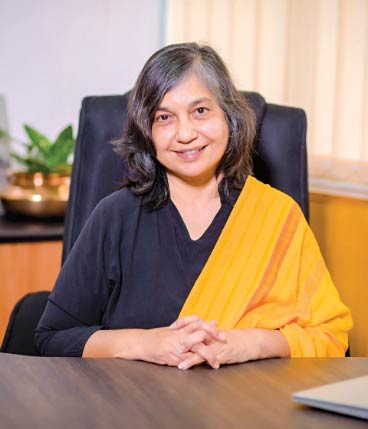
Dr. Tara de Mel
If classrooms are kept small with healthy teacher-pupil ratios and if teachers are allowed to innovate imaginatively within a student-friendly curriculum, with no mad rush to ‘cover the syllabus’ and if SEL – (social-motional -learning) is made an integral component of the tutorial schedule, I am sure school would be more joyful and fun!
Q: Can you share some best practices from the region and beyond which can be replicated in our setting to promote skill-based formative years of learning?
A: Examples from the region are many and would include the Indian, Singaporean and Malaysian experience. In Singapore, primary school students engage in project-based learning, which encourages critical thinking, collaboration and problem-solving skills. Projects are often interdisciplinary, combining subjects like science, mathematics and language- arts.
ICT is integrated into the curriculum to develop digital literacy. Students learn to use software tools, coding, and basic programming through platforms like Code for Fun.
In India, Activity-Based Learning (ABL) is popular. In many Indian schools, especially in states like Tamil Nadu, ABL is employed where students engage in hands-on activities to learn concepts, fostering critical thinking and problem-solving skills.
Art-Integrated Learning is also used as a medium to teach various subjects, enabling students to explore creativity while understanding core academic concepts. For example, drawing a historical event or creating models in science.
In Malaysia – KSSR (Kurikulum Standard Sekolah Rendah) can be cited. The curriculum emphasizes student-centered learning, where students are encouraged to take an active role in their education. This includes inquiry-based learning, where students investigate topics and present their findings. STEM Education: Primary schools incorporate STEM (Science, Technology, Engineering, and Mathematics) through activities like robotics, coding, and simple engineering projects. These activities develop analytical and critical thinking skills.
Q: What are the long-term social and psychological dilemmas you see regarding the local Grade 5 scholarship exam? Robbing many children of their formative years, some gain admission to better schools while many are left in the lurch. Isn’t there a more equitable alternative to this system?
A:I am mooting a simplified, student-friendly and better structured G5SE, so that a 10-year old is not stressed and burnt out. What’s wrong with reducing the load and making the two papers only one? That single paper could test simple IQ or problem solving skills. After all, the exam is meant to help identify bright students who are from under-served and rural populations so they can be allocated to better schools.
Q: You have been assisting in designing educational programs with ‘mindfulness’ as their base; initiatives which champion values, ethics, integrity and respect for diversity. How critical is it to promote inclusivity, religious and cultural tolerance early in life? Sadly, in state schools especially, regardless of the multi-ethnic student base, we hardly see any student collaborations to promote these values.
A: This is extremely critical. Mindfulness, empathy and social emotional learning should be integrated into the curriculum of every grade. When children learn these practices from an early age, a significant transformation occurs in the brain. Modern neuro-science has demonstrated with ample evidence how mindfulness-related practices alter the structure and function of the brain and the mind. A deeper sense of understanding, self awareness, compassion and resilience can result, and these could contribute towards peaceful and harmonious co-existence in multi-faith and potentially conflictual situations. Governments should give pride of place for this type of teaching, just as it happens in global education systems.
Q: In a highly-connected modern world, what are the practical collaborations that local schools, particularly less-privileged schools could forge with regional counterparts as means of sharing knowledge and technology, better teaching practices etc.?
A: ‘Twinning’ of schools has been a practice adopted on and off, where better served schools would ‘twin’ with lesser served schools, so that there could be sharing of teachers, learning experiences and other resources. This same model can be expanded into ‘twinning’ between overseas and local schools. Using technology like ICT the potential for this initiative is enormous, and could be adopted initially as pilot and later expanded in greater scale.
Q: What measures could be taken to empower local teachers and enhance their capacities so that a ‘fully-fledged’ teacher is produced, beyond subject expertise?
A: Teachers by definition need to ‘teach’ but do so in a holistic manner, without confining themselves to one-way education in class, using pencil-paper learning exercises only. A teacher is expected to be role model, a ‘parent’ in school, and much more. Empowering and encouraging teachers to be all of that is imperative. Systematic, regular and high quality teacher-training programmes are one way to make this a possibility. Overseas exposures to better systems, making available a lot of resources for teachers to upskill themselves and enabling internet/digital access to the teaching community are all important.
Q: As a professional wearing multiple hats of a doctor, educationist, administrator and more, what are your thoughts about the importance of encouraging a multi-disciplinary approach to education – both academically and professionally?
A: In today’s world, when we are grappling with poly-crises and multiple challenges in the third decade of the 21st century, I don’t think we have the luxury of having a ‘mono-disciplinary’ approach to education.
Multi-disciplinary education
involves integrating knowledge and approaches from multiple academic disciplines to provide a more comprehensive understanding of a topic or problem. In this approach, students learn to apply concepts, theories and methods from different fields to solve complex issues that cannot be adequately addressed by a single discipline. For example, a multi-disciplinary programme in Environmental Studies might include courses in biology, economics, political science and law, allowing students to understand environmental issues from various perspectives.
Mono-disciplinary education
, on the other hand, focuses on in-depth study within a single academic discipline. In this approach, students concentrate on mastering the theories, methods, and knowledge specific to one field, such as mathematics, history, or chemistry. The aim is to develop a deep and specialized understanding of that particular discipline. So, the latter is an outdated approach to the pressing problems we face and will face.
(Photo credit: BALPP)

by Col. (R) Nalin Herath
There is a question that the international community must periodically ask itself: What happens to a State after its regime has been ousted?
The question is particularly relevant when examining Iraq and Libya. Saddam Hussein and Muammar Gaddafi were authoritarian rulers. Their governments were associated with political repression, human-rights violations and the suppression of political opposition. None of this should be ignored or excused. But recognising the failures of authoritarian rule does not prevent us from asking another, equally important strategic question:
Did the removal of these regimes adequately prepare for what came next?
The experience of Iraq and Libya suggests that removing a ruler is considerably easier than replacing the political, administrative and security architecture around that ruler.
Danger of confusing regime change with State reconstruction
A state is more than its leader. It consists of institutions, security forces, civil servants, courts, political structures, infrastructure, economic systems and, perhaps most importantly, an accepted monopoly over the legitimate use of force. When an authoritarian system has concentrated enormous power around one individual, removing that individual can expose weaknesses that were previously hidden. The strategic mistake is to assume that once the dictator has gone, a democratic and stable state will naturally emerge. History does not support such an assumption. The aftermath of Iraq demonstrates this particularly clearly. Following the 2003 invasion, the Coalition Provisional Authority issued Order No. 2, formally dissolving the Iraqi Ministry of Defence and the Iraqi Army, among other security institutions. A US congressional report later documented the enormous consequences of this decision, including the disappearance of hundreds of thousands of military personnel from the institutional framework of the state. Whatever the intentions behind the decision, the strategic consequence was that an established security structure had to be rebuilt while the country was simultaneously experiencing political upheaval and growing violence. That is a dangerous combination.
Iraq: Removing the structure before building the replacement
Saddam Hussein’s government was unquestionably authoritarian. It also reflected a complicated sectarian and political structure in which members of the Sunni minority occupied disproportionate positions of power despite being a demographic minority. But the question for strategic planners should not simply be whether Saddam deserved to remain in power. The question should have been:
What institutional structure would replace the system once he was removed?
An army can be politically controlled without being politically representative. A bureaucracy can serve an authoritarian government while still providing essential state functions. A security institution can be reformed without necessarily being destroyed. The distinction between reforming institutions and eliminating institutions is therefore critical. The post-2003 experience demonstrated the consequences of institutional disruption. Security vacuums contributed to insurgency and instability, while the process of rebuilding Iraq’s security forces took place amid an increasingly deteriorating security environment. The lesson is not that authoritarian institutions should never be reformed. The lesson is that state capacity should not be casually destroyed without a credible replacement.
Libya: prosperity, authoritarianism and institutional fragility
Libya presents an even more complicated case. Gaddafi’s government was authoritarian and deeply personalised. Political freedom was severely restricted, and the security apparatus was deliberately structured around regime survival. Yet Libya, under Gaddafi, also used substantial oil revenues to fund education, healthcare, infrastructure and social services. World Bank data from around the end of the Gaddafi era show life expectancy reaching approximately 75 years by 2011, skilled attendance at birth at 100 percent and measles immunisation at 98 percent. This does not prove that Gaddafi’s system was politically legitimate. It demonstrates something different: economic and social outcomes can coexist with authoritarian political structures.
The Great Man-Made River illustrates the scale of Libya’s investment ambitions. The World Bank described the project as one of the world’s largest engineering schemes, involving thousands of kilometres of planned pipelines to transport water from deep desert aquifers toward the populated coastal belt. The original project was estimated at approximately US$ 25 billion over several phases. Again, this should not become nostalgia for dictatorship. It should become a lesson in state capacity.
What happened after Gaddafi?
The post-2011 experience is perhaps the clearest illustration of the vacuum problem. Libya did not simply move from dictatorship to a consolidated democratic state. Instead, competing armed groups, political factions and institutions emerged. A UN economic and social affairs analysis concluded that the fall of the Gaddafi regime exposed weak state institutions and that the post-Gaddafi period was characterised by the proliferation of armed militias and institutional fragmentation.
The World Bank has similarly described how the security vacuum allowed armed groups to expand, while attempts to integrate them into the formal security apparatus produced a hybrid system in which state institutions and powerful armed groups operated alongside one another. This is the heart of the lesson. The consequences of regime change were also evident in Libya. The 2012 Benghazi attack, later portrayed in 13 Hours: The Secret Soldiers of Benghazi, illustrated the security vacuum that emerged after Gaddafi’s fall. The collapse of central authority allowed militias and competing armed groups to fill the space left by weakened state institutions. The lesson is clear: removing a regime may achieve military victory, but without a credible plan to rebuild the state, victory can quickly become a security vacuum.
When the state withdraws, something else occupies the space. If the replacement is not a legitimate national institution, the vacuum can be filled by militias, tribes, ideological movements, criminal networks or competing political authorities. The vacuum does not remain empty.
Terrorism question
There is another uncomfortable issue. Authoritarian regimes frequently suppress political and armed movements through coercive security systems. When those systems disappear abruptly, previously contained organisations can find new operating space. This does not mean that dictatorship is an appropriate method of counterterrorism. It means that counterterrorism cannot be separated from State capacity. The international community therefore needs to distinguish between defeating a particular terrorist organisation and maintaining the institutional conditions that prevent multiple armed actors from competing for power. The destruction of one regime does not automatically eliminate the forces that created insecurity. Sometimes it creates an environment in which those forces multiply.
Strategic mistake: winning the war but losing the peace
Military intervention can have a clearly defined operational objective. State reconstruction does not. A military campaign may successfully remove a government in weeks or months. Building legitimate institutions can take decades.This creates a fundamental strategic asymmetry. The shorter the planning horizon for intervention, the greater the danger of a long-term vacuum. The international community therefore needs to think beyond the first question: How do we remove the regime?
It must ask: Who governs the country the next morning? Who controls the borders? Who controls the security forces? Who pays government employees? Who maintains electricity, water and hospitals? Who protects critical infrastructure? Who administers justice? Who prevents armed groups from becoming alternative governments? Who provides political legitimacy? And perhaps most importantly: Who possesses the authority to enforce the decisions of the new state? If there are no convincing answers, regime change is only the beginning of the problem.
The lesson should not be that the United States or its allies should never intervene. Nor should it be that Saddam Hussein or Muammar Gaddafi should be rehabilitated as models of governance. The lesson is more practical. Regime change must never be confused with state-building.
Before dismantling an established political order, external powers need a credible understanding of the institutions that will replace it. Security-sector reform should normally distinguish between individuals who must be removed and institutions that must be preserved. A national army may need reform. A ministry may need restructuring. A security service may need accountability and civilian oversight. But destroying institutional capacity without having an operational replacement can create consequences far beyond the original objective.
Wider geopolitical lesson
The consequences of Iraq and Libya did not remain within their borders. State fragmentation affects neighbouring countries, migration, organised crime, arms trafficking, terrorism, energy markets and regional power competition. In today’s interconnected world, a failed transition in one country can become a security problem for an entire region. That is why intervention planning should include not only military objectives but also political, economic, humanitarian and security-sector objectives. The most important planning document may therefore not be the operational plan for removing the regime. It may be the plan for Day One after the regime has disappeared.
History should not be written as a simple choice between dictatorship and democracy. The real strategic challenge is more complicated. Saddam Hussein and Muammar Gaddafi were dictators. Their governments committed serious abuses, and their populations had legitimate grievances. But the failures of authoritarian rule do not automatically justify the destruction of state institutions without a credible plan for rebuilding them. The experience of Iraq and Libya demonstrates a fundamental principle of international security: A political vacuum is not neutral space. Someone will fill it. If legitimate national institutions cannot fill that space, armed groups, sectarian interests, extremist organisations or foreign-backed factions may do so. The ultimate lesson for the United States, its allies and the wider international community is therefore straightforward:
Removing a regime may win the immediate battle. Building a legitimate, functioning and secure state determines whether the intervention succeeds in the long term. The world should learn to ask not only “How do we remove the dictator?”. It must also ask:
“What happens to the country when he is gone?”
That may be the most important strategic question of all.
(The writer is the Secretary General of the Ceylon Chamber of Shipping, former Director General of the Institute of National Security Studies (INSS), and former Spokesman of the Ministry of Defence. He is also a Non-Resident Fellow at the London Dialogue. His areas of expertise include international relations, geopolitics, maritime affairs, national security, economic policy, and strategic governance. He is a consultant at JITT Group and a member of World Pace Board.).
Tales of Mystery and Suspense – 23
By Prof. Rajiva Wijesinha
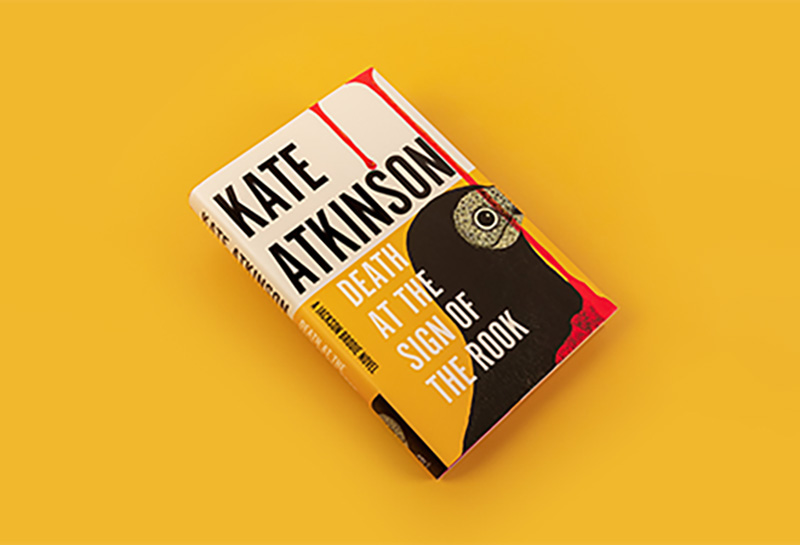
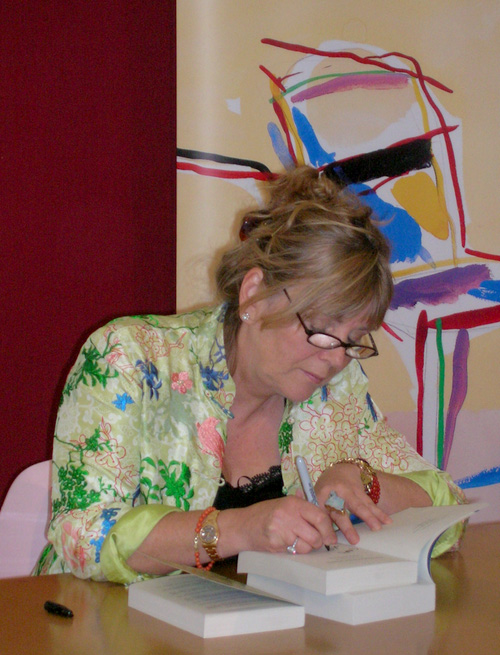
As I have noted with regard to the adventures of John Rebus, I am indebted to Dinali Fernando and her husband Steve for whole hosts of thrillers. The latter strongly recommended Kate Atkinson when I borrowed four books. I wondered about this, for I had not been too impressed with her debut novel, Behind the Scenes at the Museum, which was amongst the entries I had to judge for the Eurasian section of the Commonwealth Writing Prize. Two decades later, I had forgotten what it had been about.
But I am glad Steve persuaded me to read her. Kate Atkinson is distinctively British, and Death at the Sign of the Rook is set in a country house and the surrounding village, and seems a modern descendant of the laidback Agatha Christies I so much enjoy.
There are, however, many differences in that we have a policeman who can go rogue, like Rebus, with again a female sidekick who has a mind of her own, again like Rebus. But Jackson Brodie has retired and set up as a private investigator, while Reggie, a young lady, is still in the police.
There is a lesbian couple living in the converted dairy of the manor house, as has occurred in Agatha Christie too, in A Murder is Announced. But they are peripheral to the story, unlike Ben, the brother of one of them who left the army after losing a leg in Afghanistan. When he turns up at the Manor House to shelter from a snowstorm, along with its chatelaine, Lady Milton, he is asked to answer the door as various characters turn up, including Jackson and Reggie, who then starts fantasising about him.
The others who turn up are two couples, one from America, who have paid for a murder weekend at the hotel. The family is impoverished, and has sold lots of pictures to survive, but most recently a Turner had been stolen, almost certainly by Lady Milton’s housekeeper Sophie, who vanished one night along with the picture. Reggie had been involved in that investigation, but there had been no trace of either picture or young lady.
Jackson Brodie suspects a connection between that theft and the one he has been called in to investigate, which has not been reported to the police. The picture hung opposite the bed of an old woman whose carer vanished after she died, along with it. Her children, adopted twins, have asked Jackson to investigate and also try to trace the carer, though he suspects something strange in that they did not go to the police.
Kate Atkinson
Brodie, in studying the stolen art, is also struck by the disappearance of a Rembrandt from a house in Scotland, along with a member of the cleaning staff. He thinks the three women might be the same one.
But Brodie’s assumption that the three women who vanished when valuable pictures did were identical would not have helped except that Beatrice, as she was also called, kept turning up, including to the funeral home where the old lady’s body was kept. And then that picture turned up, in the village church, and was found by the local vicar, Simon Cate, whose life story is also a prominent feature of the novel. He was an aspiring actor but then smitten by faith, and became a priest, but in time he lost his faith. His wife left him after the death of their son, and he is now in this backwater, where he feels he is of no use to anyone. But he has a great feel for living beings, and his most successful service has been one in which he blessed pets. And he was deeply concerned about the bees that Ben looks after for his sister and her wife.
He too staggers into the manor house in the midst of the storm, in which everyone concerned loses their way comprehensively. But amongst those Ben lets in is a man in a tracksuit with cuts and bruises, who then vanishes after he has been led to a bedroom, when Ben went in search of brandy. We soon work out that it is the escaped murderer about whom Reggie has been alerted.
Simon also turns up, through the back door, carrying the picture and also a gun, for he has found the dead body of one of his parishioners when he went to her house in search of his mobile phone. She had been shot and he had picked up the gun he found there. But he could not tell the police, for though he called he had lost his voice, and for the last few days had communicated only through writing.
This chaotic mix of characters at the manor house is further complicated by the group of players putting on the murder mystery play though some members have either cried off or died before reaching the venue. So, there is much doubling up and confusion over who is an actor and who is not.
The grand now largely empty rooms of the manor house, and its various odd passages and multiple doors, make it a splendid set for the lunacy that runs on and on. Reggie finds herself in a pantry Atkinsonwith a dead body, though this turns out to be the nanny who fell down the stairs and was put there by Lady Milton’s younger son. And there is high drama on the roof when the murderer nearly kills Ben, but he is saved by Reggie, and when he tries to kill Brody with an axe, he is shot by Beatrice, who has been the maid who served at the dinner before the murder mystery play, and explains to Brody how she has managed all her thefts.
And then in the melee, she vanishes on a motorbike, along with the daughter of the old lady’s adopted daughter, the only person who seemed to grieve at the funeral, and to whom the old lady had left her house in a codicil to her will, which her children have not known about. She leaves the picture to the carer, but it is brought to Simon Cate as he lies in hospital, recovering from a heart attack which adds confusion to the play.
Wonderfully convoluted, but all very clear, despite the headlong pace of the book and its shifts from one scene to another, from one character to another (or rather combinations of them) and from one-time span to another. A writer and a detective well worth looking out for. e more books by her on Dinali’s shelves.

by Capt. (Ret.).G.A. Fernando, MBA
There are three essential components to a commercial airline operation: safety, security and teamwork.
Aviation and teamwork at the ‘sharp’ end of a commercial aircraft, i.e. the flight deck, is unique. Unlike many other teams, it may be quite literally the first and the last time a particular combination of small teams of two, three, or four individual airmen (or women) will fly together. Sometimes even in the same airline that employs them.
Therefore, to make conditions safe and practical, while understanding and trusting tech other, they have to rely on a series of Standard Operating Procedures (SOPs), and ‘Normal’ and ‘Emergency’ checklists for every conceivable situation. That is, to be able to do the right things, and do things right. In fact, there is a saying in aviation to the effect that ‘if you make a mistake in aviation, be original and make a new one’.
To ensure that safety standards are constantly maintained, airline pilots’ proficiency is tested every six months, in simulators, under the supervision of examiners from the civil aviation regulator. In Sri Lanka that organisaton is the Civil Aviation Authority-Sri Lanka (CAASL). Three simulator checks are conducted every 12 months in keeping with the tenet that ‘practice makes perfect’. A pithy adage not confined to the world of aviation warns that ‘prior preparation prevents piss-poor performance’.
The simulator exercises include rejected takeoffs, including in cross-wind situations, landings, engine fires and/or engine failures from a variety of causes, cabin pressurisation failure, precision and non-precision approaches, and landings in bad visibility – amongst other conditions that could be expected in actual flight.
In addition, a flight in a real airplane, on a regular passenger service under the supervision of an examiner from the airline, is undertaken to ensure that the company’s standard practices and procedures are carried out and maintained as prescribed in the airline’s manuals. These publications are in turn approved by the national regulator.
Crash axe
Finally, flight crew members must take a written test annually, on emergency equipment locations and procedures, with 90% as the pass mark.
Since the mid-1980s it has been mandatory for airline pilots to undertake a Crew Resource Management (CRM) programme once every two years. This training essentially emphasises what to do and what not to do to, in a specific emergency situation, or even during normal operations, to make the team cohesive and effective. During the course, the CRM facilitators discuss recent incidents and accidents that have occurred. Results of those events are recorded and could be retrieved, when necessary, by the official aviation bodies.
Not unexpectedly, it is demanding on a pilot to fulfill these requirements on a regular basis throughout his/her career, along with presenting for a bi-annual medical examination, all with the objective of retaining one’s licence to operate an aircraft. It may not be understood, therefore, by persons outside the aviation industry, or even some working in other aspects of an airline organisation, that it is often the passion for flight that keeps many pilots doing what they do to earn a living.
Security
Another important factor is the challenge of maintaining security in all aspects of airline operations, not least in the cockpit. The challenges are many, with new ones surfacing almost every day. It is therefore essential to be always prepared for the activities and ‘methods’ of perpetrators seeking to wreak evil on an aircraft and its occupants. As it is impossible for any airline or national security organisation to cover all aspects, systematic management of risks to effect a safe outcome becomes imperative.
Flydubai Incident
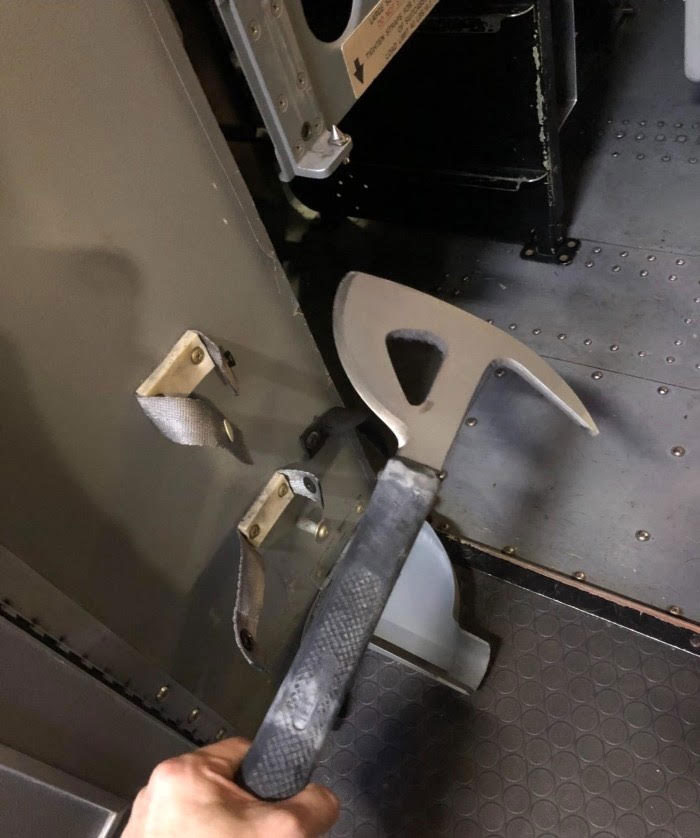
In the recent Flydubai incident of 30 September, 2026, a first officer (co-pilot) attacked the captain of the flight with a crash axe to accomplish his sinister motives, into which investigations are continuing. For the time being, it prompts the questions: should the crash axe be easily accessible to the flight crew? Or even be there at all? I believe it is a case of assessing the greater risk.
With regard to that event, and the circumstances that led to it, other deterrents could have been applied more thoroughly. For example, more thorough screening of pilots’ and other crewpersons’ backgrounds, with emphasis on their mental health, ideological affiliations and previous employment history. Separately, during a time of conflict in the Middle East, should Flydubai have even been operating between Dubai and Tel Aviv? Notwithstanding that cost-cutting and profit maximisation are key aims of any business, an airline’s apparent failure to conduct adequate psychological profiling of flight crew members, while continuing to operate ‘profitable’ routes, regardless of potential danger, can only be regarded and condemned as greed and disregard for human lives.
( Captain. Fernando, RCyAF, SLAF, Air Ceylon, Air Lanka, Singapore Airlines (SIA), SriLankan Airlines, Former Chief Pilot, Air Lanka Boeing 737, Former Deputy Chief Pilot, Lockheed L 1011, Former Crew Resource Management (CRM) Facilitator, SIA, Former Deputy Director (Air Operations) CAASL, Former President, Aircraft Owners and Operators Association Sri Lanka (AOAOASL), President, The Colombo Flying Club, Representative for Aviation, Organisation of Professional Associations (OPA), Hony, and Member Sri Lanka Society of Transport and Logistics.)

Showers above 75 mm are likely at some places in the Western, Sabaragamuwa, Central, Southern, Uva and North-Western provinces and in Anuradhapura and Mannar districts.

New prison regulations for monks serving jail terms soon: President’s Office

CP alleges NPP has taken the blame for illegal US sanctions on Iranian vessels

Ex-Tiger witness claims Ekneligoda proposed to fire missile at MR’s plane

Chandrasekaran welcomes Indian stand of Katchatheevu

Alleged killer of couple apprehended

‘Dates have the highest sugar content to fight Coronavirus’

Sunday Island 27 December – Headlines

#SundayIsland 17th December – Headlines

Sunday Island – 28th March

Sunday Island Headlines – 21 March

Sunday Island – 21st February – Headlines
-

 Features4 days ago
The Sri Lankan who made Scottish history
-

 Features6 days ago
Preventing grievances from becoming communal
-

 Sports4 days ago
Nissanka absence opens door for Sri Lanka’s young guns
-

 News5 days ago
Gnansara Thera to be assigned to prison printing section: Officials
-

 News3 days ago
NDB fraud Rs 60mn more than reported
-

 News3 days ago
Removing monk’s robes matter for Sangha to decide: Mahanayake Theras
-

 Features4 days ago
Future of Sri Lanka’s state university system: Should it be shut down and reopened?
-
 News5 days ago
OIC of FCID summoned before Maligakanda Magistrate