
Sports
Danil Thisararachi’s rise to National Sports Festival’s best boxer

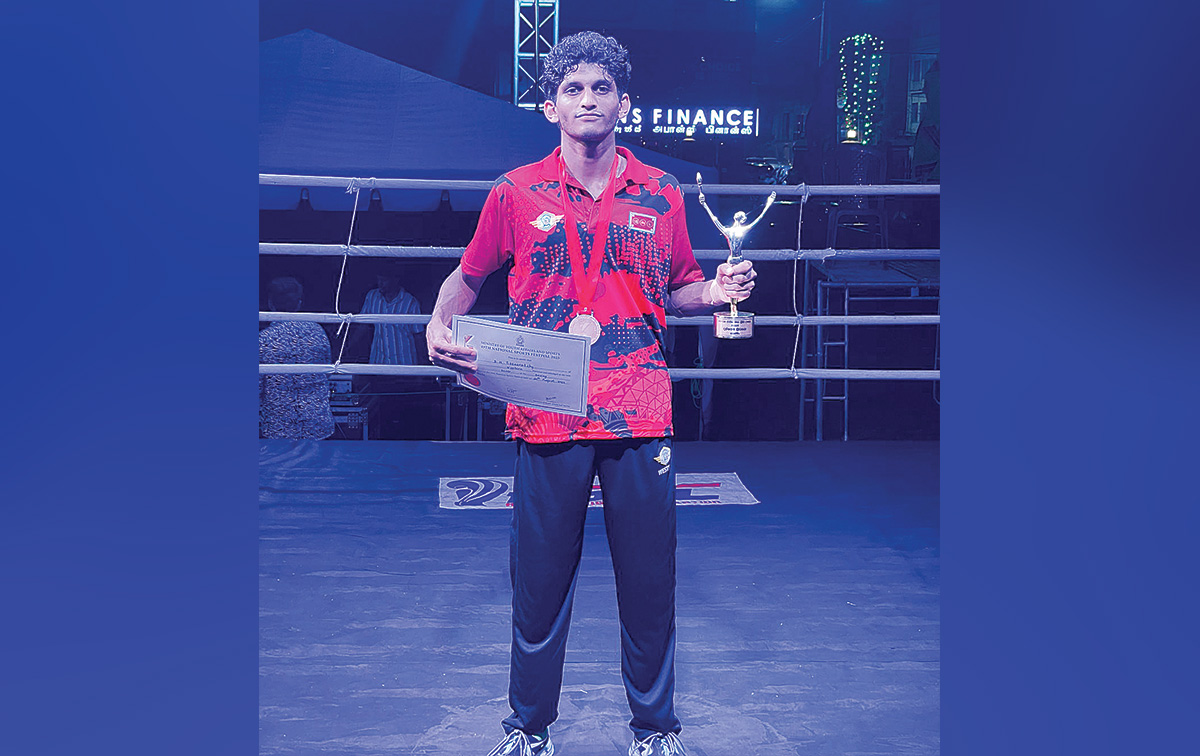
When Danil H Thisararachi had his hand raised as Best Boxer at the National Sports Festival 2025, winning gold in the minimum weight category, it felt like confirmation rather than surprise. The National Sports Festival is widely regarded as an elite stage for many sports in Sri Lanka, boxing included, and Danil owned it. For a young athlete who only laced up gloves at 20, his ascent has been brisk, deliberate and deeply impressive.
A product of St Peter’s College, Colombo, Danil’s first sporting love was football. The rhythms of midfield play and the camaraderie of a team defined his school years, until curiosity and a competitive itch drew him through the doors of ‘Back 2 Fit’, a private boxing club that has quietly rewritten assumptions about where champions come from. In a landscape where many title-winners emerge from service teams, ‘Back 2 Fit’ has shown that a high-performance culture can flourish outside the barracks.
Under coaches Gihan Maduwantha and Manul Lakshitha, both former boxers and graduates of the Sports Science and Management programme at the University of Sri Jayewardenepura, Danil found not only mentorship but method. Sessions were planned with a scientific eye: periodised conditioning, targeted strength work to complement speed, and endless rounds of drills that turned raw promise into ring craft. The result has been a résumé that lengthens almost monthly, and a style that blends economy of movement with a jab-first discipline.
The breakthrough year was 2023. Danil won gold at the Novices, then swept the Intermediate Championships with gold and the Best Boxer award, signalling to the wider community that he was not merely progressing, he was setting the pace. He also took silver at the Nationals, collecting the Best Loser distinction, a quirk of the competition that nonetheless underscored his place among the top tier.
Momentum carried into 2024: gold at the Clifford and gold again at the Nationals, evidence of consistency across formats and fields. In 2025 he capped the run with the National Sports Festival double, gold and Best Boxer, the cleanest possible statement on the biggest domestic platform. That string of results reads like a ladder with no missing rungs: Novices 2023 (Gold); Intermediate 2023 (Gold, Best Boxer); Nationals 2023 (Silver, Best Loser); Clifford 2024 (Gold); Nationals 2024 (Gold); National Sports Festival 2025 (Gold, Best Boxer).
What makes Danil’s story resonate is the route he took. He did not benefit from formal boxing at school; he switched codes as an adult and endured the humbling start that comes with it, learning to sit down on punches, to move off the line, to win exchanges with feet as much as fists. That transition is never simple, yet he embraced it with a craftsman’s patience. The result is a fighter who wastes little, keeps his shape under pressure, and wins rounds through tempo and timing rather than brawling.
There is, too, a broader significance. Danil’s success challenges the notion that elite Sri Lankan boxing is the preserve of service teams. Back 2 Fit’s model, academically informed coaching, disciplined culture, and athlete-centred planning, has expanded the sport’s talent pipeline. If that continues, boxing benefits: more pathways, more competition, higher standards.
Ambition now extends beyond national glory. Danil wants to become a Commonwealth and Olympic boxer, and the next 18 months will be decisive: stronger international sparring, targeted competitions, and qualification campaigns that reward both fitness and finesse. As Coach Maduwantha put it, “The journey is just beginning. Our goal is to bring a medal at the 2026 Commonwealth Games.” That objective demands marginal gains, from nutrition and recovery to data-led analysis of opponents, but Danil’s trajectory suggests he is comfortable living in the details.
For young athletes, Danil’s rise offers a clear lesson: it is possible to start late, to change lanes, and to climb quickly if the work is smart and the will is steady. For Sri Lankan boxing, it is a reminder that excellence thrives where opportunity and method meet, whether or not there is a uniform on the peg.


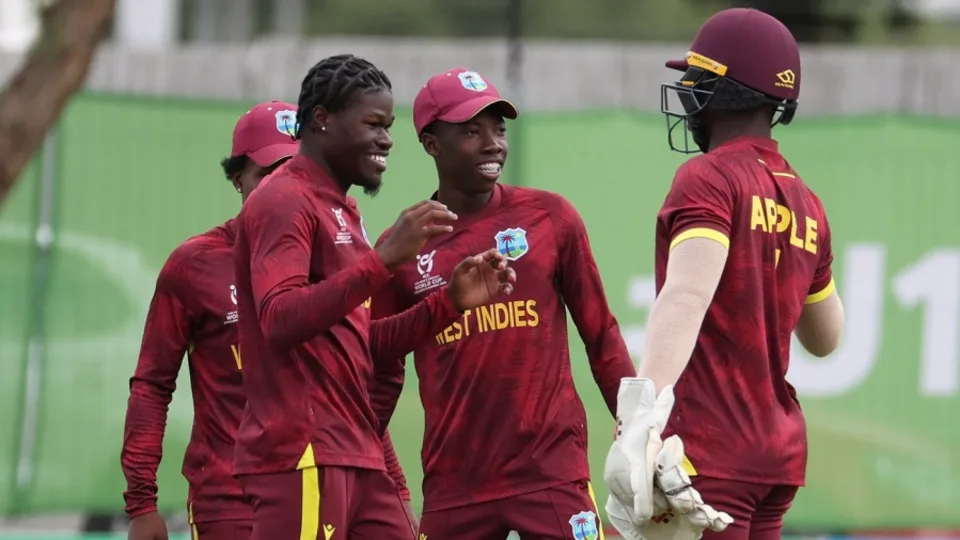
West Indies wristspinners, Micah McKenzie and Vitel Lawes, combined to take six wickets on a surface that had plenty of turn and bite to close out a rain shortned contest against Ireland. Opting to bat first, the West Indies innings had earlier been held together by keeper-batter Jewel Andrew at No. 3 – his 66 off 82 consisted of four fours and four sixes, the majority of which came in the company of Jonathan van Lange,, during their fourth-wicket partnership of 67.
Jewel departed just six overs after van Lange, in the 33rd, and the rest of the batters struggled. No one besides him managed to cross the 30-run mark. Reuben Wilson scalped up van Lange, before returning to take out two lower-order batters to finish with figures of 3 for 50, closing out the innings with West Indies bowled out for 226.
His effort, complemented by James West’s economical 2 for 24 off seven overs, gave Ireland a realistic chance at chasing down the total. West also opened the batting for Ireland and top-scored for them, hitting a 55-ball 45 that was littered with eight boundaries. By the time he was Lawes’ first victim of the innings, in the 18th over, Ireland sat at a comfortable 82 for 2.
However, the going just got worse from there: Ireland lost four wickets to McKenzie, who spun his way through the middle order. Lawes held back his best over for his final one of the match, fizzing out Oliver Riley with its first ball, and then turning the ball prodigiously against Wilson and Bruce Whaley.
Ireland were on 164 for 7 by the time they played out Lawes’ over, needing an unlikely 62 off the final ten overs. The rain had the final say when it interrupted the match and delivered the final blow to Ireland’s hopes. The DLS par score had shot way past Ireland’s total, and when no further play was possible, West Indies walked away with a convincing spin display and a 25-run win to boost their chances in the Super Sixes.
Brief scores:
West Indies Under 19s 226 in 46.5 overs (Jewel Andrew 66; Reuben Wilson 3-50, Luke Murray 2-37, James West 2-24) beat Ireland Under 19s 164 for 7 in 40 overs (James West 45; Mica McKenzie 4-36, Vitel Lawes 2-41)by 25 runs (DLS method)
[Cricinfo]
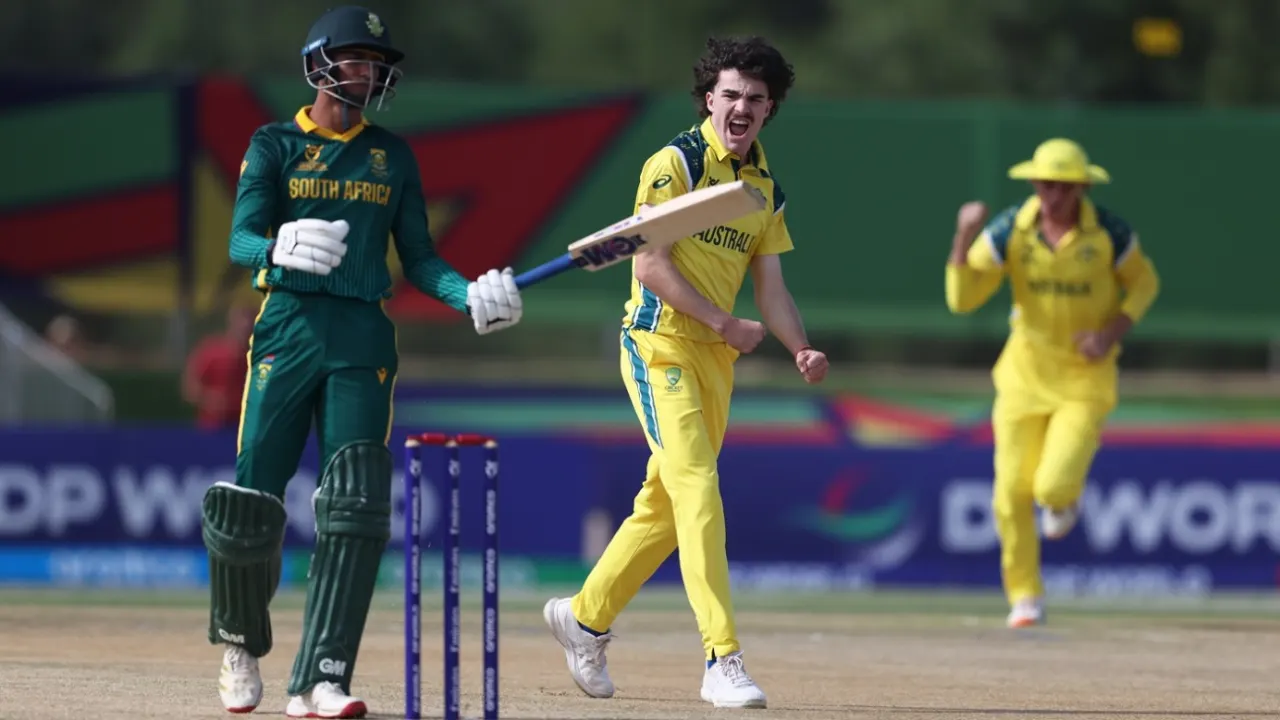
It took Australia U19s 32.5 overs, going at just around 3.5 runs an over for the majority of a belaboured chase against an excellent South Africa U-19 bowling effort. But they had that liberty after Charles Lachmond’s 3 for 29, and two wickets each from Will Byrom and Aryan Sharma, had bowled South Africa out for 118 all but ensuring the result of the match was in little doubt even at the halfway stage.
South Africa had been reduced to 37 for 4 inside the powerplay, failing to find answers against the raw pace and movement that Lachmund and Byrom found off the surface. Opener Jorich Van Schalkwyk was the sole bright spot for them, battling his way through this period and putting together a 30-run stand with Paul James, even as he was pinged on the helmet off a brutal Kasey Barton delivery.
Spinner Aryan proved to be particularly troublesome to face, as he kept spinning the ball away from the outside edge of the right-handers. He dropped two catches at point before coming into the attack, but made up for his fielding by scalping up two wickets of his own.
James kept one end steady once Schalkwyk was run out for a 26 off 55, but wickets kept falling at the other. He would eventually be the last batter out, for a 60-ball 34 .
In response, JJ Basson led a South Africa bowling attack that was incisive and economical. His spell of 3 for 41 was the highlight of a bowling effort that kept the Australia batters defensive, and also ensured that the Australia line-up lost three wickets for the first time in this tournament – in their fourth match of the tournament.
Steven Hogan never looked comfortable during his 73-ball 43, but timed short deliveries well while cutting late, and mowed down more than a third of the target by himself. He was the last Australian wicket to fall, as Basson’s third wicket. Alex Lee Young and Jayden Draper got together at the crease, and the latter smacked two fours in the 33rd over of the contest to bring it to a close.
Brief scores:
Australia 122 for 4 in 32.5 overs (Steven Hogan 43, Jayden Draper 21*, Alex Lee Young 21*; JJ Basson 3-41) beat South Africa Under 19s 118 in 32.1 overs (Paul James 34; Charles Lachmund 3-29, Will Byrom 2-16, Aryan Sharma 2-27) by six wickets
[Cricinfo]
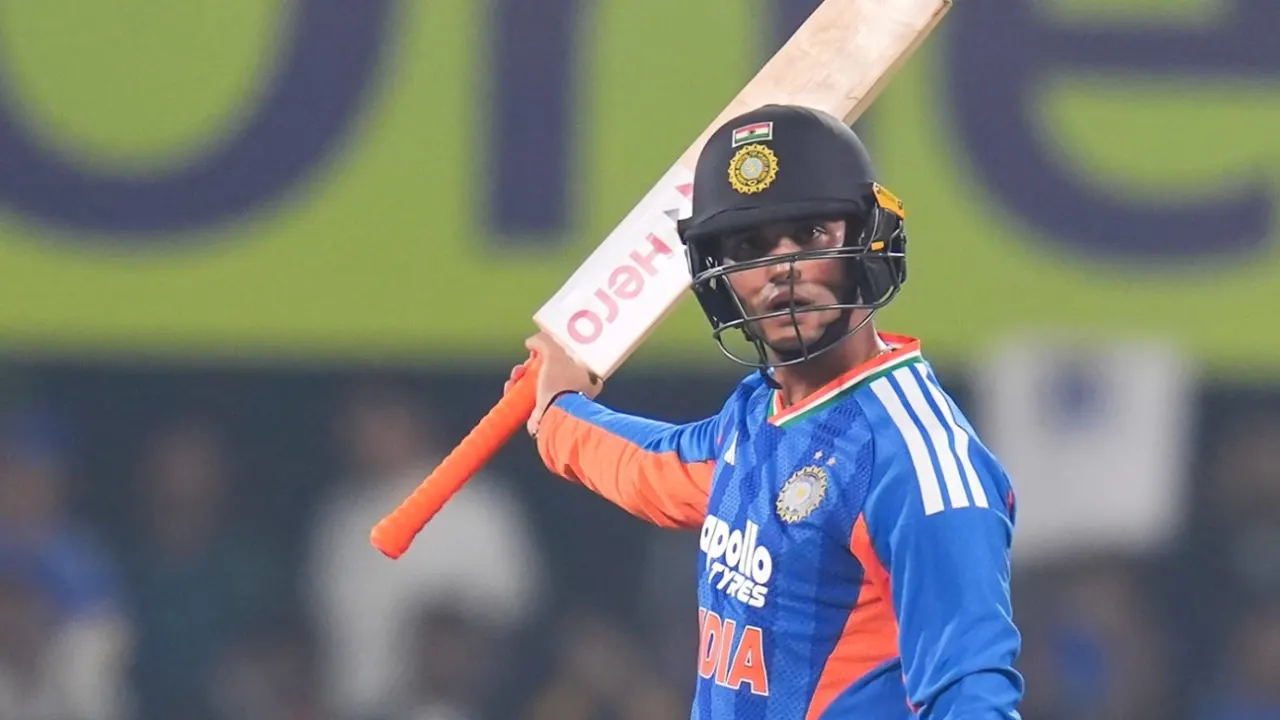
India waltzed to their 11th straight series or tournament win in T20Is as they restricted New Zealand to 153, and chased it down with ten overs to spare. Jasprit Bumrah and Ravi bishnoi, the two bowlers brought in for this match, took five wickets between them for 35 runs, before Abhishek Sharma, Suryakumar Yadav and Ishan Krishan made light work of the target.
A 3-0 series win with two matches to go, on the back of two players who are not in India’s first-choice XI right now, is as emphatic a challenge as any as India get ready to defend their world title at home; this series winning streak started before the said World Cup two years ago.
Harshit Rana took a wicket in the first over, Bumrah flattened the off stump first ball, and Kishan and Abhishek hit multiple boundaries in their first overs despite a golden duck for Sanju Samson on a night where India dominated their conquerors from Tests and ODIs.
Abhishek went on to register India’s second-quickest half-century in just 14 balls, almost mocking New Zealand’s plan to bowl at his pads and take away his room. Not as spectacular as Abhishek, Suryakumar still continued his comeback to form with an unbeaten 57 off 26 balls.
Perhaps tongue in cheek, Mitchell Santner said after the last match that you need 300 against “these guys”. Devon Conway wanted to start accordingly even though he had fallen to Rana four times in four innings on this tour. All he managed, though, was a mis-hit to mid-off, this time to an on-pace delivery. At mid-off, Hardik Pandya took a brilliant overhead catch, and in the next over created a much simpler chance for Bishnoi with a short ball to Rachin Ravindra.
India are used to bowling at least one over of Varun Chakravarthy in the powerplay, and asked the replacement for the resting No. 1 T20I bowler in the world to play the same role. Bishnoi’s unusual action and trajectory conceded just one run in the fifth over to Tim Seifert and Glenn Phillips.
At 34 for 2, you’d expect New Zealand to be forced to take risks against Bumrah in the last over of the powerplay, but Bumrah didn’t even need a risk for a wicket. He was quick and accurate, and the ball straightened a touch to have Seifert playing inside the line and losing his off stump.
Phillips and Mark Chapman had to play the first two overs outside the powerplay out before they took on Kuldeep Yadav and Shivam Dube to reach 75 for 3 in ten overs. And then Bishnoi and Bumrah came back. Bishnoi had Chapman caught at the wicket with a 105kph non-turning delivery. Once this 52-run partnership ended at 86 for 4, wickets kept falling regularly as the batters had to keep taking risks. Santner’s 27 off 17 balls took New Zealand past 150, but it looked grossly inadequate on a good batting surface.
Any misgivings New Zealand might have had about the inadequacy of their total thanks to the first-ball wicket of Samson were dissipated by the blinding bat speed of Kishan, who dismissed Matt Henry for 6, 6 and 4 after getting one sighter in. Almost as if offended by someone upstaging him even before he had had strike, Abhishek charged first ball at Jacob Duffy, who followed him, but still deposited him over midwicket.
Abhishek followed it up with two fours. He and Kishan two added 53 in 19 balls, with Kishan eventually falling to a flipper from Ish Sodhi.
When Kishan got out for 28 off 13 deliveries, Abhishek was on 23 off six already. Bowler after bowler tried to bowl outside leg to Abhishek, but he kept charging at them and backing away to go over the off side. By the time he got inside the line of one and pulled it over fine leg for six – just for variation – he had brought up his fifty inside the powerplay.
Abhishek missed his hero and mentor Yuvraj Singh’s record by two balls, and at 94 for 2, India missed their highest powerplay total by one run.
Suryakumar dominated the hitting and the strike post powerplay as New Zealand kept searching for non-existing answers. He played the signature flick over backward square leg, but was equally fluent on the off side. The last missing piece of a dominant side fell in place.
Brief scores:
India 155 for 2 in 10 overs (Abhishek Sharma 68*, Suryakumar Yadav 57*, Ishan Kishan 28; Matt Henry 1-28, Ish Sodhi 1-28) beat New Zealand 153 for 9 in 20 overs (Tim Seifert 12, Glenn Phillips 48, Mark Chapman 32, Daryl Mitchell 14, Mitchell Santner 27; Harshit Rana 1-35, Jasprit Bumrah 3-17, Ravi Bishnoi 2-18, Hardik Pandya 2-23)by eight wickets
[Cricinfo]

Royal Navy of Oman Ship ‘AL SEEB’ leaves island

Gold tops $5,000 for first time ever, adding to historic rally

Showers will occur in the Northern, North-central, Eastern, North-western, Western, Sabaragamuwa and Uva provinces and in Matale, Matara, Galle and Nuwara-Eliya districts

U – 19 World Cup: Andrew, McKenzie deliver West Indies comfortable win

U – 19 World Cup: Bowlers, Hogan help Australia breeze past South Africa

Abhishek blasts 14-ball fifty to hand India unassailable 3-0 lead against New Zealand

‘Dates have the highest sugar content to fight Coronavirus’

Sunday Island 27 December – Headlines

#SundayIsland 17th December – Headlines

Sunday Island – 28th March

Sunday Island Headlines – 21 March

Sunday Island – 21st February – Headlines
-
 Business20 hours ago
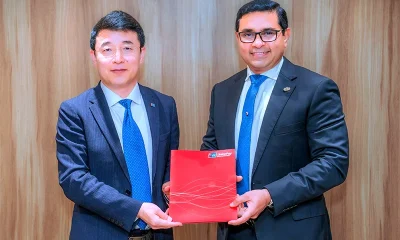
ComBank, UnionPay launch SplendorPlus Card for travelers to China
-

 Business2 days ago
ComBank advances ForwardTogether agenda with event on sustainable business transformation
-

 Opinion7 days ago
American rulers’ hatred for Venezuela and its leaders
-
 Opinion5 days ago
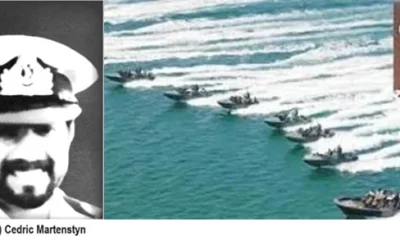
Remembering Cedric, who helped neutralise LTTE terrorism
-
 Business5 days ago
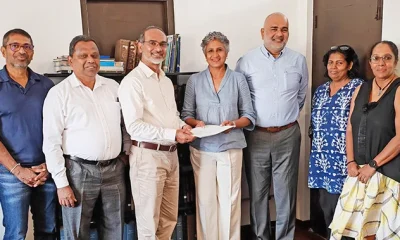
CORALL Conservation Trust Fund – a historic first for SL
-
 Opinion4 days ago
A puppet show?
-
 Opinion2 days ago
Conference “Microfinance and Credit Regulatory Authority Bill: Neither Here, Nor There”
-

 Opinion7 days ago
History of St. Sebastian’s National Shrine Kandana