
Business
CSE chairman focuses on capital-raising and stock market outlook for 2024


The chairman of the Colombo Stock Exchange (CSE), Dilshan Wirasekera, discusses opportunities for capital raising and the stock market outlook for 2024 in the following interview:
Give us an overview of the current market landscape and discuss the CSE’s overall outlook for the year 2024.
We believe the overall outlook of the CSE, for the year 2024 to be a positive one, which I think mirrors the outlook for the country as a whole. There is a significant recovery in economic activity that we see which is now translating into the capital markets and specifically to the Colombo Stock Exchange.
Notably, the turnover levels of the exchange have experienced a significant uptick from what it was at the beginning of the year. An increase from its daily average turnover (ADT) of around Rs 715 million in January, to the current comparatively more stable Rs1.8 billion ADT in March.
I would like to delve into why performance wasn’t as what it used to be, as well as why I believe it will be better this time around. The first, and arguably most significant reason being because the country is currently in a default status. As it is in default and awaiting finalisation of external creditors for the debt restructuring, we are seeing very little foreign activity, and therefore turnover is still dominated by domestic activity. As of March 28th, we are currently at 74.91% local 25.09% foreign participation to turnover. A stark shift from previous years such as in 2018, where we were able to witness a 50-50 foreign to local contribution to the turnover.
We are optimistic that as the external debt restructuring is forecasted to be finalised before June, we will then be able to shed our default status. Portfolio funds can then allocate investments into Sri Lanka, and that will drive an increase of foreign activity from its current status of 25.09%.
Second, the domestic economy has had a negative growth of 7.8% in 2022, followed by a negative growth of 2.3% for 2023. However, the last quarter for 2023 shows 4.5% growth for that quarter. Therefore, looking ahead to 2024, we are optimistic that a growth of 3 – 5 percent will be achieved by the economy. That will undoubtedly result in a lot more activity.
Next, interest rates have been prohibitive for investments. Previously, fixed income yields were over 20%, and people tend to avoid risky asset classes like equity regardless of whether the returns could be rewarding. The Central Bank has reduced policy rates, and as the AWPLR downward trajectory appears to be coming closer to 10%, which will primarily expect to stimulate credit growth; ultimately, people will consider investing in the stock market due to low interest rates.
Finally, the performance of the current market landscape hasn’t been very impressive since, the market yet remains undervalued. The current market PE is 10.27 and the price-to-book value is at 1.02. However, historically we have had our market trade at multiples of 17 times price earnings, one and a half times book value. These are all the reasons that would then further result in the valuations being re-rated.
Overall, we are quite optimistic that activity and turnover will increase driving yields and the market will perform well for the year 2024 as economic conditions continue to improve.
Do you foresee a demand for capital raising via the stock market in 2024?
Yes, there is a strong anticipation of increased demand for capital raising via the stock market in 2024. Several factors contribute to this optimistic outlook:
Conducive Market Conditions: The market environment is seen as favourable for companies to raise capital. With expectations of improved valuations, companies can achieve reasonable multiples when raising equity, making it an opportune time for capital infusion.
Investor Appetite: As investor activity increases, there is a growing appetite for initial public offerings (IPOs). This increased demand from investors creates a conducive environment for companies seeking to raise capital through the stock market.
Introduction of New Products: The introduction of new financial instruments such as sustainable bonds, infrastructure bonds, and sukuks provides alternative fundraising options for organizations. This diversification of offerings is expected to attract companies looking to capitalize on these new instruments, thereby driving more listings and investor activity.
Broad basing via Introducing Multiple Listing Boards: The Colombo Stock Exchange offers three listing boards—the Main Board, Diri Savi Board, and Empower Board— catering to local corporations of all sizes. These boards serve as gateways for companies to obtain listings and access capital markets, providing a range of options to suit different company profiles and capital-raising needs. Further, the Colombo Stock Exchange has introduced the Catalist Board exclusively aimed at accommodating listings of State-Owned Enterprises anticipated in the future. Additionally, to assist foreign-listed companies seeking dual listing status in Sri Lanka, the CSE has established a specialized board called the Multi Currency Board.
The CSE has strengthened its listing function by allocating resources with focus on issuer relations activities, including actively engaging with companies in creating awareness and addressing misconceptions, and streamlining its processes to facilitate listings.
Is there opportunity to raise capital in foreign currency for local companies?
Yes, there is indeed an opportunity for local companies to raise capital in foreign currency through the Colombo Stock Exchange (CSE). The framework established by the CSE allows listed entities to issue foreign currency denominated equity, subject to certain eligibility criteria and regulatory requirements.
One of the key eligibility requirements is that 50% of the company’s revenues should be in the form of foreign currency, with a minimum threshold of USD 5 million over a period of three years. Additionally, these issuances are classified as a different class of shares and are available exclusively to non-residents in the country.
Furthermore, companies that raise foreign currency through these issuances are required to allocate 40% of the proceeds to local requirements, while the remaining 60% can be invested outside Sri Lanka.
Despite the potential benefits of such listings, including access to a broader pool of investors and diversification of funding sources, there have been no such listings so far. This can be attributed to various factors, including the prevailing economic conditions, exchange rate volatility, and regulatory restrictions.
However, there is optimism within the CSE and the business community that these listings will gain traction in the future. Improvements in the local and global economic climate, along with the increasing demand for capital among exporters and other eligible entities, are expected to drive interest in foreign currency denominated equity issuances.
As conditions continue to evolve and stabilize, it is anticipated that more local companies will explore the opportunity to raise capital in foreign currency through the CSE, contributing to the growth and development of Sri Lanka’s capital markets.
Overall, this partnership depicts the commitment of both the CSE and USAID to foster the development of SMEs and promote inclusive economic growth. By providing SMEs with the necessary resources, guidance, and incentives, this initiative aims to empower them to harness the capital markets as a means of realizing their full potential and contributing to the broader prosperity of Sri Lanka’s economy.









Salesforce, the world’s leading AI-powered CRM platform, is set to expand its presence in Sri Lanka with the launch of the Salesforce Startup Program by the end of January 2026, signalling growing confidence in the country’s technology-led growth potential.
The move comes as Sri Lanka consolidates its position as the second-largest startup ecosystem in South Asia after India, with software, data and artificial intelligence-driven ventures accounting for nearly 60 per cent of the national startup base.
Industry observers say this concentration places Sri Lanka at a decisive stage where global exposure and enterprise access could unlock the next phase of scale.
Under the programme, Sri Lankan startups will gain access to Salesforce’s global ecosystem, including AI-powered platforms, business and technical mentorship, joint go-to-market opportunities and connections to enterprise customers, enabling founders to build globally competitive solutions from Sri Lanka.
“Sri Lanka has developed a strong base of technical talent and entrepreneurial ambition that is increasingly visible regionally and globally,” said Arundhati Bhattacharya, President and CEO of Salesforce South Asia.
“Through the Salesforce Startup Program, we aim to help startups move beyond early momentum to global relevance while delivering long-term economic impact,” he added.
He also said the initiative builds on the success of its Startup Program in India and Singapore, which today supports over 435 startups, including more than 230 AI-first companies. Several participants have expanded across Asia and beyond by building products natively on the Salesforce platform.
Responding to queries, he said Sri Lanka is also emerging as an important enterprise market for Salesforce, with major corporates such as John Keells Holdings and Cinnamon Hotels adopting the platform to modernise customer engagement, sales, marketing and loyalty management operations.
In parallel, Salesforce is strengthening the country’s digital talent pipeline through its Trailhead learning ecosystem, with plans to skill nearly 1,000 learners over the next year via local workforce development partners and community-led cohorts.
Chamil Madusanka, Head of Salesforce Practice and Salesforce Architect, said the programme arrives at a critical juncture for Sri Lanka’s startup ecosystem.
“Sri Lankan founders are increasingly building AI, data and enterprise software solutions with global relevance,” Madusanka told The Island Financial Review.
“What many startups need is structured access to enterprise customers, global mentorship and market exposure. This initiative creates that bridge, enabling local companies to scale faster while remaining rooted in Sri Lanka.”
He said the Startup Program is designed to act as a connective platform, bringing together startups, enterprises, technology partners, universities and developer communities to accelerate collaboration and innovation.
By Ifham Nizam ✍️

CSE activities were extremely bullish yesterday following Central Bank Governor Dr Nandalal Weerasinghe’s announcement that Sri Lanka’s foreign reserves had risen to US $ 6.8 billion in December 2025, up US$ 791 million from November 2025.
The Governor provided the estimated economic growth while announcing the Central Bank’s policy agenda for this year.
In December Sri Lanka received budget support loans from the Asian Development Bank and the International Monetary Fund.
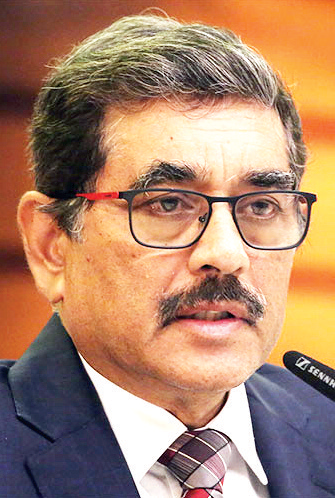
Dr Nandalal Weerasinghe
Amid these developments both CSE indices moved upwards. The All Share Price Index went up by 226.81 points, while the S and P SL20 rose by 100.01 points. Turnover stood at Rs 12.3 billion with 12 crossings.
Top seven crossings that mainly contributed to the turnover were: Lee Hedges 18.2 million shares crossed to the tune of Rs 3.9 billion; its shares traded at Rs 416, Commercial Bank 2.1 million shares crossed for Rs 467.6 million; its shares traded at Rs 215, Ceylon Hotels 429,000 shares crossed for Rs 128.7 million; its shares traded at Rs 300, LB Finance 650,000 shares crossed for Rs 105 million; its shares sold at Rs 152.50, Ceylinco Holdings 31000 shares crossed for Rs 104.5 million; its shares traded at Rs 3400, Melstacorp 200,000 shares crossed tfor Rs 35.7 million; its shares sold at Rs 178.50 and Three Acres Farm 400,000 shares crossed to the tune of Rs 29.6 million; its shares fetched Rs 740.
In the retail market top seven companies that mainly contributed to the turnover were; Wealth Trust Securities Rs 1.17 billion (55.8 million shares traded), Commercial Bank Rs 509 million (2.4 million shares traded), HNB Rs 370 million (870,000 shares traded), ACL Cables Rs 303 million (three million shares traded), Prime Lands Residencies Rs 283 million (7.9 million shares traded), Lanka Realty Rs 227.5 million (4.7 million shares traded) and HNB Rs 218 million (332,000 shares traded). During the day 223.7 million share volumes changed hands in 55116 transactions.
Yesterday, investor interest in Wealth Trust and banking stocks led to higher activity levels, brokers said. Further, the real estate sector also performed well. Lanka Realty Investments PLC acquired 51 percent of the total number of shares in issue of Lee Hedges, CSE sources said. 13,057,595 ordinary voting shares were bought at Rs 216 each.
Yesterday the rupee opened at Rs 310.12/18 to the US dollar in the spot market, weaker from Rs 310.05/15 the previous day, dealers said, while bond yields opened marginally high.
By Hiran H Senewiratne ✍️

The Gamani Corea Foundation (GCF) is pleased to announce the launch of the monograph Development: Not By Economics Alone by Dr. Nimal Sanderatne, Emeritus Chairperson of the Foundation. The foreword to the publication has been written by Dr. Godfrey Gunatilleke, one of Sri Lanka’s most eminent development economists. The launch ceremony will be held on Friday, 9th January 2026, at 4.00 p.m. at the Horton Lodge.
In this monograph, Dr. Sanderatne argues that development cannot be understood through economic indicators alone. He emphasizes that the quality of human capital depends not only on knowledge and skills acquired through formal education, but also on deeper, non-formal processes embedded in a society’s culture and value systems. These influence human behaviour, shaping work ethics, attitudes to work and leisure, capacity for teamwork, preferences between short- and long-term goals, and patterns of saving and consumption.
Dr. Sanderatne is a distinguished economist and academic, holding degrees from the Universities of London, Saskatchewan, and Wisconsin, and was conferred the Doctor of Science (Honoris Causa) by the University of Peradeniya in 2004.

Iran leader says anti-government protesters are vandals trying to please Trump

Deep Depression likely to cross the Sri Lankan coast between Trincomalee and Jaffna during the morning today (10 January 2026)

Rain washes out 2nd T20I in Dambulla

Colombia sees ‘real threat’ of US military action, president tells BBC

Landslide RED warnings issued to the Divisional Secretaries Divisions of Ududumbara, Nildadndahinna and Walapane

Harmanpreet, Mandhana return to DY Patil, on opposite sides this time

‘Dates have the highest sugar content to fight Coronavirus’

Sunday Island 27 December – Headlines

#SundayIsland 17th December – Headlines

Sunday Island – 28th March

Sunday Island Headlines – 21 March

Sunday Island – 21st February – Headlines
-

 News4 days ago
Interception of SL fishing craft by Seychelles: Trawler owners demand international investigation
-
 News4 days ago
Broad support emerges for Faiszer’s sweeping proposals on long- delayed divorce and personal law reforms
-

 Opinion24 hours ago
The minstrel monk and Rafiki, the old mandrill in The Lion King – II
-

 Features23 hours ago
The Venezuela Model:The new ugly and dangerous world order
-

 News3 days ago
Prez seeks Harsha’s help to address CC’s concerns over appointment of AG
-

 News5 days ago
Private airline crew member nabbed with contraband gold
-

 Latest News2 days ago
Warning for deep depression over South-east Bay of Bengal Sea area
-

 News2 days ago
Indian Army Chief here