
Editorial
Conspiracies here and overseas


These are apparently bad days for former heads of state across the world. Close on the heels of the passage of a new law, stripping former Sri Lankan Presidents of their perks and privileges, came the news of ex-Brazilian President Jair Bolsonaro being sentenced to jail for 27 years and three months for plotting a military coup. A panel of five Supreme Court judges handed down the sentence immediately after convicting Bolsonaro. A dissenting judge voted to acquit him, and the former President’s lawyers have taken exception to the sentence.
The main charge against Bolsonaro is that he led a conspiracy in a bid to stay in power after losing the 2022 presidential election to Luiz Inácio Lula da Silva. One may recall that the UNP-led Yahapalana government claimed that defeated President Mahinda Rajapaksa had made a coup attempt to retain his hold on power after losing the presidential election in January 2015. Minister Mangala Samaraweera, and others kept on accusing Rajapaksa of having attempted to persuade the military and police chiefs to support the conspiracy so that he could stay in power, with the use of force, if necessary. The Yahapalana administration’s claim turned out to be false, and Rajapaksa made a comeback through electoral means, a few years later.
There has been a far more serious claim about a conspiracy here. In 2022, the then Speaker Mahinda Yaha Abeywardena told Parliament that there had been a conspiracy to pressure him to appoint himself as the Acting President in violation of the Constitution at the height of a popular uprising that led to democratically elected President Gotobaya Rajapaksa to flee the country and resign.
“The objective of those who wanted me to do so was to create another Libya or Afghanistan here. They did not want to resolve the crisis here or restore law and order to protect this country … I was asked to name a Prime Minister and Cabinet of ministers and rule the country, but I was determined to protect democracy,” Abeywardena said, adding that when he refused to follow their diktats, they intimidated him. He said there had been foreign and local individuals among those who pressured him to act in violation of the Constitution.
Leader of the National Freedom Front Wimal Weerawansa was the first to claim that there had been a foreign conspiracy to oust President Gotabaya Rajapaksa and Prime Minister Mahinda Rajapaksa. He said the US had been party to it. US Ambassador Julie Chung rejected his claim out of hand.
What we witnessed in Colombo, on 09 July 2022, has been viewed in some quarters as the culmination of a well-planned destabilisation process aimed at shaking this country off the sphere of influence of one world power and realigning it with some others. If Parliament had fallen into the hands of violent protesters who went all out to march on it, the country would have been plunged into anarchy like Libya. Gotabaya himself blamed his ouster on a conspiracy.
Abeywardena’s claim that some local and foreign individuals hatched a plot to plunge this country into anarchy has gone unprobed while Bolsonaro has been jailed for a coup he plotted in the same year. If those who attempted to force Abeywardena to resort to an illegal course of action had succeeded in their endeavour, this country would have descended into anarchy. There is no guarantee that the same sinister forces will not make a fresh attempt to achieve their goal, and create conditions for another uprising. Hence the need for Abeywardena’s claim to be investigated thoroughly and action taken against those who were behind the 2022 ‘conspiracy’. It may be recalled that ousted Prime Minister of Bangladesh Sheikh Hasina has also alleged that there was a foreign hand behind the uprising that toppled her government last year.
Worryingly, neither the NPP government nor the SJB-led Opposition has taken up Abeywardena’s allegation. Why the JVP-led NPP cannot do so may be understandable; its leaders made a determined yet abortive bid to capture Parliament at the height of Aragalaya, and therefore they may not want to open a can of worms by ordering a probe into anything that happened during that period. Why the Opposition has chosen to remain silent defies comprehension. How can its cantankerous MPs be so lily-livered?
Doomed is the nation that has not a single MP to call for a probe into a conspiracy to destabilise it.

Corruption scandals and blunders of successive governments have bled the state coffers for decades. The Treasury has lost USD 2.5 million again owing to a compromised payment process, and its bigwigs and their political masters are all out to muddy the water. The Opposition is out for their scalps. It never rains but it pours. Scandals have been cropping up in quick succession under the current dispensation.
The JVP-NPP government is in the same predicament as a cantankerous, all-knowing backseat driver suddenly thrust behind the wheel on a treacherous road. Having talked the talk, it now has to walk the walk. Less than two years into office, it has many problems to contend with. The last few weeks have been particularly bad. It must be a fate worse than death for the JVP/NPP leaders, who came to power, condemning previous governments and promising good governance, to be accused of corruption by their political opponents who are known to be utterly corrupt.
The government was reeling from a coal procurement scam that led to the resignation of Energy Minister Kumara Jayakody and Energy Ministry Secretary Udayanga Hemapala, when an NPP propaganda stunt, aimed at boosting the images of the President and the Prime Minister as simple leaders, backfired, with a minister’s palatial house and unexplained assets coming to light. It has now been revealed that the JVP leaders who claimed that their lot was no better than that of the ordinary people are politicians of substantial means. Then, HSBC CEO Georges Elhedery dropped a bombshell. He revealed that Sri Lanka had paid the highest premium for oil in the world, recently. The government had to admit that it purchased diesel at USD 286 a barrel, to replenish stocks, thereby admitting, albeit unwittingly, that the substandard coal imports had led to a shortfall in electricity generation at Norochcholai, and diesel had to be imported at exorbitant prices to keep oil-fired power plants running to prevent power cuts. Now, it is under fire over the transfer of USD 2.5 million from the Treasury to a fake account.
The government has attributed the misdirected Treasury payment to a hacking scheme. But cyber security experts have dismissed this claim as a tall tale. The diversion at issue could not be a simple “hack” and it was rather a case of a compromised payment process, where weak verification layers, email-based instructions, and insufficient system segregation left room for fraud, a fintech expert has told The Island. The government has a penchant for obfuscating issues, but in doing so it only makes matters worse for itself. There is no way it can justify the inordinate delay in reporting the Treasury fraud to the police.
Treasury Chief Dr. Harshana Suriyapperuma has claimed that the government kept the payment scandal under wraps lest the hackers should cover their tracks. The government seems to have a very low opinion of the intelligence of the public. Cyber criminals wipe out all traces of their illegal operations immediately after committing an offence, as is public knowledge. The government should have called in the CID immediately after realising that a misdirected payment had been made and maintained transparency in investigations. Instead, it ordered an internal inquiry. It is only natural that pressure is mounting on the Treasury Chief to step down. Fund transfers go through a layered authorisation process at the Treasury, and a few junior officials must not be scapegoated for the loss at issue. All senior officials who authorised the misdirected payment must be brought to book.
President Anura Kumara Dissanayake, who is also the Minister of Finance, claims to have information about all illegal transactions carried out by his predecessors, but he could not prevent a fraud in the Treasury under him.
It is doubtful that the government has taken cyber security seriously. It seems to think the task of preventing cybercrimes is as easy as carrying out social media attacks on its political opponents. The Opposition claims that the Treasury has suffered a huge loss because the officials who handled the fund transfers are not experienced and competent enough to perform such tasks. This allegation must not go uninvestigated. It is imperative that Parliament conduct a special probe into the Treasury fraud, and open it to the media. The public has a right to know what happened to their money, how the fraud happened, who is actually responsible, and what action will be taken to ensure the safety of state funds. It is hoped that President Anura Kumara Dissanayake will not appoint a presidential commission to investigate all misdirected payments by state institutions since Independence.

Saturday 25th April, 2026
Another scandal has come to light and made international headlines. The illegal diversion of Treasury funds amounting to USD 2.5 million, meant for bilateral debt repayment to Australia, to a third party, could not have come at a worse time. It has happened close on the heels of the launch of the National QR Payment Adoption Programme to transform Sri Lanka into a cash-lite economy. Although the two payment systems are vastly different, and risks are much lower where the QR-based payment is concerned, the fraudulent diversion of Treasury funds is likely to erode public confidence in online fund transfers, if posts being shared via social media are any indication. The digital payment scheme is the way forward for the country, and it behoves the government to take action to clear doubts being created in the minds of the public. A misinformation campaign is already underway, and it needs to be countered.
Opposition Leader Sajith Premadasa has accused government politicians of making contradictory statements about the theft of Treasury funds. As he has rightly pointed out, it is clear from their claims that the government is still at sea, and instead of getting to the bottom of the fraud, it is trying to manage the political fallout from the incident. Some of them have even gone to the extent of bashing the Opposition. They ought to study the issue properly and speak with one voice. One need not be surprised even if the government propagandists concoct a conspiracy theory that the political rivals of the JVP/NPP masterminded the diversion of Treasury funds.
What one gathers from the government politicians’ different claims is that cyber criminals gained unauthorised access to the computer system of the External Resources Department (ERD) within the Finance Ministry through emails. They altered payment instructions, redirecting the funds to unauthorised accounts. There has been no system level hacking, according to cyber security experts. It defies comprehension why the ERD officials have not been trained to handle situations of this nature, which are not uncommon in the digital space. Even ordinary people double-check account details before transferring funds. A telephone call to the Australian creditor that was to receive funds from the Sri Lanka Treasury would have helped save USD 2.5 million.
The Opposition politicians are no better. They are also making various claims that are contradictory, and some of them have betrayed their ignorance of the issue. Most of them do not seem to know the difference between the functions of the Treasury and those of the Central Bank. They are only making the public even more confused by expressing opinions and making allegations to gain political mileage. Among them are lawmakers. They ought to be educated on the duties and functions of the Finance Ministry/Treasury and the Central Bank. What they will come out with in case of a parliamentary debate being held on the Treasury payment scam is anyone’s guess.
What needs to be done now is to ensure that the illegal fund diversion is probed thoroughly and the stolen money recovered forthwith while action is taken to prevent the repetition of such incidents. Political battles will not serve the country’s interests.

Friday 24th April, 2026
The Opposition is intensely resentful that the government has thwarted its attempt to have President Anura Kumara Dissanayake, who is also Minister of Finance, summoned before the Parliamentary Select Committee (PSC) probing the green-channelling of 323 red-flagged freight containers in the Colombo Port in January 2025. When the Opposition members of the PSC proposed that President Dissanayake be summoned, their government counterparts put the proposal to a vote and defeated it.
The Opposition’s abortive bid was not devoid of politics, but Sri Lanka Customs, which released the aforementioned containers without mandatory inspections, is under the Finance Ministry. Therefore, the Finance Minister is accountable to Parliament and must answer questions from the container PSC, as it were.
The dispute between the government and the Opposition over the container scandal has more to it than a mere political argy-bargy. It reflects a deeper constitutional issue. The Constitution requires the President to attend Parliament, but frequent politically strategic interventions by him or her dilutes the spirit of the separation of powers and strengthens the Executive’s dominance over the legislature. This practice is bad for the wellbeing of democracy. The President has used, if not misused, Articles 32 and 33 of the Constitution to dominate Parliament in this manner over the years.
The JVP, on a campaign for abolishing the Executive Presidency, played a pivotal role in introducing the 17th, 19th and 21st Amendments to the Constitution to reduce the executive powers of the President, but ensconced in power, it is now silent on its pledge to restore a parliamentary system of government.
The Opposition has claimed that President Maithripala Sirisena testified before the PSC which probed the Easter Sunday terror attacks in 2019, and therefore President Dissanayake ought to do likewise. What it has left unsaid is that President Sirisena made a statement at the 20th meeting of that PSC, held at the Presidential Secretariat, on 20 September 2019. The PSC report has referred to the event as a ‘discussion’. Sirisena, who secured the executive presidency, promising to reduce the powers vested therein, should have refrained from undermining the legislature and visited the Parliament complex to testify before the PSC, as the Minister of Defence.
The least President Dissanayake can do to avoid the public perception that he, too, is undermining the legislature is to follow the precedent created by President Sirisena. Ideally, he ought to appear before the PSC in the parliamentary complex in keeping with his government’s much-touted commitment to upholding accountability and the separation of powers. After all, when the question of summoning President Sirisena before the PSC on the Easter Sunday attacks came up, the then JVP MP Dr. Nalinda Jayatissa, who was also a PSC member, defended the rights of Parliament. He declared that the PSC had the authority to summon anyone for questioning.
Now that the government members of the container PSC have gone out of their way to defend President Dissanayake, the question is whether they can be expected to allow an impartial investigation to be conducted and help uncover anything detrimental to the interests of the President and the ruling coalition.
By scuttling the Opposition PSC members’ effort to have President Dissanayake testify before the container PSC, and undermining the legislature in the process, the JVP-NPP government has unwittingly reminded the public of its unfulfilled election pledge to introduce a new Constitution, inter alia, “abolishing the executive presidency and appointing a president without executive powers by the parliament” (A Thriving Nation: A Beautiful Life, NPP Election Manifesto, p. 109).

Showers expected in the Western, Sabaragamuwa and North-western provinces and in Galle, Matara, Kandy and Nuwara-Eliya districts after 2.00 pm.

Heat Index at Caution Level in the Northern, North-central, North-western, Western, Sabaragamuwa, Southern, and Eastern provinces and in Monaragala district during the day time

Sagarika derailment disrupts coastal rail line; services to resume in two days

PHIs launch Vesak ‘Dansal’ safety registration drive

Measles resurfaces, health officials sound alarm

Hackers steal $3.2 Mn from Finance Ministry

‘Dates have the highest sugar content to fight Coronavirus’

Sunday Island 27 December – Headlines

#SundayIsland 17th December – Headlines

Sunday Island – 28th March

Sunday Island Headlines – 21 March

Sunday Island – 21st February – Headlines
-
 News5 days ago
Rs 13 bn NDB fraud: Int’l forensic audit ordered
-

 Opinion6 days ago
Shutting roof top solar panels – a crime
-

 News3 days ago
Lanka faces crisis of conscience over fate of animals: Call for compassion, law reform, and ethical responsibility
-

 News2 days ago
No cyber hack: Fintech expert exposes shocking legacy flaws that led to $2.5 million theft
-
 News2 days ago
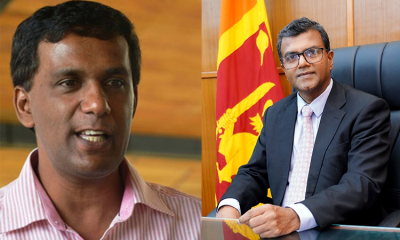
Whistleblowers ask Treasury Chief to resign over theft of USD 2.5 mn
-
 News6 days ago
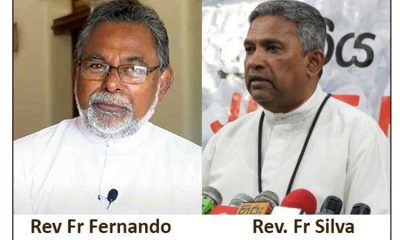
Church calls for Deputy Defence Minister’s removal, establishment of Independent Prosecutor’s Office
-

 News3 days ago
USD 2 mn bribe: CID ordered to arrest Shasheendra R, warrant issued against ex-SriLankan CEO’s wife
-

 Features6 days ago
The Digital Pulse: How AI is redefining health care in Sri Lanka?