
Opinion
Considerations for higher education reforms

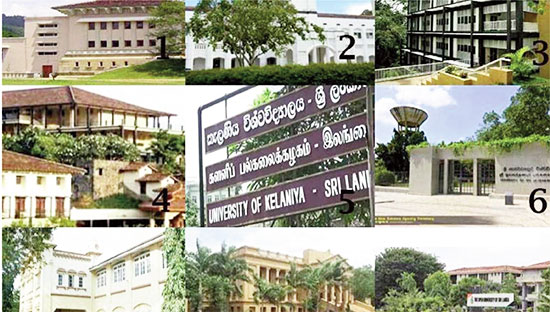
Submitted by Udari Abeyasinghe, Farzana Haniffa, Ahilan Kadirgamar, Anushka Kahandagama, Ramya Kumar, Shamala Kumar, Hasini Lecamwasam, Kaushalya Perera, Aruni Samarakoon, Sivamohan Sumathy, Mahendran Thiruvarangan
Decades of underfunding have left our education system, overall, fractured and in urgent need of rebuilding. The virtual lack of public early childhood education, the years of neglected vocational training, and the scale of problems facing general education (widespread staff shortages, stark disparities in resources, among other things) mean that these subsectors demand immediate attention. Therefore, despite the opaqueness of the consultative process and questions we have about the content of the reforms, the ongoing action on reforming general education and vocational education by the Ministry of Education is a welcome move. No part of the system operates in isolation, however. Even if reforms focus on early, general, or vocational education, higher education must remain part of the conversation. Democratising higher education and making it accessible to a larger number of people will strengthen the entire education system. Such reforms have to be undertaken together with other actions through a consultative process. Waiting until other sectors are ‘in better shape’ will only deepen existing fragmentation.
What is needed is a comprehensive plan that serves all sectors of education and builds a more integrated system capable of addressing each subsector’s specific needs. Only then can we create an education system equipped to meet the challenges ahead. We are concerned that recent higher education reforms in Sri Lanka are emulating the market-based model that has failed elsewhere. One of the basic principles of our higher education system has been free education supported by the state, but of late this principle has been given to serious erosion. Successive governments have defunded our state university system–a lower-cost and more equitable model of tertiary education–while supporting the expansion of private higher education. Universities are compelled to function as businesses, generating their own funds. Inequalities in access are widening with university admissions increasingly favouring the privileged.
In an effort to contribute to the conversation on education taking place currently, we outline issues of concern and actions the government could take to strengthen the state university system.
* Funding state universities
Public spending on education (as a % of GDP) in Sri Lanka is among the lowest in the world. It is being increasingly replaced by project-based funds from external organisations, particularly the World Bank, compelling reforms modeled on market-friendly designs. Our universities must now generate funds, primarily through fees from postgraduate courses and international student enrollment. Students and their families are increasingly expected to spend on their undergraduate education, eroding the Free Education policy.
* Increase the budget allocation for state universities; halt the push toward self-generated funds.
* Halt the introduction of fee-levying undergraduate courses (e.g., School of Open Learning, University of Peradeniya; plans to enrol fee-levying medical students at University of Vavuniya).
* Curtail initiatives that subsidise private and foreign degrees. The rapid expansion of private and foreign degrees, often supported by state subsidies, including student loans, results in the extraction of resources from public education to support private interests.
* Critically examine and reduce reliance on project-based funding. The World Bank in particular uses funding initiatives to institute their agendas into our systems of education. Decades of such interventions have substantially transformed higher education.
* Democratising university administrations
University administration has become increasingly hierarchical, with authority filtering from the University Grants Commission (UGC) to Vice Chancellors and Deans. While administrative mandates insist on student friendly pedagogy that foster critical thinking, actual practices take away authority from the lower ranks of the academic community, importantly, the teacher. Power is increasingly vested in Vice Chancellors, Councils and the UGC, which does little to advance the cause of education, or the wellbeing of students and staff.
* A participatory and dialogue based governance model should be promoted by strengthening the authority of participatory bodies like Faculty Boards, Senates and Statutory Committees. Administrative bodies should be concerned largely with procedure and feasibility.
* Concerns regarding curriculum and curriculum revision need to be led by departments and faculties, and a greater degree of independence granted to the academic community in administrative matters.
* Improving fairness and transparency in appointments and recruitment
The recent decision to bring an end to political appointments in the non-academic staff cadre is welcome. However, the current system of making appointments to UGC committees, University Councils and other university/faculty level committees by government officials lacks transparency and is subject to manipulation. Committed academics and others who want to advance knowledge and have involvement in specific areas of interest may not make it to the relevant decision making forums. The schemes of recruitment of academic staff are outdated and often impede the recruitment of well-qualified candidates. There have been numerous reports highlighting the increasing politicisation of academic recruitment processes.
* Create transparent processes regarding higher level appointments to commissions and councils.
* Update the schemes of recruitment to reflect present-day realities of inter-disciplinary and multi-disciplinary training in order to recruit suitably qualified candidates.
* Ensure recruitment processes are made transparent by university administrations.
* Change bond regulations to be more just, in order to retain better qualified academics.
* Strengthening existing degree programmes
Out-migration of academics has created a dire shortage of university teachers. Degree programmes offered by peripheral universities have a dearth of staff. STEM programmes at state universities are well-supported as they are presumed to produce students with ‘marketable skills’ for the industry, while the social sciences and humanities (SSH) are given less priority despite their having the highest student intakes and serving the most underprivileged sections of society. Lecturers who work after hours and on weekends teaching in fee-levying courses are poorly compensated in certain disciplines.
* Remove the freeze on hires so that academic and other staff vacancies can be filled; increase academic cadre positions, especially in peripheral universities.
* Recruit adequate academic staff for ongoing programmes and implement minimum staff requirements to commence new programmes.
* Halt the trend of employing contracted workers, which leads to a work climate where there is no buildup of capacities and less commitment to scholarship, teaching and the institution.
* Ensure recruitment data, including student to staff ratios, are accessible for public scrutiny (they were accessible until 2022).
* Allocate funds to strengthen SSH.
* Reevaluate the emphasis on English-medium instruction in SSH, and approach the issue with greater sensitivity, keeping in mind the great inequalities any arbitrary decision may create. It is imperative that Sinhala and Tamil medium instruction is supported and well-funded.
* Strengthen English language instruction, without prioritising English medium education. Transition to English medium should take into consideration the availability of teachers and resources within the universities to help students improve their English language competency.
* Review payment structures of fee levying courses (graduate and undergraduate) that are run by departments. Remove the limits on compensation amounts for lecturers pressured to work after hours and on weekends.
* Promoting fairness in university admissions
Students attending university are not always prepared for tertiary education; they are compelled to select their subject stream at the Ordinary Level. There are wide disparities based on districts in admissions to certain courses. Once admitted, students pursuing STEM education do not have opportunities to explore the social sciences and humanities and vice versa.
* Institute a formal process of collaboration between secondary, tertiary and vocational education to streamline transitions between these types of education.
* Strengthen the district quota system to ensure equity of access to higher education. Ensure that the system reflects present-day demographic patterns and resource maldistribution.
* Support the development of pathways for interdisciplinary collaboration in degree programmes.
* Reviewing the quality assurance framework
Significant resources are channeled towards quality assurance activities. These activities take up much time and effort of academics, but it is unclear whether the quality of academic programmes at universities have improved as a result. Further, quality assurance processes are conducted in a top-down manner, with directives coming from the UGC with little flexibility for faculties and programmes to design their own procedures. The emphasis is on gathering ‘evidence’ with very little critical thinking on how to actually improve degree programmes.
* Review the quality assurance programme in place today and the extent and nature of its impact on curriculum development
* Revise it, so that it functions as a guide to a consultative process that supports the development of alternative approaches to quality assurance designed within universities and faculties and not as a restrictive monitoring mechanism.
* Include mechanisms of downward accountability to make universities answerable to students and local communities.
* Promoting research and scholarship
Owing to the emphasis on evaluations of research and publications that emphasise quantity, or numerically value quality, the research culture within state universities has changed. Researchers report various bottlenecks in receiving and using research funds, and various malpractices related to citation gaming can also be seen (e.g., badly reviewed journals, publishing in predatory journals, salami publications, etc.).
* Relax the bureaucracy related to the initiation of relationships with foreign research institutions and universities.
* Revise the national financial regulations and leave procedures that at present create bottlenecks for research collaborations and participation at international forums for academics.
* De-emphasise the commercialization of research which has led to a rise in instrumentalist research and the devaluing of social-justice oriented research in all fields, but especially the humanities and social sciences.
* Shift the emphasis from working towards improving state universities’ standing in global university rankings to promoting rigorous scholarship that is relevant to our setting.
* Creating open and inclusive universities
Interventions to rid university spaces of violence and harassment usually target the issue of ragging. There is less recognition of other forms of violence and the subculture of the university that breeds violence through its various hierarchies and exclusions. Violence cannot be expunged from the system in the absence of inclusive university spaces that encourage dialogue and discussion on these important issues.
* Create policies and bylaws that provide a course of action that supports and brings a measure of justice to victims. Strengthen existing grievance mechanisms in ways that ensure independence and protection of complainants and witnesses.
* Introduce basic codes of conduct across the university system for administrators, supervisors, academics and others.
* Implement the national language policy at all universities with regards to both teaching and administration and ensure that all communications from university administrations are conveyed in Sinhala, Tamil and English. The state should also ensure instruction in both Tamil and Sinhala of a similar standard and quality are available for students at all state universities.
* Support universities to explore opportunities to integrate social cohesion, gender sensitivity, and reconciliation through curricula and other forums. Prioritise and provide training opportunities for staff on the above issues. Support the introduction of opportunities for students to engage in political participation and democratic processes.
* Upholding academic freedom
Teachers and students should have the freedom to teach, study, pursue research without unreasonable interference or restriction. Media policies, job insecurities, policies for financing research and other university activities, usurpation of powers from lower-level authorities and committees by centralized authoritative command are some mechanisms which have had a stifling effect on academic freedom.
* Create an independent body at the national level that serves to protect academic freedom within universities and investigate attempts to thwart the exercise of academic freedom. This body could be similar to committees addressing violence and harassment complaints and quality concerns.
* Strengthening student services and promoting wellbeing
The recent increase in the Mahapola Scholarship disbursement is welcome. However, basic student welfare and support services are in a woeful state. Student intakes have increased without parallel investments in student residences and other facilities. Despite the rise in mental health problems among young people, there are no dedicated staff or facilities to support students who require additional support. Student counsellors and other academics need to juggle student welfare- duties with various other commitments.
* Allocate funds to build student residences across state universities and/or request universities to do so. Residences should include cooking facilities.
* Introduce policies to address the welfare of women students who are a growing proportion in most faculties, e.g., residential facilities, washrooms, sexual health facilities, etc.
* Allocate university cadres whose primary role will be in the area of student welfare, including professional counsellors, disability services, ombudspersons.



The President has taken the bold decision to get rid of the office bearers of Sri Lanka Cricket (SLC) and appoint an interim committee till such time suitable persons are elected to run the SLC. All Sri Lankan cricket lovers will applaud and endorse President Anura Kumara Dissanayake’s action as the SLC was one of the most corrupt sports organizations in Sri Lanka for a long time.
The office bearers had organized it in such a manner that no other persons could get elected to this den of thieves. They increased the number of clubs as members to collect their votes. Large amounts of funds were doled out to the clubs to which the office bearers belonged.
All cricket lovers would remember how when a previous Minister holding the Cabinet portfolio pertaining to sports tried to get rid of the corrupt officials which the then Parliament endorsed unanimously and how they manipulated to remain in power and get the President at that time to get rid of the Minister instead of the corrupt officials of the SLC.
They were able to get round the ICC too to get what they wanted. The Minister who was appointed in place of the ousted Minister fell into the pockets of the SLC officials and they continued happily thereafter. The Minister was happy and the corrupt officials were happy!
It is not only the elected officials who have to be removed. There are executive employees and other permanent employees who have to be relieved of their duties as otherwise they could get round the incoming officials, and the activities of the bandwagon could go on.
We would appreciate if the President and the Minister in charge would go the whole hog and relieve the SLC of all corrupt personnel so that Sri Lanka’s cricket could get back to its halcyon days again.
HM NISSANKA WARAKAULLE

Malimawa government and Yahapalanaya are dissimilar in many respects, the most important being whilst Yahapalanaya had to manage with a balancing act in the parliament, Malimawa has the luxury of a massive parliamentary majority. However, they share one thing in common; the main plank for the election of both presidents Dissanayake and Sirisena was their solemn pledge for the eradication of corruption. It looks as if both have failed miserably, on that count!
It did not take very long for Yahapalanaya’s first act of corruption; the bond scam. COPE, headed by the veteran politician D E W Gunasekara, picked on this but to prevent the presentation of the report, Sirisena dissolved the parliament which was done at the request of the Prime Minister Ranil, to whom Sirisena was obliged for the unexpected bonanza of becoming president. This enabled the second bond scam to take place, also masterminded by Ranil’s friend Mahendran, imported from Singapore!
Malimawa convinced the voters that they are the only group that could get rid of the 76-year curse of corruption and made a multitude of promises, most of which are already broken! What is inexcusable is that, in a short space of time, they seem to have become as corrupt as any previous government and they seem to excel their predecessors in doling out excuses. Of course, they have a band of devoted social media influencers who are very adept at throwing mud at their opponents which they hope would help to cover up their sins. How long this strategy is going to work is anybody’s guess!
Some of these issues were addressed in an article, “Squeaky clean image of JVP in tatters” by Shamindra Ferdinando (The Island, 22 April). I hasten to add that, though some of his supporters are still trying to paint an honest image of AKD, he should be held responsible for many of these misdeeds and irresponsible acts.
One of the first acts of the newly elected president AKD was to appoint two retired police officers, who openly worked for the NPP through the Retired Police Collective, to top posts; Ravi Seneviratne as Secretary to the Ministry of Public Security and Shani Abeysekara as the Director of CID. Both of them held top jobs in the CID when the Easter Sunday attack took place and were blamed, by some, that they too failed to prevent this horrendous act of terrorism. In addition, there was a case against Seneviratne for causing accidents whilst under the influence and Abeysekara was exposed as a ’fixer’ by the infamous Ranjan Ramanayaka tapes. No one would have objected had they been appointed after their names were cleared but AKD’s rash decision to appoint them, disregarding all norms, clearly showed what his long-term strategy was. Was this not political corruption?
Now these two tainted officers are heading the search for the mastermind of the Easter Sunday attacks! Are they being used to divert attention away from Ibrahim’s family that was supposed to have funded the project? After all, Mohamed Ibrahim, the father, was on the national list of the JVP, and the two sons were the leading suicide bombers. It is a matter of great surprise that the Catholic church led by Cardinal Ranjith is not demanding the removal of these two officers from the investigation, who obviously have a conflict of interest. It becomes even more surprising when the demand is made for the Deputy Minister of Defence Aruna Jayasekara to resign, for the same reason; as well stated in the editorial, “Of masterminds” (The Island, 21 April).
The first act of the new parliament was to elect ‘Dr’ Ranwala as the speaker and pretty soon his doctorate was challenged. He stepped down to look for the certificate, which he is still looking for! Though some of the ministers too have admitted that Ranwala may not have a PhD, AKD seems silent. When Ranwala was involved in an RTA, police had run out of breathalyser tubes and blood was taken after a safe period had elapsed. Why has AKD no guts to sack him?
Episode of the release of 323 containers, without the mandatory inspections, seems to be receding to the past and the long-awaited report may be gathering dust in the president’s office! It is very likely due to political intervention and we probably will never know who benefitted.
A minister, who claimed that he is living on his wife’s salary and on the generosity of the party faithfuls, seems to have been able to build a three-storey house in a suburb of Colombo. He claims that when he made that statement, his father was alive but has since died and he has inherited everything as he is the only son! What a shame that Marxists do not believe in sharing the family wealth with sisters? Though the opposite may be true, his explanation that he was able to build a house in Colombo by selling the land in Anuradhapura rings hollow!
The worst of all was the coal scam which would have long lasting consequences on our economy. I do not have to go into details as much has been written about this but wish to point out AKD’s role. In spite of ex-minister Kumara Jayakody being indicted by CIABOC, AKD continued to give unstinted support till it became pretty obvious that he had to go. In fact, he is being charged with an offence which was committed whilst he was serving the Ceylon Fertilizer Company which was under the purview of, guess who? AKD when he was the Minister of Agriculture.
Devastating report from the Auditor General,before Jayakody’s resignation, would not have happened if AKD had his way. He attempted a number of times to get one of his henchmen appointed to this coveted post, overlooking those experienced officers in the department. AKD’s political machinations were thwarted thanks to the integrity of some members of the Constitution Council. If not for them, AKD’s nominee would have been in post and, perhaps, his friend Jayakody would still be the minister.
Malimawa seems to have beaten Yahapalanaya rather than being the second!
By Dr Upul Wijayawardhana

Doctor Upul Wijayawardhana (eminent physician), posed a riddle for us. He wrote about that island Sri Lanka as ‘ this little dot in the ocean’ when deriding the remark of President Dissanayake who had said that Sri Lanka was a hunduva , a term that indicated a small volume: me hunduve inna puluvan da? (Can you live in this restricted space?) Most sensible people, even uneducated, judge that the volume of a little drop (of whatever) is smaller than that of a hunduva; so is weight. When the learned doctor emphatically maintains ‘….we are not a hunduva’ but ‘… a little dot in the ocean…’, is the pot calling the kettle black or worse?
Physically and population wise, Sri Lanka is neither ‘a little dot’ nor ‘a hunduva. This is all in the rich imaginations of Dissanayake and Wijayawardhana. I once counted that there were more than 50 members of the UN who were smaller than Sri Lanka in physical and population size. England was a sizeable island with a small population in the northwest corner of Europe in late 18th century when it began to become what China, with 1.3 billion people and jutting out to the Pacific, is now. From about 1850, when the population of Great Britain was about 20 million, less than that of Sri Lanka in 2026, it ruled more than half the world. Besides, do not forget Vanuatu, Kiribati, Cook Islands, Antigua and Barbuda, Barbados, Lesotho and New Zealand (who habitually beats us at cricket). New Zealand with 5 million population played against 1.5 billion population India (1:300) for the T20 cricket championship a few weeks ago. I quietly wished New Zealand would win; so much for crap about dots in the Indian Ocean or the south Pacific.
Dr. Wijayawardhana also wrote about history and about ‘The achievements of Hunduwa’. The massive reservoirs and extensive irrigation systems in rajarata and ruhuna as well as the stupa are indeed tremendous works of irrigation and bear witness to superior ingenuity and organising ability, for the time they were built. They compare very well among structures elsewhere in the ancient world. Terms like ‘granary of the East’ must be taken with more than a grain of salt. Facile use of such terms does not take account of whatever shreds of evidence there is of adversity in those times. Monsoon Asia over the ages has more or less regularly suffered from floods, droughts and consequent famines. The last dire famine was in Bengal in 1944. The irrigation works in Lanka were a magnificent response to those phenomena. The modern response has been scientific agriculture making India a major grain exporter, from near famine conditions in 1973-74. Recall Indira Gandhi’s garibi hatao (eliminate poverty) speech to the General Assembly of the UN, that year.
The bhikkhu who wrote down the tripitaka in aluvihara did so because there was the threat of a severe famine in the course of which learned bhikkhu might have come to harm. Buddhist thought over centuries had been passed from generation to generation vocally (saamici patipanno bhagavato savaka (listener) sangho) and the departure from that tradition must have required a major threat of famine. There are stories of bhikkhu from Lanka fleeing from dire straits. In the same vein, while the mahavamsa speaks of kings and their valiant deeds, there is little account of the large mass of little people who lived then. Sensible teaching of the history of a people must include the history of as much of the people as possible and some idea of the history of other peoples in comparable times to avoid feeling dangerously smug and arrogant, which we have seen many times over.
Usvatte-aratchi

Russian circumnavigation team arrive in Sri Lanka

Trump unhurt after shots fired at White House correspondents’ dinner

Sooryavanshi ton in vain as Sunrisers Hyderabad raze a 229 chase

Prabhsimran, Shreyas upstage Rahul’s 152* to mow down record T20 chase

Showers expected in the Western, Sabaragamuwa and North-western provinces and in Galle, Matara, Kandy and Nuwara-Eliya districts after 2.00 pm.

Heat Index at Caution Level in the Northern, North-central, North-western, Western, Sabaragamuwa, Southern, and Eastern provinces and in Monaragala district during the day time

‘Dates have the highest sugar content to fight Coronavirus’

Sunday Island 27 December – Headlines

#SundayIsland 17th December – Headlines

Sunday Island – 28th March

Sunday Island Headlines – 21 March

Sunday Island – 21st February – Headlines
-
 News6 days ago
Rs 13 bn NDB fraud: Int’l forensic audit ordered
-

 News4 days ago
Lanka faces crisis of conscience over fate of animals: Call for compassion, law reform, and ethical responsibility
-

 Opinion7 days ago
Shutting roof top solar panels – a crime
-
 News3 days ago
Whistleblowers ask Treasury Chief to resign over theft of USD 2.5 mn
-

 News3 days ago
No cyber hack: Fintech expert exposes shocking legacy flaws that led to $2.5 million theft
-
 News7 days ago
Church calls for Deputy Defence Minister’s removal, establishment of Independent Prosecutor’s Office
-

 News4 days ago
USD 2 mn bribe: CID ordered to arrest Shasheendra R, warrant issued against ex-SriLankan CEO’s wife
-

 Features7 days ago
The Digital Pulse: How AI is redefining health care in Sri Lanka?