
Features
CONFESSIONS OF A GLOBAL GYPSY JUDO FIGHTING IN INDIA

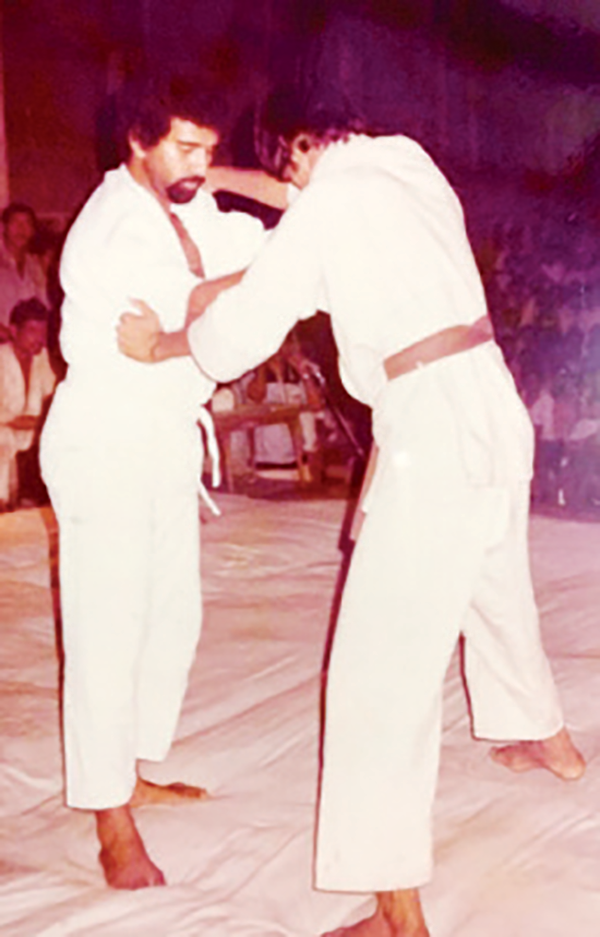
Continuing from last week’s column: ‘Judo Fighting in Sri Lanka’.
The First National Judo Team of Sri Lanka
In 1982, when the National Judo Association of Sri Lanka invited me to be on the first-ever national Judo team, I was pleasantly surprised and overjoyed. I quickly negotiated two weeks special leave from my job as a Senior Lecturer of the Ceylon Hotel School, to travel to India. The national team comprised of members from four Judo clubs.
The 10-member team was led by Kithsiri De Zoysa (Kiththa) of my club – Colombo YMCA, as the team captain. The other members of the national team were Raja Fernando, A. H. Jinadasa (Jinna), D. H. Ranjith and M. F. M. Izamudeen of the Colombo YMBA; W. K. Godwin of Sri Lanka Police, T. B. Koswaththa of Gampola Judo Club, Gamini Nanayakkara (Nana), K. Navarathnam (Nava) and Chandana Jayawardena of the Colombo YMCA.
Upali Sahabandu, a Senior Superintendent of Police at that time, was the team manager. Upali had a tough job keeping an eye on some of the playful, Judokas who were in their twenties. Upali was a good leader and an experienced Judo fighter. In the middle of the hot summer of 1982, eleven of us departed for India for two weeks with hope, anxiety and ambition.
We flew from Colombo to Madras on August 13, 1982. After that, the plan was to take a two-day long, train ride from Madras to New Delhi. Then we would proceed to Ghaziabad, where an international Judo tournament was being held. The key reward for the competing teams from South Asian countries was the possibility of winning the prestigious ‘Professor Jigoro Kano Cup (India)’. It paid tribute to the father of Kodokan Judo in Japan.
India
I was excited to arrive in India. It was the 20th country I visited, during my early stage of global travel. I had set an ambitious target to eventually, travel to over 100 countries (yet to achieve in 2022). Although it was the first time I visited India, my whole life had significant Indian influences. My father’s mother’s parents were from a Brahmin family who had migrated from India to Ceylon. My elder sister went to India on a scholarship to study for five years at the Allahabad Agricultural Institute, India (now, Sam Higginbottom University of Agriculture, Technology and Sciences).
Vijaya brought the island under his control establishing himself as king. He was followed by 123 kings and queens who ruled Sri Lanka for next 2,361 years. About 75% of Sri Lankans – Sinhalese are descendants from that wave of North Indian migration. Another 15% of Sri Lankans – Tamils are descendants from different waves of South Indian migration over the centuries. Therefore, 90% of Sri Lankas have some form of Indian connection.
I had studied a little about the lives, philosophies and contributions to the mankind by some famous sons of India whom I admire – Gautama Buddha, Mohandas Gandhi, Jawaharlal Nehru and Jiddu Krishnamurti. Indian religions (Buddhists plus Hindus totalling over 80% of Sri Lankans), Ayurveda, meditation, yoga, sports, festivals, cuisine, and culture were common elements in India and Sri Lanka. These helped to create a bond among the populations living in two countries, only 21 miles apart, that had lasted over 26 centuries.
In the early 1970s, I frequently left my grade 11 and 12 classes at Ananda College, soon after the attendance registers were marked to watch over 50 Hindi movies (without any knowledge of my parents!). Seated in the gallery which cost only 50 cents, the language was no barrier for my enjoyment of the music and beautiful singing. It was clearly evident that some of the popular Sri Lankan movies at that time, were influenced by the storylines, productions, songs and box office winning formulas of Indian movies. I liked old Hindi songs of Lata Mangeshkar, popular movies of Raj Kapoor, artistic movies of Satyajit Ray and also the opening batting of Sunil Gavaskar.
In the early 1980s, there were hardly any imports to India of non-essential items. Coming from Colombo where roads were filled with re-conditioned Japanese cars, we were surprised to see only a limited number of locally manufactured brands of vehicles on the roads in India. We did not notice any makes other than TATA buses and trucks, Hindustan and Premier Padmini cars. Soon after we landed in Madras, we had numerous offers to sell bottles of imported liquor and cigarettes that we were privileged to buy from duty free shops at the airport.
Madras
Our AirLanka flight from Colombo took a short 70-minutes to reach Madras. We were given a warm welcome by a small group of Indian Judokas. Our accommodation was arranged in Madras at the Sri Lanka Maha Bodhi Centre which included a small temple, named Buddha Vihar – the only Buddhist temple in Madras. It was located opposite to Egmore Railway Station, which was an impressive, early 20th century building and one of the prominent landmarks of Madras. On our second evening in Madras, our Indian friends arranged a friendly Judo meet and a brief tour of Madras.
Madras was the shortened name of the fishing village Madraspatnam, where the British East India Company had built a fort and factory/trading post in the mid-seventeenth century. The government of Tamil Nadu officially changed the name of the city to Chennai in 1996, in order to break free from the legacy stamped by British colonisers. Madras, on the Bay of Bengal in Eastern India, is the capital of the state of Tamil Nadu, which had a population of 50 million in 1982 (increased to over 77 million in 2022).
The city is home to Fort St. George, built in 1644 and now a museum showcasing the city’s roots as a British military garrison. Madras has the famous 13-kilometre-long Marina Beach along the Bay of Bengal. It is the longest and the most crowded, natural urban beach in India and the second longest in the world (after Praia do Cassino Beach, Brazil,). In 1982, with an urban / metropolitan population of 4.5 million (over nine million in 2022), Madras was the fifth most populated city in India.
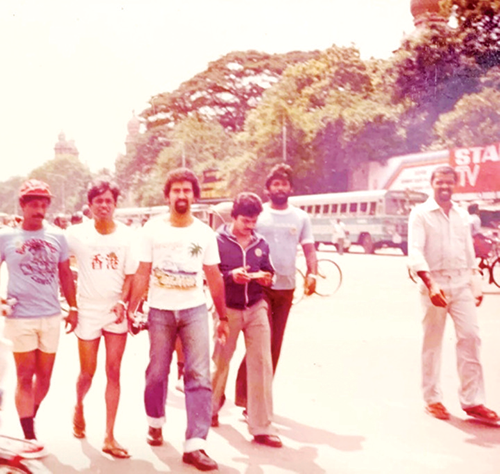
52-hours on Janta Express
After two days in Madras, we took the longest (around 2,200 kilometres) train ride any of us had ever experienced. Although the journey was expected to take 46 hours, several delays resulted in us being on the train for 52 hours. None of the passengers complained about that six-hour delay. We quickly got used to the train and its hard seats in the economy class. We were given seats in a corner of our compartment, next to a bathroom. There, we regularly showered to be comfortable in the midst of a heat wave and nearly unbearable humidity.
This train had three tiers of bunks to sleep. Our Captain, Kiththa was nearly starving as he wanted to reduce his weight by five pounds before pre-game weighing in Ghaziabad, to qualify for a lower weight category fight. His plan was to eat a lot after the weighing to gain weight and more strength. In spite of our jokes, Kiththa remained in a top level bunk to avoid any temptation to eat while the rest of us ate. Occasionally he looked down at us having a lot of fun and laughing loudly. He came down only a couple of times to use the toilet.
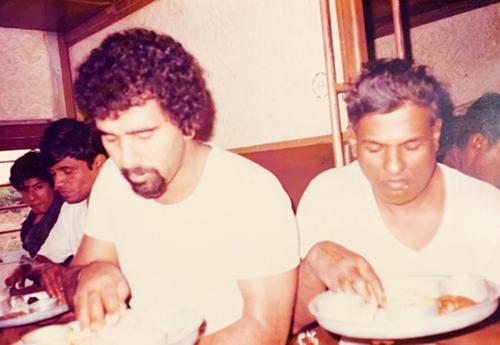
At the main station stops, food vendors sold us warm food served on large aluminium plates. We had to pay first and eat quickly before the train moved, as the vendors wanted their aluminium plates back. Food was always delicious although we were not sure of the hygienic conditions in which the fit was prepared. As we were starving, we did not care too much about such things. In between our stops, hot meals, showers, pranks, jokes, naps; we also played 304 card games. Even though we came from different clubs, that 52-hour long train ride made us become a closely-knit team, proud to represent our country in India.
Delhi
We were exhausted by the time we arrived in New Delhi, the capital of India. A few of us also suffered from food poisoning. After some rest, we went sightseeing. The seat of all three branches of the government of India – Rashtrapati Bhavan (President’s residence/office), Parliament House and the Supreme Court, are in Delhi. With a 340-room main building on a 320-acre presidential estate, Rashtrapati Bhavan is considered the largest residence of any head of state in the world. The New Delhi district formed a relatively small part of the megacity of Delhi which had a population of six million in 1982, but has now grown to have nearly 30 million in 2022 (second only to Tokyo).
In Old Delhi, a neighbourhood dating to the 1600s, stands the imposing Mughal-era Red Fort, a symbol of India. Nearby is the sprawling Jama Masjid Mosque, whose courtyard can accommodate 25,000 people. Chandni Chowk, a vibrant bazaar filled with food carts, sweet shops and spice stalls, was colourful and interesting. The Red Fort had served as the main residence of the Mughal Emperors. Emperor Shah Jahan commissioned the construction of the Red Fort, when he decided to move his capital from Agra to Delhi.
Every year on India’s Independence Day (15 August), the Prime Minister hoists the Indian flag at the fort’s main gate and delivers a nationally broadcasted speech from its ramparts. Unfortunately, we missed this event in 1982 by a day. In Delhi we met another Judoka from Sri Lanka, Gamini Rupasinghe, who had arrived in India for a different assignment. Having earned black belts in both Judo and Karate, Gamini was unique among Sri Lankan martial artists. Gamini joined us for a short period.
We had a free evening, so we decided to see a Hindi movie after dinner. In Delhi, some large cinemas had movies placed on a loop, continuing 24-hours non-stop. The choice of top summer movie releases was wide. We decided to see – ‘Prem Rog’ (Sickness of Love) which had received high critical acclaim as an all-time classic by Raj Kapoor. It was also one of the two biggest Bollywood box office hits of 1982. It was the correct choice for us. Prem Rog led the 30th Filmfare Awards with 12 nominations and won four including the Best Director of the year award for Raj Kapoor.
Tournaments in Sonipat and Ghaziabad
We moved to an adjoining district in a neighbouring state, about an hour from Delhi. Ghaziabad was the venue for our main tournament. It was a relatively small city of around one million residents. We were provided with accommodation in a quiet old building. We were happy there until we found out that it was a closed hospital. One night, our team member from Sri Lanka Police, Godwin, moved from his bed saying that our dormitory was too warm.
Next morning, over breakfast, Godwin was boasting and told us, “Machang, while you guys were suffering in that warm dormitory, I was lucky to find a ‘cool’ marble bed in another room. I had a nice sleep without any sweat or getting disturbed by noises from you guys.” His happiness was short-lived when we heard from the security guard that the dark, eery looking room with the marble slab was actually the morgue of the haunted old hospital! After that, our team fun was full of ghost jokes and scary pranks with mid-night screams. Godwin was not amused.
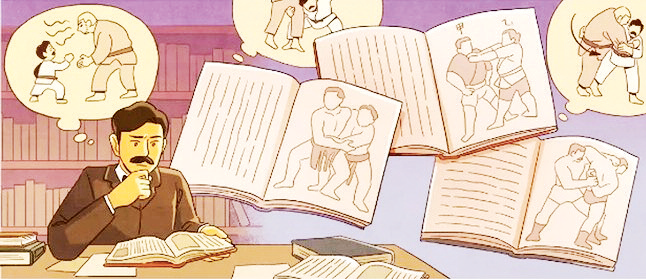
JUDO…
Just before our main tournament, we received an additional invitation. Haryana State Judo Association invited the Sri Lanka National team to a quickly organized tournament. It was advertised as ‘North India vs. Sri Lanka Judo Meet’. It was held in a small city called Sonipat. Kiththa and Raja won their bouts and Jinna won a silver medal. That meet was a good practice for the main tournament.
One of the biggest challenges we had was that the mats used for the tournament were wrestling mats. In Sri Lanka, we always fought on proper Judo tatami mats gifted by the Japanese Embassy. Those Japanese mats had a tatami finish and were made of vinyl with an inner compressed sponge and anti-skid bottom.
In spite of that challenge, we did relatively well on the mat. Sri Lanka team had mixed results at the third ‘Professor Jigoro Kano Cup (India)’ tournament. Nana won a gold medal. A few of the team won silver medals. I lost in semi-finals in my category, but managed a draw at a five-Judoka team event.
Judo adventures will continue next Sunday…

By Dr. Chandana (Chandi) Jayawardena DPhil
President – Chandi J. Associates Inc. Consulting, Canada
Founder & Administrator – Global Hospitality Forum
chandij@sympatico.ca


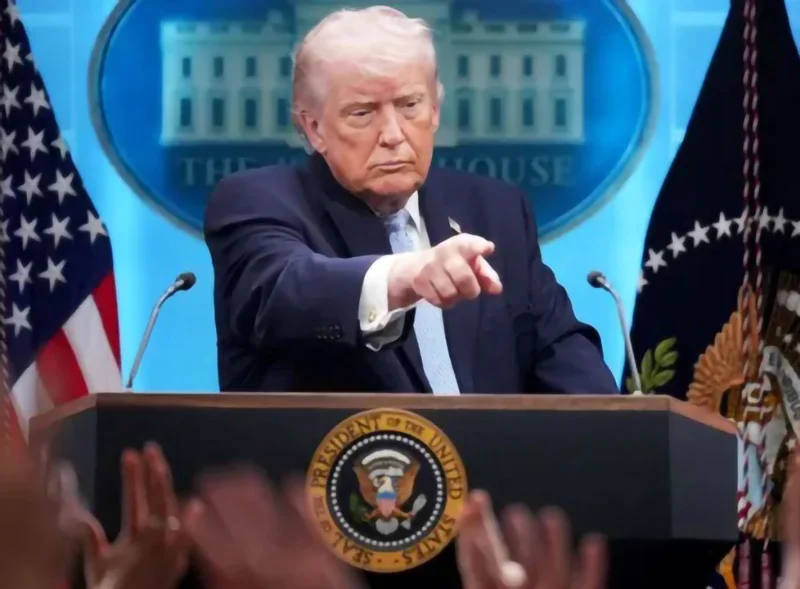
 Some fundamental freedoms seen to be at the heart of democracy in the US – religion, speech, the press, assembly and the right to petition the government – are at risk of being undermined at present by the country’s Executive President. However, the latter is being legally challenged on this score by some sections of the US media and the citizenry of the country could take heart from this notable defense of media freedom.
In fact this is good news for the world of democracy. The push back is coming from organizations such as CNN, ABC, CBS, Fox, NBC who constitute the nucleus as it were of the US media and their solidarity no less than their resourcefulness calls for commendation.
Following a recent White House decision to suspend CNN from what was referred to as ‘participation in presidential pool coverages’, the other media organizations mentioned refused to replace it in the pool. Their position was that the public had a right to receive ‘accurate and independent information about the government.’
Earlier, the White House decided to bar MS NOW and Politico from entering its premises following the restrictions imposed on CNN. The organizations were accused of publishing “FAKE NEWS’ , ‘Fiction’ and ‘lies’ in respect of the administration. These organizations lost no time in initiating a federal lawsuit accusing the central administration of violating their rights guaranteed by the First Amendment.
However, the latter litigating organizations could now consider themselves as having been vindicated because the federal court hearing their case has ordered the Trump administration to temporarily restore White House press access to journalists from the mentioned media institutions. Notably, the court has declared that the ban is ‘likely unconstitutional’. The case is proceeding.
The mass media of the most vibrant democracies of the West ought to be no strangers to such inspirational acts of solidarity and exemplifications of independence but there are lessons here for the democracies of the South that could stand them in good stead. Minus the right of a people to be informed, the rest of fundamental rights featuring in Southern Bills of Rights and legislation of the kind are bereft of substance and meaning.
It is informed decision-making on the part of a citizenry that makes for democratic vibrancy and on this score many a Southern democracy fails. While Southern publics generally demand of their governments continuous economic well being and substantive material benefits they are not equally desirous of being informed and knowledgeable.
This lacuna in the consciousness of many Southern publics enables their governments ‘to get off the hook’, so to speak and govern, or more often misgovern, their countries with impunity. Among other factors, this species of mass ignorance makes it possible for governments to dismantle democracy and rule in perpetuity.
Accordingly, an educated and constantly informed public is an essential precondition for the flourishing of democracy and independent media are integral to this process. Minus an independent mass media sector that meets the knowledge needs of the people responsibly, democracy is as good as dead.
Needless to say, those sections of the US media that are currently taking the Trump administration to task over its media curbs are acutely aware of the cruciality of these fundamental knowledge requirements.
The hope of democratic opinion worldwide and locally is likely to be that media independence would thrive in the manner in which it is flourishing in the most vibrant and accountable democracies of the West.
Southern countries such as Sri Lanka that lay claim to democratic credentials, but are democracy-deficient in many ways, need to be particularly cognizant of these requirements. The publics of these countries need to go the extra mile to ensure the thriving of an independent but responsible mass media sector.
In fact it is veritably a matter of life and death. It is only an independent media sector that could, while ensuring the existence of an informed public, impress on the latter the need to protect and perpetuate its fundamental rights. In the absence of these campaigns, such publics could be eventually having on their hands governments that boast of ruling in perpetuity.
Taking a leaf from the sections of the US media referred to independent media organizations in Southern states need to act in solidarity as well. They would need to act on the basis of the principle that acts of victimization suffered by members in their fold at the hands of governments, for instance, are in fact inimical acts directed at their collectivity and which call for united remedial action. In short, no independent mass media institution could see itself as ‘an island’.
Besides some general guidance on the importance of media independence and solidarity, the message coming from the US with regard to media praxis is that power must be stood-up to unblinkingly. The mentioned sections of the US media are primarily in a struggle to ward off encroachments on their independence in the areas of policy and practice by the political executive, that is the President.
The latter would ride rough-shod over the media in the absence of robust opposition by the media itself to inimical executive action of this kind.
While media independence needs to be seen as crucial to democratic development, an obligation is cast on the media to ensure that it uses such independence responsibly and constructively.
The worst that could afflict a media sector is for it to fall prey to the clichetic ‘freedom of the wild ass’. In fact recurring irresponsibility on the part of the media could lend credence to the perception that a tightly regulated media is best for a country. It is a short step from this misguided view to the position that political authoritarianism is best for a state. That turn of events would be of course catastrophic for a democracy.
The issues discussed thus far point to the need for a broad discourse among Southern democracies in particular on what is best for them in this connection. Given the risks underscored earlier for Southern countries in particular a broad discussion on the matters at hand, which includes the public, emerges as a must for Sri Lanka. Besides, media solidarity within democratic countries and internationally is a must.

by Prof. M. W. Amarasiri de Silva
Following public controversy over an inappropriate web link found in an English study module, the Sri Lankan government formally deferred the full rollout of the Grade 6 curriculum reforms to January 2027. In the interim, state schools will maintain the existing syllabus, reverting to standard eight-period daily timetables and previous textbooks to ensure uninterrupted instruction. Prime Minister and Minister of Education Dr. Harini Amarasuriya emphasized that this temporary pause allows the Education Ministry to thoroughly review all instructional materials, fix editorial flaws, and conduct scientific impact assessments across pilot schools prior to nation-wide implementation.
To address the oversight, an expert committee evaluated the flawed materials, completed necessary amendments, and finalised discussions to resubmit corrected modules for printing. Beyond revising written texts, the Ministry established a broader preparation roadmap—allocating funds for extensive teacher training programs set to begin mid-year, alongside scheduled informational briefings for parents, teachers, and students. Prime Minister Amarasuriya reaffirmed that none of the valid first-term modules were completely discarded or scrapped, preserving state resources while systematically rebuilding public trust and strengthening quality assurance protocols.
In this respect, this article reviews the current grade 6 syllabus comparing it with similar syllabi of India and the USA, with a view to make recommendations for the upcoming grade 6 syllabus revision.
Architecture of nation’s future
Education is the quiet architecture of a nation’s future. It is the unseen scaffolding upon which generations build their character, their intellect, and their capacity to contribute meaningfully to society. In Sri Lanka, the Grade 6 syllabus occupies a particularly important place in this architecture. It is the bridge between primary learning and the more demanding intellectual terrain of secondary education. It is the moment when children begin to move from learning basic facts to understanding concepts, from memorising information to applying knowledge, and from passive reception to active engagement. Yet, despite its importance, the Grade 6 curriculum in Sri Lanka has long struggled with issues of breadth, depth, relevance, and pedagogy. As global education systems evolve, Sri Lanka must examine what lessons can be learned from international models—particularly India and the United States—to strengthen its own curriculum and prepare students for a rapidly changing world.
The first lesson Sri Lanka can learn is the value of conceptual clarity. India’s NCERT curriculum, especially in Mathematics and Science, is globally respected for its logical progression and conceptual depth. Indian students are introduced early to the idea that mathematics is not merely a set of procedures but a language of reasoning. They learn why a ratio works, not just how to compute one. They understand the structure of an equation, not merely the steps to solve it. In Science, they explore the properties of materials, the structure of plants, and the principles of motion with a clarity that encourages curiosity rather than rote memorisation.
Sri Lanka’s Grade 6 syllabus, while competency-based, often leans heavily toward content coverage. Students are expected to learn many topics, but the time allocated for each is limited, and the teaching culture often emphasizes memorisation over understanding. If Sri Lanka wishes to improve the quality of its syllabus, it must embrace the idea that fewer topics taught well are better than many topics taught superficially. Conceptual mastery builds confidence, and confidence builds lifelong learners.
Lesson from the US
A second lesson comes from the United States, where the curriculum is built around skills rather than content. American students in Grade 6 are expected to read complex texts, analyse arguments, write essays supported by evidence, conduct experiments, and engage in collaborative projects. The emphasis is not on how much they know but on what they can do with what they know. This skills-based approach encourages critical thinking, creativity, and independence—qualities essential for success in the modern world.
Sri Lanka’s syllabus, by contrast, often rewards students for reproducing information rather than interpreting it. The exam culture reinforces this tendency, as students are assessed primarily through written tests that measure recall. To improve the syllabus, Sri Lanka must integrate more opportunities for students to think, question, debate, and create. The classroom should become a space where students learn to solve problems, not just memorize solutions.
Another important lesson comes from the breadth of Sri Lanka’s own curriculum. One of the strengths of the Sri Lankan system is its inclusion of cultural and religious education. Subjects such as Buddhism, Hinduism, Islam, and Christianity provide moral grounding and cultural identity. Art, Music, Drama, and Health contribute to holistic development. These subjects remind students that education is not merely about academic achievement but about becoming a balanced human being. However, breadth without depth can become burdensome. Grade 6 students in Sri Lanka often juggle more than ten subjects, each with its own textbook, competencies, and assessments. This creates pressure not only for students but also for teachers, who must rush through content to meet syllabus requirements. The lesson here is not to reduce cultural subjects but to integrate them more meaningfully. Religious education can be taught through ethical discussions, community projects, and reflective writing. Art and Music can be connected to history, literature, and social studies. Health can be linked to science and physical education. Integration reduces overload while enriching learning.
Another lesson from India
India offers another valuable lesson in the form of standardised textbooks. NCERT books are used across the country, ensuring consistency in quality and content. They are written by subject experts, reviewed rigorously, and updated periodically. Sri Lanka’s textbooks, while generally well-structured, vary in quality and often lag behind modern pedagogical standards. Some are dense, text-heavy, and lacking in visual aids or real-world examples. To improve the syllabus, Sri Lanka must invest in high-quality textbooks that are engaging, accessible, and aligned with contemporary educational research. Textbooks should not merely transmit information; they should inspire curiosity. They should include stories, diagrams, experiments, and activities that make learning enjoyable and meaningful.
The United States provides a lesson in inquiry-based science education. American students conduct experiments, build models, observe natural phenomena, and engage in engineering design challenges. They learn science not as a set of facts but as a process of discovery. Sri Lanka’s science curriculum includes experiments, but many schools lack the resources, laboratory facilities, or teacher training to implement them effectively. Improving the syllabus requires improving the ecosystem around it. Schools need laboratories, equipment, and teacher development programs that empower educators to teach science through inquiry. A syllabus is only as strong as the environment in which it is taught. ***
International models
Another area where Sri Lanka can learn from international models is language education. In India, students often learn three languages—English, Hindi, and Sanskrit or Urdu. This heavy language load has its challenges, but it also produces students with strong linguistic skills. In the United States, English Language Arts emphasises reading complex texts, writing arguments, and analysing literature. Sri Lanka’s English curriculum, while improving, still struggles with uneven implementation across schools. Many students reach secondary school without adequate proficiency in English, limiting their access to global knowledge. To improve the syllabus, Sri Lanka must strengthen English instruction through better teacher training, more reading opportunities, and a shift from grammar-heavy teaching to communication-focused learning. At the same time, Sinhala and Tamil instruction should be modernised to include creative writing, literature appreciation, and critical reading.
Social Studies is another area ripe for improvement. Sri Lanka’s curriculum includes History, Geography, and Civics, but the teaching often emphasises memorization of dates, definitions, and facts. India’s Social Science curriculum, while also content-heavy, provides clearer conceptual frameworks. The United States, however, excels in teaching civics and citizenship. American students learn how governments function, how laws are made, how communities solve problems, and how citizens participate in democracy. Sri Lanka can strengthen its Civics curriculum by incorporating more discussions on governance, rights, responsibilities, and community engagement. Students should learn not only the structure of government but also the values that sustain it—justice, equality, and participation.
One of the most important lessons Sri Lanka can learn is the value of reducing exam pressure. In both India and Sri Lanka, exams dominate the educational landscape. Students are judged primarily by their ability to perform on written tests. The United States, while not free from assessment challenges, uses a wider range of evaluation methods—projects, presentations, portfolios, and continuous assessment. These methods allow students to demonstrate learning in diverse ways. Sri Lanka should consider adopting a more balanced assessment system that values creativity, collaboration, and practical skills alongside academic knowledge.
Technology integration is another area where Sri Lanka can improve. The United States incorporates digital literacy, coding, online research, and digital citizenship into the curriculum. Sri Lanka’s ICT syllabus is well-structured, but implementation varies widely. Many schools lack computers, internet access, or trained ICT teachers. Improving the syllabus requires improving infrastructure. Students must learn to navigate the digital world safely and effectively. They must learn coding not as a luxury but as a basic skill. They must learn to evaluate online information critically, a skill essential in an era of misinformation.
Teacher training
Teacher training is perhaps the most critical lesson of all. A syllabus is only as effective as the teachers who deliver it. India invests heavily in teacher training through national programs, workshops, and online platforms. The United States emphasises professional development, peer collaboration, and instructional coaching. Sri Lanka must strengthen its teacher training programmes, ensuring that educators understand not only what to teach but how to teach it. Teachers should be trained in inquiry-based learning, differentiated instruction, formative assessment, and classroom management. They should be empowered to adapt the syllabus to the needs of their students rather than follow it mechanically.
Sri Lanka must learn the lesson of relevance. A syllabus must prepare students not only for exams but for life. It must teach them how to think, how to communicate, how to solve problems, and how to work with others. It must prepare them for a world where knowledge is abundant, but wisdom is scarce. It must help them navigate a future shaped by technology, globalisation, environmental challenges, and social change. To improve the syllabus, Sri Lanka must ask: What kind of citizens do we want to produce? What kind of thinkers? What kind of leaders? The answers to these questions should shape the curriculum.
Lastly, improving the quality of Sri Lanka’s Grade 6 syllabus requires learning from both international models and local strengths. From India, Sri Lanka can learn the value of conceptual clarity and standardised textbooks. From the United States, it can learn the importance of skills, inquiry, and creativity. From its own traditions, it can preserve cultural education, moral development, and holistic learning. The goal is not to copy another country’s system but to build a uniquely Sri Lankan curriculum that is modern, relevant, and empowering. A curriculum that honours the past while preparing students for the future. A curriculum that nurtures thinkers, creators, and compassionate citizens. A curriculum worthy of a nation with immense potential and a proud educational heritage. If Sri Lanka embraces these lessons, the Grade 6 syllabus can become not just a bridge to secondary education but a foundation for national progress.

 Melloney Dassanayaka is certainly a familiar name here, and abroad, as well, having represented Sri Lanka at the Miss Universe 2024 pageant, held in Mexico.
A former National Basketball player, she is also involved in several projects, beneficial to the community, including financial literacy for single women-headed families in the country.
A banker by profession, Melloney hold a Bachelor’s Degree in Business Administration.

Melloney with Asanka de Mel of Lovi Sri Lanka
This extremely talented old girl of Holy Family Convent, Bambalapitiya, was in the limelight, once more, when she was seen on the ramp at Colombo Fashion Week.
It was her very first experience, at this prestigious event, and she loved every minute of it, she said, and, what’s more, she was featured on three consecutive days.
 According to the itinerary, on day 01 she walked for Lovi Sri Lanka; day 02 Rizwan Beyg (Pakistan designer), Arsath Furkhan (Indian designer), Haoyi Yan (Chinese designer) and Samant Chauhan (Indian designer); and on day 03 Vaishali Shandangule (Indian designer).
In today’s edition of The Island SceneAround, we spotlight Melloney, on the ramp, at Colombo Fashion Week.
Melloney will also participate at Miss Grand All Stars to be held later in the year, in Thailand, as Miss Universe Sri Lanka 2024.

England call up Crane and rest Archer for Pakistan series

ICC introduces pink-ball daytime Test trial, new time-wasting penalties

Discussion on Anuradhapura Sacred City Development Plan

India enter Asian Games final after Kishan and Bumrah ride roughshod over Sri Lanka

I extend my heartfelt wishes to all the sons and daughters of our country for a Happy World Children’s Day – President

Sri Lanka bowl first in semi final clash against India

‘Dates have the highest sugar content to fight Coronavirus’

Sunday Island 27 December – Headlines

#SundayIsland 17th December – Headlines

Sunday Island – 28th March

Sunday Island Headlines – 21 March

Sunday Island – 21st February – Headlines
-

 News4 days ago
Police remove Thileepan statue in Jaffna
-

 Editorial6 days ago
Birth of a bad law
-

 Features7 days ago
Beyond traditional jobs: Why Sri Lanka needs to facilitate the gig economy
-

 News6 days ago
TIN mandatory for key transactions from Nov. 1
-
 Latest News7 days ago
Kusal, Wellalage star as Sri Lanka defend 322 in Headingley thriller
-

 Features4 days ago
The 22nd Amendment, constitutional recovery and illiberal slippage
-

 Features4 days ago
Of foreigners as CEOs of Lankan ventures
-

 News4 days ago
Sajith rejects Jt. Opp. protest sabotage claim; SJB TU chief demands remedial action