
Midweek Review
Colombo Port City: Who can be entrusted with safeguarding Sri Lanka’s interests?

By Shamindra Ferdinando
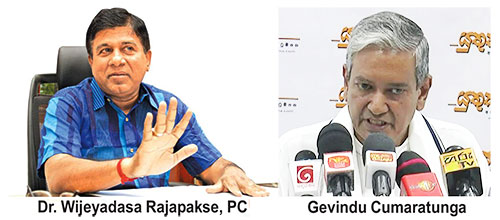
SLPP National List lawmaker Gevindu Cumaratunga, on Sunday (25) raised three issues in respect of the controversial Bill, titled ‘Colombo Port City Economic Commission’, that had been challenged in the Supreme Court.
Addressing the media at the Sri Sambuddhajayanthi Mandiraya, lawmaker Cumaratunga expressed concerns over (I) the composition of the proposed Economic Commission (EC) with the focus on the President being the sole authority in deciding its members, (ii) authority over the newly reclaimed land, adjacent to the Galle Face Green, and finally (iii) automatic approval granted to those making applications for projects through the EC.
Cumaratunga called the briefing in the wake of Friday’s (23) conclusion of hearing of petitions filed by those opposed to the project on the basis the Bill, as whole, is inconsistent with many provisions of the Constitution. There were also several intervenient petitions defending the Bill. These petitions were heard before a five-judge-bench comprising Chief Justice Jayantha Jayasuriya, PC, Justice Buwaneka Aluwihare, Justice Priyantha Jayawardena, Justice Murdhu Fernando, and Justice Janak de Silva.
Cumaratunga, in addition to being an SLPP lawmaker, also expressed views on the Bill in his capacity as the Chairman of the nationalist civil society pressure group Yuthukama. Yuthukama is represented in the current Parliament by two lawmakers – Cumaratunga and Anupa Pium Pasqual who entered Parliament from the Kalutara district.
At the commencement of the briefing, the MP appealed to the media to ensure priority to the Port City issue though they could raise any other matter pertaining to simmering controversy over the Easter Sunday carnage, the Covid-19 rampage, and the developments since the Presidential Political Victimisation Commission handed over its report to President Gotabaya Rajapaksa on Dec 8, 2020.
Having compared the proposed Bill, with two concept papers submitted during the previous UNP-led administration, and the current, on Sept 09, 2019 and June 16, 2020, respectively, lawmaker Cumaratunga questioned the failure on the part of those who prepared the Bill, at issue, to take into consideration the salient points therein.
The arch nationalist emphasized the responsibility on the part of the SLPP government to take remedial measures on its own, in respect of the Bill, regardless of the position taken by the Supreme Court. With the country crossroads, in the wake of implementation of the mega project, the government couldn’t, under any circumstances, shirk its responsibility to introduce the required changes, he argued.
The Supreme Court is scheduled to convey its ruling to President Gotabaya Rajapaksa and Speaker Mahinda Yapa Abeywardena.
Out of the 145-member SLPP parliamentary group, lawmaker Cumaratunga is the second to express concerns over the Bill. Having fired a broadside at the Bill, Colombo District SLPP lawmaker Dr. Wijeyadasa Rajapakse, PC, represented Ven. Muruththettuwe Ananda Nayaka Thera, Chief Incumbent of the Sri Abhayarama Purana Viharaya and President of the Public Service United Nurses’ Union, Sri Abhayarama, Narahenpita, and Nagashenage Dasun Yasas Sri Nagashena, of 90/12, Gramasanwardana Road, Polwatta, Pannipitiya.
Former President of the Bar Association of Sri Lanka, Dr. Rajapakse’s written submissions in respect of the case filed against the Secretary General of Parliament, Dhammika Disanayake, and Attorney General Dappula de Livera, PC, depicted a far more serious picture than lawmaker Cumaratunga’s criticism.
Having found fault with the incumbent administration for placing the responsibility of naming the EC on the President, MP Cumaratunga stressed that the appointing process should be subjected to parliamentary supervision. The lawmaker pointed out the concept papers presented by the previous government and the present, under the leadership of Prime Minister Mahinda Rajapaksa, underscored the need for the EC to consist of Sri Lankans. Referring to the concept paper presented on June 16, 2020, Cumaratunga said that it proposed the appointment of 10 members, including the Chairman of the EC. The Yuthukama Chief asserted that the issue at hand could be resolved by ensuring the majority of appointments to the EC, depending on the number, be placed under parliamentary supervision whereas the President/the minister in charge of the Port City, too, could make appointments. However, all should be Sri Lankans whereas required foreign experts could be hired for suitable positions, including that of the Director General.
MP Cumaratunga questioned the rationale in giving the sole authority, as regards appointments, to the President, or the minister in charge, in case the government brought the Port City under a particular Ministry.
Cumaratunga pointed out that the Office of the President shouldn’t be the sole decision-making authority, as elections were held every five years. Referring to statements as regards the Greater Colombo Economic Commission (GCEC) law, introduced by late President J.R. Jayewardene, in 1978, lawmaker Cumaratunga said that over the years there were many amendments to the Constitution. The government member expressed the view that the Bill, at issue, couldn’t be discussed taking into consideration JRJ’s law. The Constitution, the lawmaker emphasized, had undergone far reaching changes with the enactment of the 17th (Oct. 2, 2001) 18th (Sept. 10, 2010) 19th (April 28, 2015) and 20th Amendments (Oct 22, 2020) Amendments. Therefore, the incumbent government couldn’t go back on those Amendments, the MP said, pointing out that the two concept papers submitted in terms of the 19th and 20th Amendments envisaged the EC being subjected to the supervision of the Constitutional Council and the Parliamentary Council, respectively.
The 20th Amendment did away with the 10-member CC thereby passing the responsibility to the five-member Parliamentary Council. MP Cumaratunga explained that in terms of those concept papers mentioned, the officials who should be appointed to the EC. They included Governor, Central Bank, Secretary to the Treasury et al.
Parliament shirks its responsibilities
Before discussing concerns in respect of the Bill, at issue, raised by nearly 20 petitioners, including lawmaker Rajapakse, it would be pertinent to take up the failure on the part of those responsible to ensure financial stability. The country is experiencing severe difficulties for want of financial discipline, at every level, with the Parliament yet to take tangible remedial measures. The revelations made by House parliamentary watchdog committees, the Committee on Public Enterprises (COPE) and the Committee on Public Accounts (COPA), as well as the Public Finance Committee (PFC), since the last general election, painted a bleak picture. The situation is so bad, a guarantee that the EC would comprise only Sri Lankan nationals holding responsible positions does not promise a clean administration. It would be pertinent to mention that Sri Lankans, being at the helm of the EC wouldn’t necessarily guarantee safety, security, political stability and uppermost the country’s interest without oversight.
JVP leader Anura Kumara Dissanayake’s hard hitting speech in Parliament, last Friday (23), painted a grim picture of the national economy. The JVPer didn’t mince his words when he named those allegedly responsible for massive waste, corruption and irregularities during successive governments.
 Dissanayake pointed out how wrongdoers continued to enjoy political power, regardless of their public exposure. Lawmaker Dissanayake’s fiery speech highlighted Sri Lanka’s overall failure to tackle corruption, now, possibly, even threatening the very survival of the country. The JVP leader cited the Treasury bond scams, perpetrated in Feb 2015 and March 2016, as well as the massive sugar tax scam executed by the present lot. Reference was also made to the payment of a staggering USD 6.5 mn in 2014 to US national Imaad Shah Zuberi, 50, of Indian and Pakistani origins, to lobby the US Government to save Sri Lanka from human rights scrutiny by Washington. The then Rajapaksa government wired a total of USD 6.5 mn to a venture capitalist and political fundraiser who was sentenced recently to 12 years in a federal prison in the US on charges of embezzlement.
According to the US Department of Justice, Sri Lanka hired Zuberi of Arcadia, California, in 2014, to improve the country’s image in the United States, in the wake of investigations undertaken by the Geneva-based United Nations Human Rights Council. Of course, in this instance the then government would have turned to a questionable lobbyist out of sheer desperation, like a drowning man clutching at a straw, as the powerful West piqued by the ignominious defeat of the LTTE at the hands of our security forces, which they had always claimed were incapable of defeating it, was and still is out to punish us for defying their mantra.
Zuberi had promised to make substantial expenditures on lobbying efforts, legal expenses, and media buys, which prompted Sri Lanka to agree to pay Zuberi a total of USD 8.5 million over the course of six months, in 2014. But actual payments amounted to USD 6.5 mn.
Examination of recent statements, issued by the Communication Department of the Parliament, pertaining to proceedings at the COPE, COPA and PFC, chaired by Prof. Charitha Ratwatte, Prof. Tissa Vitharana and Anura Priyadarshana Yapa, respectively, revealed the absence of proper scrutiny at any level in all sectors. Let me briefly discuss the shocking disclosure of the happenings at the Football Federation of Sri Lanka at the recently concluded COPE proceedings. The watchdog committee questioned a range of irregularities during the tenure of Attorney-at-Law Manilal Fernando as its President. And, finally, he was forced to quit because of those controversial dealings. The COPE queried how a sum of Euro 40,400 (approximately Rs 6 mn) received from the Italian Football Players’ Association to construct a football ground in his home town, Kalutara, ended up in Fernando’s private account. Prof. Herath’s committee also questioned the misappropriation of a sum of USD 60,000 (nearly Rs 6 million) provided by the Asian Football Federation to conduct competitions, a sum of Rs.10 mn given by a private company to construct 20 houses for tsunami victims and a sum of USD 200,000 donated by the Asian Football Federation.
It also transpired, during the COPE proceedings, that the current President of the Federation, Anura de Silva, has submitted an affidavit to the court claiming that financial irregularities hadn’t taken place in spite of the Financial Crimes Investigation Division (FCID) moving the courts. The committee pointed out the seriousness in submitting such an affidavit.
In addition, it is reported that Anura de Silva now wants to quit from the post of President of the Sri Lanka Football Federation to make way for Manilal’s son to climb to that post!
Prof. Herath directed both Manilal Fernando and Anura de Silva to appear before COPE on May 06. COPE also dealt with controversial circumstances under which elections to the Football Federation of Sri Lanka was conducted with the Chairman of the Elections Committee as well as two other members given Rs 750,000 and Rs 600,000 each, respectively. The crisis at the Football Federation of Sri Lanka should be examined against the backdrop of the disgraceful conduct of the Sri Lanka Cricket (SLC) administrations.
Over the past couple of decades, under the watch of successive governments, the financial discipline has deteriorated to such an extent that the national economy is in deepening turmoil. Therefore, the Port City undertaking is a vast challenge that requires the highest consideration and, under any circumstances, the public shouldn’t be duped by the promise that Sri Lankan nationals, holding responsible positions at the helm of the EC, would ensure the best interests of the country.
Wijeyadasa isolated
Contrary to lawmaker Wijeyadasa Rajapakse’s high profile stand as regards the Port City project, the SLPP constituents endorsed it. The National Freedom Front (NFF) parliamentary group threw its weight behind the Port City project. Pivithuru Hela Urumaya (PHU), too, defended the project while those appointed on the SLPP National List, except Yuthukama leader Cumaratunga, refrained from causing any friction. However, Wijeyadasa Rajapakse, who had represented both the SLFP and the UNP cabinets since his entry into parliamentary politics, pursued his agenda.
Let me verbatim the section headlined ‘Threat to the National Security’ in Dr. Rajapakse’s written submissions to the SC: “The zone has been exempted from the Customs Ordinance. The Customs is debarred from exercising its powers within the Zone and the people in the Zone. There may be importation of prohibited substances, such as drugs, weapons, etc. The South jetty of the Colombo Port is situated, adjoining the said Zone, and it is controlled by the company belonging to the Chinese government.
As the proposed Commission is formed, in the event of any violation or disregard of International Charters and Treaties including, UN Charter, UN Charter for Human Rights, International Covenant on Civil and Political Rights, War Crimes, Crimes against Humanity within the said zone, the Sri Lankan State is responsible, not the purported commission.
There is a turmoil situation prevailing in the region, as well as in the World, due to the power struggle between China on one side and India, the USA, Europe, Japan on the other side. This kind of unprecedented facilitation to China would undoubtedly expose the whole country and the whole nation to danger. When presenting Bills of this nature, it is necessary to take geo-political factors into consideration.
In the course of argument, it was submitted that the government of Sri Lanka could not be able either to resist and control the import of any prohibited substance, including weapons of mass destruction, such as nuclear, atomic, multi-barrel, etc., as the operation of the Customs Ordinance is excluded. On 21st April, a ship loaded with Uranium, meant to be used for nuclear, which belongs to China, docked at the Hambantota Port by misleading the Authorities. The Government was able to direct it to leave the Port because that power of the government was preserved in the Agreement. But the present Bill does not contain any such safeguard.
One must not forget that the Colombo South Jetty is adjoining the zone. Therefore, it cannot be ruled out that the Chinese government will not resort to such devastation, compelling the other super powers to destroy the economy of the country and to expose national security to danger.
The total consideration of the Bill, as a whole is inconsistent to the rudimental principles of our Constitution and it shall be ruled out ab initio.”
Former Ports and Shipping Minister Arjuna Ranatunga, in a recent interview with the writer over the phone, pointed out how Sri Lanka lost the strategic Hambantota port, to China, in 2017, and was now about to suffer a similar fate as regards the Port City project. Ranatunga recalled how the Sirisena-Wickremesinghe administration went ahead with the Hambantota project in spite of him giving up the Ports and Shipping portfolio. The country would one day pay a very heavy price for irresponsible actions of politicians and officials, the outspoken defeated UNP candidate, at the 2020 August general election, told the writer.


Iranian Ambassador in Colombo Dr. Alireza Delkhosh says the Islamic Republic of Iran remains fully prepared to face US-Israeli aggression.
In an interview with The Island at the Iranian Embassy, in Colombo, Dr. Delkhosh emphasised that in case of a fresh outbreak of hostilities, the aggressors, as well as those who provided bases for unprovoked military campaign ,should be prepared to face the consequences.
Excerpts of the interview:
The Island: Did Iran anticipate Israel-US launching unprovoked attacks in the midst of indirect nuclear talks between Iran and US in Geneva, mediated by Oman?
Ambassador: Iran’s wall of mistrust towards the US is rooted in decades of hostile policies and, specifically, Washington’s dark record of broken promises. We always welcomed diplomacy in good faith and serious intent, entering diplomatic channels accordingly; yet, we have repeatedly witnessed the US chose the path of betraying diplomacy in the midst of negotiations.
We do not build our foreign policy on optimism toward the US, as we fundamentally do not view the current US administration as a trustworthy party. The recurrence of provocative patterns and coordination with the Zionist regime’s actions during sensitive negotiations indicate a systematic approach to discredit diplomacy.
From our perspective;
“Any coercive or military action taken alongside mediation efforts serves as further evidence of Washington’s lack of sincere will for diplomacy and its attempt to exert pressure under the guise of dialogue—an approach that will not go unanswered.”
The Island: Do you think the latest war and regional developments, such as the UAE pulling out of OPEC, should be examined, taking into consideration the Oct0ber 7, 2023, Hamas attack on southern Israel.
Ambassador: Allow me to rephrase your question: Is there a link between the attacks carried out by the US and Israel against Iran and the Zionist regime’s warmongering policies? My answer is a definitive “yes”.
Any serious analysis of the current regional dynamics must be placed within the broader historical and structural context of the Palestinian question and the continuation of occupation and blockade. Iran has consistently maintained that the developments of October 7, 2023, did not emerge in a vacuum, but are rooted in decades of unresolved injustice, the denial of legitimate rights of the Palestinian people, and the absence of a credible political horizon.
From this perspective, the subsequent escalation in the region reflects a chain of reactions shaped by long-standing structural tensions, rather than isolated incidents. Iran has repeatedly emphasised that sustainable stability can only be achieved through ending occupation, addressing the root causes of the crisis, and upholding the inalienable rights of the Palestinian people.
Thus, it is important not to reduce complex geopolitical developments to a single starting point. Energy market decisions, alliance shifts, and military escalations are influenced by a broader set of strategic, economic, and political factors.
The Island: What is the status of talks mediated by Pakistan?
Ambassador: A high-ranking Iranian delegation attended an intense day of negotiations, with American negotiators, in Pakistan, on 12th of April, to permanently end a US-Israeli aggression against the country. Iran agreed to participate in the negotiations after US authorities indicated they had accepted Iran’s general conditions as a baseline for peace deal discussions. However, during 20 hours’ intense talks, the US changed its position.
The main sticking point in the talks was the US reluctance to agree to Iran’s legitimate rights to have a peaceful nuclear programme, which Iran has insisted on for years and just before entering the talks, based on the UNSC resolution and the relevant laws.
Iran’s foreign policy is firmly grounded in the principles of dignity, mutual respect, and rejection of coercion or imposed negotiations. Within this framework, Iran has consistently stated that it remains open to indirect diplomatic engagement through mediators, including regional partners, such as Pakistan, provided that diplomacy is conducted in a balanced and credible environment. At the same time, Iran has repeatedly emphasised that the effectiveness of any negotiating track is directly undermined by the US coercive measures, unilateral sanctions, and pressure-based policies.
Sustainable diplomacy necessitates a complete decoupling from pressure tactics; it must be grounded in genuine reciprocity and respect for national rights and interests. Guided by this principled approach, Iran continues to engage in mediation efforts, in good faith, while resolutely safeguarding its sovereign rights and rejecting any framework that resembles ‘dictation under pressure’.”
The Island: The UN has pathetically failed to intervene in the current West Asia conflict. Both Israel and the US simply ignored the UN and the world body seems irrelevant. As a seasoned diplomat what is your opinion on the UN? What is wrong with the global body”
Ambassador: Iran views the UN as an important multilateral institution established to safeguard international peace and security; however, its effectiveness has increasingly been constrained by the selective application of its Charter and the politicisation of decision-making, particularly within the Security Council.
Currently, the international community is witnessing highly dangerous interpretations of ‘peace,’ ‘rights,’ and ‘aggression’ by the US and the Israeli regime. In their lexicon, if they attack a country, it is labelled a ‘peace operation’ or ‘legitimate defence’; yet, if a nation defends itself, it is branded as ‘warmongering.’
“When the innocent people of Gaza, Lebanon, Syria, Yemen, Iran, and Iraq are stripped of their fundamental human and humanitarian rights and endure profound suffering due to attacks, genocides, and inhumane sanctions, it is as if—in the prevailing international discourse—’human rights’ are not being violated at all.”
The world witnessed, on many occasions, that when certain permanent members are directly involved, or aligned with one side of a conflict, the UN’s ability to act impartially is significantly weakened.
From this perspective, the current situation does not reflect irrelevance of the United Nations itself, but rather highlights the structural imbalance in the international order, where enforcement mechanisms are often subject to geopolitical considerations. Iran has, therefore, consistently called for fundamental reform of global governance structures, including democratisation of the Security Council and strengthening of multilateralism, based on justice, equality, and respect for sovereignty.
The Islamic Republic of Iran supports a United Nations that truly represents the rights of nations and establishes justice. The current state of global affairs reflects the failure of certain powers to adhere to the fundamental principles of the UN Charter.
While emphasising the necessity of effective multilateralism to guarantee international peace and security, the Islamic Republic of Iran has consistently reaffirmed its commitment to an international order, based on international law and the principles of the UN Charter.
In conclusion, I must state that: “Unilateralism negates the essential and fundamental principles of the United Nations. Unilateralism is an invitation to injustice, confrontation, and war.”
The Island: In spite of sustained US pressure, its NATO allies declined to join military action against Iran or commit forces to Hormuz Strait. The British and French positions caused an unprecedented rift between them and the US. Do you think NATO countries’ split position on Iran war caused irreparable damage to the largest military organisation in the world?
Ambassador: Differences among NATO members on the use of force in external theatres are not unprecedented. Divergent approaches to specific regional conflicts can place strain on political unity and strategic messaging within this alliance. Whether such differences translate into long-term structural damage depends on how effectively members manage internal consultation and reaffirm shared principles.
Let’s not forget that NATO is fundamentally a military alliance shaped by the strategic priorities of the United States, and differences among its members often reflect not a principled divergence, but rather varying degrees of alignment with Washington’s regional policies.
What is presented as “internal consultation” within NATO is frequently constrained by asymmetric influence, where key decisions on the use of force are effectively driven by the US agenda.
In this context, disagreements among NATO members on external military actions are seen in Tehran less as an institutional safeguard and more as evidence of the alliance’s limited strategic autonomy, particularly in relation to West Asia. Therefore, these divergences do not merely represent tactical differences, but highlight a deeper structural issue: the growing questioning of interventionist policies and the sustainability of military blocs in addressing complex regional crises.
The Island: When did you first hear about the unprovoked US attack on Iran frigate off Galle? (The date and time, please). Who told you about the unfortunate incident? What was your first reaction?
Ambassador: What was particularly concerning was that the IRIS Dena was understood to be undertaking a routine passage in the region, returning from an official visit to India, and was not engaged in any combat or hostile activity. Any incident involving a naval vessel, under such circumstances, is naturally a matter of serious concern and a war crime, especially when it raises questions about maritime safety and the protection of unarmed or non-combat assets.
My immediate priority, upon receiving credible confirmation about this attack, would have been the safety of personnel and the prevention of any escalation. From the first moments of receiving this information, I have been in direct talks and consultations with the Ministry of Foreign Affairs of Sri Lanka and other relevant government authorities, while ensuring that no conclusions are drawn until all facts are verified.
The Island: Did you visit the Iranian vessel and sailors now at Trincomalee?
Ambassador: At this stage, I would like to state that the primary responsibility of the mission has been to maintain continuous contact with the relevant Sri Lankan authorities and ensure the safety, welfare, and proper handling of Iranian personnel and assets involved. In this regard, we have been in close and ongoing coordination with the Ministry of Foreign Affairs of Sri Lanka and other competent government institutions to follow up on all necessary arrangements.
Our focus has been on ensuring that all matters are addressed through official diplomatic channels in accordance with international maritime and humanitarian procedures. The well-being of our personnel and the proper management of the situation remain our highest priority.
The Island: Ambassador, you presented your credentials to the then President Ranil Wickremesinghe in late October, 2023. What were the previous diplomatic stations you served before taking over the Colombo mission?
Ambassador: Prior to my mission in Sri Lanka and the Maldives, I served in various diplomatic capacities in Turkey, Sweden, and Uzbekistan.”
The Island:Would you mind stating Iranian red lines about issues that Iran would never give up such as the right to use nuclear power for civilian purposes and control over Hormuz Strait?
Ambassador: Iran’s foreign policy is based on the principles of sovereignty, deterrence, and the rejection of coercion and unilateral pressure, while simultaneously affirming its commitments under international law. In this framework, we have consistently emphasised that the Islamic Republic will never relinquish its inalienable right to peaceful nuclear energy, including enrichment for civilian purposes, such as energy production, medical applications, and scientific development. As we continually maintained, this right is fully consistent with the Non-Proliferation Treaty.
At the same time, Iran regards the security and management of the Strait of Hormuz as a strategic national responsibility, given that it lies within Iran’s sovereign waters and is one of the world’s most sensitive maritime corridors. Our officials have repeatedly stated that the security of the Persian Gulf and Hormuz must be maintained by regional states themselves, without external militarisation or domination.
However, Iran has consistently expressed concern over certain regional developments in which neighbouring territories have been utilised for the projection of external military power, including by the United States, which, in Tehran’s view, contributes to heightened tensions and undermines regional stability. From Iran’s perspective, such dynamics are among the key factors affecting and jeopardising the security environment of the Persian Gulf and the Strait of Hormuz.
Within this framework, Iran has emphasised that any threat to its sovereignty, territorial integrity, or strategic security interests would be met with firm and proportionate resistance, while at the same time reaffirming its commitment to freedom of navigation in accordance with international law.
Taken together, from a broader perspective: “The overarching framework of Iran’s foreign policy is built upon three primary pillars: countering diplomatic pressures, maintaining autonomy in strategic decision-making while safeguarding national interests and sovereignty, and emphasising the principle of reciprocity. This approach—rooted in the three guiding principles of ‘Dignity, Wisdom, and Expediency’—reflects Tehran’s explicit opposition to unilateralism and bullying in the global arena.”
The Island: Iran proved that it had the strength and the will power to face daunting military challenges and, in spite of civilian protests, influenced by economic hardships, the public stood by the leadership during the hour of crisis. What is Iran’s message to the world?
Ambassador: Iran is the heir to a great civilisation, spanning several millennia. Iran’s message to the world is that national resilience is ultimately rooted in the bond between the state and its nation, particularly, during times of external pressure and security challenges. Despite economic hardships, the Iranian people have demonstrated that in moments of national crisis, priorities converge around the defence of sovereignty, territorial integrity, and national security.
From this perspective, the experience of recent years is a clear testimony that external pressure, military threats, or coercive policies do not weaken national cohesion; rather, they reinforce a shared sense of resistance and the bond between the leadership and segments of society around core national principles. It highlights that such domestic economic issues are addressed within the framework of national stability, not through external intervention.
There exists an inviolable principle: “Sustainable national cohesion is achieved only in the light of full sovereignty over internal affairs and the rejection of any intervention or the politicisation of domestic developments by foreign powers.”
The Island:Wishful Israel-US assessment for regime change, following the Supreme Leader’s assassination failed. Against the backdrop of US success in Venezuela, they seemed to have wrongly asserted the situation and Iranian military response. How do you see the next few weeks as the US and Israel maintain a fragile ceasefire, regardless of some isolated incidents?
Ambassador: The assumptions that external pressure, military action, or targeted scenarios, such as the assassination of its leadership, would lead to structural political change in Iran, have repeatedly proven to be a strategic miscalculation. “Iran’s security architecture is not modelled after classic Western patterns that could be brought down, through sanctions or threats; rather, it possesses its own unique design.
Iran’s strategic decision-making is rooted in institutional continuity, national sovereignty, and a well-established defence and command structure—one that cannot be disrupted by external pressures or short-term military developments.”
Regarding the current situation, the existing ceasefire environment looks to be fragile and highly sensitive. As repeatedly stressed by our officials and leadership, stability cannot be sustained through coercive measures, continued military pressure, or selective escalation. Therefore, any lasting calm depends on adherence to commitments, respect for sovereignty, and cessation of hostile actions.
In the coming weeks, the situation will remain volatile, yet manageable, and Iran will continue to maintain its readiness to respond to any potential adventurism.
Iran continues to emphasise that sustainable regional security cannot be built on failed assumptions of regime change or military superiority, but only through recognition of political realities and mutual respect under international law.
The Island: Finally, the senseless killing of over 150 schoolgirls and teachers at an Iranian school, at the onset of the latest conflict, horrified the world. However, the response of Western governments, and various human rights bodies, seemed inadequate. Some refrained from commenting on the incident. The situation in Lebanon, too, is deteriorating. Why do they act differently when the perpetrators happened to be the US or Israel?
Ambassador: I believe that the disparity in reactions reflects a long-standing flaw in the international system: the selective application of international law and humanitarian principles, based on political considerations rather than universal standards.
As you noted, when incidents involve the US or Israel, many international actors—including certain Western governments and institutions—tend to interpret events through the narratives of ‘security,’ ‘self-defence,’ or ‘strategic necessity.’ The brutal attack on the Minab girls’ school, which resulted in the slaughter of over 168 students and teachers, has pulled back the curtain on the double standards of those who claim to champion human rights. While the smallest incidents in other countries trigger immediate global outcries. We witness a response characterised by silence, projection, and brazen falsehoods regarding this blatant crime—as well as the horrific atrocities in Gaza and Lebanon. These tactics aim at nothing but distorting reality and whitewashing the perpetrators of these tragedies. This pattern has undermined the credibility of international law and the global human rights framework, as it ignores the principle of ‘sovereign equality’ and suggests that accountability is not applied equally to all members of the international community.
This is not merely a legal issue but an expression of a structural imbalance in the international order, where political alliances and strategic interests dictate the interpretation and enforcement of norms. Therefore, I maintain that: “The only way to restore trust in the international system is through the consistent and non-selective enforcement of international law, without exceptions or double standards, regardless of the identity of the parties involved.”
As a final word: “Ibn Khaldun 1332-1406, a famous philosopher and historian, believes that ‘politics is the product of geography.’ The essence of this hypothesis is that the temporary presence of extra-regional powers in West Asia and the Persian Gulf must not lead certain small coastal states of the Persian Gulf into a strategic miscalculation.
The time will come when outsiders are expelled from this region, leaving only the neighbours who are destined to coexist. Instead of focusing on Outsourced Security and legitimacy from distant powers, they must return to geographical realities. They ought to study history to recognise which nation has been the source of security and stability in the Persian Gulf for millennia.
By Shamindra Ferdinando

‘Aragalaya’ betrayed? ‘The treason of the intellectuals’ in the age of populism – Part III
The JVP/NPP government, which relied heavily on social media to come to power, seems to be deeply afraid that it will be overthrown by a second aragalaya fuelled by social media. The government has been accused of organising and directing forces—including pro-government social media activists—from behind the scenes to prevent criticism of the government’s actions from shaping public opinion against the government through social media. Critics say that the aim is to discourage, silence, and drive away critics of the government through ridicule, insults, obscene statements, and intimidation.
Leaving aside these behind-the-scenes manoeuvers, the news that a group of YouTubers, who are identified as “dhobies” or “washers,” recently attended a private press conference at the JVP party headquarters at the invitation of the President and the Minister of Mass Media and Cabinet Media Spokesperson, is a powerful example of the weight the current government places on social media.
“Dhobies”/”washers”
The intelligentsia and intellectuals in democracies play a key role in shaping public opinion, which is traditionally vital in determining the outcome of elections or in building public protests. In the era of social media ubiquity, the primary location of the intelligentsia engaged in politics has shifted to social media. Influencing social media users is now seen as the key to political victory—hence the significance of the phenomenon identified by the term “dhobies”/”washers” (literally laundrymen).
Manifested as a voluntary social media activity—dominated by Facebook and primarily occurring in the Sinhala medium (this article does not cover Tamil social media)—the phenomenon of “washers” is an unprecedented and unique addition to the political process in Sri Lanka. This is an activity of political significance with a certain level of intellectual content that goes beyond the level of mere social media activism, and is carried out by the intelligentsia and intellectuals. These “washers”, alongside the academics who lead them, emphatically state that it is their responsibility to work vigorously to protect this government—one that they brought to power and which aligns with the ideology they believe in.
This group also includes social media journalists who identify themselves as left-wing political activists and as ‘analytical’ discussion presenters via content creation—podcasts and video interviews—as opposed to being mere social media activists.
To achieve their goal, the “washers” understand their role as “cleaning” or “whitewashing” the government in the face of criticism or controversy. They seek to prove the government right by targeting, attacking, and silencing critics through quibbling and intimidation, thereby “protecting” the government.
Although these attacks primarily come in the form of “intellectual” attacks, the range of attacks unleashed under that “intellectual leadership” includes ridicule, insults, and harassment, which are encouraged to be directed at opponents at various levels. Posts are published subtly or directly inviting the “people” who habituate social media as “friends” to post their emojis—likes, dislikes, laughter, ridicule—which may take the form of reaction images, or verbal “comments” against political opponents who publish their views on social media.
In addition to organised “washers,” there are highly credentialed academics who contribute to the “washing” process on their own Facebook pages, either directly or in tacit, subtle ways. Those who do not actively join indicate their support tacitly as “friends” of the organized “washers”—either via emojis or by participating through seemingly innocuous comments that nevertheless get the job done.
They claim this activity of ‘washing’ is the real ground on which politics is determined today. Their stated argument is that in the current era of social media, ridicule, insults, and harassment are inevitable in politics; therefore, those who cannot face them should not be involved in politics. In other words, in this view, politics dominated by social media seems to reenact Hobbes’”state of nature,” which is “nasty, poor, solitary, brutish, and short,” indicating an unprecedented level to which Sri Lanka’s intellectual culture has descended.
Isn’t it an indictment of academia that the practice of “washing” led by academics comes under serious scrutiny from their academic “friends” on social media, especially in relation to the vocation of intellectuals and their role in politics? Notably, the self-identified intellectual leaders of left populism—some of whom are themselves drawn from academia—circulate within these same social media circles.
What they are trying to protect the government from by silencing their rivals and banishing them from the public arena is a second aragalaya that they and the government seem to firmly believe will build on social media operations if criticism of the government is allowed to spread unabated. Hence, there is the need to somehow suppress criticism while giving the act a veneer of intellectual activity. They are participating in this effort, rallying as both organisations and individuals at different levels.
It needs to be added that while these “washing” activities take place mainly in the medium of Sinhala, related “higher” intellectual content is aired in the English medium as well, mainly in the form of interviews with academics.
Criticising the government from a left political perspective
What has come to be expressed as the essence of this “washing” process is the idea, presented in the form of a theoretical formulation, that when criticising the current government from a leftist political perspective, one should first consider who benefits from it. What it means is that if the current government is criticised from a leftist perspective, it could result in a second aragalaya, leading to the return of those who are currently out of power.
A related question that critics are often asked is this; whom do they see as the leaders of a government that could replace the current government? It is as if citizens should only criticise a government that affects their lives if they have a clear alternative to replace it. It is as if criticism is not something that can be done with the intention of correcting something, or a way to develop an alternative.
This argument rejects the traditional liberal political science argument about bourgeois democracy, which considers holding elections at regular intervals to bring governments to power and changing governments when necessary as positive—which requires accepting as positive the development of a critique of the government in power. Accordingly, it implies that the current government must be kept in power at all costs to prevent the power groups that the people rejected from coming back to power, and that is why the Left should stop criticizing the current government. This is a very strange idea of democracy. It is clearly not the bourgeois liberal democracy we have known so far. So, what kind of democracy is it? As some are wont to do, we can keep on tweaking the term to suit the changing conditions instead of developing a critique in the name of the ideal of democracy. So, what is the new term for what is done with democracy under the new regime? Or, do they think that we have reached an era of post-democracy?
Traditionally, the role of intellectuals and the intelligentsia has been to provide the critical thinking that society needs. But the intellectuals who are engaged in “washing” say that the Left should silence its criticism in order to save the government, and then everything will be fine. Some who support “washing” argue that what the Left should do is not criticize the current government, but push it further to the left. While this argument presumes the government to be Left notwithstanding the Left criticism of it, what it fails to take into account is that one of the reasons the government needs repressive social media forces and “washers” may be that the government is intolerant of criticism that pushes it to the left.
The NPP government came to power by rallying around the NPP organisations and individuals who called themselves liberal, progressive, leftist, radical, etc., outside of the JVP membership. The group that can be called intellectuals among them identified themselves with the NPP through a series of actions—starting from contributing to the work of building the National People’s Power and the formulation of its policies, to taking the leadership of relevant committees at various levels and appearing publicly at various public events of the NPP, even on the election platform. Some of them won the elections on the basis of their identity-based vote blocks or became members of parliament from the national list and even became ministers. Many others, as is customary after an election victory, got themselves appointed to various positions in the government bureaucracy as chairpersons, board/council members, directors, etc., either immediately or later.
Some, whether or not they were appointed, abandoned the critical role they were previously playing in society and have remained silent. Some of them have abandoned the theoretical interventions they were making in the public arena with a view to a “system transformation” until they brought the current government to power, in favour of safe literary or other topics as if the transformation that all those criticisms targeted had been achieved with the coming to power of the current government. Others entered the “washing” business while holding official positions in the current ruling regime. Although not all those involved in the “washing” process are in positions of power, there have been allegations that some of those who are involved without holding positions do so in exchange for payment. Among these groups are those who, traditionally known as independent journalists, are now mostly known as content and/or digital creators, questioning the validity of their claims to represent independent journalism.
Some leftists assume that this will be the last time a left-wing government has come to power in Sri Lanka, and therefore have joined the government believing that they should achieve the maximum good for the people, as if they think that history has ended.
Conclusion: Populism and the treason of intellectuals
In conclusion, returning to the ideology of populism that provided the backdrop for this article, it is relevant to note how some of the key characteristics of populism identified in the literature align with critics’ accounts of the policies followed by the current JVP/NPP government.
At its core, populist ideology presents a dichotomy between a “pure,” idealised conception of the people and a “corrupt” elite. It frames politics as a moral struggle against corruption, seeking to displace the traditional class basis of politics. Being deeply anti-institutional, populism dismisses expert and academic knowledge as elitist.
Driven by a Schmittian logic of friend-versus-enemy politics, populist leaders and the intelligentsia seek to displace the traditional elite, aiming to purge them from politics, academia, and culture with a view to appointing themselves as the new elite.
Populism rejects the democratic state in the name of the people. Political theorist Wendy Brown points out that populism focuses instead on aggressive law and order, statism, and a non-democratic view of liberty—where authority rules, yet individuals claim libertarian freedom.
Globally, populism tends to breed authoritarian leaders who centralise power in the executive branch, stripping judges of their independence and turning elected parliaments into mere rubber stamps. To stay in power, populist movements systematically target checks and balances, the free press, and universities, labeling them as roadblocks against the people’s mandate. Once in control, these regimes use legal gray areas to oppress opposition parties and subvert democracy to ensure they remain in power.
The Treason of the Intellectuals
For the title of my article, I have borrowed the title of a seminal work by the French philosopher and essayist Julien Benda, The Treason of the Intellectuals (1927). Almost a hundred years ago, Benda critiqued the intelligentsia’s betrayal of their vocation as intellectuals, focusing on their abandonment of the Enlightenment ideal of universal humanity. In our case, I would argue that intellectuals have abandoned their vocation in the very name of the “renaissance” and “enlightenment” ideals—or the punarudaya—they claim to stand for, allowing political partisanship to dictate their understanding of the intellectual vocation itself.
In her 2023 book, Nihilistic Times, political theorist Wendy Brown argues that we are living in deeply nihilistic times. Placing this rise in nihilism at the very center of our current political crisis, she warns that it is actively undoing democracy while degrading and confounding both political and academic life. In Brown’s view, nihilism leads to the devaluation of both knowledge and political responsibility—a crisis that is especially clear in academia. She argues that intellectuals have abandoned democracy, the common good, and the pursuit of objective truth, choosing instead to align themselves with whoever holds political or cultural power to serve partisan or authoritarian goals. Ultimately, Brown argues that public intellectuals must act as honest, thoughtful analysts who hold politicians accountable rather than seeking to win their favor. Finally, she issues a direct challenge to left-wing intellectuals to make good on their foundational commitment to true critical thinking.

Cutting across the brooding greenery,
Of the big city’s outlying wetlands,
That are verily its purifying lungs,
Are roads less traveled and sought,
That teem with Nature’s All,
Beginning with the tiniest forms of life,
To sprawling giants of the wilds,
Not to speak of birds and butterflies,
Rising to the skies in mesmeric flight…
But nature lovers are nowhere in sight,
Except for frolicking young couples,
Whose purses are pinching so much,
That they can’t afford costlier hideouts,
But there’s no denying that our wetlands,
Need to be right away protected,
Lest they win mention in the Red List,
Of earthly beings heading for extinction.
By Lynn Ockersz

Protesters call on Kenyan government to halt femicide crisis

US Defense Department bars journalists from its press office

Rainy conditions are expected to increase in the southwestern parts of the island from this evening (02 June)

IMF turning a blind eye to NPP corruption: Opp.

Shavendra tells Beijing meet Sri Lanka should not become an arena for geopolitical rivalry among major powers

Govt. leaders speak to Basil more than I do – Namal

‘Dates have the highest sugar content to fight Coronavirus’

Sunday Island 27 December – Headlines

#SundayIsland 17th December – Headlines

Sunday Island – 28th March

Sunday Island Headlines – 21 March

Sunday Island – 21st February – Headlines
-
 News3 days ago
IMF urges Lanka not to meddle with exchange rate
-
 Business4 days ago
Sri Lanka’s construction industry losing ground while no one watches
-
 News3 days ago
State of emergency extended
-
 Midweek Review6 days ago
Israeli-US aggression won’t go unanswered -Iranian Ambassador
-

 Features4 days ago
The Division Bell Mystery
-
 News1 day ago
UNP challenges NPP move to amend Vihara – Devalagam Act
-

 News5 days ago
RTI query of Ditwah funds: Presidential Secretariat mum on key questions
-
 News3 days ago
Fort Magistrate to announce whether to summon Arsecularatne PC to testify at Kapila’s inquest