
Business
Charting Sri Lanka’s economic future: Current challenges and strategies for resilient growth

By Rasith Wickremasinghe COYLE Chairman
The Sri Lankan economy currently grapples with the significant challenges presented by a complex financial situation unfolding in unprecedented ways. As the country tackles the intricacies of this economic turmoil to overcome fiscal obstacles, there is a prevailing sense of concern among the populace. Against this backdrop, the nation contends with politically motivated decision-making that bears the marks of a presidential election at the end of 2024.
Despite these existing realities, we remain optimistic about the rising potential through collective efforts and shared objectives driven by the nation’s private sector, aiming to revitalize the economy. In the present circumstances, positive indicators emerge as macroeconomic policy reforms start showing concrete outcomes, signalling a promising phase of stabilization in Sri Lanka’s economic landscape. Nonetheless, the path to recovery and inclusive growth relies on maintaining the ongoing momentum of these reforms.
Looking at the recent upgrade of Sri Lanka’s local currency rating from selective default (SD) to CCC+/C by S&P Global Ratings, there is a reflection of a more optimistic view of the country’s solvency. This upgrade follows the finalization of a domestic debt restructure, including collaboration with superannuation funds (EPF/ETF) and the Central Bank. https://www.fitchratings.com/research/sovereigns/fitch-upgrades-sri-lanka-long-term-local-currency-idr-to-ccc-28-09-2023
The completion of the first IMF review under the 48-month Extended Fund Facility marks a significant milestone, unlocking access to SDR 254 million (about US$337 million) to support the country’s economic policies and reforms. Notably, Sri Lanka’s performance under the program has been deemed satisfactory, with the majority of performance criteria and indicative targets met by the end of June.
The publication of the Governance Diagnostic Report showcases a pioneering step, positioning Sri Lanka as the first country in Asia to undergo this IMF exercise. The commendable progress made by the authorities in restoring debt sustainability, raising revenue, and ensuring financial stability reflects a positive trajectory. Moving forward, a strong commitment to improving governance and protecting the welfare of the vulnerable will be crucial, laying the foundation for a resilient and prosperous economic future.
Examining Sri Lanka’s net general government debt, which currently exceeds 100% of GDP and is projected to persist until at least 2028, there are challenges ahead. Addressing concerns about long-term sustainability, potential positive shifts can be driven by factors such as nominal GDP growth, successful fiscal consolidation, increased revenue generation, current interest rates, and the positive impacts of future restructuring efforts. By navigating these aspects effectively, Sri Lanka has the potential to enhance its fiscal outlook and achieve more favourable outcomes in the coming years. https://www.fitchratings.com/research/sovereigns/fitch-upgrades-sri-lanka-long-term-local-currency-idr-to-ccc-28-09-2023
It’s noteworthy that Sri Lanka’s Budget for 2024 presents ambitious targets, though they pose challenges, particularly with the projected wider fiscal deficit of 9.1% of GDP. The government’s focus on achieving a primary surplus, excluding bank recapitalization, aligns with the IMF’s projections. However, the expenditure target of 22.2% of GDP exceeds the IMF’s envisioned 19.7%. While this discrepancy may raise questions, it also reflects a commitment to ambitious goals, and successful implementation could enhance the budget’s long-term viability and effectiveness. https://island.lk/sri-lankas-ambitious-budget-agenda-faces-high-implementation-risks-fitch-ratings/
Fitch Ratings has already expressed concerns about the government’s plan to reach its revenue target by 2024. Sri Lanka has a history of not meeting fiscal goals, with revenue collection falling short by 29% in the first nine months of 2023. Recently, the government has planned a revenue increase of nearly 45% in 2024, with a confirmed 3-percentage-point rise in the value-added tax to 18%.
We believe as far as tax revenue is concerned, widening the tax net or the number of taxpayers in the country is more critical than raising the percentage values. Only as little as 2.6% of Sri Lanka’s total workforce of 4.64 million is subjected to the PAYE income tax. Nearly half of the labour force receives less than Rs.30,000 monthly salary, while 3.91 million families, out of 5.8 million families, are seeking state assistance to continue their livelihoods. In 2021, there were about 105,000 registered companies, and 60,721 had income tax files, from which 82 per cent of the corporate income taxes were paid by 342 companies. https://economynext.com/sri-lanka-only-has-137-persons-who-paid-income-taxes-of-rs5mn-or-more-legislator-100108/#:~:text=Sri%20Lanka%20in%202021%20had,were%20paid%20by%20342%20companies
What baffles us mostly is the number of tax files reported by the inland revenue which is recorded to be only 500,000 as per the Commissioner Association Inland Revenue department. https://www.newsfirst.lk/2023/07/27/tott-only-500-000-tax-files-in-sri-lanka-president-commissioner-association-27-07-2023/ . If the recorded number of tax files is only 500,000 out of the 5.8 Million families in Sri Lanka, we must ask the question of what has happened to the rest of the taxpayers.
Several businesses in Sri Lanka, whether small, medium, or large, conduct their transactions mainly through cash. Despite how much they earn, there can be several loopholes they can harness for tax evasion. Even though it is apparent in many ways, there is little to no step taken forward to curb the issue owing to political gains or the mass displeasures that could arise curbing the future of many political affiliates in the decision-making process.
Concurrently, the growing wealth gap between the affluent and less privileged segments of the population is reaching alarming levels, compelling numerous skilled professionals to seek better opportunities abroad.
It’s not just the taxation system; the government’s inability to overhaul unprofitable state-owned enterprises (SOEs) adds to the discontent. The weight of these financially struggling entities falls disproportionately on a limited number of taxpayers, causing widespread chaos that ripples through the entire system. This, in turn, has a cascading impact on the economy and Sri Lankan society. An aspect often overlooked by many governing parties owing to their political future. Given that a significant portion of those affected by these restructuring efforts comprises a substantial voter base and influential circles in the country, there appears to be a reluctance among decision-makers to take the necessary corrective actions.
One of the contributing factors for the IMF to provide the second tranche was the promise to reduce the commercial bank interest rates to single digits, which is yet to be done. Even though the president and the CBSL have requested the above, several parties have been insensitive about the situation and requests. As COYLE, we emphasize the importance of expanding the tax potential net and then further tracking the registered yet inactive member mass. However, we can observe, that the government is now distracted to a path more concerned with securing votes for the upcoming elections as opposed to the earlier economic revival path, which has diminished its momentum from the critical pace of decision-making on SOE restructuring.
This will bring us to COYLE’s point of view on how we can set further to solve the foreign currency deficit by adopting different and dynamic strategies. At COYLE, we believe Sri Lanka must look at foreign direct investments with changing state policy decisions to have a more attractive and investor-friendly outlook to attract numerous investors from booming industries. We urge the Parliamentary Select Committee on Ease of Doing Business to reactivate and pursue proactive steps towards ensuring FDIs are secure in the country without further delay.



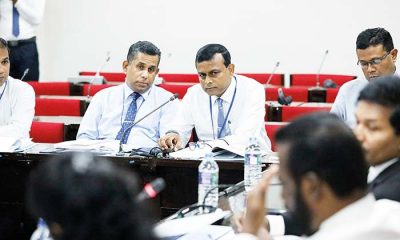





The Securities and Exchange Commission of Sri Lanka (SEC) successfully hosted a series of high-level meetings of the International Organization of Securities Commissions (IOSCO), bringing together leading securities regulators and enforcement officials from around the world to discuss emerging regulatory challenges, strengthen international cooperation, and enhance collective efforts to combat cross-border securities market misconduct.
The meetings, held at the Hilton Colombo from 13 to 16 October 2026, included sessions of the IOSCO Enforcement and Cooperation Committee and its Screening Group (Committee 4/SG), as well as meetings of the Monitoring Group and the Steering Committee. The event attracted approximately 50 senior representatives from securities regulators and exchanges across several jurisdictions, including Australia, Japan, the United States, the United Kingdom, France, Italy, Canada, New Zealand, India, Germany, Belgium, Singapore, China and Spain, reflecting the global significance of the discussions and the growing importance of international regulatory collaboration.
Welcoming delegates to Sri Lanka, Senior Professor D.B.P.H. Dissabandara, Chairman of the SEC, emphasized the critical role of international cooperation in safeguarding market integrity and investor confidence in an increasingly interconnected financial landscape.
“No regulator can effectively address cross-border misconduct in isolation. The speed with which information, transactions and illicit activities can move across borders requires an equally coordinated and timely regulatory response. Strong international cooperation, effective information sharing and mutual trust among regulators are essential to maintaining fair, transparent and resilient capital markets,” he stated.
The discussions focused on a range of enforcement and cooperation matters, including mechanisms for enhancing cross-border information exchange, strengthening investigative collaboration among regulators, addressing increasingly sophisticated forms of securities fraud and market abuse, and promoting the effective implementation of international standards and best practices. Participants also exchanged experiences and insights on emerging enforcement challenges arising from technological developments, digitalization of financial services, and increasingly interconnected global markets.
IOSCO is recognized as the leading international body that brings together the world’s securities regulators and serves as the global standard setter for securities regulation. Through its policy work and cooperative initiatives, IOSCO plays a central role in promoting investor protection, ensuring that markets are fair, efficient and transparent, reducing systemic risk, and strengthening confidence in capital markets worldwide.
Sri Lanka has maintained a strong and active relationship with IOSCO for more than three decades. The SEC became an Ordinary Member of IOSCO in 1993 and has been a signatory to the IOSCO Multilateral Memorandum of Understanding (MMoU) since 2004. The MMoU is the internationally recognised benchmark for cooperation and information sharing among securities regulators and serves as a critical tool in facilitating cross-border investigations and enforcement actions.

Pan Asia Bank recently entered into a one-year Memorandum of Understanding (MOU) with Ideal Motors (Pvt) Ltd, creating a new financing avenue for customers purchasing vehicles from the authorised Mahindra dealer. The strategic partnership will enable customers of Ideal Motors to access leasing facilities from Pan Asia Bank, making vehicle financing more convenient while supporting their mobility and business requirements. The agreement also provides an opportunity for the Bank to expand its leasing portfolio and strengthen its presence in Sri Lanka’s vehicle financing market.
Ideal Motors is the authorised dealer for the Mahindra vehicle range in Sri Lanka, including the Mahindra Bolero CPU Truck and Scorpio Jeep/Pickup. The vehicles cater to a range of requirements, from commercial and business applications to personal mobility, making accessible financing an important part of the purchasing decision.
The Bank’s vehicle leasing facilities are designed to simplify the financing process, with convenient repayment options and professional support to help customers select a solution suited to their requirements. For customers, the arrangement brings vehicle selection and financing closer together, reducing the need to navigate the two processes separately.
“Our partnership with Ideal Motors enables us to bring financing closer to customers at the point of vehicle purchase. We remain focused on providing convenient and flexible leasing solutions that support both personal mobility and the needs of businesses,” said Naleen Edirisinghe, Director/CEO of Pan Asia Bank.
Pan Asia Bank and Ideal Motors will work closely during the one-year partnership to maximise business opportunities and deliver a seamless financing experience to customers. The collaboration is expected to strengthen both organisations’ ability to respond to demand for commercial and personal vehicles while creating greater value for customers.
Yohan Ebell, Head of Retail Credit, Pan Asia Bank, said: “Through this partnership, we aim to make vehicle financing simpler and more accessible, with leasing solutions designed to meet the varied requirements of Ideal Motors’ customers.”
The collaboration also reflects Pan Asia Bank’s commitment to building partnerships that make financial services more accessible and responsive to the needs of individuals and businesses.
Pan Asia Bank has established a growing presence in vehicle financing, offering leasing solutions designed around customer convenience and flexibility. Its leasing proposition is supported by a nationwide branch network and a customer-focused approach, enabling customers to obtain guidance on financing options while completing their vehicle purchase.

Heritance Hotels and Resorts has secured four distinguished titles at the World Travel Awards 2026, with three national awards recognising its Sri Lankan properties and an international title for Heritance Aarah in the Maldives.
The three Sri Lankan titles recognise Heritance Tea Factory as Sri Lanka’s Leading Heritage Hotel 2026, Heritance Ahungalla as Sri Lanka’s Leading Luxury Hotel 2026, and Heritance Kandalama as Sri Lanka’s Leading Wedding Hotel 2026. Heritance Aarah was named the Indian Ocean’s Leading All-Inclusive Resort 2026.
Internationally recognised within the global travel and tourism industry, the World Travel Awards celebrate excellence across hotels, resorts, and destinations. Recognition at this level affirms the quality, distinctiveness, and consistency of the experiences delivered by Heritance Hotels and Resorts.

Import and Export (Control) Regulations No. 08 of 2026
Draft Bill of the Public Private Partnership Enterprises Act to be gazzetted
Amendment of the Ayurvedha Act No. 31 of 1961

Cabinet nod to amend the Sri Lanka Development Administration Institute Act No. 9 of 1982
Establishment of the National Higher Performance Centre
State patronage for the cremation ceremony of the late deputy prelate (Anu Nayaka Thero) of the Sri Laka Ramangya Maha Nikaya, Gatambe Rajopawanramadhipatha, Siri Chandawimala Wanshalankara, Chandrakeerthi Sri Amarawansha, Sadhdharmawageeshwara, Shasanashobhanna Most Venerable Keppetiyagoda Siriwimalabhidhana Thero

‘Dates have the highest sugar content to fight Coronavirus’

Sunday Island 27 December – Headlines

#SundayIsland 17th December – Headlines

Sunday Island – 28th March

Sunday Island Headlines – 21 March

Sunday Island – 21st February – Headlines
-

 Features3 days ago
Kotahena:A Small Enclave, An Extraordinary Legacy
-

 News7 days ago
Sri Lanka, India caught in US-Iran ship crisis
-

 News4 days ago
Asgiri Mahanayake calls for immediate release of Gnanasara Thera
-

 Latest News7 days ago
Missiles intercepted near Riyadh after Saudi coalition hits Yemen fuel depot
-

 Latest News7 days ago
Kusal Mendis’ unbeaten 87 hands Sri Lanka consolation win
-

 News3 days ago
Record 1,600 students take Russian Classical Ballet examination in Sri Lanka
-

 News6 days ago
AC President recuses himself from hearing prison attire case pertaining to Gnanasara Thera
-

 Latest News7 days ago
Heavy showers above 100 mm are likely at some places in the Western, Sabaragamuwa, Southern, Central, and North-western provinces and in Anuradhapura district.