
Business
Celebrating World Youth Skills Day – empowering the nation through skilled youth

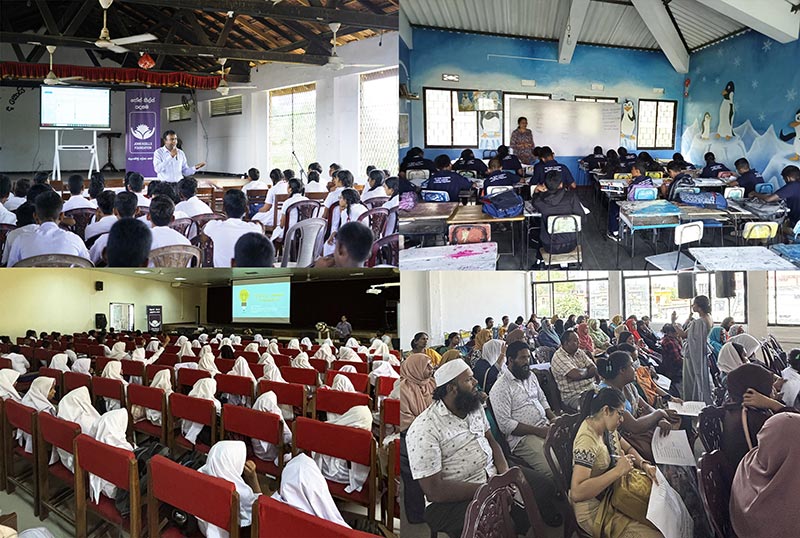
Youth skills are vital for a country’s development, drive innovation, economic growth, and social progress. Equipping young people with the right skills enables them to participate fully in the economy and contribute to a more prosperous and equitable future.
According to World Bank estimates, the youth unemployment rate in Sri Lanka for 2024 was 22.32% representing the total labour force percentage aged 15-24 who are without work but actively seeking employment.
“Youth empowerment is a cross-cutting theme of the work of John Keells Foundation (JKF), the CSR entity of the John Keells Group”, said Carmeline Jayasuriya, Head of CSR of the John Keells Group. “Within our vision of `Empowering the Nation for Tomorrow’, JKF has been consistently involved in developing youth skills through a range of sustained initiatives that nurture essential life and career skills as well as mindsets, attitudes and values among our youth aimed at shaping a better future for both the beneficiaries and our nation as a whole.”
As JKF celebrates 20 years of ‘Empowering the Nation for Tomorrow’, it remains steadfast in its commitment to fostering equitable opportunities and supportive environments for young people.
Education, Community & Livelihoods, Social Health & Cohesion, and Biodiversity are the four (reclassified) focus areas of John Keells Foundation – the CSR entity of John Keells Holdings PLC (JKH), largest company listed on the CSE in terms of market capitalization operating over 70 companies in 7 diverse industry sectors. With a history of over 150 years, the John Keells Group provides employment to over 18,000 persons and has been ranked as Sri Lanka’s ‘Most Respected Entity’ for the last 19 Years by LMD magazine. JKH has placed first for the fourth consecutive year in the ‘Transparency in Corporate Reporting Assessment’ by Transparency International Sri Lanka. Whilst being a full member of the World Economic Forum and a participant of the UN Global Compact, JKH drives its CSR vision of “Empowering the Nation for Tomorrow” through John Keells Foundation and through the social entrepreneurship initiative, ‘Plasticcycle’, which is a catalyst in significantly reducing plastic pollution in Sri Lanka.

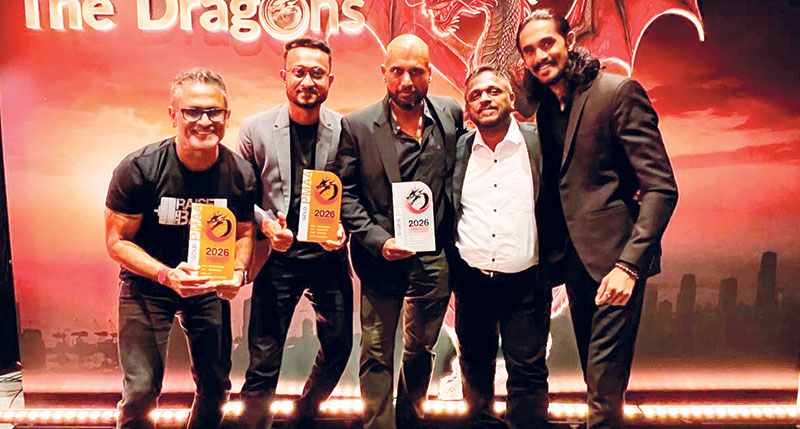
Nine awards, including two Golds, across disciplines recognise business-driven creativity
Ogilvy Group Sri Lanka delivered a standout performance at the recently concluded Dragons of Sri Lanka 2026 Awards, securing a total of nine awards comprising two Gold Dragons, one Silver Dragon and six Black Dragons, among the festival’s highest overall award tallies, a company news release said.
Gold Dragon wins for Phoenix Ogilvy and Ogilvy Digital, together with the seven additional recognitions across multiple categories, highlighted Ogilvy’s ability to combine creativity, strategic thinking and commercial effectiveness to deliver business results.
Organised by the 4As Sri Lanka, the third edition of Dragons of Sri Lanka shortlisted more than 50 agencies and corporates, making it one of the country’s most competitive marketing communications awards. These local awards, along with the chapters in Malaysia and Pakistan are part of the Dragons of Asia platform, one of the region’s leading programmes for marketing communications effectiveness, with entries being judged on strategy, originality, execution and measurable results.
Ogilvy Digital accounted for eight awards in total, including a Gold Dragon in the Business & Trade Marketing category, and a Silver Dragon in the Innovative Idea or Concept category. The Agency additionally received six Black Dragons across the categories of Innovative Idea or Concept, Business & Trade Marketing, Content Creation, Small Budget, Event or Experiential, and Brand Trial or Sales Generation.
Commenting on the achievement, Sajith Weerasinghe, Chief Operating Officer of Ogilvy Digital, said, “These recognitions reflect the breadth of capabilities we’ve built across strategy, creative, content, experience design, technology and performance marketing. The fact that the work was recognised across so many different disciplines demonstrates our ability to apply creativity to a wide range of business challenges and objectives. We’re proud that this achievement spans multiple clients, categories and types of work, reflecting both the versatility of our people and our commitment to delivering results.”
The Ogilvy Group’s second Gold Dragon win was Phoenix Ogilvy’s recognition in the Product Launch or Re-Launch category for the relaunch of American Premium Water. It was a multi-dimensional campaign which refreshed the identity and rejuvenated the positioning of one of Sri Lanka’s pioneering bottled drinking water brands, bolstering its 30-year heritage while connecting with a new generation of consumers.
Commenting on the win, Siddhartha Roy, Chief Operating Officer at Phoenix Ogilvy, said, “There’s always something special about reimagining a brand with a rich heritage. American Premium Water has been a trusted name in Sri Lanka for more than three decades, but the challenge was to make it relevant and compelling for a new generation of consumers. We created a new blueprint for growth for the brand’s positioning, proposition and visual identity, and manifested it through design, packaging and storytelling. To see that transformation recognised with a Gold Dragon, and more importantly reflected in the brand’s renewed momentum in the market, makes this a particularly rewarding achievement.”
The Ogilvy Group Sri Lanka operates across multiple marketing communication disciplines and comprises over 290 staff in creative, strategy, digital, media, public relations and integrated communications. As part of the global Ogilvy network, the Group partners with leading local and international brands to create integrated campaigns that build brands, influence behaviour and drive business growth.

A musical tribute celebrating the life and legacy of Rev. Fr. Marcelline Jayakody, OMI, renowned for his contribution to Sri Lankan arts, music, culture and religious harmony, was held in California with the participation of a large gathering of Sri Lankans.
Titled “Sri Lanka Rani Maniye,” the event was organised by the Sri Lankan Catholic Community in California (SLCCC) under the guidance of Rev. Fr. Rashmi M. Fernando, S.J.
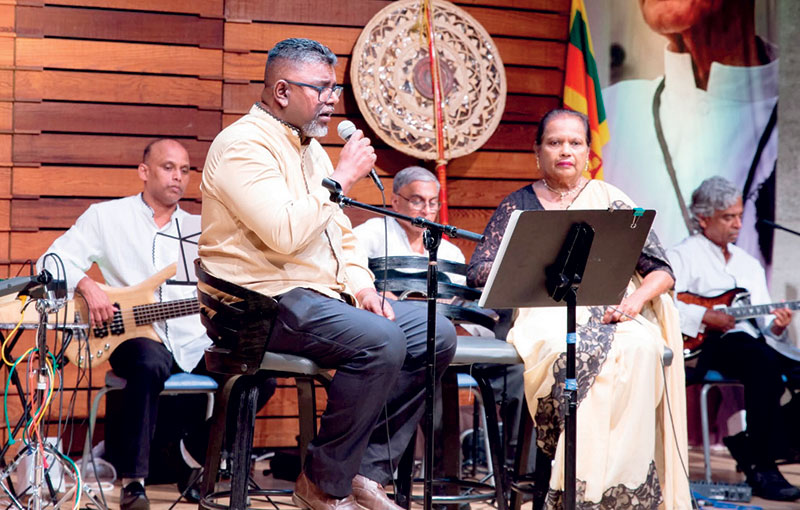
Shalika Perera singing at the event
The programme honoured Fr. Jayakody, affectionately known as “Pansale Piyathuma” (The Priest of the Temple), for his efforts to promote Buddhist-Catholic understanding, interfaith dialogue and a shared Sri Lankan identity.
The event brought together members of the Maha Sangha, the Consul General of Sri Lanka in Los Angeles, musicians, singers, donors, parents, children and members of the Sri Lankan community from Los Angeles and other parts of Southern California.
Music, song and Sri Lankan cultural traditions featured prominently, with organisers placing particular emphasis on introducing the country’s artistic and cultural heritage to younger generations of Sri Lankans growing up overseas.
The programme also highlighted the importance of community unity, religious harmony and mutual respect among Sri Lankans living abroad.
Rev. Fr. Fernando told the gathering that the event marked only the beginning of efforts that could achieve more through unity “for the pride and greater good of our motherland, Sri Lanka.”
The organisers thanked the performers, volunteers, donors and well-wishers who contributed to the event, which concluded as a celebration of Fr. Jayakody’s enduring cultural legacy and the Sri Lankan diaspora’s continuing connection with its homeland.

Hayleys Fentons Limited has completed construction of a state-of-the-art manufacturing facility for Shield Restraint Systems (Pvt) Ltd at the Wathupitiwala Export Processing Zone, with the project completed on schedule within approximately 14 months.
The project, valued at more than Rs. 1 billion, commenced with the laying of the foundation stone on January 7, 2025. It was undertaken by the project arm of Hayleys Fentons, with Design Consortium International (Pvt) Ltd serving as the principal design consultant.
The facility has been designed to meet international industry standards and incorporates advanced safety and energy-efficiency features. A pre-engineered building structural system was used to facilitate faster construction and optimise project costs.
The new facility will manufacture safety restraint systems for the international automotive industry through Shield Restraint Systems.
Hayleys Fentons Deputy Managing Director – Projects Sujith De Alwis said the timely completion of the project demonstrated the company’s engineering and project management capabilities and the ability of Sri Lankan construction expertise to meet stringent international standards.
Hayleys Mobility Executive Director Roshani Dharmaratne said the project required detailed planning, quality management and coordination across multiple disciplines.

Sujith De Alwis, Deputy Managing Director – Projects of Hayleys Fentons Limited and Roshani Dharmaratne, Executive Director of Hayleys Mobility Limited
Chairman Design Consortium Migara Alwis said the project further strengthens its portfolio in specialised industrial construction and supports investment linked to Sri Lanka’s participation in the global automotive supply chain.

Shree Charani, Prema Rawat spin Pakistan out for 55 in one-sided contest

Sun directly overhead Bentota, Thiniyawala, Iththakanda, Udawalawe, and Kataragama about 12.08 noon t9day (06)

Showers above 75 mm are likely at some places in the Uva and Eastern provinces.

Tharanga creates history with Diamond League crown in Brussels

UN welcomes Lanka’s anti-graft drive, seeks end to impunity

Dispute which triggered listed company director being detained at BIA resolved

‘Dates have the highest sugar content to fight Coronavirus’

Sunday Island 27 December – Headlines

#SundayIsland 17th December – Headlines

Sunday Island – 28th March

Sunday Island Headlines – 21 March

Sunday Island – 21st February – Headlines
-

 Features7 days ago
When Sri Lankan stories find their own voice
-

 News7 days ago
BASL takes exception to Justice Ganepola being denied a place in SC
-

 News4 days ago
Denied of promotion to SC despite vacancies, justice Gurusinghe retires
-

 Latest News4 days ago
Grade 5 scholarship exam results released
-

 News4 days ago
22A: SC urged to suspend hearing, appoint full bench
-

 Midweek Review5 days ago
The local and global dynamics of Sri Lanka’s 22nd Amendment
-

 Business7 days ago
ADB-funded Thalaiyadi plant serves as blueprint for vulnerable dry zones in Sri Lanka
-
 News4 days ago
Govt. seeks NATO assistance