
Business
Celebrating excellence: Aitken Spence Hotels bags multiple awards and accolades


Premier Sri Lankan hospitality chain, Aitken Spence Hotels reiterated their commitment to unparalleled service excellence in the hospitality industry with a stunning succession of accolades in the last month. The Company’s properties in Sri Lanka, India and Oman and the Maldives have been recognised for their distinctive experiences and steadfast dedication to quality at various esteemed platforms, further cementing their reputation as leaders in travel and sustainable tourism.
At the prestigious South Asian Travel Awards (SATA) 2023, Heritance Hotels and Resorts stood out with a sweep of prestigious awards. Heritance Kandalama was distinguished as the ‘Leading Eco-Friendly Resort’ in Asia, attesting to its profound commitment to environmental stewardship. Our resort in the hills, Heritance Tea Factory bagged the award of ‘Leading Designer Hotel/Resort’ for its unique tea destination concept, whilst Heritance Ayurveda was accoladed as ‘Leading Wellness and Spa Resort’ for its authentic and holistic wellness offering. The resort within the city, Heritance Negombo was awarded as ‘Leading Luxury Hotel/Resort’ reinforcing its promise of comfort and serenity by the sea.
In the Maldives, Adaaran Select Meedhupparu was awarded as the ‘Leading Dive Resort’ while Aitken Spence Hotels Maldives was honoured with the ‘Leading Resort/Hotel Brand’, reflecting its dominant presence and esteemed reputation in the Maldivian hospitality sector.
Turyaa Chennai was recognized as the ‘Leading Meeting and Conference Hotel/Resort’, a nod to its state-of-the-art facilities and service excellence in hosting events and business gatherings.
In addition to these impressive SATA recognitions, Heritance Aarah was honoured with the SHe Travel Club Gold, celebrating the resort’s commitment to empowering women within the hospitality sector, a testament to the brand’s progressive policies and inclusive work environment.
The picturesque Adaaran Select Meedhupparu was honoured with the Condé Nast Traveller Readers’ Choice Award 2023 as well, an acknowledgment from the world’s most discerning travellers that places the property among the upper echelons of global travel destinations.






As businesses navigate an increasingly complex operating environment shaped by workforce transformation, evolving stakeholder expectations, technological disruption and shifting market demands, strengthening performance requires more than new strategies. It requires new ways of thinking, leading, and collaborating.
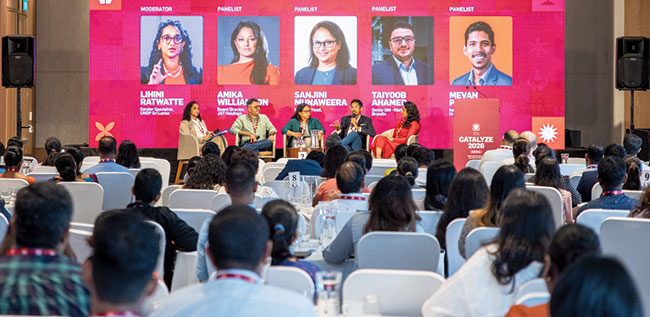
It was against this backdrop that UN Global Compact Network Sri Lanka convened CATALYZE 2026: Social, bringing together business leaders, sustainability practitioners, policymakers, development partners and industry experts to mobilize collective action and equip businesses with the knowledge, partnerships and practical approaches needed to strengthen performance through responsible business.
More than a forum for dialogue, CATALYZE 2026 was designed to help businesses think differently about performance. It reinforced that long-term success is increasingly shaped by how organizations lead, uphold human rights, foster inclusive workplaces, strengthen ethical governance, and build cultures that enable innovation, resilience and trust. Responsible business is no longer separate from business performance — it is fundamental to it.
Aligned with the UN Global Compact’s 2026–2030 Global Strategy, the Forum reflected its three strategic pillars — Equip, Catalyze and Advance — by strengthening business capability, fostering collaboration and mobilizing leadership to accelerate progress on social sustainability.
UN Global Compact Network Sri Lanka’s approach to social sustainability centres on driving this change — recognizing that meaningful progress comes not only through policies and commitments, but through the everyday decisions, leadership behaviours and organizational cultures that shape how businesses operate. CATALYZE 2026: Social encouraged participants to move beyond intention towards implementation, embedding responsible business practices into strategy, governance and organizational culture.
Opening the CATALYZE 2026: Social, Rathika de Silva, Executive Director of UN Global Compact Network Sri Lanka, spoke to the role of responsible business leadership in strengthening Sri Lanka’s global competitiveness:
“Sri Lanka has the workforce, resilience, and opportunity to compete not by being the cheapest producer, but by becoming the most trusted. As global expectations evolve, compliance is no longer simply a cost of doing business — it is the foundation of market access, and the decisions we make today will determine how strongly we compete in the markets of the future.”
The Forum featured keynote addresses, leadership dialogues and technical sessions on the issues shaping the future of business, including business integrity and anti-corruption, human rights, neurodiversity and inclusive workplaces, artificial intelligence and the future of jobs, the Women’s Empowerment Principles (WEPs), responsible sustainability communications, and workforce resilience. Together, these discussions highlighted how responsible leadership, inclusive practices, and strong governance contribute to organizational resilience, innovation, and long-term performance.
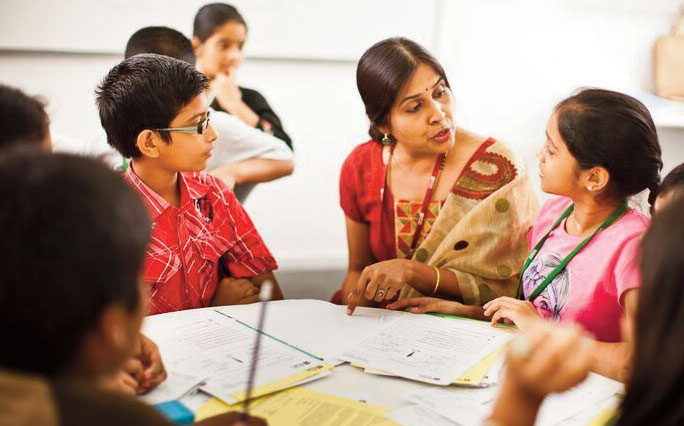
Free British Council online conference brings together leading educators from across South Asia to explore how creativity, inclusion and technology can help prepare learners for a rapidly changing world
The British Council has announced the South Asia TeachingEnglish Online Conference 2026, a free three-day event that will convene educators, researchers and teacher educators from across the region to examine one of the most pressing questions facing education today: how can schools equip learners with the creativity, adaptability and communication skills needed to thrive in an increasingly complex world?
Taking place from 23–25 July 2026, the online conference comes at a time when education systems across South Asia are grappling with the challenge of balancing curriculum demands, assessment pressures and evolving learner needs. While English remains a critical gateway to academic and professional opportunities, educators are increasingly seeking approaches that move beyond language acquisition alone to foster critical thinking, collaboration, learner agency and participation.
Business
The Ceylon Chamber convenes dialogue on energy security and standards for Sri Lanka’s energy transition
The Ceylon Chamber of Commerce recently hosted a discussion titled “Energy Transition in Sri Lanka: Strategic Insights from Global Markets”, bringing together representatives from the public and private sectors, industry experts, academics, and other stakeholders to examine the opportunities and challenges associated with Sri Lanka’s evolving energy landscape.
Held at a time when countries around the world are accelerating their transition towards cleaner, more resilient, and technology-driven energy systems, the event provided a timely platform to examine renewable energy not only as an environmental priority but as a strategic pillar of national energy security, with implications for economic growth and long-term competitiveness. The discussion also considered the increasing importance of reliable energy infrastructure in meeting the growing demands of digital transformation, including emerging technologies such as artificial intelligence, electric mobility, and data centres.
The programme covered a wide range of topics relevant to Sri Lanka’s energy future, including renewable energy development, energy security, regulatory and policy frameworks, electricity sector reforms, energy storage systems, grid modernization, investment and financing considerations, and international experiences in energy transition. Particular attention was given to the need for creating an enabling environment that supports innovation, attracts investment, including the technical and safety standards required to protect consumers and businesses as storage and solar adoption scales nationally.

Brutal heat cancels Fourth of July events, from DC to Philadelphia

Arias sends Colombia into World Cup last-16 with 1-0 win over Ghana

Messi scores again but Argentina given World Cup upset fright by Cape Verde

Anguished families left to identify Venezuela quake victims at makeshift morgue

Ukrainian suspect hunted by police after Monaco bomb attack was ‘disguised as a man’

Showers in the Western, Sabaragamuwa and North-western provinces and in Galle, Matara, Kandy, Nuwara-Eliya, Anuradhapura and Mannar districts.

‘Dates have the highest sugar content to fight Coronavirus’

Sunday Island 27 December – Headlines

#SundayIsland 17th December – Headlines

Sunday Island – 28th March

Sunday Island Headlines – 21 March

Sunday Island – 21st February – Headlines
-
 News5 days ago
LAWASIA warns against ad hoc initiative to increase judges’ retirement ages
-
 Features5 days ago
Climate action to bring South Asia together
-

 News5 days ago
Chamuditha to seek removal of injunction on Youtube programme
-

 Features7 days ago
People’s Bank expands digital banking network with 125th cheque deposit kiosk
-
 News2 days ago
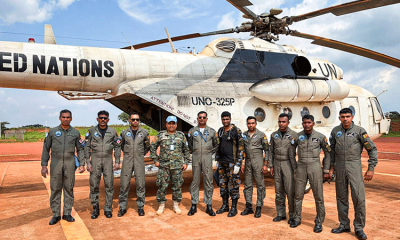
SLAF conducts successful rescue mission under UN command in Central African Republic
-

 News1 day ago
CIABOC to question Harak Kata on Rs. 200 mn bribery allegation
-

 News5 days ago
CPRP alleges another death in custody, seeks protection for witness
-

 Midweek Review4 days ago
H’tota port’s strategic status remains focal point of geopolitical scrutiny