
Foreign News
Cat makes history in Sydney to Hobart yacht race

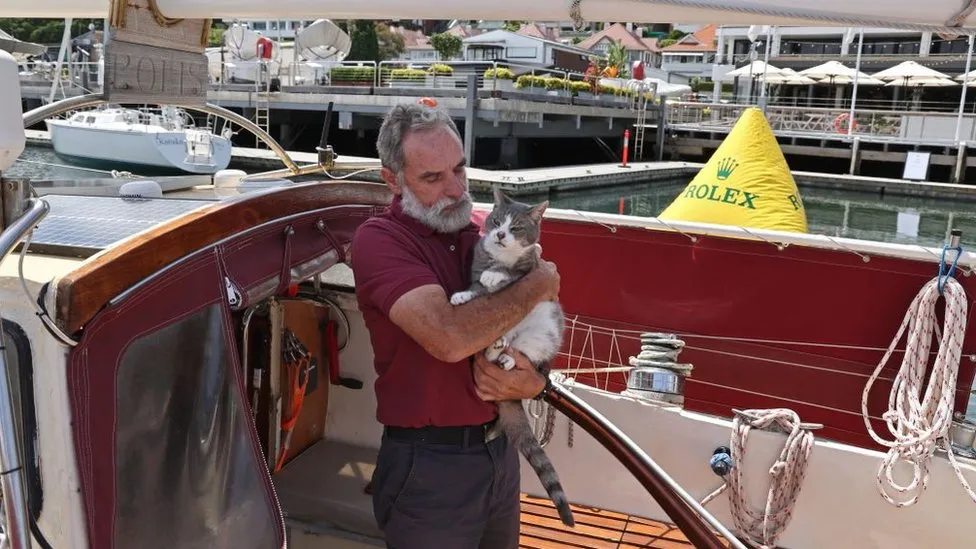
When Oli queues up on the starting line for the Sydney to Hobart yacht race on Tuesday, he’ll be making history.
That’s because Oli is a cat.
Since the event began as a casual cruise down the east coast of Australia in 1945, it has attracted all manner of colourful competitors – from media magnate Rupert Murdoch to Australian cricket legend Michael Clarke and former UK Prime Minister Sir Edward Heath.
But there’s no record of any feline seafarers in the gruelling regatta. Carrier pigeons – sure: they were once used to send messages back to shore and have graced many a deck during the ocean classic. But cats? No.
Oli’s owner Bob Williams says the pair didn’t set out to be pioneers. The moggy is simply part of the furniture on Sylph VI and leaving him behind on the boat’s jaunt south was out of the question.”I’ve done lots of crazy things, but this isn’t one of them,” Williams told the BBC ahead of the race.
Organisers – while initially bemused – are also on board.
There are no race rules prohibiting animals, and cats have a long history in maritime travel, the Cruising Yacht Club of Australia pointed out.
“One of the great things about the Rolex Sydney Hobart is all the wonderful characters in the race and the diversity of boats,” Commodore Arthur Lane said.
While most eyes will be on the speedy super maxis – giant yachts with up to 24 crew – during the Boxing Day race, Sylph, a 12m (40ft) yacht made in 1960, will set off in the two-handed division where smaller boats compete with a slimmed down team.
“We’re jokingly saying it’s the two-handed and four-pawed division,” Williams said. A friend of his is co-skippering, he explains, and as for Oli: “He’s SC – ship’s cat.”
While Sylph is an old hat – having taken part in six Sydney to Hobarts many decades ago – this is William’s first time racing it. But both he and Oli have plenty of experience at sea.
A retired navy officer, Williams has spent his life traversing the ocean – including a recent single-handed circumnavigation of the globe – much of it with a feline companion by his side.
Oli, who is about 10 years old, joined him five years ago and quickly earned his sea legs. “He used to get seasick, and he was a bit stressed to start off with… but now he’s fine. He quite enjoys life,” Williams said.
The laidback kitty can usually be found meowing orders or napping on the job in the boat’s cockpit. “He’s very sensible… Whenever it gets rough, he’ll disappear down below to find a nice, safe spot to curl up.”

And get rough it just might. The 630 nautical mile (1,166km) dash has long been characterised by unpredictable and often brutal conditions – the worst, 25 years ago.
Competitors in the 1998 race were battered by a monster storm, which sank five boats and claimed the lives of six sailors.
This year forecasters have warned that the fleet could be in for thunderstorms, strong winds, and even hail along parts of the course.
Williams jokes that he hasn’t lost a cat at sea yet. But turning serious, he stresses that he is prepared for any emergency. “The cat overboard routine is just to have something like a towel or a thick rope handy so that they can climb back on board.”
There’s no life jacket for Oli though, because he simply wouldn’t wear it: “They’re Houdinis, they’ll escape from anything they don’t like,” Williams says.
But although cats hate the water, he knows for a fact Oli can swim, because he once legged it into the ocean to avoid an overzealous dog.
Sylph and her occupants will be playing it safe though and proceeding towards Hobart at a comparatively leisurely pace.
The record for the fastest finish – set in 2017- is one day and nine hours. But that was a massive, modern super yacht built for speed. “Sylph is an older slower boat… Our ambition is to get to Hobart in time for the New Year’s celebration.”
There they’ll mark the occasion with a nip of rum, and perhaps some milk on the rocks for Oli.
(BBC)








Italian police have arrested nine people accused of raising around €7m (£6m) for Hamas over more than two years.
The money was ostensibly collected as humanitarian aid for Palestinian civilians, a police statement said, but was instead sent to the militant group via a “complex fundraising system”.
Alongside the arrests, police say they have seized more than €8m (£7m) in assets as part of the investigation.
Police say the suspects are “specifically accused of carrying out financing operations believed to have contributed to terrorist activities”.
The arrests were made as part of a joint initiative between Italy’s counter-terror police and financial police.
The investigation began after the 7 October 2023 Hamas attack in southern Israel.
Police say they analysed “a series of reports of suspicious financial transactions” involving some of the suspects in the lead up to the attack.
Investigators uncovered a “complex” system of fundraising, which was headquartered in Genoa with branches in Milan, the statement adds.
“The suspects collected donations intended for the civilian population of Gaza, however, it emerged that over 71% of these funds were diverted to Hamas’s coffers to finance its military wing and support the families of suicide bombers or those detained for terrorism,” the police statement says.
Interior Minister Matteo Piantedosi said the most well-known of the arrested suspects was Mohammad Hannoun, the president of the Palestinian Association in Italy.
Mr Hannoun has previously described allegations he is a financier of Hamas as a “lie”.
Piantedosi thanked police for their work in a post on X, but also noted that “the presumption of innocence… must always be recognised at this stage”.
[BBC]

Thailand and Cambodia said they have signed a ceasefire agreement to end weeks of fierce fighting along their border that has killed more than 100 people and displaced more than half a million civilians in both countries.
“Both sides agree to an immediate ceasefire after the time of signature of this Joint Statement,” the Thai and Cambodian defence ministers said in a statement on Saturday.
“Both sides agree to maintain current troop deployments without further movement,” the ministers said.
The ceasefire took effect at noon local time (05:00 GMT) on Saturday [27] and extends to “all types of weapons” and “attacks on civilians, civilian objects and infrastructures, and military objectives of either side, in all cases and all areas”.
Al Jazeera’s Assed Baig, reporting from the Cambodian border city of Poipet, said the “guns seem to have fallen silent” as both sides adhered to the truce.
“But I must tell you, right up until the point of that ceasefire being implemented, there was some intense firing going on… really, really intense – right up until that moment. And it kind of gives you the idea of how fragile this actually is,” Baig said.
“That doesn’t instil a great deal of confidence in people here who want to return home and will be watching if this ceasefire will hold,” he said.
[Aljazeera]

United States President Donald Trump has issued a new warning to Nicolas Maduro, saying “it would be smart” for the Venezuelan leader to step down, as Washington escalates a pressure campaign that has drawn sharp rebukes from Russia and China.
Speaking at his Mar-a-Lago resort in Florida on Monday, flanked by Secretary of State Marco Rubio and Secretary of Defense Pete Hegseth, Trump suggested he was prepared to further ratchet up the tensions after four months of mounting pressure on Caracas.
When asked if the goal was to force Maduro from power, Trump told reporters: “Well, I think it probably would… That’s up to him what he wants to do. I think it’d be smart for him to do that. But again, we’re gonna find out.”
“If he wants to do something, if he plays tough, it’ll be the last time he’s ever able to play tough,” the US leader added.
Trump levied his latest threat as the US Coast Guard continued for a second day to chase a third oil tanker that it described as part of a “dark fleet” that Venezuela uses to evade US sanctions.
“It’s moving along, and we’ll end up getting it,” Trump said.
The US president also promised to keep the two ships two ships and the nearly 4 million barrels of Venezuelan oil the coastguard has seized so far.
“Maybe we’ll sell it. Maybe we’ll keep it. Maybe we will use it in the strategic reserves,” he said. “We’re keeping it. We’re keeping the ships also.”
[Aljazeera]

Threads of Equity: MAS Holdings’ Journey of Inclusion and Impact

Growing investor participation fuels unit trust industry performance

Capturing the spirit of Christmas

ComBank and Colonial Motors in year-long partnership to promote Mazda vehicles

Nawaloka Hospitals Colombo Marks Four Decades of Responsible, Patient Centered Healthcare

SLT-Mobitel leads Lanka’s 5G Digital Transformation

‘Dates have the highest sugar content to fight Coronavirus’

Sunday Island 27 December – Headlines

#SundayIsland 17th December – Headlines

Sunday Island – 28th March

Sunday Island Headlines – 21 March

Sunday Island – 21st February – Headlines
-

 News5 days ago
Members of Lankan Community in Washington D.C. donates to ‘Rebuilding Sri Lanka’ Flood Relief Fund
-

 News3 days ago
British MP calls on Foreign Secretary to expand sanction package against ‘Sri Lankan war criminals’
-
 Business7 days ago
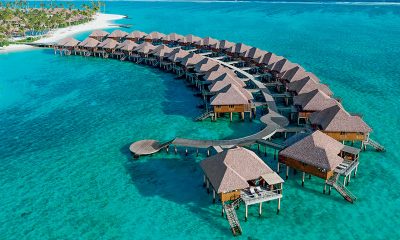
Browns Investments sells luxury Maldivian resort for USD 57.5 mn.
-

 News6 days ago
Air quality deteriorating in Sri Lanka
-

 News6 days ago
Cardinal urges govt. not to weaken key socio-cultural institutions
-
 Features7 days ago
Hatton Plantations and WNPS PLANT Launch 24 km Riparian Forest Corridor
-

 Features5 days ago
General education reforms: What about language and ethnicity?
-
 Features7 days ago
Another Christmas, Another Disaster, Another Recovery Mountain to Climb