
Latest News
Wobbly England register first Test win in Australia in 15 years

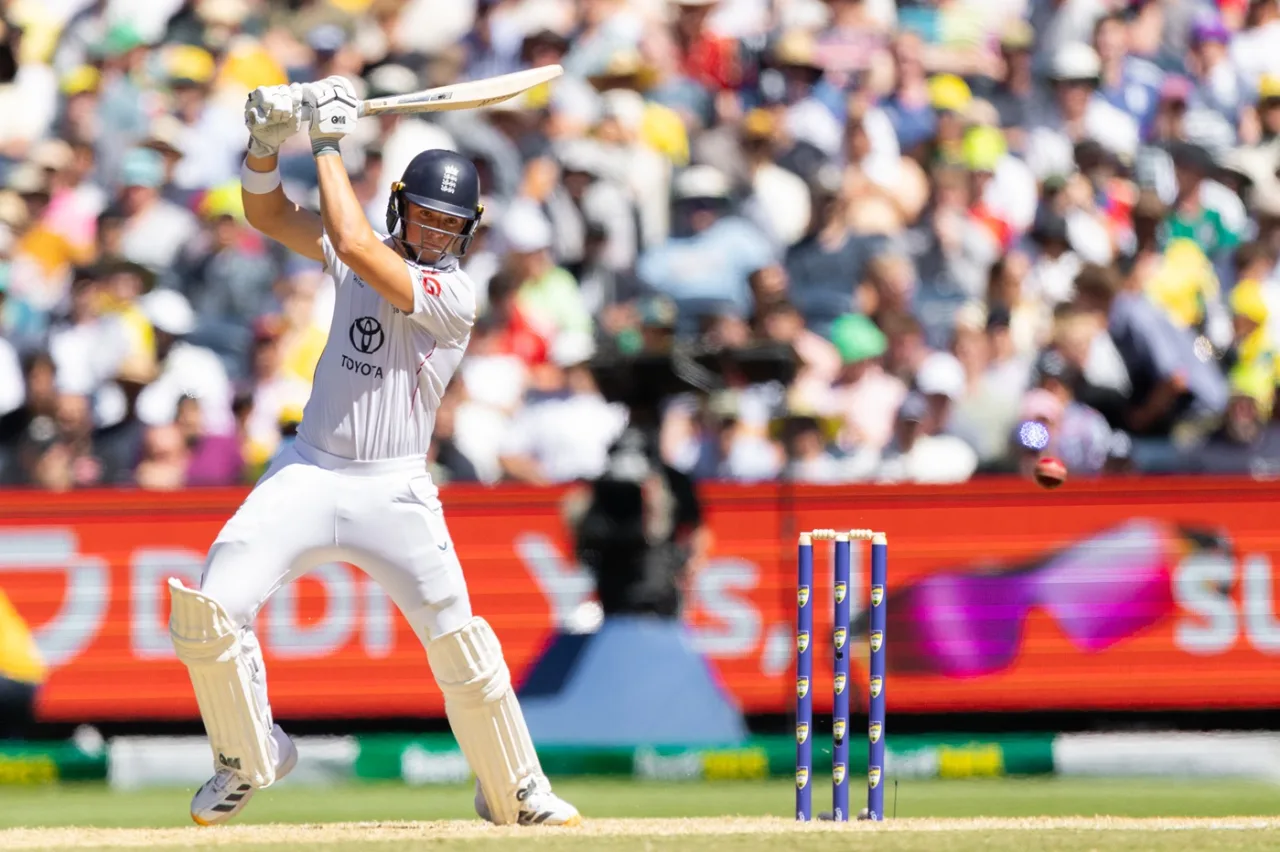
For the first time in 19 matches, and nearly 15 years, England’s men experienced a Test victory in Australia as the MCG raced to the second two-day finish of the Ashes series. On a tough surface which will continue to come under the spotlight in the aftermath, England’s top order met their target of 175 with aggression and they eventually got home with four wickets in hand.
It was only the fifth time in Test history that a series had included multiple two-day finishes, and before this summer, there had only been two in history in Australia. Although more than 186,000 had attended the match across two record-breaking days, it left Cricket Australia facing another significant financial loss – the Ashes has proved a costly affair, and Ben Stokes acknowledged it was far from ideal, but England have avoided the risk of another whitewash down under.
Jacob Bethell who was recalled for this match, compiled 40 to give a glimpse at his potential, but his dismissal meant this would be the first Test in Australia without an individual half-century since 1932 and just the fifth overall. Bethell’s wicket was followed by a little wobble with the winning line in sight. Joe Root was lbw to Jhye Richardson and Stokes carved an edge off Mitchell Starc with ten need, but four leg byes finished the job to roars from the travelling support, although more muted celebrations from England.
Australia, who had earned a first-innings lead of 42 on the manic opening day which brought 20 wickets, could only manage 132 the second time around as Stokes and Brydon Carse shared seven wickets, while Josh Tongue added two more to his impressive match tally. It meant they were able to overcome the loss of Gus Atkinson to a hamstring injury early in the day.
Still, the target was comfortably the highest total of the match. But the intent from Zak Crawley and Ben Duckett was clear and they wiped off 51 inside seven overs. Duckett pinged Starc through the leg side first ball and Crawley launched Michael Neser down the ground in his first over to set the tone. Starc produced some gems, especially to Duckett, and came within fingertips of getting to a return catch from a leading edge.
Tellingly, though, the first ball that Alex Carey came up to the stumps against Neser, Crawley launched him straight down the ground for six and followed that with a blazing drive through the covers. Duckett also took on Neser, a top-edged hoick flying to deep third and then, most stunningly, a scoop going for six. Perhaps there was life in Bazball, after all.
The ball after Duckett cracked his fourth boundary behind point, Starc speared a full delivery through him, but the openers had shifted the mood. England pulled a trick, promoting Carse to No. 3, but he sliced down to deep third, which opened the door for Bethell to play what could prove a significant innings.
Bethell got away with a leading edge first ball, then drove Scott Boland confidently down the ground. He started the final session by reverse-scoping Boland over Carey, then nailed a cover drive.
Boland, who curiously had not been introduced until the 11th over by when England already had 70 on the board, conjured thoughts of another MCG burst from him when he trapped Crawley lbw and had Bethell caught at cover, but Australia didn’t have quite enough runs to play with.
Australia had resumed one over into their second innings with Boland having survived amid heady scenes the night before. He hung around for five more overs before Atkinson found the outside edge to remove a potential frustration for England. However, Atkinson’s day – and potentially series – was soon done when he walked off holding his hamstring at the end of his fifth over, leaving three frontline quicks.
The captain took on the task, Stokes striking in his first over when Jake Weatherald misjudged a delivery from around the wicket which he left alone at the last moment and was bowled. After his excellent first innings in Brisbane, returns have been lean for Weatherald, who faces a big outing in Sydney next week before Australia’s lengthy gap in Test cricket.
By now, the pitch was offering some uneven bounce as well as sideways movement. Marnus Labuschagne took two blows on the gloves before being drawn into poking outside off stump, edging to first slip in a manner that suggests his game is still not in top working order, although conditions provided some caveat.
Travis Head was playing as well as anyone had all game, latching onto anything loose but not breaking into the full-blown attack seen in the second innings in Perth. However, even someone who had survived more than an hour and a half could do nothing about the delivery from Carse, which jagged off the seam to take the top of off stump.
Three balls later, Usman Khawaja top-edged a well-directed short ball from Tongue to long leg. There was no rescue act from Carey this time as he steered a delivery to second slip, where England’s catching continued to be secure.
Either side of lunch, Steven Smith and Cameron Green held firm for nine overs, adding 31 runs, to tip the balance once again. Without ever looking entirely secure, Green again got himself set, as he had in the first innings before running himself out, but flashed an edge to second slip when he drove at a short delivery.
In the absence of Atkinson, Carse lifted impressively and clutched a sharp return catch, full stretch to his left, to remove Neser. Then, with the seventh delivery of the over after a no-ball, he had Starc edging to slip.
Smith showed no inclination to shield No. 11 Richardson (who has a first-class average of 20.70) and a crunched straight drive suggested it was a fair call, but Richardson carved Stokes into the off side to leave England with their target. The pubs, golf courses and Boxing Day sales around Melbourne could get an unexpected boost.
Brief scores:
England 110 in 29.5 overs (Harry Brook 41; Michael Neser 4-45, Scott Boland 3-30, Mitchell Starc 2-23) and 178 for 6 in 32.2 overs (Zak Crawley 37, Ben Duckett 34, Jacob Bethell 40; Mitchell Starc 2-55, Jhye Richardson 2-22, Scott Boland 2-29) beat Australia 152 in 45.2 overs (Michael Neser 35; Josh Tongue 5-45, Gus Atkinson 2-28) and 132 in 34.3 overs (Travis Head 46; Brydon Carse 4-34, Ben Stokes 3-24) by four wickets
[Cricinfo]

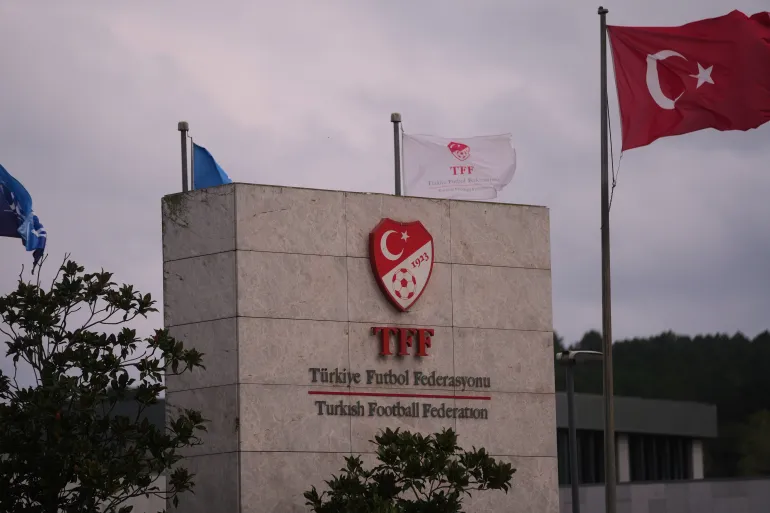
The head of Turkiye’s football refereeing body and four other officials have been placed in pretrial detention by a court as part of a corruption investigation, the state news agency Anadolu reports.
Ferhat Gundogdu, head of the Central Referees Committee, and six others appeared before a judge over allegations of manipulation of the referee administration process, Anadolu said on Saturday.
They appeared on Friday before a judge at Istanbul’s Caglayan courthouse on several charges, including forgery of official documents, breach of trust and illegal acquisition of personal data, the report said.
The judge remanded five people in custody and granted the other two conditional release, Anadolu said.
It was the latest scandal to shake football in Turkiye, coming exactly a year after the Turkish Football Federation (TFF) suspended 149 referees on charges of illegal betting.
On Thursday night, police from the illegal betting and sports crime unit also detained Yasin Kol, a referee from Turkiye’s top-flight Super Lig, as well as an assistant referee, media reports said.
Justice Minister Akin Gurlek said prosecutors are examining claims about “interference in the processes of referee classification, assignments, scoring and appointments as well as the exams on rules”.
During raids on Tuesday, police searched the VAR room at TFF’s headquarters in Istanbul. Observers said the investigation was likely linked to last year’s betting scandal and would have implications for the federation.
“It does seem to be a continuation of 2025, and it looks like it will continue further,” sports journalist Ayhan Sensoy told the AFP news agency.
Sensoy, who wrote a 2024 book on the issue called The Gambling Pit, said it was unlikely that federation bosses “have any chance of staying in office”.
So far, the TFF has not directly addressed the arrests as its top officials are due to fly home on Saturday after attending Friday night’s Belgium-Turkiye UEFA Nations League clash in Liege, which Turkiye lost 3-0.
[Aljazeera]
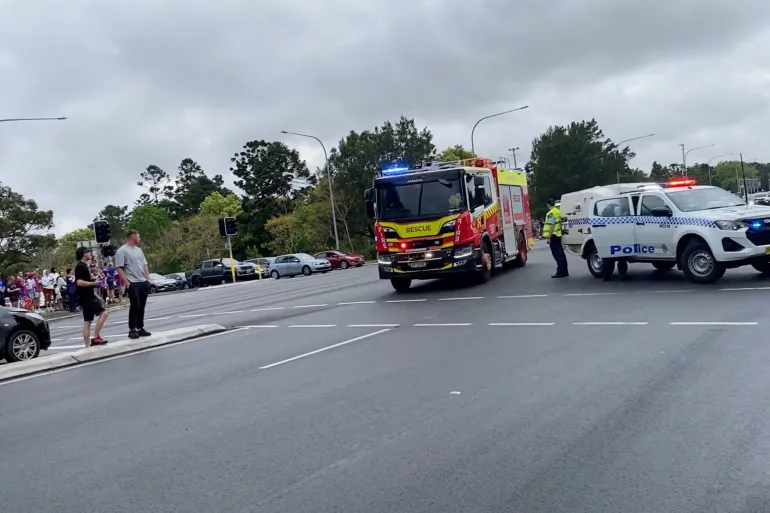
A car has crashed into a crowd of rugby league supporters in the eastern Australian city of Newcastle, injuring 10 people, including three children.
New South Wales police said on Saturday that two of the injured – a five-year-old girl and a 67-year-old man – were in a critical condition and the other eight were in stable condition in hospital.
Police said they had arrested the 18-year-old man driving the vehicle and were investigating what happened. They said the crash was not believed to be related to “terrorism”.
The crowd had gathered to farewell the local rugby league side, the Newcastle Knights, ahead of their grand final against the Sydney Roosters on Sunday.
Newcastle Lord Mayor Gavin Morris said the driver, a rugby league fan, had lost control of his vehicle and had been taken into custody.
“He was revving the car, he was excited, he was a supporter, he was there for the joy of the moment,” Morris told the national broadcaster ABC.
“Somehow he lost control of the car … and he’s gone into the crowd,” he added.
Prime Minister Anthony Albanese said: “My thoughts are with everyone injured or involved in the horrible incident this morning in Newcastle.”
“Rugby league brings people together, and this should have been a weekend of excitement and pride for Newcastle fans,” he wrote in a social media post.
[Aljazeera]
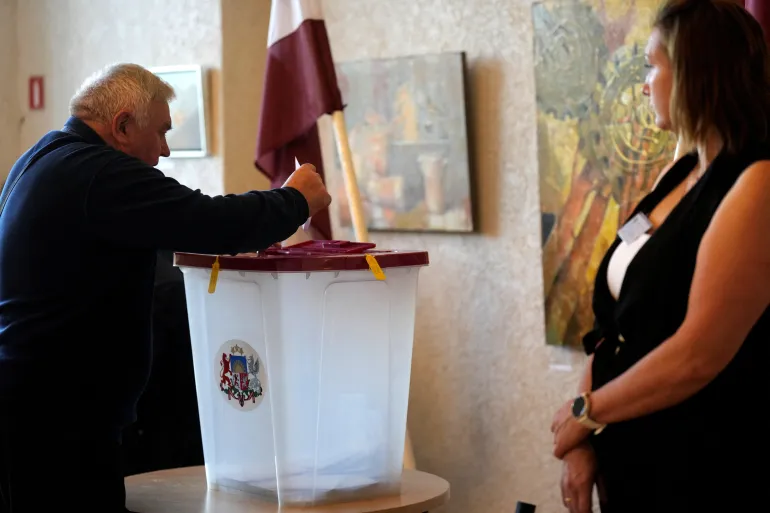
Polls have opened in Latvia for an election taking place against the backdrop of perceived security threats from Russia and a nationwide cost-of-living squeeze.
Saturday’s vote is the first electoral test for Prime Minister Andris Kulbergs after coming to power in May this year when his predecessor resigned due to a backlash from stray drone incursions from Ukraine.
Kulbergs, whose right-wing United List party is currently polling at about 20 percent, is expected to hold onto his position, but the decline of two allies in his current coalition means he is set for a complicated negotiation over the makeup of any future government.
Polls opened at 05:00 GMT and will close at 17:00 GMT. The results are not expected to change Latvia’s pro-European and pro-Ukrainian course.

About 1.5 million people are eligible to vote in the country’s 11th parliamentary election since independence from the Soviet Union in 1991.
Latvian politics are highly fragmented, with parties rarely seeing above 20 percent vote share and coalitions being the norm.
This year, 14 electoral lists are contesting the election, but polls indicate only seven are likely to enter parliament, with the rest expected to fail to meet the minimum 5 percent vote threshold.
Rising living costs, low wages, strains on the healthcare system and long-term population decline have all featured prominently in campaign debates.
Most parties in Latvia are pro-Ukraine; however, the populist Sovereign Power party – which says it wants Ukraine to win but argues money spent supporting Kyiv would be better spent at home – looks likely to become the country’s second-biggest party, with more than 9 percent of the vote. Most other parties have ruled out forming a coalition with Sovereign Power.
Latvia First, a pro-Ukraine and populist nationalist party currently polling at about 9 percent, could be a potential coalition partner for PM Kulbergs.
The Progressives, a pro-European social democratic party, are polling at 6 percent.
Ethnic Russians make up roughly one in four Latvian citizens, but their vote, which has traditionally been cast along identity-based lines, looks set to be made according to economic and social issues.
Latvia is the poorest of the Baltic states, and it has sharply increased its defence spending since Russia invaded Ukraine, now allocating nearly 5 percent of its gross domestic product (GDP) to defence.
[Aljazeera]

Turkish court detains football refereeing chief pending corruption trial

Ten injured after car crashes into rugby supporters in Australia

Polls open in Latvia against backdrop of perceived Russia threat

Abhishek, Tilak and spinners secure gold for India at Asian Games again

Tharindu Rathnayake, bowlers secure Asian Games Bronze for Sri Lanka

G7 to release 100 million barrels of oil and diesel after Trump export ban threat

‘Dates have the highest sugar content to fight Coronavirus’

Sunday Island 27 December – Headlines

#SundayIsland 17th December – Headlines

Sunday Island – 28th March

Sunday Island Headlines – 21 March

Sunday Island – 21st February – Headlines
-

 News6 days ago
Police remove Thileepan statue in Jaffna
-

 Features6 days ago
The 22nd Amendment, constitutional recovery and illiberal slippage
-

 Features6 days ago
Of foreigners as CEOs of Lankan ventures
-

 Latest News4 days ago
Gold winner Tharanga gets brand-new Honda Vezel from SLAAJ
-

 News6 days ago
Sajith rejects Jt. Opp. protest sabotage claim; SJB TU chief demands remedial action
-

 Features4 days ago
Why Sri Lanka needs an Inclusive Civic Nationalism – urgently
-

 Features5 days ago
Thailand’s biggest new global star …
-

 News3 days ago
US-assisted ‘Ice’ detection: NPC to examine IGP’s move to transfer drug-busting team