
Business
Cargills Bank posts Profit before Tax Rs. 1,150 Million for the year ended 31 December 2024, a 58% increase

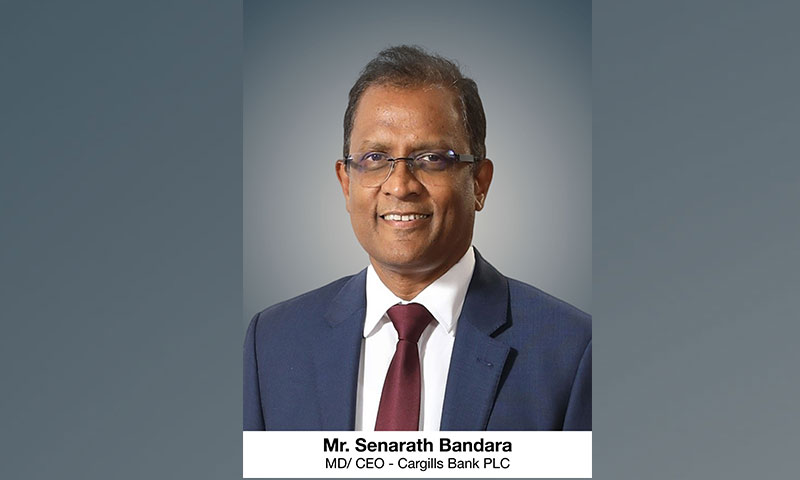
Cargills Bank’s results for the year ended 31 December 2024 reflected a YoY increase of 48% in profitability. Profit after tax at Rs. 651 Mn for the year 2024 was higher by Rs. 211 Mn compared to 2023. Net interest income of Rs. 3.589 Bn was a marginal increase of Rs. 208 Mn in the year 2024 compared with 2023. The Bank continued to focus on repricing of deposits and advances to reflect the market conditions and to manage the NIM in an optimal manner. The marginal increase in NIM is attributable to this proactive approach in the decreasing interest rate regime.
Net fee and commission income of Rs. 894 Mn for the year ended 31 December 2024 recorded Rs. 96 Mn growth in comparison with the previous year. Concerted efforts to improve trade volumes, card-related fee income and improved remittance income were among the main contributory factors for this growth of 12% recorded.
Additionally, net gains from financial assets at fair value through profit or loss grew by Rs. 11 Mn to reach Rs. 276 Mn in the year of 2024. Capital gains realized on derecognition of financial assets boosted other income streams by Rs. 493 Mn in the period under review to reach Rs. 670 Mn. Net other operating dropped by 76% to Rs. 61 Mn largely due to reduction in foreign exchange gains recognized during the year under review.
Total operating expenses increased by 11% from Rs. 2.892 Bn last year to Rs. 3.198 Bn. Personnel expenses increased by 24% largely due to adjustments to salary and welfare benefits considering increased costs of living over the last few years and market conditions. Other operating expenses grew by 4% largely due to increased utility-related operating expenses and marketing costs.
Impairment charges totaling Rs. 607 Mn reflected a decrease of 28% from Rs. 849 Mn in the year 2024 partially due to the need for management overlay provisions being lower subsequent to a careful scrutiny of the status of borrowers and considering the improved macro-economic environment. The Bank’s Stage 3 Loans (net of Stage 3 Impairment) to Total Loans Ratio stood at 8.74% while Stage 3 Provision Cover was 46.79% as at 31 December 2024.
The Bank maintains Capital Adequacy and Liquid Assets Ratios well within the minimum requirements prescribed by the Central Bank. The Total Capital Ratio was at 22.44% while all liquidity related ratios were well above the regulatory minimum.
Total assets of the Bank as at 31 December at Rs. 80.3 Bn, an increase of 15% or Rs. 10.3 Bn during the year. The loan book posted a moderate growth of 14%, from Rs. 40.6 Bn to Rs. 46.1 Bn, given conditions prevailing. Financial Assets measured at fair value through other comprehensive income grew by 26% to reach Rs. 22.4 Bn. Net loss of Rs. 411 Mn was reflected in Other Comprehensive Income. Customer Deposits grew by 17% to Rs. 59.4 Bn at the reporting date from Rs. 50.7 Bn at the end 2023 amidst continued reductions in market interest rates.
Mr. Richard Ebell who served on the Bank’s Board as Chairman retired on 02 July 2024 in compliance with the Banking Act on Corporate Governance for licensed commercial banks issued by the Monetary Board of the Central Bank. Mr. Ebell completed nine years in the Bank Board having been appointed in 2015. Mr. Asoka Pieris, who served as Deputy Chairman was appointed as the Chairman of the Bank, with effect from July 3, 2024.



LOLC Finance PLC, the flagship finance company of the LOLC Group and Sri Lanka’s largest non-bank financial institution, delivered a strong financial performance for the year ended 31 March 2026, supported by robust lending growth, stronger recurring income, improved asset quality and a capital position that remained comfortably above regulatory requirements.
The Company reported profit after tax of Rs. 27.4 billion for the year, compared with Rs. 25 billion in the previous year. At headline level, this represents growth of around 9%. However, the headline comparison does not fully capture the improvement in the Company’s underlying performance.
The previous year’s profit included significant non-recurring gains linked to Sri Lanka sovereign bond-related impairment reversals, partially offset by a derecognition loss. On a net basis, these one-off items added approximately Rs. 4 billion to the prior year result. Adjusting for this, the prior year’s underlying profit base was closer to Rs. 21 billion. Against that adjusted base, the current year profit of approximately Rs. 27 billion reflects underlying profitability growth of close to 30%.
This is the more important message behind the numbers. LOLC Finance did not merely preserve profitability in a recovering economic environment; it expanded its recurring earnings base materially, while simultaneously growing its balance sheet and improving key credit quality indicators.
The improvement was driven primarily by core income. Interest income increased to approximately Rs. 79 billion, supported by strong expansion in the lending portfolio. Interest expense rose at a slower pace to approximately Rs. 29 billion, allowing net interest income to grow to approximately Rs. 50 billion. This demonstrates the Company’s ability to expand its loan book while maintaining control over funding costs.
Net fee and commission income also improved, rising to approximately Rs. 3 billion, reflecting higher business volumes and broader customer activity. Total operating income increased to approximately Rs. 56 billion, despite the absence of the large sovereign bond-related gains that benefited the previous year. This shift from one-off gains to recurring operating income is a clear positive from an earnings-quality perspective.
The balance sheet story was equally significant. Total assets grew by approximately Rs. 129 billion during the year, reaching around Rs. 559 billion as at 31 March 2026. The main driver of this expansion was the lending portfolio, with gross loans and advances increasing from approximately Rs. 305 billion to approximately Rs. 423 billion, representing growth of nearly 39%.
This level of loan book expansion is notable not only because of its scale, but also because it was spread across multiple product categories. Growth was recorded across key lending lines including finance leases, gold loans, speed drafts, alternate finance, personal loans and term loans. This points to a broad-based recovery in customer demand rather than growth concentrated in a single product line.
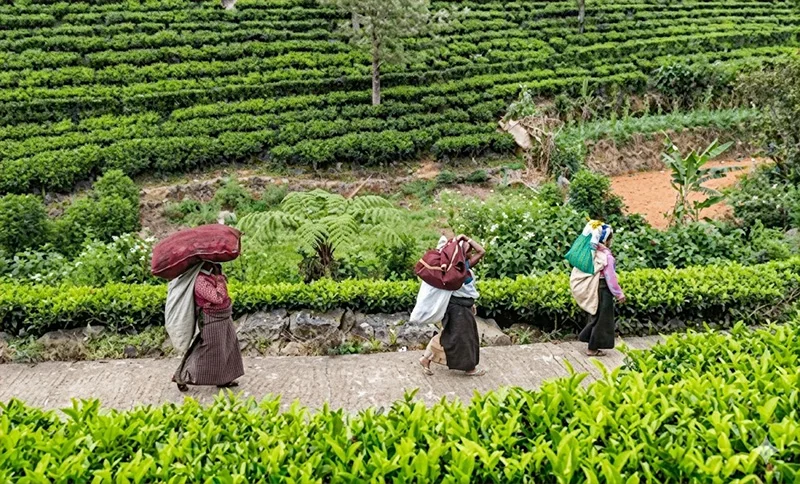
Malaiyaha Tamil workers in Sri Lanka’s private tea estates and smallholdings are facing widespread labour abuses that amount to multiple indicators of forced labour, according to a new report released last week by Amnesty International.
‘The Sri Lankan government is urged to strengthen labour protections, improve enforcement mechanisms and remove barriers that prevent Malaiyaha Tamil workers from accessing their rights under both domestic law and international obligations, a media release on the report explained.
‘Workers are being subjected to intimidation, physical violence, harassment, debt bondage, restrictions on movements, wage withholding and severely poor living and working conditions, the release added.
Some extracts from the release:
‘The research focused on tea estates in Sri Lanka’s Southern Province, particularly in the Galle and Matara Districts. It is based on visits to 45 estates conducted between January 2024 and January 2026, alongside 159 interviews with workers, discussions with Estate Managers and Supervisors, and 15 focus group discussions involving 65 workers. Across all sites, researchers found what they describe as a consistent pattern of exploitation and discrimination affecting Malaiyaha Tamil workers.
‘Workers reported being forced to meet unrealistic daily tea-picking targets, often set at more than 25 kilograms per day. Failure to meet these targets reportedly resulted in wage deductions, delays, or reduced pay, sometimes bringing daily earnings down to as little as LKR 1,000 (around USD 3.10). Workers also described a cycle of wage advances and loans that left them increasingly indebted to estate owners, raising concerns about debt bondage in the plantation sector.
‘Several workers also told researchers they had experienced or witnessed verbal and physical abuse by estate managers, particularly when they were late for work, questioned unpaid wages, or failed to meet production targets. One worker described being beaten with hands, legs, and sticks, and said such violence was still occurring. Others reported that wages were often withheld or manipulated based on arbitrary assessments of productivity.
‘Employers frequently classify them as “casual workers,” which denies them access to maternity benefits, pensions, sickness leave, and other statutory entitlements. The report also notes that trade union representation is largely absent in the Estates surveyed, leaving workers with little collective bargaining power or protection against abuse. According to the report, workers face multiple barriers in accessing justice, including language barriers, discriminatory treatment by officials, lack of documentation, and weak labour inspection mechanisms. These factors, the report says, prevent effective enforcement of labour laws and allow abusive practices to continue largely unchecked.
‘Smriti Singh, Regional Director for South Asia at Amnesty International, said the findings reflect systematic violations of labour laws and a failure of enforcement by the state. She said, private tea estates are operating with little accountability and that the pattern of abuse raises serious concerns about forced labour.’
By Hiran H. Seneviratne

Low investor sentiment persisted in the stock market yesterday due to lingering West Asian uncertainties particularly in relation to Israel and Lebanon.
Both indices moved downwards. The All Share Price Index went down by 48.78 points, while the S and P SL20 declined by 7.46 points. Turnover stood at Rs 1.67 billion with two crossings.
Those crossings were; HNB crossed 185718 shares to the tune of Rs 73.4 million; its shares traded at Rs 395 and Dialog Axiata 1 million shares crossed for Rs 44 million; its shares traded at Rs 44.
In the retail market companies that mainly contributed to the turnover were: RIL Properties Rs 148 million (5.3 million shares traded), Dialog Rs 108 million (2.4 million shares traded), Aitken Spence Rs 74.4 million (542,100 shares traded), LB Finance Rs 72.2 million (7.3 million shares traded), Royal Ceramics Rs 67.2 million (1.4 million shares traded), Renuka Agri Foods Rs 64.8 million (5.2 million shares traded) and JKH Rs 53.7 million (2.7 million shares traded). During the day 71 million shares volumes changed hands in 23582 transactions.
It is said that banking sector counters, especially HNB, performed well while the real estate sector stocks, especially RIL Properties, performed well. An overall mixed performance was noted in most of other sectors, especially finance and agriculture.
Yesterday the rupee was quoted at Rs 330.00/332.00 to the US dollar in the spot market, from 331.00/332.00 Friday, dealers said, while bond yields were flat.
By Hiran H Senewiratne

Protesters call on Kenyan government to halt femicide crisis

US Defense Department bars journalists from its press office

Rainy conditions are expected to increase in the southwestern parts of the island from this evening (02 June)

IMF turning a blind eye to NPP corruption: Opp.

Shavendra tells Beijing meet Sri Lanka should not become an arena for geopolitical rivalry among major powers

Govt. leaders speak to Basil more than I do – Namal

‘Dates have the highest sugar content to fight Coronavirus’

Sunday Island 27 December – Headlines

#SundayIsland 17th December – Headlines

Sunday Island – 28th March

Sunday Island Headlines – 21 March

Sunday Island – 21st February – Headlines
-
 News3 days ago
IMF urges Lanka not to meddle with exchange rate
-
 Business4 days ago
Sri Lanka’s construction industry losing ground while no one watches
-
 News3 days ago
State of emergency extended
-

 Midweek Review6 days ago
Israeli-US aggression won’t go unanswered -Iranian Ambassador
-

 Features4 days ago
The Division Bell Mystery
-

 News1 day ago
UNP challenges NPP move to amend Vihara – Devalagam Act
-

 News3 days ago
Fort Magistrate to announce whether to summon Arsecularatne PC to testify at Kapila’s inquest
-

 News5 days ago
RTI query of Ditwah funds: Presidential Secretariat mum on key questions