
Latest News
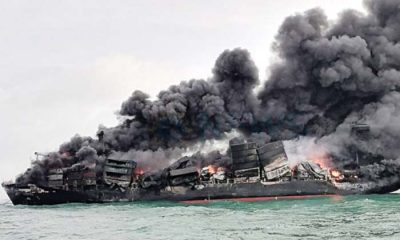
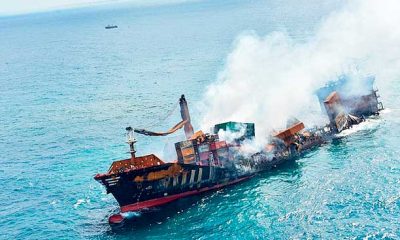
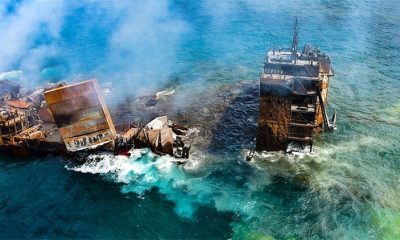
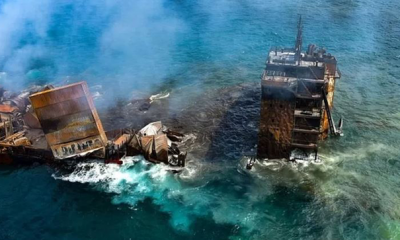
Cabinet-appointed delegation discuss X-Press Pearl incident with lawyers representing ship-owner, insurers in Singapore


In a significant development regarding the X-Press Pearl incident, a nine-member Sri Lankan delegation led by the Attorney General engaged in discussions with lawyers representing the ship-owner interests and their insurers on the 18th and 19th of July 2023 in Singapore.
The meeting was convened in response to a request made by the lawyers on behalf of their clients following the Government of Sri Lanka’s claims action filed in Singapore in April. During the course of these discussions, both parties addressed several critical aspects related to the incident and its aftermath.


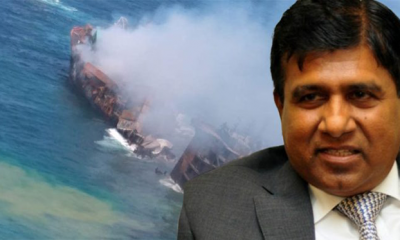






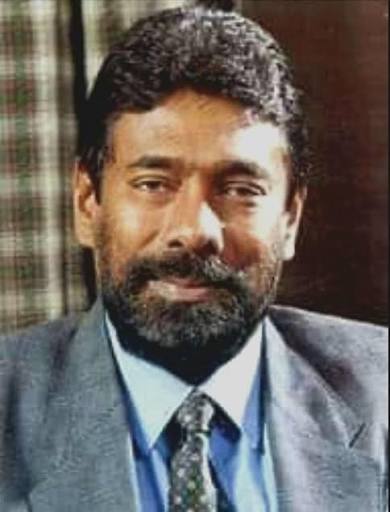
Former Matara District Member of Parliament and Cabinet Minister Mahinda Wijesekara has passed away this morning (02) at the age of 83 family sources have announced.
Mahinda Wijesekara served as a Member of Parliament for the Matara district for over two decades (1989 to 2010), representing the People’s Alliance, the United National Party and the United People’s Freedom Alliance.
He held several ministerial portfolios, including Minister of Postal and Telecommunication Services in 2008, Minister of Forestry and Envioronment 1999-2001, Minister of Fisheries and Ocean Resources from 2001 to 2004 and Minister of Special Projects 2007-2008
He was in poor health following injuries sustained in the 2009 bomb attack by the LTTE terrorists in Godapitiya, Matara.
He was the father of former Minister Kanchana Wijesekara.
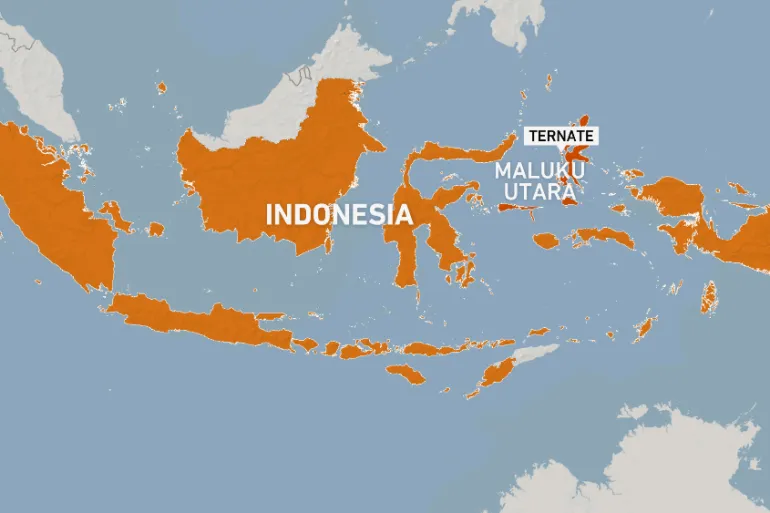
A magnitude 7.4 earthquake has hit the Northern Molucca Sea off the coast of the city of Ternate, in Indonesia, killing at least one person and triggering a tsunami warning that was subsequently lifted.
The United States Geological Survey (USGS) said Thursday’s quake, which was initially recorded at a magnitude of 7.8, struck at a depth of 35km (22 miles), greater than the early figure of 10km (six miles). There were no immediate reports of injuries.
The epicentre of the earthquake was about 120km (75 miles) from Ternate, in Indonesia’s North Maluku province.
Local authorities in some cities, such as Ternate and Tidore, were urged to prepare citizens for evacuation, while news channel Metro TV broadcast images of damaged buildings.
One person was killed when a building collapsed in the city of Manado in North Sulawesi province, a local search and rescue official told AFP news agency.
“The quake was felt strongly and around Manado … one person died and one person had a leg injury,” George Leo Mercy Randang told AFP by telephone. The victim was “buried under the rubble” of a collapsed building, he said.
The Hawaii-based Pacific Tsunami Warning Center (PTWC) initially said hazardous tsunami waves were possible within 1,000 kilometres (621 miles) of the epicentre along the coasts of Indonesia, the Philippines and Malaysia.
Within half an hour of the quake, waves up to 75 centimetres were recorded in North Minahasa and 20 centimetres in Bitung, both in the north of Sulawesi island, according to Indonesia’s BMKG geological agency.
Thirty-centimetre waves were also logged in North Maluku province.
The PTWC lifted its warning just over two hours after the tremor, saying the tsunami threat “has now passed”.
Indonesia straddles the so-called Pacific Ring of Fire, an area of high seismic activity where tectonic plates meet and earthquakes are frequent.
[Aljazeera]

The Artemis II space mission has blasted off from the US state of Florida, sending four astronauts on a historic journey around the moon and marking the first time humans have travelled beyond low-Earth orbit in more than 50 years.
The mission, which launched on Wednesday, is a major step in the United States space agency NASA’s plan to return humans to the moon and eventually send astronauts to Mars.
The 32-storey rocket rose from NASA’s Kennedy Space Center in Cape Canaveral, where tens of thousands gathered to witness the liftoff.
The Artemis II crew – NASA astronauts Reid Wiseman, Victor Glover and Christina Koch, and Canadian Space Agency astronaut Jeremy Hansen – are set for a nearly 10-day journey around the moon and back, taking them farther into space than humans have travelled in decades.
“On this historic mission, you take with you the heart of this Artemis team, the daring spirit of the American people and our partners across the globe, and the hopes and dreams of a new generation,” said Charlie Blackwell-Thompson, the launch director. “Good luck, Godspeed Artemis II. Let’s go.”
Five minutes into the flight, Wiseman, the commander, saw the team’s target: “We have a beautiful moonrise, we’re headed right at it,” he said from the capsule.
Tensions were high in the hours leading up to the launch as hydrogen fuel began flowing into the rocket, a critical phase that had caused a dangerous leak during a countdown test earlier this year and forced a lengthy delay.
To NASA’s relief, no significant hydrogen leaks were detected this time. The launch team successfully loaded more than 700,000 gallons (2.6 million litres) of fuel into the Space Launch System rocket on the pad, a smooth operation that set the stage for the Artemis II crew to board.
NASA also had to resolve several technical issues ahead of liftoff, but was able to clear them without delaying the launch. One issue involved commands not getting through to the rocket’s flight-termination system, which is designed to send a self-destruct signal if the rocket veers off course and threatens populated areas.
That issue was quickly resolved, according to NASA. Engineers also troubleshot a battery in the Orion capsule’s launch-abort system after its temperature readings fell outside the expected range, but the problem was fixed and did not prevent the launch from going ahead.

The astronauts will spend the first one to two days in high Earth orbit carrying out extensive systems checks, including testing Orion’s life-support, propulsion, navigation and communications systems to make sure the spacecraft is ready for deep space.
Once those checks are complete, Orion will perform a critical engine burn known as translunar injection, which will send the spacecraft out of Earth’s orbit and onto a trajectory towards the moon.
The journey will take several days, during which the crew will continue monitoring spacecraft systems as they travel farther from Earth.
Orion will then fly behind the moon on a free-return trajectory, a path that naturally swings the spacecraft back towards Earth using the gravity of both the moon and Earth, with minimal fuel required. During this phase, the spacecraft will reach its greatest distance from Earth.
After the lunar flyby, the crew will spend several days travelling back to Earth while carrying out additional deep-space tests on power systems, thermal controls and crew operations.
As Orion approaches Earth, the capsule will re-enter the atmosphere at speeds of about 40,233km per hour (25,000 miles per hour), before splashing down in the Pacific Ocean, where recovery teams will retrieve the crew.
With half the world’s population not yet born when NASA’s Apollo astronauts last walked on the moon, Artemis is being presented as a new generation’s moon mission.
“There are a lot of people who don’t remember Apollo. There are generations who weren’t alive when Apollo launched. This is their Apollo,” NASA science mission chief Nicky Fox said earlier this week.
[Aljazeera]

Brook, Bethell receive warnings from Cricket Regulator after Wellington incident

Former Minister Mahinda Wijesekara passes away aged 83

Navy seize 323kg of heroin from fishing vessel in southwestern seas

Magnitude 7.4 quake hits off Indonesia’s Ternate, tsunami warning lifted

NASA successfully launches historic Artemis II moon mission

Sameer Rizvi arrives in the IPL to guide Delhi Capitals home in low-scoring chase

‘Dates have the highest sugar content to fight Coronavirus’

Sunday Island 27 December – Headlines

#SundayIsland 17th December – Headlines

Sunday Island – 28th March

Sunday Island Headlines – 21 March

Sunday Island – 21st February – Headlines
-

 Features6 days ago
A World Order in Crisis: War, Power, and Resistance
-

 News7 days ago
Energy Minister indicted on corruption charges ahead of no-faith motion against him
-

 Sports7 days ago
SLC to hold EGM in April
-

 Opinion7 days ago
When elephants fight, it is the grass that suffers
-

 Features7 days ago
Lest we forget
-

 News3 days ago
Tariff shock from 01 April as power costs climb across the board
-
 Business7 days ago
Pan Asia Bank empowers export sector as Strategic Partner of NCE Export Awards
-

 News6 days ago
Minister Jayakody indicted in Colombo High Court over alleged corruption