
Business
Brown & Company marks 150th year with landmark Rs. 25.89 bn Profit Before Tax in FY 2025


Marking its 150th year of operations, Brown & Company PLC Group closed the financial year ended 31st March 2025 with a strong performance marked by significant revenue expansion and ambitious acquisitions across core sectors. The Group recorded a 34% year-on-year increase in consolidated revenue, reaching Rs. 107.82 billion, supported by EBITDA of Rs. 15.34 billion and profit before tax of Rs. 25.88 billion. Total assets climbed 34% to Rs. 752.69 billion, while its debt-to-equity ratio improved from 1.27 to 1.19, underscoring improved capital structure despite an aggressive investment pipeline.
Plantation Acquisitions Fuel Global Aspirations
A cornerstone of this year’s growth was the Group’s expansion in the plantation sector. Brown & Company completed the landmark acquisition of Lipton’s plantation assets in Kenya, Rwanda, and Tanzania, further advancing its vision to become a globally competitive player in the tea supply chain. These acquisitions significantly expand the Group’s footprint across East Africa and reinforce its long-term commitment to the real economy.
Domestically, the Group continued to consolidate its plantation and industrial holdings. It converted its minority interest in Sierra Cables PLC into a controlling stake. Post financial year, the Group secured full ownership of Pussellawa Plantations Ltd., along with a majority interest in Tea Smallholder Factories PLC. With these strategic additions, Brown & Company now operates with an annual tea production capacity of approximately 100 million kilograms, cultivated across around 100,000 hectares of plantations.
Performance from the Group’s local listed plantation companies, Udapussellawa Plantations PLC and Hapugastenne Plantations PLC, was also notable. These entities recorded pre-tax profits of Rs. 883 million and Rs. 614 million, respectively, reflecting improved market conditions and operational efficiencies.
Trading and Manufacturing Continue to Anchor Group Stability
Brown & Company’s trading and manufacturing segments remained foundational pillars of the Group’s overall performance, contributing consistent and resilient growth. Trading operations generated Rs. 37.81 billion in revenue, while manufacturing contributed Rs. 14.82 billion, together reflecting a steady 5% year-on-year increase.
Browns Battery SBU continued to consolidate its market leadership and enhance product availability across Sri Lanka to meet increasing market demand. Browns Battery remains the exclusive distributor for Exide automotive batteries in Sri Lanka. Along with the Lucas and Dagenite battery brands, Browns Battery maintained a total market share of 62% during the year, with Exide, Lucas, and Dagenite brands dominating the market.
Browns Agriculture SBU continued to lead the industry with an undisputed market share in both the harvester and tractor segments by exploring new opportunities and maintaining a steadfast commitment to reliability and innovation. During the year, the SBU maintained a harvester market share of 68%.
The Veterinary and Pharmaceuticals SBU of the Browns Group marked a significant milestone with a 76% increase in the bottom line, driven by an extensive expansion of its product portfolio and robust industry engagement initiatives. This achievement underscores the SBU’s commitment to growth and sustainability.
Flagship trading entities such as Brown & Company PLC and AgStar PLC played critical roles in sustaining the Group’s commercial base, posting revenues of Rs. 23.17 billion and Rs. 9.5 billion, respectively.
Leisure Sector Rebounds on Tourism Recovery
The Group’s leisure segment also benefited from Sri Lanka’s ongoing tourism recovery. Segment revenue rose 21% year-on-year to Rs. 12.82 billion, buoyed by improved international tourist arrivals amid increasing political and economic stability. Flagship hospitality assets Eden Hotel Lanka PLC and Serendib Hotels PLC posted operating profits of Rs. 172 million and Rs. 160 million, respectively. With inbound travel continuing its upward trend, the Group’s hospitality business is well-positioned for further gains.

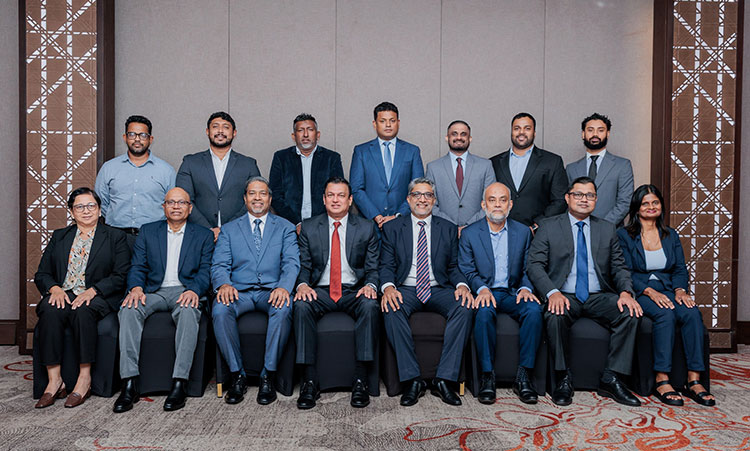
The Sri Lanka Retailers’ Association (SLRA) successfully held its 9th Annual General Meeting (AGM) on 23 June 2026 at Hilton Colombo Residencies, bringing together members of the country’s organized retail sector to review the Association’s achievements over the past year and outline its strategic priorities for the future.
The AGM formally adopted the Annual Report and Audited Accounts for the financial year 2025/26 and elected the Office Bearers and Executive Council for the year 2026–2027.
Infiyaz M. Ali, Director of Healthguard Pharmacy Ltd, was announced as President of the Sri Lanka Retailers’ Association for 2026–2027. He will be supported by Mahesh Wijewardena, Executive Director and Group Chief Executive Officer of Singer (Sri Lanka) PLC, as Senior Vice President, and Kumar De Silva, CEO of SPAR SL Private Ltd, as Vice President.
The newly appointed Executive Council comprises senior representatives from leading retail organizations across Sri Lanka, reflecting the Association’s continued commitment to representing the diverse interests of the retail sector.
Addressing the gathering, President Infiyaz M. Ali emphasized the importance of collaboration, innovation, and industry advocacy in driving the next phase of growth for Sri Lanka’s retail sector.
“Retail continues to be one of the most dynamic sectors of the Sri Lankan economy. As consumer expectations evolve and technology reshapes the industry, the role of SLRA is to create opportunities for knowledge sharing, collaboration, and collective action. We remain committed to supporting our members and contributing to the sustainable growth of the retail ecosystem,” he stated.
The AGM was honoured by the presence of Wasantha Samarasinghe, Minister of Trade, Commerce, Food Security and Cooperative Development, who attended as Chief Guest. In his address, the Minister highlighted the importance of the retail sector as a key contributor to economic development, employment generation, and consumer welfare, while emphasizing the need for stronger public-private collaboration to strengthen the industry’s competitiveness.
Members also had the opportunity to gain insights from the Guest Speaker, Chayu Damsinghe, Head of Macroeconomic Advisory at Frontier Research, who shared perspectives on Sri Lanka’s economic outlook, emerging business trends, and the opportunities and challenges facing the private sector in the years ahead.
A key highlight of the evening was the presentation on the upcoming Sri Lanka Retail Forum 2026, SLRA’s flagship industry event, which will be held under the theme “Retail Without Boundaries – Building the Next Growth Engine.” The forum is expected to bring together more than 500 industry leaders, retailers, entrepreneurs, policymakers, technology providers, and investors to discuss the trends shaping the future of retail.
The Association reaffirmed its commitment to supporting retailers through industry advocacy, professional development initiatives, policy engagement, and knowledge-sharing platforms that foster innovation and business growth.
Since its establishment in 2015, SLRA has played a pivotal role in bringing together retailers from diverse sectors including FMCG, fashion, healthcare, consumer electronics, and digital commerce, creating a unified voice for the industry.
With a renewed leadership team and an ambitious programme of activities planned for the year ahead, SLRA looks forward to working closely with its members and stakeholders to strengthen Sri Lanka’s retail sector and contribute to the country’s economic development.

CSE trading was yesterday driven by month- end profit-takings, market analysts said.Amid those developments both indices moved upwards. The All Share Price Index went up by 2.77 points, while the S and P SL20 rose by 10.91 points.
Turnover stood at Rs 1.91 billion with two crossings. Those crossings were; ACL Cables 2.1 million shares crossed to the tune of 209 million; its shares traded at Rs 100 and Hayleys 100,000 shares crossed for Rs 24.1 million; its shares traded at Rs 240.
In the retail market companies that mainly contributed to the turnover were: Hayleys Rs 141 million (587,000 shares traded), Lanka Realty Rs 105 million (1.8 million shares traded), CIC (Non Voting) Rs 81 million (3.1 million shares traded), HNB Finance Rs 79 million (8.3 million shares traded), Dialog Axiata Rs 56.7 million (1.2 million shares traded), Colombo Dockyard Rs 48.6 million (371,000 shares traded) and Singer SriLanka Rs 46.6 million (586,000 shares crossed).
During the day 63.9 million share volumes changed hands in 18300 transactions.
It is said that manufacturing sector counters, especially Hayleys, performed well while construction related companies, especially ACL Cables, also performed well. Banking sector counters, especially HNB, were also notable on the floor.
Meanwhile, Lee Hedges concluded negotiations with Amana Bank to sell and transfer its land and premises in Kollupitiya for a total consideration of Rs 2.7 billion, with the transaction completed on June 25, 2026.
Lee Hedges shares were trading up 2.52 percent, at Rs.325.75, while Amana Bank was up 1.13 percent at Rs.26.80.
Yesterday the rupee was quoted at Rs 336.90/337.00 to the US dollar in the spot market, from Rs 337.25/35 the previous day, while bond yields were quoted slightly higher, dealers said.
The telegraphic transfer rate for Sri Lanka’s rupee against the US dollar was 332.3416 buying, 342.0372 selling; the euro was 376.2315 selling, 389.9580 buying; and the pound was 436.5994 buying, 451.8110 selling.
By Hiran H Senewiratne
Business
MullenLowe’s Praveena Perera becomes first Sri Lankan woman named to Campaign APAC’s 40 Under 40


Honoured among Asia-Pacific’s most influential emerging professionals
Praveena Perera, Associate Vice President and Client Services Director at MullenLowe Group Sri Lanka, has become the first Sri Lankan woman to be named to Campaign Asia-Pacific’s 40 Under 40 list, a recognition that celebrates the region’s most influential emerging leaders across marketing, media, technology, and communications.
Now in its 14th year, Campaign Asia-Pacific’s 40 Under 40 recognises outstanding professionals across the region whose achievements and leadership potential are shaping the future of the industry. Praveena earned her place on the 2026 list following a comprehensive assessment by senior industry leaders and Campaign Asia-Pacific’s editorial team.
Commenting on the recognition, Praveena Perera said, “This is a deeply meaningful milestone in a journey that has been shaped by continuous learning, hard work, and the support of many people along the way. I am grateful to MullenLowe Sri Lanka, my colleagues, mentors, and family for their belief in me. Recognition such as this is never an individual achievement, and I hope it encourages more women in Sri Lanka to pursue leadership opportunities and realise their potential.”
Praveena currently leads the Unilever portfolio at MullenLowe Sri Lanka, overseeing 27 brands across four categories. Her leadership has played a pivotal role in driving business growth, strengthening client partnerships, and delivering award-winning work. These efforts contributed to MullenLowe Sri Lanka being named Creative Agency of the Year at the Campaign Agency of the Year Awards 2025, while also securing Agency of the Year and Marketer of the Year honours alongside Unilever Sri Lanka at the Effie Awards Sri Lanka 2025.
As one of the youngest Associate Vice Presidents at MullenLowe Sri Lanka and among the first women to serve on its Operating Committee, Praveena has built a reputation for leadership that extends beyond business performance. Her growing list of achievements includes being recognised among the Top 50 Professional and Career Women Global Awards in 2023, reflecting a career marked by consistent excellence, while her commitment to mentoring future talent continues to contribute to greater female representation within the industry.
Thayalan Bartlett, Executive Chairman of MullenLowe Group Sri Lanka, said, “Praveena’s recognition is thoroughly deserved. She has consistently demonstrated exceptional leadership, commercial acumen, and resilience while navigating some of the most demanding circumstances our industry has faced. Her ability to balance performance, people development, and long-term thinking has distinguished her as one of the most promising leaders of her generation.”
Campaign Asia-Pacific’s 2026 cohort comprises 40 professionals representing 14 markets across the region, selected for their contributions to business growth, innovation, leadership, and industry advancement. Praveena’s inclusion marks an important milestone for Sri Lanka’s communications industry and reflects the growing impact of Sri Lankan talent on the regional stage.
MullenLowe Group Sri Lanka (MLG) is Sri Lanka’s largest integrated brand communications company with nine independent strategic business verticals spanning Mainstream, Digital, Activations, MarTech, Media and Public Relations. MLG’s Sri Lanka office consists of 111 staff, serves 43 of the nation’s top corporates, manages 111 brands across 33 categories, including 80% of the top 10 and 50% of the top 20 most advertised categories in the country, making it a company with prolific cross-category knowledge. Ranked among the world’s top 100 most effective agencies and APAC’s top 20, MLG is Sri Lanka’s reigning Effie Agency of the Year, Campaign Asia’s Creative Agency of the Year for South Asia, and a consistent local and regional awards leader for over a decade. It operates as a full member affiliate of MullenLowe Group Worldwide, which was recently acquired by Omnicom. As the world’s largest marketing services group, Omnicom combines unmatched global knowledge and experience with local insight to deliver end-to-end brand solutions.

Ben Stokes four-for, Ben Duckett hundred as England roar back

Venezuela shaken by magnitude 4.9 tremor days after major earthquakes

US strikes Iran in response to drone strike on commercial ship

Jangoo, Chase’s defiant stand takes West Indies close to parity

Heartbreak for Scotland as Sri Lanka clinch thriller to stay alive

Showers will occur at times in the Western, Sabaragamuwa and North-western provinces and in Galle, Matara, Kandy and Nuwara-Eliya districts

‘Dates have the highest sugar content to fight Coronavirus’

Sunday Island 27 December – Headlines

#SundayIsland 17th December – Headlines

Sunday Island – 28th March

Sunday Island Headlines – 21 March

Sunday Island – 21st February – Headlines
-

 Features6 days ago
Nanda Pethiyagoda Wanasundara as three generations of family saw her
-

 Features5 days ago
Sri Lanka developing independent hydrographic capabilities
-

 Opinion4 days ago
Ranasinghe Premadasa: The man who would not take ‘No’ for an answer
-

 Editorial6 days ago
Fuel crisis: Beyond price debate
-

 Latest News6 days ago
Sooryavanshi thumps fastest List A fifty as India A win tri-series
-

 News4 days ago
US Assistant Secretary of State for South and Central Asian Affairs meets President
-

 Business5 days ago
University of West London opens Sri Lanka’s first full UK university branch campus
-

 Features6 days ago
The Sirisena – Ranil conflict and events leading to MR’s return as PM