
Business
Beyond the Numbers: The real costs and benefits of migration for migrant mothers

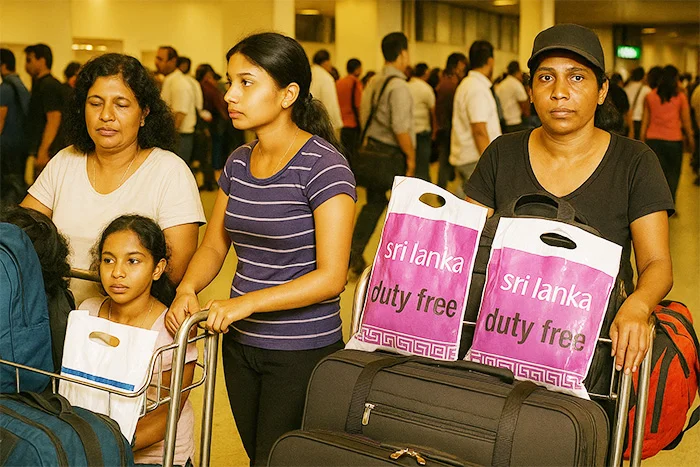
A recent IPS study brings out the reality of Sri Lankan Female Migrant Workers (FMWs), particularly those engaged in domestic work across the Middle East. These women juggle multiple roles across various locations, handling extra tasks, often beyond their contractual obligations. Despite the heavy workload, they often do not receive even their agreed-upon payment, which delays the timely transfer of money to their families, making it difficult for them to meet basic needs such as food, education, health and housing, ultimately leading to a shortfall in the country’s expected foreign exchange inflows, diminishing the broader economic gains of labour migration in Sri Lanka.
Trends in Migration
The female migration pattern in Sri Lanka has fluctuated notably over recent years. In 2018, considered a normal year before the economic crisis, women made up 38.6% (81,499) of total departures for foreign employment. However, in 2023, during the peak of Sri Lanka’s economic crisis, their share increased to 44.7% (133,048).
Although women made up less than half of all migrant departures (44.7%) in 2023, they accounted for 80.3% of the total complaints (6,051 out of 7,535) received by the Sri Lanka Bureau of Foreign Employment (SLBFE), indicating that complaints are proportionally higher among female migrants. Among these, wage-related grievances stand out. Of particular concern is that in 2023 alone, the SLBFE documented 694 complaints about wage non-payment, over half of which were lodged by FMWs. But behind the statistics, personal struggles often go unnoticed, and these untold stories deserve to be heard.
Why Women Migrate: The Dreams Behind the Journey
For many FMWs, migration is not just a choice but a necessity, beginning with the hope of escaping poverty, supporting their families, or securing a better future. The reasons women migrate are varied and deeply personal. But for migrant mothers, the journey takes on an even deeper meaning. Unlike other migrant women, they carry not only the weight of their struggles to strive for their survival but also the dreams for the future of their children.
Many migrant mothers with school-aged children endure long working hours, difficult working conditions, and emotional sacrifices to build a better future for their children. For them, education is often seen as the pathway out of this vicious cycle of poverty. Education, something that many migrant mothers may have missed, motivates them to convert every penny earned into funds to invest in better quality education as revealed by UN Women Asia-Pacific study notes that many female migrant workers send money home explicitly for school-related costs such as books, tuition, and transport, despite the loneliness, overwork, or even abuse they may face abroad.
Unpaid Wages, Unfulfilled Promises
The issue of non-payment of wages goes far beyond simply not receiving wages for hard work, when the financial gap created by missing wages turns a mother’s sacrifice into a painful struggle, thus delaying her dreams of seeing her children receive proper education.
One such example from IPS’s recent study highlights the real struggles behind these statistics. It is about a woman with two school-aged children who migrated to Oman to work as a domestic worker, hoping to give her children a better life through the income she would earn. However, once in Oman, she was not paid her salary for several months. She pleaded for her overdue payments as her children’s schooling depended entirely on the remittances she had planned to send back home.
In Sri Lanka, when FDWs face such issues while working abroad, they, or their next of kin (NOK), can make a complaint to the SLBFE. When such complaints are received, the SLBFE reviews the details and then conducts an inquiry, involving both the NOK of the migrant worker and the local recruitment agent. In this case, during the SLBFE inquiry, the FDW’s husband, acting as her NOK, revealed that she had not received her salary for three consecutive months.
This situation is not isolated. Delayed or unpaid wages among domestic workers in the Gulf countries are commonplace. A major issue in this context is that the recruitment culture for FDWs from Sri Lanka to the Middle East involves the employer paying an upfront incentive to the FDW before she takes up the employment overseas. This shifts the expectation by the employer that the FDW needs to continue working, no matter what the situation. But this particular family’s situation was especially vulnerable. In this case, the husband, who was unemployed at the time due to health reasons, explained that they had no other source of income. The family had been relying solely on her expected earnings to fund their children’s education.
Mother’s Absence Costs More Than Earnings
While remittances bring clear financial benefits, it is crucial to look beyond the economic lens and consider what migration truly costs mothers and families, as it leaves a deep void in the upbringing of a child who must grow up without the daily care of a mother.
For the children left behind in the country of origin, the concerns primarily centre on “their social, educational, behavioural, and psychological development”.
Indeed, academic challenges exist broadly, as evidenced by the fact that nearly 50% of students in Sri Lanka fail their O/L examinations, even with the presence of both parents. But the absence of a mother due to migration can compound these challenges. Since the mother is away, it hurts a child’s life in many ways, as no one can replace a mother’s love and care.
For instance, a real-life case reflecting these concerns is that of a mother from Badulla who had spent over 20 years working in the Middle East.. During her long absence, her husband became an alcoholic. One of her daughters was unable to get through the O/L exams, and her other daughter ran away with a boy. As such, the absence of a mother, along with not having proper care at home and poor money management, can cause the children’s education falling apart, turning the mother’s dream into a fading hope.
This is not just one story; there are many similar incidents all around us. These real-life stories align closely with the findings from the other studies’ supporting the idea that the absence of a primary caregiver, particularly the mother, can lead to educational development and emotional distress due to inadequate protection, particularly when fathers or other caregivers cannot provide necessary support, leading to increased vulnerability among these children.
SLBFE officers confirm this pattern through KIIs conducted for IPS’s latest study,
“The social impact of mothers migrating and leaving their children behind is significant, as it heavily impacts their education and safety. They also reported that children often struggle without their mother’s guidance and emotional support, leading to a loss of focus in their studies and reduced motivation.
These stories are just one or two of many, touching on the financial and emotional toll on many mothers who sacrifice every coin to give a better life for the children. Therefore, the personal struggles of migrant mothers that hide behind the figures usually go unnoticed.
Balancing Hope with the Hardships of Migration
The SLBFE has set plans to facilitate 340,000 foreign employment opportunities by 2025, marking the highest number of total departures for foreign employment in Sri Lanka’s history. It is important to recognise the broader economic and social costs associated with migration, even as Sri Lanka increasingly relies on sending record numbers of workers abroad as a strategy to reduce domestic unemployment and boost foreign exchange earnings.
Instances of non-payment not only cause hardship for families but also hurt the national economy. Emotional and educational setbacks for children left behind can have long term impacts on Sri Lanka’s human capital development.
These stories of FMWs serve as a powerful reminder of the paradox of migration: Hopes for a better life versus the cost of emotional and financial hardships. This paradox underscores the urgent need for stronger policy measures to ensure that migration is safe, fair, and truly beneficial, both for the workers and for national development.
Recommendations
To address financial challenges faced by migrant mothers due to delayed wages:
Maintain employer accountability frameworks with wage protection mechanisms for the employees:
Establish a Wage Protection System (WPS): The Ministry of Labour and Social Affairs and the Qatar Central Bank launched WPS, an electronic system, to track and record the worker wage payment process in Qatar. As such, to ensure timely salary payments, the SLBFE can maintain a database that enables recruitment agencies/employers to report on the payment status at 3- or 6-month intervals each year and upload verified payment slips as supporting documentation to ensure accuracy of the status.
Public Disclosure of Defaulters: By reviewing the database, the SLBFE can publicly disclose the names of employers and recruitment agencies who fail to meet payment deadlines, thereby increasing transparency and encouraging timely payments.
Good Employer/Agency List: Employers who remit their payments on time can be placed on a “good employer/agency list”, which serves as a positive reputational marker, motivating employers to maintain fair labour practices.
To address the educational and emotional challenges faced by children of migrant mothers:
Focus on Family Support Initiatives: The SLBFE is currently granting scholarships for children of migrant workers. Rather than relying solely on scholarships, having a revolving fund or emergency grant system in place, which can be accessed more quickly when wage delays are detected. The fund could be set up by the SLBFE in collaboration with local or international partners, such as private sector companies or organisations focused on migrant welfare.
Sri Lanka can monitor these sensitive issues, such as the impact of migrating mothers and the sacrifices made for their children’s education. Protecting the well-being of migrant workers is not just a social imperative, it also supports national goals of reducing unemployment and increasing foreign exchange earnings. By aligning worker protection with economic development, Sri Lanka can fully realise the benefits of labour migration for families, ensuring that the sacrifices made by Sri Lanka’s migrant mothers are not in vain, and their hope for their children’s future can blossom into something real.
 By Yashora Gunawardena


Pan Asia Banking Corporation PLC’s Senior Listed Rated Unsecured Redeemable Debenture issue of up to Rs. 5 billion was oversubscribed following its opening reflecting strong investor interest.
The debentures, with a par value of Rs. 100 each, will be listed on the Colombo Stock Exchange (CSE). The three-year debentures offer an interest rate of 12.75% interest payable annually, while the five-year debentures offer 13.50% interest payable annually.
The issue has been assigned a BBB+ (Stable) rating by Lanka Rating Agency.
The debenture issue was managed by the Investment Banking Unit of Commercial Bank of Ceylon PLC, with SSP Corporate Services (Private) Limited serving as the Registrar to the Issue.
The Bank said the strong investor response demonstrates continued confidence in Pan Asia Bank and its approach to creating long-term value for its stakeholders.
Pan Asia Bank, which positions itself as ‘The Truly Sri Lankan Bank’, continues to strengthen its role in supporting the financial requirements of individuals and businesses while contributing to the development of Sri Lanka’s economy.
Business
SLIIT International and Liverpool John Moores University inaugurate dedicated international learning facility

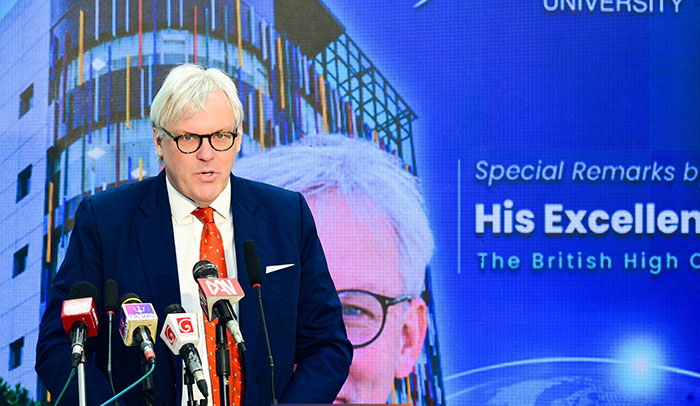
The Sri Lanka Institute of Information Technology (SLIIT) and Liverpool John Moores University (LJMU), United Kingdom, recently inaugurated SLIIT International in Collaboration with LJMU, a dedicated international learning facility located at No. 17, Dickmans Road, Colombo 04, marking a significant milestone in a partnership spanning more than a decade and reinforcing their commitment to providing Sri Lankan students with access to internationally recognised UK higher education qualifications.
The Grand Opening Ceremony was attended by Andrew Patrick, British High Commissioner to Sri Lanka, who graced the occasion as Chief Guest, alongside senior representatives from SLIIT, Liverpool John Moores University, the British Council, academia, industry and other stakeholders, marking the next chapter of the longstanding SLIIT–LJMU collaboration. The new facility is particularly significant as Sri Lanka’s first academic facility dedicated exclusively to the delivery of LJMU degree programmes, reflecting the strength, maturity and long-term commitment of the partnership.
Over the past decade, the SLIIT–LJMU partnership has established a growing network of more than 1,500 alumni, while providing Sri Lankan students with opportunities to gain internationally recognised UK qualifications locally. The new dedicated facility has been designed to provide a world-class learning environment exclusively for LJMU programmes, supporting future programme expansion, strengthening the student experience and creating opportunities for deeper academic collaboration, innovation, research and student engagement.
Commenting on the milestone, Prof. Lalith Gamage – Vice-Chancellor, Managing Director and Chief Executive Officer, SLIIT, stated, “The launch of SLIIT International in Collaboration with Liverpool John Moores University represents an important new chapter in our longstanding partnership with Liverpool John Moores University. Our vision is to provide Sri Lankan students with a world-class education and student experience right here in Sri Lanka, while equipping them with the global outlook, critical thinking, professional capabilities and career readiness required to succeed in an increasingly interconnected world. This dedicated facility strengthens the student experience while providing a strong foundation for the continued growth of our collaboration with LJMU.”
Prof. Timothy Nichol, Pro-Vice-Chancellor, Faculty of Society and Culture, Liverpool John Moores University, said, “The opening of Sri Lanka’s first facility dedicated exclusively to LJMU degree programmes represents a significant milestone for the University and our partnership with SLIIT. It reflects the strength of our collaboration and our shared commitment to delivering a high-quality LJMU educational experience in Sri Lanka. The new facility also creates exciting opportunities for deeper academic collaboration, innovation, research and student engagement as we look towards the next phase of our partnership.”
A key highlight of the Grand Opening Ceremony was the panel discussion titled “Beyond Borders: The Role of British Higher Education in Developing Globally Competitive Graduates.” The discussion examined the growth of international educational opportunities in Sri Lanka, the future expansion of UK degree programmes, maintaining the quality and integrity of UK qualifications, developing future-ready graduates with global competencies, and the role of international higher education in strengthening graduate employability. The panel brought together Prof. Lalith Gamage; Prof. Timothy Nichol; Mr. Sajeewa Meepage, Representative of the British Council; and Dr. Harsha Cabral, Board Member of SLIIT.
The panelists further emphasized on emerging trends in areas including law, business, psychology and artificial intelligence, as well as the contribution of UK higher education to Sri Lanka through internationally recognised qualifications that uphold global academic standards.
The discussion explored the history and future of the SLIIT–LJMU partnership, the strategic significance of the new SLIIT International facility, academic quality, graduate employability and the long-term growth of LJMU programmes in Sri Lanka.
The ceremony also featured a special address by Andrew Patrick, British High Commissioner to Sri Lanka, followed by an address by Mrs. Clare Sears, Country Director, British Council Sri Lanka. The evening also included the ceremonial exchange of the partnership document between SLIIT International and Liverpool John Moores University, symbolising the continued commitment of both institutions to strengthening their collaboration and expanding international educational opportunities for Sri Lankan students.
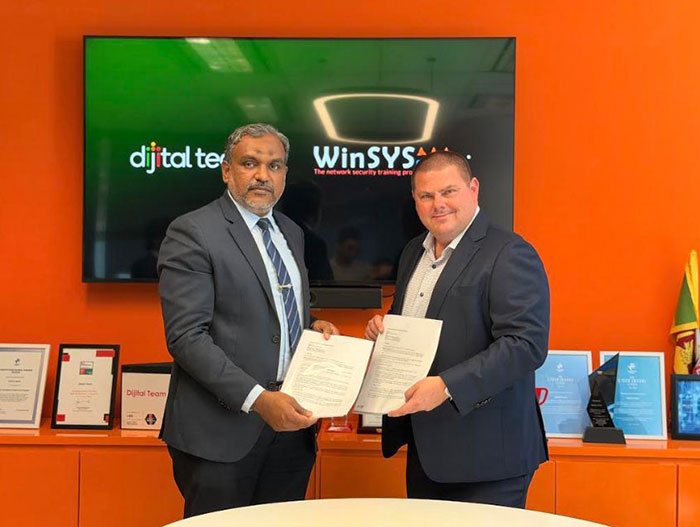
Dijital Team has signed a two-year partnership with Winsys City University, strengthening the skills and capabilities of its team members to support Managed Service Providers and IT service providers while elevating tech talent to immediate industry-readiness. With a Memorandum of Understanding (MOU) signed recently, the partnership was formally launched on 9 September 2026 at Dijital Team’s office premises, Colombo.
Combining Dijital Teams’ international employer network and understanding of the capability requirements of MSPs and IT service providers across Australia, New Zealand and the United Kingdom with Winsys City University’s training heritage of 21 years, the joint programmes create legitimate classroom-to-international-career pathways, offering structured learning and certification avenues that support deeper capability across cloud, cybersecurity, automation, AI and emerging technologies.

Turkish court detains football refereeing chief pending corruption trial

Ten injured after car crashes into rugby supporters in Australia

Polls open in Latvia against backdrop of perceived Russia threat

Abhishek, Tilak and spinners secure gold for India at Asian Games again

Tharindu Rathnayake, bowlers secure Asian Games Bronze for Sri Lanka

G7 to release 100 million barrels of oil and diesel after Trump export ban threat

‘Dates have the highest sugar content to fight Coronavirus’

Sunday Island 27 December – Headlines

#SundayIsland 17th December – Headlines

Sunday Island – 28th March

Sunday Island Headlines – 21 March

Sunday Island – 21st February – Headlines
-

 News6 days ago
Police remove Thileepan statue in Jaffna
-

 Features6 days ago
The 22nd Amendment, constitutional recovery and illiberal slippage
-

 Features6 days ago
Of foreigners as CEOs of Lankan ventures
-

 Latest News4 days ago
Gold winner Tharanga gets brand-new Honda Vezel from SLAAJ
-

 News6 days ago
Sajith rejects Jt. Opp. protest sabotage claim; SJB TU chief demands remedial action
-

 Features4 days ago
Why Sri Lanka needs an Inclusive Civic Nationalism – urgently
-

 Features5 days ago
Thailand’s biggest new global star …
-

 News3 days ago
US-assisted ‘Ice’ detection: NPC to examine IGP’s move to transfer drug-busting team