
Business
Between homefront policies and global developments: Sri Lanka’s external sector outlook


By Nilupulee Rathnayake
 Having weathered a challenging period marked by a deep economic crisis, Sri Lanka is now demonstrating positive signs of an economic upturn. Still, amidst limited homefront policy alternatives against an unfavourable global backdrop, a critical question arises: how will Sri Lanka’s external sector cope in the face of these challenges?
Notably, import controls, initially imposed in response to the dearth of foreign exchange liquidity in the domestic market, are being largely eased. The government is actively seeking to forge partnerships with regional giants, aiming to strengthen trade relations through Free Trade Agreements (FTAs). Nevertheless, in the broader global context, the rise of geopolitical rivalries, slow growth and contracting demand in key markets create multiple uncertainties for Sri Lanka’s external sector recovery.
Global Economic Developments: A Complex Web of Uncertainties
Globally, there are promising signs of economic progress in the near term. Supply chain disruptions, which significantly impacted various industries, have largely returned to pre-pandemic levels. Energy and food prices, having peaked during conflict-induced periods, have substantially subsided, alleviating global inflationary pressures faster than anticipated.
However, the global economic landscape remains overshadowed by a complex web of uncertainties. Political dysfunction in key economies and ongoing geopolitical rivalries present challenges. The United States’ imposition of bans on certain exports to Chinese firms exemplifies the extant geopolitical tensions. This growing inclination towards trade interventions through industrial policies, subsidies, and import restrictions, driven by national security and environmental considerations, has the potential to impact the trajectory of globalisation. These developments carry substantial implications for emerging and developing economies, particularly those deeply reliant on a globally integrated economy, foreign direct investment (FDI), and technology transfers. Economies contending with burgeoning sovereign debt overhangs in particular, are expected to face heightened vulnerabilities. Having defaulted in early 2022, Sri Lanka is among the countries particularly affected by these global economic shifts.
Sri Lanka’s Vulnerable Export Sector
In 2022, Sri Lanka recorded its lowest merchandise trade deficit since 2011, primarily due to reduced imports and an uptick in exports. Merchandise exports expanded by 4.9% in 2022 compared to the previous year, while import expenditure decreased by 11.4% in 2022 relative to 2021. The decrease in import expenditure stems from a combination of import restrictions and foreign exchange liquidity constraints.
However, as import controls ease and the economy gradually improves, a marginal increase in import expenditure is observed from June 2023 onwards. While improving consumer welfare and food security, this move may negatively impact the trade deficit this year, especially as global demand for Sri Lanka’s primary exports, like tea and garments face a downturn – the former triggered by high production costs and the latter by contracting foreign demand.
Sri Lanka’s key export markets for garments, particularly in the US and Europe, are experiencing low growth and weakened demand since the fourth quarter of 2022. Consequently, monthly earnings from garment exports in August 2023 indicates a 26% decline compared to August 2022. Notable decreases in the import of Ceylon tea by prominent Sri Lankan tea importers in 2022 relative to 2021, including Russia (by 9.6%), the UAE (by 2.5%), and Turkey (by 47%), also highlight the vulnerability of Sri Lanka’s export sector to external shocks. The tea market’s condition has seen a modest improvement in 2023, though it has not been entirely resolved.
The concentration of Sri Lanka’s exports in terms of products and markets has long been a source of concern, rendering the economy exceedingly susceptible to sector-specific shocks.
Tourism and Worker Remittances: A Silver Lining
In a positive trajectory, 2023 has witnessed a notable increase in monthly tourist arrivals compared to the previous year, signalling a discernible recovery trend. Cumulative tourist arrivals from January to August 2023 amounted to 904,318, compared to 496,430 arrivals recorded during the corresponding period in 2022. Overcoming the challenges within this sector necessitates a coordinated effort from various stakeholders, including the government and the private sector, as Sri Lanka endeavours to reconstruct its brand identity as a secure and preferred destination.
Worker remittances, representing another crucial source of foreign exchange earnings, have exhibited promise. In the first half of 2023, worker remittances grew to USD 2.8 billion, however it remains below the pre-pandemic level of USD 3.6 billion recorded in the first half of 2018. While the Middle East remains a vital destination for Sri Lankan workers, alternative destinations offering employment across various job categories have emerged, including South Korea, Singapore, Japan, and several European countries. Notably though, the large-scale migration of workers, including white-collar employees, raises concerns regarding long-term economic repercussions due to brain drain.
Challenges in Attracting Foreign Investment
In a fiercely competitive global FDI landscape, political stability and a robust macroeconomic framework are paramount considerations for investors, especially given the numerous countries competing for their attention.
In the post-war period, Sri Lanka experienced its peak FDI inflows in 2018, attracting USD 1.6 billion. However, in 2022, this figure dwindled to USD 898 million, reflecting the adverse impact of the pandemic and economic challenges. Sri Lanka’s economic crisis – and the country’s sovereign default status together with public protests, strikes, and violence – reshaped the country’s perception as a not particularly attractive destination for foreign investors.
As Sri Lanka anticipates modest growth in the coming years, it becomes imperative not only to retain existing investors but also to proactively seek new investments within the current unfavourable climate. The Board of Investment (BOI) has targeted to attract USD 2 billion in FDI in 2023, with a particular focus on the tourism sector. An incentive package, potentially incorporating tax incentives, is being contemplated as a viable policy intervention, aligning with practices observed in peer countries aimed at attracting FDI.
Building Resilience and Diversification
Sri Lanka’s external sector has been susceptible to policy missteps that exposed it heavily to external global shocks. Building the economy’s resilience against external pressures must necessarily be a crucial part of the adjustment and recovery process. As import controls are also eased, to bridge the widening trade deficit, Sri Lanka needs to implement concrete policy measures to diversify its export basket and connect to global value chains.
Several initiatives have already been undertaken, for instance, to pursue fresh trade relationships with neighbouring giants. These trade agreements should be deep trade agreements that target not only merchandise trade but also services, FDI promotion, value addition, trade facilitation, and digitisation. In the near term, negotiations are ongoing on various stalled trade agreements with India, China, and Thailand, amongst others, while expressing interest in joining the RCEP trade bloc in the medium term.
However, notably, Sri Lanka can no longer approach efforts to expand and diversify exports in a piecemeal fashion and FTAs on their own will fail to deliver. High energy costs, labour shortages, and scaling back on infrastructure spending, amongst others, impact the operating environment for businesses. Sri Lanka’s longstanding structural bottlenecks must be overcome by implementing the necessary reforms to raise productivity for sustained growth if the country is to regain lost confidence in its economic prospects.
*This blog is based on the comprehensive chapter on the external environment in IPS’ ‘Sri-Lanka: State of the Economy 2023’ report.
Link to original blog: https://www.ips.lk/talkingeconomics/2023/10/24/between-homefront-policies-and-global-developments-sri-lankas-external-sector-outlook/





By Hiran H. Senewiratne
Sri Lanka’s financial literacy rate is approximately 58 percent. Such literacy is absolutely necessary for the inclusion of people in the country’s financial system which in turn is central to overall economic development, Central Bank Governor Dr. Nandalal Weerasinghe said.
‘One needs to have knowledge and skills of a financial nature to figure in financial inclusiveness. While 86 percent of Sri Lanka’s population has access to the country’s financial system, 82 percent of the public has at least a savings account in the country’s banking system, Dr Weerasinghe said.
The Governor made these comments recently at the inauguration of Financial Literacy Month 2026 at the Central Bank’s Centre for Banking Studies, Rajagiriya.
Dr. Weerasinghe added: ‘Suitable, affordable and quality financial instruments are needed to enhance financial literacy in the country.
‘Financial information has to be accurate, risk-free and accountable, thus creating confidentiality in the financial system, which would enable the sector to reach greater heights’.
Meanwhile CBSL sources said: ‘The Literacy Month opened with the two-day ‘FinLit Expo Colombo’. The expo gives the public the opportunity to engage with institutions, better understand financial services, gain practical insights into managing their finances and learn how to protect themselves from financial fraud and scams.
‘The CBSL is leading the program in collaboration with stakeholder institutions. It forms part of the Financial Literacy Roadmap for Sri Lanka, which is implemented under the National Financial Inclusion Strategy (NFIS), the national framework for widening access to and use of formal financial services.
‘The Colombo event will be followed by six regional ‘FinLit Expos’ aimed at direct engagement with local communities. Partner institutions will also run awareness activities. Together, the events are intended to provide financial education to communities and encourage people to apply financial knowledge in everyday life.
‘A public awareness campaign on television, radio, newspapers and social media will extend the program’s reach. The program also includes digital financial literacy activities and the promotion of QR codes and other online payment methods.
‘The public and stakeholder institutions are encouraged to take part in the month’s activities under the theme, “Towards a Financially Literate Sri Lanka”.
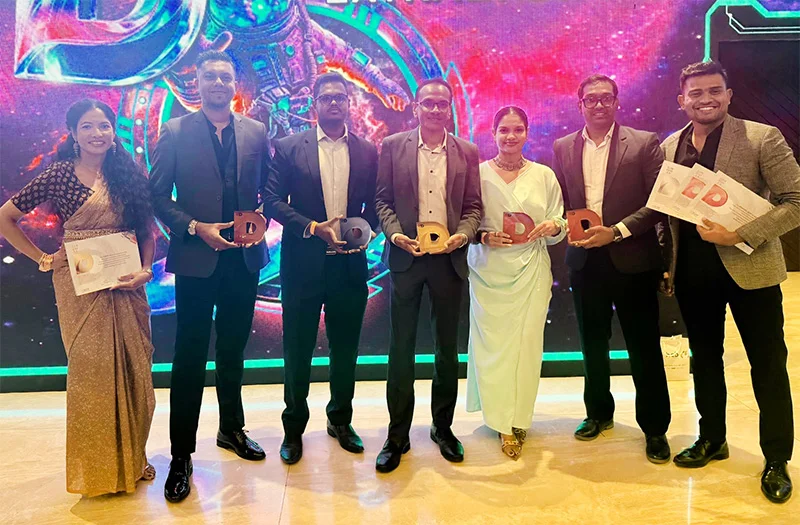
HUTCH Sri Lanka strengthened its position as a leader in digital engagement by securing five accolades at SLIM Digis 2.6, emerging as one of the most recognized brands at this year’s digital excellence awards. The achievement was further highlighted by HUTCH being the only telecom operator to be recognized at the event.
Organized by the Sri Lanka Institute of Marketing (SLIM), SLIM Digis is Sri Lanka’s premier platform celebrating excellence, innovation, and outstanding achievements in the digital marketing industry. The recognition highlights HUTCH’s growing strength in digital-first, agile, and creative marketing, and its ability to respond to everyday moments, engage audiences, and deliver impactful digital campaigns.
The Gold Award for Best Use of Agile and Moment Marketing, a Silver for Best Use of Digital in a Marketing Campaign, and a Bronze for Best Performance Marketing were all awarded for “Keeping Sri Lanka Connected Through Ditwah,” HUTCH’s response to the cyclone that struck Sri Lanka in November 2025, recognised for the speed and relevance with which HUTCH kept customers better connected and informed.
HUTCH Roaming also earned two further Bronze awards for Best Use of Digital in a Marketing Campaign and Best Use of Creative Content. Bringing together AI-led storytelling, the campaign was designed around distinct customer clusters, each characterized by unique travel behaviours, needs, and perceptions, delivering relevant content for different audiences within a single overarching campaign.
“These wins are a strong reflection of how HUTCH approaches marketing today, staying close to the moments that matter to our customers and responding with speed, relevance, and creativity. Being the only telco recognised at SLIM DIGIS 2.6, and across five categories, is proof that agility and thoughtful storytelling can go hand in hand. This recognition reflects the collective efforts with our strategic partners, whose collaboration, expertise, and shared commitment brought great campaigns to life,” said Hamdhy Hassen, Chief Marketing Officer, HUTCH Sri Lanka.
Sri Lanka’s Smart Luxury Business Hotel to Host Delegates and Contestants from Over 40 Countries as the Island Nation Hosts Its First-Ever Global Pageant of This Scale
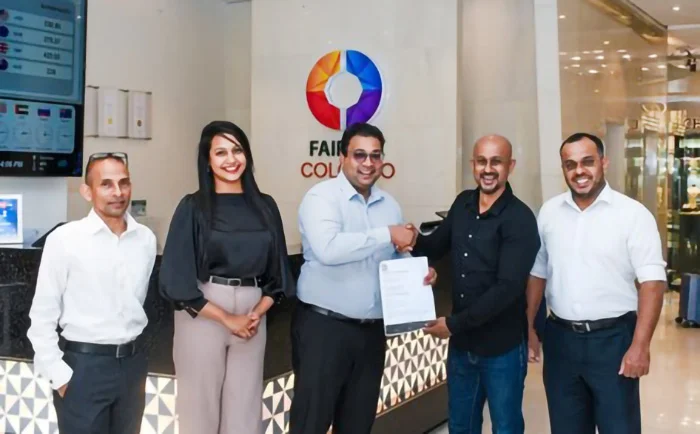
Fairway Colombo, a subsidiary of Fairway Holdings (Pvt) Ltd, has been appointed as the Official Accommodation Partner for Manhunt International 2026, one of the world’s most prestigious male pageants, scheduled to take place in Sri Lanka.
The event marks a historic milestone for Sri Lanka, as the country prepares to host a global pageant of this scale for the very first time. More than 40 contestants representing countries from across the world will arrive in Colombo, bringing together diverse cultures, international media attention, and a global audience — further strengthening Sri Lanka’s position as a premier destination for tourism, culture, and hospitality.
As the official accommodation partner, Fairway Colombo will welcome and host international delegates and contestants throughout their stay in Colombo, delivering the exceptional hospitality experience and personalized service that the hotel is recognized for.
A Landmark Partnership for Sri Lankan Tourism
“We are truly honored to be selected as the Official Accommodation Partner for Manhunt International 2026. This partnership is a proud moment not only for Fairway Colombo but also for Sri Lanka as a whole. Hosting an event of this global stature provides us with an opportunity to showcase our commitment to smart luxury, innovation, and authentic Sri Lankan hospitality to an international audience. We look forward to creating a memorable and seamless experience for all delegates and guests,” said Avinga Wanigasekara, General Manager of Fairway Colombo.
Strategically located in the heart of Colombo’s historic Fort district, Fairway Colombo is recognized as a Smart Luxury Business Hotel, combining modern comfort, advanced technology, and exceptional service. As part of Fairway Holdings (Pvt) Ltd, the property represents the group’s vision of delivering innovative, world-class experiences across the hospitality and leisure sectors.

Delegation from Korean Volunteer Association meet Secretary to the President

Imran Khan’s PTI braces to fight federal takeover of Khyber Pakhtunkhwa

Nissanka’s return headlines Sri Lanka’s Test squad against Pakistan

HRCSL issues recommendation on seizure of four books by B. Piratheepan by Sri Lanka Customs

Former Zimbabwe player and umpire Sarah Dambanevana dies aged 36

Deflated Sri Lanka look to prevent whitewash against dominant Pakistan

‘Dates have the highest sugar content to fight Coronavirus’

Sunday Island 27 December – Headlines

#SundayIsland 17th December – Headlines

Sunday Island – 28th March

Sunday Island Headlines – 21 March

Sunday Island – 21st February – Headlines
-

 Features6 days ago
The Sri Lankan who made Scottish history
-

 Sports6 days ago
Nissanka absence opens door for Sri Lanka’s young guns
-

 News5 days ago
NDB fraud Rs 60mn more than reported
-

 News7 days ago
Gnansara Thera to be assigned to prison printing section: Officials
-

 News5 days ago
Removing monk’s robes matter for Sangha to decide: Mahanayake Theras
-

 News7 days ago
OIC of FCID summoned before Maligakanda Magistrate
-

 Features6 days ago
Future of Sri Lanka’s state university system: Should it be shut down and reopened?
-
 News6 days ago
Shiranthi R remanded until 13 Oct.