
Foreign News
BBC apologises to Trump over Panorama edit but refuses to pay compensation


The BBC has apologised to US President Donald Trump for a Panorama episode that spliced parts of his 6 January 2021 speech together, but rejected his demands for compensation.
The corporation said the edit had given “the mistaken impression that President Trump had made a direct call for violent action” and said it would not show the 2024 programme again.
Lawyers for Trump have threatened to sue the BBC for $1bn (£759m) in damages unless the corporation issues a retraction, apologises and compensates him.
Culture Secretary Lisa Nandy told BBC Breakfast she was confident the corporation was “gripping this with the seriousness that it demands”, adding her role was to ensure “the highest standards are upheld”.
But she also told BBC Radio 4’s Today programme that the BBC’s editorial standards and guidelines were “in some cases not robust enough and in other cases not consistently applied”, adding that there would need to be people “at a very senior level with a journalistic background”.
Political appointments to the corporation’s board would be examined in the BBC’s charter review, she said in response to a question asking if member Sir Robbie Gibb, a former political adviser to Theresa May, had overstepped his remit and weighed into politics.
While this was a matter for the board and its chairman, she said, those appointments “damaged confidence and trust in the BBC’s impartiality”.
Liberal Democrats leader Sir Ed Davey had urged the prime minister on Thursday to “get on the phone to Trump” to put a stop to his lawsuit threat and “defend the impartiality and independence of the BBC”.
The fallout from the scandal led to the resignations of BBC director general Tim Davie and head of news Deborah Turness on Sunday.
BBC News has approached the White House for comment.
The apology comes hours after a second similarly edited clip, broadcast on Newsnight in 2022, was revealed by the Daily Telegraph.
In its Corrections and Clarifications section, published on Thursday evening, the BBC said the Panorama programme had been reviewed after criticism of how Trump’s speech had been edited.
The BBC had been given a deadline of 22:00 GMT (17:00 EST) on Friday to respond.
“We accept that our edit unintentionally created the impression that we were showing a single continuous section of the speech, rather than excerpts from different points in the speech, and that this gave the mistaken impression that President Trump had made a direct call for violent action,” the statement said.
Lawyers for the BBC have written to President Trump’s legal team in response to a letter received on Sunday, a BBC spokesperson said.
“BBC chair Samir Shah has separately sent a personal letter to the White House making clear to President Trump that he and the corporation are sorry for the edit of the president’s speech on 6 January 2021, which featured in the programme,” they said.
They added: “While the BBC sincerely regrets the manner in which the video clip was edited, we strongly disagree there is a basis for a defamation claim.”
In Trump’s speech he said: “We’re going to walk down to the Capitol, and we’re going to cheer on our brave senators and congressmen and women.”
More than 50 minutes later in the speech, he said: “And we fight. We fight like hell.”
In the Panorama programme the clip shows him as saying: “We’re going to walk down to the Capitol… and I’ll be there with you. And we fight. We fight like hell.”
Speaking to Fox News, Trump said his speech had been “butchered” and the way it was presented had “defrauded” viewers.
The BBC received the letter from Trump’s lawyers on Sunday. It demands a “full and fair retraction” of the documentary, an apology, and that the BBC “appropriately compensate President Trump for the harm caused”
In its letter to Trump’s legal team, the BBC sets out five main arguments for why it does not think it has a case to answer.
First it says the BBC did not have the rights to, and did not, distribute the Panorama episode on its US channels.
When the documentary was available on BBC iPlayer, it was restricted to viewers in the UK.
Secondly, it says the documentary did not cause Trump harm, as he was re-elected shortly after.
Thirdly, it says the clip was not designed to mislead, but just to shorten a long speech, and that the edit was not done with malice.
Fourthly, it says the clip was never meant to be considered in isolation. Rather, it was 12 seconds within an hour-long programme, which also contained lots of voices in support of Trump.
Finally, an opinion on a matter of public concern and political speech is heavily protected under defamation laws in the US.
A BBC insider said that internally, there is a strong belief in the case the corporation has put forward, and in its defence.
Earlier on Thursday, the BBC was accused of another misleading edit of Trump’s 6 January 2021 speech, two years before the Panorama sequence aired.
On a Newsnight programme from 2022, the edit is a little different from Panorama.
Trump is shown as saying: “We’re going to walk down to the Capitol. And we’re going to cheer on our brave senators and congressmen and women. And we fight. We fight like hell. And if you don’t fight like hell, you’re not gonna have a country anymore.”
This was followed by a voice-over from presenter Kirsty Wark saying “and fight they did” over footage from the Capitol riots.
Responding to the clip on the same programme, former White House chief of staff Mick Mulvaney, who quit a diplomatic post and became a critic of Trump after describing the 6 January riots as an “attempted coup”, said the video had “spliced together” Trump’s speech.
“That line about ‘we fight and fight like hell’ is actually later in the speech and yet your video makes it look like those two things came together,” he said.
In response to Thursday’s story in the Telegraph, a BBC spokesperson said the BBC holds itself to the “highest editorial standards” and the matter was being looked into.
A spokesman for Trump’s legal team told the Telegraph it was “now clear that BBC engaged in a pattern of defamation against President Trump”.
Concerns over the Trump Panorama documentary emerged when a leaked internal memo, written by a former independent external adviser to the corporation’s editorial standards committee, was published by the Telegraph newspaper. Among other things, the document also criticised the BBC’s reporting of trans issues, and BBC Arabic’s coverage of the Israel-Gaza war.
[BBC]

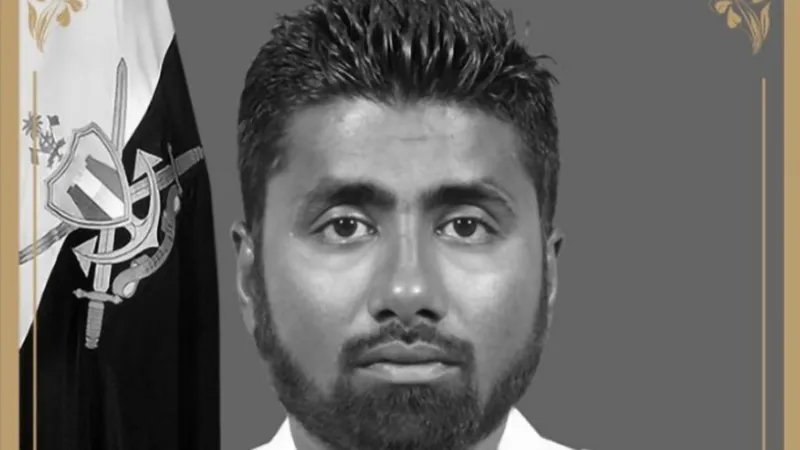
A rescue diver has died while searching for the bodies of a group of Italians who died in a scuba-diving accident in the Maldives.
Staff Sgt Mohamed Mahdhee was taken to hospital in critical condition and later succumbed to his injuries, a government spokesman told the BBC on Saturday.
Five Italians died while attempting to explore caves at a depth of around 50m (164ft) on Thursday. So far, the body of one of them is thought to have been recovered, in a cave at a depth of around 60m (197ft).
The incident is believed to be the worst single diving accident in the tiny Indian Ocean nation, a popular tourist destination because of its string of coral islands.
Maldivian President Mohamed Muizzu travelled to Vaavu Atoll on Saturday to observe the search operations.
“Eight rescue divers went into the water today. When they surfaced, they realised Mahdhee didn’t come up,” Mohamed Hossain Shareef, a Maldivian government spokesman told the BBC.
The other divers immediately went into the water again and they found Mahdhee had blacked out.
The Maldives military has described the operation as very high risk, with unfavourable weather conditions.
Italian Foreign Minister Antonio Tajani sent condolences: “These days of grief for Italy are compounded by the news that one of your brave soldiers… died while attempting to dive to reach the bodies of our fellow Italians.”
“This tragedy unites Italy and the Maldives in grief and respect for the victims,” he added.
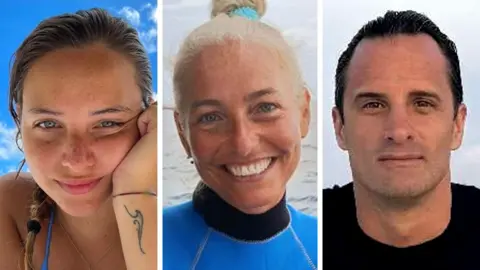
Four of the Italian divers were part of a University of Genoa team, including professor of ecology Monica Montefalcone, her daughter and two researchers. The fifth was a boat operations manager and diving instructor.
The five entered the water at Vaavu Atoll on Thursday morning, local media said, and were reported missing when they failed to resurface later on.
Police said the weather was rough in the area, about 100km (62 miles) south of the capital, Male. A yellow warning was issued for passenger boats and fishermen.
Shareef said recreational scuba divers were only allowed to dive up to a depth of 30m and it was not clear why the Italians went into a cave that’s 60m under water.
Italy’s foreign ministry said earlier that another 20 Italian nationals aboard the Duke of York yacht, from which the five divers took off, were unharmed and receiving assistance from the Embassy of Italy in Colombo, Sri Lanka
[BBC]
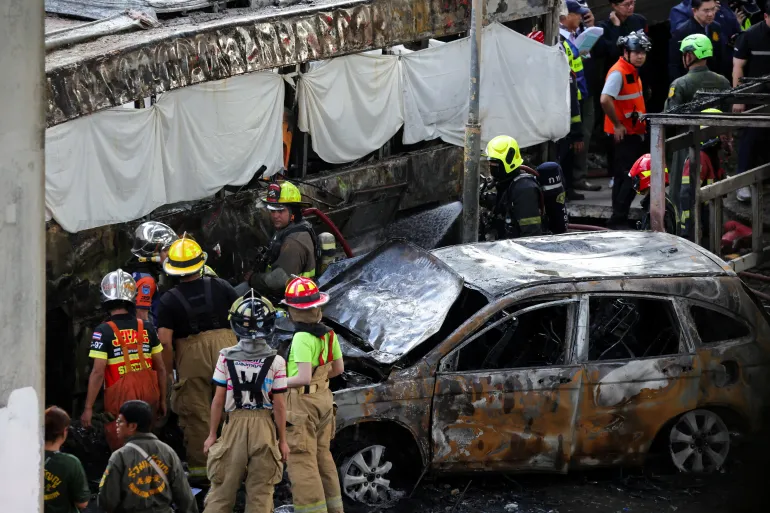
At least eight people have been killed, and dozens injured, after a freight train crashed into a public bus in Thailand’s capital.
Flames engulfed the bus and nearby vehicles near an airport rail link station in the centre of Bangkok Saturday afternoon.
The city’s emergency services Erawan Medical Center confirmed the number of deaths, while Bangkok police chief Urumporn Koondejsumrit told AFP news agency at least 35 people were injured.
Speaking to reporters at the scene, Deputy Transport Minister Siripong Angkasakulkiat said that all the bodies were found on the bus. It was not yet clear how many people were on board in total.
Prime Minister Anutin Charnvirakul ordered an investigation into the crash, according to a statement from his office.
Al Jazeera’s Tony Cheng, reporting from Bangkok, said the crash unfolded around 3:40pm local time (08:40 GMT), when the bus appeared to get stuck on an intersection with the rail line after the safety barriers descended.
As the freight train rammed into the stationary bus and continued travelling, it dragged several nearby vehicles along with it before the bus burst into flames.
Siripong would not confirm whether the bus had stopped on the railway track or discuss reports that the barriers may not have lowered properly, saying the matter still needs to be investigated.
Firefighters and rescue crews were dispatched to pull people from the wreckage and battle the flames as motorcyclists and passersby attempted to redirect traffic.
The fire has since been brought under control.
[Aljazeera]
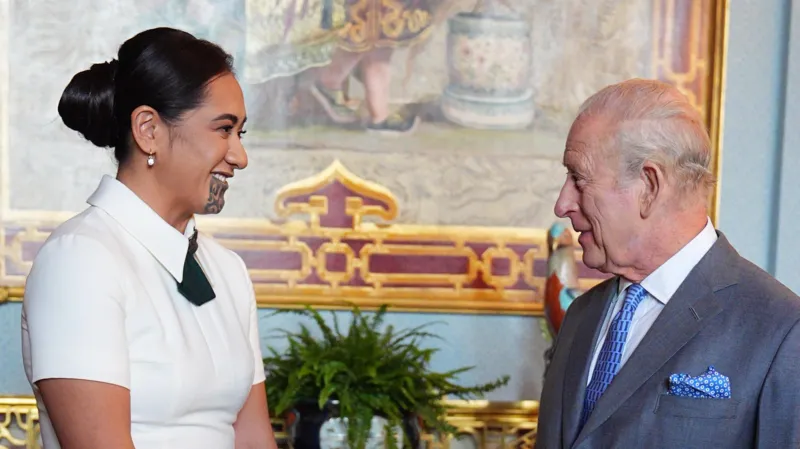
New Zealand’s Māori Queen Te Arikinui Kuini Nga Wai hono i te po has met King Charles III at Buckingham Palace.
The meeting with the British monarch was Te Arikinui’s first since she became queen in 2024, following the death of her father, Kiingi Tuheitia.
The visit marks a near 200-year relationship between the indigenous peoples of New Zealand and the crown, formalised in the Treaty of Waitangi, one of New Zealand’s founding documents.
A spokesperson for the queen says the two discussed the former king’s death in what was a “heartfelt” discussion, as well as the strengthening of their relationship.
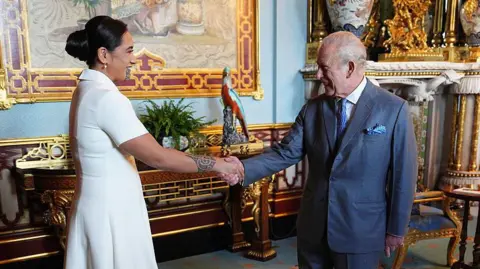
Earlier this week, the Māori queen was also welcomed by Prince William to Windsor Castle.
In a post on Instagram, Prince William acknowledged the visit, saying, “it was a pleasure to meet with the Queen.”
A statement released after the meeting from the Kīngitanga said the Māori queen discussed a range of global topics with Prince William.
“Te Arikinui affirmed her belief in the power of indigenous knowledge and intergenerational stewardship to help solve the world’s environmental and social challenges.”
Te Arikinui was crowned in 2024 after the death of her father – becoming only the second Māori queen, the first being her grandmother, Te Arikinui Dame Te Atairangikaahu.
The Māori monarchy dates back to the 19th Century, when different Māori tribes decided to create a unifying figure similar to that of a European monarch in order to try to prevent the widespread loss of land to New Zealand’s British colonisers and to preserve Māori culture. It is a largely ceremonial and symbolic role.
[BBC]

Fighter jet crews parachute safely after collision at US air show

WHO declares Ebola outbreak in DR Congo an international emergency

Trump warns ‘clock is ticking’ for Iran as peace progress stalls

Axar, Ashutosh, Starc keep Delhi Capitals’ playoffs hopes alive

Venkatesh, Rasikh take Royal Challengers Bengaluru into IPL 2026 playoffs

Showers will occur at times in the Western, Sabaragamuwa, Central, North-western and Northern provinces and in Anuradhapura, Galle and Matara districts

‘Dates have the highest sugar content to fight Coronavirus’

Sunday Island 27 December – Headlines

#SundayIsland 17th December – Headlines

Sunday Island – 28th March

Sunday Island Headlines – 21 March

Sunday Island – 21st February – Headlines
-
 News5 days ago
Ex-SriLankan CEO’s death: Controversy surrounds execution of bail bond
-
 Features1 day ago
Sri Lankan Airlines Airbus Scandal and the Death of Kapila Chandrasena and my Brother Rajeewa
-
Features6 days ago
High Stakes in Pursuing corruption cases
-
 Features6 days ago
When University systems fail:Supreme Court’s landmark intervention in sexual harassment case
-
 News2 days ago
Lanka’s eligibility to draw next IMF tranche of USD 700 mn hinges on ‘restoration of cost-recovery pricing for electricity and fuel’
-
 Midweek Review5 days ago
A victory that can never be forgotten
-
 Features3 days ago
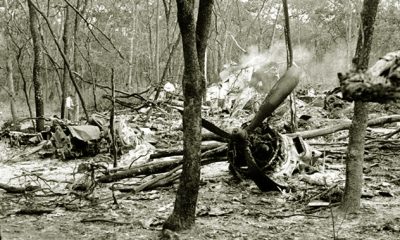
Mysterious Death of United Nations Secretary General Hammarskjöld
-
 Opinion4 days ago
Electricity tariffs have skyrocketed: Can further increases be prevented?