
News
Battery storage drive to power Sri Lanka’s renewable leap


Sri Lanka is poised for a decisive breakthrough in its clean energy transition with the government moving to introduce large-scale battery energy storage for the first time in the country’s history — a development that could fundamentally transform how electricity is generated, managed and consumed.
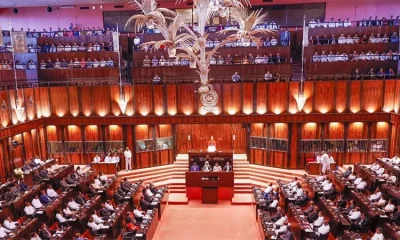
Power and Energy Minister Kumara Jayakody told Parliament of Sri Lanka that a 160-megawatt battery energy storage system (BESS) will be constructed within the next six months, marking the single biggest technological leap yet in Sri Lanka’s power sector.
In parallel, tenders will soon be called for a further 300 MW battery storage facility, signalling the government’s intention to embed energy storage at the core of future power planning.
The announcement was made in response to a question raised by MP Suranga Ratnayake, with the Minister underlining that battery storage is no longer optional but a strategic necessity if Sri Lanka is to fully capitalise on its rapidly expanding renewable energy capacity.
“We are strengthening the transmission network while taking the initial steps to integrate battery storage systems alongside future solar power plants on selected lands,” Minister Jayakody said. “Our objective is to ensure that renewable energy can be absorbed into the national grid without instability or wastage.”
Energy sector analysts have long warned that Sri Lanka’s grid is structurally ill-equipped to handle the variability of solar and wind power. While renewable generation has grown steadily, large volumes of clean electricity are often curtailed during peak production hours due to the lack of storage and limited grid flexibility. The result has been a paradox where green energy exists, but cannot always be used.
The introduction of battery energy storage systems is expected to change that equation. By storing surplus electricity and releasing it during peak demand or low generation periods, batteries effectively convert intermittent renewables into stable, dispatchable power. This, in turn, reduces reliance on expensive thermal plants, lowers fuel imports, and enhances overall grid resilience.
Minister Jayakody said the new systems would also play a critical role in reducing the risk of power disruptions and in cutting long-term electricity costs. “Without storage, we are forced to fall back on fossil fuels even when renewable energy is available. Battery systems allow us to break that dependency and move towards a truly modern power system,” he said.
The move represents a clear shift in national energy policy — from merely adding renewable capacity to building an intelligent, future-ready power infrastructure. Integrating storage with solar parks and strengthening transmission lines are expected to unlock large-scale private sector investment, improve energy security, and align Sri Lanka more closely with global decarbonisation trends.
For a country grappling with high energy costs, foreign exchange pressures and climate vulnerability, the battery storage initiative is being seen not just as a technological upgrade, but as a strategic intervention with economic, environmental and geopolitical implications.
By Ifham Nizam




The Cabinet of Ministers approved the resolution forwarded by the Minister of Health and Mass Media to relocate the Deniyaya Base Hospital after constructing a new hospital with a capacity of 300 beds at an estimated cost of Rupees 6,000 million.
The Southern Provincial Department of Health has acquired a plot of land in Handford estate which is approximately 03 kilometres away from the town for this purpose.
News
Cabinet nod to legally empower methodology for implementing the ‘Praja Shakthi’ poverty alleviation national movement


The Cabinet of Ministers granted approval for the resolution furnished by the Minister of Rural Development, Social Security and Community Empowerment to instruct the Legal Draftsman to draft a bill to legally empower the implementation of ‘Praja Shakthi’ (Strength of the Community) poverty alleviation national movement
…preliminary work started on new Constitution
JVP General Secretary Tilvin Silva yesterday (17) maintained that the NPP government was not under Indian pressure to hold the long delayed Provincial Council elections.
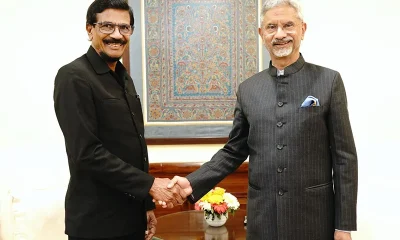
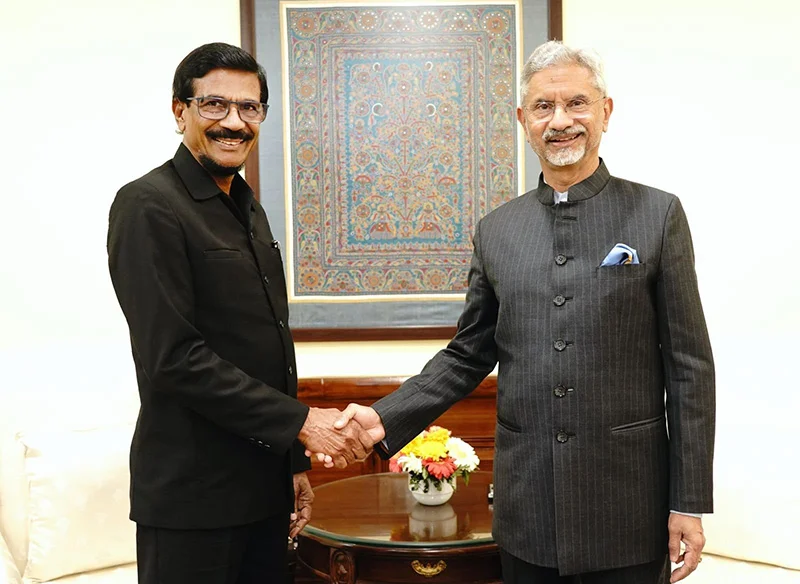
The top JVP official said so appearing on Sirasa Pathikada, anchored by Asoka Dias. Tilvin Silva said that neither the devolution nor terrorism issues had been discussed during his meeting with External Affairs Minister Dr. S. Jaishankar and Deputy National Security Advisor Pavan Kapoor, in New Delhi. This was Tilvin Silva’s first visit to India.
Declaring that politics hadn’t been on the agenda, the JVPer said that the Indian focus was entirely on economic development and technology.
The JVP General Secretary visited India under the Indian Council for Cultural Relations’ (ICCR) Distinguished Visitors Programme from 5-12 February 2026. General Secretary Silva was accompanied by Kitnan Selvaraj, MP, Ilankumaran Karunanathan, MP, JVP Central Committee Member Janaka Adhikari, JVP’s Media Unit Head Hemathilaka Gamage and Member of JVP’s International Relations Department Kalpana Madhubhashini. The delegation visited New Delhi, Ahmedabad and Thiruvananthapuram.
Responding to another query, Tilvin Silva said that Dr. S. Jaishankar had reiterated that India would always remain a true and trusted partner for Sri Lanka, in accordance with its ‘Neighbourhood First Policy’ and Vision ‘MAHASAGAR.’
Referring to the second JVP insurrection in the late 1980s, the JVPer claimed that they had not been against India but responded to the actions of the then Indian government.
Sri Lanka enacted the 13th Amendment to the Constitution in the wake of the Indo-Lanka peace accord of July 1987 to pave the way for Provincial Councils.
Tilvin Silva said that since they came to power, Indo-Sri Lanka relations had changed. “India has realised we could work together,” he said.
The JVP official said that preliminary work was underway, regarding the formulation of a new Constitution. The abolition of executive presidency and creation of an Office of President sans executive powers, too, would be addressed, he said, adding that the strengthening of the legislature was the other issue at hand.
Pointing out that the NPP had 2/3 majority in Parliament and could introduce a new Constitution on their own, Tilvin Silva said that they intended to obtain views of all and study the past processes in a bid to secure consensus. The JVP, as the party that campaigned against the introduction of executive presidency, way back in 1978, would lead the current effort to do away with the existing Constitution, he said.
Tilvin promised that they would implement what was in their manifesto.
The interviewer also raised the issue of abolishing the pensions for ex-Presidents. Tilvin Silva said that the Supreme Court, too, had approved the move to abolish pensions to ex-MPs. Therefore there was no issue with that, however, the ex-Presidents pensions couldn’t be done away with as they were made through the Constitution. That would be addressed when the government introduced a new Constitution in consultation with other stakeholders.
By Shamindra Ferdinando

Cabinet approves construction of new 300 bed Base Hospital in Deniyaya

Heavy showers about 100 mm are likely at some places in the Eastern, Uva and North-central provinces and in Matale and Nuwara-Eliya districts

Cabinet nod to legally empower methodology for implementing the ‘Praja Shakthi’ poverty alleviation national movement

NPP not under Indian pressure to hold PC polls – JVP

Battery storage drive to power Sri Lanka’s renewable leap

Parliamentary Pensions (Repeal) Bill Passed by Majority Vote

‘Dates have the highest sugar content to fight Coronavirus’

Sunday Island 27 December – Headlines

#SundayIsland 17th December – Headlines

Sunday Island – 28th March

Sunday Island Headlines – 21 March

Sunday Island – 21st February – Headlines
-
 Life style3 days ago
Marriot new GM Suranga
-

 Business2 days ago
Ministry of Brands to launch Sri Lanka’s first off-price retail destination
-
 Features3 days ago
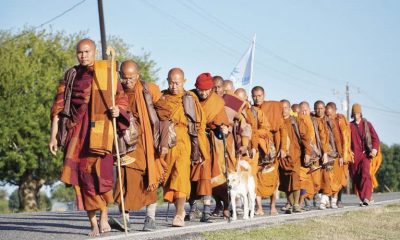
Monks’ march, in America and Sri Lanka
-
 Opinion6 days ago
Will computers ever be intelligent?
-
 Features3 days ago
The Rise of Takaichi
-

 Features3 days ago
Wetlands of Sri Lanka:
-

 News3 days ago
Thailand to recruit 10,000 Lankans under new labour pact
-
 News3 days ago
Massive Sangha confab to address alleged injustices against monks