
News
BASL Prez sets record straight


Govt-EC battle over LG polls:
By Shamindra Ferdinando
President of the Bar Association of Sri Lanka (BASL) Saliya Pieris, PC, says the Election Commission (EC) has retained him as its Counsel as Attorney General Sanjay Rajaratnam, PC, does not appear for the EC in a fundamental rights case filed against the conduct of the scheduled local government polls.
The outgoing BASL Chief said so when The Island sought his response to accusations directed by SLPP Gampaha District MPs Sahan Pradeep Withana and Milan Jayatilleke regarding a secret meeting he had with the five-member EC and its Director General.
The EC consists of Nimal G. Punchihewa (Chairman), M. M. Mohamed, S.B. Divaratne, K.P.P. Pathirana and Mrs. P.S. M. Charles. Saman Sri Ratnayake functions as its Director General.
Pieris said that there was absolutely no basis for such allegations. “In fact, I have been retained by the EC in 2020,” the BASL President said. Pieris will continue in the current capacity till the BASL Convocation scheduled for March 25, 2023.
Kaushalya Navaratne was recently elected uncontested as BASL President after Sarath Jayamanne, PC, one-time Director General, Commission to Investigate Allegations of Bribery or Corruption (CIABOC) withdrew his nomination. Incumbent Secretary, BASL, Attorney-at-Law Isuru Balapatabendi, too, was elected uncontested for 2023/2024 period.
Pieris said that DG, EC, didn’t even attend the meeting.
Pieris emphasised that the BASL is firmly of the view that the EC should be allowed to exercise its powers mandated under the Constitution and the law without interference.
In a statement dated January 11, 2023, the BASL asked the President and the Government to refrain from taking any steps which could be construed as an interference with the independent
functions of that Commission and with the exercise of the franchise by the people.
It warned of dire consequences in case the government interfered with the scheduled election.
In terms of the relevant laws, the LG poll could be postponed for a maximum period of one year.
EC sources said that as the last LG poll had been held on February 10, 2018 and Local Authorities constituted subsequently, the next poll was to be concluded by March 19, 2022.
Former Local Government Minister Roshan Ranasinghe had put off the election by one year and it was to be conducted and Local Government Authorities established by March 20, 2023, sources said.
Responding to The Island queries, sources said that the law allowed the EC to set the date for election after Sept. 20, 2022 as stipulated. Asked to explain, sources said that the EC received the authority to take necessary measures after completion of six months of the postponed period.
Minister Ranasinghe put off LG poll claiming the threat posed by Covid-19.
Acknowledging criticism directed at the EC regarding inordinate delay in issuing notice for LG polls, sources pointed out that if the election was called immediately after Sept 20, 2022, perhaps 250,000 to 300,000 could have lost an opportunity to exercise their franchise as the EC had to go by the 2021 Electoral Register.
The process was delayed to update the Electoral Register in terms of the relevant Act, sources said, adding that those who reached 18 could be accommodated thrice every year.
Having finalised the Electoral Register, the EC was to go ahead with other preparations when Premier Dinesh Gunawardena twice called EC members and DG, for talks last December at his office where the MEP leader explained the difficulties experienced by the government and the public in case LG poll was conducted.
Among the issues that had been raised by the Premier were the Advanced Level examination, retirement of public servants, economic crisis, shortage of printing paper, fog experienced in some parts of the country etc.
Subsequently, President Ranil Wickremesinghe has called for two meetings with EC members and DG, to repeat concerns raised by Premier Gunawardena previously. On both occasions, Premier Gunawardena has been present while AG Rajaratnam attended the second meeting chaired by President Wickremesinghe on January 05 at the Presidential Secretariat.
Sources said that scheduled polls couldn’t be postponed on the basis of division within the EC as whatever the differences they had to abide by the relevant Acts and laws.
These sources said that the AG’s refusal to appear for the EC should be examined against the backdrop of him questioning the EC over the process, particularly the decision to issue ‘call notice’ on January 04, 2023.
The government, in a bid to pressure the EC, pushed for the Treasury, the IGP and the Government Printer to declare their inability to facilitate the electoral process. However, the meetings called by the EC failed to cause the anticipated uproar as there was consensus regarding the need to conduct LG polls as scheduled.
Sources said that the process was on track and EC didn’t expect the government to cause further hindrance.








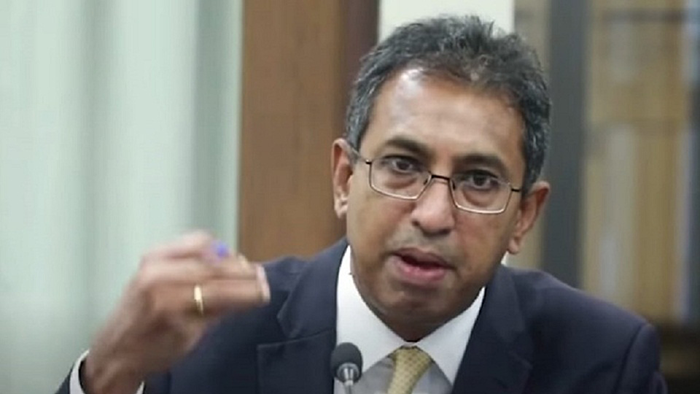
Chairman of the Public Finance Committee Dr. Harsha de Silva, MP, yesterday (31) said that the National People’s Power (NPP) government was going ahead with a controversial move to pass on the massive losses caused by the coal scam to the public. The government also intended to recover USD 2.5 (approximately Rs 800 mn) lost by the Treasury from the people by introducing an amendment to the Budget, the Opposition lawmaker alleged.
Dr de Silva said that the government had been compelled to increase the supply of diesel for the oil-fired power plants to meet the Norochcholai generation shortfall due to the use of substandard coal.
Responding to The Island queries, the former State Minister said that regardless of repeated assurances that electricity consumers wouldn’t be burdened for the lapse on their part, the government, in writing, has assured the International Monetary Fund (IMF) to recover the losses from the public. This came to light after the IMF released the Letter of Intent submitted by the government following the completion of the combined Fifth and Sixth Reviews under the Extended Fund Facility (EFF) programme to receive USD 695 mn.
Commenting on the specific assurance as regards the upward revision of fuel prices and electricity tariffs, MP de Silva pointed out the government’s assurance of its commitment to cost-recovery pricing for fuel and electricity meant that subsidies provided to ease the burden on households and businesses would remain within budgeted limits and be phased out by the end of September 2026.
Welcoming the USD 695 mn IMF loan, MP de Silva said that in terms of the agreement between the government and the IMF, the relief would end once Rs 100 bn allocated to provide relief was spent on subsidies on fuel (Rs 57 bn), electricity (Rs 15 bn) and the rest on ‘Aswesuma’ social welfare scheme and fertiliser.
MP de Silva said that the crisis should be examined taking into consideration that Sri Lanka paid very high prices to procure fuel in the wake of the continuing turmoil in West Asia. He noted that having perpetrated a coal scam the government could not under any circumstances absolve itself of responsibility for the skyrocketing electricity tariffs.
Commenting on the Sri Lanka-IMF agreement, lawmaker de Silva lambasted the government for utterly chaotic and poor management of the economy. Severe criticism was directed at the government over the rapid depreciation of the rupee against the USD and the NPP’s pathetic performance. Amidst speculation that De Silva may switch allegiance to the NPP, the MP also posted a video in which he flayed the government alleging the NPP couldn’t take forward measures taken by former President Ranil Wickremesinghe.
MP de Silva explained how the people would end paying for the theft of USD 2.5 by way of an amendment to the Budget. The MP told The Island that assurance meant that the government acknowledged that there was no hope of recovering USD 2.5 mn though they talked of investigations and progress being made. De Silva called for a combined Opposition effort to pressure the government to act responsibly in the face of growing challenges.
The government couldn’t lie as the relevant IMF report and the government letter of intent were in the public domain, Dr de Silva said.
by Shamindra Ferdinando
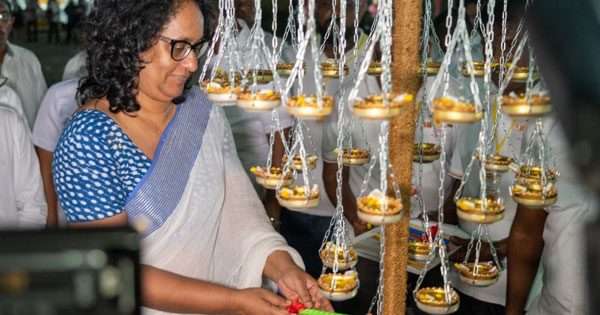
Two Vesak pandals erected in the Colombo area to mark Vesak Poya were ceremonially opened under the patronage of Prime Minister Dr. Harini Amarasuriya.
The Prime Minister first opened a pandal depicting the Sambula Jataka, constructed by the Sri Vaishakya Society of the Borella Magazine United Traders’ Association. She subsequently attended the opening of another pandal at the Grandpass Kosgas Junction, which portrays the Samudra Vanija Jataka tale, and ceremonially inaugurated it by lighting a traditional coconut-oil lamp.
The event was attended by members of the Maha Sangha, clergy of other faiths, Members of Parliament Dr. Najith Indika, Attorney-at-Law Lakmali Hemachandra and Dilith Jayaweera, Deputy Inspector General of Police Nihal Thalduwa, former Member of Parliament Thilanga Sumathipala, and President of the Magazine United Traders’ Association Palitha Herath, among others.
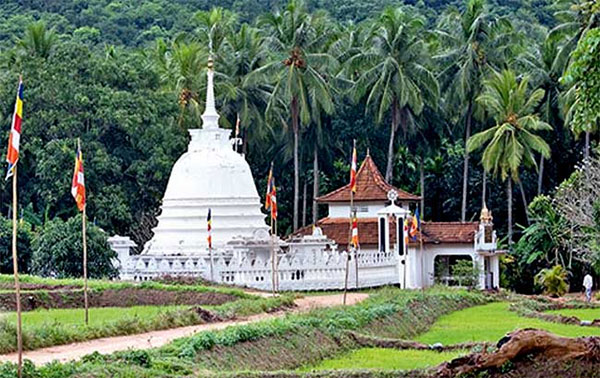
The UNP yesterday said that the government did not have the power to establish a Dharma Court. According to the Constitution, neither the executive, the legislature nor the judiciary had the power to interpret the Dharma, it added. The power to pass laws on disciplining the clergy had been granted to Parliament in terms of Article 105 of the Constitution, the UNP said, emphasising that the ultimate powers lay with the committees of the respective sects.
The UNP said so in response to President Anura Kumara Dissanayake’s recent speech that a concept paper had been submitted for amending the Vihara – Devalagam Act and the Cabinet had approved it. The President further stated that he had held a discussion with the Registrar, the Commissioner for Buddhist Affairs and the Attorney General. It is not known whether he discussed the matter with the Buddhist MPs in the Opposition.
Excerpts of the statement issued by former President Ranil Wickremesinghe’s Office: ” President Anura Kumara Dissanayake has recently publicly agreed to a call to take the same measures as previous kings in cases where the Buddhist religion is distorted under the guise of Dhamma.
Over our history we have seen some kings kill the Sangha during their reigns. The JVP also killed the Sangha in the same way during the years 1987-89.Kotikawatte Saddhatissa, Weltota Pangnadassi, Beligalle Mahinda, Kumbagoda Gnanaloka, Athurugiriya Pangnatissa, Soragune Pangnasara, Pelpola Dharmapala, Kandy Dhammarakkhitha and many other monks are included in the list of the JVP’s assassinations.
Apart from shedding the blood of the Buddha, the greatest sin that Buddhists can commit is the killing of the Sangha. The JVP has not apologised for the killings. Is it moral for the President to accept this invitation without first taking this step?
In addition to killing the Sangha, the JVP also looted valuable historical items from the monasteries and temples.
The JVP has never accepted that Buddhism should be given priority politically. The JVP has always acted against Buddhism.
A major question that arises from this is whether the JVP, which has a history of killing monks, can do such a thing after taking power. What is the hidden motive here?
Mr. J. R. Jayewardene took steps to include a separate chapter in the 1978 Constitution to take necessary measures for monks who behave undisciplined and engage in crimes. Provisions were made for the establishment of a Sangha Court to decide on the discipline of monks.
What did the NPP government done during the Sinhala and Tamil New Year? It disrupted all the auspicious signs. While the whole world was celebrating Vesak Poya on May 1st, the Vesak Poya day in Sri Lanka was postponed to a later date in order to hold political rallies.
There is no objection to taking action against unruly monks. But there is a procedure for how to discipline monks. Cabinet papers related to this should be prepared and presented to the Maha Sangha led by the Mahanayaka Theros and then a decision should be taken. Everything should be carried forward according to the existing tradition in the country.
The President has also expressed his views on taking monks to court. He has expressed such views without understanding the tradition. Taking wrong-doing monks to court in their robes is not something that only happened yesterday. Thalduwe Somarama and Mapitigama Buddharakkhita were presented to court wearing their robes for the assassination of Mr. Bandaranaike and later their robes were removed. This is not limited to monks. Father Mathew Peiris first came to court for legal proceedings wearing his robe. Accordingly, the monks who are currently acting in an undisciplined manner must also follow the same procedure that was implemented earlier.
The President mentioned in his speech that a concept paper was submitted for amending the Vihara – Devalagam Act and the Cabinet agreed to it. The President further stated that he had held a discussion with the Registrar, the Commissioner for Buddhist Affairs and the Attorney General. It is not known whether he had discussed this matter with the opposition Buddhist parliamentarians. This work has all been done only by the government without any consultation.
The government does not have the power to establish a Dharma Court. According to the Constitution, neither the executive, the legislature nor the judiciary have the power to interpret the Dharma. The power to pass laws on disciplining the clergy has been given to Parliament under Article 105 of the Constitution. However, the final powers lie with the committees of the respective sects. At present, this work has been done by the cabinet, officials and a handful of monks of a government that does not accept Buddhism.
The temples with the most assets and properties today are in the monasteries and temples that fall under the Vihara – Devalaya Village Act. It is no secret that the Janatha Vimukthi Peramuna (JVP) is taking the position that these temples should be taken under government control. There is a strong suspicion that the Dharma Court is being created for this purpose.
An organized program to destroy Buddhism is being implemented today through government-affiliated social media. A section of civil society is also involved in it. What is always happening today is the marginalization of the Buddhist monastic-lay opinion.In the President’s speech, a reference was also made to the holding of the World Buddhist Congress in this country under the current government.
Such a situation is also indicated in the Vasala Sutta.
“Na jaccha vasalo hoti,
Na jaccha hoti brahmano;
Kammana vasalo hoti,
Kammana hoti brahmano”
Its Sinhala meaning is as follows.
“One is not a householder by birth.Nor is one a Brahmin by birth.One becomes a householder or a Brahmin by one’s actions.”

Showers will occur at times in the Western, Sabaragamuwa and North-western provinces and in Galle, Matara, Kandy and Nuwara-Eliya districts

Harsha flays govt. over plan to pass coal, Treasury losses to public

PM opens Vesak pandals

UNP challenges NPP move to amend Vihara – Devalagam Act

Fuel price increases: Bus and trishaw operators demand fare hike

Govt. halts e-passport project

‘Dates have the highest sugar content to fight Coronavirus’

Sunday Island 27 December – Headlines

#SundayIsland 17th December – Headlines

Sunday Island – 28th March

Sunday Island Headlines – 21 March

Sunday Island – 21st February – Headlines
-
 News3 days ago
IMF urges Lanka not to meddle with exchange rate
-
 News7 days ago
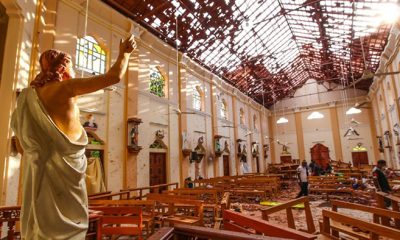
Easter Sunday carnage: Court told Maulana’s statement cannot be accepted without cross-examination
-
 News7 days ago
UK passport holder hiding here wants to have deportation order rescinded to leave without blemish
-
 Business4 days ago
Sri Lanka’s construction industry losing ground while no one watches
-
 Opinion7 days ago
Undermining the democratic political framework
-
 News3 days ago
State of emergency extended
-
 Features4 days ago
The Division Bell Mystery
-
 Midweek Review6 days ago
Israeli-US aggression won’t go unanswered -Iranian Ambassador