
Foreign News
Barnier becomes new French PM and bids to end turmoil

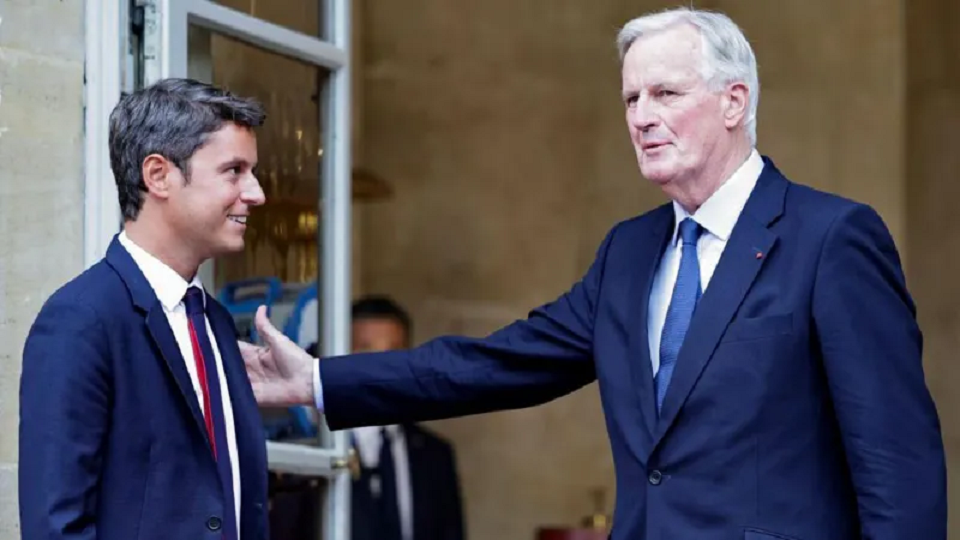
Veteran French conservative Michel Barnier has taken over as prime minister, almost two months after France’s snap elections ended in political stalemate.
He said France had come to a “serious moment” and he was facing it with humility: “All political forces will have to be respected and listened to, and I mean all.”
President Emmanuel Macron named the EU’s former chief Brexit negotiator, ending weeks of talks with political parties and potential candidates.
Mr Barnier, 73, arrived at the prime minister’s residence at Hôtel Matignon in Paris on Thursday evening, taking over the role from Gabriel Attal, France’s youngest ever prime minister who has been in office for the past eight months.
His immediate task will be to form a government that can survive a National Assembly divided into three big political blocs, with none able to form a clear majority.
But Mr Barnier will need all his political skills to navigate the coming weeks, with the centre-left Socialists already planning to challenge his appointment with a vote of confidence.
He said he would respond in the coming days to the “challenges, the anger and the sense of being abandoned and of injustice that run through our towns and countryside”.
He promised to tell the truth to the French people about the financial and environmental challenges facing the country, and to work with “all those in good faith” towards great respect and unity.
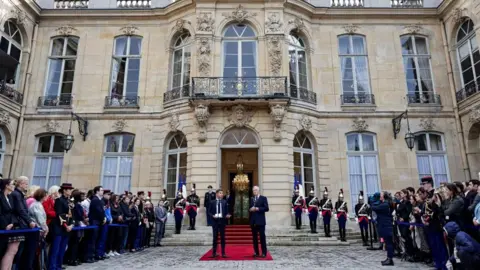
It has taken President Macron 60 days to make up his mind on choosing a prime minister, having called a “political truce” during the Paris Olympics.
In his farewell speech outside Hôtel Matignon, Gabriel Attal said “French politics is sick, but a cure is possible, provided that we all agree to move away from sectarianism”.
Having led the marathon talks on the UK’s exit from the European Union between 2016 and 2019, Mr Barnier has considerable experience of political deadlock. He has had a long political career in France as well as the EU and has long been part of the right-wing Republicans (LR) party.
Known in France as Monsieur Brexit, he is France’s oldest prime minister since the Fifth Republic came into being in 1958.
Three years ago, he tried and failed to become his party’s candidate to take on President Macron for the French presidency. He said he wanted to limit and take control of immigration.
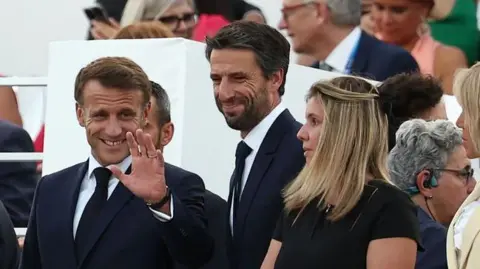
Mr Macron’s presidency lasts until 2027. Normally the government comes from the president’s party, as they are elected weeks apart.
But the man who has called himself “the master of the clocks” changed that when he called snap elections in June and his centrists came second to the left-wing New Popular Front.
President Macron has interviewed several potential candidates for the role of prime minister, but his task was complicated by the need to come up with a name who could survive a so-called censure vote on their first appearance in the National Assembly.
The Elysée Palace said that by appointing Mr Barnier, the president had ensured that the prime minister and future government would offer the greatest possible stability and the broadest possible unity.
Mr Barnier had been given the task of forming a unifying government “in the service of the country and the French people”, the presidency stressed.
Mr Barnier’s initial challenge as prime minister will be to steer through France’s 2025 budget and he has until 1 October to submit a draft plan to the National Assembly.
Gabriel Attal has already been working on a provisional budget over the summer, but getting it past MPs will require all Mr Barnier’s political skills.
His nomination has already caused discontent within the New Popular Front (NFP), whose own candidate for prime minister was rejected by the president.
Jean-Luc Mélenchon, the leader of the radical France Unbowed (LFI) – the biggest of the four parties that make up the NFP – said the election had been “stolen from the French people”.
Instead of coming from the the alliance that came first on 7 July, he complained that the prime minister would be “a member of a party that came last”, referring to the Republicans.
“This is now essentially a Macron-Le Pen government,” said Mr Mélenchon, referring to the leader of the far-right National Rally (RN).
He then called for people to join a left-wing protest against Mr Macron’s decision planned for Saturday.
To survive a vote of confidence, Mr Barnier will need to persuade 289 MPs in the 577-seat National Assembly to back his government.
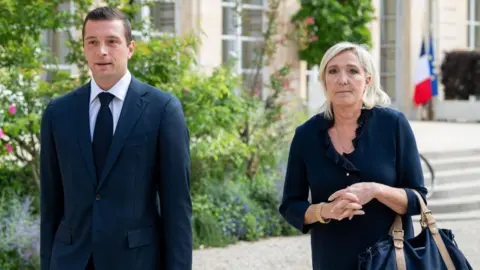
Marine Le Pen has made clear her party will not take part in his administration, but she said he at least appeared to meet National Rally’s initial requirement, as someone who “respected different political forces”.
Jordan Bardella, the 28-year-old president of the RN, said Mr Barnier would be judged on his words, his actions and his decisions on France’s next budget, which has to be put before parliament by 1 October.
He cited the cost of living, security and immigration as major emergencies for the French people, adding that “we hold all means of political action in reserve if this is not the case in the coming weeks”.
Mr Barnier is likely to attract support from the president’s centrist Ensemble alliance. Macron ally Yaël Braun-Pivet, who is president of the National Assembly, congratulated the nominee and said MPs would now have to play their full part: “Our mandate obliges us to.”
The former Brexit negotiator had only emerged as a potential candidate late on Wednesday afternoon.
Until then, two other experienced politicians had been touted as most likely candidates: former Socialist prime minister Bernard Cazeneuve and Republicans regional leader Xavier Bertrand. But it soon became apparent that neither would have survived a vote of confidence.
That was Mr Macron’s explanation for turning down the left-wing candidate, Lucie Castets, a senior civil servant in Paris who he said would have fallen at the first hurdle.
The president has been widely criticised for igniting France’s political crisis.
A recent opinion poll suggested that 51% of French voters thought the president should resign.
There is little chance of that, but the man Mr Macron picked as his first prime minister in 2017, Édouard Philippe, has now put his name forward three years early for the next presidential election.
[BBC]

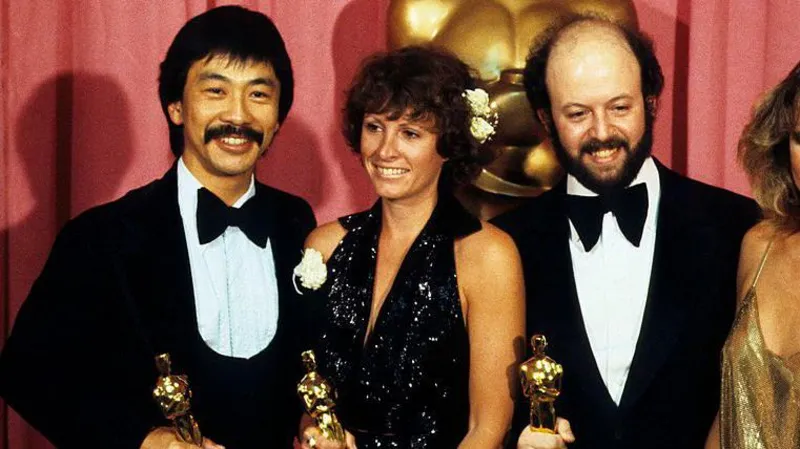
Marcia Lucas, the Oscar-winning editor of the original Star Wars film, has died aged 80.
Lucas, who was married to Star Wars creator George Lucas during the making of the first three films, was regarded as a pivotal creative force behind the space saga’s early success, imbuing the original series with emotional depth and narrative clarity.
She died from metastatic cancer at her home in Rancho Mirage, California, on Wednesday surrounded by loved ones, according to her family.
“Marcia was a force,” her family said in a statement to US media on Friday. “A true trailblazer for women in film and one of the most influential editors in cinematic history; she helped redefine what film editing could be.”
Lucas won the Academy Award for Best Film Editing for 1977’s Star Wars – later renamed A New Hope – alongside editors Richard Chew and Paul Hirsch.
Although her contributions largely took place behind the scenes, her role in shaping the film’s emotional heart and narrative structure has been widely recognised in the decades since its release.
George Lucas credited her with helping make sense of the vast amount of footage filmed for the climactic Death Star battle sequence.
“It was extremely complex and we had 40,000 feet of dialogue footage of pilots saying this and that,” he told Rolling Stone shortly after the film’s release
“Nobody really has ever tried to interweave an actual plot story into a dogfight, and we were trying to do that.”
Born Marcia Griffin in Modesto, California, in 1945, she began her career as a film librarian before becoming one of Hollywood’s most respected editors.
After marrying George Lucas in 1969, she worked on several of his early films, including THX 1138 and American Graffiti – earning an Oscar nomination for the latter.
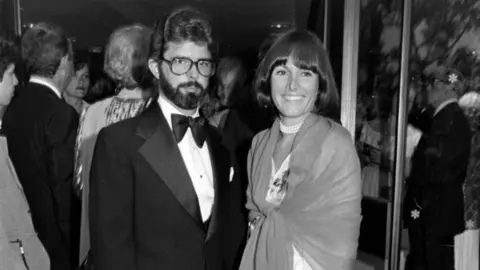
She also collaborated with director Martin Scorsese on a string of his acclaimed 1970s films including Alice Doesn’t Live Here Anymore, Taxi Driver and New York, New York.
Lucas later returned to the Star Wars franchise, working on The Empire Strikes Back in 1980 and Return of the Jedi in 1983.
She and George Lucas adopted a daughter, Amanda, in 1981. The couple divorced in 1983 after 14 years of marriage.
She later married Tom Rodrigues, a production manager at Skywalker Ranch, with whom she had a second daughter, Amy.
Her family said in its statement: “Her influence on film is indelible, but those who knew her best will remember the way she made life feel more vivid, more beautiful, more fun and more full of love.
“Her work was known for its emotional intelligence, rhythm and humanity – a rare ability to find the truth of a scene and bring heart, momentum and clarity to the screen.”
“I love film editing,” Lucas once told a reporter, according to Lucasfilm.
“I have an innate ability to take good material and make it better, and to take bad material and make it fair.”
Paying tribute on Saturday, Lucasfilm said it was “deeply saddened” to learn of her death, adding it “joins the global filmmaking community in mourning the loss of Marcia Lucas”.
Meanwhile, Mark Hamill, who portrayed Star Wars protagonist Luke Skywalker, wrote that he and his wife Marilou were “deeply saddened by the loss of our lifelong friend”.
He added: “Not just a gifted, innovative artist, she also happened to be a genuinely nice person. Smart, funny and just plain fun to be around. Thankfully, her memory lives on and we will never stop missing her.”
[BBC]

At least 18 people, including women and children, were killed when a cargo truck carrying recently returned Afghan refugees from Pakistan overturned on a major highway in eastern Afghanistan, authorities said.
Taliban government spokesperson Zabihullah Mujahid said the crash took place in the Qarghayi district of Laghman province on Saturday.
The vehicle, heavily loaded with displaced families and their household belongings, veered off the road at approximately 5:30am local time (01:00 GMT) near the Surkhakan intersection in Qarghayi district.
The provincial Director of Public Health Aminullah Sharif said the accident occurred when the truck fell into a ditch after the driver fell asleep.
Authorities said at least 10 children were among the dead.
Abdul Malik Niazay, a spokesperson for the Laghman provincial governor, said more than 30 other passengers were injured, some critically. The families had been temporarily staying in eastern Kunar province and were en route to the capital, Kabul.
Emergency services quickly transferred the wounded to medical facilities in neighbouring Nangarhar province, where several remain in intensive care.
The central government expressed formal condolences to the families of the victims. The Taliban’s Mujahid said in a post on X, “we pray for the speedy recovery of the injured”, adding that he was “deeply saddened” by the tragedy which took place at the end of the Muslim holiday of Eid al-Adha.
Meanwhile, the National Disaster Management Authority announced 730,000 afghanis ($10,000) in emergency financial assistance for the affected families.
[Aljazeera]
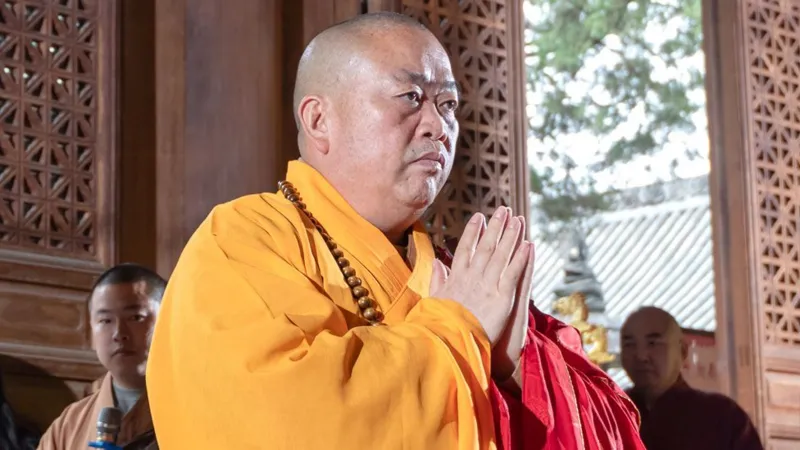
The former head of China’s famous Shaolin Temple – known as the birthplace of kung fu – has been sentenced to 24 years in jail for crimes including embezzlement and bribery.
Shi Yongxin had misappropriated temple assets worth more than 282m yuan ($42m; £31m) from 2003 to 2025, a court in the central Henan province said.
It said Shi had also used his official position to illegally obtain millions from temple construction projects, as well as offering huge bribes to Chinese officials.
Shi – whose birth name is Liu Yingcheng – had earlier admitted his guilt, China’s state Xinhua news agency reported. On Friday, he said he would not appeal against the verdict.
The 1,500-year-old Shaolin Temple – located on a mountain range – attracts thousands of disciples from China and elsewhere every year.
Shi took office there as abbot in 1999, soon earning the nickname “CEO monk” for transforming the institution into a global brand.
Under his leadership, the temple started opening schools outside China and formed a travelling troupe of monks who performed Shaolin kung fu shows – the temple’s signature style of martial arts.
Last year he was defrocked, China’s Buddhist association said.
Shi was investigated for embezzlement and fathering several children in 2015, but was later cleared of the charges.
In an interview with BBC Chinese that year, he said: “If there were a problem, it would have surfaced long ago.”
The name “Shaolin Temple” has gained prominence in pop culture over the years, including being the title of a 1982 film starring Jet Li.
The temple is referenced in songs by American hip-hop group Wu-Tang Clan and inspired a spin-off of the video game Mortal Kombat.
[BBC]

Showers will occur at times in the Western, Sabaragamuwa and North-western provinces and in Galle, Matara, Kandy and Nuwara-Eliya districts

Harsha flays govt. over plan to pass coal, Treasury losses to public

PM opens Vesak pandals

UNP challenges NPP move to amend Vihara – Devalagam Act

Fuel price increases: Bus and trishaw operators demand fare hike

Govt. halts e-passport project

‘Dates have the highest sugar content to fight Coronavirus’

Sunday Island 27 December – Headlines

#SundayIsland 17th December – Headlines

Sunday Island – 28th March

Sunday Island Headlines – 21 March

Sunday Island – 21st February – Headlines
-
 News3 days ago
IMF urges Lanka not to meddle with exchange rate
-

 News7 days ago
Easter Sunday carnage: Court told Maulana’s statement cannot be accepted without cross-examination
-
 News7 days ago
UK passport holder hiding here wants to have deportation order rescinded to leave without blemish
-

 Business4 days ago
Sri Lanka’s construction industry losing ground while no one watches
-
 Opinion7 days ago
Undermining the democratic political framework
-
 News3 days ago
State of emergency extended
-
 Features4 days ago
The Division Bell Mystery
-
 Midweek Review6 days ago
Israeli-US aggression won’t go unanswered -Iranian Ambassador