
Life style
Australian company has a plan to mine sands

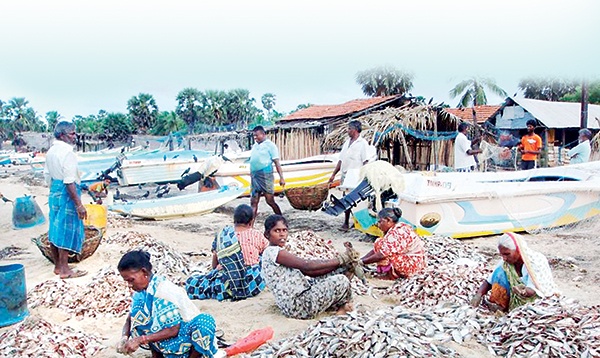
Mannar Island is a bird paradise that survived Sri Lanka’s civil war
Two thousand flamingos and a war-torn island: controversy over Australian mine proposal
Have you heard of Sri Lanka’s Mannar Island?
Up to a million migrating birds seek sanctuary here each year on their gruelling journeys South, and thousands of flamingos call the island home too.
It’s also home to the survivors of a 26-year civil war, who are still rebuilding their lives and rely on the island for their subsistence livelihoods.
An Australian ASX-listed company wants to mine on the island for mineral sands – a booming global industry extracting vital minerals for a multitude of uses.
But Sri Lankan scientists, environmentalists, and human rights activists are concerned about the impact a mine could have, and dismayed about the lack of information on what’s proposed.
Science Friction investigates.
by environment reporter Nick Kilvert and Jane Lee for Science Friction
As a small child, Shreen Abdul Saroor remembers getting up before dawn with her father to spy on the masses of migratory birds that would visit her island.
The birds were on their way down the Central Asian flyway — a migration path that crosses 30 countries from Siberia to the Indian Ocean.
“We would hide somewhere and … we don’t make any noise,” Ms Saroor recalls.
“[Then we’d watch] them coming and landing in the causeway areas and then catching fish and taking off as a huge group covering the entire sky.”
Up to a million birds stop at Mannar Island, off the north-west coast of Sri Lanka, to feed during the winter.
 The Vankalai Bird Sanctuary on the southern tip of the island is protected by the Sri Lankan government and has been internationally recognised under the Ramsar Convention for its importance to both local and migratory birds.
Ms Saroor also remembers climbing the swollen trunks and gnarled branches of the baobab trees — trees synonymous with Africa, Madagascar and Australia’s Kimberley, but also found incongruously on her tiny island.
“Even though I fondly remember these baobab trees, one thing that I really remember is how … [members of the militant separatist group the Tamil Tigers] put the mutilated heads of the Indian peacekeeping forces on those trees.”
The Liberation Tigers of Tamil Eelam fought a 30-year civil war with majority Sinhalese Sri Lankan military, in an attempt to create an independent Tamil homeland in the north and east of the country.
Ms Saroor had already left the island to study in Colombo in 1990 when the Tamil Tigers forced her remaining family off Mannar Island, along with all the other Muslim residents.
“Everybody overnight became refugees,” she says.
Since the war ended in 2009, many displaced Mannar Islanders have returned to re-establish themselves in fishing and farming communities. But the trauma still lingers and there are tensions over land.
Against this backdrop, an Australian company has a plan to mine Mannar’s sands.
There are fears for the island’s fragile ecology, agriculture and fishing areas — and islanders are worried they could be displaced all over again.
Company’s drilling triples estimate of island’s minerals
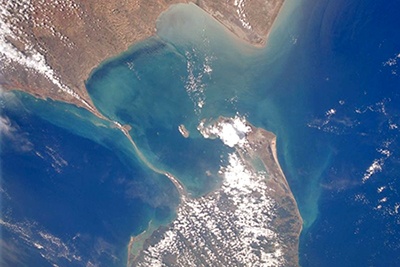
Mannar is the biggest island at the base of a narrow chain of limestone shoals known as Rama Setu or Adam’s Bridge, which stretches 48 kilometres north-west to join India.
The island is 26km long by 8km wide and has rich deposits of the mineral ilmenite in its sand.
Ilmenite is the main source of titanium dioxide, a valuable white pigment used in things like paints, ink, plastics and cosmetics.
In 2018, Perth-based company Titanium Sands advised the Australian Securities Exchange (ASX) it entered an agreement with Srinel Holdings Ltd to explore the extent of the island’s ilmenite reserves.
 In May this year, the company announced their exploratory drilling had tripled the previous estimate — to a total of just under 265 million tonnes.
Managing director of Titanium Sands, James Searle, says the company is looking to mine an area of the island that is 2km wide and about 8km long.
“That’s probably over a 30-plus year lifespan,” he told ABC RN’s Science Friction.
“On an annualised basis that’s probably … in the region of between 10 and 16 hectares.”
But some Sri Lankan scientists and environmentalists say they have been inadequately informed about the project.
‘The machines are moving in’
Ms Saroor’s younger brother is one of those who have made it back to the island, where he has a coconut estate.
“The first time I heard about this Titanium Sands mining is from him,” Ms Saroor says.
“He called me frantically and said there are machines moving in and out of those areas.”
Companies that Titanium Sands acquired started preliminary assessment with small-scale drilling on the island in 2015.
Throughout the totality of their study, which included a scoping study completed this year, the company drilled more than 3,000 exploratory holes with the deepest going down to 12 metres. The majority were between 1 and 3 metres.
According to Dr Searle, there has been no drilling in built-up areas of the island.
“The population on the island is largely concentrated in a town down the landward end of the island, called Mannar Town. There are other coastal villages, other settlements around the island,” he says.
“Our exploration work is only being undertaken on areas where there is no habitation and where there is no active agriculture.”
It’s some of those undeveloped areas of Mannar Island that concern ecologist Sampath Seneviratne, who studies Mannar’s birds.
“Flamingos must be the most charismatic and sought-after in terms of beauty,” he says. “[But] spoon-billed sand piper, one of the rarest birds in the world and one of the most iconic species that are on the verge of extinction right now, has been recorded in Mannar.
“These birds require highly productive places to feed during their migration and during their winter stopover. So if the productivity drops, they can’t use Mannar, they have to go [to] other places.”
According to Dr Seneviratne, a public notice is usually issued when companies are given permission for mining exploration in Sri Lanka.
But he and his colleague at the Wildlife Protection Society only found out from a friend in Australia about the drilling, and they were surprised that local environmental groups knew nothing of the project.
“It was a big shocker, because how did people like us working in [Mannar] not know
Company accused of illegal conduct by Mines Bureau
Earlier this year in June, Titanium Sands was accused of illegal conduct in local Sri Lankan media reports.
 The Sri Lankan Geological Surveys and Mines Bureau (GSMB) — the government body responsible for issuing mining and exploration licenses in Sri Lanka — reportedly said the company’s exploration was unlawful.
The GSMB told local media that under Sri Lankan law, Titanium Sands couldn’t legally acquire the rights to explore Mannar by purchasing the company (Srinel Holdings Ltd) that previously held the licenses.
But Dr Searles says the GSMB was “incorrect” and was responding to misleading social media posts.
“The legal advice and the legal structures are in total compliance with the Sri Lankan regulations,” he says.
The ABC contacted the GSMB but did not receive a response.
In November, a committee was put together by the Sri Lankan Ministry of Industry to look into the claims of illegal drilling.
Titanium Sands presented its case to the Ministry of Industry, but Dr Searle says he hasn’t heard anything further.
“I reiterate again that the licenses are held in a fashion which is in total compliance with the legal requirements in Sri Lanka
At the time Science Friction went to air there was no information on the company website about the committee’s enquiries into the project.
Asked why, Dr Searle responded: “We received enquiries on all manner of things and we don’t consider it to be significant.”
The company has since added a statement that says it “is not being investigated” although they have “provided information to the committee” which they say confirms the validity of their licences.
It also stated that the company has “no intention of pursuing a project that potentially impacts a Ramsar-designated area”.
Mannar ‘promoted as a promising resource’
Environmental scientist and senior director of the Centre for Environmental Justice, Hemantha Withanage, says he is concerned he hasn’t heard anything about the committee’s enquiries since the Sri Lankan federal election in August.
But, he says, the picture Titanium Sands is painting for their shareholders is not all it seems to be.
“On their website, they’re promoting Mannar Titanium Sands as a promising resource,” Mr Withanage says.
“How can somebody promote like that, without going through the environmental impact assessment process and getting the government approval?”
“We are very, very concerned about what this company is going to do in Sri Lanka,” he says.
But an environmental impact assessment and public consultation are the next steps in the process, according to Dr Searle.
“That would eventually [lead to], we hope, granting of mining licences and ultimately development of the project,” he says.
Mining would ‘dramatically transform’ the ecosystem
Mineral sands mining is considered to have a fairly low impact on the environment compared to some other forms of mining.
The process doesn’t involve chemical separation of minerals such as in gold mining, or digging vast open-cut pits such as with coal.
Titanium Sands published material online showing the location of their resources including exploratory drill holes near the coast.
Daniel Franks, program leader of the development minerals strategic program at the University of Queensland, says Titanium Sands’ scoping study, released

to the ASX in June this year, reveals the size of the planned mine is extensive and includes areas just a few metres from the beach.
If the operation was based in Australia, the company would be unlikely to be granted permission to mine those areas, says Professor Franks, who is not involved in the project.
“Mining to such a wide extent would dramatically transform the ecosystem. It would also limit the land uses that the community already has for the island,” he says.
“If it was in Australia, which is the home company of the project partners, it would face some pretty steep obstacles to regulatory approval.”
Mining near active beaches can disturb coastal morphology and removing vegetation can leave sand dunes vulnerable to erosion.
Managing director Dr Searle stresses that his company may not end up being able to mine all the resources they’ve identified, should the mine go ahead.
He says the company doesn’t intend to mine near beaches on Mannar, and that there is no economic incentive for the company to do this.
“Those areas along the shoreline are of no interest to us whatsoever because we consider them to be environmentally sensitive. We are much more interested in the interior, one to three kilometres away from the nearest coastline.”
But Professor Franks says the company’s assertion that it has no plans to mine near the beach “appears contrary to the scoping study released to the ASX” and that an update to the ASX might be in order.
Ms Saroor is also afraid the mine could damage the island’s groundwater.
“Mannar gets the smallest amount of the rain in the whole of Sri Lanka. So we totally depend on groundwater,” she says.
Professor Franks says the extent to which a sand mine could disturb the groundwater on Mannar depends on how deep Titanium Sands digs into the ground.
“I think there is a potential to impact groundwater systems. We’ve seen that in Australia where there’s indurated layers in the sand, that are impermeable and that can hold water,” he says.
“But I think the bigger impact is just the surface disturbance that’s going to happen across the island.”
Dr Searle, however, says the project will not affect groundwater or disturb beach areas.
“If it was to affect the groundwater, we wouldn’t be doing it,” he says.
“How you can make a statement that [this type of operation] would not be permitted in Australia is farcical.
“This sort of operation … has occurred over the last 50 to 60 years [in Australia] with an excellent environmental record.”
‘The people on the ground have the right to say no’
Rather than displacing people, Dr Searle says the mine will create between 200 and 600 jobs and that 95 per cent of those employed would be Sri Lankan people.
But Ms Saroor, who is now an award-winning human rights activist, is concerned about the impact on a community recovering from war.
She believes Titanium Sands should not add to the trauma of a community that is still rebuilding.
“At the end of the day, they are investing in Sri Lanka to make profit,” she says.
“So, my message would be to them to make sure not to profit out of a community that has been suffering in the last 30 years of the war.
“Think about the impact not only on the environment, but also on the people, and [then] make their decision.”
Mr Withanage of the Environmental Justice Centre says he could support the project, if it can be proven to be done in a way that benefits the local community and earns its social licence.
He says the final decision on whether the mine goes ahead needs to rest with the Mannar people.
“It’s not the Australian citizens who are going to make that decision.
“It is the Sri Lankan citizens going to that place, Sri Lankan government agencies, Sri Lankan courts… So they have to make that information available to Sri Lankans first.
“Australians are just going to buy the shares. The people on the ground have the right to say no.” –ABC


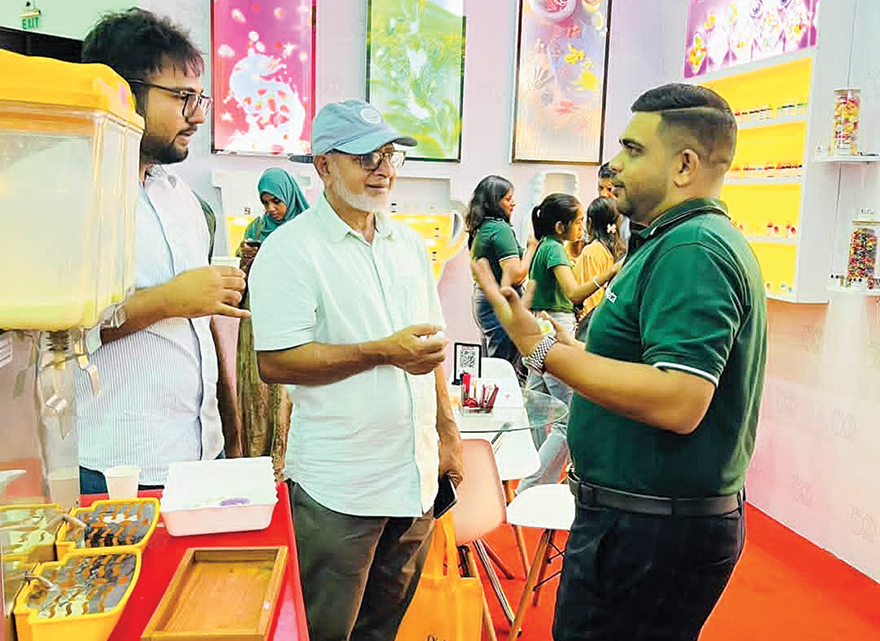
Salman Faiz has turned his family legacy into a modern sensory empire. Educated in London, he returned to Sri Lanka with a global perspective and a refined vision, transforming the family legacy into a modern sensory powerhouse blending flavours,colours and fragrances to craft immersive sensory experiences from elegant fine fragrances to natural essential oils and offering brand offerings in Sri Lanka. Growing up in a world perfumed with possibility, Aromatic Laboratories (Pvt) Limited founded by his father he has immersed himself from an early age in the delicate alchemy of fragrances, flavours and essential oils.
 Salman Faiz did not step into Aromatic Laboratories Pvt Limited, he stepped into a world already alive with fragrance, precision and quiet ambition. Long before he became the Chairman of this large enterprise, founded by his father M. A. Faiz and uncle M.R. Mansoor his inheritance was being shaped in laboratories perfumed with possibility and in conversations that stretched from Colombo to outside the shores of Sri Lanka, where his father forged early international ties, with the world of fine fragrance.
Growing up amidst raw materials sourced from the world’s most respected fragrance houses, Salman Faiz absorbed the discipline of formulation and the poetry of aroma almost by instinct. When Salman stepped into the role of Chairman, he expanded the company’s scope from a trusted supplier into a fully integrated sensory solution provider. The scope of operations included manufacturing of flavours, fragrances, food colours and ingredients, essential oils and bespoke formulations including cosmetic ingredients. They are also leading supplier of premium fragrances for the cosmetic,personal care and wellness sectors Soon the business boomed, and the company strengthened its international sourcing, introduced contemporary product lines and extended its footprint beyond Sri Lanka’s borders.
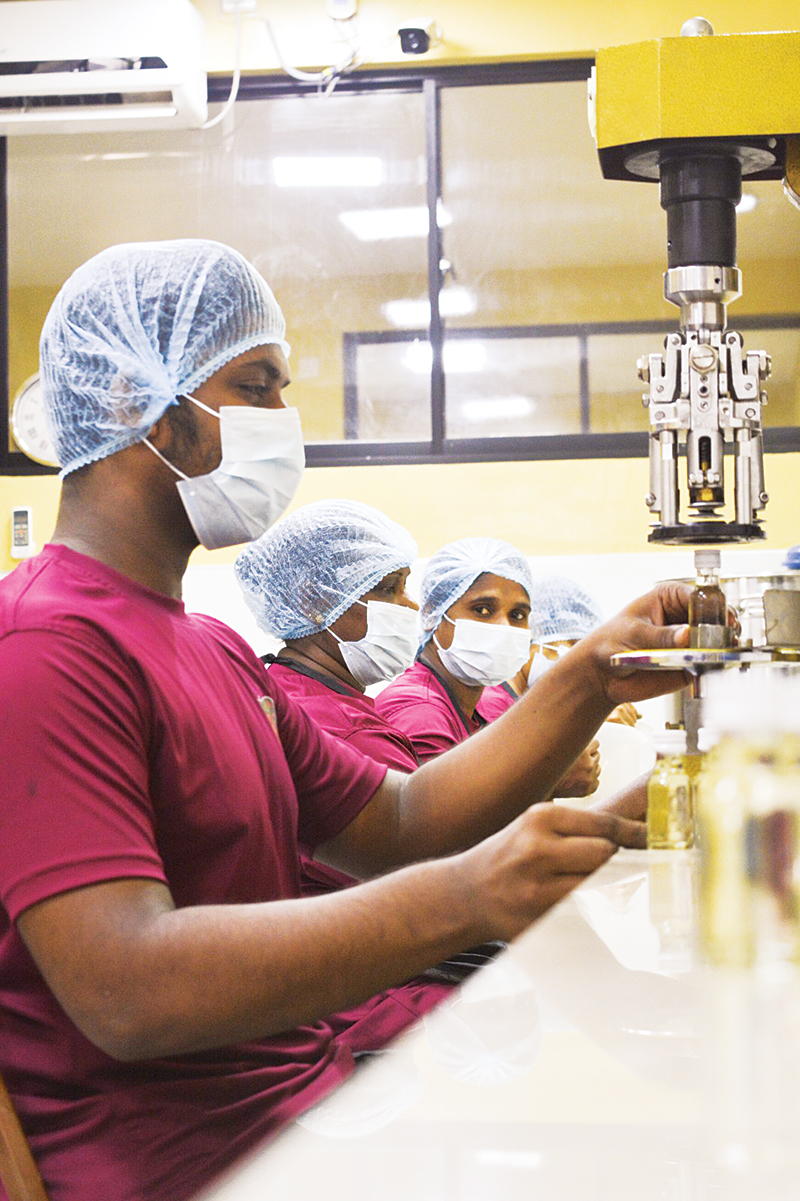
Where raw materials transform into refined fragrance

Salman Faiz -carrying forward a legacy
Today, Aromatic Laboratories stands as a rare example of a second generation. Sri Lankan enterprise that has retained its soul while embracing scale and sophistication. Under Salman Faiz’s leadership, the company continues to honour his father’s founding philosophy that every scent and flavour carries a memory, or story,and a human touch. He imbibed his father’s policy that success was measured not by profit alone but the care taken in creation, the relationships matured with suppliers and the trust earned by clients.
“We are one of the leading companies manufacturing fragrances, dealing with imports,exports in Sri Lanka. We customise fragrances to suit specific applications. We also source our raw materials from leading French company Roberte’t in Grasse
Following his father, for Salman even in moments of challenge, he insisted on grace over haste, quality over conveniences and long term vision over immediate reward under Salman Faiz’s stewardship the business has evolved from a trusted family enterprise into a modern sensory powerhouse.
Now the company exports globally to France, Germany, the UK, the UAE, the Maldives and collaborates with several international perfumes and introduces contemporary products that reflect both sophistication and tradition.
We are one of the leading companies. We are one of the leading companies manufacturing fine and industrial fragrance in Sri Lanka. We customise fragrances to suit specific applications said Faiz
‘We also source our raw materials from renowned companies, in Germany, France, Dubai,Germany and many others.Our connection with Robertet, a leading French parfume House in Grasse, France runs deep, my father has been working closely with the iconic French company for years, laying the foundation for the partnership, We continue even today says Faiz”
Today this business stands as a rare example of second generation Sri Lankan entrepreneurship that retains its souls while embracing scale and modernity. Every aroma, every colour and every flavour is imbued with the care, discipline, and vision passed down from father to son – a living legacy perfected under Salmon Faiz’s guidance.
By Zanita Careem
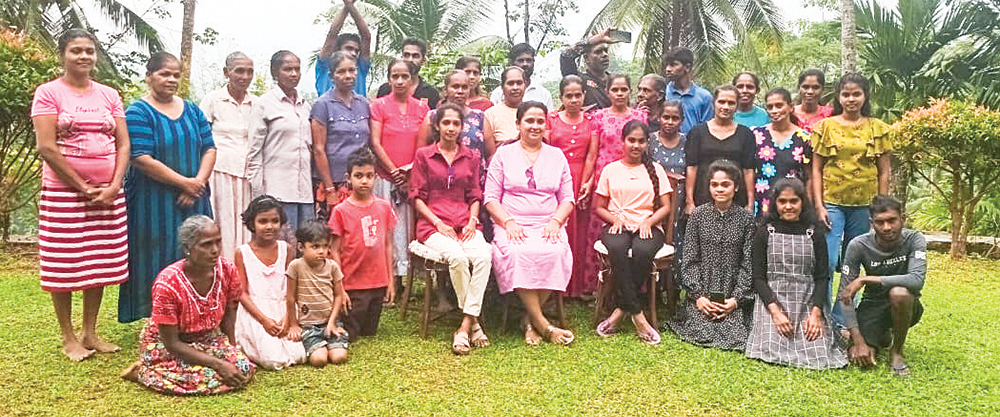
Harini and Chanaka cultivating change
When Harini and Chanaka Mallikarachchi returned to Sri Lanka after more than ten years in the United States, it wasn’t nostalgia alone that they brought home . It was purpose.Beneath the polished resumes and strong computer science backgrounds lay something far more personal- longing to reconnect with the land, and to give back to the country that shaped their memories. From that quiet but powerful decision was born Agri Vision not just an agricultural venture but a community driven movement grounded in sustainability ,empowerment and heritage. They transform agriculture through a software product developed by Avya Technologies (Pvt Limited) Combining global expertise with a deep love for their homeland, they created a pioneering platform that empowers local farmers and introduce innovative, sustainable solutions to the country’s agri sector.
After living for many years building lives and careers in theUnited States, Harini and Chanaka felt a powerful pull back to their roots. With impressive careers in the computer and IT sector, gaining global experience and expertise yet, despite their success abroad, their hearts remained tied to Sri Lanka – connection that inspired their return where they now channel their technological know-how to advance local agriculture.
For Harini and Chanaka, the visionaries behind Agri Vision are redefining sustainable agriculture in Sri Lanka. With a passion for innovation and community impact, they have built Agri Vision into a hub for advanced agri solutions, blending global expertise with local insight.
In Sri Lanka’s evolving agricultural landscape, where sustainability and authenticity are no longer optional but essential. Harini and Chanaka are shaping a vision that is both rooted and forward looking. In the heart of Lanka’s countryside, Uruwela estate Harini and Chanaka alongside the ever inspiring sister Malathi, the trio drives Agri Vision an initiative that fuses cutting edge technology with age old agricultural wisdom. At the core of their agri philosophy lies two carefully nurtured brands artisan tea and pure cinnamon, each reflecting a commitment to quality, heritage and people.
Armed with global exposure and professional backgrounds in the technology sector,they chose to channel thier experiences into agriculture, believing that true progress begins at home.
-
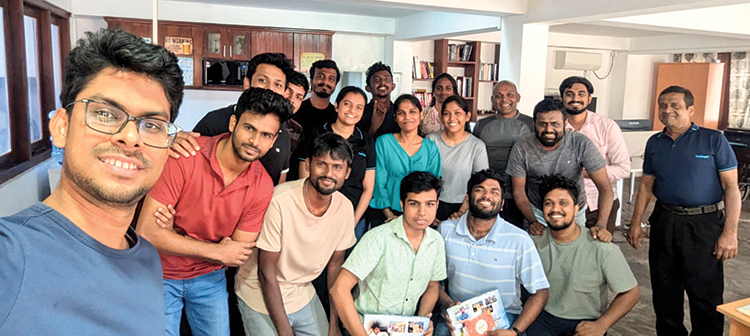
- Avya Technologies (Pvt) ltd software company that developed Agri Vision
-

- Chanaka,Harini and Shakya Mallikarachchi and Malathi Malathi dias (middle)
But the story of Agri Vision is as much about relationships as it is about technology. Harini with her sharp analytical mind, ensures the operations runs seamlessly Chanaka, the strategist looks outward, connecting Agri Vision to globally best practices and Malathi is their wind behind the wings, ensures every project maintains a personal community focussed ethos. They cultivate hope, opportunity and a blueprint for a future where agriculture serves both the land and the people who depend on it .
For the trio, agriculture is not merely about cultivation, it is about connection. It is about understanding the rhythm of the land, respecting generations of farming knowledge, and that growth is shared by the communities that sustain it. This belief forms the backbone of Agro’s vision, one that places communities not only on the periphery, but at the very heart of every endeavour.
Artisan tea is a celebration of craft and origin sourced from selected growing regions and produced with meticulous attention to detail, the tea embodier purity, traceability and refinement, each leaf is carefully handled to preserve character and flavour, reflecting Sri Lanka’s enduring legacy as a world class tea origin while appealing to a new generation of conscious consumers complementing this is pure Cinnamon, a tribute to authentic Ceylon, Cinnamon. In a market saturated with substitutes, Agri vision’s commitment to genuine sourcing and ethical processing stands firm.
By working closely with cinnamon growers and adhering to traditional harvesting methods, the brands safeguards both quality and cultural heritage.
What truly distinguishes Harini and Chanake’s Agri Vision is their community approach. By building long term partnerships with smallholders. Farmers, the company ensures fair practises, skill development and sustainable livelihoods, These relationships foster trust and resilience, creating an ecosystem where farmers are valued stakeholders in the journey, not just suppliers.
Agri vision integrates sustainable practices and global quality standards without compromising authenticity. This harmony allows Artisan Tea and Pure Cinnamon to resonate beyond borders, carrying with them stories of land, people and purpose.
As the brands continue to grow Harini and Chanaka remain anchored in their founding belief that success of agriculture is by the strength of the communities nurtured along the way. In every leaf of tea and every quill of cinnamon lies a simple yet powerful vision – Agriculture with communities at heart.
By Zanita Careem
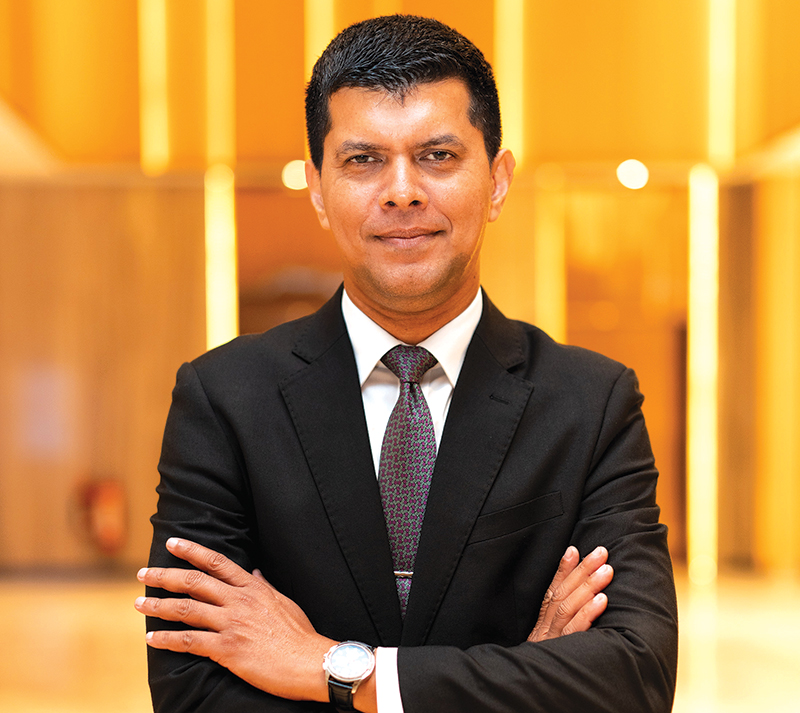
Courtyard by Marriott Colombo has welcomed Suranga Peelikumbura as its new General Manager, ushering in a chapter defined by vision, warmth, and global sophistication.
Suranga’s story is one of both breadth and depth. Over two decades, he has carried the Marriott spirit across continents, from the shimmering luxury of The Ritz-Carlton in Doha to the refined hospitality of Ireland, and most recently to the helm of Resplendent Ceylon as Vice President of Operations. His journey reflects not only international mastery but also a devotion to Sri Lanka’s own hospitality narrative.
What distinguishes Suranga is not simply his credentials but the philosophy that guides him. “Relationships come first, whether with our associates, guests, partners, or vendors. Business may follow, but it is the strength of these connections that defines us.” It is this belief, rooted in both global perspective and local heart, that now shapes his leadership at Courtyard Colombo.
At a recent gathering of corporate leaders, travel partners, and media friends, Suranga paid tribute to outgoing General Manager Elton Hurtis, hon oring his vision and the opportunities he created for associates to flourish across the Marriott world. With deep respect for that legacy, Suranga now steps forward to elevate guest experiences, strengthen community ties, and continue the tradition of excellence that defines Courtyard Colombo.
From his beginnings at The Lanka Oberoi and Cinnamon Grand Colombo to his leadership roles at Weligama Bay Marriott and Resplendent Ceylon, Suranga’s career is a testament to both resilience and refinement. His return to Marriott is not merely a professional milestone, it is a homecoming.

Nepal, Scotland chase win to close out what-if tournament

How dark web agent spotted bedroom wall clue to rescue girl from years of harm

US build-up of warships and fighter jets tracked near Iran

Showers above 75 mm are likely at some places in the Central, Uva and Eastern provinces and in Polonnaruwa district

Zimbabwe take on Ireland with clarity about Super Eights path

CEB seeking tariff hike while making huge profits, says opposition trade union leader

‘Dates have the highest sugar content to fight Coronavirus’

Sunday Island 27 December – Headlines

#SundayIsland 17th December – Headlines

Sunday Island – 28th March

Sunday Island Headlines – 21 March

Sunday Island – 21st February – Headlines
-
 Life style2 days ago
Marriot new GM Suranga
-

 Business1 day ago
Ministry of Brands to launch Sri Lanka’s first off-price retail destination
-

 Features2 days ago
Monks’ march, in America and Sri Lanka
-

 Midweek Review6 days ago
A question of national pride
-

 Business6 days ago
Autodoc 360 relocates to reinforce commitment to premium auto care
-

 Opinion5 days ago
Will computers ever be intelligent?
-

 Features2 days ago
The Rise of Takaichi
-
 Features2 days ago
Wetlands of Sri Lanka: