
Foreign News
At least 1000 dead and hundreds injured in Morocco Earthquake

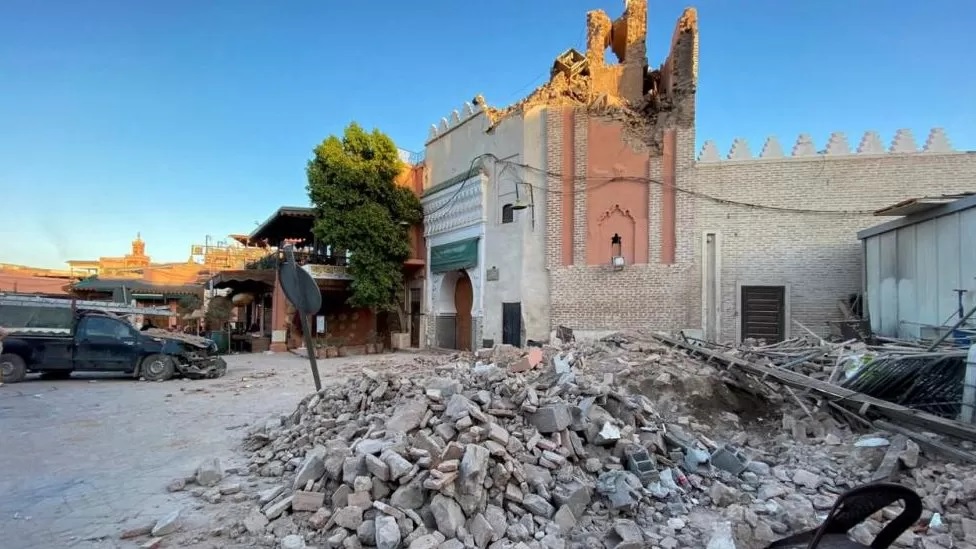
A strong earthquake of magnitude 6.8 has struck central Morocco, killing at least 1,000 people, and causing damage in several areas.
The epicentre was in the High Atlas Mountains, 71km (44 miles) south-west of Marrakesh, at a depth of 18.5km, the US Geological Survey said.
It struck at 23:11 local time, followed by a 4.9 aftershock 19 minutes later.
People died in Marrakesh and several areas to the south, the country’s interior ministry said. Many of the victims are believed to be in remote areas.
The interior ministry said the earthquake killed people in the provinces and municipalities of al-Haouz, Marrakesh, Ouarzazate, Azilal, Chichaoua and Taroudant, adding that more than 600 people have been injured.
Many people spent the night out in the open as the Moroccan government had warned them not to go back into their homes in case of severe aftershocks. Hospitals in Marrakesh have seen an influx of injured people, and the authorities have called on residents to donate blood.
There are also reports of families trapped under the rubble of their homes in the city, and damage to parts of the Medina, a Unesco World heritage Site. Some buildings have collapsed, one resident told the Reuters news agency. Several clips on X show buildings crashing down, but the BBC has not identified where they were.
Dust could also be seen surrounding the minaret of the historic Kutubiyya mosque in Marrakesh, a major tourist attraction near the old city’s main square.
The quake’s epicentre in a remote area of the High Atlas Mountains was relatively shallow – and tremors were also reportedly felt in the capital Rabat, some 350km away, as well as Casablanca and Essaouira.
Simple buildings in mountain villages near the epicentre may not have survived and, being remote, it may take some time to determine casualties there.
The quake was also felt in neighbouring Algeria, but officials said it had not caused any damage or casualties.
Speaking at the G20 summit in Delhi, Indian Prime Minister Narendra Modi said the international community would come to Morocco’s aid.
Spanish Prime Minister Pedro Sanchez offered “solidarity and support to the people of Morocco”. French President Emmanuel Macron said he was “devastated” by the news and offered assistance to Morocco.
(BBC)

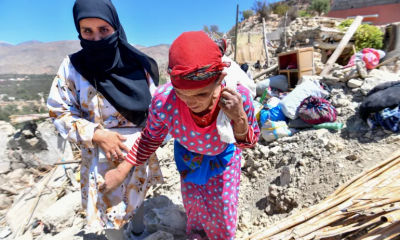

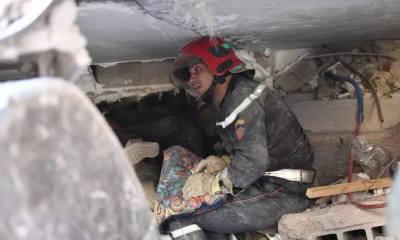

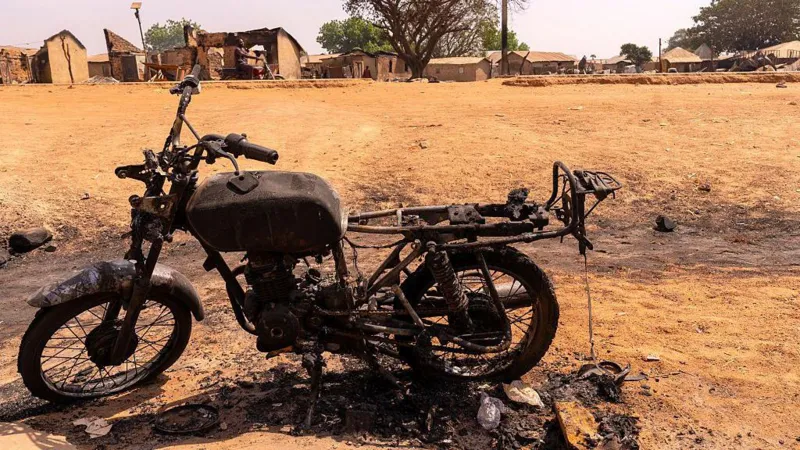
Gunmen on motorcycles have killed dozens of people in dawn raids across three villages in north-western Nigeria.
Armed men shot locals dead, set homes alight and abducted an unknown number of people in Niger State, Musa Saidu, head of the State Emergency Management Agency (Sema), told the BBC.
The attacks on Saturday morning occurred near the site of a suspected jihadist massacre earlier this month, in which more than 100 people were killed in a similar ambush.
Armed criminal gangs, known as bandits, have carried out attacks and kidnappings in Nigeria for years, mainly targeting those in the north-west – but reports of attacks in other parts of the country have risen sharply more recently.
Bandits swooped on the village of Tunga-Makeri early in the morning, before striking the nearby villages of Konkoso and Pissa, local officials said.
Police said six people were killed in one incident, and 20 more in the attacks on Konkoso and Pisa.
Officials confirmed at least 29 people had been killed as of Saturday, but Saidu said that death toll could rise.
The number of people abducted is also unknown because many residents fled their homes and ran into the nearby bush or neighbouring communities, he said.
“People are afraid because you can’t tell which community is going to be next,” he added.
A security report cited by AFP news agency said bandits came on 41 motorcycles, each carrying two or three men.
Abdullahi Rofia, a resident of neighbouring Agwara, told the BBC that many displaced people have taken shelter in his community, which was itself attacked two weeks ago.
“People are so traumatised, they no longer go to farm nor do they go to market,” he said.
“The bandits are not interesting in stealing or looting – they are more interested in killing and terrorising locals.”
Authorities have introduced emergency measures, including a restriction on late-night gatherings and a “partial curfew” that bans motorcycle taxis from operating after 20:00 local time (19:00 GMT).
Police confirmed that security teams have been deployed and rescue efforts are ongoing.
Nigeria’s leaders are under pressure to curb violence, with jihadist groups active in the north-west and separatist insurgents based in the country’s south-east.
The US launched Christmas Day strikes targeting Islamist militants in Nigeria’s northern Sokoto state and President Donald Trump warned of further attacks “if they continue to kill Christians”.
Many of the victims of jihadist violence are Muslim, according to organisations monitoring political violence in Nigeria.
A Nigerian official told BBC last month that 200 suspected bandits had been killed in an operation in the central Kogi state.
It came after more than 250 children and staff were abducted from a Catholic school in Papiri, in one of the largest recent mass-kidnappings. Their release was later secured.
[BBC]
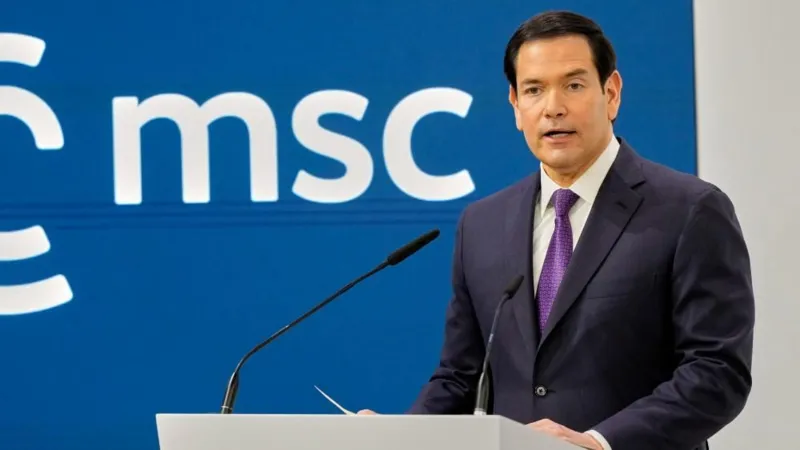
Marco Rubio has assured European leaders the US does not plan to abandon the transatlantic alliance, saying its destiny “will always be intertwined” with the continent’s.
The US secretary of state told the Munich Security Conference: “We do not seek to separate, but to revitalise an old friendship and renew the greatest civilisation in human history.”
He criticised European immigration, trade and climate policies, but the overall tenor of the closely-watched speech was markedly different to Vice President JD Vance’s at the same event last year, during which he scolded continental leaders.
European Commission President Ursula von der Leyen said she was “very much reassured” by Rubio’s remarks.
Rubio, the Trump administration’s most senior diplomat, said it was “neither our goal nor our wish” to end the transatlantic partnership, adding: “For us Americans, our home may be in the Western Hemisphere, but we will always be a child of Europe.
“And I am here today to leave it clear that America is charting the path for a new century of prosperity, and that once again we want to do it together with you, our cherished allies and our oldest friends.”
However, he repeated several criticisms repeatedly levelled at Europe by the Trump administration, including describing immigration policies as a threat to civilisation, and saying a “climate cult” had taken over economic policy.
On trade, he said Europe and the US had “made mistakes together” by adopting a “dogmatic vision of free and unfettered trade”.
He repeated familiar calls from the US for Europe to invest more in defence, saying: “We want allies who can defend themselves so that no adversary will ever be tempted to test our collective strength.”
In response, von der Leyen said: “Rubio is a good friend, a strong ally. And this was, for me, very reassuring to listen to him.”
She continued: “We want a strong Europe. And this is, I think, the message of today.”
Elsewhere in his half-hour address, Rubio said the system of international co-operation “must be rebuilt” and singled out the UN for particular criticism, saying it had “played virtually no role” in resolving the Gaza and Ukraine conflicts.
He also said the organisation was “powerless to constrain the nuclear programme” of Tehran.
In recent weeks, US President Donald Trump has threatened strikes on Iran if a deal to curb its nuclear programme can be reached, as negotiations between the two intensify.
A second round of talks will be hosted by Oman in Geneva next week, the Swiss foreign ministry said on Saturday.
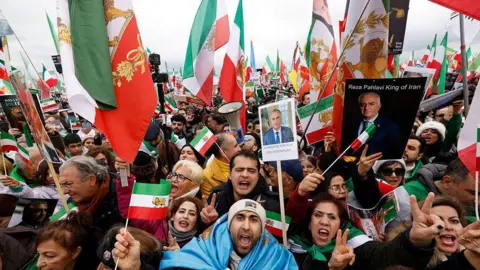
Outside the conference, an estimated 200,000 protesters held a rally against the Iranian government, local police report.
The demonstrators denounced the country’s leadership, following the government crackdown on January’s protests in which thousands of people were killed.
Rubio also said the US did not know whether the “Russians are serious about ending the war” in Ukraine, before adding: “But we’re going to continue to test it.”
Ukraine’s President Volodymyr Zelensky told the conference later on Saturday that no one in Ukraine believed his Russian counterpart Vladimir Putin would leave the country alone, describing the Russian leader as a “slave to war”.
Zelensky has come under pressure from the White House to hold presidential elections, which have been suspended while the country is under martial law.
Asked about a Financial Times report that his administration was planning for elections as soon as May, Zelensky said it was “something new to me” and repeated that “nobody supports elections during the war”.
He said that Ukraine would need “two months of ceasefire” and “security infrastructure” to safely conduct elections.
[BBC]
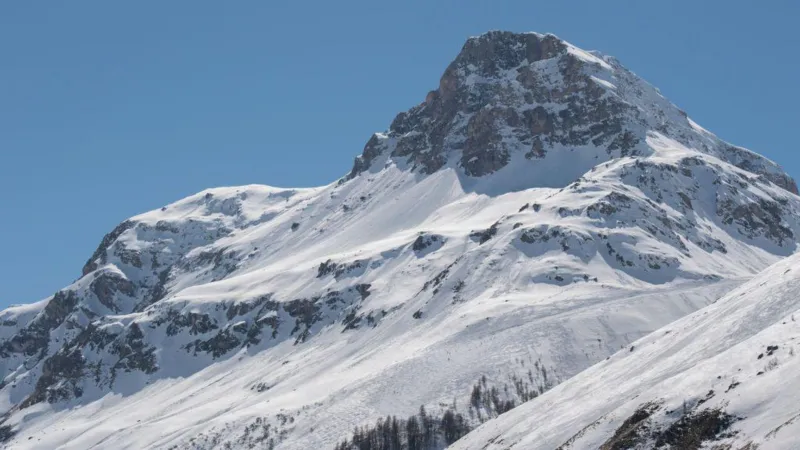
Two Britons and one French person have died in an avalanche in the French Alps on Friday.
The British pair were part of a group of five people skiing off-piste with an instructor in the Manchet valley, near Val d’Isère, a spokeswoman for the resort told the BBC.
The French national was skiing alone when the avalanche struck at 11:30 local time (10:30 GMT), Albertville prosecutor Benoit Bachelet said in a statement announcing the deaths.
Another British person has minor injuries, he added.
A spokesperson for the Foreign Office told the BBC they are aware of the death of the two British men and they are “in contact with the local authorities and stand ready to offer consular assistance”.
A manslaughter investigation has now been launched by the Albertville public prosecutor’s office and will be carried out by CRS Alpes mountain rescue police.
The ski instructor, who was unharmed, tested negative after taking alcohol and drug tests, according to Bachelet.
Val d’Isère already experienced avalanches this winter, with one person dying in the resort of Tignes nearby last month.
France’s national weather service had issued a red alert for avalanche risk across the Savoie region on Thursday, which was then lifted on Friday. But the risk level remained high across the Alps with “very unstable snow cover”.
The avalanche comes in the wake of Storm Nils, which passed through France the day before, leaving between 60cm and 100cm of snow, the weather service said.
There have been a number of fatal avalanches in the region in recent weeks, including the death of a British man off-piste skiing at the La Plagne resort in January.
“We have had some very complicated, very unstable snow since the beginning of the season,” Luc Nicolino, slopes manager at La Plagne, told AFP.
“It’s a kind of mille-feuille with many hidden, fragile layers.”
[BBC]

Kusal Perera in as Sri Lanka bowl; Marsh returns for Australia

Jacks the star as England qualify for Super Eights with nervy win

Navy seizes 02 Indian fishing boats poaching in northern waters

Ramadan 2026: Fasting hours around the world

Omarzai’s all-round brilliance hands Afghanistan their first win of the World Cup

We will not allow anyone to drag the country backward by inciting racism. — PM

‘Dates have the highest sugar content to fight Coronavirus’

Sunday Island 27 December – Headlines

#SundayIsland 17th December – Headlines

Sunday Island – 28th March

Sunday Island Headlines – 21 March

Sunday Island – 21st February – Headlines
-

 Life style2 days ago
Marriot new GM Suranga
-
 Midweek Review6 days ago
A question of national pride
-

 Features2 days ago
Monks’ march, in America and Sri Lanka
-

 Business6 days ago
Autodoc 360 relocates to reinforce commitment to premium auto care
-
 Opinion5 days ago
Will computers ever be intelligent?
-

 Features2 days ago
The Rise of Takaichi
-

 Features2 days ago
Wetlands of Sri Lanka:
-

 Business15 hours ago
Ministry of Brands to launch Sri Lanka’s first off-price retail destination