
Opinion
Are science and religion mutually exclusive?

By Dr Upul Wijayawardhana
Science and religion are two of the most important things that shape our lives. Whilst various religions practised across the world have given rise to differing cultures and conflicts at times, advances in science have improved living standards globally although affordability making that too inequitable, unfortunately. However, there are fundamental differences among religions, the most important being dogmatism.
Most religions are dogmatic as what is laid down by a higher authority, usually a supernatural through an intermediary has to be taken as incontrovertibly true. In contrast, dogmatism is the antithesis of science. In fact, many things I learned in the early sixties, as a medical student, are no longer true as science continues to change with new discoveries. Therefore, it is very easy to jump to the conclusion that science and religion are mutually exclusive but this is far from being true as the interaction between science and religion is much more complex.
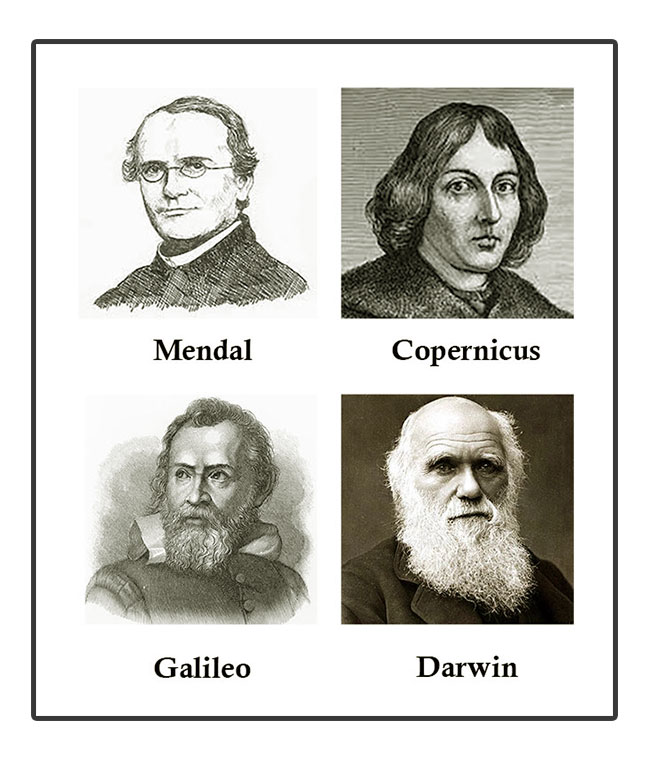
It is not difficult to find instances where religion has stood in the way of scientific advancements. Nicolaus Copernicus’ made the earth-shattering discovery that we are not the centre of universe and formulated a model of the universe that placed the Sun rather than the Earth at its centre. Copernicus is said to have risen from a stupor to have a glance at his book on heliocentrism, De revolutionibus orbium coelestium (On the Revolutions of the Celestial Spheres), just before his death in 1543.
For having propagated this theory it was Galileo Galilei who earned the wrath of the Catholic Church. In 1633, he was convicted of grave suspicion of heresy for “following the position of Copernicus, which is contrary to the true sense and authority of Holy Scripture” and was placed under house arrest for the rest of his life. He was forced to recant the theory but is said to have muttered the rebellious phrase “And yet it moves”! Whilst under house arrest, he dedicated his time to one of his finest works, Two New Sciences, wherein he summarised work he had done 40 years earlier, on the two sciences now called kinematics and strength of materials which earned him the plaudit “father of modern physics”. He is also referred to as ‘the father of observational astronomy’ because of his achievements including telescopic confirmation of the phases of Venus, observation of the four largest satellites of Jupiter, observation of Saturn’s rings, and analysis of lunar craters and sunspots.
It is also well known that Charles Darwin delayed the publication of his masterpiece, ‘The Origin of Species’ by 20 years, out of respect to his wife, as his theory went against her religious beliefs. It is argued in some quarters that he was compelled to publish it because Alfred Russel Wallace, who has come to the same conclusions by differing means, sought his opinion. This illustrates another interesting aspect of science that the same conclusions can be reached by differing methods which adds to the weight of the discovery.
On the other hand, there is a long list of clergymen who have contributed to science, one of the most significant being Gregor Mendel. He was a 19th century German-Czech biologist, meteorologist and mathematician, who was an Augustinian friar and is considered to be founder of the modern science of genetics, a science that is making vast strides today. It started with his experiments on pea plants which established many of the rules of heredity, now referred to as the laws of Mendelian inheritance. One can argue that most of them, just like Mendel, took to the Holy Orders as they had access to education which they did not have to pay for, as well as access to libraries, which were not readily available in that era but it is unfair to underestimate their contribution to the progress of science.
Two lunar months after Enlightenment, on Esala full moon day in the Deer Park at Sarnath. Gautama Buddha delivered his first sermon, Dhammacakkappavattana Sutta (The Setting in Motion of the Wheel of the Dhamma Sutta). The main topic of this sutta is the Four Noble Truths, which is a formulaic expression of the fundamental concepts. This methodology we apply in science even to this day. This sutta also refers to the concept of the Middle Way, a way we find is the best in most aspects of life.
It also refers to impermanence which scientists today refer to as dynamic flux. Finally, it lays down the concept of dependent origination, a concept that has not been surpassed. Based on this Sutta, Emperor Ashoka devised the Dhammacakka (Wheel of Dhamma) which adorns the national flag of India though India has largely given up on the Dhamma of its greatest son, Brahmins making sure that the Buddha was submerged as the ninth avatar of Vishnu.
The Buddha’s contribution to science does not stop there. In Kalama Sutta, he laid the foundation for scientific thinking. His analysis of the mind and consciousness has not been surpassed by even modern science. He emphasised that everything depends on individual perception and showed that what we see, hear, smell, taste or feel is modified by our mind and identified the mind as the sixth sense though science recognises only five senses.
According to Yogacara school of Mahayana Buddhism there are eight kinds of discernment: (1) sight-consciousness, (2) hearing-consciousness, (3) smell-consciousness, (4) taste-consciousness, (5) touch-consciousness, (6) mind-consciousness, (7) Mano-consciousness, and (8) Alaya-consciousness. Alaya-vinnana (storehouse consciousness) refers to a level of subliminal mental processes that occur uninterruptedly throughout one’s life and may continue in to multiple lifetimes and scientists identify this as the sub-conscious. Perhaps, it is based on this and the Hindu concept of universal consciousness that Carl Jung formulated his theory of ‘The Collective Unconscious’.
In fact, there being so much similarities to the teachings of the Buddha and the postulates of Carl Jung and Sigmund Freud, one wonders whether their source of inspiration is Buddhism though they fail to acknowledge. It is not surprising when one considers what has happened with Mindfulness, a concept introduced by the Buddha, who showed that though one can attain higher mental states with Samatha or Concentration meditation that total detachment can be achieved only through Vipassana or Mindfulness meditation. Today, mindfulness is big business and the Buddha is rarely given the credit for it!
Although mostly a philosophy and a way life, as structures built around the Dhamma have features of a religion, we are forced to continue to class Buddhism as a religion. It is a religion that has contributed immensely to science and I can find no aspect of Buddhism that has been challenged by science.











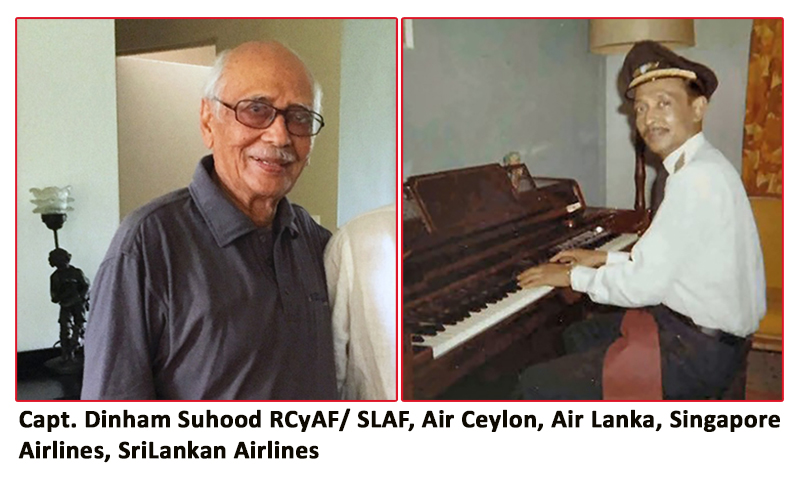
A few days ago, we heard the sad news of the passing on of Capt. Dinham Suhood. Born in 1929, he was the last surviving Air Ceylon Captain from the ‘old guard’.
He studied at St Joseph’s College, Colombo 10. He had his flying training in 1949 in Sydney, Australia and then joined Air Ceylon in late 1957. There he flew the DC3 (Dakota), HS748 (Avro), Nord 262 and the HS 121 (Trident).
I remember how he lent his large collection of ‘Airfix’ plastic aircraft models built to scale at S. Thomas’ College, exhibitions. That really inspired us schoolboys.
In 1971 he flew for a Singaporean Millionaire, a BAC One-Eleven and then later joined Air Siam where he flew Boeing B707 and the B747 before retiring and migrating to Australia in 1975.
Some of my captains had flown with him as First Officers. He was reputed to have been a true professional and always helpful to his colleagues.
He was an accomplished pianist and good dancer.
He passed on a few days short of his 97th birthday, after a brief illness.
May his soul rest in peace!
To fly west my friend is a test we must all take for a final check
Capt. Gihan A Fernando
RCyAF/ SLAF, Air Ceylon, Air Lanka, Singapore Airlines, SriLankan Airlines

The cause of global warming, they claim, is due to ever increasing levels of CO2. This is a by-product of burning fossil fuels like oil and gas, and of course coal. Environmentalists and other ‘green’ activists are worried about rising world atmospheric levels of CO2. Now they want to stop the whole world from burning fossil fuels, especially people who use cars powered by petrol and diesel oil, because burning petrol and oil are a major source of CO2 pollution. They are bringing forward the fateful day when oil and gas are scarce and can no longer be found and we have no choice but to travel by electricity-driven cars – or go by foot. They say we must save energy now, by walking and save the planet’s atmosphere.
THE DEMON COAL
But it is coal, above all, that is hated most by the ‘green’ lobby. It is coal that is first on their list for targeting above all the other fossil fuels. The eminently logical reason is that coal is the dirtiest polluter of all. In addition to adding CO2 to the atmosphere, it pollutes the air we breathe with fine particles of ash and poisonous chemicals which also make us ill. And some claim that coal-fired power stations produce more harmful radiation than an atomic reactor.
STOP THE COAL!
Halting the use of coal for generating electricity is a priority for them. It is an action high on the Green party list.
However, no-one talks of what we can use to fill the energy gap left by coal. Some experts publicly claim that unfortunately, energy from wind or solar panels, will not be enough and cannot satisfy our demand for instant power at all times of the day or night at a reasonable price.
THE ALTERNATIVES
It seems to be a taboo to talk about energy from nuclear power, but this is misguided. Going nuclear offers tried and tested alternatives to coal. The West has got generating energy from uranium down to a fine art, but it does involve some potentially dangerous problems, which are overcome by powerful engineering designs which then must be operated safely. But an additional factor when using URANIUM is that it produces long term radioactive waste. Relocating and storage of this waste is expensive and is a big problem.
Russia in November 2020, very kindly offered to help us with this continuous generating problem by offering standard Uranium modules for generating power. They offered to handle all aspects of the fuel cycle and its disposal. In hindsight this would have been an unbelievable bargain. It can be assumed that we could have also used Russian expertise in solving the power distribution flows throughout the grid.
THORIUM
But thankfully we are blessed with a second nuclear choice – that of the mildly radioactive THORIUM, a much cheaper and safer solution to our energy needs.
News last month (January 2026) told us of how China has built a container ship that can run on Thorium for ten years without refuelling. They must have solved the corrosion problem of the main fluoride mixing container walls. China has rare earths and can use AI computers to solve their metallurgical problems – fast!
Nevertheless, Russia can equally offer Sri Lanka Thorium- powered generating stations. Here the benefits are even more obviously evident. Thorium can be a quite cheap source of energy using locally mined material plus, so importantly, the radioactive waste remains dangerous for only a few hundred years, unlike uranium waste.
Because they are relatively small, only the size of a semi-detached house, such thorium generating stations can be located near the point of use, reducing the need for UNSIGHTLY towers and power grid distribution lines.
The design and supply of standard Thorium reactor machines may be more expensive but can be obtained from Russia itself, or China – our friends in our time of need.
Priyantha Hettige

The Island has recently published various articles on AI, and they are thought-provoking. This article is based on a paper I presented at a London University seminar, 22 years ago.
Will computers ever be intelligent? This question is controversial and crucial and, above all, difficult to answer. As a scientist and student of philosophy, how am I going to answer this question is a problem. In my opinion this cannot be purely a philosophical question. It involves science, especially the new branch of science called “The Artificial Intelligence”. I shall endeavour to answer this question cautiously.
Philosophers do not collect empirical evidence unlike scientists. They only use their own minds and try to figure out the way the world is. Empirical scientists collect data, repeat and predict the behaviour of matter and analyse them.
We can see that the question—”Will computers ever be intelligent?”—comes under the branch of philosophy known as Philosophy of Mind. Although philosophy of mind is a broad area, I am concentrating here mainly on the question of consciousness. Without consciousness there is no intelligence. While they often coincide in humans and animals, they can exist independently, especially in AI, which can be highly intelligent without being conscious.
AI and philosophers
It appears that Artificial Intelligence holds a special attraction for philosophers. I am not surprised about this as Al involves using computers to solve problems that seem to require human reasoning. Apart from solving complicated mathematical problems it can understand natural language. Computers do not “understand” human language in the human sense of comprehension; rather, they use Natural Language Processing (NLP) and machine learning to analyse patterns in data. Artificial Intelligence experts claim certain programmes can have the possibility of not only thinking like humans but also understanding concepts and becoming conscious.
The study of the possible intelligence of logical machines makes a wonderful test case for the debate between mind and brain. This debate has been going on for the last two and a half centuries. If material things, made up entirely of logical processes, can do exactly what the brain can, the question is whether the mind is material or immaterial.
Although the common belief is that philosophers think for the sake of thinking, it is not necessarily so. Early part of the 20th century brought about advances in logic and analytical philosophy in Britain. It was a philosopher (Ludwig Wittgenstein) who invented the truth table. This was a simple analytic tool useful in his early work. But this was absolutely essential to the conceptual basis of early computer science. Computer science and brain science have developed together and that is why the challenge of the thinking machine is so important for the philosophy of mind. My argument so far has been to justify how and why AI is important to philosophers and vice versa.
Looking at computers now, we can see that the more sophisticated the computer, the more it is able to emulate rather than stimulate our thought processes. Every time the neuroscientists discover the workings of the brain, they try to mimic brain activity with machines.
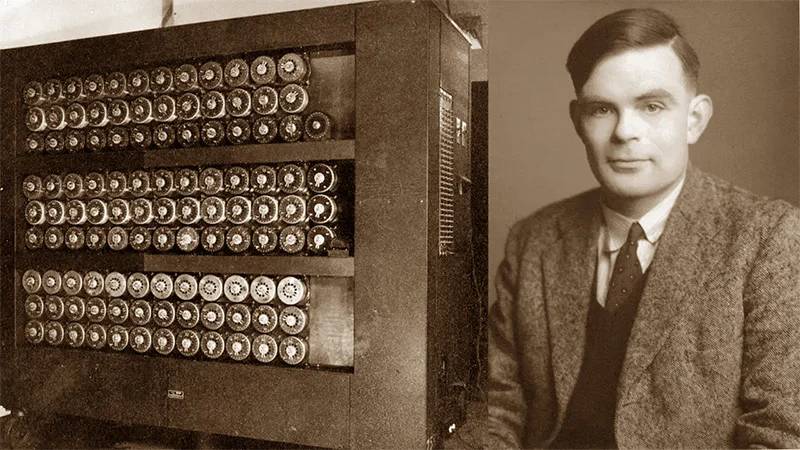
How can one tell if a computer is intelligent? We can ask it some questions or set a test and study its response and satisfy ourselves that there is some form of intelligence inside this box. Let us look at the famous Alan Turing Test. Imagine a person sitting at a terminal (A) typing questions. This terminal is connected to two other machines, (B) and (C). At terminal (B) sits another person (B) typing responses to the questions from person (A). (C) is not a human being, but a computer programmed to respond to the questions. If person (A) cannot tell the difference between person (B) and computer(C), then we can deduce that computer is as intelligent as person (B). Critics of this test think that there is nothing brilliant about it. As this is a pragmatic exercise and one need not have to define intelligence here. This must have amused the scientists and the philosophers in the early days of the computers. Nowadays, computers can do much more sophisticated work.
Chinese Room experiment
The other famous experiment is John Sealer’s Chinese room experiment. *He uses this experiment to debunk the idea that computers could be intelligent. For Searle, the mind and the brain are the same. But he warns us that we should not get carried away with the emulative success of the machines as mind contains an irreducible subjective quality. He claims that consciousness is a biological process. It is found in humans as well as in certain animals. It is interesting to note that he believes that the mind is entirely contained in the brain. And the empirical discovery of neural processes cannot be applied to outside the brain. He discards mind-body dualism and thinks that we cannot build a brain outside the body. More commonly, we believe the mind is totally in the brain, and all firing together and between, and what we call ‘thought’ comes from their multifarious collaboration.
Patricia and Paul Churchland are keen on neuroscientific methods rather than conventional psychology. They argue that the brain is really a processing machine in action. It is an amazing organ with a delicately organic structure. It is an example of a computer from the future and that at present we can only dream of approaching its processing speed. I think this is not something to be surprised about. The speed of the computer doubles every year and a half and in the distant future there will be machines computing faster than human beings. Further, the Churchlands’, strongly believe that through science one day we will replicate the human brain. To argue against this, I am putting forward the following true story.
I remember watching an Open University (London) education programme some years ago. A team of professors did an experiment on pavement hawkers in Bogota, Colombia. They were fruit sellers. The team bought a large number of miscellaneous items from these street vendors. This was repeated on a number of occasions. Within a few seconds, these vendors did mental calculations and came out with the amounts to be paid and the change was handed over equally fast. It was a success and repeatable and predictable. The team then took the sample population into a classroom situation and taught them basic arithmetic skills. After a few months of training they were given simple sums to do on selling fruit. Every one of them failed. These people had the brain structure that of ordinary human beings. They were skilled at their own jobs. But they could not be programmed to learn a set of rules. This poses the question whether we can create a perfect machine that will learn all the human transferable skills.
Computers and human brains excel at different tasks. For instance, a computer can remember things for an infinite amount of time. This is true as long as we don’t delete the computer files. Also, solving equations can be done in milliseconds. In my own experience when I was an undergraduate, I solved partial differential equations and it took me hours and a lot of paper. The present-day students have marvellous computer programmes for this. Let alone a mere student of mathematics, even a mathematical genius couldn’t rival computers in the above tasks. When it comes to languages, we can utter sentences of a completely foreign language after hearing it for the first time. Accents and slang can be decoded in our minds. Such algorithms, which we take for granted, will be very difficult for a computer.
I always maintain that there is more to intelligence than just being brilliant at quick thinking. A balanced human being to my mind is an intelligent person. An eccentric professor of Quantum Mechanics without feelings for life or people, cannot be considered an intelligent person. To people who may disagree with me, I shall give the benefit of the doubt and say most of the peoples’ intelligence is departmentalised. Intelligence is a total process.
Other limitations to AI
There are other limitations to artificial intelligence. The problems that existing computer programmes can handle are well-defined. There is a clear-cut way to decide whether a proposed solution is indeed the right one. In an algebraic equation, for example, the computer can check whether the variables and constants balance on both sides. But in contrast, many of the problems people face are ill-defined. As of yet, computer programmes do not define their own problems. It is not clear that computers will ever be able to do so in the way people do. Another crucial difference between humans and computers concerns “common sense”. An understanding of what is relevant and what is not. We possess it and computers don’t. The enormous amount of knowledge and experience about the world and its relevance to various problems computers are unlikely to have.
In this essay, I have attempted to discuss the merits and limitations of artificial intelligence, and by extension, computers. The evolution of the human brain has occurred over millennia, and creating a machine that truly matches human intelligence and is balanced in terms of emotions may be impossible or could take centuries
*The Chinese Room experiment, proposed by philosopher John Searle, challenges the idea that computers can truly “understand” language. Imagine a person locked in a room who does not know Chinese. They receive Chinese symbols through a slot and use an instruction manual to match them with other symbols to produce correct replies. To outsiders, it appears the person understands Chinese, but in reality, they are only following rules. Searle argues that similarly, a computer may process language convincingly without genuine understanding or consciousness.
by Sampath Anson Fernando

Royal Navy of Oman Vessel “SADH” departs island

Muzarabani, Bennett orchestrate famous Zimbabwe win

“We will not make decisions for rural level schools while sitting in Colombo” – PM

USA need to overturn history to beat Netherlands and stay alive

Paul Stirling ruled out of World Cup with knee injury

The silent pace revolution in Sri Lanka

‘Dates have the highest sugar content to fight Coronavirus’

Sunday Island 27 December – Headlines

#SundayIsland 17th December – Headlines

Sunday Island – 28th March

Sunday Island Headlines – 21 March

Sunday Island – 21st February – Headlines
-
 Features6 days ago
My experience in turning around the Merchant Bank of Sri Lanka (MBSL) – Episode 3
-

 Business7 days ago
Zone24x7 enters 2026 with strong momentum, reinforcing its role as an enterprise AI and automation partner
-

 Business6 days ago
Remotely conducted Business Forum in Paris attracts reputed French companies
-

 Business6 days ago
Four runs, a thousand dreams: How a small-town school bowled its way into the record books
-

 Business6 days ago
ComBank and Hayleys Mobility redefine sustainable mobility with flexible leasing solutions
-

 Business3 days ago
Autodoc 360 relocates to reinforce commitment to premium auto care
-

 Midweek Review3 days ago
A question of national pride
-

 Business7 days ago
HNB recognized among Top 10 Best Employers of 2025 at the EFC National Best Employer Awards