
Sports
Are rugby players cracking up under the rigours of heavy training?


by a Special Sports Correspondent
Former rugby player and now a coach and strength and conditioning professional Bilal Yusuf is concerned about the quantum of training done by both school and club rugby players.
It is no wonder that players today are taxed more than their systems can take. The reason, according to Yusuf, could be because these players are following a professional training routine in an amateur system.
Gone are the days when hordes of ex-schoolboy players, just out of school, awaited their turn to play club rugby. Very few among these school leavers walked in straight to the club sides of yesteryear because there was a gap between club and school rugby; in terms of the capacity needed to play senior rugby. But now the training load is basically the same for both club and school players.
And as how Yusuf sees it the players are being over trained. “The present training regimes are extremely demanding on the players. Players are training five days of the week and sessions are held twice a day. At the end of the season there is mental and physical fatigue,” said Yusuf who has also had stints both as a school and club rugby coach and also as the junior national coach for the under 20 Asian Championship. At present, he is a strength and conditioning coach for Sri Lanka Tennis.
There have been occasions where even some of the foreign coaches who have undertaken assignments at local rugby clubs having cautioned that the Sri Lankan players are trying too hard. The game has changed over the years and become more physical and the coaches now demand that their chargers pack on the pounds and spend more time in the gymnasium.
Yusuf sees the present system being counterproductive. “Sometimes doing more might make the players mentally tougher, but certainly it would not do good for the game,” he said. According to him rugby clubs around the world, where the players are not professionals, get their players to train twice a week (Tuesday and Thursday) with a game on Saturday.
But here in Sri Lanka players have to hit the gym in the morning, then shower and go to work and comeback in the evening for rugby practices. Even the sleep they get might not be sufficient. “This is a vicious circle and clubs might not be able to sustain the players in this manner,” opined Yusuf.
But a side like Kandy Sport Club could be an exception because the players are professionals and don’t really have to work, so after the morning training they ideally get to have nap and take a rest. When they comeback for training in the evening their batteries are recharged.
However, club rugby coaches and administrators might not listen to the views of a rugby coach cum trainer like Yusuf because the demands on the coach are high. Most coaches are desperate to hold on to their jobs, so they tax the players to the hilt. Yusuf cautions that school rugby players might be training more than club rugby players, hence the former might be close to total burnout when a season nears an end. We also hear of stories where the schoolboy players in their final year of rugby are skipping the GCE A Level Exam because the demands of rugby training don’t allow these players to balance sport and studies. “The problem with the system is that we might not be grooming these players to balance sport, family and life. The joys of a coach is to see them play top level rugby and when you bump into them in latter years to see them having turned out to be happy and responsible citizens,” said Yusuf.
The taking of supplements in rugby is part and parcel of the game. But some players are becoming too big too soon. “Sometimes the mass they are gaining is unbelievable; which makes us wonder whether these supplements that are given to them contain any illegal substance. The supplement taking of players must be properly monitored. We have enough doubts to suspect that some of these supplements may have performance-enhancing substances,” he said.
Insecure coaches can poison a system and make the players believe that more training is good, when the opposite is true. But there is also another issue regarding the psyche of the players. The majority of schoolboy players who have the brains and capacity to study and make good progress in life give up the sport and concentrate on higher education. The sad part of the equation is that the players who are not academics continue with rugby hence this would mean that ones who are playing club rugby might not be able to think for themselves and can be manipulated. But Yusuf cautioned by saying, “Even if you know that a certain way of eating and training is harmful you just have to follow the demands of the coach because rugby is a team sport and you are not playing for yourself”.
Yusuf concluded the interview by quoting what a foreign coach once gave as his response when someone asked whether he considers himself having done his job properly and having given something back to the game. “This coach said come and meet me in ten years time and ask me how my players are doing and whether they have become better human beings. And if they have then I think I could be considered a successful coach,” concluded Yusuf.


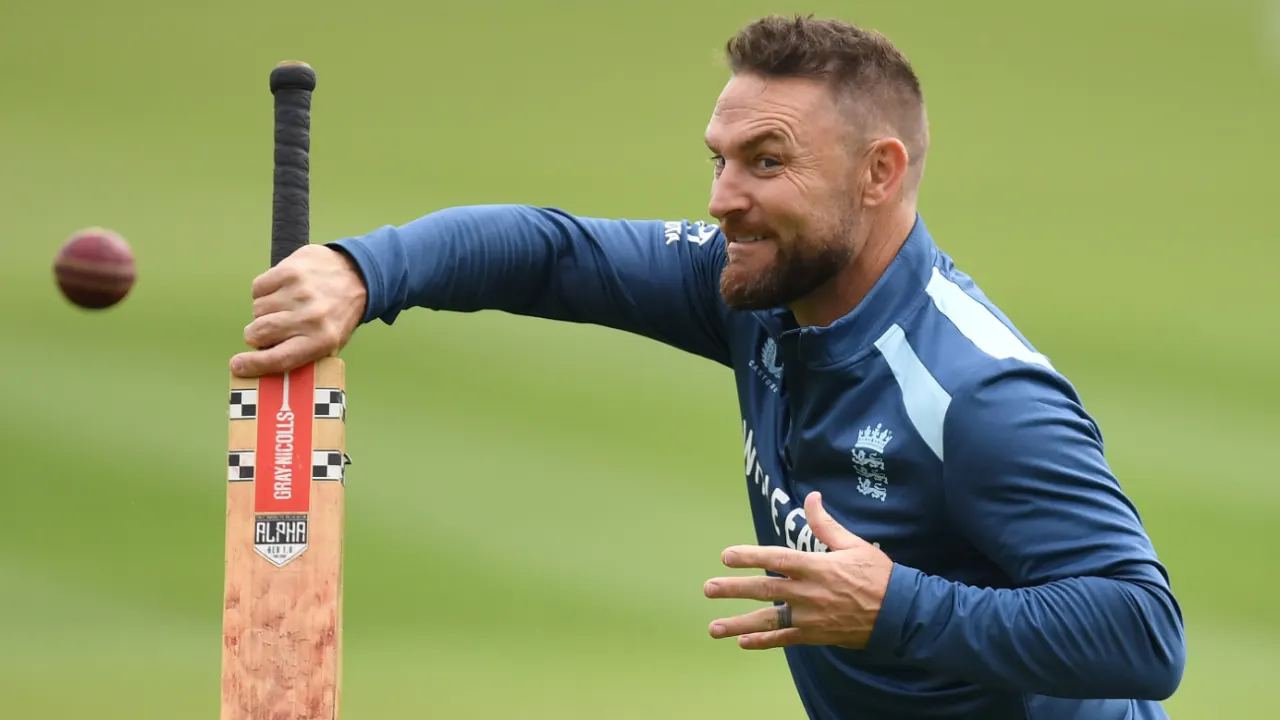
The ECB has sacked Brendon McCullum as England’s Test head coach but he will remain in charge of their white-ball teams. The decision leaves England’s Test team without a captain or a coach and comes barely three months after McCullum was publicly backed to continue despite overseeing a 4-1 defeat to Australia in last winter’s Ashes series.
McCullum described himself as “gutted” to lose a job that he had “absolutely loved”. He said in a statement: “Of course I’m gutted not to be continuing, but I respect the decision. My focus now is on giving everything I’ve got to the white-ball teams and helping England keep moving forward… I wish the Test team nothing but success.”
Richard Gould, the ECB’s chief executive, insisted in March that McCullum could “evolve” and learn from the mistakes made in Australia, saying that sacking him would have been the “easy” option. But only three Test matches later, in the wake of a 2-1 home defeat to New Zealand, the ECB has done exactly that, with Gould saying “the time is right” with next summer’s Ashes less than 12 months away.
“Brendon breathed new life into England Men’s Test team during an exciting period which saw some amazing victories, and we’re grateful for all he has given to the role,” Gould said. “We now believe that the time is right to make a change for the Test team as we target victory in the Ashes next summer.”
McCullum took charge of England’s Test team in 2022 and, along with captain Ben Stokes, inspired a run of 10 wins in his 11 matches in charge, as England played with uncharacteristic and unprecedented attacking flair. But results have tailed off badly since, and he leaves the job without a series win over either Australia or India.
Overall, McCullum’s record as Test coach stands at 27 wins, two draws, and 20 defeats, with seven of those losses coming in England’s last nine Test matches. His tenure both started and finished with home series against his native New Zealand: a 3-0 win in 2022, and defeat last month that culminated in Stokes’ sudden retirement.
McCullum said after England’s heavy defeat at Trent Bridge, where New Zealand clinched their series win, that his commitment to English cricket “has never wavered” and that he was “pretty sure the plan is that we just keep cracking on” when asked about his future as Test head coach.
But after a week of discussions with the ECB, he was informed on Saturday morning – before England’s fifth T20I against India in Southampton – that he would be removed from the Test job.
Rob Key, England’s managing director, decided two years ago to extend McCullum’s brief to include white-ball cricket when his contract was renewed until the end of 2027. McCullum now departs the Test job with over a year left to run on that deal, though will remain in charge of the white-ball teams until the end of next year’s 50-over World Cup in southern Africa.
The ECB said that the process to recruit a replacement for McCullum would begin immediately, and the decision means a return to the split coaching model that England used from 2022-24 when Matthew Mott was in charge of their white-ball teams. Potential candidates could include Andrew Flintoff, Richard Dawson, Ryan Campbell and Justin Langer.
Andy Flower, who coached England to three Ashes wins in 2009, 2010-11 and 2013, is also likely to be a target, though would need a lucrative contract to persuade him to resume a full-time international role given his success in the IPL with Royal Challengers Bengaluru.
Key said that it had been an “absolute privilege” to work with McCullum, and that he left the Test team “well-set and poised to achieve great things” despite recent results and the leadership vacuum. Harry Brook is the clear favourite to take over from Stokes as captain but the ECB must weigh up whether he can lead across formats.
McCullum had swerved questions about his own future on Saturday night after England’s win over India in Southampton sealed a 4-0 clean-sweep in the T20I series and took them to No. 1 in the ICC’s rankings in the format. His tenure as white-ball coach started with a group-stage exit at the Champions Trophy, though England reached the T20 World Cup semi-final in March.
“I’ve absolutely loved coaching the Test side and I’m incredibly proud of what we’ve achieved together,” McCullum said. “There’ve been some unbelievable highs and a few tough days along the way, but that’s all part of taking on a challenge like this. It’s been a privilege and an honour, and I’m grateful. Grateful to the players, the staff and the fans who supported us on the journey.
“I wish the Test team nothing but success. There’s a hell of a lot of talent in that dressing room and they’re a special bunch of lads. I’ll always be backing the boys, with a smile on my face, and hoping they keep taking the game on. I know they’ll continue to make people proud.”
[Cricinfo]
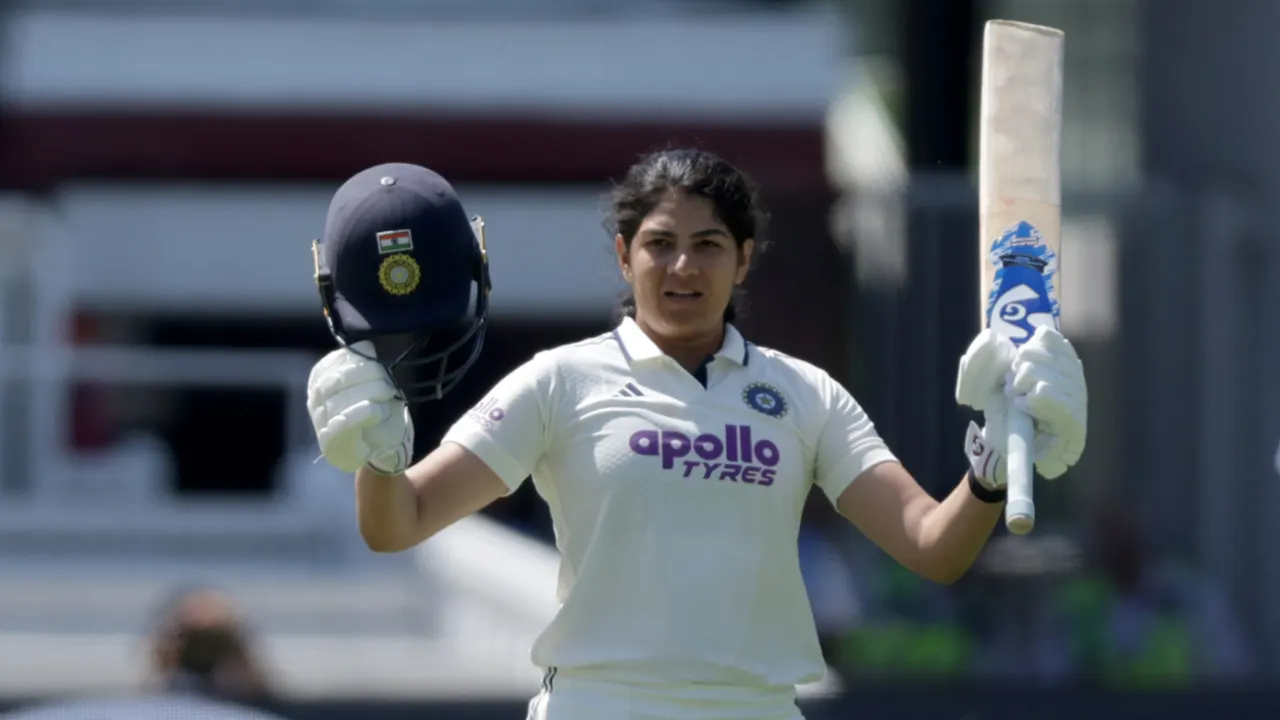
Yastika Bhatia followed India team-mate Kranti Gaud in etching her name onto the Lord’s Test honours boards with a maiden international century to guide India within touching distance of a massive victory over England in their historic match.
Sophie Ecclestone became the first Englishwoman named in the Lord’s Test bowling honours for her toil through 33.3 overs of India’s second innings to take 5 for 118, her fourth five-wicket haul in Tests. In all, Ecclestone bowled 55.2 overs for eight wickets, and her five-for came after Gaud won the race to be the first woman on the list with 5 for 37 on the second day.
Gaud continued her outstanding performance by ending the international careers of Tammy Beaumont and Heather Knight in a whimper, as England lurched to 59 for 5 in pursuit of 457. Amy Jones’ second half-century of the match offered enough resistance to ensure England take the match into a fourth and final day, but they do so still needing 327 runs with only four wickets in hand.
Beaumont, who announced two days before the match that this would be her last in an England shirt, fell for a first-ball duck to a beauty that nipped in, beat the inside edge and crashed into the top of off stump. Gaud curtailed her celebrations to join the India players in forming a guard of honour as Beaumont left the field.
Knight, who also announced that she would retire after this match two hours after leaving the field on Saturday evening, was also denied a fairytale farewell. With the match all but gone – India had set England the second-highest target in Women’s Test history – the best she could hope for was an individual innings of note. But she too fell to Gaud, caught at short leg by Richa Ghosh for 13.
Gaud, Sayali Satghare and Sneh Rana took two wickets apiece as Jones and Mady Villiers staged a 67-run stand for the sixth wicket.
Earlier, Bhatia had gone where fellow top-order batter Smriti Mandhana could not with her twin fifties in the match, falling 13 and 30 runs shy of her ton in each. Richa Ghosh also reached an unbeaten fifty, at which point India declared their second innings. Resuming on 39 not out with India one wicket down and leading by 269, Bhatia continued to grind England into submission.
She brought up her second Test fifty with an effortless drive down the ground off Lauren Bell and she punished Issy Wong for bowling too full and too wide by picking off boundaries with ease. She struck 14 fours all up and raised her ton off 145 balls with a drive off Wong through deep extra cover, punching the air in celebration as she ran a single.
The performance bookended a mixed tour of England for Bhatia, which began with a half-century in the opening T20I at Chelmsford – her first appearance in the format since April 2024 after undergoing knee surgery – and ended with a Test ton. In between, she made 41 runs in three innings of India’s T20 World Cup campaign, where they failed to make it out of the group stage.
Bhatia started the day surviving a failed attempt to drive at a Bell delivery which beat the inside edge and clipped off stump but didn’t dislodge the bails. She watched as Mandhana added just one to her overnight score of 69 before falling to Bell, well taken by wicketkeeper Amy Jones diving full-stretch to her right and collecting the ball millimetres above the turf.
Bell then accounted for Jemimah Rodrigues with one that jagged in to hit off stump. Soon after, she left the field suffering from abdominal muscle soreness, which kept her out of action for the remainder of the innings.
Cue Ecclestone, who had removed Shafali Verma on the second evening, to account for India captain Harmanpreet Kaur on this third day, although it took an England review to confirm Harmanpreet was plumb lbw.
Ecclestone had Deepti Sharma out in similar fashion, with one that turned in from outside off stump to hit Deepti on the back hip, before Bhatia holed out to extra cover. She claimed her fifth wicket bowling Sneh Rana with one that stayed low. She looked ready to collapse exhausted into her team-mates’ congratulatory embraces.
Richa, who relinquished the wicketkeeping gloves to Bhatia for this match, batted with freedom and was scoring at a run-a-ball when she was dropped on 43 by Wong at long-on off Ecclestone. She brought up her fifty with a single through the covers off Ecclestone, at which point Harmanpreet declared.
During the India innings, news broke of Brendon McCullum’s sacking as England Men’s Test head coach, continuing a theme of this summer where drama in those quarters has overshadowed the women’s events. Two weeks ago, Ben Stokes announced his international retirement in the middle of a Test against New Zealand, right as eventual T20 Women’s World Cup champions Australia were knocking India out of the tournament at Lord’s.
On this occasion, the England Women’s team might have welcomed the distraction as they crumbled. But for India, who comprehensively outplayed them, the limelight should be theirs.
Scores:
England Women 170 in 59.1 overs [Amy Jones 52; Kranti Gaud 5-37] and 130 for 6 in 40 overs (Amy Jones 52*; Sayali Satghare 2-19, Kranti Gaud 2-40) need 327 runs to beat India Women 285 in 74.5 overs [Smriti Mandhana 83, Harmanpreet Kaur 58, Deepti Sharma 57; Sophie Ecclestone 3-68] and 341 for 7 dec. in 86.3 overs (Smriti Mandhana 70, Yastika Bhatia 113, Richa Ghosh 50*; Sophie Ecclestone 5-118)
[Cricinfo]

Hurdler Ayomal Akalanka produced the finest performance of his career when he shattered the 26-year-old national record in the men’s 400 metres hurdles winning the silver medal at the Asian Under-23 Athletics Championships in Ordos, China on Sarurday.
The 20-year-old clocked a sensational 49.03 seconds to become the fastest Sri Lankan to run the event. It was in this discipline that Sri Lanka won the first Olympic medal in 1948. Akalanka’s performance erased the long-standing national record of 49.44 seconds set by Harijan Ratnayake in Jakarta in 2000 and confirmed his place as one of Asia’s emerging one-lap hurdlers.
The achievement is the latest milestone in a journey that has been built patiently under the guidance of renowned coach Aruna Bandara. As a schoolboy, Akalanka dominated the age-group ranks, rewriting both Sri Lanka Schools and national junior records in the 400 metres hurdles while steadily establishing himself as one of the country’s brightest track and field prospects. He was still in school when he set the target of breaking the national record of Ratnayake.
His talent first came to international prominence when he claimed the bronze medal in the boys’ 400 metres hurdles at the Asian Youth Athletics Championships with a then outstanding time of 51.40 seconds. He continued to progress through the junior ranks, representing Sri Lanka at Asian and global age-group competitions while consistently improving his performances.
With Saturday’s feat he has all the national level (Youth – 51.10 secs, Junior – 49.90 secs) records under his belt now.
At junior level, Akalanka developed a reputation as one of Sri Lanka’s most dependable relay runners as well, contributing to national relay teams in major regional championships. His performances earned him regular selections for Sri Lanka’s youth, junior and senior national squads, reflecting the confidence the selectors placed in his ability to perform on the international stage.
The silver medal in Ordos signals the arrival of a new force in Asian athletics. More importantly, the historic national record demonstrates that the years of careful development under Aruna Bandara have transformed a record-breaking Ambagamuwa Central athlete into a genuine senior international contender.
With several international competitions lined up Ayomal Akalanka’s breakthrough suggests Sri Lanka has another athlete to pin country’s hopes for medals.
by Reemus Fernando

Qatar’s Father Emir Sheikh Hamad bin Khalifa Al Thani laid to rest in Doha

Brendon McCullum removed from post as England Men’s Test coach

Yastika century, seamers put India on the brink of historic win at Lord’s

Showers will occur in the Sabaragamuwa, Western and North-western provinces and in Kandy, Nuwara-Eliya, Galle and Matara districts.

JSA opposes move to extend retirement ages of superior court judges

Next two weeks critical as dengue risk soars

‘Dates have the highest sugar content to fight Coronavirus’

Sunday Island 27 December – Headlines

#SundayIsland 17th December – Headlines

Sunday Island – 28th March

Sunday Island Headlines – 21 March

Sunday Island – 21st February – Headlines
-
 News3 days ago
Herath warns prospective migrant workers not to get fleeced by racketeers
-

 Midweek Review5 days ago
Unexpected focus on ‘pieces of tin’ worn by military men
-

 Features1 day ago
Prison riots and politics: NPP’s biggest challenge and Sri Lanka’s biggest opportunity
-
 Latest News6 days ago
Nyamhuri and Ngarava stun Bangladesh by defending 141
-

 Editorial2 days ago
What’s the world coming to?
-

 News4 days ago
Negombo Prison riot: Ensuring protection of prisoners fundamental responsibility of the state – UN
-

 Features3 days ago
Devanesan Annan – in Memoriam
-

 Foreign News3 days ago
Tensions erupt in Indian state after 11-year-old raped and murdered