
Features
An opportunity to break with the past


By Jehan Perera
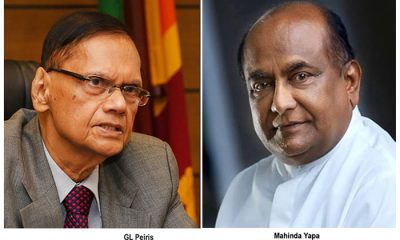
The passage of the budget by a comfortable majority confirms that the government’s parliamentary majority is holding in the face of adverse circumstances. The ruling party has lost over twenty of its members who no longer follow the party line. But the rest of them appear to be staying together despite the lack of a clear and public leadership. Prof. G L Peiris who gives leadership to one of the breakaway groups has assailed the ruling party members for having betrayed the mandate on which they got elected. At the previous elections, the SLPP had committed itself to protecting state assets including state-owned economic enterprises (SOEs).
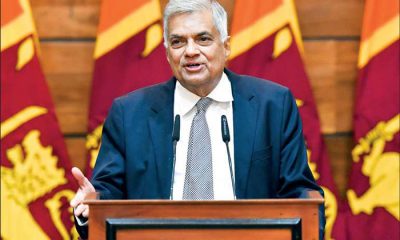
In a strongly worded speech in parliament he accused the party of switching allegiance to UNP leader Ranil Wickremesinghe at the expense of its own manifestos at the last elections. He pointed out that having repeatedly assured the electorate that state owned enterprises (SOEs) would be further developed and modernised at the 2019 presidential and 2020 parliamentary polls, the SLPP has thrown its weight behind President Wickremesinghe, who, in his capacity as the Finance Minister, reiterated his determination to sell even the profit-making SOEs. President Ranil Wickremesinghe has proposed privatising several state enterprises including Sri Lanka Insurance and Sri Lanka Telecom.
The government’s budget proposals make it clear that the decks are being cleared for a major overhaul of state-owned enterprises. Members of the ruling party who once spoke in favour of protecting them are now explaining the need to change their stance. Minister Bandula Gunawardena said Sri Lanka would not be in a position to be part of the international trading system unless it boosted its foreign reserves by selling some of its assets. The Minister said that if Sri Lanka did not shore up its reserves to the tune of over three billion dollars, international companies would not accept the letters of credit given by Sri Lankan banks.
DRAMATIC SHIFT
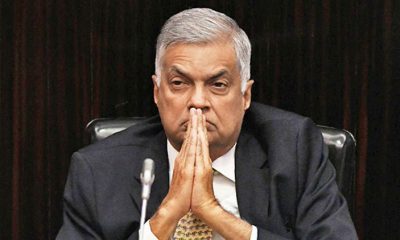
The realpolitik behind the dramatic shift in the stance of members of the ruling party is politics based on practical objectives, which is survival in this case rather than ideals. The protest movement that erupted in the aftermath of the economic crisis that hit the country a year ago reached its peak with the overrunning of official residences and secretariats of the president and prime minister. It caused their resignations and also denuded the ruling party of any credible leadership that can face the people. It was in this context that the five-time former prime minister took on that challenge with his single party seat in parliament to give the ruling party his leadership.
Some of the actions of President Wickremesinghe have been subjected to severe criticism, such as the crackdown on the protest movement and more recently the government’s policy on taxes and lack of policy on corruption. However, after the president took over the reins of government, support for the protest movement has diminished to all appearances and so have the numbers coming out in protest. The increasing levels of economic hardship being experienced by the masses of people who are now forced to cut down on their consumption and their savings are being borne in silence, at least for the moment. Sporadic and short protests are taking place in a number of industrial areas, but they are yet showing no signs of coalescing into one powerful force.
It seems that the hope of an imminent economic recovery and apprehension of the security forces continues to subdue the will of the people who balk at another round of large scale public protests. Nonetheless, members of the ruling party who could not face the people at the height of the protest movement are wary of the people even now. They seem to prefer to stick together even if it means going against the fundamentals of what they have been espousing in the past. In the north women were shown throwing rotten tomatoes to a hoarding on which the pictures of parliamentarians were pasted which would a shared sentiment in the south as well. Justifying their reversals, their spokesman Minister Bandula Gunawardena said that “Fitch again reduced our rating. No matter who governs Sri Lanka, they will all face the same problem. We need to build our reserves.”
READYMADE SOLUTION
It is in these straitened circumstances that President Wickremesinghe has been declaring his intention t resolve the country’s ethnic conflict and bring about national reconciliation without delay. He has set a target of February 4 next year, when Sri Lanka will celebrate its 75th year of Independence. This can be dismissed as an impossible dream. The ethnic conflict is one that predates independence from British rule. It was a problem that was identified by the colonial rulers much before independence. In response to a demand by some of the leaders of Ceylon, as it was then known, for self-rule, they noted that “Had the inhabitants of Ceylon presented greater appearance of unity and corporate spirit, one obstacle to the grant of full responsible government would have been removed.”
The divided nature of Sri Lankan society observed by the British colonials has been witnessed on every occasion on which a political solution to the ethnic conflict has been proposed. In 1957, there was the Bandaranaike-Chelvanayakam Pact, which was torn up, which was followed by the Dudley Senanayake-Chelvanayakam Agreement of 1965 which was not implemented, the Indo-Lanka Peace Accord of 1987 which was only partially implemented, the draft constitution of 2000 of Chandrika Kumaratunga which was burnt in parliament, the All Party Representatives Committee proposals of 2010 during Mahinda Rajapaksa’s period which were not even considered by the government, and the constitutional assembly of 2015 by the Sirisena- Wickremesinghe government that came up with multiple proposals.
In other words, the political solution to the ethnic conflict has been worked and reworked on multiple occasions. They have tended to be accepted by the government in power or by sections within the government but rejected by the opposition that is out of power. This time, however, the most militarist and ethnic nationalist political party in Sri Lanka’s history is dependent for its short term survival on the leadership of a non-racist political leader. This is an opportunity that may never come again and needs to be taken. Shakespeare wrote, “There is a tide in the affairs of men, Which taken at the flood, leads on to fortune.”
President Wickremesinghe’s assertions that he will solve the ethnic problem by the next Independence Day may reflect a realistic confidence that what was done in the passage of the budget can be replicated in the political solution whose contours have been readymade by being worked and reworked on multiple occasions. There would be no future or survival unless the country gets its act together and the political solution seems to be the basic one to unite the country to handle the present crisis. To continue with Shakespeare, “Omitted, all the voyage of their life is bound in shallows and in miseries. On such a full sea are we now afloat.”








 The abduction of Venezuelan President Nicolas Maduro by US special forces on January 3rd and his coercive conveying to the US to stand trial over a number of allegations leveled against him by the Trump administration marks a dangerous degeneration of prevailing ‘world disorder’. While some cardinal principles in International Law have been blatantly violated by the US in the course of the operation the fallout for the world from the exceptionally sensational VVIP abduction could be grave.
Although controversial US military interventions the world over are not ‘news’ any longer, the abduction and hustling away of a head of government, seen as an enemy of the US, to stand trial on the latter soil amounts to a heavy-handed and arrogant rejection of the foundational principles of international law and order. It would seem, for instance, that the concept of national sovereignty is no longer applicable to the way in which the world’s foremost powers relate to the rest of the international community. Might is indeed right for the likes of the US and the Trump administration in particular is adamant in driving this point home to the world.
Chief spokesmen for the Trump administration have been at pains to point out that the abduction is not at variance with national security related provisions of the US Constitution. These provisions apparently bestow on the US President wide powers to protect US security and stability through courses of action that are seen as essential to further these ends but the fact is that International Law has been brazenly violated in the process in the Venezuelan case.
To be sure, this is not the first occasion on which a head of government has been abducted by US special forces in post-World War Two times and made to stand trial in the US, since such a development occurred in Panama in 1989, but the consequences for the world could be doubly grave as a result of such actions, considering the mounting ‘disorder’ confronting the world community.
Those sections opposed to the Maduro abduction in the US would do well to from now on seek ways of reconciling national security-related provisions in the US Constitution with the country’s wider international commitment to uphold international peace and law and order. No ambiguities could be permitted on this score.
While the arbitrary military action undertaken by the US to further its narrow interests at whatever cost calls for criticism, it would be only fair to point out that the US is not the only big power which has thus dangerously eroded the authority of International Law in recent times. Russia, for example, did just that when it violated the sovereignty of Ukraine by invading it two or more years ago on some nebulous, unconvincing grounds. Consequently, the Ukraine crisis too poses a grave threat to international peace.
It is relevant to mention in this connection that authoritarian rulers who hope to rule their countries in perpetuity as it were, usually end up, sooner rather than later, being a blight on their people. This is on account of the fact that they prove a major obstacle to the implementation of the democratic process which alone holds out the promise of the progressive empowerment of the people, whereas authoritarian rulers prefer to rule with an iron fist with a fixation about self-empowerment.
Nevertheless, regime-change, wherever it may occur, is a matter for the public concerned. In a functional democracy, it is the people, and the people only, who ‘make or break’ governments. From this viewpoint, Russia and Venezuela are most lacking. But externally induced, militarily mediated change is a gross abnormality in the world of democracy, which deserves decrying.
By way of damage control, the US could take the initiative to ensure that the democratic process, read as the full empowerment of ordinary people, takes hold in Venezuela. In this manner the US could help in stemming some of the destructive fallout from its abduction operation. Any attempts by the US to take possession of the national wealth of Venezuela at this juncture are bound to earn for it the condemnation of democratic opinion the world over.
Likewise, the US needs to exert all its influence to ensure that the rights of ordinary Ukrainians are protected. It will need to ensure this while exploring ways of stopping further incursions into Ukrainian territory by Russia’s invading forces. It will need to do this in collaboration with the EU which is putting its best foot forward to end the Ukraine blood-letting.
Meanwhile, the repercussions that the Maduro abduction could have on the global South would need to be watched with some concern by the international community. Here too the EU could prove a positive influence since it is doubtful whether the UN would be enabled by the big powers to carry out the responsibilities that devolve on it with the required effectiveness.
What needs to be specifically watched is the ‘copycat effect’ that could manifest among those less democratically inclined Southern rulers who would be inspired by the Trump administration to take the law into their hands, so to speak, and act with callous disregard for the sovereign rights of their smaller and more vulnerable neighbours.
Democratic opinion the world over would need to think of systems of checks and balances that could contain such power abuse by Southern autocratic rulers in particular. The UN and democracy-supportive organizations, such as the EU, could prove suitable partners in these efforts.
All in all it is international lawlessness that needs managing effectively from now on. If President Trump carries out his threat to over-run other countries as well in the manner in which he ran rough-shod over Venezuela, there is unlikely to remain even a semblance of international order, considering that anarchy would be receiving a strong fillip from the US, ‘The World’s Mightiest Democracy’.
What is also of note is that identity politics in particularly the South would be unprecedentedly energized. The narrative that ‘the Great Satan’ is running amok would win considerable validity among the theocracies of the Middle East and set the stage for a resurgence of religious fanaticism and invigorated armed resistance to the US. The Trump administration needs to stop in its tracks and weigh the pros and cons of its current foreign policy initiatives.

 The British School in Colombo (BSC) hosted its Annual Christmas Carnival 2025, ‘Gingerbread Wonderland’, which was a huge success, with the students themseles in the spotlight, managing stalls and volunteering.
The event, organised by the Parent-Teacher Association (PTA), featured a variety of activities, including: Games and rides for all ages, Food stalls offering delicious treats, Drinks and refreshments, Trade booths showcasing local products, and Live music and entertainment.

The carnival was held at the school premises, providing a fun and festive atmosphere for students, parents, and the community to enjoy.
The halls of the BSC were filled with pure Christmas magic and joy with the students and the staff putting on a tremendous display.
Among the highlights was the dazzling fashion show with the students doing the needful, and they were very impressive.

The students themselves were eagerly looking forward to displaying their modelling technique and, I’m told, they enjoyed the moment they had to step on the ramp.
The event supported communities affected by the recent floods, with surplus proceeds going to flood-relief efforts.

 Hi! This week I’m giving you some beauty tips so that you could look forward to enjoying 2026 with a glowing younger looking skin.
Face wash for natural beauty
* Avocado:
Take the pulp, make a paste of it and apply on your face. Leave it on for five minutes and then wash it with normal water.
* Cucumber:
Just rub some cucumber slices on your face for 02-03 minutes to cleanse the oil naturally. Wash off with plain water.
* Buttermilk:
Apply all over your face and leave it to dry, then wash it with normal water (works for mixed to oily skin).
Face scrub for natural beauty
Take 01-02 strawberries, 02 pieces of kiwis or 02 cubes of watermelons. Mash any single fruit and apply on your face. Then massage or scrub it slowly for at least 3-5 minutes in circular motions. Then wash it thoroughly with normal or cold water. You can make use of different fruits during different seasons, and see what suits you best! Follow with a natural face mask.
Face Masks
* Papaya and Honey:
Take two pieces of papaya (peeled) and mash them to make a paste. Apply evenly on your face and leave it for 30 minutes and then wash it with cold water.
Papaya is just not a fruit but one of the best natural remedies for good health and glowing younger looking skin. It also helps in reducing pimples and scars. You can also add honey (optional) to the mixture which helps massage and makes your skin glow.
* Banana:
Put a few slices of banana, 01 teaspoon of honey (optional), in a bowl, and mash them nicely. Apply on your face, and massage it gently all over the face for at least 05 minutes. Then wash it off with normal water. For an instant glow on your face, this facemask is a great idea to try!
* Carrot:
Make a paste using 01 carrot (steamed) by mixing it with milk or honey and apply on your face and neck evenly. Let it dry for 15-20 minutes and then wash it with cold water. Carrots work really well for your skin as they have many vitamins and minerals, which give instant shine and younger-looking skin.

Greenland allies vow action if Trump moves to seize world’s largest island

Landslide early warnings issued to the Districts of Badulla, Kandy, Matale and Nuwara Eliya

Coe commits World Athletics support to Jamaica

Rare mountain gorilla twins born in Africa’s oldest national park

ECB launch ‘thorough review’ in wake of 4-1 Ashes defeat

Warning for deep depression over South-east Bay of Bengal Sea area

‘Dates have the highest sugar content to fight Coronavirus’

Sunday Island 27 December – Headlines

#SundayIsland 17th December – Headlines

Sunday Island – 28th March

Sunday Island Headlines – 21 March

Sunday Island – 21st February – Headlines
-

 News3 days ago
Interception of SL fishing craft by Seychelles: Trawler owners demand international investigation
-
 News3 days ago
Broad support emerges for Faiszer’s sweeping proposals on long- delayed divorce and personal law reforms
-
 News4 days ago
Private airline crew member nabbed with contraband gold
-

 News2 days ago
Prez seeks Harsha’s help to address CC’s concerns over appointment of AG
-

 News2 days ago
Govt. exploring possibility of converting EPF benefits into private sector pensions
-

 Features3 days ago
Educational reforms under the NPP government
-

 News6 days ago
Health Minister sends letter of demand for one billion rupees in damages
-
 Features4 days ago
Pharmaceuticals, deaths, and work ethics