
Latest News
Afghanistan storm into Super Eight; New Zealand knocked out


Afghanistan booked their place in Super Eight, thereby knocking New Zealand out of men’s T20 World Cup 2024 after a seven-wicket win over PNG in Tarouba.
Their win was set up by new-ball spells from fast bowlers Fazalhaq Farooqi and Naveen-ul Haq that saw PNG lose five wickets inside the powerplay. A total of four run-outs did not help PNG’s cause either as they were dismissed for 95.
Afghanistan romped home with 29 balls to spare with Gulbadin Naib staying unbeaten on 49. The result meant that for the first time since 2014, New Zealand bowed out before the semi-final stage of a men’s World Cup – ODI or T20.
With six points and a net run rate of 4.230, Afghanistan lead Group C.
A target of 96 would not have worried Afghanistan. Rahmanullah Gurbaz and Ibrahim Zadran had added century stands for the opening wicket in each of their first two games. Gurbaz had struck fifties in those outings. As a result, the middle order had barely had time in the middle. On Thursday, Afghanistan’s worst fears nearly came true.
Semo Kamea brought in for vice-captain Charles Amini, almost struck first ball when Ibrahim was ruled out lbw. He used the DRS to his benefit but lost his stumps three balls later while trying to attack an inswinger from Kamea. In the next over, fast bowler Alei Neo knocked over Gurbaz, who also charged down to heave one across the line. PNG could have put even more pressure on Afghanistan had wicketkeeper Kiplin Doriga hung on to Naib’s outside edge in the fifth over.
PNG were left to rue those chances on a surface with dry grass, which, as Daren Ganga had said in his pitch report, contributed to variable bounce. The proof was in Azmatullah Omarzai’s dismissal when a length ball from Norman Vanua barely got up and bowled him.
But Naib, in the company of Mohammad Nabi, countered the conditions to ensure Afghanistan faced no further hiccups.
PNG made almost the right start after being sent in. A double through fine leg, a single through point, a cut shot for four – they were ticking along without any risk. But it all went south when captain Assad Vala was run out in the second over. Going for the third run, his bat was in the air at the non-striker’s end when Gurbaz nailed a direct hit at the bowler’s end. Had Vala slid his bat, he would have been safe.
Farooqi then did what he does best: flummox batters with swing. He had Lega Siaka caught behind by Gurbaz diving full length to his right and then, on the next ball, Sese Bau also nicked one behind.
When Naveen got Hiri Hiri to chop one onto his stumps on the first ball of the fourth over, PNG had lost four wickets in nine balls. Batting first on a used surface that hosted the West Indies-New Zealand clash just 24 hours ago, that was handing over advantage on a platter.
When Naveen crashed through Tony Ura for his 50th T20I wicket, PNG were reduced to 30 for 5. PNG needed to bat a few overs safely at that point, and Chad Soper and Doriga did that for 24 balls while scoring 16 runs. But in the tenth over, both were guilty of ball-watching, which resulted in Soper being run out.
Doriga then used the slog sweep and sweep to rotate strike against Rashid Khan and Noor Ahmad. Neo punished the seamers when they bowled on his pads. The pair was effective without being enterprising and added 38 off 34 balls.
Once Doriga was done in by a wrong’un from Noor to be trapped lbw, PNG lost their last three wickets for just seven runs.
Brief scores:
Afghanistan 101 for 3 in 15.1 overs (Gulbadin Naib 49*; Alei Neo 1-26, Semo Kamea 1-16, Norman Vanua 1-18) beat Papua New Guinea 95 in 19.5 overs (Kiplin Doriga 27; Fazalhaq Farooqi 3-16, Naveen Ul-Haq 2-04, Noor Ahmad 1-14) by seven wickets
[Cricinfo]













Latest News
Trump says he is postponing strikes on Iran power plants after ‘productive’ talks on ending war

Donald Trump says the US and Iran have held talks on the “complete and total resolution of hostilities” in the Middle East
He says that, as a result of the talks, he has postponed threatened strikes on Iranian power plants and oil and gas fall immediately after.
On Saturday night, Trump had given Iran a 48 hour deadline to reopen the Strait of Hormuz. – or, he said, the US would “obliterate” Iranian power plants
An Iranian news agency quotes an unnamed source saying there have been no talks between Teheran and Trump.
Earlier, the UK’s Keir Starmer and Trump agreed that reopening the Strait of Hormuz is “essential to resume global shipping” during a call late on Sunday according to Downing Street
Meanwhile, the Israel Defense Forces (IDF) says it expects to face ‘several more weeks of fighting against Iran and Hezbollah in Lebanon
(BBC)
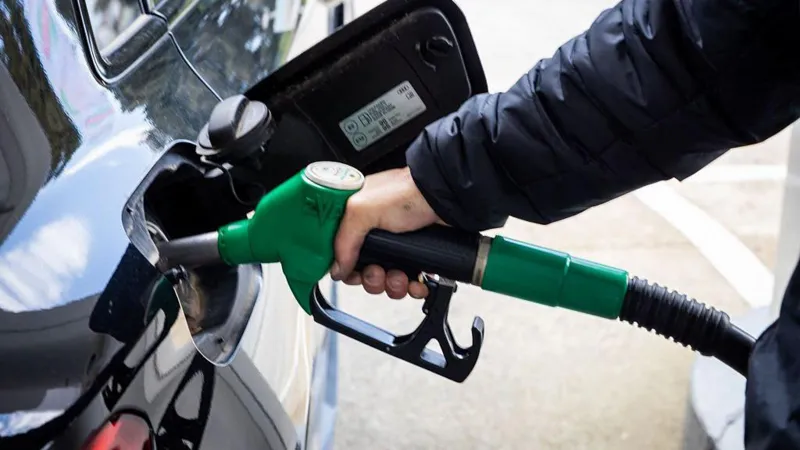
Major stock markets in Asia slumped on Monday after Washington and Tehran threatened to escalate hostilities, as the Iran war enters its fourth week.
Japan’s benchmark Nikkei 225 index was almost 3.6% lower, while South Korea’s Kospi fell by almost 6%.
US President Donald Trump warned on Saturday that he would “obliterate” Iranian power plants if Iran did not open the key Strait of Hormuz shipping route. Iran said it would respond to any such strikes by targeting key infrastructure in the region, including energy facilities.
Japan and South Korea have been particularly impacted by the conflict, as they are heavily dependent on oil and gas that would normally pass through the strait.
Iran has effectively blocked the Strait of Hormuz, one of the world’s busiest shipping channels, since the US and Israel attacked the country on 28 February.
About 20% of the world’s oil and liquefied natural gas (LNG) usually passes through the waterway – and the war has sent global fuel prices soaring.
On Monday, International Energy Agency chief Fatih Birol said that the war could see the world facing its worst energy crisis in decades.
Speaking at the National Press Club in Australia’s capital, Birol compared the current energy crisis to those of the 1970s and the impact of Russia’s 2022 invasion of Ukraine.
“This crisis as things stand is now two oil crises and one gas crash put all together,” he said.
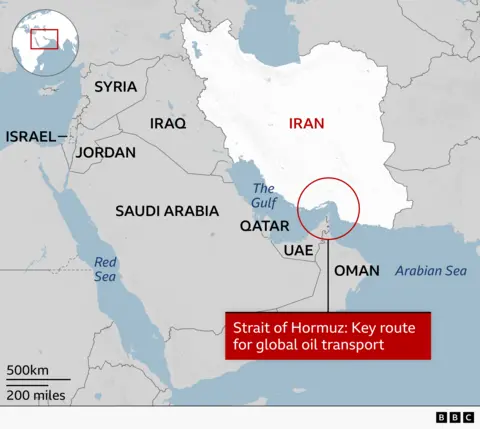
“If Iran doesn’t FULLY OPEN, WITHOUT THREAT, the Strait of Hormuz, within 48 HOURS from this exact point in time, the United States of America will hit and obliterate their various POWER PLANTS, STARTING WITH THE BIGGEST ONE FIRST!,” Trump said in a social media post published at 23:44 GMT Saturday.
That threat came after Iranian missiles hit the Israeli city of Dimona, and shortly before a second attack on the town of Arad nearby.
Mohammad Bagher Ghalibaf, the speaker of the Iranian parliament, said on Sunday that energy and desalination infrastructure in the region would be “irreversibly destroyed” if his country’s power plants were attacked.
Such action would significantly escalate the conflict, which has already disrupted global energy supplies, pushing up prices and causing fuel shortages.
Other markets in the Asia-Pacific region were also lower on Monday.
Hong Kong’s Hang was down by almost 3.5% and the Shanghai Stock Exchange Composite index 2.5% lower.
Global oil prices were broadly steady, with Brent crude 0.45% higher at $112.69 (£84.56) a barrel and US-traded oil was up by 0.7% at $98.93.
[BBC]
Latest News
Heat Index at Caution Level in the Western, Sabaragamuwa, Southern and North-western provinces and in Anuradhapura, Mannar and Vavuniya districts
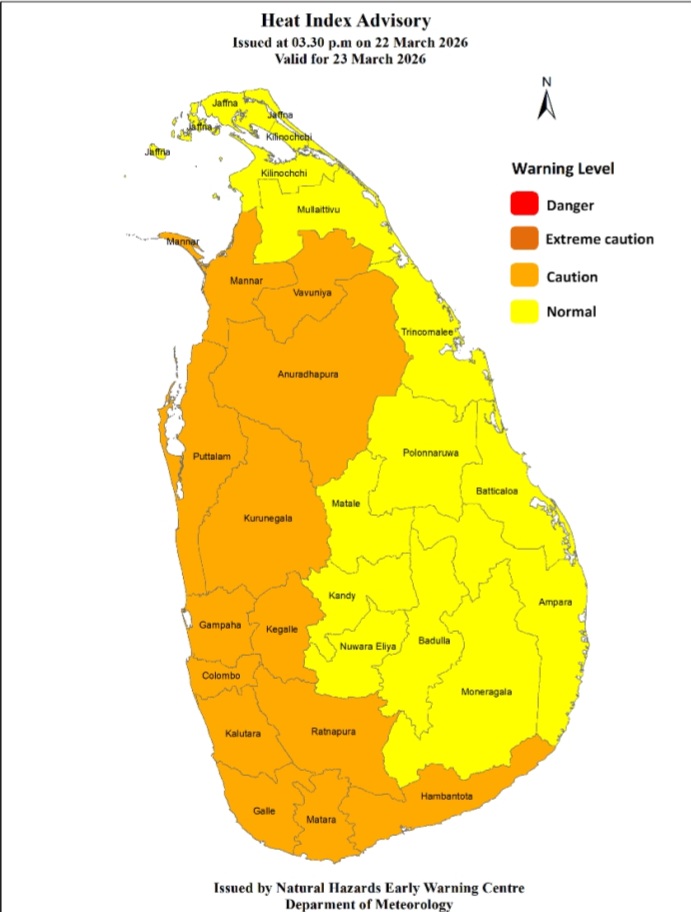
Warm Weather Advisory
Issued by the Natural Hazards Early Warning Centre of the Department of Meteorology
at 3.30 p.m. on 22 March 2026, valid for 23 March 2026.
The Heat index, the temperature felt on human body is likely to increase up to ‘Caution level’ at some places in the Western, Sabaragamuwa, Southern and North-western provinces and in
Anuradhapura, Mannar and Vavuniya districts.
The Heat Index Forecast is calculated by using relative humidity and maximum temperature and this is the condition that is felt on your body. This is not the forecast of maximum temperature. It is generated by the Department of Meteorology for the next day period and prepared by using global numerical weather prediction model data.

Effect of the heat index on human body is mentioned in the above table and it is prepared on the advice of the Ministry of Health and Indigenous Medical Services.
ACTION REQUIRED
Job sites: Stay hydrated and takes breaks in the shade as often as possible.
Indoors: Check up on the elderly and the sick.
Vehicles: Never leave children unattended.
Outdoors: Limit strenuous outdoor activities, find shade and stay hydrated.
Dress: Wear lightweight and white or light-colored clothing.
Note:
In addition, please refer to advisories issued by the Disaster Preparedness & Response Division, Ministry of Health in this regard as well. For further clarifications please contact 011-7446491.

Trump says he is postponing strikes on Iran power plants after ‘productive’ talks on ending war

Asia stocks slide as US and Iran threaten to escalate war

Heat Index at Caution Level in the Western, Sabaragamuwa, Southern and North-western provinces and in Anuradhapura, Mannar and Vavuniya districts

Showers may occur at several places in the Western and Sabaragamuwa provinces and in Galle, Matara and Nuwara-Eliya districts after 2.00 pm.

Fuel price hikes trigger transport disruptions and calls for fare increases

Prof. Peiris honoured by International Institute of Rehabilitation

‘Dates have the highest sugar content to fight Coronavirus’

Sunday Island 27 December – Headlines

#SundayIsland 17th December – Headlines

Sunday Island – 28th March

Sunday Island Headlines – 21 March

Sunday Island – 21st February – Headlines
-

 News6 days ago
CIABOC questions Ex-President GR on house for CJ’s maid
-

 News7 days ago
Sri Lankan marine scientist Asha de Vos honoured at UNGA opening
-

 News7 days ago
Australian HC debunks misleading travel risk claims for Sri Lanka
-
 News5 days ago
Bailey Bridge inaugurated at Chilaw
-

 Latest News7 days ago
Wednesdays declared a government holiday with effect from 18th March
-

 News5 days ago
Pay hike demand: CEB workers climb down from 40 % to 15–20%
-
 News4 days ago
CIABOC tells court Kapila gave Rs 60 mn to MR and Rs. 20 mn to Priyankara
-

 Editorial6 days ago
Couple QR-based quota with odd-even rationing