
News
A meal of hope: Kalawana entrepreneur feeds hungry schoolchildren amid economic hardship

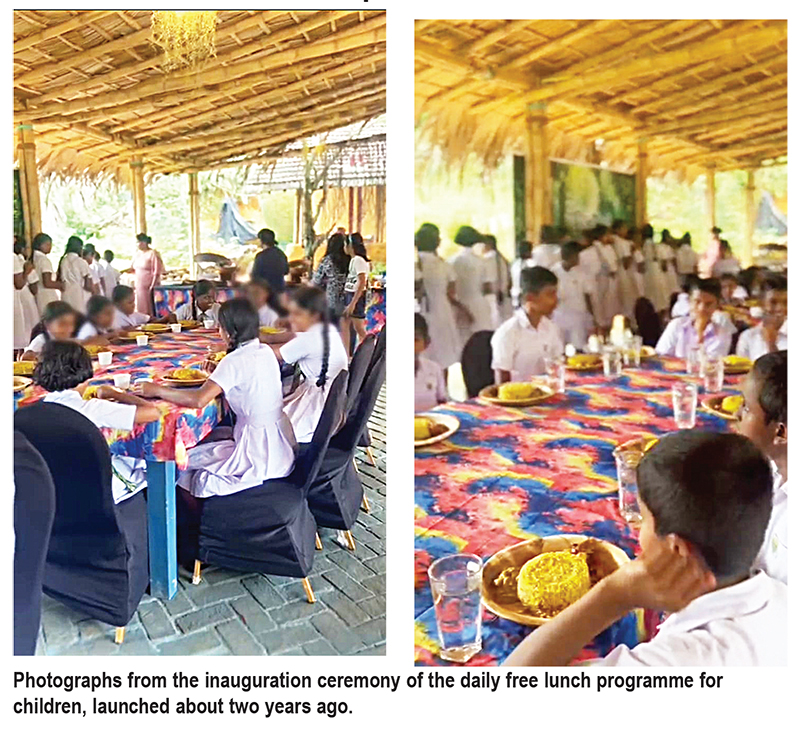
In a country where some children arrive at school in luxury vehicles after three hearty meals, others walk into classrooms having eaten nothing more than a piece of bread and a drink of water.Teachers say there are students who attend lessons without bringing lunch, wearing the same uniform day after day, some without shoes or slippers. For a few, the school’s water tap becomes their only source of relief from hunger.
It is against this stark backdrop that Kalawana-based tourism entrepreneur Sarathchandra Ramanayake has stepped forward with a quiet but determined intervention.
Since 2023, through his venture Rainforest Community Kitchen, Ramanayake has been providing free, nutritious lunches to 100 schoolchildren in and around Kalawana who would otherwise go without a midday meal. The initiative began at the height of the country’s economic crisis, a period marked by soaring food prices and reports of children fainting during morning school assemblies due to hunger.
“As prices rose, families who once managed three meals struggled to afford two. Those who ate twice a day were reduced to one,” Ramanayake recalled. “If parents had the means, they would never send their children to school hungry.”
Parents echo this reality. They speak of children who once carried a few rupees to buy a snack at the school canteen but now stand by, unable to afford even the simplest meal. “On some days, the daily wage we earn in the morning is spent entirely at the shop by evening,” one parent said. “We cannot even think about tomorrow’s meal.”
-
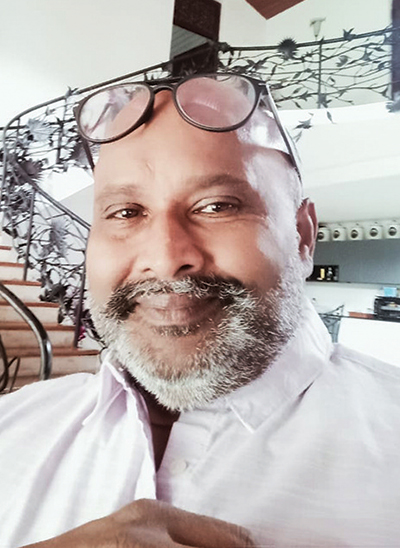
- Entrepreneur Sarathchandra Ramanayake
-
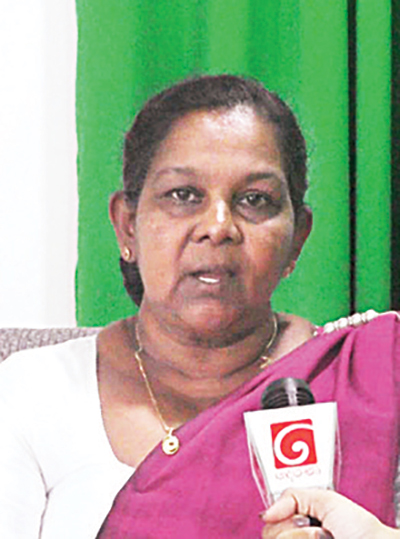
- Nilmini Suraweera, a teacher at Kalawana National School
At Kalawana National School, where the programme first took root, teachers have witnessed the impact firsthand. Nilmini Suraweera, who coordinates the initiative within the school, described the children’s anticipation during the lunch break.
“For nearly two years, meals have been provided continuously to economically disadvantaged students,” she said. “When we see how eagerly they wait for that meal, it is deeply moving. They receive a clean and nutritious lunch every day. It is a truly noble service.”
Students are identified through class teachers, ensuring that those most in need benefit from the programme. According to Suraweera, while many schools face similar hardships, few sustained efforts reach these children.
Ramanayake, a father of two daughters, says his motivation is simple. “An adult may endure hunger somehow. But how can a child?” he asked. “If we have the ability to give, why should we hold back?”
Despite warnings from some quarters that charity might affect business profits, he chose to integrate social responsibility into his enterprise. A portion of the profits from meals purchased at his establishment is channelled into funding the school lunch programme. Customers are not charged extra; instead, the business absorbs the cost as part of its commitment to the community.
“We don’t even see the faces of the children who receive these meals,” Ramanayake said. “I do this with no narrow motive—only for the happiness it brings.”
The initiative, which currently supports 100 students daily, has plans for expansion. Ramanayake hopes to increase the number of beneficiaries to 1,000 in the coming years, drawing support from individuals, institutions and well-wishers willing to join the cause.
Parents, struggling under the weight of rising living costs, say the assistance has brought relief during desperate times. “Children wear the same pair of shoes until the soles wear out,” one parent noted. “Sometimes we cannot even afford slippers. What he is doing is truly noble.”
As economic pressures continue to affect families across the country, the Kalawana lunch programme stands as a reminder that small, sustained acts of compassion can make a profound difference.For the children who line up each day for a simple, nourishing meal, it is more than food. It is strength for the afternoon’s lessons—and perhaps, hope for a better tomorrow.
Text and Pix by Upendra Priyankara Jathungama


… America-Pakistan developed required ‘intel’ for operation
By Shamindra Ferdinando
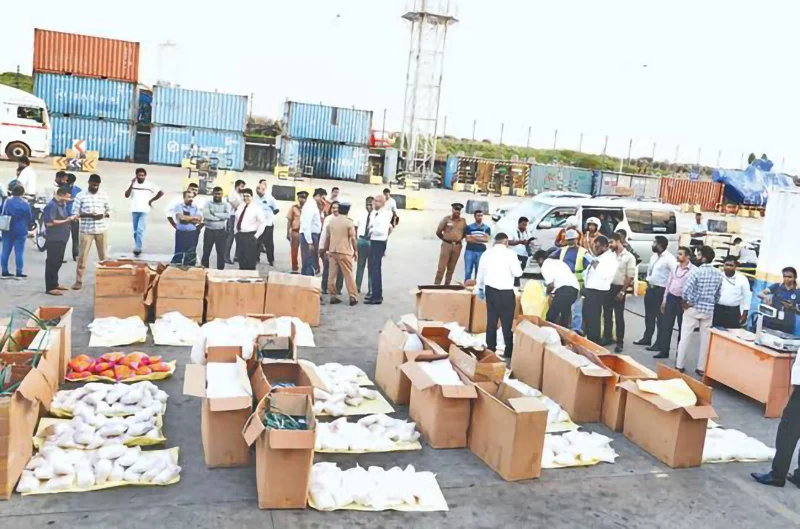
The US Embassy in Colombo declined to comment on a special police probe into the recent narcotics detection, jointly made at the China-managed Colombo International Container Terminal (CICT) by the US Drug Enforcement Administration’s (DEA) New Delhi Country Office and Sri Lanka Police..
US Embassy spokesperson said that the mission wouldn’t add to their press release, issued on 2 Sept., in the immediate aftermath of the raid.
Police Headquarters, on 11 Sept., declared that the Central Crime Investigation Bureau (CCIB) was conducting investigations into the recovery of 473 kg of Crystal Methamphetamine (‘Ice’). Police never acknowledged the role played by the US in the operation.
According to Police Headquarters, on a directive given by IGP Priyantha Weerasooriya, the Special Investigation Unit has launched an internal probe into, what it called, shortcomings and irregularities in the Colombo Port raid.
The Island:
Have you (relevant US authorities) received an update of Sri Lanka’s investigations from the Police?
US Embassy:
U.S. and Sri Lankan law enforcement authorities maintain close and ongoing cooperation on counternarcotics matters, including the exchange of information that helps both countries combat transnational drug trafficking. We don’t have anything further to share on communications with Sri Lankan authorities beyond what we’ve already said publicly about the successful operation.
The Island:
Did the Police seek clarification regarding DEA, New Delhi Country Office role in the successful raid?
US Embassy:
As the Embassy noted publicly following the seizure, cooperation with the U.S. Drug Enforcement Administration contributed to the Sri Lanka Police Narcotics Bureau’s successful seizure of approximately 463 kilograms of methamphetamine at the Port of Colombo.
The seizure demonstrates the value of close U.S.-Sri Lankan cooperation in disrupting transnational narcotics trafficking.
The Island:
Before we raised this issue were you aware of the internal investigation into the drug bust which was also raised in Parliament last week?
The US Embassy:
We don’t have anything further to share beyond what we’ve already said publicly about the successful operation.
Our focus remains on the strong U.S.-Sri Lanka law enforcement partnership and the concrete results our cooperation can deliver—disrupting transnational criminal organisations, cutting off the profits that fuel illicit drug trafficking, and protecting our citizens from the dangers of narcotrafficking.
The US Embassy attributed the success of the counternarcotics operation to the US-Sri Lanka partnership
The US Embassy statement, dated 2 Sept: The U.S. Drug Enforcement Administration’s (DEA) New Delhi Country Office and Sri Lanka’s Police Narcotics Bureau (PNB) conducted a successful joint operation disrupting a Pakistan-based narcotrafficking network attempting to smuggle crystal methamphetamine through Sri Lanka to international markets.
Acting on intelligence developed by DEA’s Foreign Counterparts Unit Pakistan Anti-Narcotics Force Special Investigations Cell between August 14–29 on suspicious maritime containers moving from Pakistan to Colombo, PNB seized approximately 463 kg of crystal methamphetamine with a street value of $21 million, concealed in bath towels, and arrested several suspects, including Pakistani nationals. This operation underscores the strength of the U.S.-Sri Lanka partnership in dismantling transnational criminal organisations that fund terrorism and threaten communities in both our countries. This cooperation builds on long-standing training and technical assistance provided through the U.S. Department of State’s Bureau of International Narcotics and Law Enforcement Affairs (INL) to the Sri Lanka Police and Customs. The United States remains committed to working with Sri Lanka and regional partners to aggressively pursue transnational criminal organizations, deny them the revenue from illicit drug trafficking, and protect our citizens from the dangers of narcotrafficking.”
SLPP National Organiser Namal Rajapaksa, in Parliament, raised questions about the internal investigation into the raid. However, Rajapaksa, too, hasn’t mentioned the US role in the operation. The Special Investigation Unit has recorded a statement from Senior DIG Ranmal Kodituwakku regarding the Colombo Port raid.
MP Rajapaksa questioned the rationale behind questioning the officer who led the raid against the backdrop of controversial releasing of 323 containers from the Colombo Port in January 2025. The failure to question those responsible for the releasing of 323 containers indicated who was behind that operation, MP Rajapaksa told Parliament.
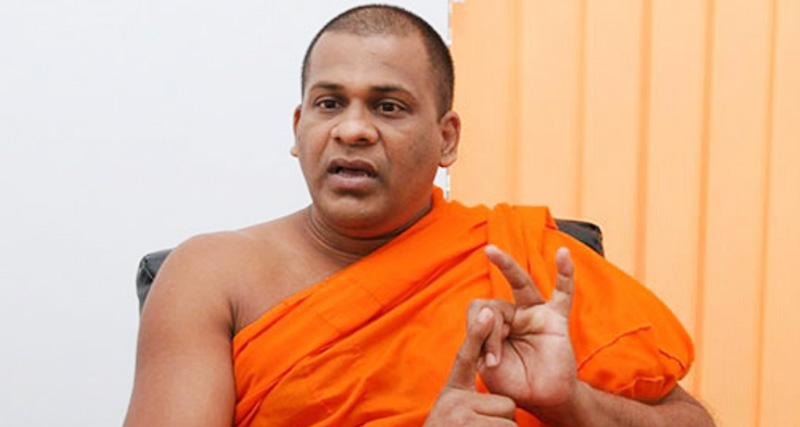
Bodu Bala Sena (BBS) General Secretary Ven. Galagodaaththe Gnanasara Thera appeared before the Colombo High Court yesterday in a case filed by the Attorney General over statements allegedly insulting Islam.
The case was taken up before Colombo High Court Judge Buddhika C. Ragala, who ordered that it be called again on September 30.
His appearance came six days after the Supreme Court invalidated the presidential pardon granted to Gnanasara Thera by former President Maithripala Sirisena in 2019.
Speaking to journalists outside the court, Gnanasara Thera said he was prepared to face the legal process and would abide by the law, rejecting reports that he had gone into hiding following the Supreme Court judgment.
“It is the weak who disappear and flee. We worked for the country and are facing the consequences for that. We are not afraid and will not flee,” he said, noting that he would surrender to the court and face whatever legal consequences following the Supreme Court decision.
The Supreme Court, on September 10, ruled that the presidential pardon granted to Gnanasara Thera by Sirisena was invalid. The judgment followed fundamental rights petitions challenging the legality of the pardon. A three-judge bench, comprising Justices Janak de Silva, Sobhitha Rajakaruna and Sampath Abeykoon, delivered the ruling.
Gnanasara Thera was convicted by the Court of Appeal in 2018 for contempt of court and sentenced to a total of 19 years’ imprisonment to run concurrently as six years. The conviction related to his conduct during proceedings at the Homagama Magistrate’s Court concerning the disappearance of Prageeth Eknaligoda.
He was released from Welikada Prison on May 23, 2019, after then President Maithripala Sirisena had granted him a presidential pardon.
The Supreme Court found the pardon to be arbitrary and invalid in law, following its consideration of the petitions challenging the exercise of the presidential power of clemency.
Meanwhile, police have said they are awaiting the Supreme Court judgment before determining what further action should be taken following the invalidation of the pardon.
The proceedings before the Colombo High Court yesterday are separate from the contempt of court case that resulted in the six-year sentence. They concern alleged statements made by Gnanasara Thera regarding Islam.
In June this year, the Colombo High Court rejected an appeal by Gnanasara Thera against a nine-month prison sentence imposed by the Colombo Magistrate’s Court in connection with statements made at a 2016 media briefing that were found to have disrupted religious coexistence.
The latest High Court proceedings, therefore, form part of separate legal action concerning his alleged remarks about Islam, while the Supreme Court ruling relates specifically to the legality of the 2019 presidential pardon granted in connection with his contempt of court conviction.
The case before the Colombo High Court will be called again on September 30.
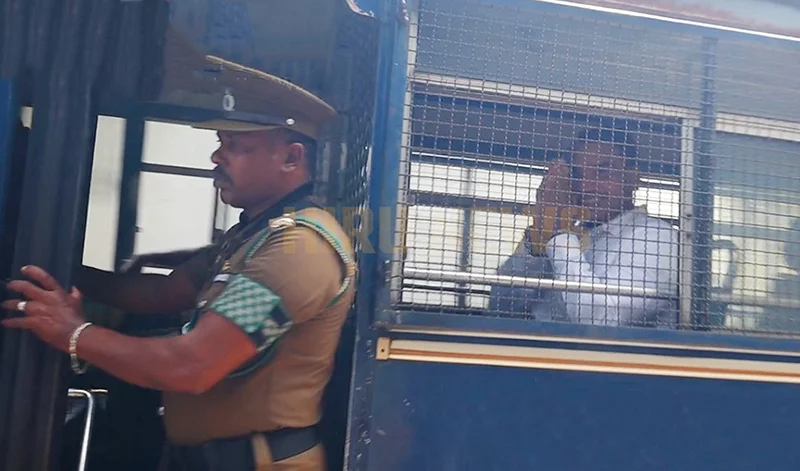
Colombo Fort Magistrate Pasan Amarasena yesterday (16) ordered SLPP National Organiser Namal Rajapaksa, MP, to be further remanded, until September 23. The Magistrate issued the order when Rajapaksa was produced before the court as a suspect in an investigation into an alleged USD 2 million bribe case connected to the acquisition of aircraft for SriLankan Airlines.
The Magistrate issued the order following the submissions made by Deputy Solicitor General Janaka Bandara, appearing on behalf of the Criminal Investigation Department (CID).
President’s Counsel Anil Silva, along with other attorneys representing Rajapaksa, also made submissions before the court.
The Magistrate also announced that a decision on Rajapaksa’s bail application would be announced on 23 September.

Showers in most parts of the island today (17)

US embassy won’t comment on IGP’s probe into joint drug raid

Gnanasara Thera declares outside High Court that he wouldn’t flee

Namal further remanded

22A: LAWASIA questions compostion of five-judge bench

Sri Lanka’s lifestyle coffee culture boom and the two faces of its economy

‘Dates have the highest sugar content to fight Coronavirus’

Sunday Island 27 December – Headlines

#SundayIsland 17th December – Headlines

Sunday Island – 28th March

Sunday Island Headlines – 21 March

Sunday Island – 21st February – Headlines
-

 Sports6 days ago
DDS set to lose Test captaincy
-

 News6 days ago
Sri Lanka faces new grid challenge as rooftop solar surges: former CEB GM
-

 Latest News6 days ago
Shafali, Deepti power India into sixth T20 Asia Cup final
-

 Latest News5 days ago
Sri Lanka thwart Fatima Sana challenge to secure Asia Cup final spot
-

 News4 days ago
Gnanasara Thero absconding after SC ruling
-

 News5 days ago
Ammunition cache found in old Kandy bungalow
-

 Editorial6 days ago
A flight of fancy
-

 News5 days ago
Green Climate Fund (GCF) Regional Dialogue for East and South Asia will be held from 14 to 17 September 2026 at Cinnamon Life at City of Dreams Hotel, Colombo