
News
‘Govt must hide its head in shame for allowing the crisis to deepen’

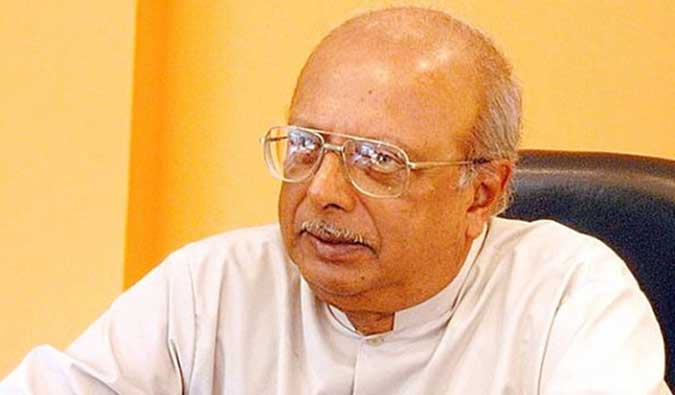
by Prof.TISSA VITARANA
Looking back at 2022, Sri Lanka cannot look forward to 2023, with any sense of hope. The economic, social and political crisis deepens without any clear plan by the Government to emerge from the crisis. Inflation is increasing with the Government, which is short of money due to its reluctance to tax the rich, resorting to massive printing of currency notes. This rise in the cost of living is fed by the support given to the private traders and big rice mill owners to fleece the cultivator and the producer who are in perpetual debt to them on the one hand and the consumer on the other. Survey data indicates that more than 65% of families live below the poverty line and that the malnutrition rate has approached 20%. Thus one out of five children below five years of age is suffering from severe under nutrition, and are both physically stunted and thin, but also mentally defective.
The future generation will be badly affected. Thus people with fixed or diminishing incomes faced with the high cost of living are suffering from hunger. In many families the parents have one meal a day and the children two, but the meals lack protein which is essential for development as well as vitamins and key minerals. Rampant bribery and corruption in the Administrative service has added to the suffering of the average person in his daily life; it is no longer a Public Service, it only serves the rich, the crooks and those with influence Instead of Government action to stop this exploitation by the middleman, like strengthening the Cooperative Movement among producers and consumers, reviving the Marketing and Food Control Departments, the Government supports the exploiter, rather than the exploited.
Ranil Wickremasinghe (RW) as Finance Minister tries to control the inflation by increasing the bank interest rate to a massive 30%. This not only deters the startup of new companies but also hits the established ones. The outcome of these policies is that the economy will continue to shrink, with more closures and job losses in the private sector together with the near complete stop to infrastructure development in the public sector. RW claimed that he would revive the economy through the private sector but his policies are undermining the private sector. The lack of jobs especially among the youth is leading to their leaving the country in huge numbers. The brain drain among professionals like doctors due to wrong tax policies is also increasing in an alarming manner. The youth that remain are driven to illicit activities like drug addiction and trafficking, and prostitution. Criminal activities like robberies, petty thefts, abductions, rape, assaults and murders are increasing so that people fear to venture out, especially after dark. Conflicts within families and between families and among criminal gangs are increasing. In society as a whole the collective cooperative spirit is being replaced by neoliberal individualism. Social cohesion is being lost. There is a complete breakdown of law and order.
The policy of taking more and more foreign loans is being persisted with. But even the International Monetary Fund (IMF) has yet to come forward with any part of its promised 3.9 billion US dollar (USD) aid package, despite several months of negotiations. Even if we get the IMF loan it will be too little too late. The terms demanded, if fully implemented, will reverse all the gains of the post-1956 era towards building a national economy as a sovereign independent state and emerge from our colonial past. The IMF demands would lead to de-nationalization and privatization of state-owned enterprises, but worst of all to the ownership passing over even to foreign hands. Sri Lanka would become a neo-colony subject to direct Imperialist exploitation once again.
The Government expects that by bowing down to the IMF terms Sri Lanka would be able to access more multilateral and bilateral loans and emerge from the dollar crisis and restore the ability to import using letters of credit from local banks. But getting deeper into foreign debt, which is the main cause of our dollar shortage and crisis, will only make matters worse. In 2021 we had to pay USD seven billion to service our 52 billion USD foreign debt, and Sri Lanka will be drawn further into the foreign debt trap. The fact that nearly 50% of the foreign loans are International Sovereign Bonds (which are short term high interest private loans) which are difficult to re-negotiate to delay payment makes matters worse. To further aggravate the situation the ban on the import of half of over 1500 non-essential items by this Government has been lifted recently. The dollar shortage will get worse and the fuel and gas queues will return and the shortage and high price of medicines and essential food items will also continue to rise.
The wrong policies of the present Government should be radically changed. There must be “a system change”. The way to increase productivity and national income is not by going back to the purely profit oriented privatization policy, but to move with the times and turn to a solidarity economy, as in Scandinavia and some provinces in Germany. In our agricultural economy the biggest export income earner is tea. But the private companies say they are running at a loss and cannot pay the employees a living wage. After 5 years of struggle the employees won a wage increase, the total allowance was raised to Rs.1000/day. But the employees are now being forced to increase their green leaf quota from 18 kilos per day to an impossible 24 kilos.
Even if they provide 20 or even 22 kilos, their pay is cut by Rs 50 per Kg, so that they are back to the status quo ante. We must learn from Kerala, India, where the solidarity economy is now in action. The ownership has been given to the employees by the Left regime, and as owners with shares in the company, in addition to their salary, they have increased the output tremendously and produce a large profit, which also benefits the society.
The present Government should also promote value added industry based on local raw material. I am happy to mention that as Minister of Science and Technology I developed the nanotechnology centre, SLNTEC, which can do this. In addition I was happy to learn that the Vidatha Centres for the development of SMEs in every Division have now topped the mark of thousand entrepreneurs that have successfully exported their products. Thus the answer is to make Sri Lanka an industrialized exporter of finished products.




The Sri Lanka Navy successfully recovered its Fast Attack Craft P 4447 following a successful salvage operation, bringing a multi-stage emergency response to a close.
The craft, which ran into distress during a routine patrol on 15th August 2026 off Angulana, was brought to the surface on 11th September, from a depth of approximately 80 feet. It was
subsequently towed to the Colombo Dockyard premises.
The initial phase of the operation immediately following the incident focused on search and rescue. A joint effort involving the Navy, Air Force, Police, and local fishermen from Angulana
resulted in the rescue of 11 crew members. The search and rescue phase drew to a close with the recovery of the remains of the Second in Command of the craft, on 4th September.
Following the search and rescue phase, specialized Navy diving and salvage teams launched a dedicated recovery phase against rough sea conditions and underwater challenges, adhering to
strict safety protocols. The Navy’s marine, hull, electrical, and electronic engineering teams utilized specialized technical know-how and equipment to raise the vessel in stages.
Thus, the salvage operation marked an outstanding achievement attained through the professionalism, technical expertise of Navy divers, and coordinated contribution of all
engineering and technical branches of the Sri Lanka Navy. Technical support and specialized expertise were also extended by the Sri Lanka Ports Authority and Colombo Dockyard PLC.

By Shamindra Ferdinando
The Opposition should intensity its focus on the forthcoming selection of a member of the Commission to Investigate Allegations of Bribery or Corruption (CIABOC) and remain vigilant as Speaker Dr. Jagath Wickremaratne, MP, the head of the Constitutional Council (CC) tasked with making the relevant recommendation, is under investigation by the CIABOC, sources familiar with the ongoing inquiry told The Island.
Chethiya Goonasekara, PC, is expected to complete his three-year term on Dec 31, 2026. Sources pointed out that CIABOC Commissioners are appointed by the President on the recommendation made by the 10-member Constitutional Council.
The CIABOC initiated the investigation following a complaint lodged by suspended Chief of Staff and Deputy Secretary General of Parliament Chaminda Kularatne in early February this year. Sources said that as Goonasekera is scheduled to complete his term toward the end of 2026, the CC would have to call applications soon to choose the successor.
Goonasekara received his appointment from President Ranil Wickremesinghe in January 2024. A Justice W. M. N. P. Iddawala was appointed Chairman of the CIABOC. The other commissioner is K. Bernard Rajapakse.
Asked whether Iddawala and Rajapakse, too, would complete their terms soon, sources said that in terms of the Anti-Corruption Act No 09 of 2023, the Chairman of CIABOC would hold office for a period of five years, second commissioner (K. Bernard Rajapakse) for four years and the third commissioner (Chethiya Goonasekara) for a period of three years.
Sources said that the Opposition as well as civil society representatives in the CC should take up the issue of Speaker facing an investigation by the CIABOC taking part in the forthcoming selection process. Responding to queries, sources emphasized that the issue was whether in terms of Section 107 of the Anti-Corruption Act the participation of the Speaker in the selection process amounted to a violation of the Act itself.
The current members of the CC are Dr Jagath Wickramaratne, Speaker and Chairman of the Constitutional Council, Dr. Harini Amarasuriya, Prime Minister, Sajith Premadasa, Leader of the Opposition, Bimal Rathnayake, MP, Aboobucker Athambawa, MP, Ajith P. Perera, MP, Sivagnanam Shritharan, MP, Austin Fernando, Civil society representative, Prof. Wasantha Seneviratne, Civil society representative and Ranjith Ariyaratne, Civil society representative.
Sources pointed out that in spite of the sensitivity of the case, the CIABOC recorded Kularatne’s statement in the second week of August, six months after he lodged the complaint.
The CIABOC on 3, 8 and 10 Sept recorded the statements from the Transport Officer, Deputy Director, Administration and Assistant Director, Finance regarding the use of facilities by the Speaker, those assigned to his staff and other relevant matters.
The NPP named Dr. Wickramaratne as the Speaker after Asoka Ranwala resigned over controversy regarding his higher education qualifications.
SJB lawmaker Dayasiri Jayaskera has repeatedly raised the issues concerning the Speaker with the focus also on the Speaker using two government-managed residences, relevant staff in addition to expenditure on food, transport and fuel provided to the Speaker’s private secretary.
Political sources said that trouble erupted after the Parliamentary Staff Advisory Council in late January sacked Kularatne accusing him of providing false information to secure his appointment. Before being appointed as the Deputy Secretary-General of Parliament in 2023, Kularatne held several high-ranking positions, including Secretary to the Chief Government Whip, Additional Secretary to the President, Additional Secretary to the Prime Minister, and Additional Secretary to the Leader of the Opposition.
The SJB declared in Parliament that Ranwala should be brought back as the Speaker as they have no faith in Wickramaratne. MP Mujibur Rahuman jokingly told parliament that the Opposition wouldn’t raise Ranwala’s educational qualifications.

The Government Medical Officers’ Association (GMOA) has stressed the need to conduct a comprehensive countrywide cadre revision urgently.
GMOA spokesman Dr. Lasitha Dhammika told The Island that the failure on the part of successive governments to conduct cadre revision caused the deterioration of the public sector health services. Due to the absence of required statistics, they hadn’t been able to fully comprehend the situation on the ground and to ascertain the requirements of the public.
Dr. Dhammika pointed out the expansion of the services without supporting statistics and the need to initiate an immediate cadre revision. According to him, the GMOA had raised this issue with successive governments without success. The GMOA spokesman said that they also sought relevant information from the Health Ministry in terms of the Right to Information (RTI) Act two weeks ago but was yet to receive response.
(SF)

Fast Attack Craft P 4447 recovered in successful salvage operation

Showers above 100 mm are likely at some places in the Western, Central, Sabaragamuwa, Southern, North-central and North-western provinces

Shafali, Mandhana power India to eighth Asia Cup title

Tharanga wins Ultimate Javelin title

CIABOC member’s appointment: Controversy over Speaker under probe heading selection process

GMOA: Countrywide cadre revision not done since 2015

‘Dates have the highest sugar content to fight Coronavirus’

Sunday Island 27 December – Headlines

#SundayIsland 17th December – Headlines

Sunday Island – 28th March

Sunday Island Headlines – 21 March

Sunday Island – 21st February – Headlines
-

 Sports4 days ago
DDS set to lose Test captaincy
-
 News7 days ago
Thailand shuts door on undesirables from Sri Lanka
-

 News4 days ago
Sri Lanka faces new grid challenge as rooftop solar surges: former CEB GM
-

 Latest News4 days ago
Shafali, Deepti power India into sixth T20 Asia Cup final
-
 Business7 days ago
CEB successor company breaks into top three in competitive BESS tender
-
 Opinion6 days ago
Navigating Sri Lanka’s Israeli Dilemma
-

 Latest News3 days ago
Sri Lanka thwart Fatima Sana challenge to secure Asia Cup final spot
-
 Features5 days ago
Lost for 90 years: Rare Goby resurfaces in Jaffna