
Features
Universal qualities of successful leadership

by Anoja Wijeyesekera
Today the world is facing a crisis in leadership, as one leader after another fails to meet the expectations of his subjects and is forced to either resign, or is defeated at the next election. Those who manage to cling on despite being unpopular, are the despots who live in fear of their own people and use every means to crush the very people they are supposed to serve. What are the fundamental causes for this failure of leadership in the 21st century?
Leadership exists at different levels, at state and national level, at the level of organisations or business units or in a family situation. The Oxford English dictionary defines a leader as “the person who leads, commands or precedes a group, organisation or country.”
The world is replete with examples of good leaders and bad, the latter gaining notoriety on account of the mass media that zooms in on examples of failure. In the modern world, at the basic level, the following are regarded as some requirements expected of a good leader. These are:
Qualifications, experience, capacity and wisdom to fulfil the functions of the leadership role. Enthusiasm for the function to be performed and a vision for the future or the task at hand.Commitment and loyalty.Being a team player. Management experts now recognise that much more is achieved by dynamic teams rather than models of a strict hierarchy or autocracy.Flexibility and democracy.Hard work, dedication, knowledge and the desire and humility to learn.Respect for others and commitment to equality.Integrity, honesty and a generous spirit.
Despite these well-known attributes, which should be general knowledge, we see leaders fail. On close examination, it becomes increasingly clear that in addition to qualifications and experience, it is the qualities within a person, the intrinsic attributes of character, ethics, integrity, and values that makes a person a good leader and earns the respect and adoration of others.
The Buddha identified these essential qualities that a leader should possess which are referred to as the Dasa Raja Dhamma [10 qualities of Kingship]. The Buddha gave prescriptions to different people, as a doctor would do, to heal different illnesses. To rulers he gave the prescription of the Dasa Raja Dhamma, a universal and timeless prescription that is valid today, as it was 2600 years ago.
They are:
Dana – generosity/liberality. This refers not only to charity but also to a generosity of spirit. Giving away one’s own wealth and possessions and sacrificing for the greater good of the people, as opposed to seeking power and self-benefits. It refers to a charitable and generous attitude of giving credit to others and placing the welfare of every single citizen before one’s own. It means promoting the Human Rights of every single citizen regardless of any consideration of caste, creed, race, political inclination, gender etc. In simple words it means putting country before self, and making whatever sacrifice required to achieve that including sacrificing one’s life.
Dana also means paying special attention to the needs of the poor and the marginalised, and uplifting their lives and steering the economy for the benefit of all. This does not mean the practice current among politicians today, of using public funds to give away goodies before an election. In Western countries this takes the form of tax cuts or more state benefits. Here in Sri Lanka it takes a more blatant form of outright handouts in addition to tax cuts, thus rendering the exchequer dry. This is not Dana. It is bribery and it is a crime.
In the early years of independence, most leaders in Ceylon, spent their own private funds to run for election and became impoverished as a result. At the end of their political careers, many who were wealthy individuals before they entered politics, ended up with virtually nothing. Dudley Senanayake, a former Prime Minister, had a mere Rs. 200 in his bank account at the time of his death. He did not travel in luxurious cars or ever flaunt his power and position. Judging by the largest ever gathering at his funeral, the judgement of history is that he was the best loved Prime Minister of Sri Lanka.
It is public knowledge that Prime Minister, W. Dahanayake came to Temple Trees with one suitcase, in a Morris Minor taxi, and after his tenure of office, left with that same suitcase, also in a Morris Minor taxi with no security guards!
Seela – morality and ethics. This at its basic level is the observance and practice of the five precepts or observation of a moral code. These precepts are universal and can be enumerated as follows:
respect for all sentient life,
honesty and integrity in all matters,
good behaviour/ impeccable sexual conduct,
honesty, integrity, transparency and upholding the truth,
not being addicted to intoxicating drinks and drugs.
In the case of a ruler, the last precept also means not being addicted to power, which is the most potent of all narcotics. The famous words of Lord Acton ring true. “Power corrupts and absolute power corrupts absolutely.” Examples of this are rife.
Parithyaga – sacrifice, altruism. A leader must be able to sacrifice him/herself for the sake of others. This is the total opposite of selfishness. It is the concept of the captain of the ship taking responsibility and being the last to leave a sinking ship, or the head of the organisation accepting responsibility for the mistakes of his staff or organisation, rather than “passing the buck”.
Sri Lankan history has examples of the Kings going to battle and engaging in one to one combat with the opponent, so that the lives of hundreds of soldiers could be saved. This degree of sacrifice disappeared a long time ago and today leaders remain behind their desks while troops face bullets on the battle front. The King of Bhutan joined his troops on the front line during a short war, to drive away a terrorist outfit from India, that was operating from its southern jungles. This took place in the early part of the 21st century. The King took great care to minimise casualties.
Irju – Righteousness and being perfectly upright. A leader must carry out his duties without fear or favour, regardless of caste, creed, ethnicity, gender etc. This is perfect honesty and integrity in all matters. In the ‘Sigalovada Sutta. (Digha Nikaya), the Buddha says that if a person maintains justice without being subjected to favouritism, hatred, fear or ignorance, his popularity grows like the waxing moon. What we sadly see today is the opposite of this – the systems of accountability and justice being manipulated by politicians.
Irju also means the ability to take tough decisions for the sake of greater good. A leader who practices the Dasa Raja Dhamma would have the support of the public in implementing the tough decisions, as the people will be convinced that it is for their good. The leader being sincere in his/her efforts will have the confidence of his subjects. Such a leader does not go for cheap popularity or what is now termed “populist” policies, which are triggered by prejudice.
Murdu – flexibility/ not being dogmatic. In terms of a leader this means being able to accept one’s mistakes and taking steps to rectify them. It means the ability to apologise and to accept blame. This quality is a sign of strength, not weakness. It is the wisdom to see one’s self more objectively and to have the strength of character to heed advice and expert opinion rather than arrogantly holding on to one’s own preferred options or preferences in matters of state and governance. Queen Elizabeth II is quoted as having said “I take my duties very seriously, but I don’t take myself seriously.”
Thapasa – self-discipline, subduing of passions and carrying out duties without indolence. The leader being completely disciplined, energetic yet frugal and non-ostentatious and a living example of dignity. It is the opposite of engaging in lavish ceremonies and media events organised at state expense. Rather it is the conducting of all affairs of state with poise and grace at minimum expense to the exchequer.
Akroda – non-anger, non-hatred. A leader must not be given to anger and aggression. He must be kind, understanding and compassionate and be devoid of aversion. He must be forgiving and considerate but conform to justice and the rule of law which must be applied equally. The Rule of Law is the basis of democracy and enhances the trust of the people in the system of governance.It is this quality that enables the leader to mobilise the best brains in the country and to obtain trust of those around him, so that they serve him sincerely and honestly giving him true and good advice rather than engaging in sycophancy.
Avhihinsa – non-violence. A leader must never use violence, even when provoked. This means negotiation in preference to war and dealing with difficult situations with utmost tolerance and wisdom. This means dismantling the weaponry of war and fostering qualities of unity and harmony among his own population, as well as fostering true friendship with neighbouring countries so that war and aggression are prevented.
Kanthi – patience/forbearance. A leader must practice forbearance and must never be vindictive. Today we see vindictive leaders using the weaponry of war to settle grudges. In the 21st century, humanity needs to evolve from reptilian disposition of aggression and move towards a world of peace. This means the total dismantling of the apparatus of war and the trillions of dollars spent on weapons which can be used for the upliftment of the poor and the marginalised.
Avirodha – non-enmity, non-prejudice. This is an appreciation of the oneness of man and is the opposite of arrogance and the promotion of self-interest, favouritism, cronyism and nepotism.A leader must necessarily appreciate opposing views and review his/her actions giving due consideration for those opposing views. Opposition is the basis of democracy. It is the respect that is accorded to the opposition that fosters critical analysis and healthy debate. In a true democracy the opposition has to be regarded as the alternative government and given due respect. A leader must see the benefits of considering opposing views to improve and modify a course of action. The opposition needs to be a mirror of public opinion that must be recognised and respected.
This quality necessarily entails press freedom, the freedom of expression and the freedom to engage in non-violent forms of dissent. It is clear that if a ruler observes the Dasa Raja Dhamma, his leadership would never result in a situation where people are forced to come out on to the streets to show their grievances.
A leader practicing the Dasa Raja Dhamma would be so close to his people that he would know the pulse of the nation as his own pulse. The Buddha said that a leader must regard every single one of his subjects as his own children and look after their needs and aspirations accordingly. This is the complete opposite of favouring one group over another. The Buddha said that the leader of the country must be a father to all his subjects regardless of any consideration.
In the 21st century, we see leaders rise and fall in quick succession. If we look at the reason for the fall, we see the character flaws and their lack of understanding of these 10 values, as prominent causes for their downfall. Those whom we consider good leaders are those who have come close to observing these principles which are universal values common to all mankind and not particular to any one religion or belief system.
The Buddha preached to all mankind and not to any one group of so called “believers”. Thus, even the term “Buddhist” is a misnomer. These qualities of leadership explained and propounded 2600 years ago are intrinsic to the character of the person and do not come from outside. They can be practised and perfected by anyone aspiring to be a successful leader. They are a universal formula for successful leadership.
One of the greatest leaders the world has known was Emperor Asoka who ruled India in the 3rd Century BC. Historians refer to him as the “Emperor of Emperors”. Prior to embracing Buddhism, he unified the whole of the Indian Sub-continent through war, but realised the huge loss of life that it entailed and resolved never to engage in violence. He embraced Buddhism which preaches non-violence and turned India into a country that practiced avihimsa – non-violence. He disbanded his armed forces. He embraced the Dasa Raja Dhamma and engaged in programmes to uplift the conditions of his subjects, introduced free hospitals for both humans and animals and brought a period of unprecedented prosperity and peace to the lands he ruled.
Sri Lanka benefited from Emperor Asoka’s generosity. He bestowed the gift of Buddhism to his friend, Devanampiyatissa, the King of Sri Lanka. To carry out this unique diplomatic mission, he sent his own son and daughter Arahant Mahinda and Arahant Sanghamitta, who had both ordained and gained full Enlightenment.
King Devanampiyatissa too followed the example of his friend Emperor Asoka and introduced universal free health care for both humans and animals and reigned over a period of peace and prosperity in Sri Lanka.
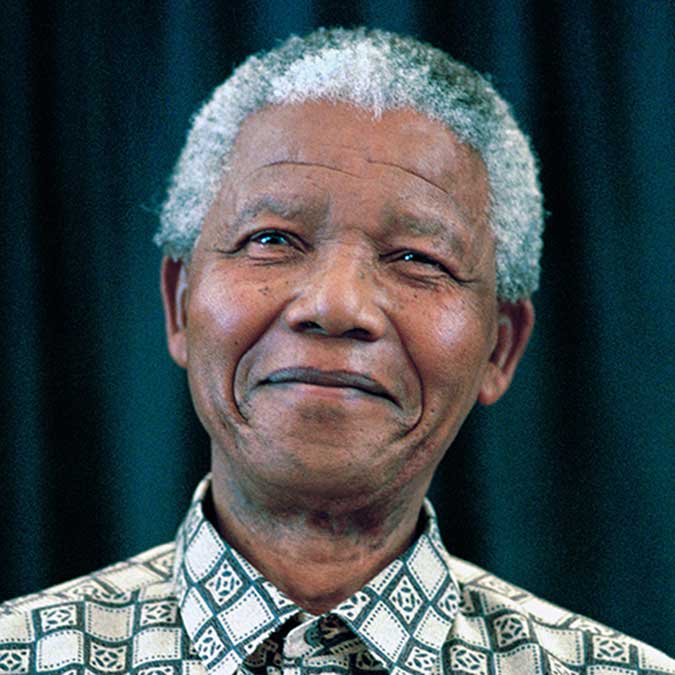
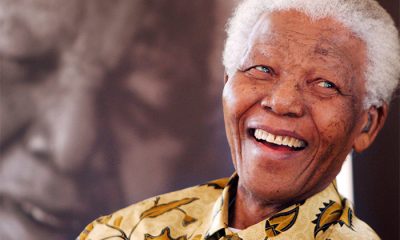
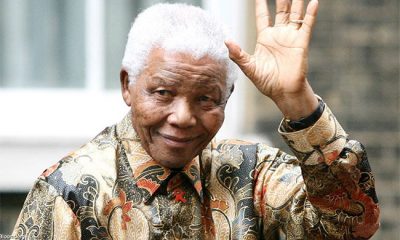
Closer to our own times, the 20th century has a few examples of good leaders. Nelson Mandela is one such person who was imprisoned by the Apartheid Regime for 27 years, his crime being his struggle to gain freedom and equality for his people. On being released from prison, Nelson Mandela stunned the world with his forgiveness. He forgave all those who tortured and tormented him in prison and unleashed appalling brutality and violence on unarmed people, thus killing large numbers and subjecting them to untold misery and hardship. He created the rainbow nation where all races, castes and creeds could live in harmony and enjoy a peaceful life. [The South African national anthem is sung in eight languages]. The world honours Nelson Mandela for his enlightened qualities. He is unique among leaders as he relinquished his right to be president for a second term. He displayed his magnificent humility in stepping down after just one term in office.
In general, although man has occupied the earth as its leading species for millennia and brought many benefits in terms of material comforts to his fellow beings through scientific discoveries, he has yet to make strides in the arena of human behaviour. Einstein famously said “the splitting of the atom has changed the world except the human mind”. The human mind that clings to his reptilian and mammalian characteristics, has utilised the global opportunities now available, to pursue his base instincts of greed, hatred and delusion.
It is said that World War II was fought to end all wars. Has this happened? Within a few years of its end the Korean War started, the Viet Nam war followed, internal conflicts in many parts of the world continued and today we have the Ukrainian war. If someone looks down upon the Blue Planet from outside, this little dot of dust in the universe, he/she will see nothing but humans fighting humans in this tiny bit of space. What we have to show for ourselves is a world of wars, nuclear weapons, environmental degradation, mass extinction of species and the prospect of our own destruction.
If man is to thrive, it is time that our leaders look within themselves and subscribe to these universal qualities of good behaviour. It is in this arena of the human mind that real change is possible. It is through the reduction of greed, hatred and arrogance that mankind will be able to save the blue planet on which we all live and save ourselves from extinction.




by Prof. Ranjith Bandara,
Emeritus Professor, University of Colombo
This article examines why community exclusion, excessive bureaucratic control, unequal distribution of conservation benefits, weak institutional accountability, and short-sighted political leadership continue to undermine wildlife conservation in Sri Lanka.
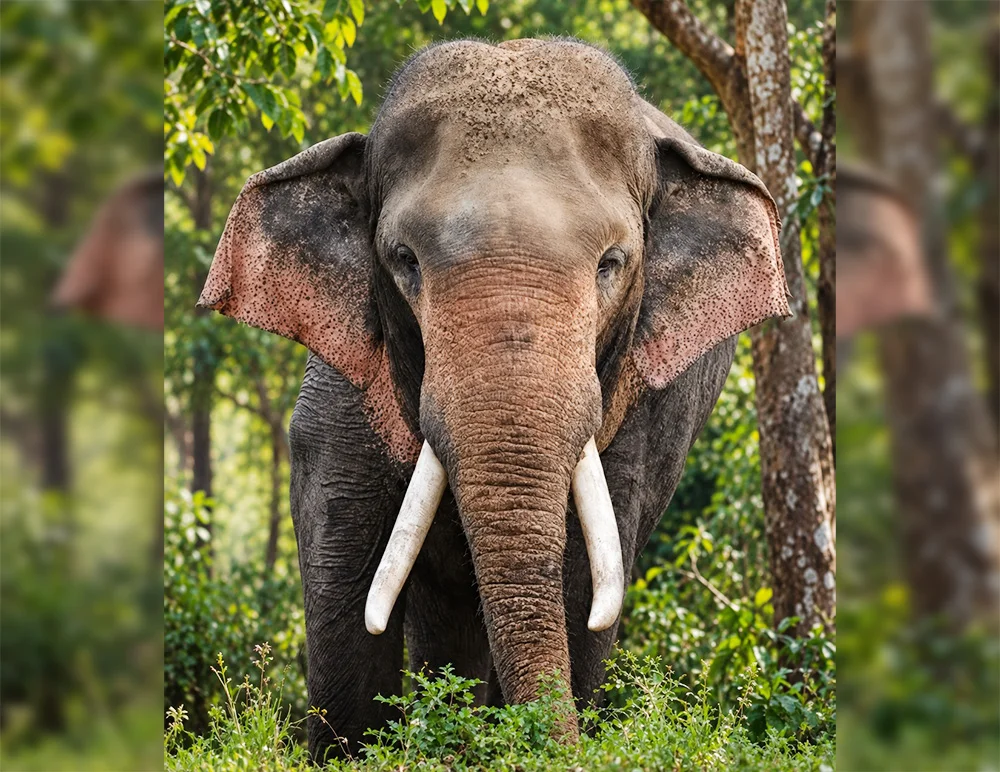
The death of Tusker Kavantissa is more than the loss of one of Sri Lanka’s most remarkable wild elephants. It exposes uncomfortable questions about how we protect our natural heritage, how conservation decisions are made, and why repeated warnings have failed to produce meaningful reforms. His death should compel us to examine not only what happened to one extraordinary animal, but also the deeper weaknesses in our wildlife conservation system.
Tusker Kavantissa, one of Sri Lanka’s most prominent wild tuskers, died on 16 October, 2026, after receiving veterinary treatment for an injury, reportedly caused by gunfire. Although the wound had shown some improvement, his health subsequently deteriorated. The precise cause of death requires confirmation through a proper post-mortem examination. Nevertheless, the circumstances raise serious questions about preventive protection, wildlife management, and institutional preparedness.
The wider picture is equally disturbing. According to recently reported figures, Sri Lanka has lost an average of approximately 402 elephants and 138 people annually, since 2019, due to human–elephant conflict. These figures reflect a continuing national tragedy affecting both wildlife and rural communities.
What Sri Lanka faces today is not merely a wildlife conservation problem. It is also a crisis of environmental governance, shaped by institutional weaknesses, political decisions, and the failure to recognise the economic and social realities of conservation.
Conservation without communities
One of the fundamental weaknesses of our conservation approach is that local communities are often treated as subjects of regulation rather than partners in conservation. They are expected to bear the risks, respect restrictions, and cooperate with government programmes, yet their influence over decisions affecting their lives remains limited.
For rural families living alongside wild elephants, conservation is not an abstract environmental objective. It directly affects their safety, agricultural income, property, and everyday lives.
Farmers frequently possess valuable knowledge about elephant movements, vulnerable locations, seasonal changes, and practical protection measures. Yet conservation interventions are sometimes designed without adequately considering this experience.
When decisions are imposed from above, communities may feel excluded from programmes they are expected to support. This weakens trust, reduces cooperation, and ultimately undermines conservation outcomes.
We must recognise that protecting elephants and protecting farmers are not conflicting objectives. Both are essential. A conservation policy that safeguards wildlife while neglecting human security cannot be considered successful.
The real challenge is to replace conservation imposed on communities with conservation undertaken alongside them. Meaningful participation requires more than consultation meetings. Communities must have a genuine role in planning, implementing, monitoring, and evaluating conservation activities.
Bureaucratic authority versus public accountability
Wildlife conservation requires strong institutions, professional expertise, and effective regulations. However, excessive bureaucratic control can become an obstacle when administrative authority takes precedence over practical outcomes.
Decision-making in Sri Lanka’s conservation system remains heavily dependent on central institutions. Administrative procedures, overlapping responsibilities, and limited coordination can delay responses to urgent problems.
More importantly, excessive centralisation can discourage local innovation and prevent communities from contributing practical solutions.
When administrative authority becomes more important than results, conservation risks becoming an exercise in controlling people rather than protecting nature.
This criticism should not be confused with questioning the dedication of frontline wildlife officers and veterinarians. Many work under difficult conditions with limited resources. The efforts undertaken to save Tusker Kavantissa deserve recognition.
However, individual commitment cannot compensate indefinitely for institutional weaknesses.
We must ask whether our conservation institutions have the capacity to identify risks early, protect vulnerable animals, coordinate emergency responses, and evaluate the effectiveness of their interventions.
Public accountability should, therefore, extend beyond compliance with administrative procedures to measurable conservation outcomes.
Who bears costs, and who receives benefits?
Perhaps the most neglected dimension of wildlife conservation in Sri Lanka is the unequal distribution of its economic costs and benefits.
Wild elephants contribute substantially to tourism, biodiversity, cultural heritage, and the country’s international image. Their conservation generates benefits enjoyed by society as a whole.
Yet the financial and personal costs are concentrated among rural communities living within elephant habitats.
A study published in 2023, involving 300 farming households in southern Sri Lanka, revealed a striking imbalance. Although these households lived near two national parks, none received economic benefits from tourism. Meanwhile, 57 percent had experienced elephant-related crop damage.
The findings raise a fundamental economic question: if the entire country benefits from elephant conservation, why should a relatively small and vulnerable section of society bear a disproportionate share of its costs?
Conservation cannot remain economically sustainable when its benefits are widely enjoyed but its costs are concentrated among those least able to bear them.
A separate study, published in 2024, involving 439 affected farming households, examined the possibility of financing compensation through tourism revenue. It demonstrated the potential for tourism-based financial mechanisms to support human–elephant coexistence.
The policy implications are significant
A proportion of wildlife tourism revenue could be directed towards affected communities through transparent benefit-sharing arrangements. Such measures could support compensation, village protection, local employment, community enterprises, and agricultural improvements.
However, financial compensation alone is insufficient. The 2023 study also indicated that fear of elephants and concerns about crop damage strongly influenced community attitudes. People must feel safe in their homes and farms, not merely receive payment after suffering losses.
Equitable benefit-sharing is, therefore, more than an act of generosity. It is an economic and social requirement for sustainable conservation.
Political decisions and absence of long-term vision
The weaknesses in wildlife conservation cannot be attributed solely to public officials. Political leadership must accept its share of responsibility.
Poor land-use planning, habitat fragmentation, obstruction of elephant movement corridors, and development decisions that inadequately consider environmental consequences have contributed to human–elephant conflict.
Political decisions made for immediate gains can create environmental and economic costs lasting for decades.
Another weakness is the preference for visible, short-term interventions.
Constructing electric fences, relocating elephants, and launching emergency operations can attract considerable publicity. However, such interventions should be evaluated according to their effectiveness, not their visibility.
Political leadership should be judged not by the number of conservation programmes announced, but by the lives protected, conflicts prevented, and long-term improvements achieved.
There is also a serious problem of policy continuity. Conservation cannot be governed according to electoral cycles or changing political priorities.
Elephant habitats, migration patterns, and ecological processes do not change with governments. Successful conservation, therefore, requires consistent national commitments extending beyond individual political administrations.
Without such continuity, public investment may be wasted while the underlying problems remain unresolved.
Problem is not always a lack of policy
Sri Lanka’s conservation crisis cannot be explained simply by a shortage of scientific knowledge or policy recommendations.
In many instances, the greater challenge lies in translating available knowledge into coordinated, adequately funded, and politically supported action.
The National Action Plan for the Mitigation of Human–Elephant Conflict, prepared in 2020, proposed a science-based approach that emphasised community participation, protection of villages and agricultural land, and more effective conflict-management strategies.
Yet an important question remains: how much of this plan has been implemented successfully?
Have implementation difficulties arisen from inadequate resources, weak institutional coordination, administrative resistance, or insufficient political commitment?
An independent assessment of the plan’s implementation would help identify these obstacles and establish clear responsibilities.
We must also recognise that a substantial proportion of Sri Lanka’s wild elephants live outside protected areas. Attempting to confine all elephants within national parks and forest reserves is, therefore, neither realistic nor sustainable.
Effective conservation requires land-use policies informed by elephant ecology, settlement patterns, agricultural needs, and the practical realities of human–wildlife coexistence.
A sound policy that remains largely unimplemented offers little protection to either elephants or people.
Towards more responsible conservation system
Sri Lanka needs a fundamental change in how wildlife conservation is governed.
Four priorities deserve immediate attention.
First, local communities must become genuine partners in conservation management, with meaningful responsibilities and decision-making opportunities.
Second, conservation benefits must be distributed more fairly. Wildlife tourism should contribute directly to protecting the livelihoods and safety of communities that bear conservation costs.
Third, existing national conservation plans should be independently reviewed to identify implementation gaps and establish a realistic timetable for corrective action.
Fourth, conservation institutions must become more accountable for measurable outcomes, including reductions in human deaths, elephant mortality, crop losses, and property damage.
These reforms require cooperation among wildlife, forestry, agriculture, land, irrigation, and local government institutions.
They also demand political leadership willing to prioritise long-term results over short-term publicity.
For exceptional animals, such as Tusker Kavantissa, improved risk monitoring, preventive protection, and timely veterinary responses are particularly important. However, conservation should not be limited to protecting a few well-known animals.
Every wild elephant has ecological value, just as every person living alongside elephants has an equal right to safety.
The objective must be a system that protects both.
Lesson tusker Kavantissa leaves behind
The death of Tusker Kavantissa should not become another moment of national sorrow that gradually fades from public memory. It should mark a turning point in how Sri Lanka approaches wildlife conservation.
A proper investigation into his death is essential. Equally important is an honest examination of the conservation system within which such tragedies continue to occur.
The real challenge is not choosing between people and elephants. It is creating a system in which both can coexist safely, and where the responsibilities, costs, and benefits of conservation are shared fairly.
This requires more than scientific expertise and stronger regulations. It demands accountable institutions, meaningful community participation, economic fairness, and political leadership guided by a clear long-term vision.
Our greatest failure would not be the loss of Tusker Kavantissa alone. It would be allowing the same weaknesses in our conservation system to claim more lives while we continue to avoid the reforms that could prevent them.

by Jehan Perera
The government appears set to overcome the first major challenge to one of its foundational principles. It has faced down demands from sections of the Buddhist clergy and opposition parties to release Ven. Galagodaatte Gnanasara from his prison sentence for contempt of court.
Ven Gnanasara is best known as the general secretary of the Bodu Bala Sena, a nationalist Sinhala grouping. The government seemed unfazed by a protest march organised by Buddhist monks and the opposition parties and its supporters organised an even bigger march to support the government’s position. It is notable that the general population did not get involved in either march in any substantial number. The issue has now become a test of whether the government will uphold its commitment to apply the law equally, irrespective of a person’s position or status, even when doing so brings it into conflict with a powerful constituency.
The case has a specific legal history. Ven. Gnanasara was sentenced to six years’ imprisonment by the Court of Appeal in 2018 for contempt of court in a case involving former military personnel where he disrupted the proceedings. The Supreme Court rejected his appeal in 2018. Former President Maithripala Sirisena subsequently granted him a presidential pardon in 2019. Last month, the Supreme Court invalidated that pardon. The initial demand by Buddhist monks and their lay supporters was that Ven. Gnanasara should be permitted to wear his Buddhist robes when appearing in public before the courts. The government has indicated its willingness to examine the procedures governing the treatment of Buddhist monks in prison, in consultation with the relevant religious authorities. However, the initial demand has now been escalated into a demand for a presidential pardon.
One of the central promises of the National People’s Power (NPP) during its election campaign two years ago was to apply the law equally to all. This commitment has shaped the government’s approach to allegations of corruption and criminality involving individuals who previously wielded political power. The NPP government was swept into power on a wave of antipathy towards those in previous governments who were perceived to have abused their positions for private gain. The economic collapse Sri Lanka experienced in 2022, and the hardships endured across society, remain vivid in the public memory. The past two years have seen the government pursuing those accused of corruption and other offences. Several high-ranking members of previous governments have faced arrest and legal proceedings and been sentenced to jail.
Religious Concerns
The ability of opposition parties to mobilise widespread resistance against proceedings involving their leaders has been limited, as much of the general population continues to favour accountability for past financial crimes. However, the case of Ven. Gnanasara is different. It does not concern allegations of financial corruption, but the relationship between religious authority, the courts and the law of the land. This is where the distinction between respecting religious traditions and upholding the law becomes crucial. There is a sense among sections of the general population that Buddhist monks should not be treated on a par with others and that requiring Ven. Gnanasara to appear in court without his robes was unjust and contrary to the national ethos. Such sentiments reflect the special place Buddhism occupies in Sri Lanka’s history and society. Sinhala Buddhist nationalism has been a potent political force throughout the country’s history, drawing on a heritage that extends back more than two millennia. The question is whether respect for Buddhism needs to also entail the exemption of individual monks from the ordinary requirements of the law and thereby treat them differently.
The challenge would be to accommodate legitimate religious concerns through rational and lawful procedures without allowing religious status to become a source of legal privilege. The government has been amenable to addressing the issue of monastic robes, but has so far resisted the demand to release Ven. Gnanasara through a new pardon. President Anura Kumara Dissanayake and government members have made it clear that the government would not bend the law to accommodate any individual. They have taken the position that any shortcomings in existing rules should be addressed by changing the rules through proper procedures, rather than by making an exception for a particular individual. If the government holds its position, it will demonstrate that its commitment to the rule of law extends even to constituencies that have historically enjoyed considerable political influence.
This is important not only for the country’s democratic institutions but also for its economic future. Sri Lanka is seeking to recover from its economic collapse and establish the foundations for sustained growth. The International Monetary Fund’s analysis of Sri Lanka’s governance weaknesses has repeatedly emphasised the economic costs of corruption and institutional deficiencies. Its 2024 analysis of governance and growth concluded that comprehensive and coherent reforms could bring significant macroeconomic benefits. The IMF’s 2025 assessment also highlighted the importance of sustained governance reforms in unlocking the country’s growth potential. Investors, both domestic and foreign, need confidence that public institutions function according to predictable rules, that contracts and property rights are protected, and that political connections or social status will not determine how the law is applied.
Sensitive Issue
Sri Lanka has long sought the leap towards prosperity that has proved elusive under successive governments. Economic reform alone will not achieve it. The connection between the rule of law and economic prosperity is direct. Businesses are more likely to invest when they can expect disputes to be resolved fairly, public resources to be managed transparently and regulatory decisions to be made on rational grounds. No country can achieve a durable economic take-off if its institutions are perceived to operate according to political favour, inherited privilege or communal pressure. Sri Lanka cannot afford to return to a political culture in which powerful interests are shielded from accountability while ordinary citizens bear the costs.
Changing a political culture that has evolved over the decades if not centuries is a difficult undertaking, particularly in a country where political leaders have long relied on religious and communal identities to consolidate their support. It requires not only firmness but also sensitivity, dialogue and a willingness to reform laws and institutions where genuine deficiencies exist. The present controversy offers an opportunity to demonstrate that these objectives need not be in conflict. The government can respect the Buddhist clergy’s concerns about the treatment of monks in prison while refusing to grant an individual an exemption from a judicial sentence. It can recognise the importance of Buddhism to the country while maintaining that no religious or political authority stands above the law.
The question is whether national traditions and ethos are interpreted in ways that strengthen justice, responsibility and social harmony, or invoked to defend privileges that undermine them. The country needs a transformation in public expectations from privilege to accountability, from communal claims to equal citizenship, and from personal discretion to institutions governed by law.
The government’s handling of the case involving Ven. Gnanasara is therefore about more than one monk or one sentence. This particular case will determine whether the government can build a system in which no government, religious authority or politically influential individuals can place themselves beyond the law. A just society must be able to honour both its traditions and its commitment to equality before the law.

 Lanka was his homeland, and now it’s Australia, based in Sydney. But for legendary performer Roger Menezes, the lure of his old hometown is just too hard to resist — and he keeps coming this way, ever so often!
Roger is in town at the moment — his fourth trip for this year alone! In fact, for the last few years, he has been checking out Sri Lanka on a very frequent basis.
This time, he says, he will be here for just two weeks, as he has heavy commitments, Down Under, as a performer.
On the 24th of this month, he will be seen in action at Broadway Dehiwela, celebrating their second anniversary. It’s a homecoming of sorts, as he was the very first artiste to perform live at this venue, on their opening night!
He goes back to Sydney in November for an early Christmas party, and will be back, in Colombo, in December, for more performances, with a pre-New Year’s Eve party at the Broadway, on 30th December.
Roger says he also takes the opportunity, whenever he visits Sri Lanka, to soak in the beauty of our country, especially the serene scenes away from the hustle and bustle of Colombo!

Roger Menezes: Fourth trip for this year
Roger Menezes is truly a remarkable talent, and it is always a sheer pleasure to look into the careers of musicians who have left such a lasting, indelible mark on Sri Lanka’s rich musical heritage.
Known for his signature “hits and memories” performance style — a nostalgic, heart-warming blend of jazz, pop, and classic rock — he remains a foundational figure of Sri Lanka’s golden era of music.
He was deeply integrated into Colombo’s swinging 1960s and 70s music scene.
He played drums for iconic groups like The Savages, Thunderbirds, and Fireflies, played guitar for Sam the Man, and joined the legendary band The Jetliners as their keyboardist, saxophonist, and guitarist (additionally recording bass guitar tracks). He also fronted his own much-loved ensemble, Roger and the Webs.
He migrated to Sydney, Australia, in the early ’70s and the legend only grew.
In Australia, he founded the highly successful corporate and event bands Eastern Spice and Stay Tuned (alongside his wife Cheryl and family). Under his leadership, Stay Tuned was heavily involved in providing entertainment for corporate functions, organised by the Sydney 2000 Olympic Committee. The group also headlined the New Year’s Eve festivities at Sydney’s iconic Centrepoint Tower for five consecutive years!
Today, he is widely celebrated as a highly adaptive one-man band, simultaneously navigating vocals, keyboards, guitar, saxophone, and drums — a one-man orchestra who truly does it all!

Heavy showers about 100 mm are likely at some places in the Northern, North-central, Central, Eastern, North-western and Uva provinces

Molineux, Dunkley enter WPL 2027 auction with top base price of INR 50 lakh

Ranawaka accuses govt. of using JVP cadres and police to suppress political opponents

Six killed as speeding bulker crashes into vehicles, shop in Akurana

Prof. Peiris, summoned by CIABOC, appeals for Ven. Gnanasara’s release

Tusker Agbo found safe and in good health

‘Dates have the highest sugar content to fight Coronavirus’

Sunday Island 27 December – Headlines

#SundayIsland 17th December – Headlines

Sunday Island – 28th March

Sunday Island Headlines – 21 March

Sunday Island – 21st February – Headlines
-

 Features2 days ago
Kotahena:A Small Enclave, An Extraordinary Legacy
-

 News6 days ago
Sri Lanka, India caught in US-Iran ship crisis
-
 News3 days ago
Asgiri Mahanayake calls for immediate release of Gnanasara Thera
-

 Latest News6 days ago
Missiles intercepted near Riyadh after Saudi coalition hits Yemen fuel depot
-

 Latest News6 days ago
Kusal Mendis’ unbeaten 87 hands Sri Lanka consolation win
-

 News2 days ago
Record 1,600 students take Russian Classical Ballet examination in Sri Lanka
-
 News5 days ago
AC President recuses himself from hearing prison attire case pertaining to Gnanasara Thera
-

 Latest News6 days ago
Heavy showers above 100 mm are likely at some places in the Western, Sabaragamuwa, Southern, Central, and North-western provinces and in Anuradhapura district.