
Business
SriLankan Catering looking at providing 25,000 meals per day as ‘SriLankan Flavours’ takes off


By Hiran H.Senewiratne
CEO, SriLankan Catering Ltd. Mangala Wijesekera said that with the picking- up of the tourism industry next year and beyond, they could provide meals for all airlines with full capacity, which capability now stood at below the total capacity.
“We are looking at increasing the number of flights into the country to cater to the full capacity of 25000 meals per day. We now provide only 13000 meals for various airlines which land in Sri Lankan airports, Wijesekera told the media recently during a familiarization tour of the Bandaranaike International Airport premises. The aim of the tour was also to announce that SriLankan Airlines had unveiled a delectable new range of authentically Sri Lankan dishes for its menu under the theme, ‘SriLankan Flavours.’
Wijesekera added: “We have a well- trained catering culinary staff who could cater to any airline and new introductions to the Sri Lankan meal option will be available onboard SriLankan’s long haul and medium haul flights and at the signature Business Class lounges of the airline at Bandaranaike International Airport.
“The reinvented meals aim to showcase Sri Lankan food to the global traveler by emphasizing the nutritional and medicinal benefits of the ingredients that go into the meals, based on culinary traditions passed down through generations.
“We are excited to introduce these additions which are certain to stimulate all five senses, to our inflight cuisine as an expression of the Sri Lankan heritage. Additionally, we are helping to promote and preserve the culinary culture of Sri Lanka by offering traditional delicacies of the island to a global audience of travelers.”
Manager, Product Development Maria Sathasivam said the fascinating lineup of new dishes include main meals, such as egg roti with Paraw fish curry and crumb fried prawns; ‘Dhunthel rice’ with traditional curries; Kuruluthuda heirloom rice served with chicken pepper curry and local vegetables; pittu with kirihodi, chickpea curry and lunu miris and Lamprais.
“Complementing these uniquely Sri Lankan mains were equally delicious desserts like Lavariya and curd with Waraka compote. Immunity boosting beverages, such as king coconut with coconut pulp; local cucumber and honey and pineapple and aloe vera are also part of the menu.
“The new meal options are replete with fibre, minerals and healing properties ensuing from champion ingredients that are locally sourced, such as, Kurakkan, ginger, cinnamon, curry leaves, cloves and Kuruluthuda, an heirloom rice variety of Sri Lanka.
“The ingredients are blended to enhance the inherent flavours, textures and wellness aspects that define the Sri Lankan culinary experience using trusted, centuries-old native recipes and cookingmethods. Therefore, each item is not just flavourful, but packed with nutritional value, thus appealing to the health-conscious, contemporary traveler.
“The SriLankan Flavours campaign is just one of many initiatives of the airline aiming to deliver a superior and quintessentially Sri Lankan inflight experience for its customers. Sri Lankan cuisine in particular has been a part of the fabric of SriLankan Airlines’ inflight products since the beginning, with many frequent flyers looking forward to the airline’s signature Sri Lankan dishes when they travel. Passengers could always expect to see a Sri Lankan meal option on their inflight menu.
“While SriLankan continues to introduce various enhancements to its onboard service, the range of authentic Sri Lankan meal options is also set to expand with time. Ultimately, the Airline’s hope is to delight its loyal customers by offering an experience that is innately Sri Lankan, yet globally superior.”

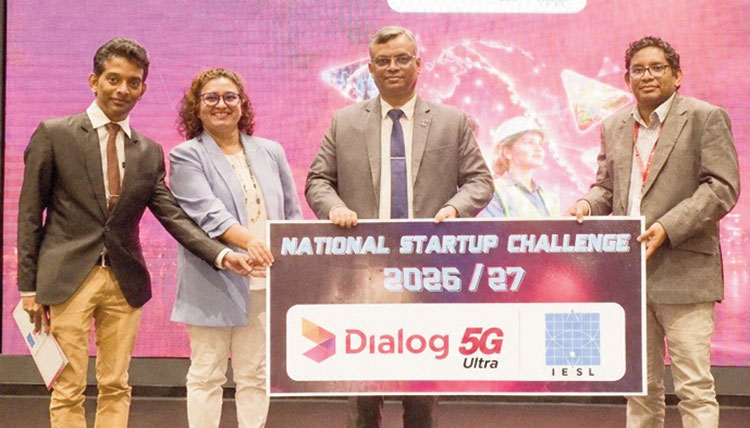
Dialog Axiata PLC, Sri Lanka’s #1 connectivity provider, joins the Institution of Engineers, Sri Lanka (IESL) to launch the IESL National Startup Challenge, creating a national pathway for aspiring entrepreneurs to transform innovative ideas into commercially viable, investment-ready startups. The initiative reflects a shared commitment to strengthening Sri Lanka’s entrepreneurship ecosystem through structured development, expert mentorship and practical support that enables promising ideas to progress towards market readiness and scale.
Launched through the IESL Entrepreneurship Forum at the Dialog Auditorium on 5 October 2026, the competition invites Engineering Undergraduates, Engineering Practitioners and participants in an Open Category for Non-Engineers to submit ideas across 12 innovation verticals aligned with national priorities, emerging technology and market trends, and inclusive innovation. Participants will progress through idea development, pitching, incubation, prototyping, validation, minimum viable product development and business scaling, supported by industry experts, mentors and ecosystem partners. The programme will culminate in a Top 10 selection, with the first-place winner receiving an award of LKR 1 million.
As title sponsor and a key ecosystem enabler, Dialog is contributing practical expertise and resources beyond sponsorship, providing technical expertise, mentors and digital resources to help participating teams develop, validate and scale their solutions. Each of the Top 10 teams will also receive a Dialog Digital Startup Support Package valued at LKR 250,000, comprising selected Dialog digital products and services.
“Dialog is committed to enabling Sri Lanka’s next generation of innovators by connecting entrepreneurial ambition with the technology, expertise and practical resources needed to turn ideas into scalable ventures. Through the IESL National Startup Challenge, Dialog is extending its digital capabilities, mentorship and ecosystem support to help promising teams progress from concept to validation and investment readiness,” said a representative of Dialog Axiata PLC.
Eng. Jasmine Nanayakkara, Chairperson of the Entrepreneurship Forum at the Institution of Engineers, Sri Lanka, added, “The IESL National Startup Challenge is designed to turn innovative ideas into viable businesses by connecting aspiring entrepreneurs with industry expertise, mentorship and continuous practical support. More importantly, it is about creating an ‘Engineer to Entrepreneur’ transformation and nurturing a stronger entrepreneurial culture within the IESL community. By encouraging our engineers and aspiring founders to create, commercialise and scale solutions, we aim to contribute to new ventures, new opportunities and meaningful job creation for Sri Lanka’s skilled and educated next generation. We are grateful to Dialog for partnering with IESL to create this pathway for innovation, entrepreneurship and national economic growth.”
Driving innovation across Sri Lanka, the National Startup Challenge also brings together a strong network of partners, including The Ceylon Chamber of Commerce as Ecosystem and Mentoring Partner, Helago as Official Mobility Partner, Helakuru as Official Digital News Partner, and Real Life as Official Climate Action Partner.
The IESL National Startup Challenge represents a collaborative effort to strengthen Sri Lanka’s innovation and entrepreneurship ecosystem by creating a structured pathway from promising ideas to market-ready businesses. Applications are now open via www.iesl.lk/announcements, giving aspiring entrepreneurs an opportunity to access the resources and funding they need to succeed. Applications close on 16th November 2026. For more information, contact mgr.pub@iesl.lk / 071 109 4393.
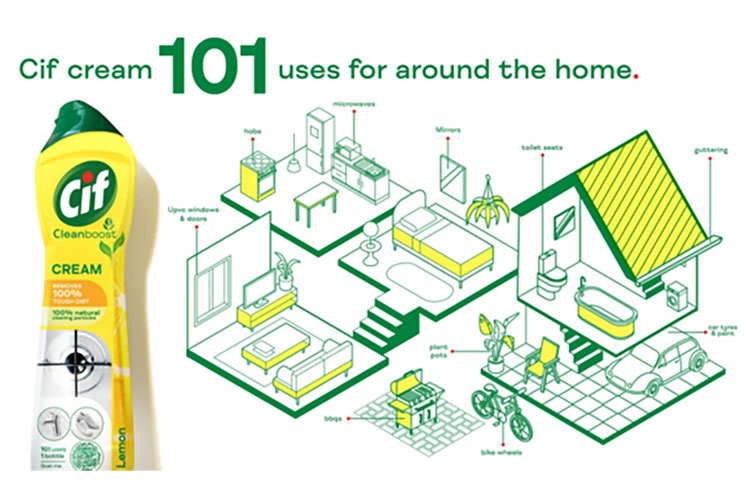
Keeping a home clean involves more than dealing with one kind of mess. Kitchens face grease and cooking splashes, bathrooms develop soap scum and limescale, while frequently used areas around the home collect marks, fingerprints and everyday dirt.
For households looking to simplify this routine, multi-surface cleaners offer a practical solution by allowing one product to tackle multiple cleaning needs across suitable surfaces.
One home, many everyday messes
In the kitchen, grease, splashes and burnt-on food can build up around hobs and hotplates. Cupboard doors and appliance exteriors can also collect smudges and marks through daily use.
Bathrooms present different challenges, including limescale, soap scum, toothpaste residue and water marks around sinks, washbasins and shower doors.
Even outside these rooms, surfaces such as door handles, baseboards, table mats and PVC areas can require regular attention.
Making everyday cleaning simpler
This is where the versatility of products such as CIF Cream becomes useful.
CIF Cream can help tackle a range of common household cleaning challenges across suitable surfaces, from grease and burnt-on food in the kitchen to limescale and soap scum in the bathroom.
Its uses can also extend to other suitable areas and items around the home, including cupboard doors, appliance exteriors, PVC surfaces and more, when used according to product directions.
For busy households, the benefit is straightforward: a versatile cleaner can help reduce the complexity of everyday cleaning by addressing several common cleaning needs with one product.
Consumers should always follow product instructions and check suitability before using any cleaner on a particular surface.
CIF products are now available at Cargills, Keells, Glomark and Celeste, as well as online through Daraz and uStore, at a retail price of Rs. 900 for 500ml. Shop CIF online at https://ustore.lk/collections/cif or https://www.daraz.lk/cif/
As household routines continue to evolve, multi-surface cleaning provides a simple approach to keeping different areas of the home clean — one versatile solution for many of the everyday messes that come with daily life.
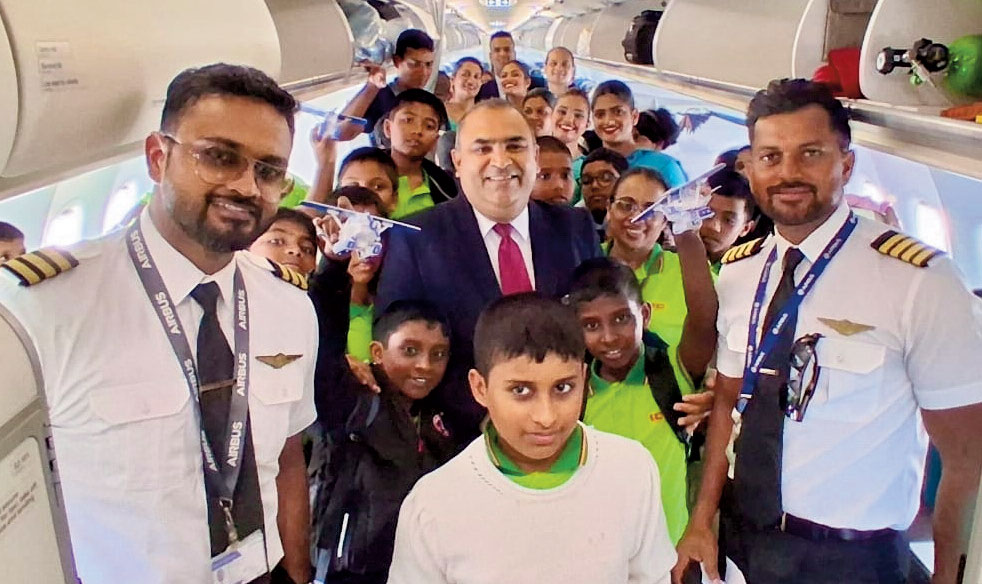
SriLankan Airlines set dreams in motion for 24 young students selected to represent Sri Lanka at the 2026 International Mathematics and Science Olympiad, held in Indonesia from 2 to 7 October 2026, helping make their journey to Indonesia and back an extra special one.
The students were selected through a four-stage national selection process covering school, zonal, provincial and national levels, with the highest-performing students progressing at each stage.
As a special initiative for Children’s Day, the Ministry of Education sponsored the air travel of all 24 students for the first time. Returning to Sri Lanka with an impressive haul of three Silver Medals and 10 Bronze Medals, the young contestants competed alongside students from 23 countries.
SriLankan Airlines was privileged to be part of their special journey, helping make their experience even more memorable as they represented Sri Lanka on the international stage.

Sri Lanka ITEC Alumni Association formally launched

Measures underway to protect Diyagama Forest as a Reserve — Deputy Minister of Environment

Showers or thundershowers will occur in most parts of the island after 1.00 p.m.

NPP govt. reminded of its responsibilities as US warship leaves Colombo

CERT: Beware of foreign Uni. scams on social media

Shiranthi receives treatment at National Eye Hospital

‘Dates have the highest sugar content to fight Coronavirus’

Sunday Island 27 December – Headlines

#SundayIsland 17th December – Headlines

Sunday Island – 28th March

Sunday Island Headlines – 21 March

Sunday Island – 21st February – Headlines
-

 News5 days ago
Geneva takes up Sallay’s case and govt. ignores opportunity to answer accusations
-

 Features6 days ago
The first woman in the foreign service or Ceylon Overseas Service it was then called
-

 News6 days ago
Nearly 20 Iranian tankers stranded off Lanka amid US sanctions
-

 Features4 days ago
Preventing grievances from becoming communal
-

 Sports2 days ago
Nissanka absence opens door for Sri Lanka’s young guns
-

 Features5 days ago
Sri Lanka Cricket Bill: Governance reform is not yet a cricket strategy
-

 News3 days ago
Gnansara Thera to be assigned to prison printing section: Officials
-

 News6 days ago
Lanka enters new phase of prosecutions as hurdles clear