
Opinion
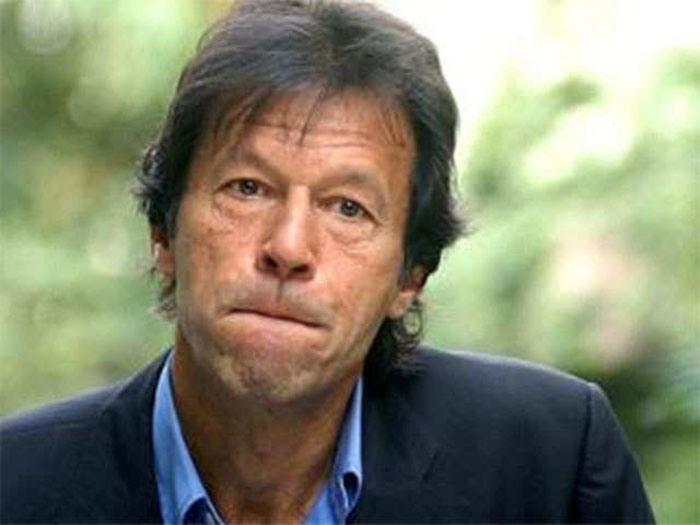
Imran Khan in pole position

By Abbas Nasir
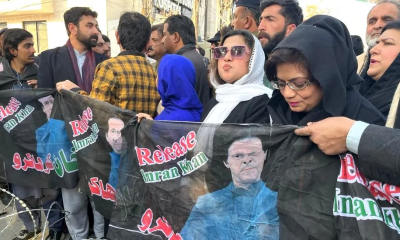
FIRST things first. Nobody can condemn enough a violent attempt to physically harm or kill a political leader regardless of the severity of disagreement with their views. One can only be relieved and grateful Imran Khan is on the road to recovery after surgeons patched up his bullet and bullet fragment injuries that included a fracture in his leg.
During his first live address to supporters from the hospital, after surviving the attempt on his life, with his fractured right leg up in a cast on a chair, the PTI leader blamed the prime minister, the interior minister and DG C, ISI, for the attempt on his life and called on supporters to protest daily till the three resign.Editorial: By going public with his accusations, Imran has taken a step he may find impossible to reverse
He reiterated his earlier warning that if peaceful change was not facilitated then there will be a bloody revolution like Iran, as he went through each element of his multi-point narrative honed to perfection over the course of the past few years and fine-tuned to account for his ouster from office in a vote of no-confidence in April this year.Apart from this rather repetitive message that has been beamed to his support base with telling effect for the past several months, there were two significant points to be picked up from his long statement. The first was that he was putting his ‘long march’ on hold till he was back to full fitness to lead it again.
Medical experts put the period of recovery from a fractured tibia, the ‘shin bone’ at up to 20 weeks but in no case less than a couple of months. During the healing phase, doctors say, walking or standing ie anything that involves putting weight on the affected leg/bone is not allowed so the patient is grounded.
We may then be right in assuming that the march is not likely to resume before the new year, if at all it does resume. By then, whatever decision about the office of the chief of army staff will have been taken and at least on that one crucial front which has been often cited as the cause of many a political convulsion in the country, any anxiety ought to have ended.
In turn, that would also mean that in the event a fresh election demand were to make headway, no such exercise would be possible before early summer at the soonest and possibly even later say June/July or August. Barring, of course, dramatic, unforeseen developments. This to me was the most important takeaway from the Khan address.
The second significant factor was that even as he named a key figure of a services intelligence agency, Mr Khan and later some of his party men such as Asad Umar were not citing the entire high command such as the COAS or even the DG ISI for the attack, let alone the institution.
If this was a tactical move it made little sense, in fact, looked naïve, because in an ostensibly disciplined institution it would be pretty nigh impossible for a two-star to so blatantly go on a solo flight, without risking his career; he would not last a day in his job if his alleged actions or activities came to light.
An almost unprecedented written ISPR response that followed Mr Khan’s address confirmed that. It mentioned the ‘PTI chairman’, as it strongly rebutted his allegations, terming them baseless and irresponsible, and made clear the institution stood firmly behind the named officer. The ISPR statement added the government has been requested to investigate the matter and initiate legal action “against those responsible for defamation and false accusations against the institution and its officials without any evidence whatsoever”.
By the time these lines appear in print, you shall have received such a vast amount of information as well as disinformation, allegations and ‘expert’ opinion on that much-videoed firing incident that there is no point in recounting that again.But one fact that hasn’t received due attention and warrants a mention was how quickly and professionally the 1122 paramedic rushed to the front of the trailer platform where Mr Khan and some of the other injured were, of course, assisted by an expeditious exit from that platform by some PTI leaders.
The 1122 trained emergency medical response teams were Punjab Chief Minister Pervaiz Elahi’s initiative in the same tenure he was telling all and sundry that he was committed to getting Gen Pervez Musharraf elected president in uniform.Even today he fits the ‘win some, lose some’ idiom. A case in point is his reported reluctance to register a police case (FIR) against all those named by the man Mr Elahi currently calls his leader and avowedly sees as a panacea for all that ails us.
To refocus on the attempt on the PTI leader’s life, kudos to the paramedic who did brilliantly in giving the PTI leader high-quality first aid, that enabled him to be driven the 100 or so kilometres to Lahore and his own hospital with his trusted surgeons and not the nearest emergency unit.From where we stand today, it is clear the Khan narrative is effective, is being beamed professionally and winning. Whether it is the government or other institutions they appear clueless about how to counter it.
We seem a million miles away from March this year and Mr Khan seems to have pushed the Sharifs off the coveted pole position for any electoral race as things stand. The Sharifs have their work cut out if they are to claw back their top ratings in Punjab.Finally, events from 2016 onwards particularly have been disastrous for the country. That those events have led to politicisation of key appointments to powerful security institutions is a matter of alarm and regret. Is it a forlorn hope that some lessons may have been learnt?
The writer is a former editor of Dawn.






Terminally Ill:
 Anyone with a minimal rational understanding of international relations and the functioning of multilateral organisations would know that South Asian Association for Regional Cooperation (SAARC) has gone the same way the Non-Aligned Movement had gone before. That is, to total oblivion and inconsequence. Maintaining these organisations today is a waste of taxpayers’ money from countries which can hardly afford extra cash for inconsequential diplomatic performances.
In June 2026, amidst an official visit to Colombo, SAARC’s outgoing Secretary General, Md. Golam Sarwar made several public statements about the future of the organisation during engagements at the Regional Centre for Strategic Studies and the SAARC Cultural Centre. It is instructive to see what he said. He did recognise the organisation was in trouble when he noted the need for member nations to engage more proactively with each other to overcome the present difficulties the organisation faces and “re-ignite” it. He also noted at Colombo’s RCSS that “an inspiring momentum is emerging as visionary leadership across the region works to keep broader cooperation at the heart of the conversation.” He further said, “when member nations champion this collective vision together, they can successfully elevate the dialogue around shared progress, ensuring that deep, meaningful regional integration remains a vibrant and lasting priority for all.”
But where exactly is this wonderful world of cooperation and visionary leadership emerging in the messiness that typifies domestic and international relations in South Asia? Where exactly can one see this inspiring momentum? Not on the ground for sure. In more realistic terms, what he has articulated is not fact or what is possible, but hope, against hope. What he outlined also does not constitute ongoing action on the ground. The reality beyond diplomatic sound bites is something very different. That reality merely mirrors the fractured history and dysfunctionality of SAARC over the last four decades.
In an essay titled ‘As SAARC Faces Unprecedented Setback, Time to Rethink the Rigid Boundaries of Its Nation States’ published in 2016, my former colleague Ravi Kumar and I noted the need to rethink how actually SAARC works. We wrote at a time when India, Bangladesh, Afghanistan and Bhutan refused to attend the 2016 SAARC summit scheduled to be held in Islamabad affectively scuttling the important meeting. Despite its forty-year history, the last summit took place twelve years ago in 2014 in Katmandu indicating the utter dysfunctionality of the organisation. What organisation can function when it cannot even successfully hold regular mandatory summits? This inability comes fundamentally from the India-Pakistan rivalry that flows into decision-making and more crucially, due to the unpractical expectation of 100 percent consent across all nations to proceed with all significant programmes.
In this background, when Mr Sarwar claims SAARC is the “irreplaceable beacon of hope” for the 2 billion people in South Asia, it means nothing more than utter naivety. It is precisely this ostrich attitude of its leaders and officials which have at one level ensured SAARC’s established dysfunctionality and track record in relatively unimaginative programing. That is, they have not moved beyond the practices and hurdles so typified by nation states and mere sound good rhetoric as in this case.
Beyond this, SAARC should never have been merely focused on a geographic grouping led by nation states with their often-irreconcilable idiosyncrasies and rivalries. This is what Ashish Nandy had referred to as “garrison states.” Where are the region’s people, their collective organisations, their cultural productions and their hopes and histories beyond the overused rhetoric of people-to-people relations? This is what Kumar and I raised in 2016. That is, whether it was possible, “from the continued existence and overall usefulness of the regional grouping, to the foundational concern of how to work out issues of regional cooperation.”
In this situation, mere “politics and economics of nation states” have “become the most significant dimension of the hegemonic discourses of regional cooperation.” Unfortunately, “in this process, it loses track of the actual sites inhabited by people, which are the messy cultural and emotional spaces beyond these territorial boundaries.” Moreover, “this has become evident in the way states have to work through their own formal bureaucratic mechanisms, while the initiatives of the people, and the imagination of scholars and creative people of the region, have often been very different and more inclusive than that of the state.”
Beyond the matter of leadership, the other area where SAARC has failed is in its lack of creative imagination in the way it should work. If it could put in place a process beyond the usual bureaucratic performances where there is more grounded involvement of people, there can be some hope. However, as Kumar and I had noted in 2016, “these non-hegemonic approaches have not been recognised at the level of formal statecraft. The obvious disconnect between the people and the nation is reflected in the constitutive character of the SAARC.” This is why even when visual artists, singers, dancers and sometimes scientists take part in purportedly SAARC-led initiatives, they are drawn from lists of supporters maintained by individual national governments and constituent political parties rather than from repositories of people who have actually worked tirelessly and excelled in their respective fields. The result is consistent mediocrity.
Mr Sarwar reportedly noted at RCSS that the “SAARC Cultural Centre in Sri Lanka” is “a vital node of technical expertise driving a practical, bottom-up approach to regional problem-solving.” Since when does this organisation do this kind of thing? While this is certainly possible when it comes to discourses on issues such as heritage management and preservation, the Centre’s mandate is to “promote regional unity through cultural integration and intercultural dialogue” and to “contribute towards preservation, conservation and protection of South Asia’s cultural heritage within the framework of the SAARC Agenda for Culture.” In any case, this organisation as well as SAARC more generally have never been about working through a bottom-up approach to address regional problems. Given their bureaucratic personalities, they are top-down by definition like all such multilateral organisations.
Notwithstanding that the SAARC Cultural Centre has become far more active in very recent times than it ever has been in the recent past due to changes in its leadership affected under the auspices of the Sri Lankan government, it is nevertheless reduced to run programmes mostly online. The inability to undertake more proactive programming despite the Centre’s present enhanced interest comes from both funding restrictions as well as the unnecessary rivalry between member states, particularly between India and Pakistan that percolates into the way the Centre is expected to function. It also does not help when the ability to be creatively independent in its programs is severely curtailed by unpractical norms of consent across member nations.
The Secretary General’s observations on the South Asian University in Delhi were far more disappointing as were they also completely wrong. Referring to the University’s now meaningless slogan, “knowledge without borders,” he described the university as a “visionary investment in our collective intellectual capital” that inculcates a shared regional consciousness by functioning as a “living bridge of mutual trust and academic collaboration” transcending political boundaries. Clearly, despite being the current Secretary General of SAARC, Mr Sarwar is completely unaware of what the university has become in more recent times, and particularly under his own watch.
What he has outlined are the expectations and hope upon which the university was established, which was also put into practice in the first decade or so of its existence. However, this is far from the reality now. Under its present and continuing India-appointed leadership, where no other South Asian nation has been able to appoint a President, the university has not only become completely North Indian (not even simply Indian) for all practical purposes in so far as its discission-making apparatus is concerned, but it has also become an organ of Hindutva and upper caste dominance. This transformation has affectively made it a mere extension of domestic Indian politics.
It no longer admits students from Pakistan and Afghanistan. And students from countries beyond India that include Sri Lanka and the Maldives hardly show any interest in joining the university given its seriously dented reputation and toxic environment as regularly reported in the Indian press. Even the number of students joining from Nepal – compared to early years – has also come down for the same reasons. This is an unfortunate but conscious deviation from its original intentions. What has happened in the process is its mandated South Asian identity and consciousness that the Secretly General himself referred to, has been violently uprooted. All this has happened officially under the auspices of SAARC and unofficially under the guidance of the Indian government while all member states have remained silent. The university’s deterioration into what is at best a mediocre regional ‘coaching centre’ has been well-documented in the Indian press over a long period of time. In this context, the Secretary General seeing the failed South Asian University experiment as a “living bridge of mutual trust and academic collaboration” is truly shocking.
In this overall situation, as opposed to the Secretary General’s over-optimistic and naïve assessment of SAARC’s future not grounded on regional realities, it is creditable that some of the Sri Lankan participants did bring up the South Asian University’s deterioration as well as what actually is meant by rhetoric such as South Asian identity and consciousness.
Ceylon Today of 28 June 2026 quoted the Secretary General as asking rhetorically, “without SAARC, what is the alternative?” This is indeed an important question. The answer to this question has been provided by the Secretary General’s own public pronouncements of naivety. Rather than a dynamic diplomatic institution, SAARC has become a moribund entity that merely reemploys retired diplomats and officials from the region, appoints others on secondment and employs junior officers on an unenviable pay scale, none of which have effectively contributed to serious and long-term institution-building. It is merely a burden on the region’s hapless taxpayers.
All this suggests the necessity for SAARC to radically and completely reinvent itself if it is not to become even more irrelevant than it already is. Its only hope is to rediscover itself within a “sense of embedded subversiveness in the acts of reasonable people” which cannot be done within the shackles of officialdom and dysfunctionality SAARC and the nation states which reluctantly fund it are straddled with. To be functional, the organisation also must be rescued from the India-Pakistan rivalry and its consequences. We know, all this is impossible as things stand today. This is why SAARC should be formally put to rest while its functioning organisations can be reinvented – where necessary and if it makes economic and financial sense – in the national personalities of the countries where they are located as South Asian University has already done.
Let me conclude by answering in plain terms the Secretary General’s question, “without SAARC, what is the alternative?” South Asia’s future is clearly not with SAARC. It lies squarely with individual nation states and their ability to forge bilateral and multilateral relations in areas that matter to them and in ways that benefit their national interests while at the same time self-consciously remaining out of the shadows and devious plans of any single hegemon.

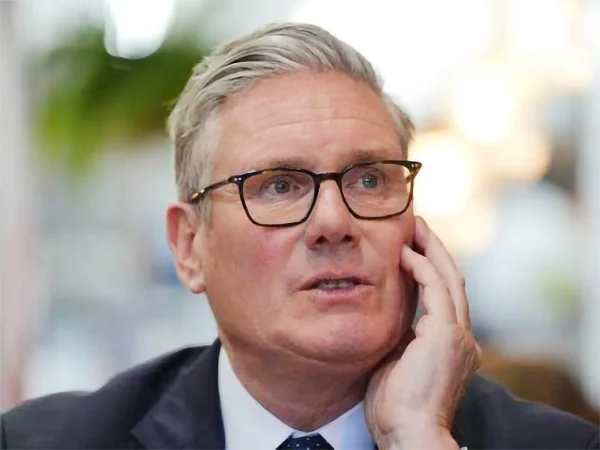
Monday, 22nd June was yet another important day in British politics. As the golden rays of late spring sunshine was bathing Downing Street early in the morning, a lectern was seen placed on the doorstep of No.10, which meant only one thing; that the sixth British Prime Minister in 10 years was about to deliver his swansong, before completing even two years in office.
Queen Elizabeth II had only 15 British Prime Ministers in her record-breaking reign, lasting 70 years, having had a record of 179 serve as Prime Ministers in her realm, the first new appointment, after her ascension to the Throne, being none other than Dudley Senanayake of Ceylon in 1952.
In contrast, King Charles III will have his fourth British Prime Minister even before he completes his fourth year of ascension on 8th September, as Andy Burnham may be PM by 16th July. This rapid turnover of PMs is the sign of a deeper problem underneath; the inability to prevent the rapid decline of a once great nation!
Keir Starmer led the Labour party to a landslide victory in the general election held on 4 July, 2024, when it won 411 seats of the 650 in the House. Interestingly, the party’s vote share was only 33.7%, the lowest of any governing party on record, making the thumping majority of 174 rather paradoxical. It made this the least proportional election in British Parliamentary history and was largely due to Nigel Farage’s Reform Party taking a major slice off the Conservative vote. The gloss of this remarkable victory was quickly tarnished when it transpired that Starmer accepted thousands of pounds, from a Labour Lord, to buy clothes and spectacles! Starmer, devoid of charisma, started becoming unpopular very quickly, more due to a large number of policy U-turns he made.
Starmer’s biggest blunder, however, turned out to be the hasty appointment, without proper security clearance, of the Labour grandee Peter Mandelson as the British Ambassador to the USA. Mandelson, the first ‘spin doctor’ in the UK, was one of the architects of Tony Blair’s massive victory and was a powerful figure in the Labour Party. He was a bitter critic of Trump but changed his views to get appointed to the coveted position!
Further, he hid his close connections to the sex offender Jeffrey Epstein, exposure of which by the media, left no choice for Starmer but to sack him. This raised serious concerns regarding Starmer’s judgement. The extremely poor performance of Labour at the May Local Government, as well as Devolved Assembly elections, sealed the fate of Starmer.
In comes Andy Burnham, who has always harboured ambitions of being PM. He is certainly charismatic and more to the left than Starmer. Having being unsuccessful at the leadership of the Labour party twice, losing out to Ed Miliband and Jeremy Corbyn, Burnham gave up national politics to be Mayor of Manchester, a major city in the Northwest of England with a rich industrial heritage and the birthplace of Marxism, where he had done some good work. Viewing a golden opportunity in Starmer’s failure, Burnham attempted to enter national politics again.
Though Starmer was able to thwart his first attempt, Burnham succeeded in the second attempt, winning the Makerfield by-election, convincingly defeating Reform, which is the emerging threat to Labour. The belief of most Labour MPs, and supporters, that ‘crowning’ him will see off Reform, nationally, may well turn out to be an illusion!
Burnham is a typical politician, who changed his views on many of his convictions during the election campaign, simply to get elected. If he keeps to his leftwing policies, it is very likely that the UK economy would get worse. Anyone thinking that only Sri Lankan politicians are fickle are completely wrong. As much as Sri Lankan politicians have ruined a country with so much potential, British politicians have ruined the country that once had the largest empire.
I have been familiar with the UK since 1969, when I first came for my postgraduate studies and visiting regularly, and intimately, since 1988, when I started working for the NHS. With a sense of horror, and sadness, I have seen the slippery slope taken by once a great country. It is to a great extent due to idiotic decisions taken by politicians based either on ideology or because of self-interest. I can well see the parallel decline in the two countries close to my heart.
When I started work in the NHS, it was the best health service in the world. Then ‘Clarke’s curse’ struck. Kenneth Clarke, during his tenure as the Secretary of State for Health in Margaret Thatcher’s government, introduced a ‘Trust’ system for hospitals and other health institutions on the premise that they should be better managed, like in the USA, disregarding all the evidence that the health services in the USA was not cost-effective and gave poor coverage. Most resources pumped to health services, since, have been absorbed by management, resulting in falling clinical care. Whilst there are plenty of managers in hospitals, there are no beds in wards resulting in corridor patients, the equivalent of floor-patients in Sri Lanka. UK doctors are also on strike frequently, perhaps taking the cue from the GMOA!
John Major, who followed Thatcher, privatised railways and even water services. Most of these are returning to the government due to failures. The first public railway service in the world was the Stockton to Darlington Railway in the North East of England, which started in September 1825 but today UK rail services have nothing to boast of. Beeching cuts of the 1960s decimated the British railway services and, in spite of attempted reforms, expansion does not match anything remotely similar to what countries like China have achieved. The high-speed rail link from London to Manchester is over budget and behind schedule, opening in 2036!
Britain once was a leader in aviation, Sir Frank Whittle being credited with the invention of the jet engine in 1930. London Heathrow was, not so long ago, the busiest international airport in the world but due to squabbling by environmentalists, etc., has been struggling for the past 10 years to build a third runway while many other countries have built hundreds of airports!
When we first came to the UK, honesty was the cornerstone of society. Today, shoplifting is the norm! Police do not care for petty thefts and some illicit immigrants are having a field day earning a living by shoplifting and petty theft! Antipathy towards immigrants is thus developing fast, as everyone is looking for someone or something to blame.
Could another PM from the Labour party make a difference? It is highly unlikely as the Labour Party is so intimately tied to the powerful trade unions. The infighting has led to the demise of the Conservatives as a political force and it is unlikely to have electoral success in the near future. Will Nigel Farge’s right-wing Reform party, which is likely to form the next government, if Burnham too fails, do any better? Perhaps, it will take the wind out of the sails of the extreme right and reduce anti-immigrant rhetoric but whether Farage has the vision, and the team, to reverse the decline of the UK, is the big question!
By Dr Upul Wijayawardhana
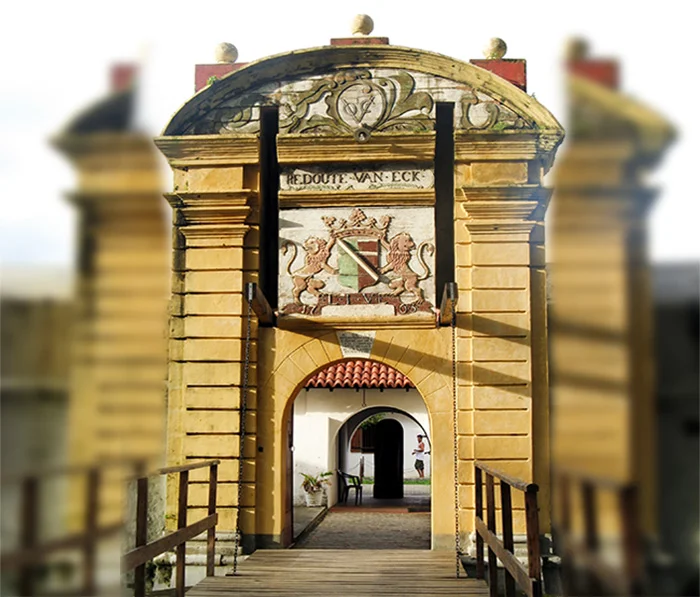
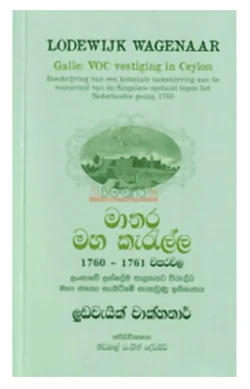
Several months ago, I contributed a piece to these columns on the unspeakable horrors of Dutch slavery in Suriname. As the period of Dutch rule of Sri Lanka (1658 – 1796 ) by and large, fell within that of Dutch rule of Suriname (1669 – 1975), I became interested in finding out how the treatment (or rather ill –treatment) of the subjugated people of Sri Lanka by the Dutch colonial masters compared with their horrendous abuse and exploitation of the Surinamese: How did they economically exploit people in Sri Lanka? To what extent was it based on outright slavery, or other forms of forced labour? If so, how widespread and atrocious was it? Whilst musing on these questions, I came across, quite by chance, a recently published Sinhala book titled ‘ Matara Maha Kerella’ (The Great Matara Rebellion). This work provided with me some valuable information and insights on the socio–economic and political foundation of Dutch colonial rule in Sri Lanka. ‘Matara Maha Kerella’ constitutes a translation from the Dutch to Sinhala of three chapters of Lodewijk Wagenaar’s book, titled ‘Galle:VOC Vestiging in Ceylon – Beschryning van een koloniale samenleving aan de vooravong van de Singalese opstand tegan het Nederlandse gezag, 1760’ (“Galle – VOC establishment in Ceylon. Description of a colonial society on the eve of the Sinhalese uprising against Dutch authority, 1760”) published in Dutch in Amsterdam, Netherlands, in 1994. The Sinhala translation has been done by Dr. Nirmal Ranjith Devasiri, and has been published by the Social Scientists Association (SSA ) in 2024.
Matara Maha Kerella
‘Matara Maha Kerella’ consists mainly of the Sinhala translation of the first, second, and ninth chapters of Wagenaar’s book. The first chapter (corresponding with Wagenaar’s first chapter ) provides very informative accounts of the Dutch East India Company (Vereenigde Oostindische Compagnie or VOC for short ), the structure of VOC’s administration in Sri Lanka, the VOC’s often strained relations with the Kandyan Kingdom, the impact of the revival of Buddhism under King Kirti Sri Rajasinha, and the huge economic surplus extracted by the Dutch mainly from their tight control of the production and export of Sri Lankan cinnamon. The second chapter (corresponding with Wagenaar’s first chapter ) provides a graphic account of Dutch Governor Jan Schreuder’s inspection tour of the territories under Dutch rule in Sri Lanka. The third chapter (corresponding with Wagenaar’s ninth chapter) provides a detailed narrative of the Sinhala uprising against Dutch rule, which took place in 1761. Additionally, the book contains a translator’s introduction and a brief note for the translation from the author Lodewijk Wagenaar.
Governor Jan Schreuder’s inspection tour of Sri Lanka
As Wagenaar tells us, it was customary for Dutch Governors of Sri Lanka to do an inspection tour of the island, at least once during their tenure, and submit a report to his superiors in the VOC High Government in Batavia ( modern day Jakarta in Indonesia ) and the VOC headquarters in the Netherlands. In keeping with this practice, Jan Schreuder, who was the governor from 1757 – 1762 did a round trip of the coastal areas of Sri Lanka, from June to September 1760. Wagenaar gives a detailed commentary of the first leg of his tour from Colombo to Gandara by road. His narrative is based mainly on a report on Schreuder’s tour, which Wagenaar found in the National Archives in The Hague in the late 1980s.
Jan Schreuder’s journey from Colombo to Galle was not lacking in pomp and pageantry befitting a governor, albeit with Dutch thriftiness. However, the main focus of the German-born governor, with an accounting background, seems to have been the fortified city of Galle, which was under the Colombo-born Commander Abraham Samlant. Wagenaar’s narrative provides amusing biographical details of these two key personalities, Schreuder and Samlant.
Schreuder paid great attention to the military and administrative aspects of Galle with German thoroughness during his week-long stay in Galle. However, he and his colleagues seem to have been oblivious to the early warning signs of the great uprising, such as the setting on fire of cinnamon trees in the village of Kathaluwa, in Talpe pattuwa, in the Galle Commandery: The report on his tour is silent of such matters. It is interesting to note that the rebellion broke out only a few months after Schreuder’s visit, and took the VOC administration, in Sri Lanka, by surprise.
Sinhalese uprising against the Dutch, 1760 – 1761
 The great Sinhalese uprising against the Dutch broke out in December 1760 and continued throughout the following year. It commenced from areas bordering the Kandyan Kingdom, such as Hanwella, and rapidly spread to the coastal areas, from Negombo to Tangalle. The Dutch forts at Hanwella and Katuwana were overrun by the rebels. Eventually, the Dutch were forced to abandon their fort in Matara, which was subsequently burned down by the Sinhalese. The Dutch were forced to retreat into their forts in Galle and Colombo. Only their immense naval power enabled them to retain a foothold in the south of Sri Lanka. In fact, contact between Colombo and Galle was possible only by sea. The rebels received significant material and moral support from the Kandyan Kingdom.
Wagenaar provides four main reasons for the rebellion; firstly, unpopular Dutch agrarian policies, which badly affected the peasant farmers; secondly, the persistent draught which decimated rice production; thirdly, the failure of the VOC administration under Schreuder to provide timely relief to the affected people; and fourthly, the new Sinhala national ethos arising from the contemporaneous Buddhist revival in the Kandyan kingdom.
Slavery and other forms of forced labour in Sri Lanka under the Dutch
Slaves are mentioned in many instances in Wagenaar’s narrative – VOC slaves, private slaves, etc. However, it is clear that slavery did not play a significant role in the economic exploitation of the subjugated people of Sri Lanka under Dutch rule. The economically most exploited people were the class of cinnamon peelers. Falsely posing as the agents of the King of Kandy in coastal regions, the Dutch cunningly adopted the pre-colonial Rajakariya system, which made it mandatory for persons belonging to service castes to provide specific goods or services to the state for free. This was, in effect, a form of forced labour. The Dutch rigorously applied this highly exploitative practise in regard to cinnamon peeling, which was a skilled and arduous activity. Each cinnamon peeler was forced to provide the VOC an ever increasing quantity of cinnamon without any payment, which is clearly a form of forced labour, or even slavery in modern parlance. The oppression of the cinnamon peelers by the Dutch was so unbearable that they often fled to the Kandyan kingdom. However, the Dutch colonial masters saw the cinnamon peelers in a totally different manner, somewhat reminiscent of the Dutch attitude towards the Surinamese slaves of African origin. According to Wagenaar, Schreuder described cinnamon peelers as a group of “lazy, careless, dissatisfied, and rebellious people”. However, it was their labour which enabled the VOC to earn astronomical profits which enabled it to build impressive forts in Sri Lanka (some of these have become high-end tourist attractions), pay hefty salaries and huge dividends to its employees and shareholders, respectively, and, above all, make its country of origin, the Netherlands, fabulously rich and powerful.
by Satyajith Andradi

Hope returns, Roach out for West Indies after injury-hit Sri Lanka bat

Juventus Training Camp from 6-10 July in Colombo

Wijesundara set for debut as injury-hit Sri Lanka struggle to make up XI

UNEP support pledged to strengthen Sri Lanka’s Environmental Priorities

Ronaldo scores as Portugal come back to win, Croatia denied by late VAR

Lister replaces injured Sears for ODI series in the West Indies

‘Dates have the highest sugar content to fight Coronavirus’

Sunday Island 27 December – Headlines

#SundayIsland 17th December – Headlines

Sunday Island – 28th March

Sunday Island Headlines – 21 March

Sunday Island – 21st February – Headlines
-
 News5 days ago
LAWASIA warns against ad hoc initiative to increase judges’ retirement ages
-
 News6 days ago
Another 1,132 Sri Lankan Personnel to be deployed for United Nations Peacekeeping Missions
-
 News4 days ago
Chamuditha to seek removal of injunction on Youtube programme
-
 Features4 days ago
Climate action to bring South Asia together
-

 Business7 days ago
Month-end profit-takings drive stock trading; indices up
-
 Features6 days ago
People’s Bank expands digital banking network with 125th cheque deposit kiosk
-
 News4 days ago
CPRP alleges another death in custody, seeks protection for witness
-

 News7 days ago
FSP complains of irregularities in a Guinness World Record event held in Sri Lanka