
News
Lankan crisis embedded into political system with leaders playing Sinhalese Buddhist card and catering to majoritarian sentiment

UK-based NGO holds discussions on what lessons South Asian nations can draw from Lankan crisis
London (ANI): A recent Democracy Forum seminar highlighted the dire political and economic problems overwhelming Sri Lanka, and what other South Asian nations might learn from its experience.On July 14th, Sri Lankan President Gotabaya Rajapaksa resigned, as his country faced economic ruin and civil unrest. Protestors demanded that the interim government probe allegations of corruption against Rajapaksa and his family, who have dominated Sri Lankan politics for much of the past two decades.
To analyze what lies behind the Rajapaksas’ fall and Sri Lanka’s economic collapse, and discuss what lessons other South Asian nations might learn from the country’s predicament, London-based NGO The Democracy Forum invited a panel of experts to address the central theme: ‘Sri Lanka: Lessons for South Asia’.
In his opening comments, TDF President Lord Bruce spoke of the plight of Sri Lanka, a country traumatized by its political shortcomings, exacerbated by a combined balance of payments and sovereign debt crisis, which betrays many of the systemic problems that continue to beset countries throughout South Asia.The Sri Lankan government’s reckless pursuit of unsustainable foreign borrowing has propelled the country into the midst of a proxy tug-of-war between China and India, he said, and although Beijing has long courted the Rajapaksa family with loans for huge infrastructure projects, it has been slow to respond to Colombo’s evolving crisis.
In contrast, the Indian government earlier this year offered a package of credit, loans, and humanitarian assistance worth USD 3.8bn. The outcome of this hegemonic rivalry is far from clear, but the machinations reflect the shifting sands of allegiance in South Asia, concluded Lord Bruce, with Beijing still wielding the most significant clout in the region.
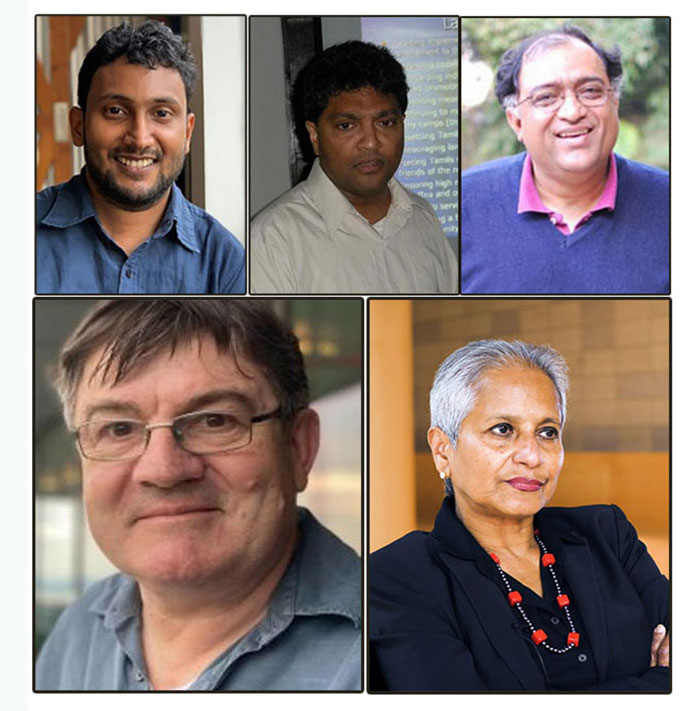
Focusing on deep-rooted, long-term economic vulnerabilities that led to sovereign default in Sri Lanka – the first time in the country’s history – Umesh Moramudali, a Lecturer at the University of Colombo and Researcher on Public Debt and Development, pondered why Sri Lanka had come to this.
While some observers believe China, the Russian war, and Covid are key external culprits in Sri Lanka’s economic decline, Moramudali pointed to three long-term internal vulnerabilities: Sri Lanka’s declining tax revenue, a much reduced exports-to-GDP ratio, and very low foreign direct investment.On Sri Lanka’s path to becoming a middle-income country, he argued, it had failed to fix the structural weakness of its economy, and core political weaknesses. Heavy borrowing from China for infrastructure projects, as well as increasing domestic and external debt, had also left their mark.
Dr Neil DeVotta, Professor of Politics and International Affairs at Wake Forest University, discussed the proximate causes of the crisis facing Sri Lanka, juxtaposing that with mal-governance over the decades and linking the island’s current problems with its ethnocentric trajectory. The hardship that Sri Lanka continues to face is almost invisible, he said, as the protest movement is now less vigorous, yet malnutrition, poverty, dipping agricultural output and lack of medicines are among growing problems.
DeVotta also drew attention to exogenous causes (Covid, the war in Ukraine), although he believed the long-term explanation was rooted in Sri Lanka’s ethnonationalism and its dynamics, with decades of ethnocentric governance having eroded meritocracy, leading to poor governance, corruption and lack of transparency. This is embedded into the political system, he said, with leaders playing the Sinhalese nationalist Buddhist card and catering to majoritarian sentiment.
The political roots of the crisis were also at the forefront for Jonathan Spencer, Regius Professor of South Asian Language, Culture & Society at the University of Edinburgh, who specifically focused on the gap between the political class and the people. He underscored the essentially non-violent nature of most protests, but also the limitations of what has been achieved by the protestors, who initially focused their ire against Gotabaya and Mahinda Rajapaksa, but are now also directing it at the other 225 current members of parliament.
Spencer called the existing political system ‘sealed’, and asked why there have been no new forces and voices entering it – for example, there are only 12 women MPs in parliament out of 225, in a country that had the first democratically elected female prime minister, and young people and those from poorer communities are also blocked from participation. So there is a long-term structural crisis though a crisis of representation in the current Parliament.
The good news, concluded Spencer, is that the aspirations of the young protestors who want to see post-ethnic, post-corruption politics have not been crushed by the repression of recent months; but the bad news is it is very hard to see how they can find expression in the mainstream political realm.
Broadening the focus to a more regional viewpoint, Dr. Ali Cheema, Associate Professor of Economics, Lahore University of Management Sciences and Research Fellow, IDEAS, looked at Pakistan’s domestic political economy challenges and development, in light of what might be learned from Sri Lanka’s recent experiences.
He drew parallels between Sri Lanka and Pakistan, given their structural weaknesses, and how these have been worsened within the context of the global economic crisis. But Cheema cautioned against being reductive, as each South Asian nation has a different set of fragilities, underpinned by growth models that are themselves fragile.
Dr Deepa Ollapally, Research Professor of International Affairs & Director of the Rising Powers Initiative at the Elliott School of International Affairs, George Washington University, also addressed the regional repercussions of the Sri Lankan crisis, especially what it means for India’s role vis-a-vis Colombo, and in the region.
She spoke of how the region is being redefined, as are regional roles and expectations, with Quad member Japan now a major player, seen as an honest broker able to develop, along with other Quad members, restructuring packages and provide alternatives to the China option, especially the BRI.
Ollapally said that, previously, India had watched helplessly as Sri Lanka fell into Beijing’s arms. But, with the Ukraine war diverting most of the international community’s attention, China then vanished from the scene and India appeared as a first responder with a huge aid package, far outstripping China’s. Sri Lanka, she added, had been overly optimistic in its expectations of China, which is a tough customer when it comes to bailouts, as it is more concerned with its own economic situation.
Many countries are in debt to China (eg Pakistan, African nations), and the upshot is a slowing down of the BRI, which had been speeding up. At the same time, Sri Lanka has underestimated India – despite the island nation begging for global help, only India came good.
India’s expectations of Sri Lanka have also increased, as the crisis has given India the opportunity to push back China. Prime Minister Narendra Modi government has been much quicker than its predecessors to realize that, in order to project itself globally, India needs to take care of its immediate neighborhood – otherwise there are others waiting in the wings, like China, to play that role. So Sri Lanka, concluded Ollapally, is a test case in India’s journey towards being a global power.
Barry Gardiner MP, Chair of the Forum, closed the event by considering some of the elements of a useful rescue package for Sri Lanka. More money would need to be channelled to the bottom of society, and fuel and fertilizer would have to reach farmers for healthy harvests next year. Regarding lessons the region could learn from Sri Lanka’s situation, Gardiner stressed the importance of borrowing to invest, not to consume, and putting funds into the hands of the people, who will help drive growth, tackle corruption, and fostering transparency within the polity.

Latest News
Landslide Early Warnings issued to the districts of Colombo, Gampaha, Kalutara, Kegalle, Nuwara Eliya and Ratnapura


The National Building Research Organisation [NBRO] has issued landslide early warnings to the Districts of Colombo, Gampaha, Kalutara, Kegalle, Nuwara Eliya and Ratnapura valid from 09:00 hrs on 23.05.2026 to 09:00 hrs on 24.05.2026
Accordingly,
LEVEL III [RED] landslide early warnings have been issued to the Divisional Secretaries Divisions and surrounding areas of Deraniyagala, Ruwanwella and Dehiowita in the Kegalle district and Ratnapura, Ayagama, Kuruwita and Eheliyagoda in the Ratnapura district.
LEVEL II [AMBER] landslide early warnings have been issued to the Divisional Secretaries Divisions and surrounding areas of Seethawaka and Padukka in the Colombo district, Attanagalla in the Gampaha district, Palindanuwara, Ingiriya, Bulathsinhala and Horana in the Kalutara district, Yatiyanthota in the Kegalle district and Pelmadulla, Kiriella, Kalawana, Nivithigala and Elapatha in the Ratnapura district.
LEVEL I [YELLOW] landslide early warnings have been issued to the Divisional Secretaries Divisions and surrounding areas of Divulapitiya and Mirigama in the Gampaha district, Mathugama and Agalawatta in the Kalutara district, Bulathkohupitiya in the Kegalle district, and Ambagamuwa in the Nuwara Eliya district.
,
.

The US has announced a new policy that means most immigrants seeking a green card will have to leave the country and apply at an embassy or consulate abroad.
The US Citizenship and Immigration Services (USCIS) said on Friday that people seeking a change in status must do so through consular processing outside of the country “except in extraordinary circumstances”.
The move – a part of the Trump administration’s effort to curtail illegal immigration – closes a loophole that had allowed visa holders and visitors to apply for a green card while still in the US.
Critics of the policy say the longstanding system allowed families to stay together during the lengthy application process.
The new method could also make it difficult or impossible for some immigrants who leave the country in hopes of gaining a green card to return.
The USCIS policy memo states that people such as students, temporary workers or people on tourist visas need to go through the Department of State from outside of the US.
“When aliens apply from their home country, it reduces the need to find and remove those who decide to slip into the shadows and remain in the US illegally after being denied residency,” USCIS said, making the system “fairer and more efficient”.
On X, the Department of Homeland Security, which oversees USCIS, said: “The era of abusing our nation’s immigration system is over.”
“We’re returning to the original intent of the law to ensure aliens navigate our nation’s immigration system properly,” USCIS Spokesman Zach Kahler said.
“From now on, an alien who is in the US temporarily and wants a green card must return to their home country to apply, except in extraordinary circumstances,” he continued.
Kahler said the policy allows the immigration system “to function as the law intended instead of incentivising loopholes” and that visits “should not function as the first step in the green gard process”.
It is unclear whether pending green card applications will be affected.
A spokesperson for the USCIS told the BBC that as the policy is rolled out, “people who present applications that provide an economic benefit or otherwise are in the national interest will likely be able to continue on their current path”.
“Others may be asked to apply abroad depending on individualised circumstances,” it said.
Being a green card holder, or lawful permanent resident, allows a person to live and work permanently in the US. Obtaining one is a multi-step process that can take months to several years.
There are currently more than a million legal immigrants waiting for approval on their adjustment of status green card applications, according to the Cato Institute’s director of immigration studies.
Kahler argued that following the law allows the majority of cases to be handled by the US State Department at consular offices abroad and frees up USCIS resources to focus on processing other cases that fall under its purview – such as visas for victims of violent crime and human trafficking, naturalisation applications, and other priorities.
The move is consistent with longstanding immigration law and immigration court decisions, the agency said. Immigration officers are being directed to “consider all relevant factors and information on a case-by-case basis when determining whether an alien warrants this extraordinary form of relief”.
Michael Valverde, who was a senior official at USCIS under both Republican and Democratic administrations until his departure last year, said to the BBC’s US media partner CBS that Friday’s announcement would “disrupt the plans of hundreds of thousands of families and employers annually”.
“This is a largely unprecedented move that will limit lawful immigration to the US greatly,” Valverde said. “People who followed the rules faithfully now face tremendous uncertainty.”
The Trump administration has instated bans or restrictions on citizens from nearly 40 countries.
Another policy from the administration this year has paused all visa issuances to immigrant visa applicants from 75 countries.
Overstaying a US visa can lead to deportation, ineligibility for future visas and re-entry bans lasting up to 10 years, according to the US State Department.
[BBC]

The warning mentioned in the flood warning message No. 01 issued for the Aththanagalu Oya basin on 22.05.2026 at about 5.30 am will be extended for the next 48 hours.
It is requested that residents in the area and vehicle drivers running through those areas pay high attention in this regard by the . Disaster Management Authorities are requested to take adequate precautions in this regard

Landslide Early Warnings issued to the districts of Colombo, Gampaha, Kalutara, Kegalle, Nuwara Eliya and Ratnapura

Most people seeking green cards must now apply from outside US

Tulsi Gabbard to resign as US director of national intelligence

SpaceX launches massive Starship V3 rocket on test flight

Everest record holder warns of Nepal danger as two Indian mountaineers die

Angkrish Raghuvanshi ruled out of IPL 2026 with concussion, finger fracture

‘Dates have the highest sugar content to fight Coronavirus’

Sunday Island 27 December – Headlines

#SundayIsland 17th December – Headlines

Sunday Island – 28th March

Sunday Island Headlines – 21 March

Sunday Island – 21st February – Headlines
-
 Features6 days ago
Sri Lankan Airlines Airbus Scandal and the Death of Kapila Chandrasena and my Brother Rajeewa
-
 News6 days ago
Kapila Chandrasena case: GN phone records under court scrutiny
-
 News6 days ago
Rupee slide rekindles 2022 crisis fears as inflation risks mount
-
 Features3 days ago
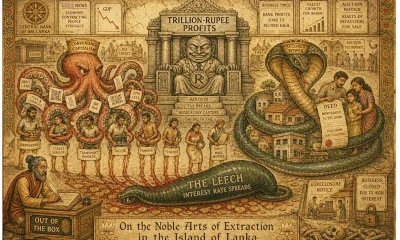
Octopus, Leech, and Snake: How Sri Lanka’s banks feast while the nation starves
-
 Business6 days ago
Expansion of PayPal services in Sri Lanka officially announced
-
 News2 days ago
Steps underway to safeguard Sri Lanka’s maritime heritage
-
 News6 days ago
Court orders further arrests in alleged USD 42 Mn NDB fraud case
-
 Opinion2 days ago
Murder of Ehelepola family, Bogambara Wewa and Sightings of Wangediya