
News
SL school education to be reformed to meet international standards – Education Minister

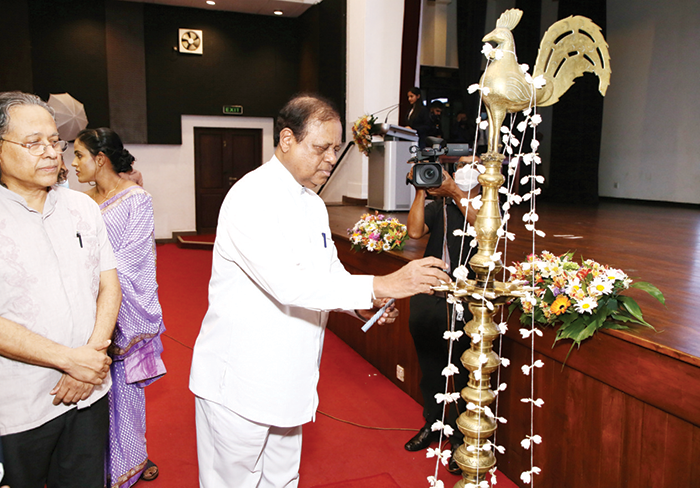
Mishrawarna Olympiad Champions’ Awards Ceremony
By Claude Gunasekera
A long-awaited revolutionary approach to the national education system is now to be launched next year by introducing the world renowned STEAM education framework with a sturdy focus on subjects of Science, Technology, Engineering, Art and Mathematics to teach students how to think critically, solve problems and use creativity, in their mindset that prepares them to work in career areas that are predicted to experience significant growth.
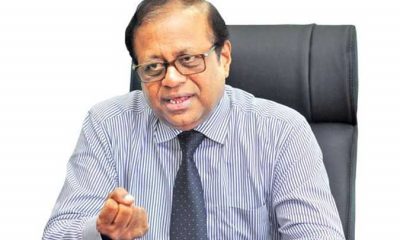
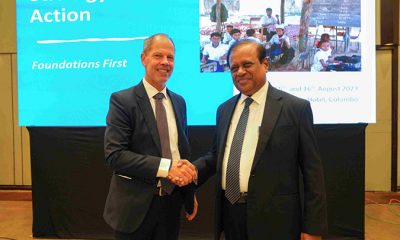
Minister of Education Dr. Susil Premajayantha revealed this new education strategy in the presence of Secretary to Ministry of Education Nihal Ranasinghe when he attended the Mishrawarna Olympiad Champions’ Awards Ceremony at the Colombo University during the weekend. He was the Chief Guest. It is an annual event organized by Sri Lanka Olympiad Mathematics Foundation since 2004.
The minister said it was the first time that such an initiative had been taken to introduce a global education model in to the curriculum in Sri Lanka and grounding in STEAM subjects offered a broader array of career choices for developing personalities. “Earlier, we have been reforming the education system on and off, but the real need is the transformation to global trends in par with international standards. We have been following the same old system for many years, but the new initiative will help achieve Sustainable Development Goals (SDG) by 2030 through a quality education. He said Finland ranks world’s No.1 in Quality Education and the reason is that teachers are accountable for each student and we too have to follow it by providing vigorous training to teachers here as in Singapore.
Minister Premajayantha also pointed out that STEAM education promotes the integration between subjects that aims at favoring deep and collaborative learning on students, through curricular integration in scientific education. He invited and sought the assistance and cooperation from all concerned and involved individuals and institutions in education to support this mission towards making the new approach a success.
Minister also said that Mathematics is a compulsory subject in school curriculum world-over and is an essential discipline in human progress and the foundation for innovation and creativity in human thinking. He concluded commending the mission conducted by Sri Lanka Olympiad Mathematics Foundation (SLOMF) and particularly it’s Founder / Chief Executive Officer (CEO) Dr. Chanakya Wijeratne and assured the fullest cooperation of the Education Ministry to support the annual Olympiad Championship Awards Ceremony from next year.
“Mathematics Achievement’ is essentially an important indicator in the economic development of a country “said Nihal Ranasinghe, Secretary Ministry of Education. He further said that International Mathematic Competition (IMO) is the most prestigious and important mathematical competition for high school students and since early nineties Sri Lankan students have toured overseas to take part this competition. He further said that SLOMF has been providing a tremendous platform to support mathematics among the school children in Sri Lanka and commended the efforts taken by the foundation to enhance the quality of mathematics. He said the contribution is greatly appreciated.
Quoting that “Education is not the filling of a pail, but the lighting of a Fire” Dr. Chanakya Wijeratne said conducting the Sri Lanka Mathematics Competition (SLMC) Island wide since 2004, has attempted to light fires in thousands of local school children’s minds posing interesting and challenging efforts for the zone of proximal development in improving critical thinking, mathematical thinking and creativity for problem solving.
Further speaking at the occasion Dr. Wijeratne said “At school you mostly do exercises which are routine tasks and easy to do. But solving problems require patience. Often solutions are not found in an instant. Sometimes you struggle and fail. Failures are the pillars of success. Every failure, every mistake is an opportunity to grow if you have a growth mind set. With a growth mind set you can aim high. You can aim for the moon or Dream big. You could be the next Elon Musk, Mark Zuckerberg or Andrew Wiles. Don’t be afraid of failing. Even if you miss the moon, you will land among the stars”.
He said the Sri Lankan national team that attended the International Mathematical Olympiad (IMO) held in Norway this year did remarkably well and they brought honors’ to the nation. He told that students who take part in the IMO have easy opportunity to get admission into top ranking universities in the world.It is a great pleasure for me to welcome you all this Olympiad Champions’ Awards Ceremony 2022. I feel lucky to have the opportunity to say a few words to the
Dayan Kiriwaththuduwa, National Coordinator & Chief Technical Officer of SLMOF, felicitated Dr. Chanakya Wijeratne for the immense service rendered in the school & university education sector through mathematics Olympiad and stated in his citation that “Self-visualization is the defining of self-future, based on present knowledge of goals, hopes, and dreams. Dr. Chanakya Wijeratne is teaching this point and is a desirable model himself”.
Glenfrey De Mel, Chief Operating Officer (COO) speaking at the occasion invited and encouraged all school children in the country to participate in the Sri Lanka Mathematics Competition which is not purely based on the mathematics subject but it is a mind improvement game worth attended by any student. He said the online registration is open by next month (October) for the examination to be held in January 2023 and the Sri Lankan team for International Mathematical Olympiad will be selected among the winners of the national competition.
Dr. Dayal Dharmasena, Director Training, Samantha Ariyaratna, Director Operations SLMOF, and Jagath Chandana Perera, Advisory Partner KPMG were attended the occasion for presentation of awards.There were around 250 award winners from a variety of schools all over the country, with Gold, Silver, Bronze Medalists and Certificate winners.








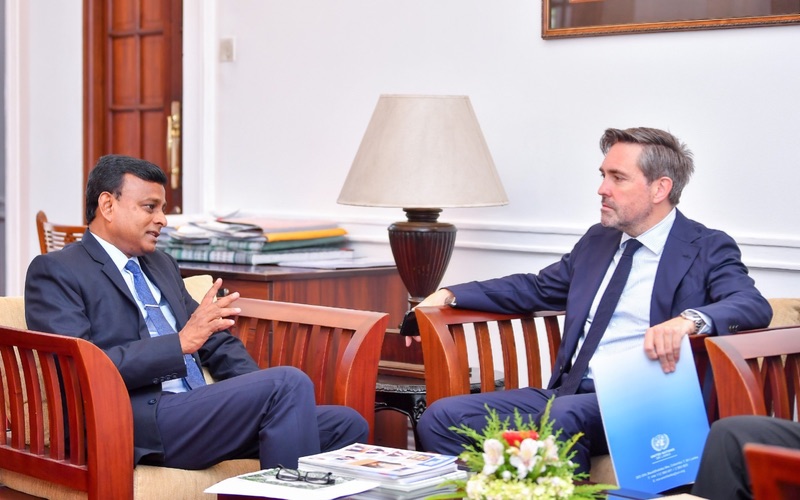
A meeting between UN Resident Coordinator Marc-André Franche and Chief of Staff to the President Prabath Chandrakeerthi was held on Monday (07) morning at the Presidential Secretariat.
Particular attention was given to the Government’s programme to resettle people who lost their homes due to Cyclone Ditwah.
The Government’s programme to address potential disasters that may arise in the future amid El Nino conditions was also discussed. The Chief of Staff to the President briefed the UN Resident Coordinator on the Government’s preparedness and plans to address such challenges.
Mr Franche stated that the United Nations was prepared to provide the necessary assistance to the Government to support the successful implementation of these programmes.
Partnerships and Development Finance Specialist at the United Nations Azam Bakeer Markar and UN Sri Lanka Humanitarian and Resilience Officer Wagisha Perera also participated in the discussion.
[President’s Media Division]
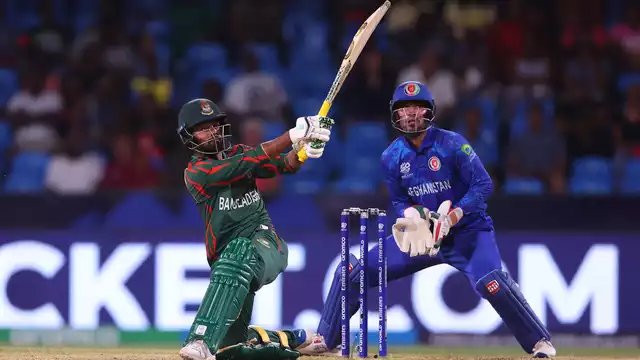
[ Cricbuzz]
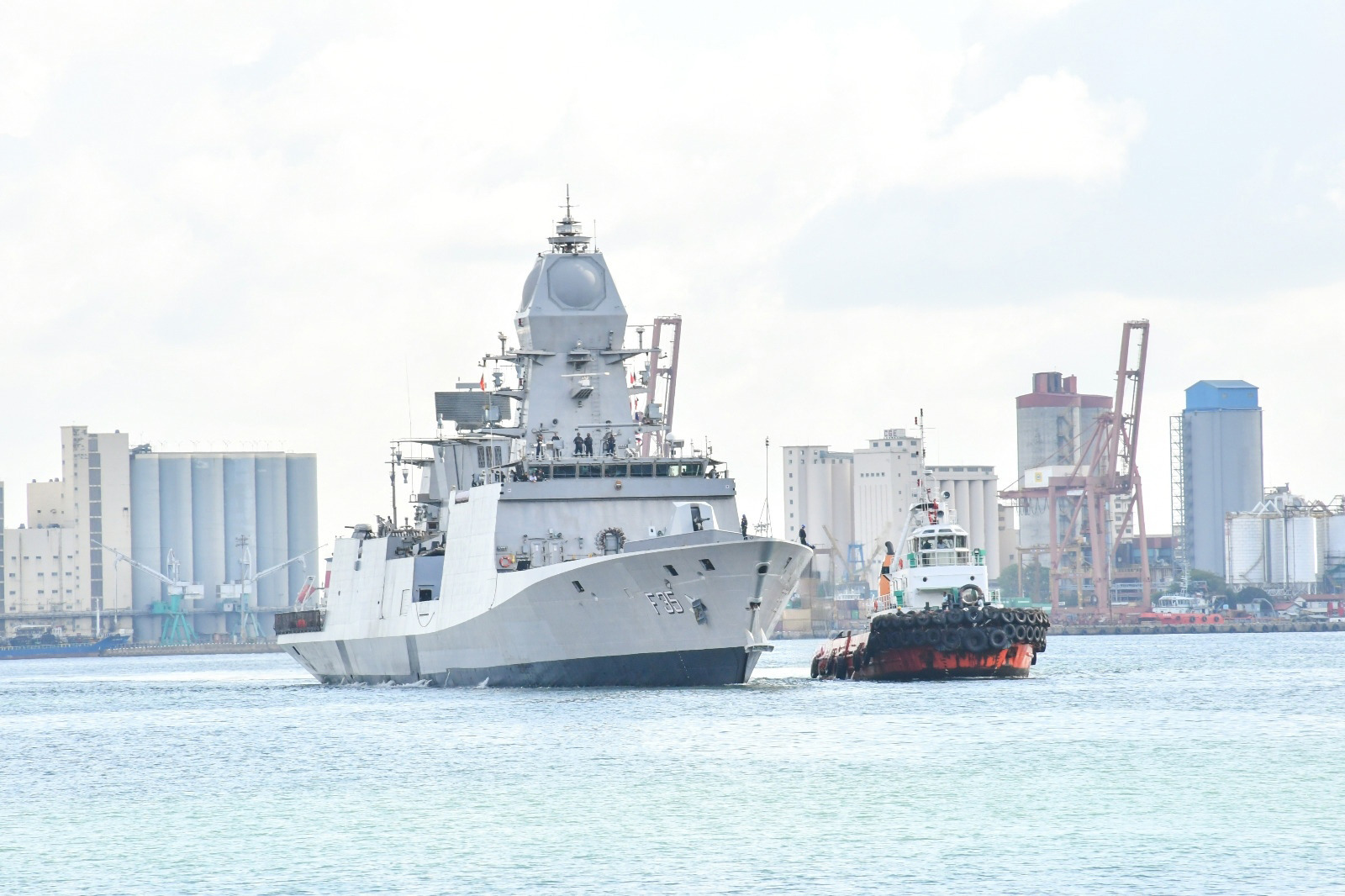
The Indian Naval Ship (INS) Udaygiri arrived at the Port of Colombo on an official visit today, 8 September 2026, where it was received by the Sri Lanka Navy in accordance with time-
honoured naval traditions.
INS Udaygiri is a 149.02m long Frigate, Commanded by Captain Vikas Sood. Meanwhile, the Commanding Officer of the visiting ship is scheduled to call on Commander Western Naval
Area, Rear Admiral Harsha De Silva at the Western Naval Command Headquarters.
Captain Sood served as the Defence Adviser at the Indian High Commission in Sri Lanka from July 2020 to October 2023.
During their stay in the island, the crew of INS Udaygiri will participate in several goodwill events organized by the Sri Lanka Navy to enhance camaraderie between the two forces.
The visiting personnel are also scheduled to visit prominent tourist and cultural locations across the island.
Additionally, Sri Lanka Navy personnel are expected to visit the ship for capability observation and knowledge sharing, and will conduct onboard training during its stay.

UN Delegation Meets Chief of Staff to the President

Afghanistan to host Zimbabwe, Bangladesh in ODI tri-series

Sandhu’s 6 for 7 seals Pakistan’s semi-final spot

INS Udaygiri makes port call in Colombo

Showers in the Uva, Central and Eastern provinces and in Polonnaruwa district

22A: Exclusion of 8 petitions questioned, action filed against SC Registrar, others

‘Dates have the highest sugar content to fight Coronavirus’

Sunday Island 27 December – Headlines

#SundayIsland 17th December – Headlines

Sunday Island – 28th March

Sunday Island Headlines – 21 March

Sunday Island – 21st February – Headlines
-

 News6 days ago
Denied of promotion to SC despite vacancies, justice Gurusinghe retires
-
 Latest News6 days ago
Grade 5 scholarship exam results released
-

 News6 days ago
22A: SC urged to suspend hearing, appoint full bench
-

 Midweek Review7 days ago
The local and global dynamics of Sri Lanka’s 22nd Amendment
-

 News4 days ago
Namal remanded until Sept. 18 over Airbus deal investigation
-

 Latest News3 days ago
Tharanga creates history with Diamond League crown in Brussels
-
 News6 days ago
Govt. seeks NATO assistance
-

 News7 days ago
40 professional organisations and TU oppose proposed 22A