
News
SL needs to boost image to attract tourists – AKD

By Rathindra Kuruwita
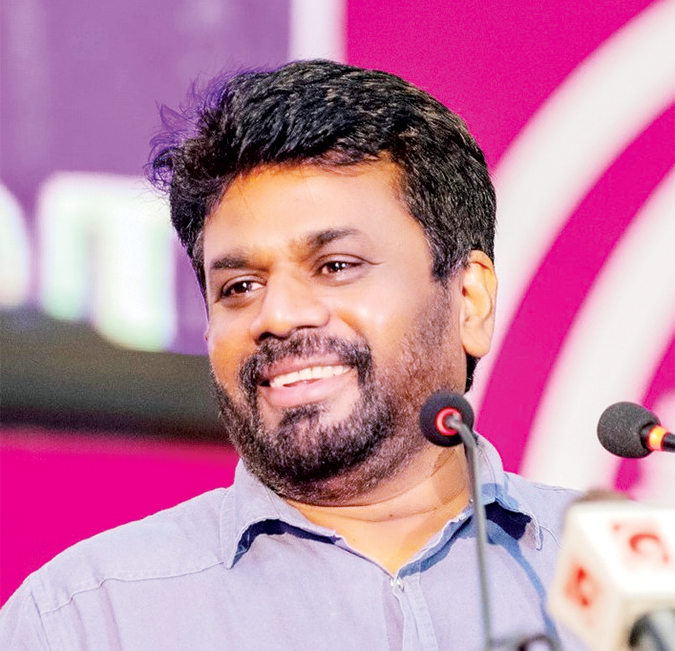
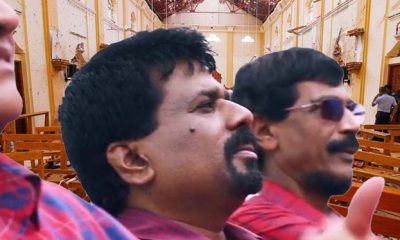
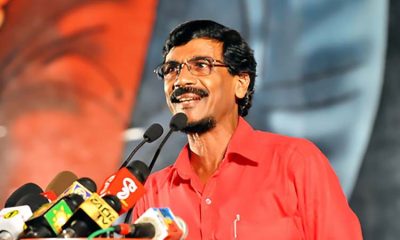
Sri Lanka had to boost it international image to attract high-spending tourists, Janatha Vimukthi Peramuna (JVP) leader, Anura Kumara Dissanayaka said in Colombo.The government apparently believed that putting in place various facilities would be enough to attract tourists, he said. However, most people were averse to visiting places run by crooks, he said.
“Recently, the World Bank gave us some money to buy fertiliser. After giving us money, it said it was also sending a team to ensure that you are not stealing. That’s what people around the world think of us. Everyone knows we are ruled by crooks,” he said.
Dissanayaka added that for the first time in Sri Lanka’s history, the United Nations Human Rights Council (UNHRC) was investigating economic crimes in Sri Lanka.
“Imagine you are planning a trip. Where would you want to go? A hotel that is well known for bad management? Or, a place everyone says is good. What comes to your mind when you think of Switzerland and what comes to your mind when you think of Sudan? Perception matters,” he said.
Dissanayaka said a JVP government would be capable of changing the perception people had about Sri Lanka.
“Some SLPP MPs insist that tourists stopped coming to Sri Lanka because of anti-government protests. Tourist arrivals stopped because Sri Lanka ran out of fuel and power cuts were extended. They also stopped coming because they didn’t want to come to a country ruled by the Rajapaksas. Most people around the would do not like the Ranil-Rajapaksa government too,” the JVP leader said.
Among those who attended the seminar were Udaya Nanayakkara, Former Chairman of Sri Lanka Tourist Board, Kimarli Fernando , Former Chairperson of Sri Lanka Tourism, Prof. Raj Somadewa , Archaeologist, University of Kelaniya, Dr. Senarath Dissanayake, Former Director General/ Department of Archaeology, Sanath Ukwaththa, Former President of Hotels Association of Sri Lanka and Chairman, Mount Lavinia Hotel, Dileep Mudadeniya, Vice President of John Keels Group , Head of Brand and Marketing and CEO of Cinnamon Life Mall, Nilmin Nanayakkara, Managing Director, NKAR Travels and Tours Pvt Ltd, Manik Rodrigo, Chairman ,Barberyn Reef Resort, Ajith Wijesekara, Owner, Blue Water and Water Garden, Gayan Amarasinghe, Director, Forbes Air (Emirates), Nahil Wijesuriya , Marriott Hotel, Palaka Perera, Hotelier, Priyanjith Weerasooriya , Uga Escapes, Mahinda Pinnapola , Chief Operation Officer, Hilton Hotel, Nuwan Liyanage, Senior Deputy General Manager, Neth FM, Dr. Mahesh Thiththagalla , Advisor, All Ceylon Tourist Service Providers’ Association ( ACTSPA), Manoj Meddage, President, Sri Lanka Institute of National Tourist Guide Lecturers (SLINTGL), Brandi Gampola, President, National Association for Professionals in Tourism (NAFPT), A.M. Jaufer, President, Chamber of Tourism and Industry, Donald Rajapaksha, Secretary, National Tourist Drivers’ Association (NTDA) and Manoj Wijethunga, President, Sri Lanka Tourist Chauffeurs’ Unity ( SLTCU).









The Cabinet of Ministers approved the resolution furnished by the Minister of Agriculture, Livestock, Lands and Irrigation to appoint Ms. P. M. Jayadeera (Engineer) in the Special Grade of Sri Lanka Engineering Service serving at present as the Additional Secretary (Water Resources Development) of the Ministry of Agriculture, Livestock, Lands and Irrigation to the post of Director General which will be vacant from 06.10.2026.
Approval has been granted at the meeting of the Cabinet of Ministers held on 08.06.2026 to prepare a draft bill for restructuring Sri Lanka Cricket.
Accordingly, the Legal Draftsman has formulated Sri Lanka draft bill providing legal provisions for the administration of Sri
Lanka Cricket, control, regulation, promotion, establishment of Sri Lanka Cricket for the development and administration, through the concepts of better governance, integrity, transparency, accountability, inclusiveness and providing equal opportunities for the betterment of the cricket sport, establishment of Sri Lanka Cricket for securing the wellbeing of all participants and securing cricket from corruption and other mal practices.
Clearance of the Attorney General has been received for the said draft bill. Approval of the Cabinet of Ministers has been received for the resolution furnished by the Minister of
Youth Affairs and Sports to publish the said draft bill in the government gazette notification and thereby forward the same to the Parliament for its concurrence.
The Sri Lanka Land Development Corporation performs vitally important functions such as minimizing the risk of inundation in urban and lowland areas, maintaining drainage systems efficiently, carrying out urgent operations during inundation events, and maintaining canals.
The need to strengthen the capacity of the corporation’s internal
operations has been identified by the corporation to perform the aforementioned functions efficiently and expeditiously.
The corporation has planned to purchase small -scale machinery that can be used to clean small canals, which significantly contribute to urban inundation.
The General Treasury has agreed to grant 625 million rupees as an equity contribution for purchasing the relevant machinery.
Accordingly, the Cabinet of Ministers has approved the resolution submitted by the Minister of Transport, Highways, and Urban Development to purchase the relevant machinery by the Sri Lanka Land Development Corporation, following formal procurement procedures at an estimated cost of Rs. 1,233
million, utilizing the aforementioned amount granted by the General Treasury and the funds of the Sri Lanka Land Development Corporation.

Ms. P. M. Jayadeera (Engineer) appointed Director General of Irrigation
Sri Lanka Cricket Draft Bill to be gazetted
Cabinet approves purchase of machinery for the Sri Lanka Land Development Corporation
Cabinet approval for Project to Build Secure, Skilled, and Empowered Community for families resettled at the at Kalinga Mawatha, housing scheme
Appointment of Cabinet Sub-Committee for the Organization of 79th Independence Day Commemoration
Establishment of New Management Framework for the Dr. Nevil Fernando Hospital

‘Dates have the highest sugar content to fight Coronavirus’

Sunday Island 27 December – Headlines

#SundayIsland 17th December – Headlines

Sunday Island – 28th March

Sunday Island Headlines – 21 March

Sunday Island – 21st February – Headlines
-

 News6 days ago
US embassy won’t comment on IGP’s probe into joint drug raid
-

 News4 days ago
Shanakiyan urges urgent action over reported death sentence for Lankan in Saudi Arabia
-

 News5 days ago
Bid for Basil’s extradition nears final stage: Police
-

 News3 days ago
Namal Rajapaksa Buddhist gambit fails, bail denied
-

 Business6 days ago
All-new Bolero MaXX unveiled in Sri Lanka
-

 Opinion6 days ago
A journalist who wrote across the divide
-

 Features3 days ago
Why the spelling Sri Lankan names in English vary
-

 Features3 days ago
Three bands, a new identity: Sri Lankan wolf snake recognised as distinct species