
Features
40th Death Anniversary of Justin Wijayawardhana: Reminiscences of a bygone socio-political milieu

By Dr Upul Wijayawardhana
It was 14th January 1982. I, together with my family, was making slow progress from Colombo to Matara in the pre-expressway era, when we heard on the car radio, the noon news bulletin of SLBC announcing the death of my father. There were no mobile phones then for me to receive the sad news from the family. My sister Mali, the only other medic in the family, very kindly undertook the onerous task of looking after our father in the intimate environs of our traditional family home ‘Wijaya Giri”‘ in Godagama rather than allowing him to wither away on a hospital bed. Having visited my father a few days earlier and persuaded Mali against active treatment in an inevitable situation, I was not surprised to learn the end of his multifaceted life but was sad that I could not be there, holding his hand that penned millions of words, when he left this world after decades of selfless service.
Standing at the foot of the bed and looking at his majestic face darkened by death, I thought to myself, “What have I done, compared to what you achieved in so many spheres?” I am still reading about his unmatchable achievements and learning more and more about him from others who write about him. has taken 40 long years for me to pen this tribute although my admiration of him has grown exponentially over the years. In fact, I wondered whether I could be tarnishing his image posthumously by referring to him as a politician because he had so many other significant achievements. I am doing so purposefully to emphasis that our country was once blessed with politicians whose mission was to serve.
First to represent the UNP from Matara District
Communism took root in the Matara district because the leader of the Communist Party Dr S A Wickramasinghe was from there and also a very caring general practitioner. In fact, my father started social service in the early 1930s with Dr Wickramasinghe, forming the Matara Youth Society with him as secretary and Dr Wickramasinghe as the president. Although they parted ways due to ideological differences, they remained friends, and Dr W was gracious enough to offer him the nomination from the Communist Party on more than one occasion. In spite of certainty of success, my father refused and stood by the UNP. The Matara branch of the UNP proposed him as the candidate for the 1952 and 1956 general elections, but the hierarchy of the UNP parachuted outsiders encouraging caste-based politics.
In 1960, the UNP high-command was forced to relent and my father successfully contested Matara seat becoming the first UNP MP for Matara and the first to do so from the whole district. He was chosen to propose the vote of thanks to the throne speech of the Dudley Senanayake government enabling him to demonstrate his much-recognised oratory in the parliament too. His old friend, Dr W retorted cynically from the Opposition benches, “My good friend has made an excellent speech, as usual, but it may well be the funeral oration of this government”, which was prophetic! Unfortunately, my father lost in July, the seat he gained in March. One reason for the loss was malicious stories spread by his opponents alleging he had said, that he needed to wash the seat in the parliament before sitting on it. I know well this was more hurtful to him than losing the election as he was one of the pioneers in the South to stand against caste divisions. In fact, in early 1940s, when caste discrimination was rampant in the South, he organised, as the Secretary of the Matara branch, a Sinhala New Year Celebration which commenced with many from different castes eating Kiri Bath, sitting on mats with the leader of the Sinhala Maha Sabha, S W R D Bandaranaike.
S W R D’s offer
The SLFP government people elected in 1956 with high hopes also started faltering. Sensing the imminent danger, SWRD started planning a revamp. He wanted to go to the UN to display his masterful oratory and reconstitute the Cabinet on his return. He sent an emissary to my father with the offer of appointment to the Senate as the Junior Minister of Education straightaway to be made the Minister with the planned reshuffle. According to my mother, who overheard the conversation, he did not take even a second to refuse the offer.
Betrayal by UNP
Undaunted by the loss, my father continued to teach and do social work. The crossover of C P De Silva caused Mahanama Samaraweera to be nominated the UNP candidate for Matara. J R Jayewardene persuaded my father to contest the Kamburupitiya seat saying, “Justin, don’t worry. Even if you lose, we will look after you. After all, there is the Senate”. My father lost, the UNP forgot the promises, but he enabled my cousin, Chandrakaumara and my brother, Ranjan to represent that constituency subsequently.
George Rajapaksa once told me, “The UNP does not know how to treat the faithful, the best example being your father. If he had done for us what he did for the UNP, we would place him on a high pedestal”.
Even during his era, my father perhaps was too soft and remained with the UNP till his death. Would any other person have refused such offers?
Maybe, to overcome their guilt, the UNP government issued a stamp in the memory of my father in 1990.
Teacher, par excellence
Born on 18 November 1904, Kotawila Withanage Don Charlis Justin Wijayawardhana attended the missionary school in the village before joining to St. Thomas College in Matara. Don Juvanis Wijayawardhana, a notary’s clerk, decided to send his son to Mahinda College, Galle in view of the brilliant performance of his son, Justin at the Junior School Certificate Examination. More than the easy success in the Cambridge Senior examination, what Mahinda College gave my father was the inspiration to fight for independence and the preservation of Buddhism. Though he could have got a more rewarding government position with his qualifications, he opted to be a teacher and joined Rahula College in Matara.
He contributed immensely to the upliftment of Rahula College by the renowned principal Mr D J Kumarage, to be one of the best schools in the country. Rahula was an assisted school, which meant only teachers’ salaries were paid by the government. To meet the increasing demand for admissions, my father went round with Mr Kumarage and persuaded philanthropists in the area to build four buildings which were ceremoniously opened by Prime Ministers DS, Dudley, Sir John and Sir Oliver, the Governor General.
In addition, he was in charge of Sinhala and English debating teams, Arts and Drama society. He wrote many plays for students to stage of which one stands out; Matara Batha, a comedy which was so hilarious, it is said that even Mr Kumarage, who seldom smiled, burst into laughter.
My father taught Buddhism, Sinhala and art. He taught me too and I managed to fail in art, the only subject that I have ever failed! After teaching and inspiring many generations of students, he retired in 1964 having devoted his entire teaching career to Rahula.
Social service
He was a live-wire of the co-operative movement and headed the village co-operative till a few years before his death. He masterminded village development projects like roads and culverts through the Village Development programme.
When Buddhism was threatened by a fanatic sect, Thapasa Nikaya and , defended Bhikkhus threatened by misguided villagers. With the support of Chandraratna Manawasinghe, who was on the editorial staff of Lankadeepa, my father was able to dispel the falsehoods, helping save Buddhism in Sri Lanka.
He reserved his best for Community Centres Praja Mandala, which were established in Matara and surrounding areas. They were the meeting places where villagers could listen to the radio for the very first time. He obtained radios from the government for these centres. Those huge primitive devices needed a massive aerial across the tallest of coconut trees to get a rattly short-wave reception and were powered by car batteries, needing a fortnightly replacement by the post office. When they got late, the radio fell silent and the whole village missed the ‘Radio bana’.
The crowning glory was the annual congress of Community Centres, which lasted a couple of days with many competitions; that was the only opportunity for people to display their talents, unlike today, when we have too many talent shows. One of the highlights was the Kavi Maduwa, the poet’s corner where reputed guest poets gave lectures, in addition to recitals. That was the biggest event in the cultural calendar of the South.
Pioneer translator and writer
A visit to India in the late 1930s changed my father’s life forever as he was able to meet the leaders of the Indian Independence Movement but the most important was his meeting Rabindranath Tagore, whose works he had already translated to Sinhala. He recalled with great fondness the unexpectedly long meeting wherein Tagore granted him permission to translate any of his works.
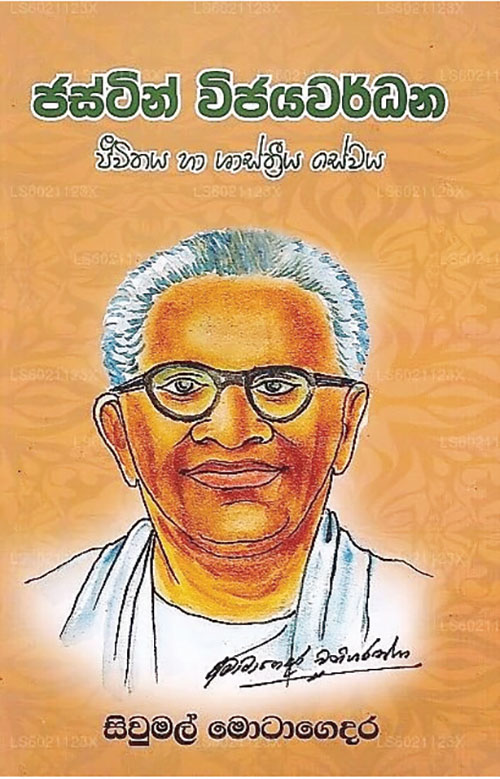
Sivumal Motagedara, who studied the life and literary works of my father for his research project for the M A degree from Colombo University, has published his dissertation “Justin Wijayawardhana: Jeewithya ha Sastriya Sevaya (Godage, ISBN 978-955-30-9644-9). He argues, very convincingly that it is a great injustice that Justin Wijayawardhana has not been accorded a much more prominent place in Sinhala literature and takes to task the academia for not doing so. He rates Justin Wijayawardhana as the pioneer translator who introduced the works not only of Eastern writers like Tagore but also Western writers like Leo Tolstoy, Hall Caine, Harriet Beecher Stowe, Walt Whitman and H G Wells to Sinhala readers. He also mentions Wijayawardhana’s ability to change the style of writing to fit the original for translation and contends that it is rare.
Perhaps, the main reason why my father’s writings have not received the attention it deserves is they were published in newspapers and magazines––not as books due to lack of facilities like agents for writers and the monopoly held by only a few publishers.
I know the great difficulties he had in getting his first book, “Nasthikara Puthraya”, the translation of Sir Hall Caine’s ‘The Prodigal Son’ published in 1964. He had to give up royalty for a tiny sum and the publisher did not even notify how many copies were sold!
Although he had many manuscripts ready, unfortunately, only two more books were published during his lifetime.
One was a translation of a book on the invasion of Tibet “Tibbethaye Bauddha Manava Sanharaya”, which was extensively used by the UNP during the 1965 election campaign. The other was “Tom Mamage Kutiya”, a translation Of Harriet Beecher Stowe’s masterpiece ‘Uncle Tom’s Cabin’, which was published by Marga in 1976.
The Ministry of Cultural Affairs, acceding to our request, published “Seeliyage Lokaya” in January 1983 to coincide with the first death anniversary and “Samawa Deema” in January 1984 to coincide with the second death anniversary. The latter, a collection of translations of ten short stories by Russian writers Leo Tolstoy, Maxim Gorky, Anton Chekhov and Hungarian writers Geza Gardonyi, Kalman Mikszath, Karoly Kisfaludy, was completed in September 1975 and dedicated to JRJ, the then leader of the Opposition. The dedication in my father’s handwriting, in his trademark violet ink, written with his beloved ‘Swan’ pen is reprinted in this book.
“Seeliyage Lokaya”
is an original work written in a novel genre. It is an exploration of village life, a synthesis of events and people in their respective villages of birth as seen by my parents. However, he has titled it ‘Seeliya’s world’, as he called my mother, Jinaseeli Jayawardana ‘Seeliya’ affectionately. The cover was drawn by my youngest brother Kamal. During one of my visits to President JRJ, when I presented a copy, he went through the chapter titles carefully and said “Upul, you must translate this to English as it is a mirror, showing the world what our village life is. It will be the opposite of ‘Grass for My Feet’ by J Vijayatunga”. I tried but, unfortunately, I do not seem to have inherited the translator gene!
The youngest of our six sisters, Champa is doing a tremendous job in keeping our father’s literary heritage going. She had been able to get “Nasthikara Putrya” and “Seeliyage Lokaya” republished. “Samawa Deema” has also been republished with a new title “Idama ha Thanhawa”. In addition, she has got the following in print: “Punarjeewanaya”, a translation of Leo Tolstoy’s ‘Resurrection, “Lo Pathala Keti Katha”, a collection of short stories by world famous authors including Tagore, Mulkraj Anand, Guy de Maupassant, Oscar Wild” and “Minis Angaharu Yuddaya”, a translation of H G Wells’ ‘War of the Worlds’.
‘Sai Baba: Man of Miracles’ by Howard Murphet was translated at the request of the Sai Baba Society, which was made in late 1974. Although my father finished the translation in a matter of two months, a unique achievement for a book running to 400 pages, it did not come out in print till a year after his death, in spite of Sai Baba’s blessings!
Matara C Justin Wijayawardhana started writing to Sinhala newspapers and magazines from his late teens and continued for six decades. In addition to articles on Buddhism and current affairs, there are many more translations that have been serialised. Champa is engaged in this monumental task of gathering them so that more books may be published.
Marriage
My father, who initially put service over marriage, changed his mind the moment he saw a new lady teacher who joined Rahula staff. The marriage of Justin Wijayawardhana and Jinaseeli Jayawardana from Ransegoda took place on 17 May 1940, during the biggest flood ever recorded in the Southern Province. We were under the impression that the bridegroom encountered the flooding on his way to the bride’s but two books by Hewamadduma brothers give a different story. The Hewamadduma family from Lenaduwa was one of the closest families to ours. Till his untimely death in 2013, Amare, the well-known administrator, historian and writer used to write regularly about my father. After that his younger brother Dharme has taken over. In Amare’s book “Amara Samara-1”, as well as his elder brother Upatissa’s book “Ma Dutu Maha Purushaya: Justin Wijayawardhana” give detailed accounts, as recounted by their father. Every time a flood occurred, their father Sinnno Appuhamy used to say, “This is nothing compared to the flooding when Wijayawardhana mahattaya got married” and had gone on to relate how my father directed the preparation of boats the previous evening and how they paddled the 15 miles in floodwaters and brought back the couple, disregarding all warnings, safely to Godagama at 3 am, the following day! Apparently, my father having settled the new bride in bed had gone immediately to help flood victims. That shows his character and that my mother was solidly behind him. By the way, Thilakasena Sahabandu, who was married to Hewamadduma sister Karuna, wrote a beautiful anthology of poems titled ‘Sevaye Suwanda (Fragrance of service) which helped a great deal in my father’s election victory.
Funeral
Unfortunately, what should have been Justin Wijayawardhana’s greatest legacy was not to be. Seeing how the poor got into difficulty with lavish funerals, he campaigned for simple funerals but his pleas fell on deaf ears. However, he ensured his funeral was simple and my mother did even better, ensuring that we handed over her body to the Galle Medical Faculty when she died on 24 February 1986.
Detailed written instructions were left about the funeral but true to his considered manner, he stated we could make changes if circumstances demanded. He also stated that if we felt bad for not spending on the funeral, to build a house for a poor family, which we did. The day after death, he was cremated in a coffin made from cheap wood and painted white, on a simple pyre made from locally collected wood. Though his voice was heard at almost every local funeral, he did not want funeral orations and as stipulated there was one anusasana. Although we did not inform any VIPs, Finance Minister Ronnie de Mel turned up and as he was representing the government, we allowed him to speak. The only thing beyond our control was the massive crowd.
As we watched, a great man who had rendered selfless service for almost eight decades, gradually turned into ashes. As requested, his ashes were thrown in Nilawala Ganga.
May he attain the supreme bliss of Nibbana!

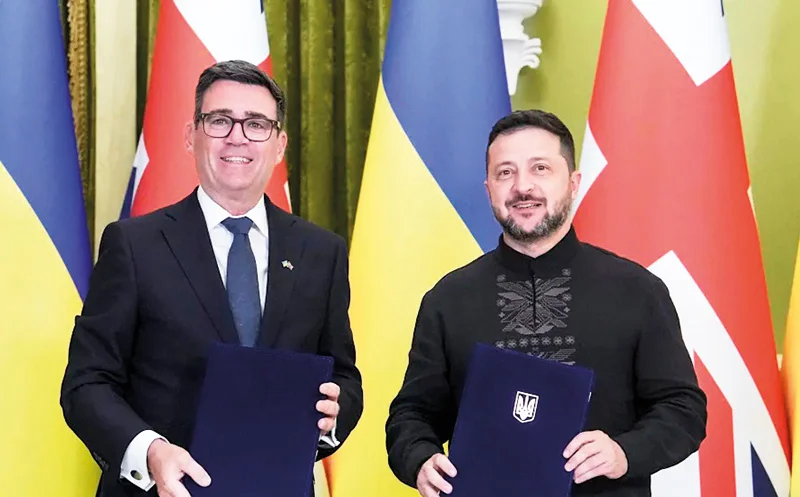
 The present offer by the UK to strengthen Ukraine’s defense capabilities in the missile technology field in particular comes as ‘a stitch in time’ and the initiative is also likely to be appreciated considerably by democratic opinion world wide for the possible morale-boosting effect it would have on Ukraine. Besides continuous arms support, the conviction that the world’s frontline democracies are behind it would prove a huge plus in Ukraine’s eyes in its grinding fightback against the Russian invasion.
While continued US support for Ukraine could not be considered ‘a given’ any more, British Prime Minister Andy Burnham’s words during a recent visit to Kyiv that the UK would stand by Ukraine ‘for as long as it takes’ is the kind of assurance that Ukraine needs at present. For, the conflict in Ukraine is essentially a war of liberation conducted by the latter against an invader and deeply at issue here is the upholding of International Law and its foundational concepts, such as national sovereignty and a nation’s right to political self-determination. The world of democracy is of the firm view that the latter ideals cannot be compromised, come what may.
The UK has its work cut out in this connection. It would find it difficult to convince the Trump administration that it should staunchly stand by Ukraine but it could campaign vigorously with the rest of the West and the EU fold in particular to unflaggingly support the embattled and over-run country.
Ukraine has shown an impressive adeptness in using drone technology in particular against her enemy and has even manufactured her own hardware in this respect but using the relevant blueprints handed over by the UK for the manufacture of more sophisticated cruise missiles, for instance, may prove financially difficult, going forward. It is left to be seen whether the UK and the rest of the West who are with Ukraine will continue to be with her, considering their own rising financial constraints.
The latter impediments could only multiply in the future. Oil, gas and energy prices are on the rise and the latter costs are glaringly reflected in kitchens and meal tables the world over. As we go along consumer discontent would steadily intensify and governments, East and West, would need to figure out with considerable rigour and foresight how such disaffection could be ably managed. Failing which, in most democratic societies, the chances are that publics would be out on the streets demanding that their grievances be redressed forthwith.
These rising concerns are reflected in a recent move by some EU governments to consider imposing what is described as ‘a windfall tax’ on the profits specified major oil companies operating within their shores have made in the wake of the US-Israel war on Iran. The rationale apparently is to use such tax earnings to cushion the rising cost of living of their publics and bolster the respective countries’ social expenditure.
In a recent letter to the president of the EU Council the EU governments referred to said, among other things, while drawing attention to the ‘discontent that is growing over the rising cost of living’: ‘A common approach’ is needed that ‘ensures those who profit from the crisis contribute their share to reducing the burden on the general population.’ Meanwhile, Oxfam with reference to the above development is on record as calling for a ‘permanent windfall tax of at least 50% on profits exceeding a 10% return on investment.’
Such are the rising economic pressures on the majority of Western governments. The question to be posed is how consistent they would be in their assistance to Ukraine if they decide consensually to stand by her. The soaring cost of living in the West compels the conclusion that there could be no guarantee that Western assistance to Ukraine, particularly in the defense and security fields, would be of a longstanding kind.
Of particular concern would be the fact that the weapons systems on offer from the UK to Ukraine could be increasingly costly to manufacture going forward. Besides they would need to be manufactured and put into action without delay.
However, these considerations should in no way deflect Ukraine’s supporters from the principled policy stance of defending her to the extent possible. Because at issue is the defense of International Law and the democratic system of government from their enemies; fascism and authoritarian rule.
While during World Wars 1 and 2 the US was with the major democracies of the West, this time around with regard to Ukraine, the US has chosen to be at cross-purposes with them. For instance, in relation to tariff matters and defense expenditure, in the NATO context, the US is pursuing a hard line which puts it at polar opposites with the West. Thus it is no longer possible to talk unreservedly of a ‘Western democratic alliance’. Put plainly, the cause of democratic development has been weakened.
A measure of relief for the supporters of Ukraine in the West could come by way of the upcoming mid-term polls in the US. If the Democratic Party fares well in them the pressure would be on the Trump administration to defer to opposition opinion at home, accommodate the best interests of Ukraine in its West European policy and perhaps even work towards a diplomatic solution to the Ukraine crisis in cooperation with Russia. Accordingly, the Democratic Party would need to put the Trump administration on the defensive, so to speak.
Until such time Ukraine’s Western supporters have no choice but to remain committed to it, ensure its steadfast defense against the invasion and work judiciously towards keeping the economic pressures at home in check.
Interestingly, at the present juncture in international politics the US could be said to be more weak than strong. For example, it has to some extent been militarily humbled by Iran; so much so it is resorting to economic means to keep Iran in check.
In keeping with this strategy, the US has launched ‘a new big wave of anti-Iran economic sanctions’ at the time of writing, aimed at cutting Iran away from all its major income sources. Some of these relate to digital assets, technology, gold, aviation and shipping. The hoped for result is the complete severance of Iran from the US dollar system.
However, while the UK and EU have no choice but to adhere to their policy of backing Ukraine, going forward they would need to dialogue more closely with the US and ensure that it cooperates with them on outstanding questions, such as Ukraine and the strengthening of democracy. The well being of the world is served when the latter aim is pursued.
OPA 39th Annual Conference calls for Sri Lanka to move Beyond Recovery towards Sustainable Transformation
The Orgnisation of Professional Associations (OPA) successfully concluded its 39th Annual Conference, held recently at the Cinnamon Grand Colombo, under the theme “Envisioning Sri Lanka: Beyond Recovery”.
Held under the patronage of Jayantha Gallehewa, President of the OPA, with the leadership and guidance of Tisara De Silva, President-Elect and Chairman of the 39th Annual Conference, the Conference brought together leading professionals, academics, business leaders and representatives of the public and private sectors to deliberate on Sri Lanka’s next phase of national development.
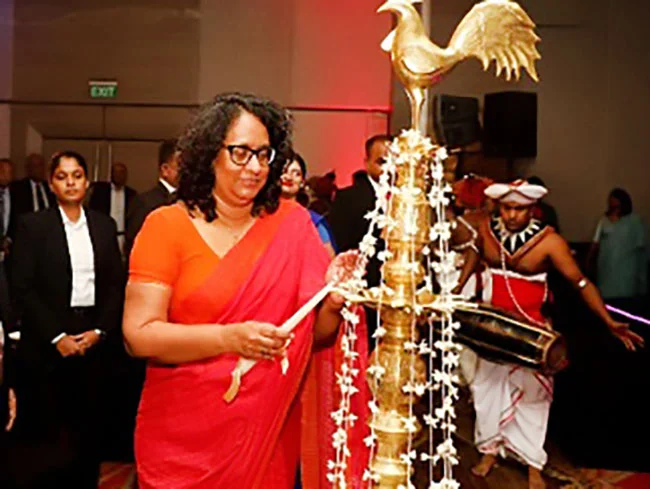
The Inaugural Session, on August 2026, was graced by Prime Minister Dr. Harini Amarasuriya, as the Chief Guest; Andrew Patrick, British High Commissioner to Sri Lanka, as the Guest of Honour; and Murtaza Jafferjee, Chairman of the Advocata Institute, Sri Lanka, as the Keynote Speaker.
In her address, Prime Minister Dr. Harini Amarasuriya emphasised that overcoming the economic crisis alone should not be Sri Lanka’s ultimate objective, stressing that recovery must serve as the foundation for a broader economic and institutional transformation necessary for sustainable national progress. Reflecting on the difficult period experienced by the country, the Prime Minister noted that Sri Lanka had faced significant economic, social and institutional challenges, which had weakened public confidence and created uncertainty about the country’s future.
She stressed that “recovery only provides the foundation” and that Sri Lanka can move forward sustainably only by using that foundation to bring about meaningful transformation.
The Prime Minister observed that the theme of the OPA’s 39th Annual Conference, “Envisioning Sri Lanka: Beyond Recovery,” aptly encapsulated these national aspirations. She emphasised that Sri Lanka’s objective should not merely be to return to the conditions that existed before the crisis, but to forge a stronger national foundation characterised by robust institutions, a resilient economy, high-quality public services and an enabling environment in which every citizen has the opportunity to thrive.
She further underscored that Sri Lanka’s future development cannot be secured through economic growth and physical development alone. She emphasised that the effective mobilisation of the country’s knowledge, skills and professional expertise, is equally essential to achieving sustainable and inclusive national progress
The Technical Sessions held on 12 August 2026 brought together 19 distinguished experts and professionals representing academia, industry, banking and finance, public health, technology, management and business leadership. Their diverse expertise provided a multidisciplinary platform to examine the critical challenges, emerging opportunities and strategic choices that will shape Sri Lanka’s next phase of development, with particular emphasis on economic transformation, institutional strengthening, digitalisation, private-sector growth, human capital and sustainable development.
The deliberations were structured around four principal sub-themes: “Resilient Recovery and Sustainable Economic Development”; “Future Readiness: Innovation & Transformation”; “Policy for Impact: Advancing Equity, Sustainable Living, and National Well-Being”; and “Leadership, Governance and National Responsibility.”
Across these thematic areas, the sessions explored the structural reforms, institutional requirements and policy choices necessary to move Sri Lanka beyond economic stabilisation towards a more productive, competitive, resilient and inclusive economy. The discussions brought together diverse professional perspectives, enabling participants to examine national priorities through economic, technological, industrial, financial, social and governance lenses.
Particular emphasis was placed on the need to move beyond the diagnosis of problems towards pragmatic, evidence-based and implementable solutions. The deliberations recognised that sustainable national progress requires not only sound policies, but also effective institutions, professional competence, innovation, responsible leadership and the capacity to translate policy into tangible outcomes.
The sessions further underscored the importance of collaboration across sectors, recognising that Sri Lanka’s complex development challenges cannot be addressed in isolation. Stronger engagement among Government, private sector, professional associations, academia and civil society was identified as essential to fostering a coherent national response and ensuring that professional knowledge and expertise are effectively translated into policy and action.
Collectively, the Technical Sessions provided a substantive platform for knowledge exchange, critical reflection and forward-looking dialogue, reinforcing the OPA’s commitment to bringing the country’s professional expertise to bear on the task of building a resilient, innovative, equitable and prosperous Sri Lanka.
The OPA expressed its sincere appreciation to Prime Minister Dr. Harini Amarasuriya, the Chief Guest; Andrew Patrick, British High Commissioner to Sri Lanka and Guest of Honour; and Murtaza Jafferjee, Chairman of the Advocata Institute, Sri Lanka and Keynote Speaker, for their distinguished contributions to the Conference.
Much of what the 39th Annual Conference achieved would not have been possible without the leadership, commitment and generous contributions of Jayantha Gallehewa, President of the OPA; Tisara De Silva, President-Elect and Chairman of the 39th Annual Conference; Eng. Ravi Rupasinghe, General Secretary; Dharshana Wijemanne, Treasurer; Bhanu Wijayaratne, Convener & the Chairman of the Session Planning Committee of the 39th Annual Conference Committee, Past Presidents and Office Bearers; Presidents and representatives of Member Associations; members of the Executive Councils and General Forum; and the distinguished Session Chairmen, Resource Persons and professionals who shared their time, expertise and insights in pursuit of the Conference’s shared vision. The OPA remains immensely grateful to all those whose collective contributions enriched the 39th Annual Conference and strengthened its role as a meaningful platform for professional exchange, informed dialogue and national reflection.
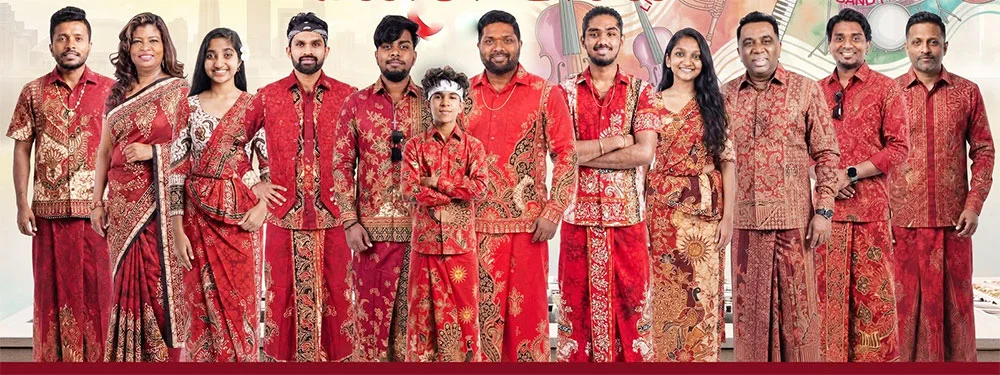
 For Sri Lankans living 14,000 kilometres from home, the sound of home has never felt closer — and that’s thanks to one man and his band.
Since stepping into the spotlight, Gamini Hemalal and the Ceymphony Band have turned into the heartbeat of the Sri Lankan community in Toronto.
Their mission is simple: bring the music, bring the memories, bring the people together. And it’s working.
What turned out to be the talk-of-the-town was their intimate musical evening with Sri Lanka’s legendary crooner Sohan Weerasinghe.

Sohan Weerasinghe: Had
everyone on their feet at the
Angus Glen Golf Club, in
Toronto, Canada
It was a ‘full house’ long before the big date. Tickets vanished within days — demand was that overwhelming.
According to those who were there, it was a truly amazing evening. The hall was packed, the energy electric. Sohan didn’t just sing — he owned the stage.
With his velvet vocals, his charm, and that signature style, he had everyone on their feet. The ladies, especially, couldn’t get enough. No wonder they call him “The Ladies’ Man!”
One attendee summed it up perfectly:
“We had so much fun. It is truly a blessing to have our kids around us, enjoying these beautiful moments together. Thank you, Gamini Hemalal, for such a wonderful evening, with an amazing crowd and an incredible atmosphere. Your hard work and dedication truly made it a special night.
“We also need to say a big thank you to the Ceymphony Band for delivering such an outstanding performance. You all were absolutely amazing! Our entire family had a fantastic time, and we truly enjoyed every moment.
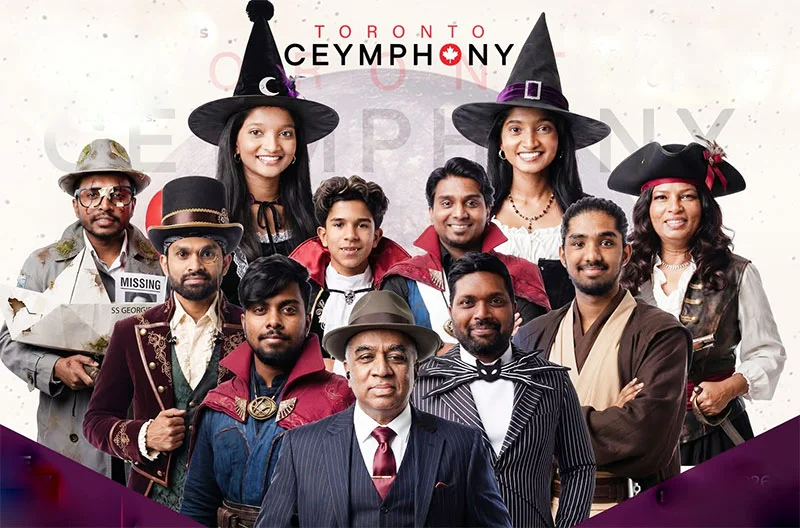
Ceymphony Band: Extremely popular in the scene in Toronto
“Wishing you all continued success. Keep up the amazing work, we can’t wait for the next.”
And the next is already on the cards: ‘Halloween Pissu Baila Party 2026,’ on Friday, 30th October, at the famous Angus Glen Golf Club.
Gamini promises a crazy night of baila, music, dancing and Halloween vibes with the Ceymphony Band. Action runs from 8:00 PM to 12:00 midnight, with plenty of prizes to be won.

Gamini Hemalal: Amazing work for the Sri Lankan community,
in Toronto, Canada
Gamini is also putting together a special event, connected with the 2027 Avurudu celebrations — ‘Avurudu Musical Show 2027,’ a uniquely styled musical Avurudu celebration … Ceymphony Band style.
It’s scheduled to be held on Saturday, 10th April, 2027, also at the Angus Glen Golf Club.
Through music, Gamini Hemalal and Ceymphony are doing what diaspora bands do best — they’re shrinking the distance between two worlds.
One baila beat at a time, one full house at a time, they’re making sure that even in Canada, Sri Lankans feel like home.
Yes, there is plenty of action, indeed, for the Sri Lankan community in Toronto, Canada.

Patali alleges NPP conspiring to put off elections indefinitely

August 15 Super Dvora tragedy: Search continues for missing officer’s body

Tripartite MoU to expand free cardiothoracic surgeries at KDU Hospital

Jaffna to mark Int’l Day of the Disappeared

Unfolding El Niño and burning issues

Complexities in global politics deepen as economic pressures intensify

‘Dates have the highest sugar content to fight Coronavirus’

Sunday Island 27 December – Headlines

#SundayIsland 17th December – Headlines

Sunday Island – 28th March

Sunday Island Headlines – 21 March

Sunday Island – 21st February – Headlines
-
 News6 days ago
Country’s first woman Surveyor General appointed
-
 Business5 days ago
SriLankan Airlines makes ShakthiSAT Mission possible for talented Sri Lankan student
-
 Features6 days ago
Medical education in Sri Lanka: Then and now
-
 Latest News6 days ago
Imran Khan moved to private hospital amid deteriorating health
-
 Latest News6 days ago
Government has declared 21, 22 and 23 August 2026 as national days of mourning
-
 Features4 days ago
My secondary schooling after Royal Primary
-
 Latest News5 days ago
Tharanga edges out Chopra in 88m javelin battle
-
 News6 days ago
22A: Opp. demands all available SC judges hear petitions