
Business
Corrugated Packaging Industry facing multiple challenges, seeks support to cope a little better

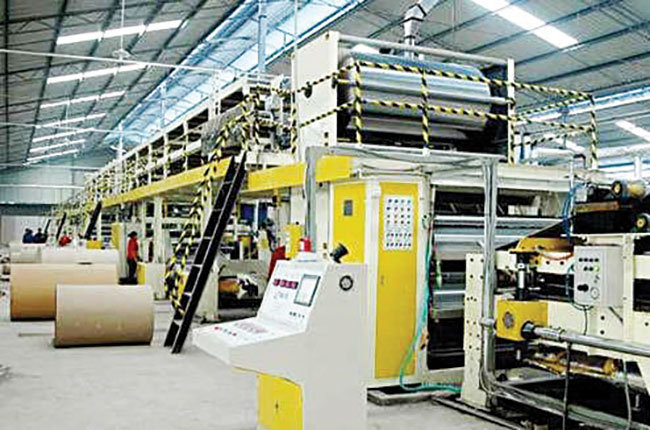
The net profit margin of the industry is an average of 5% and it can vary around 3%-7%. The industry rarely makes 7% margin and that could happen only when paper prices are at rock-bottom
Bannet Gamalath, CEO – UNIDIL Packaging Ltd – the packaging arm of VALLIBEL ONE PLC) – who is also the President of Lanka Corrugated Carton Manufacturer’s Association says that following the recent IPO announcement made by one of the carton manufacturers, people have started talking about the industry in an interested and excited way.
“In this context, as President of the Lanka Corrugated Cartons Manufacturers Association (LCCMA), I’d like to shed some light on the industry.”
“Today, corrugated cartons are recognised among the world’s most widely used materials for packaging. As a material, it also offers almost unlimited possibilities to produce packaging with different properties and shapes.” he says.
“Despite the fact that this industry serves nearly every sector of the economy becoming an integral part of the supply chain, corrugated cartons have not been regarded as an interesting area of discussion.”
“At present, around 30 small to large corrugated cartons manufacturers operate in the island. Out of these firms, seven companies control 80% of the market share while the remainder contribute around 20%. The demand for the corrugated cartons in Sri Lanka is very limited as our economy has not shown steady growth in the past.”
“The current market is around 14,500 MTNS (metric tonnes) per month and the year-on-year growth of the market is less than 2%. Hence, there is a huge competition among the players to capture the existing market. Consequently with the market pressure, the industry maintains minimal prices and eventually the companies just make normal profit. In early 2000s, many companies discontinued their operation due to heavy losses including the then corrugated giants including MSH Packaging and Nisol Corrugated Packaging.”
“The net profit margin of the industry is an average of 5% and it can vary around 3%-7%. The industry very rarely makes 7% margin and that could happen only when the paper prices are at rock-bottom.”
“Apart from imported paper, the members of the Association also source local paper to a certain extent. The paper manufacturing industry in Sri Lanka is at the infant stage and have yet to expand. Hence, the convertors are being forced to rely upon the imported paper mostly.”
“During past few years the board making capacity in Sri Lanka was expanded as some of the companies increased operations through new corrugated plants. Today these plants contribute a monthly capacity of around 4,000 MTNS while the second level entities maintain a capacity around 2,500 MTNS per month. It is estimated that the total board making capacity in the country is around 34,000 – 36,000 MTNS monthly. However, the printing capacity is limited and does not match the same volumes. Howerver, any company can enhance its printing capacity within 5-6 months as good machinery can be sourced from China and Taiwan.”
“Despite the interest in packaging is growing and the realisation that other sectors cannot survive in isolation without packaging, our industry continues to face many challenges.”
“The latest upsurge of the prices began nearly one and half years ago adversely affecting the industry. As a result, paper prices have escalated by around 70% and this ‘alarming’ upward trend is expected to rise over 100% towards the end of this year. Adding to this crisis, is the huge shortage of paper in the international market consequent to the ill-effects of Covid 19 pandemic. Furthermore, in the midst of this shortage, our members continue to struggle to open LCs with the current dollar restrictions imposed by the local banks.”
“While the industry is equipped with adequate infrastructure to support the future growth of Sri Lanka’s economy, it is also imperative that all the stakeholders and authorities contribute towards a sustainable and thriving packaging industry in Sri Lanka,” Bannet Gamalath says.

by Claude Gunasekera
The Sri Lanka Tourism Development Authority (SLTDA) officially launched its nationwide capacity-building campaign, “Grow your Tourism Business with National Tourism Skilling Programme (NTSP),” August 31, from the scenic regional hub of Ella. Directed under the leadership of the Tourism Deputy Minister, Prof. Ruwan Ranasinghe, the comprehensive initiative aims to transform micro, small, and medium enterprises (MSMEs) by accelerating their digital readiness and business formalization across the local hospitality ecosystem.
The entire islandwide operation is under the direct coordination of Ms. Tharanga Rupasinghe, the SLTDA Director of Standards and Quality Assurance, ensuring that all rural operators align seamlessly with international hospitality standards. By utilizing the framework of the NTSP, the campaign focuses on delivering essential digital payment tools, modern online marketing insights, and compliance frameworks directly to village-level enterprises, handcraft artisans, and independent tour operators. Speaking at the launch event in Ella, Tourism Deputy Minister Prof. Ruwan Ranasinghe emphasised that sustainable growth in the travel sector relies heavily on empowering smaller stakeholders to become resilient, data-driven participants in the modern market. “True economic resilience in our tourism sector cannot be achieved through large-scale infrastructure alone, but must be built from the ground up by transforming our local communities and regional MSMEs into direct, digitally enabled beneficiaries of global travel traffic,” Prof. Ranasinghe noted. Through this synchronized, localized training approach, the SLTDA intends to systematically protect cultural heritage while elevating the service quality benchmarks of regional travel hotspots nationwide.
Regional hospitality groups, led by the Ella Tourism Association, have strongly welcomed the launch of the SLTDA national skilling campaign, calling it a vital step toward safeguarding the destination’s international reputation. Local operators noted that rapid commercial growth in the Uva Province has highlighted an urgent need for structural standardization, making the arrival of the National Tourism Skilling Programme (NTSP) highly timely. The grassroots response focused heavily on the benefits of formalization and digital integration for the region’s diverse service sector. The Ella Homestay Owners Collective praised the focus on digital payment tools, noting that transition support will help smaller vendors capture direct bookings and reduce their reliance on third-party booking commissions.
The Uva Tuk-Tuk and Adventure Guides Association highlighted that the safety and compliance training will build trust with high-spending international travelers, effectively raising service quality benchmarks across the town. Local association leaders emphasized that having Ms. Tharanga Rupasinghe, SLTDA Director of Standards and Quality Assurance, directly coordinate the field training ensures the program addresses practical, local challenges rather than just theoretical rules. Following the initial rollout, regional committees have pledged to work alongside the SLTDA to ensure that even the smallest village artisans and micro-enterprises achieve official registration, positioning Ella as a model hub for high-quality, community-driven sustainable tourism.
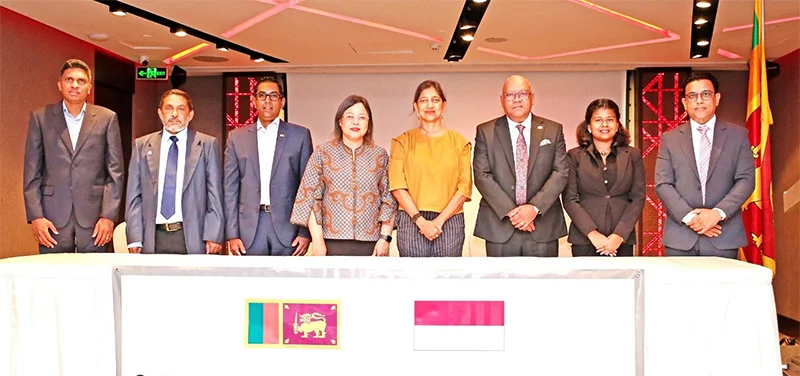
The Sri Lanka–Indonesia Business Council of The Ceylon Chamber of Commerce held its 3rd Annual General Meeting recently, bringing together Council members and key stakeholders to review the Council’s activities and priorities for the year ahead. The AGM was graced by Dewi Gustina Tobing, Ambassador of Indonesia to Sri Lanka and Patron of the Council
Delivering her address, Dewi Gustina Tobing, Ambassador of Indonesia to Sri Lanka, provided a comprehensive overview of Indonesia’s political and economic landscape, highlighting the country’s focus on promoting economic independence, strengthening sectoral resilience, improving public welfare, and facilitating both inbound and outbound investment.
Re-elected as President of the Council for 2026/27, Sheamalee Wickramasingha, Chairman / Group Managing Director of Ceylon Biscuits Ltd. acknowledged the instrumental role played by the Ambassador in the re-establishment of the Council and reflected on the Council’s key achievements during the past year. She highlighted the successful Sri Lanka–Indonesia Business Delegation to Indonesia, which provided valuable opportunities for Sri Lankan businesses to engage with Indonesian counterparts and explore avenues for commercial cooperation.
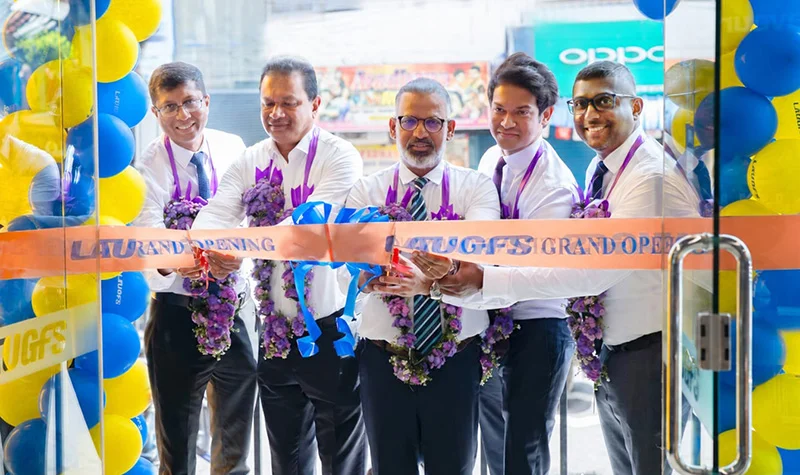
LAUGFS Supermarkets has further strengthened its growing retail presence with the opening of its 46th outlet at No. 78, K.B. Christy Perera Mawatha, Kotahena. The new outlet operates 24 hours a day, offering customers a wide range of products together with bakery and hot food options, providing greater convenience and accessibility to the surrounding community.
The new Kotahena outlet further expands LAUGFS Supermarkets’ growing network and reflects the Group’s continued focus on strengthening its presence in strategic locations across the country. The opening ceremony was attended by the Group Chairman, Group Executive Vice Chairman, Acting Group Managing Director/Group Executive Director and senior management.
Commenting on the opening, the Sector Managing Director/CEO – Retail, Niroshan De Silva, said, “The opening of our 46th outlet reflects the dedication, teamwork and determination of our people, who have worked exceptionally hard to bring this outlet together. The new Kotahena outlet is designed to offer customers greater convenience, with an inbuilt bakery and hot food facility that provides freshly prepared food alongside our wide range of products, all under one roof. Our focus is to ensure that every LAUGFS Supermarket operates to the highest standards and consistently delivers quality, convenience and service excellence to our customers.”
The opening of the Kotahena outlet marks another significant milestone in LAUGFS Supermarkets’ ongoing expansion, bringing its products and services closer to more customers while further enhancing its 24-hour retail offering. With its growing network of outlets and continued focus on customer convenience and service excellence, LAUGFS Supermarkets remains committed to strengthening its presence and creating greater value for customers across Sri Lanka.

Draft of the Appropriation Bill for the Financial Year 2027 su mitted to the Parliament
Cabinet approves aditional Rs. 2,500 million to the Paddy Marketing Board to purchase 2026 Yala harvest
Cabinet nod to host the 8th Asian Regional Conference of the Commonwealth Parliamentary Association and the 3rd Joint Asian and South-East Asian Regional Conference of the Commonwealth Parliamentary Association

SAARC Training Workshop on Financial Modeling for Renewable Energy Projects from 5th to 7th October in Colombo
National Children’s Week from 25th September to 01st October

Nairobi and Munich to host 2029 and 2031 World Athletics Championships

‘Dates have the highest sugar content to fight Coronavirus’

Sunday Island 27 December – Headlines

#SundayIsland 17th December – Headlines

Sunday Island – 28th March

Sunday Island Headlines – 21 March

Sunday Island – 21st February – Headlines
-

 Sports5 days ago
DDS set to lose Test captaincy
-

 News5 days ago
Sri Lanka faces new grid challenge as rooftop solar surges: former CEB GM
-

 Latest News5 days ago
Shafali, Deepti power India into sixth T20 Asia Cup final
-

 Opinion7 days ago
Navigating Sri Lanka’s Israeli Dilemma
-

 Latest News4 days ago
Sri Lanka thwart Fatima Sana challenge to secure Asia Cup final spot
-

 News3 days ago
Gnanasara Thero absconding after SC ruling
-

 Features6 days ago
Lost for 90 years: Rare Goby resurfaces in Jaffna
-

 News4 days ago
Ammunition cache found in old Kandy bungalow