
Business
Women’s increasing vulnerability and COVID-19


Sri Lanka’s Gender-based Employment Segregation
By Sunimalee Madurawala
Although COVID-19 may be gender-blind, it has created a crisis that has disproportionately affected women across the globe. The economic impact of the pandemic is mostly channelled through the labour market. Estimates show that women’s jobs are 1.8 times more vulnerable than men’s jobs, and while women make up 39% of global employment, they account for 54% of overall job losses. While many factors affect the vulnerability of women’s employment during the pandemic, existing gender gaps in the labour market, women’s employment share in highly-affected sectors, the ability to telecommute and the amount of unpaid care work carried out by women have been identified as the main determinants. In this context, this blog examines women’s vulnerability in the Sri Lankan labour market due to the sector they are employed in. It also looks at gender-based employment segregation – a key factor behind women’s overrepresentation in certain industries and underrepresentation in others – and proposes policy measures to address this imbalance.
Impact of COVID-19 on Employed Women in Sri Lanka
A comparison of labour market figures and indicators for Sri Lanka for the fourth quarters of 2019 and 2020 shows a severe impact on women (Figure 1). While the absolute number of employed men has increased by 38,938, the number of employed females has decreased by 189,148. The number of economically inactive persons has increased between the years. Females account for 64% of that increase in economically inactive persons. The labour force participation (LFP) rates for both sexes have decreased significantly but the fall is more prominent for women. The unemployment rate has increased for both sexes during the period, whereas the increase for men is marginally higher than that for females attesting to the lowered LFP of women.
The Sector Matters
The greater impact on employed women due to the pandemic is linked directly with the sectors they are employed in. Calculations of the author on women’s employment in Sri Lanka based on an assessment by the International Labour Organization indicate that their employment share is high in both low-risk and high-risk economic sectors (Figure 2).
Manufacturing (including the sub-sector of textile manufacturing), accommodation and food services, and wholesale and retail are high-risk sectors with relatively high female employment shares. Female representation is relatively high in some medium-high risk and medium risks sectors such as ‘arts, entertainment, recreation, and other services’ and ‘financial and insurance activities’, respectively, as well. Even though health is a low-risk sector, women employed in the health sector face a higher risk of contagion.
Gender-based Employment Segregation – a Cause for Women’s Employment Vulnerability?
Gender-based employment segregation – ‘the unequal distribution of men and women across and within job types’, is often the major reason for women’s (or men’s) over-representation in certain sectors. In most cases, especially for females, their choice of employment is linked with the traditional gender roles they play in society (i.e. direct and indirect care responsibilities such as caring for children, the elderly, and the sick, cleaning, cooking, shopping, and fetching water and fuel). For example, in Sri Lanka, the female share in several frontline occupations is high (i.e., health professionals, health-related professionals, and care workers). These occupations are directly linked with women’s traditional gender roles.
Gender-based employment segregation creates unfavourable labour market conditions such as gender gaps in wages, job quality and employment trajectories. Demand-side factors, as well as supply-side factors, limit women’s choice in selecting an employment sector, thus causing employment segregation. Gender gaps in skills and qualifications, domestic and care responsibilities, safety (i.e. harassment at workplaces and when using public transport) issues, and lack of role models and networks are some important supply-side factors. Gender biases in recruitment, evaluation and promotion processes, employers’ perceptions of women employees (where employers perceive women employees as more suitable for certain types of jobs) and features of the workplace culture are important demand-side factors.
Way Forward
Both training in hard skills and soft skills would increase women’s chances of securing employment in fields traditionally dominated by males. Specific interventions that reduce and redistribute women’s domestic and care responsibilities (i.e. expanding access to key infrastructure for care and investing in labour-saving technology, and redistributing care responsibilities between men and women within households and between households and state and other institutions) would lessen the burden of care responsibilities borne by women. This would create an enabling environment for women to participate in labour market activities and to expand the array of employment options available for them.
Strengthening the legal framework and law enforcement mechanisms is important to ensure the safety of working women both at the workplace and when travelling to work. Furthermore, promoting female role models who have succeeded in traditionally male-dominated sectors would inspire women to choose such careers. In addition, establishing workplace cultures that practice gender-blind recruitment, evaluation, and promotion processes are needed to curtail demand-side factors of gender-based employment segregation.
* This blog is based on the comprehensive chapter on “The COVID-19 Pandemic and Employed Women: Ensuring Gender Equality beyond the Pandemic” in IPS’ forthcoming annual flagship publication ‘Sri Lanka: The State of Economy 2021’.
Link to blog: https://www.ips.lk/talkingeconomics/2021/09/07/sri-lankas-gender-based-employment-segregation-does-it-increase-womens-vulnerability-amidst-covid-19/
Sunimalee Madurawala is a Research Economist at IPS. Her research interests include health economics, gender and population studies. Sunimalee holds a BA (Economics Special) with First Class Honours and a Masters in Economics (MEcon) from the University of Colombo, Sri Lanka. (Talk to Sunimalee – sunimalee@ips.lk)

Business
Inadequate LPG price hike compels the vulnerable to subsidize the wealthy: Advocata Institute


While Advocata Institute welcomes the recent Liquefied Petroleum Gas (LPG) price increase by Litro Gas Lanka, it remains inadequate and indirectly forces Sri Lanka’s vulnerable segments to subsidize wealthier LPG consumers.
This inequity arises because the retail price remains below cost-reflective levels despite the price revision. In April 2026, Saudi Aramco’s Asia-Pacific benchmark rose sharply, adding approximately Rs. 1,000–1,200 to the landing cost of a standard 12.5kg cylinder. The retail price, however, was increased by only Rs. 775, leaving a shortfall of approximately Rs. 225–425 per cylinder.
The gap is currently covered through cross-subsidization, where industrial users are charged higher prices than households. In practice, these costs are often passed on to consumers, as Sri Lanka’s protectionist trade regime allows local companies to do so without losing market share. As a result, households ultimately bear the burden through higher prices on everyday goods.
However, the benefits of this subsidy are concentrated among higher-income households. According to the 2024 Census of Population and Housing, LPG is used for cooking by 42.4% of households nationally, while 55.4% still use firewood. The 2019 Household Income and Expenditure Survey (HIES) further shows that nearly 80% of households in the highest expenditure tier use LPG, compared to less than 8% in the lowest-income tier. As such, the subsidy primarily benefits wealthier households, while its costs are indirectly borne by the broader population – including those who do not consume LPG.
Beyond this inequity, the cross-subsidization model creates two economic risks. First, artificially low prices can discourage conservation and the transition to alternatives such as firewood and briquettes. This sustains LPG demand and contributes to ongoing pressure on foreign exchange reserves. Second, pricing below cost creates an artificial price ceiling. Private sector competitors, unable to match the subsidized prices, risk being driven out of the market. This discourages new entrants and limits investment in the sector.
Advocata Institute urges the government to replace this cross-subsidization model with a fully cost-reflective pricing mechanism. Targeted cash transfers should be utilized to ensure that assistance reaches vulnerable households, while avoiding the inefficiencies of subsidies that disproportionately benefit higher-income groups.
Advocata Institute is an independent policy think tank in Sri Lanka that advocates for economic development through free markets

Financial support for housing project for families affected by Cyclone Ditwah
People’s Bank has come forward to donate Rs. 300 million to the ‘Government’s Rebuilding Sri Lanka Fund’ to support the development of a multi-storey housing project in the Nuwara Eliya District, which is being constructed to resettle families affected by Cyclone Ditwah.
This initiative, undertaken in commemoration of the Bank’s 65th anniversary, forms a key component of its Mahajana Mehewara Corporate Social Responsibility (CSR) programme, reinforcing its commitment to supporting communities and promoting sustainability.
The symbolic cheque for the donation was handed over at the Presidential Secretariat by People’s Bank CEO/GM Clive Fonseka and People’s Bank Chairman Prof. Narada Fernando to the Secretary to the President, Dr. Nandika Sanath Kumanayake. Head of Marketing Nalaka Wijayawardana was also present at the occasion.
Cyclone Ditwah, which struck in November 2025, along with the subsequent landslides in the Nuwara Eliya town area, caused extensive damage to residential properties and displaced numerous families. In response, the Ministry of Housing, Construction and Water Supply initiated a permanent housing programme to provide secure and sustainable living conditions. The contribution by People’s Bank highlights the national importance of this initiative and underscores the Bank’s continued role in supporting post-disaster recovery and community resilience.
The proposed development comprises of a fully integrated multi-storey housing complex designed to ensure both comfort and long-term sustainability. The residential component will consist of three multi-storey blocks, offering a total of 120 housing units, with 40 units allocated per block.
In addition to housing, the project incorporates comprehensive infrastructure and community facilities to support a holistic living environment. Planned infrastructure includes internal road networks, dedicated parking facilities, a wastewater treatment plant, and solar-powered outdoor lighting systems. Community-oriented amenities will feature a health centre, day-care centre, commercial outlets, a community centre, a children’s play area, a condominium management office, and a fully operational banking unit. Each block is expected to be completed within approximately a six-month construction period, enabling the timely resettlement of affected families.
Design and consultancy services for the project will be undertaken by the State Engineering Corporation, ensuring adherence to national standards and best practices in construction and urban planning.
As Sri Lanka’s largest bank in terms of customer base and the branch network, People’s Bank has consistently extended its services beyond banking to support impactful CSR initiatives. Guided by its enduring ethos, “Pride of the Nation”, the Bank continues to play a transformative role in uplifting communities and contributing to sustainable national development.
Business
Hayleys rights issue oversubscribed, reflecting sustained investor confidence in group strength

Hayleys PLC, Sri Lanka’s leading diversified conglomerate, has announced that its LKR 9 billion Rights Issue has been oversubscribed by over LKR 2 billion, reflecting strong investor confidence in the Group’s financial strength and growth prospects.
The Rights Issue of 45,000,000 new ordinary voting shares was offered at an issue price of Rs. 200 per share, in the proportion of three new shares for every fifty existing shares held.
The proceeds from the Rights Issue will be strategically deployed through a disciplined allocation of capital intended to fund high-growth, future-focused investments. This strategic move further strengthens Hayleys’ financial flexibility and capital structure, channelling fresh capital into growth-oriented assets while reinforcing long-term stability.
By strategically expanding into the modern trade retail segment and scaling renewable energy projects, Hayleys is diversifying its revenue streams to ensure long-term earnings resilience. The continued strengthening of export-oriented verticals is set to drive vital foreign currency inflows, improving profitability through access to larger international markets. Collectively, these initiatives are engineered to accelerate return on invested capital, ultimately driving sustainable shareholder wealth through long-term value creation.
Hayleys PLC carries a National Long-Term Rating of ‘AAA (lka)’ with a Stable Outlook from Fitch Ratings Lanka Limited, recently reaffirmed, the highest credit rating on the Sri Lankan national scale.

Advisory for Severe Lightning issued For Western, Sabaragamuwa and North-western province

AI chatbots could be making you stupider

‘A remarkable time capsule’: The enchanting history of Oxford University’s 750-year-old medieval library

Kohli, Padikkal hit fifties as Royal Challengers Bengaluru ace the chase against Gujarat Titans

Showers expected in the Western and Sabaragamuwa provinces and in Galle, Matara, Kandy, Nuwara-Eliya and Puttalam districts after 2.00 pm

Heat Index at Caution Level in the Northern, North-central, North-western, Western, Sabaragamuwa and Eastern provinces during the day time

‘Dates have the highest sugar content to fight Coronavirus’

Sunday Island 27 December – Headlines

#SundayIsland 17th December – Headlines

Sunday Island – 28th March

Sunday Island Headlines – 21 March

Sunday Island – 21st February – Headlines
-
 News5 days ago
Rs 13 bn NDB fraud: Int’l forensic audit ordered
-

 Opinion6 days ago
Shutting roof top solar panels – a crime
-

 News3 days ago
Lanka faces crisis of conscience over fate of animals: Call for compassion, law reform, and ethical responsibility
-

 News2 days ago
No cyber hack: Fintech expert exposes shocking legacy flaws that led to $2.5 million theft
-

 News7 days ago
From Nuwara Eliya to Dubai: Isha Holdings markets Agri products abroad
-
 News2 days ago
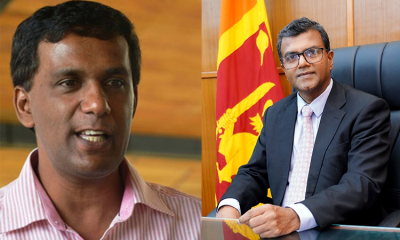
Whistleblowers ask Treasury Chief to resign over theft of USD 2.5 mn
-

 Life style7 days ago
After dark in Sri Lanka: Tiny wild cats step into the spotlight
-

 News6 days ago
Church calls for Deputy Defence Minister’s removal, establishment of Independent Prosecutor’s Office