
Sports
An American hurdling for Sri Lanka at Olympics


Waiting for the next Olympic hurdler – Part IV
by Reemus Fernando
In the year 2012, the US had more than dozen female athletes who had run the 400 metres hurdles faster than the IAAF qualifying standard (both ‘A’ and ‘B’) for the London Olympics. The ‘B’ grade qualifying standard was 56.65 seconds. While the countries like Sri Lanka were struggling to qualify athletes for Olympics, the US had a surplus. In fact, in hurdling, the whole of Asia had only three female athletes, the Japanese pair Satomi Kubokura (55.34) and Sayaka Aoki (56.62) and the Chinese Xiaoxiao Huang (56.58), who had run the discipline under the qualifying mark in 2011. By the end of July 2012, six others had managed to run under the ‘A’ and ‘B’ grade standards for Olympics from Asia. During the Olympic qualifying period, the fastest performance of Christine Merrill, born in Bakersfield, a city in Kern County, California was 56.83 seconds. Even achieving an ‘A’ grade qualifying standard does not guarantee a place in the US team for the Olympics. US athletes have to face a trial as there is an excess of qualified athletes to select from.
When more than dozen qualified US hurdlers who could not punch their ticket to the 2012 Olympics were watching the London Olympics on TV back in the US, Christine Merrill took the starters orders in the women’s 400 metres hurdles heats at the London Olympic Stadium. However, neither her name nor her country’s was announced before the race. When she completed the race, last in the fifth heat, she became the first female athlete to have represented Sri Lanka in the 400 metres hurdles at an Olympics. It was not that someone had illegally taken her to the Olympic Village. It all became possible because of her mother’s Sri Lankan origin.
With its massive TV viewer strength, the US has a huge influence when deciding disciplines of the Olympics. The women’s 400 metres hurdles made its debut when the US hosted the Games for the third time in Atlanta in 1984. Six editions after the women’s 400 metres hurdles made its debut Sri Lanka made its namesake first female representation in the 400 metres hurdles in London in 2012. It all became possible because Sri Lanka Athletics had started to look outside for formidable athletes of Sri Lankan origin to form teams for international events. Merrill also represented the country at the 2011 World Championships and also made herself available for championships held in Sri Lanka. A year after her Olympic representation she clocked 56.45 at a competition in the USA. It is the current Sri Lanka national record. Had she not made herself available for Sri Lankan representation by 2011, probably the country would have given its Olympic wildcard to a locally grown sprinter Chandrika Subashini who had clocked 52.52 seconds in the 400 metres flat event in 2011. Subashini was placed fourth at 2011 Asian Championship in Kobe. Later she was elevated to silver medal position after initial gold and silver medallists Kazakhstan’s Olga Tereshkova and Iraq’s Gulustan Ieso, were disqualified after testing positive for banned substances.
Not many have persevered in the 400 metres hurdles in the women’s category at the senior level. Lack of competition has produced sub-standard performances at the national level. Nimali Liyanarachchi who is representing Sri Lanka at the Tokyo Olympics once tried her luck in this discipline clocking 60.85 seconds. While the country’s national record in the women’s 400 metres is held by a US citizen, the country’s national championship record of that discipline is held by a British national, Selvagowry Retchakan. Selvagowry’s National Championship record of 57.5 secs (hand timing) is 30 years old now.
Selvagowry emerged as a future prospect for Sri Lanka from Chandikulam Balika. She represented Sri Lanka at the Asian Games in 1982. But she developed as a force to be reckoned in world athletics only after she moved to the UK. When she took part in the 1992 Barcelona Olympics, where she ran her lifetime best of 54.63 seconds over the 400 metres hurdles, she was representing the UK. She won two world level medals for the UK when she finished second in the 400 metres hurdles at the 1998 Kuala Lumpur Commonwealth Games and the1992 IAAF World Cup in Havana.


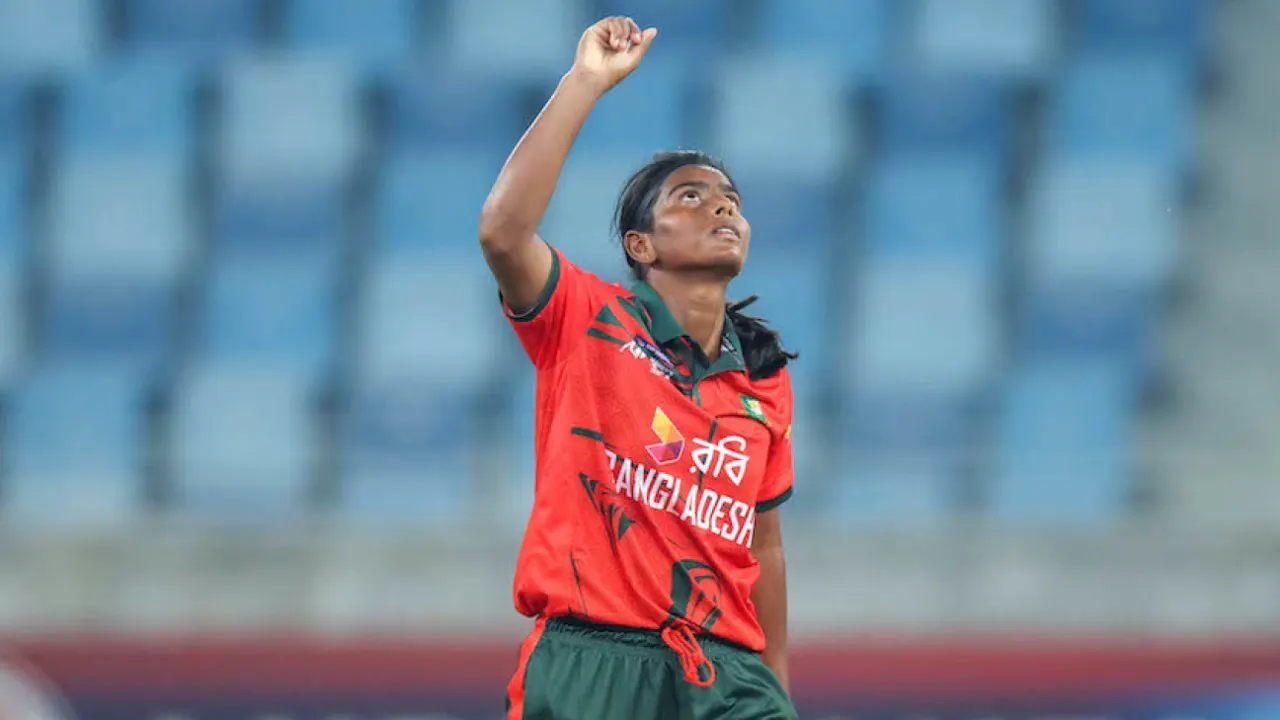
A superb bowling performance led by Marufa Akter and the spin attack helped Bangladesh overcome Indonesia in their Asia Cup opener in Dubai.
Indonesia, on their Asia Cup debut, put up a spirited performance especially with the ball to restrict Bangladesh to 129 for 8. Sobhana Mostary , playing her 100th international match, top-scored with 40, while Shorna Akter injected late momentum with 31 off 18 balls. Indonesia in return were bowled out for 58, with left-arm spinner Nahida Akter finishing with figures of 3 for 15.
Indonesia make early inroads
Indonesia’s Ni Made Putri Suwandewi found swing almost immediately but Bangladesh’s openers handled the movement well to make a positive start, scoring four boundaries in the first two overs. But that did not last long as Suwandewi struck in her second over, having Juairiya Ferdous mistime an inswinging delivery towards cover point, where Ni Ariani came forward and held a sharp low catch to give Indonesia their first wicket in Asia Cup.
Mostary and Dilara Akter then found run-scoring increasingly difficult. Bangladesh managed only one boundary between the third over and the end of the powerplay, reaching 30 for 1.
Indonesia’s spinners maintained the pressure thereafter, conceding only a few boundaries and repeatedly forcing Bangladesh’s batters to manufacture their shots. The partnership between Mostary andDilara struggled to gather momentum and was eventually broken when Ariani had Dilara caught for 27 off 31 balls. Bangladesh reached 58 for 2 at the halfway stage.
Shorna shines, Indonesia sparkle
Bangladesh’s first six came only in the 13th over thanks to Mostary. But her attempt to accelerate was checked soon after as 16-year old legspinner Sofia Velic, on her international debut, dismissed captain Nigar Sultana. Mostary was then left with the responsibility of guiding Bangladesh towards a competitive total, but Indonesia continued to restrict the scoring. Ni Luh Dewi struck twice in the 17th over to remove Mostary for 40 and Ritu Moni, leaving Bangladesh in further trouble.
Shorna briefly changed the momentum, hitting a six and a four, but Indonesia’s bowling ensured Bangladesh could not fully capitalise. Indonesia too dropped as many as three catches but the reprieves did not make much of an impact.
Ariani produced a dramatic finish to the innings, picking up two wickets as Bangladesh slipped from 105 for 3 to 129 for 8. They lost five wickets for 21 runs in just 17 balls, with Shorna, who had looked Bangladesh’s most fluent batter late in the innings, stranded at the non-striker’s end for much of the final over.
Bangladesh bowlers rule
Marufa began with a probing over, getting the ball to swing both ways and keeping Indonesia’s openers cautious. She broke through in her second over, having Rahmawati Pangestuti edge a full delivery to mid-on. she struck again in her next over, trapping Maria Corazon lbw with a full ball that swung sharply into her pads and beat her attempted flick. Indonesia had lost both openers early but they had made a slightly better start than Bangladesh managed during their own powerplay.
But the game shifted after the powerplay as Bangladesh’s spinners tightened the screws. Senior legspinner Fahima Khatun ended Ni Putu Ayu Nanda Sakarini’s difficult stay at the crease in the ninth over, trapping the Indonesia captain in front for just 2 off 15 balls. Sanjida Akter Meghla followed up with another wicket in the next over, trapping Dewi lbw after she missed a length ball that came into her pads.
Nahida struck in the 12th over but it was in the 14th over that Indonesia’s innings completely fell apart. Nahida first dismissed Suwandewi for 3 after a mistimed pull. Sofia Velic was then run out for 1 following a quick throw from deep fine leg, before Nahida finished the over by bowling Ariani for 2. Indonesia had slipped to eight down, and two more run-outs completed their innings as Bangladesh sealed a convincing 71-run victory.
Scores:
Bangladesh Women 129 for 8 in 20 overs (Dilara Akter 27, Sobhana Mostary 40, Nigar Sultana 10, Shorna Akter 31*; Ni Made Putri Suwandevi 1-13, Ni Ariani 3-28, Ni Luh Dewi 2-21) beat Indonesia Women 58 in 17.3 overs (Maria Corazon 12; Marufa Akter 2-06, Sanjida Akter Meghia 1-11, Nahida nahida 3-15, Fahima Khatun 1-09) by 71 runs
[Cricinfo]

by Rex Clementine
The Cricket Transformation Committee met the press yesterday and offered a firm assurance that the new constitution for Sri Lanka Cricket will be in place before November, with all democratic avenues available for concerned parties to challenge it in court.
According to committee head Eran Wickramaratne, the draft constitution has already been forwarded to the Ministry of Sports and subsequently to the relevant legal authorities to iron out any flaws.
Once the draft reaches Cabinet, it will be gazetted, with provisions allowing interested parties to challenge the legality of the new constitution in court.
SLC elections have been bitterly contested over the years and, at times, have resembled a political battlefield rather than a process to elect cricket administrators. There have been instances where members of prominent clubs were suspended for voting against the wishes of their clubs, while armed gunmen have even entered the Board premises at Maitland Place to intimidate voters. Such incidents eventually forced authorities to shift cricket elections to a neutral venue.
The influence wielded by paper clubs and certain district cricket associations during elections has also come under the microscope. The new constitution is expected to address many of these long-standing concerns and Wickramaratne gave a categorical assurance that ballot rigging will not be tolerated this time around.
“There will be no room for rigged elections. That’s for sure. There is a democratic process and people will be allowed to challenge the new constitution within those frameworks,” Wickramaratne said.
Another major talking point at the media briefing was the inaugural Champions Trophy. It was revealed that although the International Cricket Council has indicated that the tournament could be taken away from Sri Lanka as an elected body is not currently running the administration, officials remain hopeful that the country will retain the hosting rights.
There have been suggestions that India could host the tournament should Sri Lanka lose it. Even in such an eventuality, Sri Lanka would not miss out on participation, with the top six teams qualifying for the event and Sri Lanka currently placed sixth in the ODI rankings.
“I am made to understand that the decision will be taken at the next ICC meeting, which will be held in November. By then, we should have cleared many hurdles and the new constitution would have been passed by Parliament and dates should be fixed for the election,” Wickramaratne told the press.
“We have kept the ICC informed about what has been happening on a regular basis and we are hopeful that we will be able to host the Champions Trophy,” he added.
Former captain Kumar Sangakkara, who is also a member of the committee, was present at the briefing and was asked about creating more opportunities for budding Test cricketers.
Sangakkara stressed that Test cricket needed to be protected in the years ahead, but pointed out that supporters too had a role to play by demonstrating their appetite for the game’s traditional format.
He added that concerns over the future of Test cricket had been raised even at ICC level and that measures were being explored to safeguard the longer format of the game.
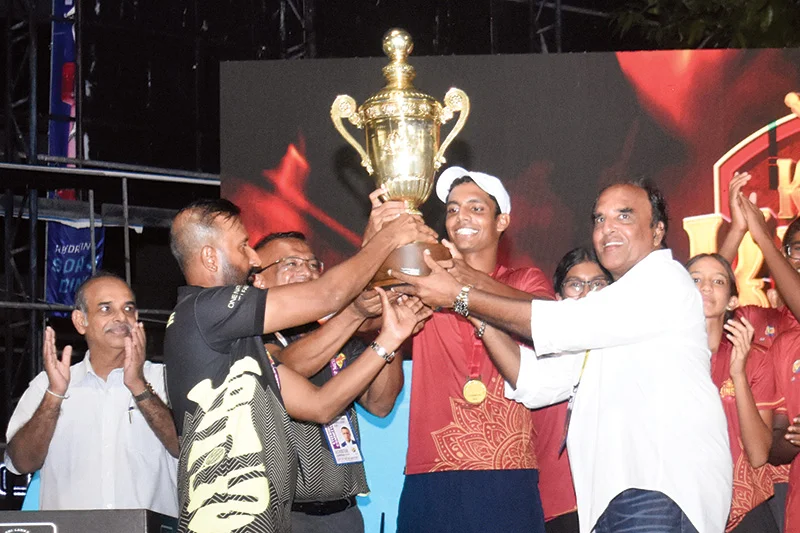
Kandy Kings emerged champions of the Sri Lanka Tennis Premier League 2026, defeating Jaffna Flamingos in an exciting final at the Sri Lanka Tennis Association courts.
The four-day tournament, held from August 27 to 30, was title sponsored by CL Synergy Power and powered by Wilson.
Kandy Kings secured the championship with a 35-26 points victory over Jaffna Flamingos in the final, with several closely contested matches deciding the outcome of the inaugural league-style competition.
Savini Jayasuriya gave Kandy Kings an early advantage when she defeated Janali Manamperi 7-5 in the opening singles encounter.
Jaffna Flamingos, however, hit back in the second singles match through Pakistan’s No. 1 national player Muzammil Murtaza, who overcame Sri Lanka’s No. 1 national player Thehan Wijemanna 6-4 in one of the most anticipated matches of the final.
Kandy Kings regained momentum in the girls’ Under-15 contest as Navya Banagala defeated Samaira Fernando 6-4.
The Kandy team further strengthened their position in the mixed doubles, where Mineth Nawarathne and Tuvini de Alwis overcame the Jaffna pairing of Aravind Fernando and Janali Manamperi.
The championship was eventually sealed in the deciding doubles encounter, with Sri Lanka’s top-ranked player Thehan Wijemanna joining Mineth Nawarathne to beat Aravind Fernando and Muzammil Murtaza 6-3, helping Kandy Kings complete a memorable triumph.
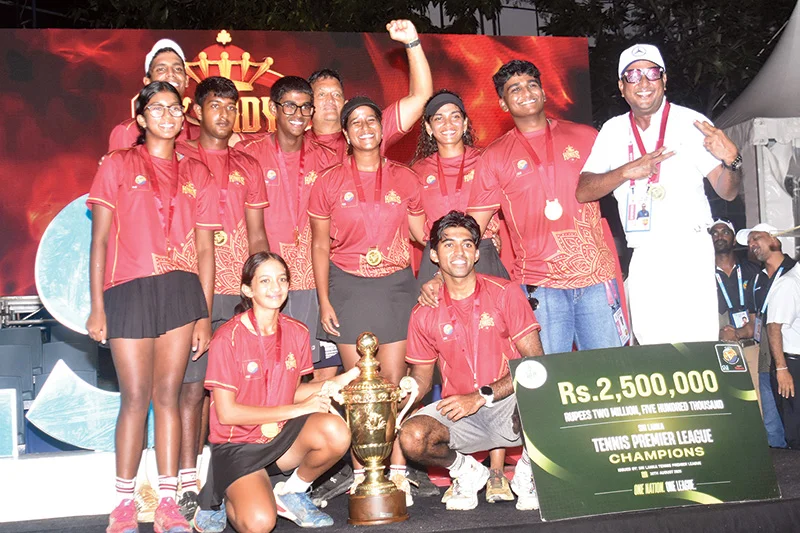
Several outstanding performers were recognised at the conclusion of the tournament. Yuhansa Peiris of Weligama Warriors was named the Most Valuable Women’s Player, while Jaffna Flamingos’ Muzammil Murtaza received the award for Most Valuable Men’s Player.
Navya Banagala of Kandy Kings was adjudged the Most Valuable Girls’ Player, while Damsath Peiris of Jaffna Flamingos won the Most Valuable Boys’ Player award.
Jaffna Flamingos’ Janali Manamperi was also presented with the Wilson Fair Play Award.
Kandy Kings finished the tournament as champions, while Jaffna Flamingos had to settle for the runners-up position after an impressive campaign that took them to the final.

Nahida, Marufa help Bangladesh brush aside Indonesia

Showers will occur in the Western, Sabaragamuwa, Southern and Uva provinces and in Kandy and Nuwara-Eliya districts

Sun directly overhead Kalpitiya, Talawa, Sinharagama, Galkadawala, Nachchaduwa, Padikaramaduwa, Gomarankalla and Verugal about 12.10 noon today (01)

SJB asks what Speaker intended to do about allegations against CJ

Navy Chief attends strategic-level discussions in Delhi

ICRS: Sustained and collective efforts critical to address issue of missing persons

‘Dates have the highest sugar content to fight Coronavirus’

Sunday Island 27 December – Headlines

#SundayIsland 17th December – Headlines

Sunday Island – 28th March

Sunday Island Headlines – 21 March

Sunday Island – 21st February – Headlines
-

 News4 days ago
Eight politicians in drug kingpin probe
-

 Features2 days ago
“Wrap Me Up in My Blazer”— A Gentlemanly Bradby Reminiscence
-

 Business4 days ago
Sri Lanka opens up: A new season of direct connectivity
-

 Features4 days ago
Redefining ageing in Sri Lanka
-
 Features6 days ago
Insights from Chieftains of Uva: Genealogy of two Kandyan Families – Part II
-
 Latest News5 days ago
Nepal-Tibet floods: What happened, what caused them and who is missing?
-

 Editorial6 days ago
Warning of power cuts: El Niño and corruption
-

 Features6 days ago
Export diversification: Missing the wood for the trees – Part I