
Features
One Term President Sirisena and post-election maneuvers

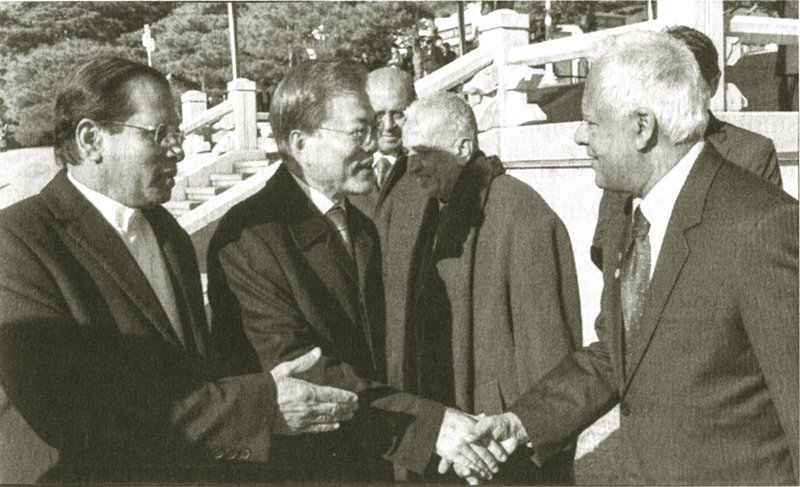
“I learn about events in the country only from newspapers”— President Maithripala Sirisena
Maithripala Sirisena was not at all sure of a victory in the 2015 Presidential election. Knowing full well the treatment meted out to Sarath Fonseka, MR’s rival in 2010, he had planned to spend the night of the vote count in a friend’s estate in Kurunegala. In fact he need not have worried because he not only obtained a plurality of votes but also went over the 50 percent barrier in the first count. In this he fared better than MR who on his first attempt barely scraped through.
When there were unexplained gaps in announcing the results electorate -wise, I suspected that the well laid plans of MR were going awry. Late that night Sirisena was informed by Ranil that he was the winner and that he should come post-haste to Colombo. In the meantime, Ranil was asked to hold the fort and negotiate the departure of MR from Temple Trees as early as possible.
Attempted Coup?
But it seemed that an attempt was in the offing to prevent MR from vacating office on the grounds that he had time remaining from his tenure as the President who was elected in 2010 for a six year term. There was speculation among the top social circles of Colombo that the Army Commander and IGP had been summoned to Temple Trees to ascertain whether the security forces would go along with such an extension.
The Chief Justice Mohan Peiris went to Temple Trees having been summoned apparently to give an opinion regarding the legality of the move that was being contemplated. It was said that both the Army Commander and the IGP refused to be a party to an enterprise which would amount to a “coup d’etat”. There was no indication as to the advice rendered by the CJ, except that he was to soon lose his position. No doubt it was highly improper to even solicit such an opinion from the CJ, as he was not the legal officer of the government. An incumbent President could have sought the opinion of the Attorney General, but not of the CJ who certainly did not have such advisory powers.
The upshot of this alleged irregular attempt by MR was that the Security Chiefs were unanimously opposed to any such thing. MR then gave in with grace and quit Temple Trees and availed himself of the offer by Ranil that he could be airlifted to his home in Tangalle. He left amidst the tears of his staff who had thronged the entrance to TT that morning. Once he got home MR gave an impromptu speech blaming the minorities for his defeat.
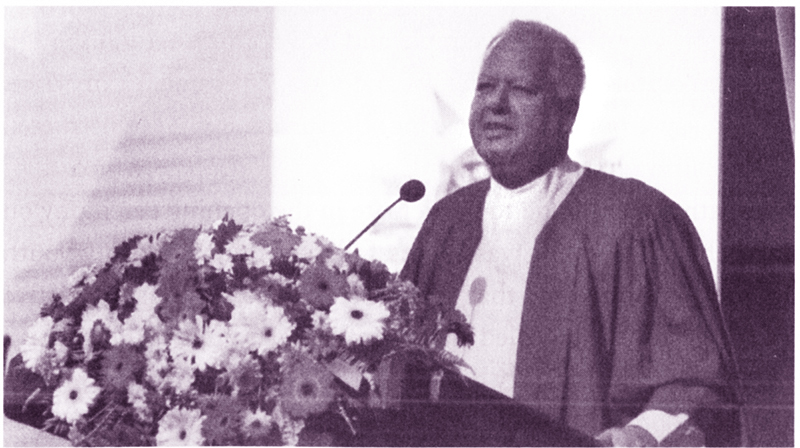
At a University event
In spite of his downfall, MR’s supporters from all over the country came to his home to console him. His house in Tangalle became a pilgrimage centre with party loyalists and sympathizers coming in droves for “darshan” of their erstwhile leader. The few SLFP leaders who remained with him began to dream of a Rajapaksa restoration and MR resumed his usual baby kissing and temple visits which he had used to good effect early in his quest for high office.
Overtures
Though Maithripala [MS] won a victory in the face of great odds he did not command a majority of MP’s in Parliament. The new government had only 60 seats in a Parliament of 225. The UNP which was the main opposition, and the motor of his victory, did not have the numbers to challenge the MR led SLFP. Thus MS’s first move was to pull out some SLFP members to his side to bolster his own position, vis a vis the UNP as well as to ensure the safety of his government.
To this end he began negotiations with a clique of SLFPers who backed him when he was the General Secretary of the party. Many of them had personal grievances such as being sidelined in the party by MR or being appointed “Senior Ministers” without Ministries and Departments under them. As predicted by MR very early his chickens [senior ministers] were now coming home to roost.
This pro-MS group of SLFPers were led by Mahinda Amaraweera from Hambantota, who was constantly claiming that his life was in danger from the Rajapaksas, and Janaka Bandara Tennakoon, son of a SLFP stalwart who had been given high office by the Bandaranaikes. Perhaps at their urging MS called me at home and requested me to help him and added that in the event of his not getting the requested support from the SLFP he would dissolve Parliament.
This would lead to the decimation of the SLFP and the emergence of the UNP as the winner of such an election. He also told me that MR had been persuaded to give up the leadership of the SLFP which under the SLFP constitution would accrue to the party person who holds the office of President of the country. Since MS had not been legally expelled from the SLFP he was entitled to benefit from that constitutional provision.
Though there could be flaws in this interpretation no one was going to question it and MR said he was willing to hand over the office of party president. This was the conclusion arrived at a meeting held by the two factions at the Speaker’s residence. Since Chamal Rajapaksa was still the Speaker both factions could avail themselves of this facility. I agreed to MS’s request and our group of SLFPers first met at Janaka Tennakoon’s official residence and then moved onto Amaraweera’s house since it was in close proximity to MS’s official residence in Paget Road.
We could walk across to MS’s house or he could come “incognito” to Amaraweeras to meet us. There were about 30 SLFP MPs who met that evening at Amaraweera’s and agreed to support the MS regime under the SLFP banner. At this stage our group was strong as MR and his relatives were in no position to bargain, having lost the election. However it was much later that we heard that Amaraweera had taken Namal to meet MS that night to smoke a peace pipe.
At a later TV debate they argued about this clandestine visit. While Amaraweera stated that Namal had begged for mercy, Namal replied that the meeting was to suggest to him that his father should quit politics and retire. We can now speculate that it was this “stab in the back” that alienated Ranil from MS at the beginning of the new administration.

Welcoming ceremony at Jaffna University
CBK always maintained that it was MS and not Ranil who had first betrayed the trust of the voters by playing up to the Rajapaksas within a few days of winning the Presidential election. When well known corrupt offenders of the SLFP were to be prosecuted, MS was pressurized by his SLFP loyalists to intervene and stop further action.
Maduluwawe Sobitha
Another influence on us at that time was Maduluwawe Sobitha Thero who was keen to incorporate a faction of the SLFP in the government that he did so much to create. He was not an admirer of Ranil. His favourite was Karu Jayasuriya who too had ambitions of holding high office. Sobhita backer and financial manager was my friend Cornel Perera who brought several messages from the priest that I should support MS at this juncture.
However, unfortunately Sobhita fell seriously ill and had to be admitted to hospital with heart disease. Later he was airlifted to Singapore but to no avail. His death was a great blow to Karu and MS as well as to many leftists who were not happy about the alliance between the UNP and SLFP. They had been persuaded to give the alliance a chance because of the leadership of Sobhita. At his funeral in Independence square, the newly appointed leaders of the government made public pledges to follow in Sobhita’s footsteps. But in effect nobody did so, much to the disappointment of the monk’s followers who had undertaken the seemingly impossible task of defeating MR when political leaders were afraid to take the lead.
At one time in desperation Sobhita himself offered to contest in the absence of a credible candidate. After Sobhita’s death I spent some time at Naga Vihara to participate in the funeral arrangements. However I was appalled when a controversy regarding succession had developed even before the cortege had left the temple. One of the younger monks was known to me and he tried to drag me into the controversy, in his favour. But since I had not interacted much with him and adverse information came from Cornel Perera who advised me to stay clear, I lost interest in Naga Vihara affairs.
Little else except a larger than life statue of the charismatic priest erected near Parliament now remains as a reminder of the time when he led a movement consisting of different opposition groups to oust a powerful and confident President.
Cabinet of January 12, 2016
After a meeting with President Sirisena, MR agreed to relinquish his position as President of the SLFP. Thus Sirisena could hold the positions of SLFP leader and President of the Republic concurrently. This helped in getting a number of SLFP MPs appointed as Cabinet ministers under the new administration. CBK made a dramatic comeback after being sidelined from politics by MR during his tenure as President. Now she called the shots according to MS and played a big role in preparing the Cabinet together with Ranil.
Following usual procedures, Ranil would nominate the UNP Cabinet Ministers while MS, assisted by CBK, would appoint the SLFP Ministers. The SLFP members who were given Cabinet office were Amaraweera, Lakshman and Mahinda Yapa Abeywardene, Reginald Cooray, Duminda Dissanayake, SB Dissanayake, Fowzie, Piyasena Gamage, MKDS Gunawardene, SB Navinne, Felix Perera, Arjuna Ranatunga, Rajitha Senaratne, Janaka Bandara Tennakoon and myself I was appointed the Minister of Higher Education and Research. It was this hybrid Cabinet that was expected to steer the country till the general elections which were due in about six months time.
Higher Education
Of the large number of portfolios held by me, Higher Education was one which really attracted me. Right through my adult life I have maintained an interest in University education not least because I have had the privilege of being associated with several of the best Universities in the world. Also my Kandy electoral district boasts of hosting Peradeniya University and several other higher educational institutions. I had barely taken over when I had to confront a difficult situation in Colombo University. The MR administration had appointed a comparatively junior teacher as the Vice Chancellor on what appeared to be political grounds. I too knew the wife of the academic concerned who was a well regarded Professor on the same campus. My predecessor had left the question simmering and the faculty was now waiting expectantly, and somewhat skeptically, for my verdict.
I decided to play with a straight bat and appointed Professor Lalitha Mendis to the post of Vice Chancellor. Lalitha was greatly admired by the faculty for her integrity and independence. Fortunately the unpopular academic then decided to go on sabbatical leave and I was happy to facilitate it since he had to be helped to save face. He departed and the University settled down to its legitimate functions. We all heaved a sigh of relief.
Campuses
My predecessor SB Dissanayake was my student at Vidyodaya University and I enjoyed a close relationship with him. He was a dynamic Minister who had expanded infrastructure facilities on many campuses. Several new halls of residence had been constructed at Peradeniya and the administration there had invited him to declare them open. However he had clashed with the students and they threatened to create mayhem if he visited the campus. SB had then left the matter pending and the halls of residence which he had constructed remained closed.
I had many of my youth leaguers at Peradeniya as undergraduates and they alerted me to this delay and invited me to come instead. But I thought I must set an example and as a politician, even though I was an alumnus of Peradeniya and a student leader of my time, keep away from such a routine University event. I instructed the Chairman of the Higher Education Commission Professor Sampath Amaratunge to participate in the opening ceremony on my behalf. The event was successfully concluded and my youth leaguers informed me that the undergraduates were appreciative of my gesture.
I travelled many times in and out of Peradeniya campus without security and never did I encounter any difficulty. On occasion I had to instruct the respective Vice Chancellors to get their campus premises cleaned up. I spoke particularly of the Colombo and Peradeniya Campuses. In my minds eye I could always see the impeccably maintained Peradeniya Campus of my time with its lush green, well trimmed lawns and the hundreds of flowering trees with their multi-coloured blossoms cascading down which made our campus a veritable garden paradise.
Colombo campus was a particularly bad offender in the maintenance department and I had to telephone Savitri Goonesekere to get the land near the Planetarium cleaned up. There were complaints about snakes in that wilderness. It was promptly cleaned and the Planetarium staff who had to ensure the safety of hundreds of students who regularly visited them were relieved and thankful.
(Excerpted from Vol. 3 of the Sarath Amunugama autobiography)

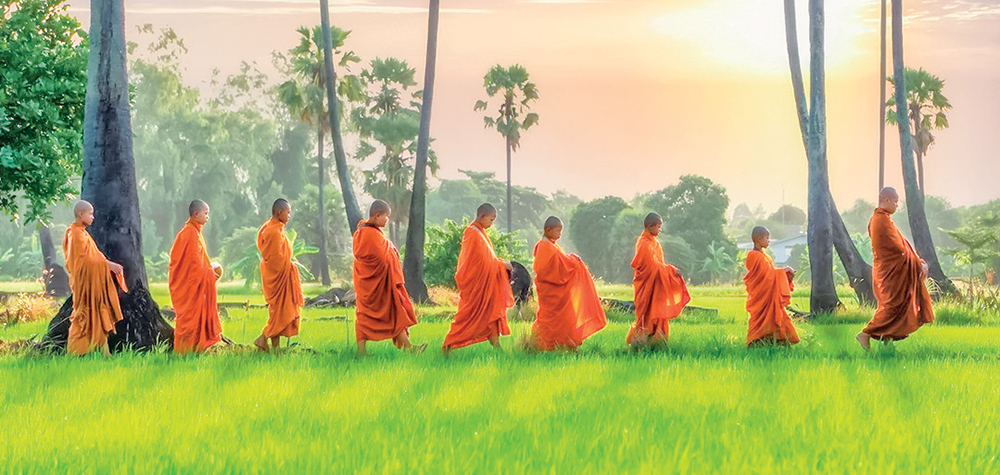
The underlying issue in Anuradhapura is a struggle between a few families who, for years, have waged a quiet cold war over control of the Udamaluwa. Similar situations exist in Mihintale as well. These places, among others, are treated as treasures of Buddhism but, in practice, function as tightly controlled economic centres. The same pattern repeats in Kandy around the Temple of the Sacred Tooth Relic and in Kataragama at the shrine of God Kataragama. Variations of it exist across religious spaces of Islam, Catholicism, and Hinduism too, where institutional authority becomes indistinguishable from localised power networks. What is presented as sacred order often operates as inherited control.
It is indeed devastating to see situations where parents have no alternative but to expose their children to predators in robes for survival. This has nothing to do with religion itself, but with human pathology in the context of survival. These are the questions that demand answers, not superficial responses that treat symptoms while ignoring the conditions that produce them. What is more shocking and disturbing is not the tragedy itself, but the reactions to it. Social media has overwhelmed us, not towards understanding, but towards a fragmented cognitive state with no exit route.
A friend of mine in Nairobi used to keep all his electronic devices at home and go into the forest once a month, spending days there before returning. He called it “detoxification”, but in reality it was an escape from a system that no longer allows uninterrupted thought. Daily life is now saturated with unnecessary content, and attention itself has become a commodity extracted, processed, and sold back to us. This is where we have become unable to understand what really drives certain tragedies we endlessly react to, while remaining blind to the systems that quietly manufacture them.
Multi-dimensional poverty
Poverty is structural, poverty is political, and poverty is functional; it is a tool and a manoeuvring force of power. The question is no longer whether poverty exists, but who benefits from its persistence, and who is forced to survive within it. From education to medicine to basic food supply chains, countries like Sri Lanka are not simply mismanaged; they are structurally captured by a small number of actors who remain stable regardless of who is formally in power. Small-scale enterprises and NGO circuits that circulate foreign funding to “solve structural issues” often operate as hollow administrative performances, producing reports rather than transformation.
Poverty is not merely the absence of money. It is the absence of bandwidth, absence of protection, absence of time, and absence of cognitive stability. As Sendhil Mullainathan and Eldar Shafir state, “Scarcity captures the mind. Just as the starving subjects had food on their mind, when we experience scarcity of any kind, we become absorbed by it.” This is a description of how human cognition is structurally reorganized under constraint. Scarcity does not sit outside the person; it occupies them.
They also state, “Scarcity leads us to borrow and pushes us deeper into scarcity.” That is the mechanism that must be confronted without euphemism. Poverty is not only deprivation; it is a self-reinforcing trap in which survival decisions generate the next layer of crisis. Once a society crosses a certain threshold of scarcity, it stops producing long-term reasoning as a default condition. It produces short-term survival logic, often mistaken by outsiders for irrationality.
It is precisely here that public discourse becomes intellectually dishonest. Everything is translated into moral language because moral language is easier than structural analysis. But morality without structure becomes theatre. It produces outrage, not understanding, and repetition, not reform.
It is indeed brutal when an individual wearing religious insignia—whether robe, symbol, or institutional identity—is accused of acts that fundamentally contradict the moral authority attached to that position. It is equally brutal when institutions that depend entirely on trust begin to function as shields rather than safeguards. But the deeper question is not shock. The deeper question is what kind of social condition produces families who see placement within such institutions not only as devotion, but as a survival strategy under constraint.
Ethical decision-making
That is where the argument collapses into its most uncomfortable form. Poverty does not produce ethical decision-making environments. It produces constrained optimization under pressure. When food insecurity, debt, and social instability converge, institutional spaces that appear stable become transactional destinations for survival rather than moral choices. To interpret this as purely cultural failure is to deliberately ignore the structural compression of options.
Mullainathan and Shafir describe this clearly: “Instead of saying that scarcity ‘focuses,’ we could just as easily say that scarcity causes us to tunnel: to focus single-mindedly on managing the scarcity at hand.” That tunnelling effect is not abstract. It is visible wherever long-term planning collapses under immediate pressure. Systems then misread this as irresponsibility, when it is in fact cognitive overload produced by structure.
What is rarely acknowledged is how deeply this extends into governance itself. Institutions increasingly operate as if they are managing rational, unconstrained individuals. In reality, they are interacting with populations whose cognitive bandwidth is already structurally taxed. The result is policy failure interpreted as public non-compliance, enforcement interpreted as moral correction, and reform interpreted as communication failure rather than design failure.
Social media has intensified this distortion. It does not merely spread information; it destroys sequencing. Structural problems require temporal depth. Social media removes that depth and replaces it with instantaneous judgment. Every event becomes a surface object, detached from causality. The outcome is a society permanently reacting and never diagnosing.
Poverty, in this environment, becomes invisible in its real form. It is not seen as a continuous structural condition but as episodic failure. A scandal appears, is consumed, and disappears. Another replaces it. Nothing accumulates into understanding because attention itself is exhausted before synthesis can occur.
Modern Condition
The modern condition reflects a reversal of earlier social organization, where human relationships are embedded within abstract systems of finance, law, and administration that often fail to recognize the lived constraints of those they govern. In this disembedded state, institutions increasingly misinterpret human behaviour as their capacity for structural understanding weakens. At the same time, attempts to resolve systemic failures through expanding administrative complexity produce diminishing returns: more regulation, oversight, and reporting generate less coherence. Over time, institutions shift from functional effectiveness to symbolic performance, maintaining the appearance of control rather than achieving it.
This is why public outrage repeatedly fails to translate into structural change. Outrage is not a tool of reconstruction. It is a signal of system fatigue. It circulates, intensifies, and dissipates without altering the underlying architecture. Meanwhile, the conditions that produce repetition remain intact.
The most persistent illusion is that these are separate problems: poverty here, institutional misuse there, media distortion elsewhere. They are not separate. They are expressions of a single condition in which scarcity, complexity, symbolic authority, and fragmented enforcement interact without coordination. The system does not fail in one place; it fails in the gaps between these layers.
Symbolic systems
What makes this condition more severe is that symbolic systems continue to operate at full strength even when structural systems degrade. Religious identity remains powerful. Political rhetoric remains strong. Cultural symbolism remains intact. But enforcement capacity, institutional coherence, and social trust degrade beneath them. That gap is where instability grows. Until that gap is addressed at the level of structure rather than sentiment, repetition remains inevitable. New scandals will emerge, new interpretations will circulate, and new cycles of outrage will follow. Nothing resolves because nothing is being reconstructed beneath the surface of reaction.
This is no longer repairable through adjustment or rhetoric. It is a form of decay that persists until it exhausts itself, because the mechanisms meant to correct it are now part of the same failure. It continues until rupture, not reform. At that point, instability ceases to be episodic and becomes structural. Pressure will accumulate into breakdown, and what follows will not be managed transition but forced reversal. The responsibility lies with those who govern these institutions to prevent that trajectory, not through language, but through change. The drama is ending; farce is over; what we are witnessing is tragedy unfolding with unprecedented consequences.
by Nilantha Ilangamuwa
As Sri Lanka celebrates the birth, Enlightenment and the Parinibbana of the Buddha, almost a month after the rest of the Buddhist-world did so, there is widespread discussion about threats to Buddha Sasana provoked by some recent incidents. Regarding the views expressed about postponing Vesak celebrations in my article ‘May Day and postponement Vesak 2026’ (The Island, 25 May), my very good friend Dr Upali Abeysiri has sent me the following comments: “The Mahanayakas have a good reason to postpone Vesak. The dawning of the full moon has to be on the same constellation (nekatha) as when the Buddha was born and attained enlightenment. Although Adhi Poya is reckoned as the second full moon arising in the same calendar month, this is supposed to be an odd exception.” Though it would have been ideal if a consensus could have been reached prior to the split of celebrations, perhaps, it does not matter very much as celebrations occur on a symbolic rather than an actual date, there being no historical or archaeological evidence confirming exact dates.
Whilst there are no direct threats to Buddha Dhamma, as the expanding horizons of science continue to confirm the fundamentals of Buddha Dhamma, there is no doubt whatsoever that there are threats to Buddha Sasana. However, these threats become important as the Buddha Sasana performs the pivotal role in protecting and propagating the Dhamma and, hence, become an indirect threat to Dhamma itself. Therefore, it should be the concern of all Buddhists and it is in this spirit I am making some comments which some may interpret as disrespectful to the Maha Sangha. I can reassure that my intentions are entirely directed towards the preservation of the Buddha Dhamma and Sasana. Though the Buddha proclaimed that the Sasana consists of Bhikkhu, Bhikkhuni, Upasaka and Upasika, for all practical purposes Sasana had been led by Bhikkhus, often at the expense of others.
There is hardly any doubt that there are external forces at play in Sri Lanka and even some Buddhists seem to object to Sri Lanka being called a Buddhist country. Interestingly, no one seems to object to countries like the UK and the USA being called Christian counties. I
There is no registration or baptism in Buddhism and there are no rewards for Buddhists for conversions. As I pointed out in a previous article, ‘How does the Buddha differ’ (The Island, 1 May) unlike most other religions, Buddhism is not a ‘high-demand’ religion, nor ‘law-based’ religion and is not exclusivist. Perhaps, it is this liberalism, pacifism and gentleness, which are the real strengths, that are being exploited as weaknesses by others.
There will always be external threats and the Buddha too faced many during his lifetime. Before addressing those, is it not more important to address the threats within? One of the most important problems seems to be the breakdown of discipline. Bhikkhus are bound by Vinaya rules, laid down by the Buddha and some recent incidents highlight total deviations. Though there were many previous incidents like unsubstantiated claims of Arahanthood, Bhikkhus attacking each other on YouTube and Bhikkhus conducting YouTube channels, not for the propagation of the Dhamma but for the accumulation of rupees, attention was focused after the detection of 22 young monks carrying narcotic drugs.
Though many commentators were quick to condemn the Sangha on this account, we need to go deeper. Narcotic menace has become a huge problem in Sri Lanka and it looks as if the drug lords would resort to anything to achieve their objectives. Though it looks as if some gullible young monks had been duped by drug lords, we need to question why it was possible. Is it due to the lack of supervision of these novices by their seniors that allowed them to accept a request in a WhatsApp group? Should there be checks and balances on foreign travel by Bhikkhus?
What shocked Buddhists was what followed next; the arrest of the Nayaka of Atamasthana for allegedly having sex with a minor. Anuradhapura was our first capital and Sri Maha Bodhi is the longest surviving authenticated tree in the world. Ruwanweliseya and Jetawanaramaya were among the ten tallest man-made structures in the ancient world, Jetawanaramaya still holding the Guiness record for the largest stupa in the world. Cyberspace is full of theories. Whilst some have condemned the Nayaka Thero even before the conclusion of inquiries whilst others claim that this was a coup by another Nayaka Thera in an attempt of succession.
I was intrigued, reading in a Sri Lankan newspaper about the 80th birthday celebrations of a Nayaka priest, who was convicted in London in 2012 of historical child sex abuse and sentenced to seven years in prison. I remember the case very well as he was the head of the Vihara, we had our first contact on relocating to the UK. I also remember his devotees, who believed that he was wrongly accused, collecting over £50,000 for an appeal. In spite of being represented by one of the top Barristers in the UK, the conviction was upheld but the jail-term was reduced by a year. His name is still on the sex-offenders register in the UK and he is permanently prevented from association with children. One can argue that as he has served the sentence and not reoffended, this should not be held against him but what baffled me is that he is still being referred to as the Chief Sangha Nayaka. Should a person on the sex-offenders register be the Chief Sangha Nayaka?
It is high time we put our own house in order before fighting the external enemies. It is reported that the former president CBK has written to the Mahanayakas requesting urgent reform and we should be obliged to her for taking the lead.
There are many aspects that need urgent reform, the first being removal of caste barriers practiced by some Nikayas, which is the greatest insult to the Buddha who promoted equality. The second is the active encouragement of Bhikkhuni Sasana which has not happened in spite of the landmark ruling by the supreme court. The third is the establishment of proper disciplinary processes under a single Adhikarana Sangha Nayaka with powers and support than allowing the government to take over the control of even non-criminal Vinaya matters.
There are many other issues that need settlement like the controversy of the land of Buddha’s birth which seems to linger on. An expert committee should hear all evidence and settle this issue once and for all.
As I have pointed out on many occasions in these columns, it is high time a Dhamma Sangayana was held, as the last one was 70 years ago. Ideally, it should be different with active participation of lay experts as well. It is the duty of us Buddhists to ensure that the words of wisdom of the Buddha continue to enlighten generations to come.
By Dr Upul Wijayawardhana
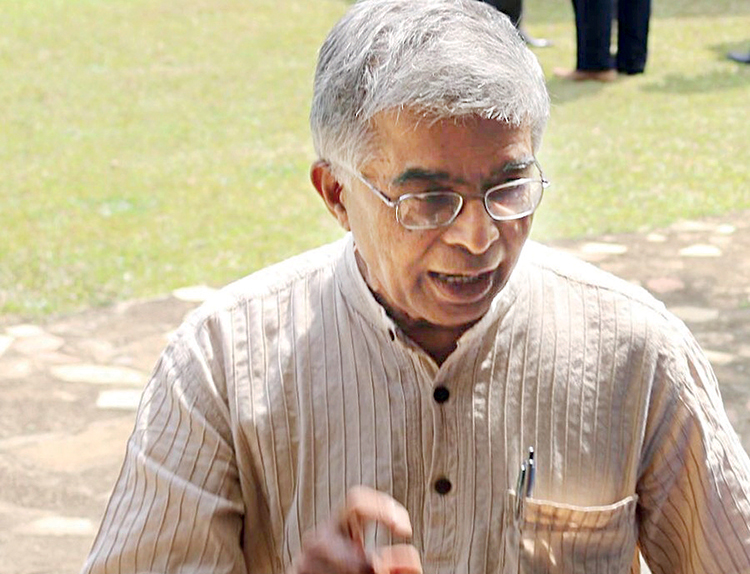
The University of Ceylon, Peradeniya, was in our time, a less-crowded residential university, where everybody knew everybody else or at least knew of everybody else.
I knew of Emeritus Professor Vijaya Kumar of the Department of Chemistry at Peradeniya, or Kumar, as we referred to him fondly, before I got to know him. His dear wife Savitri, also a member of the academic staff of the Department of Chemistry, was nicknamed Kumee, by some of their students (of which vintage is unknown to me) and the duo were thereafter referred to affectionately as Kumar and Kumee.
The Faculty of Science became a regular haunt of mine as I would go there in the company of my batchmates to attend lectures on Basic Mathematics given by Professor Maheswaran, as it was a requirement for our General Arts Qualifying Examinations. I would also go there to listen to some excellent talks under a programme that was held in the auditorium of the Science Faculty referred to as “Popular Science Gossip”. The “gossip” at these talks were not confined solely to science but were broad enough to include Literature, History and other branches of knowledge as well. I would often spot Kumar in the audience at these talks or bump into him in the corridors of the Science Faculty. But I got to know him personally only after he became the Warden of Arunachalam, my hall of residence, during my undergraduate years initially, and later, as a member of the academic staff of the Department of English.
Our Science Faculty undergraduate contemporaries, especially those at Arunachalam Hall and its immediate neighbour, Jayatilaka Hall, both within a stone’s throw away from the Science Faculty, shared many an anecdote about Kumar and their other lecturers. One of these anecdotes, had to do with a spectacular (motor car) driving feat of Kumar’s. Legend has it that he drove from his university bungalow-home to the Faculty of Science deploying only the reverse gear of his car! Kumar, on hearing of this, had told certain of his student friends, including some who became his colleagues later on, that this story is one of the biggest yarns he had heard in his life!
Some of his one-time younger colleagues, now in retirement like Kumar, tell me that Kumar exuded warmth and friendliness in all of his professional and administrative interactions with others in the wider university community. But there was no warmth or mercy for those who indulged in the unsavoury pastime of student ‘ragging’. He was a very strong proponent of the need to ensure to all freshers an environment free of the menace of ‘ragging’. He remained ever-vigilant during the ‘ragging’ season. There are stories of his chasing ‘raggers’ and catching them. Professor Maheswaran, who later became an intimate friend and remains so after more than half a century, was another who was fiercely opposed to ‘ragging’. I was a personal witness to Mahes chasing a ‘ragger’ up and down the stairs of the main library to nab him. Yet another of his students has noted that Kumar’s office room in the Faculty was a total mess at all times. It had tables, piled so high with books and documents that one could not easily spot Kumar at his desk. He, however, had the knack of pulling out from amidst the clutter, any document that he needed at any given time. If anybody were to volunteer to help tidy his desk, Kumar would respond firmly with “Don’t you touch my desk!”.
Kumar, like several of his colleagues in the other faculties as well, had his own eccentricities. According to information received from reliable sources, Kumar who taught Organic Chemistry used to carry his lecture notes in his shirt or trouser pocket with ‘the entire lecture condensed in point form on a half-sheet or half of a half-sheet of paper’. The way he rummaged through his sling bag filled to the brim with stuff to find an item that he needed was another ritual that amused onlookers.
Kumar, interestingly enough is a Royal-cum-Thomian product, in that he had his primary education at S.Thomas’ Prep School, Kollupitiya and the entirety of his secondary education at Royal College, which he entered in 1953. In a note written by Kumar himself, he notes that despite having had excellent teachers at Royal, his was not a notable school career. He goes on to say that “the only achievement I could boast of was my being the joint-winner of the school General Knowledge Prize”. However, he had been active in a Scout Group outside of school (1st Port of Colombo, Sea Scouts) where he “was Queen’s Scout, Patrol leader, and later, Assistant Scout Master”.
Kumar entered the Faculty of Science of the University of Ceylon in 1961 and secured from it an honours degree in Chemistry in 1965. He joined the academic staff of the Department of Chemistry in the Faculty of Science, University of Ceylon, Peradeniya in 1965 and left the following year for Magdalen College at Oxford University, from which institution he obtained his doctorate in Chemistry. His entire teaching career was at Peradeniya, where in the period 2003-2006 he served as the Dean of the Faculty of Science, a position that his late father-in-law had held a few decades earlier.
Among the other highlights of his career are: Chairman of the Industrial Technology Institute (formerly the Ceylon Institute of Scientific and Industrial Research, CISIR); Member (representing Sri Lanka) of the Geneva-based UN Commission on Science and Technology from 1999 to 2007 and its President from 2001-2003; President of the Sri Lanka Estate Workers Union from 1989 onwards; Member of the Politburo of the Lanka Sama Samaja Party from 1988 to 2014 and currently, a member of the Executive Committee of the National People’s Power (NPP).
Vijaya and Savitri Kumar are parents of daughters Shamala and Ramya, who are following in the footsteps of their parents: with the former teaching in the Department of Agricultural Economics in the Faculty of Agriculture, University of Peradeniya and the latter, in the Department of Community Medicine at the University of Jaffna.
(I wish to thank the following who assisted me in the writing of this brief essay: Mr. Bandula Warnakulasuriya, Emeritus Professor Ratnayake Bandara, Professor Mahinda Wickramaratne, Professor Swarna Wimalasiri and Mr. Manik de Silva).
*Editor’s note: Prof. Vijaya Kumar, a member of the NPP’s National Executive Committee and is still active in politics turns 84 today. This article by Tissa Jayatilaka, former Executive Director of the United States – Sri Lanka Fulbright Commission for Mutual Academic Exchange, was written for an upcoming collection of essays on Kumar’s life by his friends.
(Colombo Telegraph)
By Tissa Jayatilaka

Showers will occur at times in the Western, Sabaragamuwa and North-western provinces and in Galle, Matara, Kandy and Nuwara-Eliya districts

Harsha flays govt. over plan to pass coal, Treasury losses to public

PM opens Vesak pandals

UNP challenges NPP move to amend Vihara – Devalagam Act

Fuel price increases: Bus and trishaw operators demand fare hike

Govt. halts e-passport project

‘Dates have the highest sugar content to fight Coronavirus’

Sunday Island 27 December – Headlines

#SundayIsland 17th December – Headlines

Sunday Island – 28th March

Sunday Island Headlines – 21 March

Sunday Island – 21st February – Headlines
-
 News3 days ago
IMF urges Lanka not to meddle with exchange rate
-
 News7 days ago
Easter Sunday carnage: Court told Maulana’s statement cannot be accepted without cross-examination
-
 News7 days ago
UK passport holder hiding here wants to have deportation order rescinded to leave without blemish
-
 Business4 days ago
Sri Lanka’s construction industry losing ground while no one watches
-
 Opinion7 days ago
Undermining the democratic political framework
-
 News3 days ago
State of emergency extended
-

 Features4 days ago
The Division Bell Mystery
-
 Midweek Review6 days ago
Israeli-US aggression won’t go unanswered -Iranian Ambassador