
News
Ex-SriLankan CEO’s death: Controversy surrounds execution of bail bond

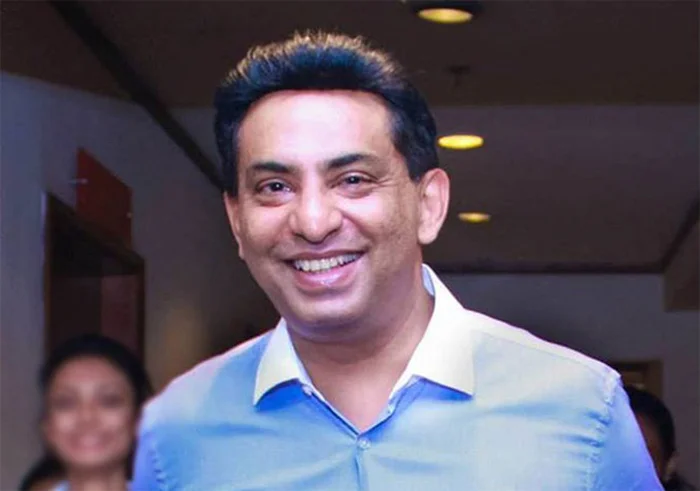
Prof. Prathibha Mahanamahewa has emphasised the need to examine the circumstances under which the court staff executed the bail bond, and the release process, in respect of the late Kapila Chandrasena, former Chief Executive Officer of SriLankan Airlines.
Chandrasena’s body was found in a house at Pedris Road, Colombo 03.
In case of any doubt regarding bail condition/s or any other matter (insufficient surety, identity issues, suspicious documents and unclear order), the Registrar had to get in touch with the relevant Magistrate, Mahanamahewa said.
Mahanamahewa was responding to The Island query regarding the acceptance of two Muslims as sureties. Had they followed the time-tested procedure, court registry/registrar staff would never have accepted sureties as blood relatives of Chandrasena, Mahanamahewa said, alleging a major defect in the execution of the bail bond.
They were arrested by police and remanded by the Colombo Magistrate’s court, till 13 May, pending further investigations.
Colombo Chief Magistrate Asanga S. Bodharagama, on 5 May, granted to Chandrasena cash bail of Rs. 500,000 and three surety bails of Rs. 10 million each. But soon after Chandrasena received bail, the court was told that two of the Rs. 10 million sureties had been produced, after payment of Rs. 15,000 each, were made to those two individuals to act as guarantors.
The bail application had been submitted by Rienzie Arsecularatne, PC, appearing on behalf of Kapila Chandrasena, when the case was earlier taken up, on 28 April.
Police also arrested an elderly person who arranged for the two persons who hadn’t even seen Chandrasena, even once, to offer themselves as sureties.
As soon as the police revealed the fraudulent manner Chandrasena obtained bail, Chief Magistrate Bodharagama issued an order to arrest and produce him before the court. This order was issued consequent to a request made by the Commission to Investigate Allegations of Bribery or Corruption (CIABOC), on the grounds that the defendant had violated bail conditions. The CIABOC wanted Chandrasena held pending the conclusion of the case.
Sources familiar with the execution of bail bond said that the moment the suspects had submitted their National Identity Cards and letters from Grama Sevakas, the court registry/registrar staff should have rejected them. In a such high-profile case, the failure on the part of the lawyers, representing Chandrasena, to check the gsureties’ relationship with Chandrasena, was another glaring shortcoming, sources said, pointing out that after having submitted bail application on 28 April, the defence team should have come prepared to put forward genuine guarantors.
The Island contacted the Bar Association of Sri Lanka for comment on the manner in which the court staff had handled bail for Chandrasena, but there was no response.
Sri Lanka’s former Ambassador to Moscow, accredited to Kiev, Udayanga Weeratunga, said that a thorough investigation should be conducted to ascertain facts about the execution of the bail bond. Asked whether he had been in touch with Chandrasena, Weeratunga said that he spent his first day at Welikada with Chandrasena and Ranjan Ramanayake in one cell. “That happened on 14 February, 2020. I was arrested when I returned to the country, from the UAE, and produced before the then Magistrate Ranga Dissanayake, the incumbent Director General of CIABOC,” Weeratunga said.
Weeratunga said that a couple of months after the change of government in 2024, the US State Department imposed a travel ban on him and Chandrasena and their families over what the US termed as significant corruption.
Weeratunga said that altogether the US designated 14 persons and, of them, two were Sri Lankan, who happened to be him and Chandrasena, accused of corruption in respect of acquisition of MiG 27s from Ukraine and the Airbus deal, during President Mahinda Rajapaksa’s tenure as the President.
SLPP sources said that Chandrasena’s demise shouldn’t prevent proper investigation on his affidavit that claimed pressure brought on him to name Mahinda Rajapaksa as a recipient of the Airbus bribe.
By Shamindra Ferdinando



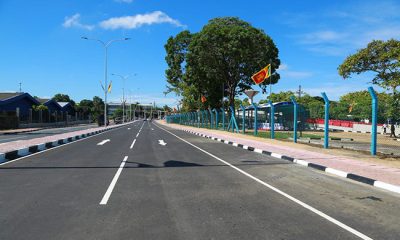
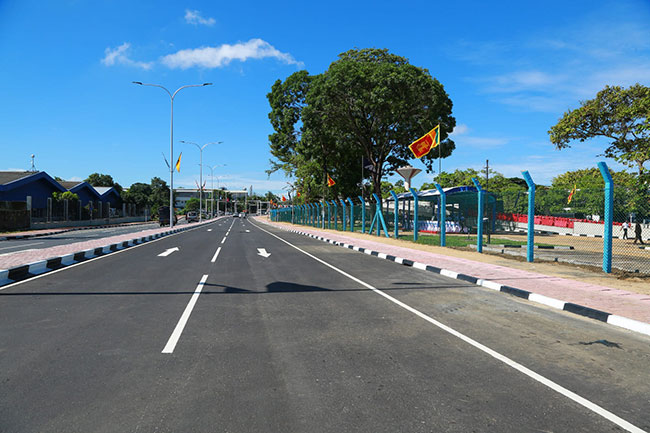
Authorities have launched an urgent programme to address recurring flooding on access roads leading to the Bandaranaike International Airport (BIA) in Katunayake,, with canal cleaning and capacity-enhancement work, commencing on Thursday (4).
The initiative follows a special meeting chaired by Deputy Minister of Civil Aviation Janitha Ruwan Kodituwakku on May 28, at which a dedicated task force was appointed to implement immediate remedial measures.
The Ministry of Civil Aviation said relevant institutions have jointly begun clearing drainage canal blockages, increasing canal capacity and improving rainwater flow management in a bid to reduce flooding around the airport and neighbouring areas.
Officials expressed confidence that the measures would help minimise disruptions to airport operations and ease difficulties faced by passengers and motorists during periods of heavy rainfall, while also mitigating flood risks for surrounding communities.
The Ministry said the current programme forms part of a broader strategy that includes both short-term interventions and a long-term plan to provide a permanent and sustainable solution to the flooding problem.
According to the Ministry, the measures are expected to strengthen the area’s resilience to future extreme weather events.
News
Over 1,100 stakeholders engaged in Lanka’s Eco-Industrial Park capacity building programme funded by EU

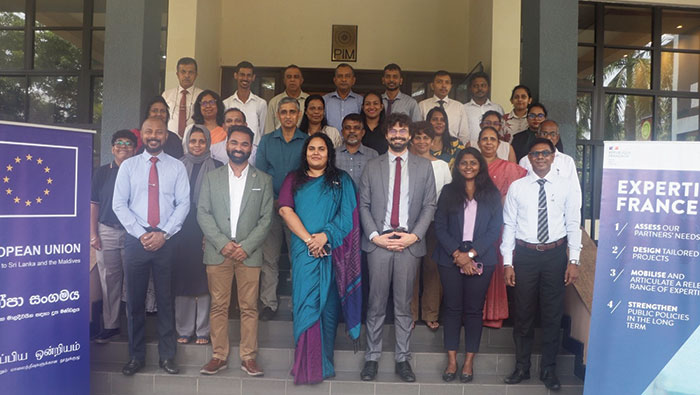
Supporting Sri Lanka’s transition towards resource-efficient, competitive and environmentally sustainable industrial development
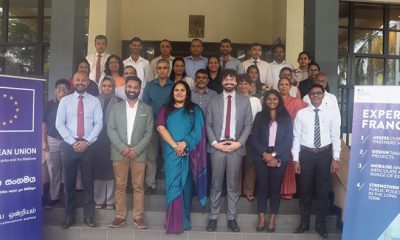
A large-scale capacity-building programme, aimed at promoting the Eco-Industrial Park (EIP) concept in Sri Lanka, officially commenced in April, 2026, targeting more than 1,000 stakeholders across the country’s industrial sector.
The capacity-building programme is being conducted by the EU-funded Green Recovery Facility project, implemented by Expertise France, in collaboration with the National Cleaner Production Centre (NCPC), Sri Lanka and Adelphi (adelphi.de), a German consultancy firm.
The newly launched capacity building programme brings together a broad group of stakeholders, including around 25 policymakers, 32 industrial park operators, 475 tenant industries, and 640 members from neighbouring communities, ensuring an inclusive approach to strengthening industrial practices in Sri Lanka.
Highlighting the role of eco-industrial parks in supporting sustainable industrial growth, Dr Johann Hesse, Head of Cooperation at the Delegation of the European Union to Sri Lanka and the Maldives, noted, “Sri Lanka’s industrial sector can drive a greener, more resilient recovery, especially in export-oriented segments. EU experience with eco-industrial parks shows that linking parks to innovation, cleaner technologies and markets is key to attracting investment and scaling circular economy practices, and that the strongest results come when companies choose to work together voluntarily rather than through top-down instruction. By engaging government, park operators, tenant industries and neighbouring communities, this programme helps create the conditions for competitive, low-carbon industrial growth.”
Sri Lanka’s industrial sector comprises approximately 75 industrial parks and more than 1,200 industries employing over 126,000 people. As the country advances its sustainable development agenda, many industrial zones and enterprises are working to address challenges related to environmental management, resource efficiency and ageing infrastructure to enhance their competitiveness and long-term resilience.
The programme was developed based on findings from pre-assessment surveys and extensive stakeholder consultations, ensuring that the training content responds directly to the practical needs, priorities and capacity gaps identified among different stakeholder groups.
The capacity building programme is being delivered through a series of engagements, including two virtual sessions, one in-person workshop, and follow-up training activities. The virtual sessions, conducted in April, introduced key concepts and frameworks, while the upcoming in-person sessions in May to July are expected to focus on practical application and peer learning.
Training sessions cover key areas such as policy and regulatory frameworks, green financing and investment strategies, environmental management and compliance, industrial symbiosis, and stakeholder engagement. The in-person workshops will include interactive discussions, real-case exercises, and experience sharing, enabling participants to identify solutions that can be implemented within their own industrial parks and institutions.
The activity aims to strengthen policy-level understanding, enhance the operational capacity of industrial park operators, support industries in adopting more resource-efficient practices, and encourage improved coordination with neighbouring communities.
By building capacity across these stakeholder groups, the initiative is expected to support the gradual transformation of industrial parks into more efficient, environmentally responsible, and economically competitive zones, contributing to Sri Lanka’s broader green development agenda.

Kalutara District SJB MP Ajith P. Perera has submitted a motion to Parliament calling for the introduction of English-medium education in all secondary schools across the country, while urging the Government to allocate adequate resources to support the initiative.
The motion, now published in the Addendum to the Order Book of Parliament, proposes that Parliament resolve that English-medium instruction be implemented throughout the secondary school system and that the Government accord priority to the necessary investments required for its successful rollout.
Perera notes that English has been recognised as Sri Lanka’s Link Language under Article 18(3) of the Constitution and argues that proficiency in the language is essential for fostering national integration and improving access to knowledge.
According to the motion, English, as an international language, serves as a vital medium through which citizens can acquire knowledge and skills in an increasingly globalised world.
The SJB legislator further contends that mastery of English would enable Sri Lankans from diverse linguistic and ethnic backgrounds to communicate more effectively and live together as one nation.
The motion highlights the success of English-medium education offered through the country’s Central College system, established under the free education policy, as well as similar programmes implemented in several other schools.
Perera also argues that expanding English-medium education would enhance the employability of Sri Lankan youth by equipping them with language skills required to access international employment opportunities.
The motion calls on the Government to make the promotion of English-medium secondary education a national priority and to provide the financial and institutional support necessary to ensure its implementation throughout the school system.

Beyond tragedy that shook the nation’s conscience

Ceylon Chamber expresses concern over new US labour-related tariffs and calls for urgent engagement

Dinara, Yuhansa and Aahil advance to ITF J30 Week 2 semi-finals

Work begins to prevent flooding on BIA access roads

Over 1,100 stakeholders engaged in Lanka’s Eco-Industrial Park capacity building programme funded by EU

SJB MP calls for English-medium education in all secondary schools

‘Dates have the highest sugar content to fight Coronavirus’

Sunday Island 27 December – Headlines

#SundayIsland 17th December – Headlines

Sunday Island – 28th March

Sunday Island Headlines – 21 March

Sunday Island – 21st February – Headlines
-

 News4 days ago
Lankan duo emerge winners in Latin dance championship held in Blackpool, UK
-
 News7 days ago
IMF urges Lanka not to meddle with exchange rate
-

 Business5 days ago
IMF’s unstated rate:Sri Lanka’s $695m loan costs about 5.33% per annum
-

 Latest News2 days ago
Kusal Mendis, Pathum Nissanka, bowlers put Sri Lanka 1-0 up
-
 News7 days ago
State of emergency extended
-
 News2 days ago
New US tariffs proposed on 60 countries, including Sri Lanka
-

 Business5 days ago
Sri Lankan scientist-innovator Milinda Edirisinghe introduces AI-integrated gem testing system to gemological world
-

 Features6 days ago
Are threats to Buddha Sasana external or from within?